Analysis of local budget execution in 2025: key trends and fiscal capacity of communities
The year 2025 became another test for Ukraine’s budget system. Under the conditions of the ongoing war, the primary focus of state policy remained on strengthening defense capacity, which inevitably affected the redistribution of resources. However, despite the withdrawal of the “military” personal income tax (PIT) and other constraints, local budgets demonstrated unexpected resilience. Thanks to effective local-level management, support from international partners, and business adaptation to wartime conditions, most communities managed to ensure the financing of critically important expenditures and sustain the functioning of both frontline and rear territories.
Thus, despite entering the fourth year of the full-scale war, the system of local public finance continues to demonstrate resilience and the capacity to ensure the delivery of core local government functions. The execution of local budgets in 2025 took place under conditions of high pressure on public finances, increasing defense expenditures, and the concentration of financial resources at the central government level. At the same time, communities maintained stable revenue streams and retained the capacity to finance key public services, which indicates the adaptability of local self-government to the conditions of a wartime economy. The analysis of local budget execution in 2025 makes it possible to assess the actual fiscal capacity of communities, their role within the public finance system, and the main trends in the changing balance between the state and local levels of the budget system.
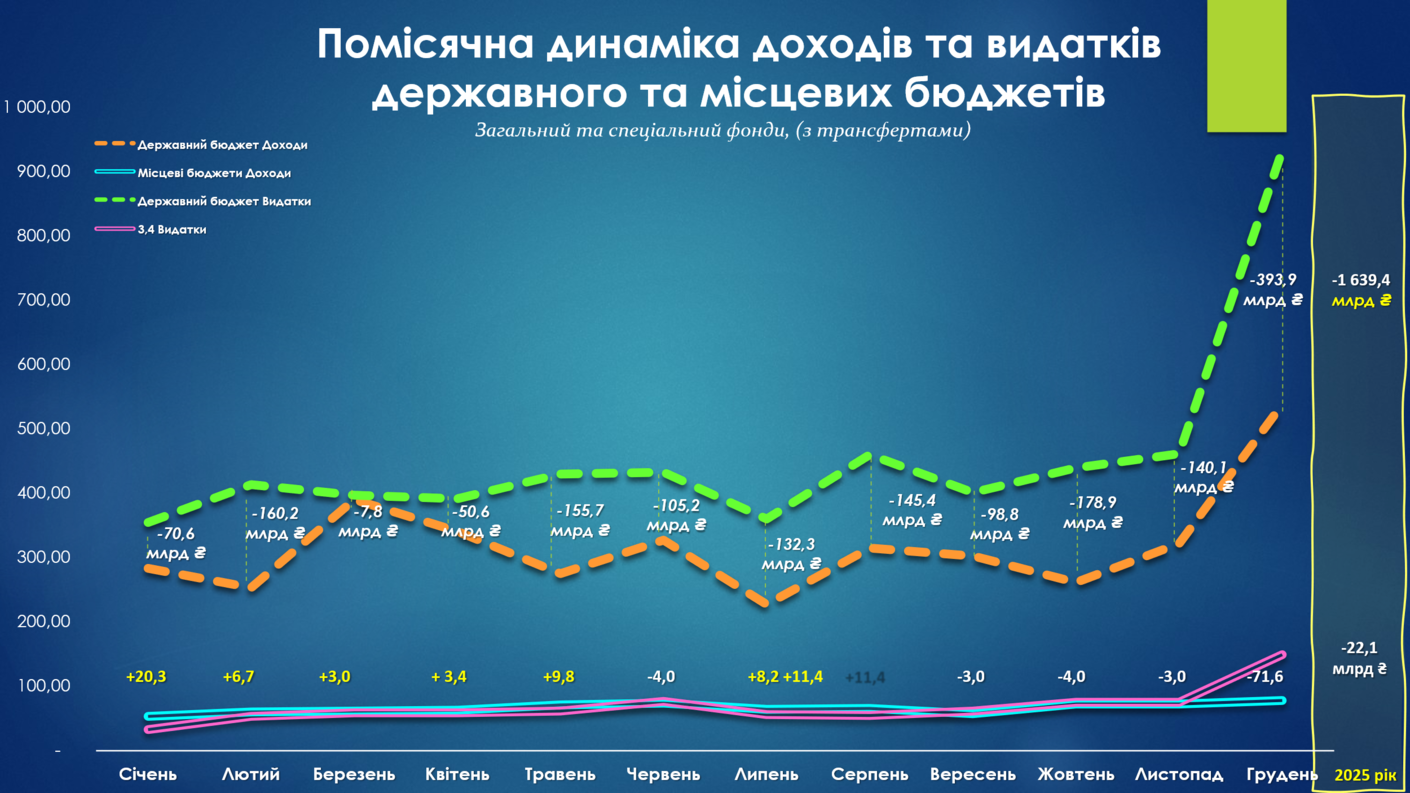
Particular attention should be paid to the monthly dynamics, which reflected the actual level of economic activity within communities. During the first half of 2025, local budgets mostly accumulated resources, as evidenced by positive balances in the majority of months. The highest surplus was recorded in January (+UAH 20.3 billion), as well as in August (+UAH 11.4 billion). These periodic surpluses enabled local self-government bodies to form the necessary financial reserves. The chart clearly demonstrates that community revenues and expenditures moved largely in parallel, without the sharp imbalances that were characteristic of the state budget level. This indicates that communities have learned to promptly adjust expenditure plans in line with actual revenues despite the withdrawal of part of their tax resources.
However, the end of 2025 made significant adjustments to the overall statistics. Traditionally, for Ukrainian budget practice, it was December that saw the peak of the financial burden. On the graph, we see a rapid increase in expenditures, which led to a monthly deficit at the local level in the amount of UAH -71.6 billion. Such a jump took place against the background of an even larger state budget deficit, which reached a record -UAH 393.9 billion in December. It is important to emphasize that it was this December gap that actually formed the final annual deficit of local budgets, since in previous months the system was mostly self-sufficient.
In general, the results of 2025 confirmed that local self-government withstood the test of war and resource constraints. While the state budget functioned in the maximum deficit mode for the sake of victory, communities were able to maintain the balance. The final figure of UAH -22.1 billion for all local budgets of the country is evidence that decentralization has created a sufficient margin of safety, which allowed the system not only to survive, but also to effectively administer resources in the conditions of the highest uncertainty.
At the same time, the monthly dynamics of revenues and expenditures of the state and local budgets in 2025 showed a significant difference in the financial situation between the central and local levels of the budget system. During the year, the state budget was executed with a high deficit, which gradually grew and reached UAH 1,639.4 billion by the end of the year, which reflected large-scale financing of the security and defense sector and other priority public expenditures.
It is important to note that at the end of 2025, local budgets ended the year with a deficit for the first time since the beginning of the decentralization reform. In previous years, communities consistently formed surplus budgets, which was a characteristic sign of their financial stability and prudent budget policy. The formation of the deficit in 2025 showed an increase in the spending burden on the local level in the context of a prolonged war, increased social needs, support for internally displaced persons, financing of territorial defense measures and infrastructure restoration. At the same time, even this deficit remained insignificant in scale and did not indicate the loss of the financial capacity of communities, but became an important signal of a change in the budget balance at the local level after a long period of full coverage of the expenditure side.
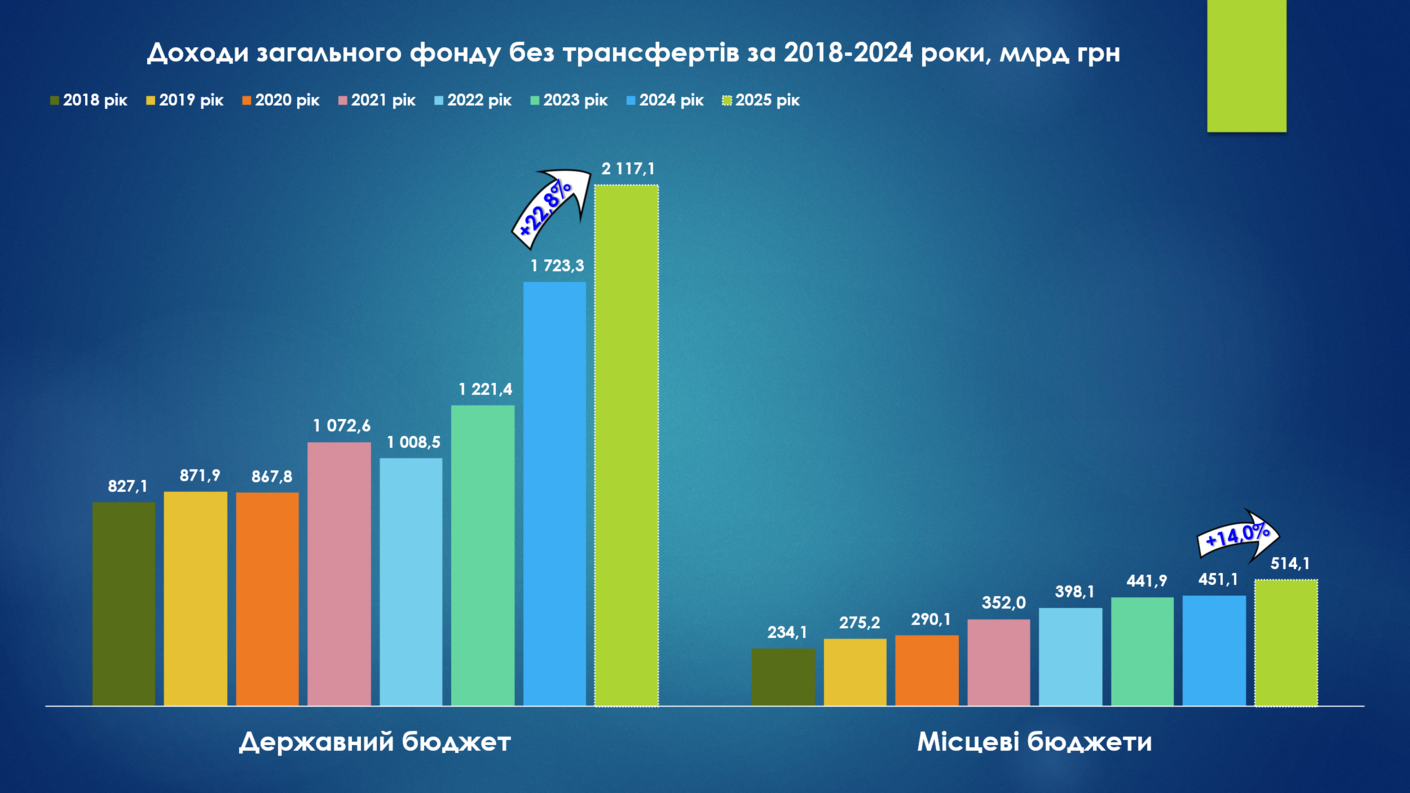
Revenues of the general fund without transfers remain a key indicator of the own financial capacity of budgets of different levels. In 2025, they continued to grow at both the state and local levels, although the scale of this growth differed significantly.
At the end of 2025, the revenues of the general fund of the state budget without transfers amounted to UAH 2,117.1 billion, which was 22.8% higher than in 2024. For local budgets, the corresponding figure increased to UAH 514.1 billion, or 14.0% more compared to the previous year. Thus, in 2025, the trend of outstripping growth of state budget revenues compared to local budgets continued.
At the same time, in the long-term dynamics of 2018-2025, local budget revenues showed stable growth - more than twice: from UAH 234.1 billion in 2018 to UAH 514.1 billion in 2025. This testified to the gradual strengthening of the communities' own revenue base even in the conditions of the war period and the transformation of inter-budgetary relations.
At the same time, the growth rate in 2025 was lower than in the state budget, which reflected the further concentration of financial resources at the central level due to the needs of defense, security and macro-financial stabilization. As a result, the contribution of local budgets to the formation of the country's consolidated financial resources continued to gradually decline compared to the pre-war period, despite the absolute growth of their own revenues.
In general, the dynamics of general fund revenues without transfers in 2025 confirmed that local budgets retained the ability to increase their own resource base even in difficult conditions of the war economy, although the pace of this growth was already inferior to the dynamics of centralization of budget resources at the state level.
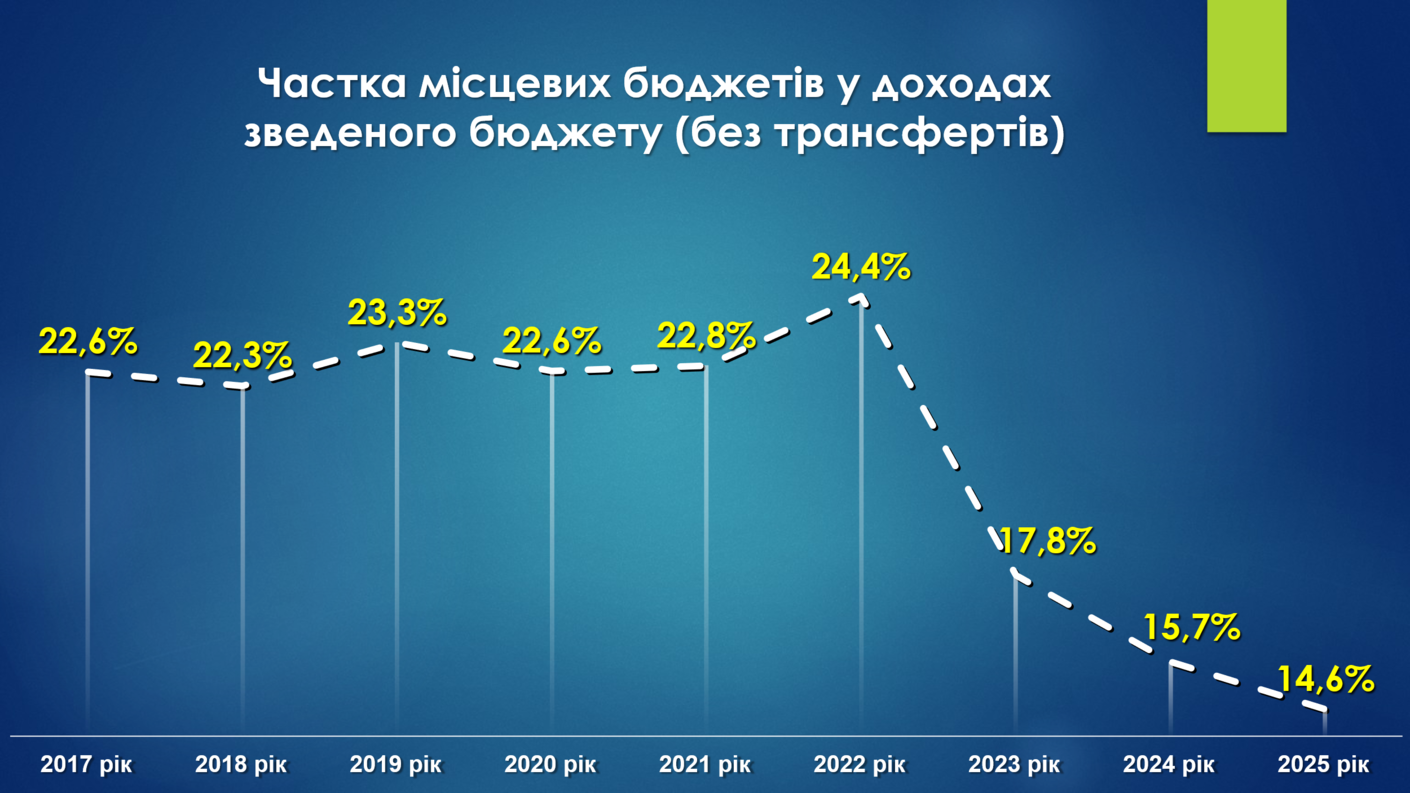
The share of local budgets in the revenues of the consolidated budget of Ukraine, excluding transfers, continued to decline in 2025 and amounted to 14.6%, which was the lowest figure for the entire period since the start of the decentralization reform. For comparison, in 2022 it reached a maximum value of -24.4%, and in 2017-2021 it was stably at the level of more than 22%. This was the period of the largest share of IBs, which was the result of a successful stage of decentralization. However, starting from 2023, the vector of state financial policy has changed under the pressure of war realities. The need to centralize resources for defense needs led to a gradual decrease in the share of MB. In 2024, this figure dropped to 15.7%, and at the end of 2025 it was fixed at around 14.6%.
Such dynamics in 2025 reflected the objective need to concentrate funds in the state budget, where the growth rate of revenues significantly outstripped local due to the attraction of international aid and changes in the rules for the distribution of personal income tax. In 2025, local self-government continued to be an important steward of every rough hryvnia in the state, ensuring the critical resilience of territories against the backdrop of global defense challenges.
But in general, over three years, the share of local budgets has decreased by almost 10 percentage points.
Such dynamics did not indicate a weakening of the revenue base of communities in absolute terms, but primarily a much faster growth of state budget revenues in the context of a war economy, the concentration of resources on financing the security and defense sector, and the centralization of financial flows at the national level. At the same time, local budget revenues continued to grow, but their contribution to the formation of the consolidated budget gradually decreased.
In fact, in 2023-2025, a new structure of the budget system was formed, under which the financial center of the scale temporarily shifted to the state level. This was a natural reaction of the budget system to the needs of wartime, but this trend at the same time means a narrowing of the relative role of local budgets in the formation of the country's public finances compared to the pre-war period.
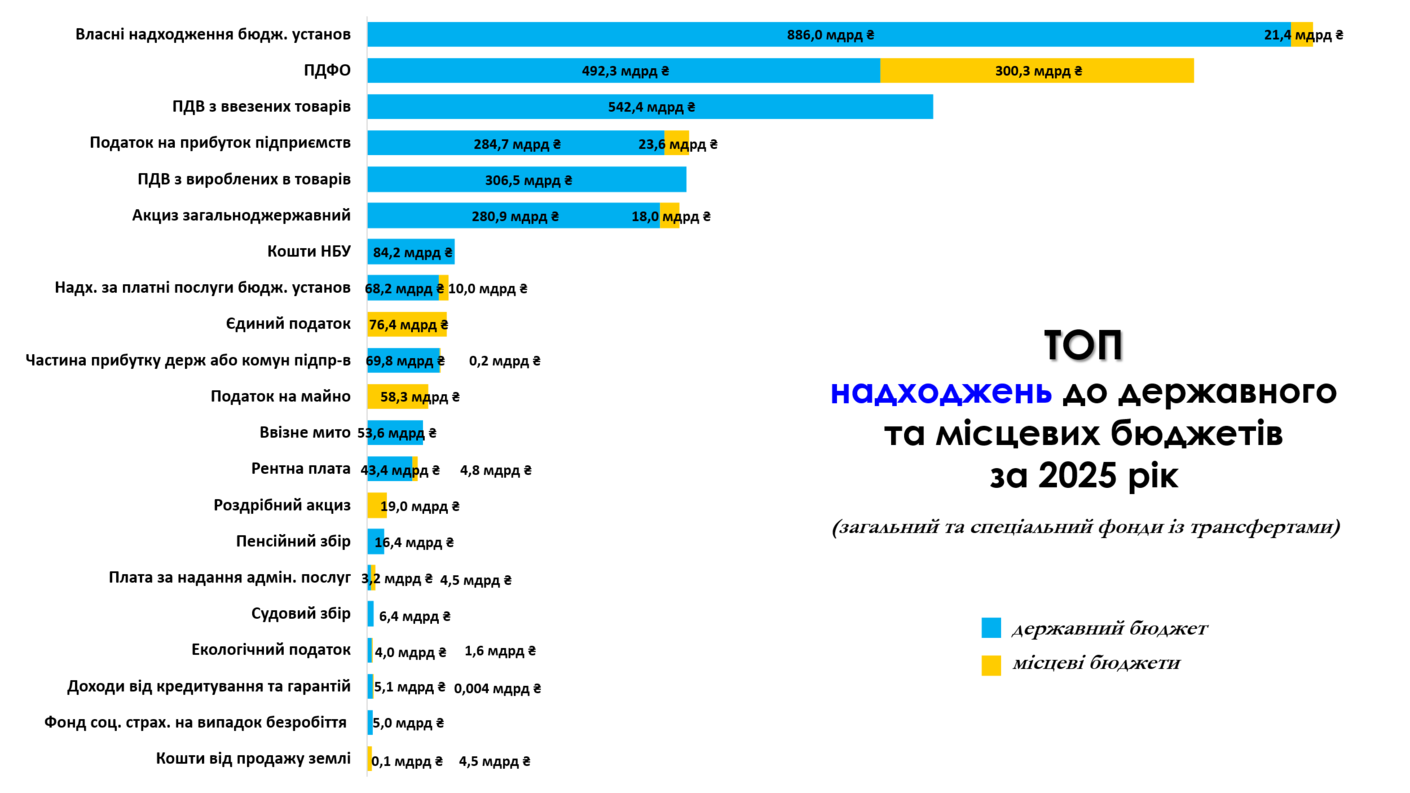
The structure of state and local budget revenues in 2025 confirmed the preservation of a clear functional specialization of sources of filling the budget system and the different role of government levels in the formation of public finances. The main source of state budget revenues remained value added tax on imported goods (UAH 542.4 billion), value added tax on goods produced in Ukraine (UAH 306.5 billion), corporate income tax (UAH 284.7 billion), national excise tax (UAH 280.9 billion), as well as significant revenues of the National Bank of Ukraine (UAH 84.2 billion). This structure testified to the dominance of import tax payments and taxes from the corporate sector in the formation of state budget revenues during the war.
At the same time, local budget revenues were traditionally formed primarily at the expense of personal income tax, the revenues of which amounted to UAH 300.3 billion and remained the key budget-forming base of communities. An important role was also played by the single tax (UAH 76.4 billion), property tax (UAH 58.3 billion), retail excise tax (UAH 19.0 billion), payment for the provision of administrative services (UAH 4.5 billion) and funds from the sale of land (UAH 4.5 billion). Such a structure confirmed the high dependence of local budgets on the taxation of household incomes and the activities of small and medium-sized businesses.
Special attention should be paid to the own revenues of budgetary institutions, which in 2025 amounted to UAH 21.4 billion in local budgets and UAH 886.0 billion in the state budget. At the same time, a number of revenue sources remained common for both levels of the budget system, including rents, revenues from administrative services, and environmental tax, although their share in the overall structure of revenues remained relatively small.
In general, the revenue structure in 2025 confirmed that the state budget concentrated resources from foreign economic activity, the corporate sector, and macro-financial sources, while local budgets continued to rely mainly on taxes on household incomes and local economic activity, which determined their sensitivity to changes in the labor market and the business environment during the war.
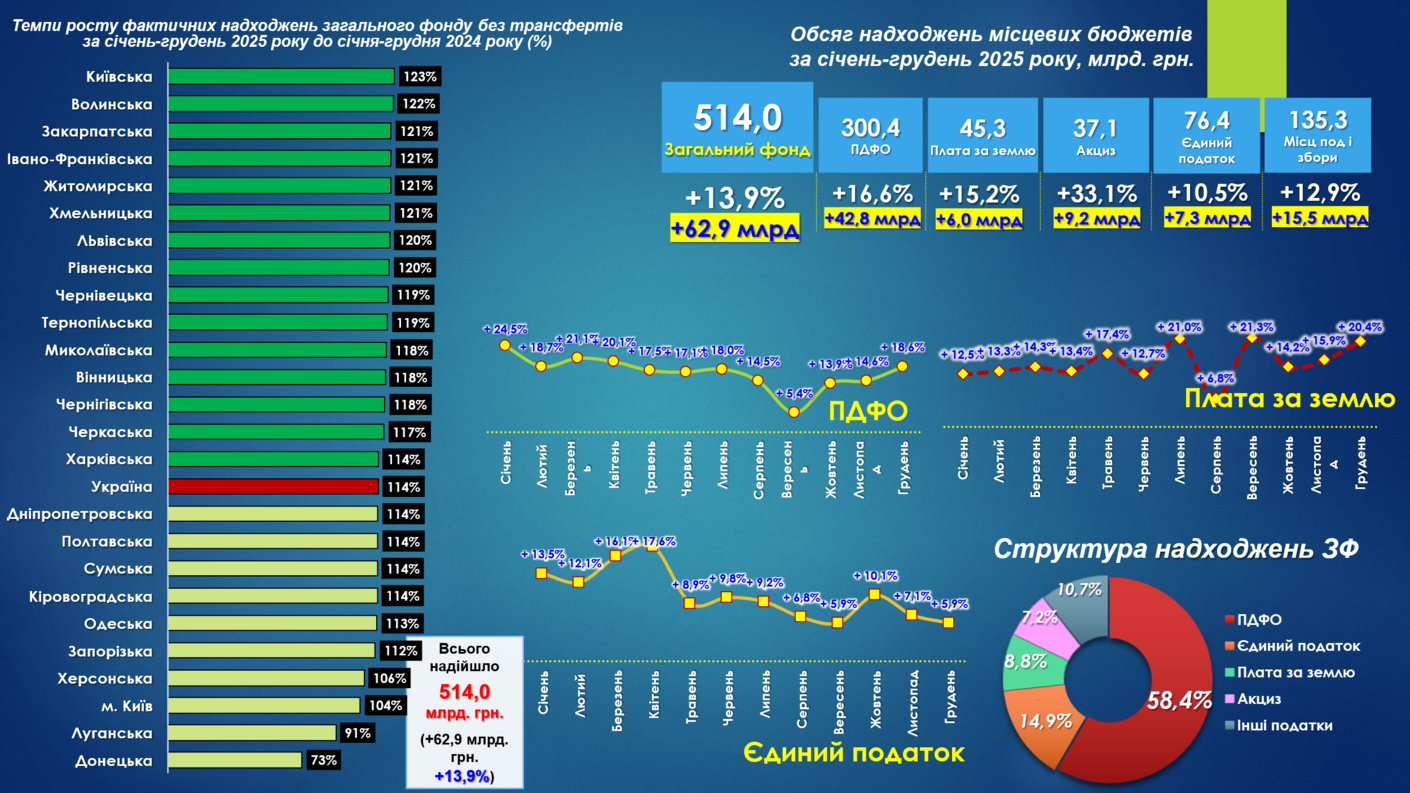
Revenues of the general fund of local budgets, excluding transfers, in 2025 continued to demonstrate positive growth dynamics. In total, local budgets received UAH 514.0 billion, which is UAH 62.9 billion, or 13.9% more than in 2024. This confirmed the preservation of financial stability at the local level even in the face of a prolonged military load on the economy.
The main budget-forming source remained the personal income tax, the revenues of which amounted to UAH 300.4 billion and provided more than half of the revenues of the general fund of local budgets (58.4%). Compared to the previous year, personal income tax revenues increased by UAH 42.8 billion, or 16.6%, which was a key factor in the overall increase in community incomes. Such dynamics testified to the preservation of the role of the labor market as the main financial support of local budgets even in the context of a war economy.
Local taxes and fees also remained important sources of revenue, which provided UAH 135.3 billion (+12.9%), a single tax – UAH 76.4 billion (+10.5%), as well as land fees – UAH 45.3 billion (+15.2%). The largest share in the structure of local taxes was traditionally taken by the single tax, revenues from which amounted to UAH 76.4 billion. This amounted to almost half (49.2%)) of the total amount of local taxes, which indicates the high role of small and medium-sized businesses in the financial viability of the territories. The second largest source was property tax, which provided UAH 58.3 billion or 37.5% of the structure. As part of this tax, the main part fell on land payments (land tax and rent), which remains the foundation of income for the vast majority of territorial communities.
Separately, it should be noted a significant increase in excise tax revenues, which amounted to UAH 37.1 billion and increased by 33.1%, which was one of the highest growth rates among the key revenue sources of local budgets.
The regional distribution of the growth rate of general fund revenues remained uneven. The highest growth rates were demonstrated by Kyiv (123%), Volyn (122%), Zakarpattia, Ivano-Frankivsk, Zhytomyr and Khmelnytskyi regions (121% each), which reflected the intensification of economic activity in relatively safer regions and increased internal migration of the population and business. At the same time, growth rates remained significantly lower in the frontline regions, in particular in Kherson region – 106%, Luhansk region – 91%, Donetsk region – 73%, which directly reflected the impact of security factors on the formation of the income base of communities.
The monthly dynamics of revenues of the main budget-forming taxes remained generally stable. Personal income tax revenues showed uniform positive dynamics throughout the year, with a slight slowdown in September and a further resumption of growth at the end of the year. Land payments were characterized by more pronounced seasonal fluctuations, but maintained a positive annual trend. Single tax revenues remained relatively stable throughout the year with moderate fluctuations, which confirmed the preservation of the role of small businesses as an important source of financial viability of territorial communities.
In general, the structure of revenues of the general fund of local budgets in 2025 confirmed the preservation of their basic dependence on personal income tax and local taxes and fees, and also demonstrated a gradual recovery of economic activity in most of the country, despite the prolonged challenges of wartime.
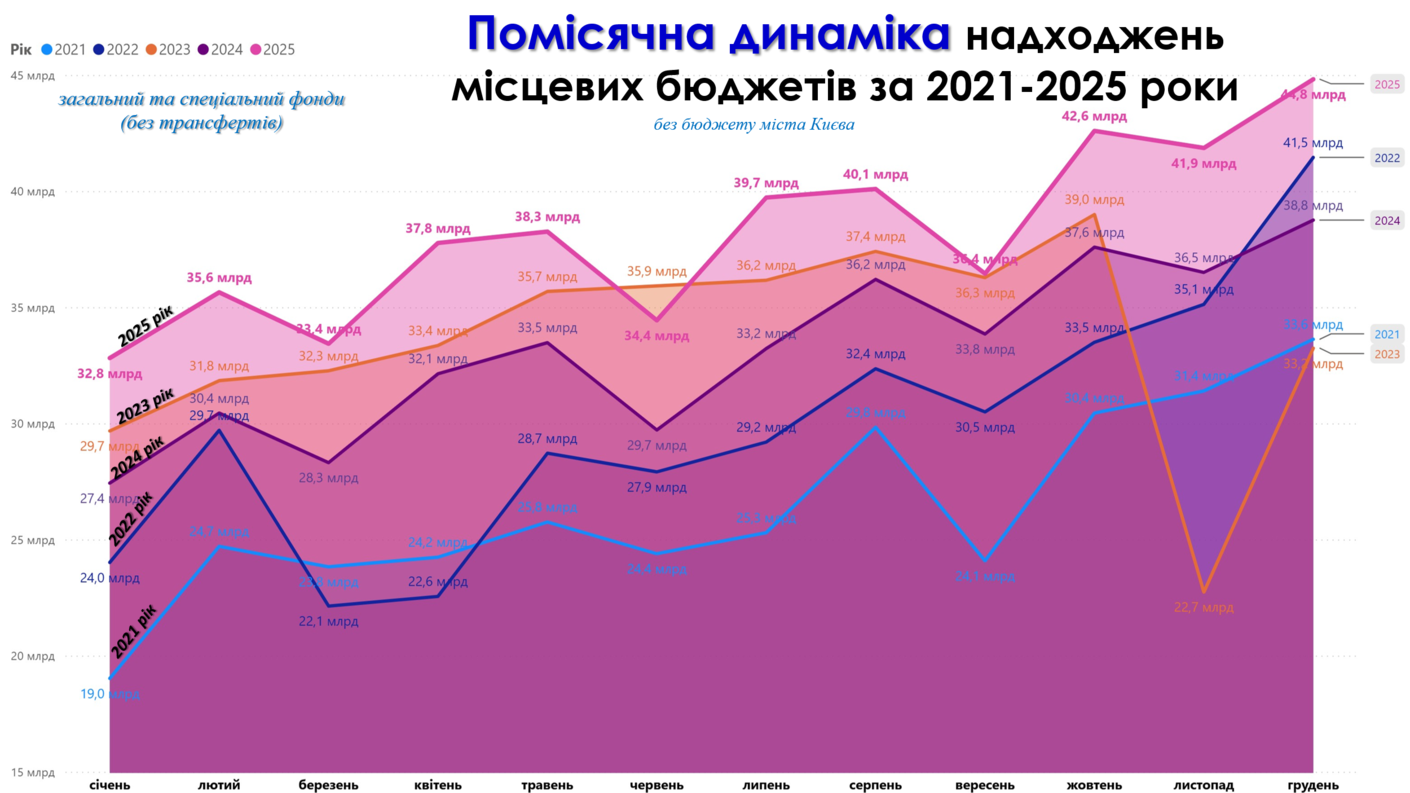
The monthly dynamics of local budget revenues in 2025 (excluding the budget of the city of Kyiv) confirmed the preservation of a steady trend of growth of the revenue base of communities compared to previous years. Almost throughout the year, actual revenues exceeded the indicators of the corresponding months of 2021-2024, which indicated a gradual expansion of financial capabilities at the local level even in the face of a prolonged military load on the economy.
The highest volumes of revenues were traditionally formed in the second half of the year. In particular, in July-October, revenues steadily exceeded UAH 39-42 billion per month, and the maximum value was reached in December – UAH 44.8 billion. This reflected seasonal features of budget execution. During the year, a characteristic seasonal wave of revenues was maintained, primarily related to the schedules of payment of personal income tax, single tax and land payment. A certain decrease in volumes was observed in June and September, but in the following months, revenues resumed the upward dynamics.
Compared to previous years, it was especially indicative that in 2025, even the minimum monthly values of revenues exceeded the corresponding indicators of 2021 and approached the levels of 2023-2024, which indicated a structural strengthening of the communities' own revenue base. In general, the monthly dynamics confirmed that local budgets in 2025 maintained the stability of revenues throughout the budget year and continued to demonstrate the ability to adapt to the conditions of the war economy without losing systemic financial capacity.
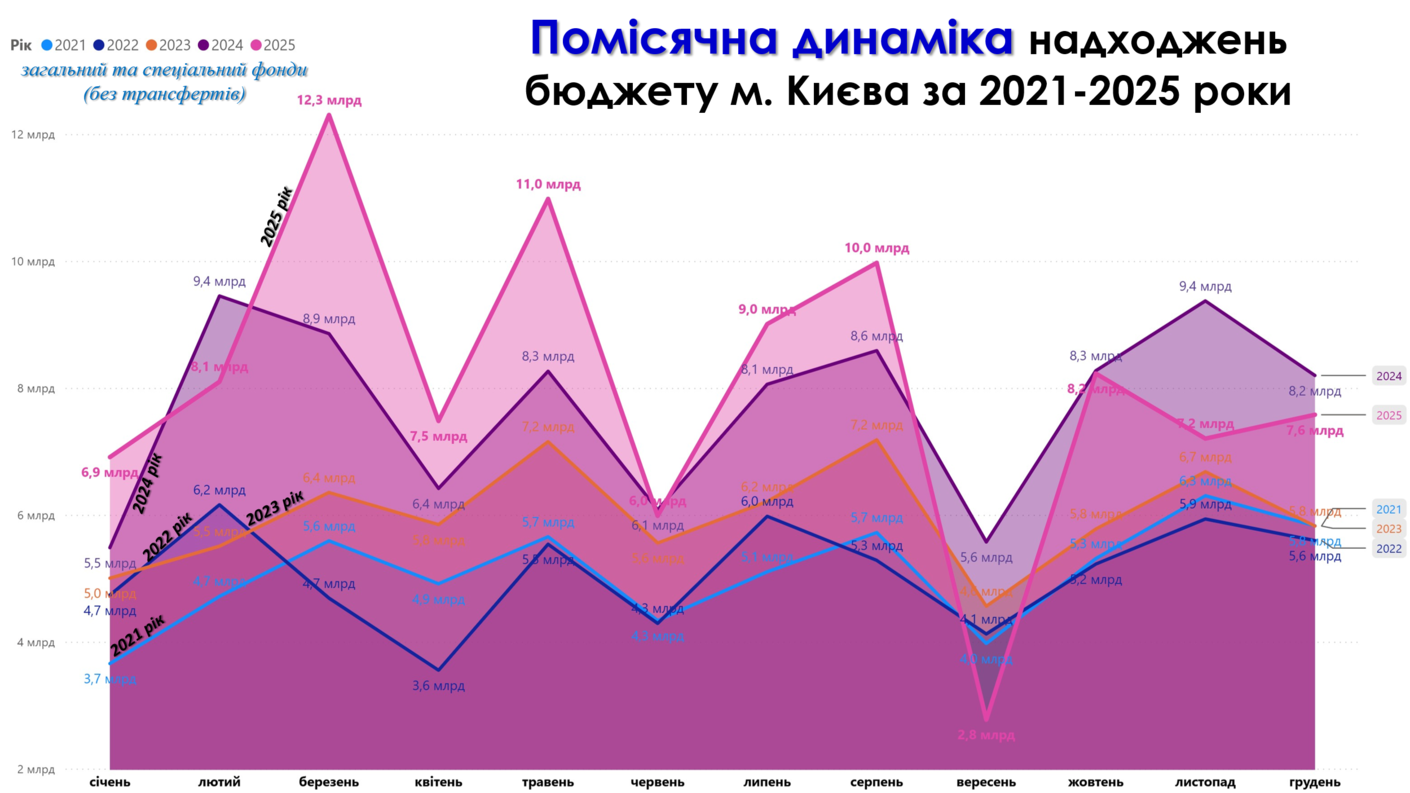
In 2025, the budget of the city of Kyiv retained its status as the most resource-rich among all local budgets of Ukraine and demonstrated outstripping revenue growth rates compared to most territorial communities. The dynamics of its revenues was formed primarily due to the concentration in the capital of sectors of the economy with high added value, a significant part of the financial sector of the state, central offices of large companies, public authorities and international organizations.
The main source of income for the city budget has traditionally been the personal income tax. It was he who provided a decisive contribution to the growth of Kyiv's revenues in 2025. The growth of this tax was formed due to an increase in the level of remuneration in the financial sector, the IT industry, public administration and the corporate segment of large companies, which are mainly concentrated in the capital. A high share of employees with medium and high incomes formed a stable revenue base of the city budget even in wartime.
A significant factor in the growth of budget revenues in Kyiv in 2024-2025 was the income tax revenues of banking institutions. If in pre-war 2021 they amounted to only about UAH 0.8 billion, and in 2023 – UAH 1.3 billion, then in 2024 they increased sharply to UAH 9.7 billion, that is, they increased more than 12 times compared to the pre-war level and more than 7 times compared to 2023. Even in 2025, after a partial decline, they remained at a high level – UAH 5.4 billion, which was about 7 times higher than before the war growth compared to most other territorial communities.
A significant component of revenues remained the single tax, which reflected the relatively high level of economic activity of small and medium-sized businesses in the city even during the war. Kyiv traditionally had the largest concentration of business entities among all territorial communities in the country, which ensured the stability of this source of revenue.
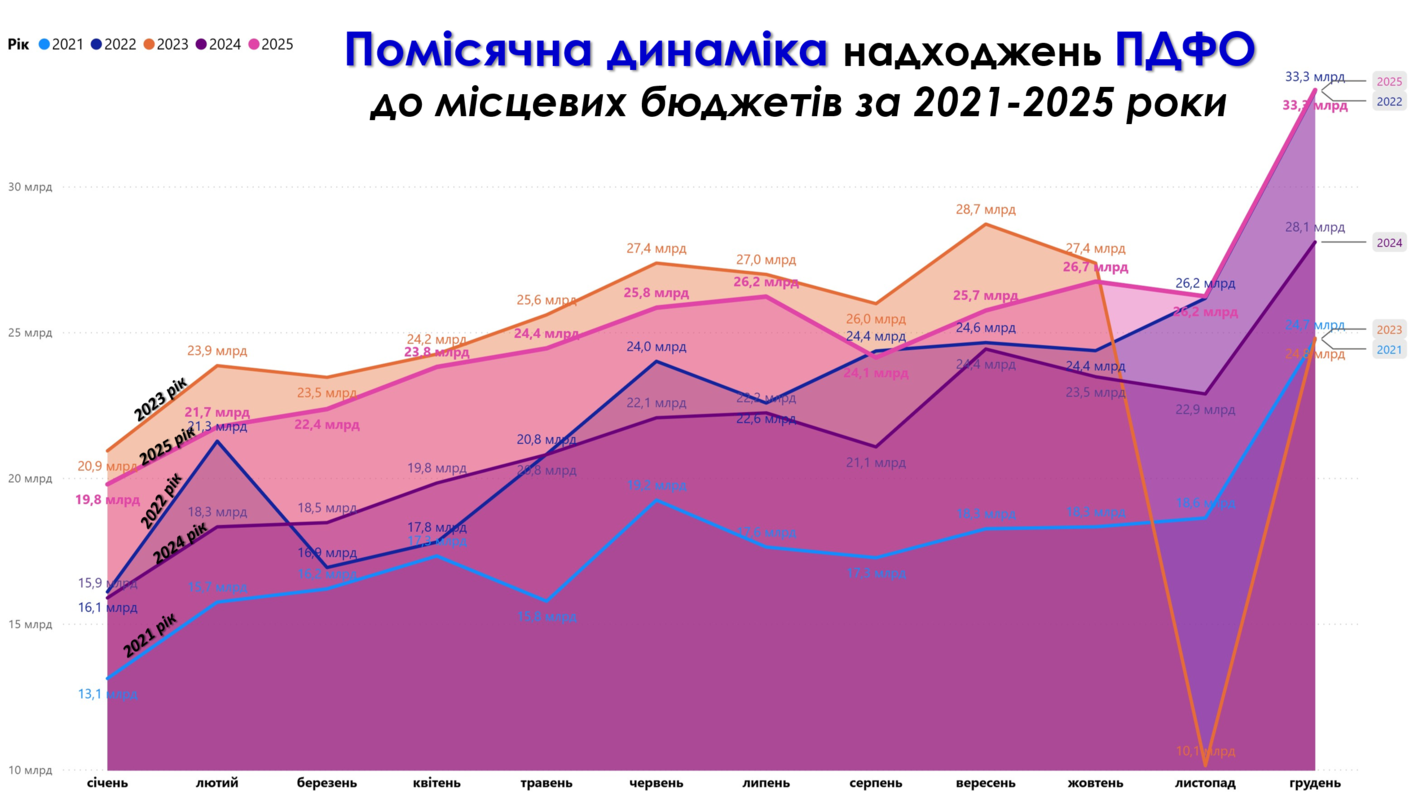
Personal income tax in 2021-2025 remained the main source of local budget revenues and provided more than half of the revenues of the general fund of communities. Monthly dynamics indicated a gradual increase in revenues throughout the entire period: if in 2021 they fluctuated mainly in the range of UAH 13-19 billion per month, then in 2024 they already amounted to UAH 18-28 billion, and in 2025 they reached UAH 20-33 billion, which meant an increase of about 1.6-2 times compared to the pre-war level. , which led to a sharp drop in revenues in November 2023. This explains the abnormal drawdown of indicators at the end of 2023 and the subsequent recovery of growth in 2024-2025, mainly due to the expansion of the payroll in the civilian sector of the economy, indexation of wages, and the development of the Diia sector. City and the gradual adaptation of the labor market to the conditions of the war economy. Thus, despite the loss of one of the most dynamic components of personal income tax in 2023, this tax retained its role as a key stabilizing source of local budget revenues and remained the basis for the financial stability of territorial communities in 2024-2025.
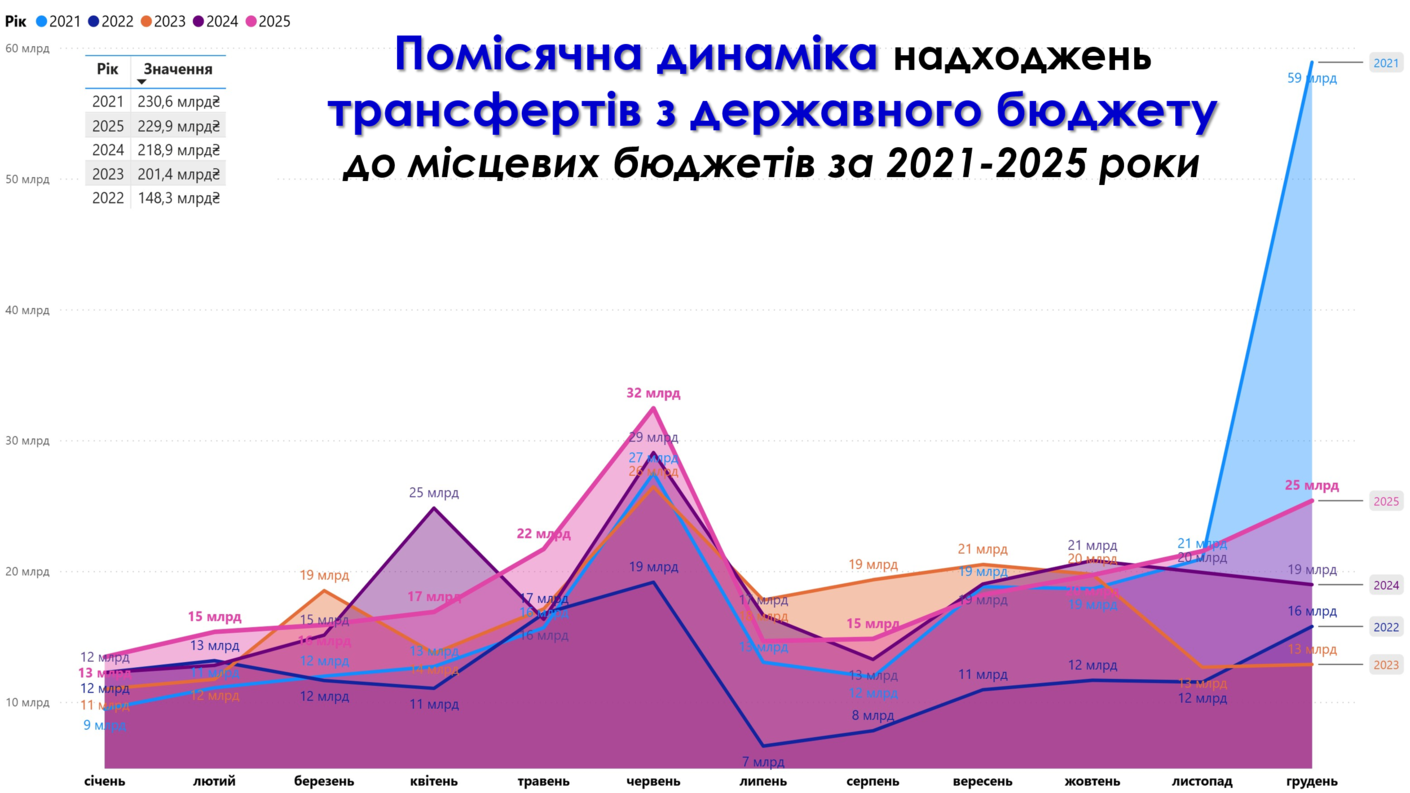
Transfers from the state budget in 2021-2025 remained a significant source of local budget resources, but their dynamics clearly reflected the change in the role of the state in financing the delegated powers of communities during the war period. As well as a certain dependence on the state. In pre-war 2021, the volume of transfers amounted to UAH 230.6 billion, after which in 2022 it sharply decreased to UAH 148.3 billion, or by almost 36%, which was due to the redistribution of state resources for defense needs and a revision of approaches to financing certain state programs. Subsequently, in 2023, the volume of transfers gradually recovered to UAH 201.4 billion, and in 2024 it increased to UAH 218.9 billion, which reflected the adaptation of interbudgetary relations to the conditions of the war economy and the stabilization of financing of basic social services. At the end of 2025, transfers amounted to UAH 229.9 billion, actually approaching the pre-war level, although their structure remained significantly changed.
The monthly dynamics of transfer receipts during the analyzed period showed a characteristic seasonality, primarily related to the schedules for the transfer of educational subventions, additional subsidies for the maintenance of educational and health care institutions, as well as other targeted social subventions. Traditionally, the largest volumes fell on June, when additional transfers were made based on the results of clarification of state budget indicators, as well as at the end of the year – the period of completion of budget calculations and additional financing of individual programs. At the same time, the sharp peak value of December 2021 (about UAH 59 billion) remained atypical for subsequent years and was explained by a significant amount of subvention for the difference in tariffs.
After 2022, the structure of transfers became more concentrated around the financing of protected areas – primarily the remuneration of teachers through an educational subvention, support for the functioning of basic social services and separate compensation mechanisms for communities that suffered losses due to hostilities. At the same time, the share of investment subventions has significantly decreased compared to the pre-war period, which reflected the change in the priorities of the state budget policy from development to ensuring the sustainability of the functioning of territories.
But it is worth noting that the share of subsidies has increased, and not sucbvention, which has increased the flexibility of using cats. After all, subsidies do not have a targeted purpose, unlike subsidies.
Thus, in 2023-2025, transfers from the state budget performed a stabilization function of supporting communities, while the role of local budgets' own revenues in the formation of their financial capacity gradually increased even in wartime.
At the same time, in the structure of interbudgetary transfers in 2023-2025, there was a noticeable increase in the role of subsidies, not subventions, which indicates a change in state policy approaches to financial support for local budgets under martial law. If in 2021 the volume of subsidies amounted to only UAH 22.8 billion, then in 2023 it increased to UAH 50.3 billion, that is, more than 2.2 times, and in 2024 it reached UAH 53.1 billion. In 2025, their volume remained at a high level – UAH 49.6 billion, which is more than twice the pre-war figure. At the same time, the volume of subventions from the state budget to local budgets during this period changed more restrainedly: from UAH 127.2 billion in 2021 to UAH 136.5 billion in 2025, with a significant failure in 2023 to UAH 98.3 billion.
As a result, the share of subsidies in the structure of transfers has increased significantly: if in 2021 it amounted to about 15% of transfers from the state budget, then in 2023-2025 it already fluctuated at the level of 27-30%, which means that their role in the financial provision of local budgets has actually doubled. Such a transformation of the structure of transfers is of fundamental importance, since subsidies, unlike subventions, do not have a designated purpose, which increases the flexibility of budget resources management at the local level and allows for a faster response to changes in the needs of communities during the war period.
Especially indicative is the sharp increase in the number of subsidies of additional subsidies for the exercise of powers of local self-government bodies in the de-occupied, temporarily occupied and other territories that have been negatively affected by armed aggression. It was this instrument that became one of the key mechanisms for supporting the financial capacity of territorial communities during the war and partially compensated for the loss of the revenue base of local budgets.
Thus, the increase in the share of subsidies in the overall structure of transfers indicates a gradual transition from the financing model through strictly targeted subvention programs to more flexible stabilization mechanisms to support local budgets, which allowed local self-government bodies to more effectively ensure the implementation of powers in conditions of high uncertainty and a changing budget situation during the war period.
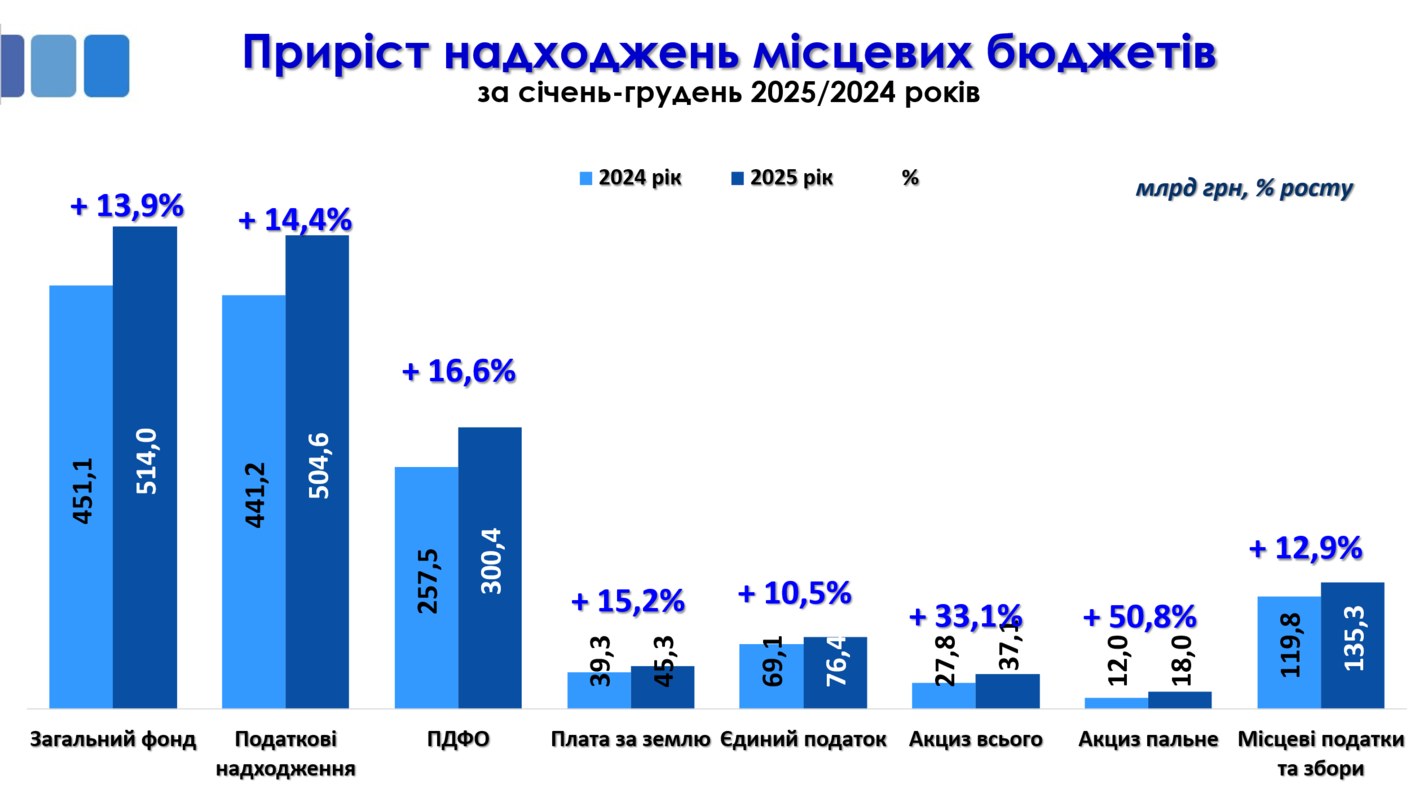
In 2025, revenues of the general fund of local budgets continued to grow in all major budget-forming sources. Compared to 2024, their volume increased by 13.9%, and tax revenues increased by 14.4%. single tax (+10.5%) and local taxes and fees in general (+12.9%). The highest growth rates were recorded for excise tax (+33.1% or +UAH 9.3 billion), in particular due to the excise tax on fuel, which provided an additional UAH 6.0 billion in revenues in 2025 (+50.8%).
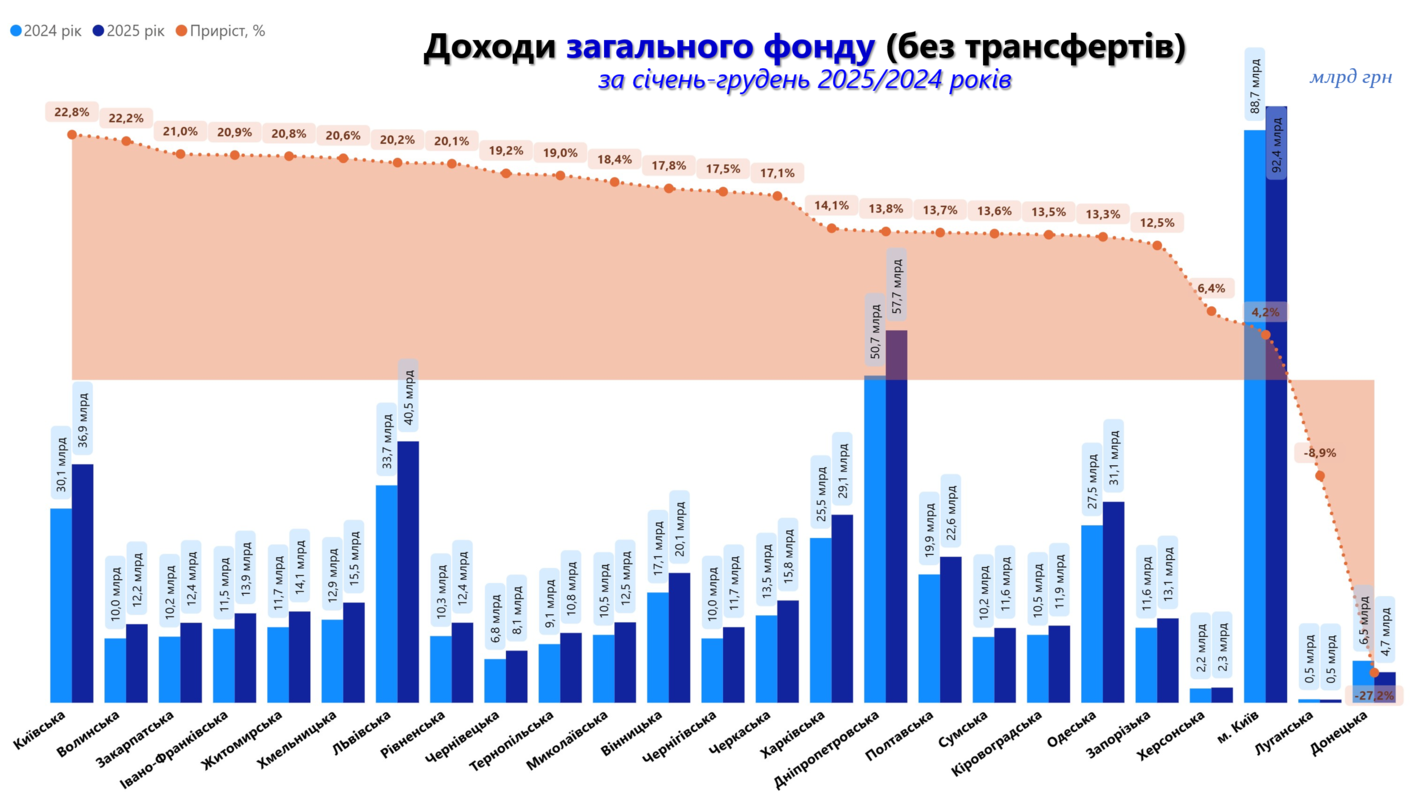
In 2025, revenues of the general fund of local budgets (excluding transfers) increased in most regions of Ukraine, but the pace of this growth remained uneven. The highest positive dynamics were demonstrated by regions with relatively stable economic activity and employment growth – in particular, Kyiv (+22.8%)), Volyn (+22.2%), Zakarpattia (+21.0%), Ivano-Frankivsk (+20.9%) and Zhytomyr (+20.8%) At the same time, in the financially largest budgets, the growth was more moderate: in particular, in Kyiv +4.2%, which is explained by the high base of comparison of the previous year and structural changes in the revenue base in wartime. Negative dynamics was recorded in some frontline regions, primarily in Donetsk (-27.2%) and Luhansk (-8.9%) regions, which is directly related to the security situation and the reduction of economic activity in these territories.
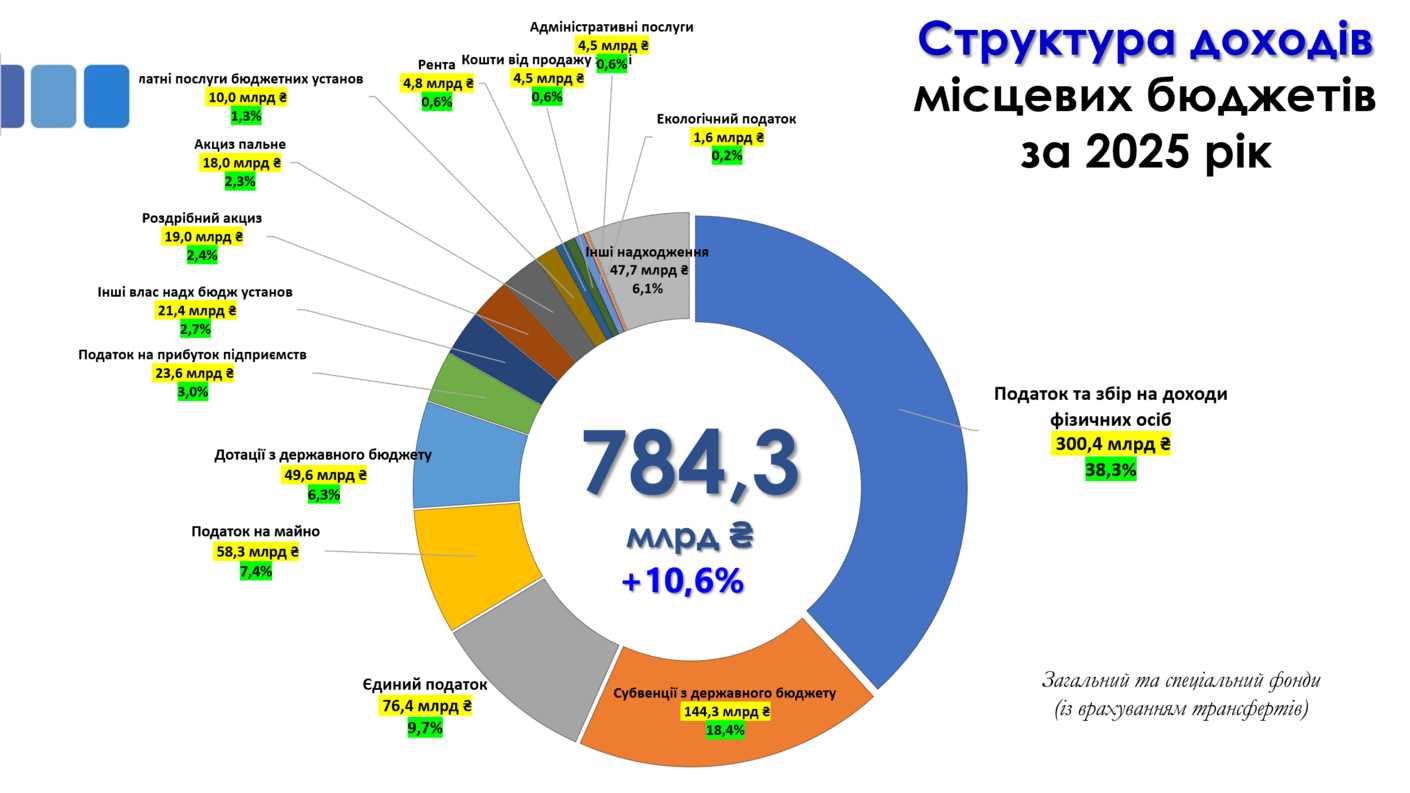
In 2025, the total volume of local budget revenues (including transfers) amounted to UAH 784.3 billion, which is 10.6% more than in 2024. The structure of local budget revenues traditionally remains concentrated around several key budget-forming sources, among which the personal income tax plays a decisive role.
The largest share of local budget revenues was provided by the personal income tax and levy – UAH 300.4 billion, or 38.3% of total revenues. This confirms that it is the personal income tax that remains the basis of the financial capacity of territorial communities even after the withdrawal of military personal income tax to the state budget in 2023.
The second largest source is traditionally subventions from the state budget, which amounted to UAH 144.3 billion or 18.4% of local budget revenues. A significant part of these resources is directed to finance the powers delegated by the state in the field of education, social protection and the implementation of certain programs to support territories.
Local taxes play an important role in the formation of communities' own revenue base. In particular, revenues from the single tax amounted to UAH 76.4 billion (9.7%), and property tax revenues amounted to UAH 58.3 billion (7.4%), which indicates a gradual recovery of entrepreneurial activity and the stability of the use of the property base of territorial communities.
The volume of subsidies from the state budget amounted to UAH 49.6 billion (6.3%), performing a stabilization function of supporting local budgets, primarily in the territories negatively affected by hostilities.
Other sources of income had a relatively smaller share but remained important for the formation of the resource base of communities. In particular, the corporate income tax provided UAH 23.6 billion (3.0%), retail excise tax – UAH 19.0 billion (2.4%), excise tax on fuel – UAH 18.0 billion (2.3%), and payment for services of budgetary institutions – UAH 10.0 billion (1.3%).
Thus, the structure of local budget revenues in 2025 demonstrates a combination of two key components of their financial capacity – a stable own revenue base, formed primarily at the expense of personal income tax and local taxes, and state support through the system of interbudgetary transfers, which allows ensuring the implementation of delegated powers in difficult wartime conditions.
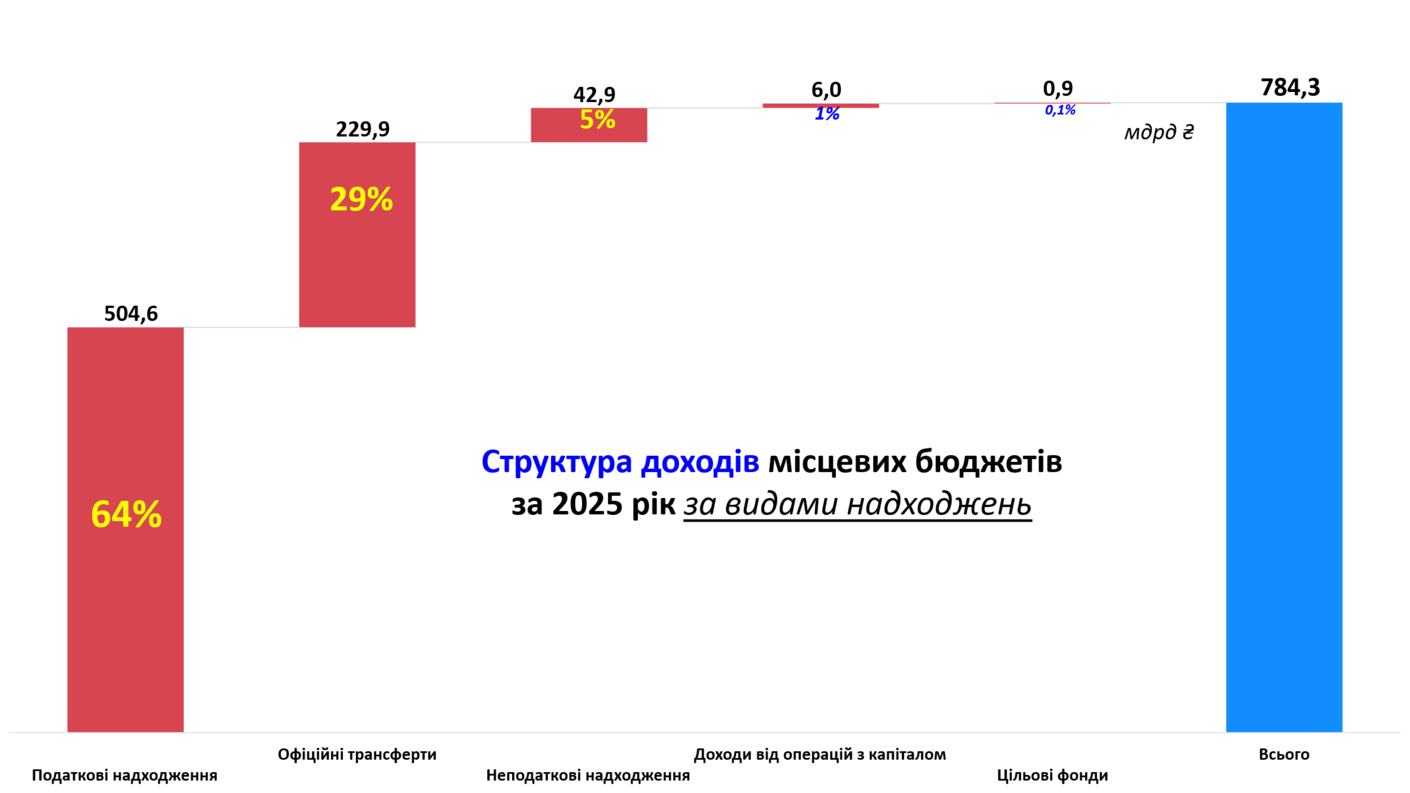
In 2025, the total amount of local budget revenues amounted to UAH 784.3 billion, of which the bulk of tax revenues were UAH 504.6 billion, or 64% of the total resource. This confirms that it is the tax base of territorial communities that remains the key source of their financial viability in wartime.
At the same time, official transfers from the state budget, the volume of which in 2025 amounted to UAH 229.9 billion, or 29% of all revenues, continue to play a significant role in the formation of the resource base of local budgets . Through the transfer mechanism, the state provides funding for delegated powers, primarily in the areas of education, social protection of the population and support for territories that have been negatively affected by hostilities.
Non-tax revenues provided UAH 42.9 billion (5% of local budget revenues) and were formed mainly due to payment for administrative services, revenues from rent for the use of the property complex and other property that is in communal ownership, and other payments at the local level.
The share of income from capital transactions – UAH 6.0 billion (1%) and trust funds – UAH 0.9 billion (0.1%), which are auxiliary in the formation of the financial resource of communities, remained relatively insignificant.
Thus, the structure of local budget revenues in 2025 retains the model characteristic of recent years, in which own tax revenues prevail, while interbudgetary transfers perform the function of financial equalization and ensuring the implementation of state social guarantees at the local level. This indicates a relatively high level of financial autonomy of local self-government even in the context of a war economy.
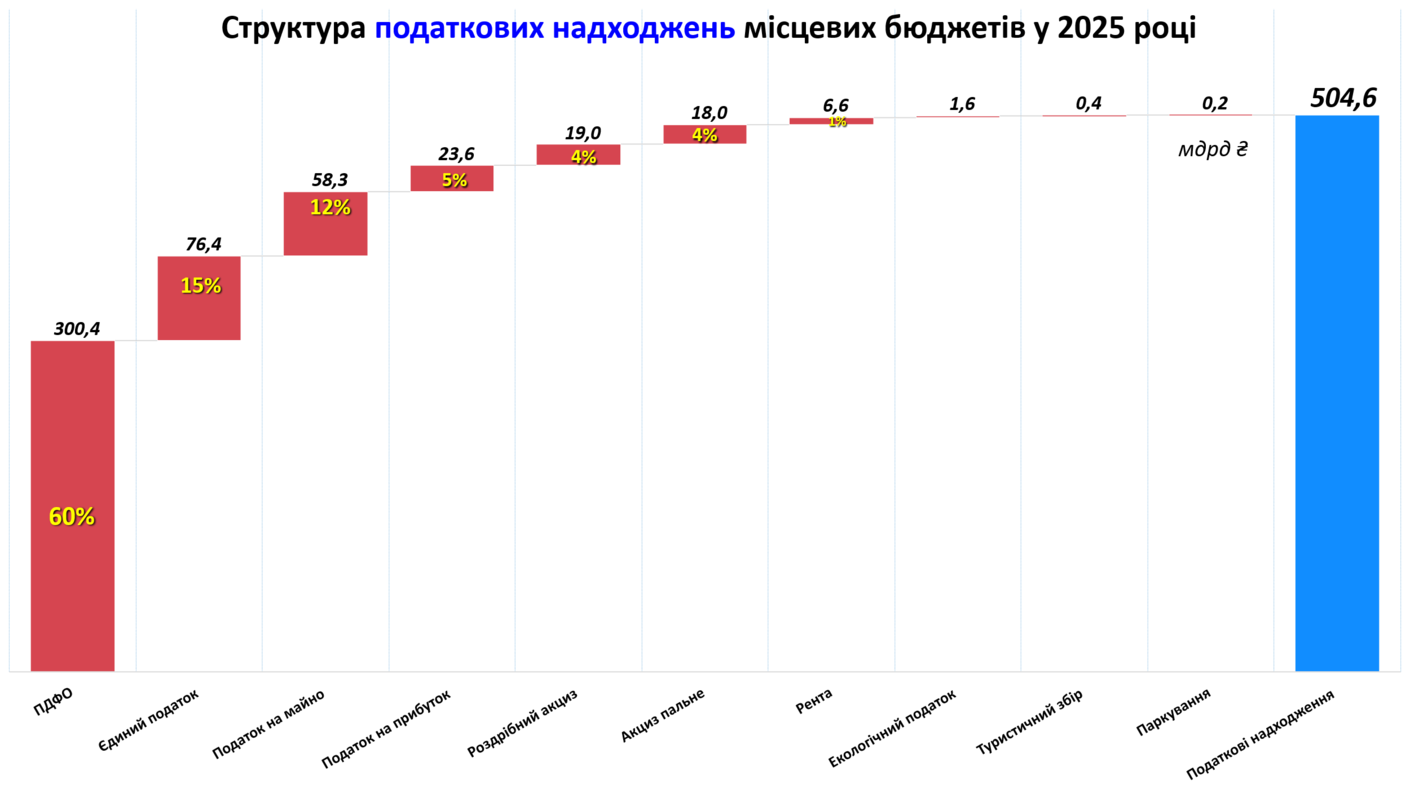
In 2025, tax revenues of local budgets amounted to UAH 504.6 billion and remained the basis of the financial capacity of territorial communities. Their structure is traditionally characterized by a high concentration around the personal income tax, which provided UAH 300.4 billion, or about 60% of all tax revenues of local budgets.
The second most important source of income is the single tax, revenues from which amounted to UAH 76.4 billion (15%), which confirms the significant role of small and medium-sized businesses in the formation of the revenue base of communities. At the same time, the property tax provided UAH 58.3 billion (12%), remaining one of the key stable sources of local budgets due to its territorial attachment and predictability of revenues.
Payments related to the activities of enterprises and the consumption of goods are also of significant importance in the structure of tax revenues. In particular, corporate income tax provided UAH 23.6 billion (5%), retail excise tax (alcohol and tobacco products) – UAH 19.0 billion (4%), and excise tax on fuel – UAH 18.0 billion (4%)), which together forms an important component of the financial resource of territorial communities.
Other tax revenues had a relatively smaller share in the overall structure. In particular, the rent amounted to UAH 6.6 billion (1%), the environmental tax – UAH 1.6 billion, the tourist tax – UAH 0.4 billion, and the parking fee – UAH 0.2 billion, playing an auxiliary role in the formation of local budget revenues.
Thus, the structure of tax revenues of local budgets in 2025 confirms the preservation of their high dependence on personal income tax revenues, while demonstrating the significant contribution of local taxes and payments, which are formed directly at the level of territorial communities and reflect the level of economic activity at the local level.
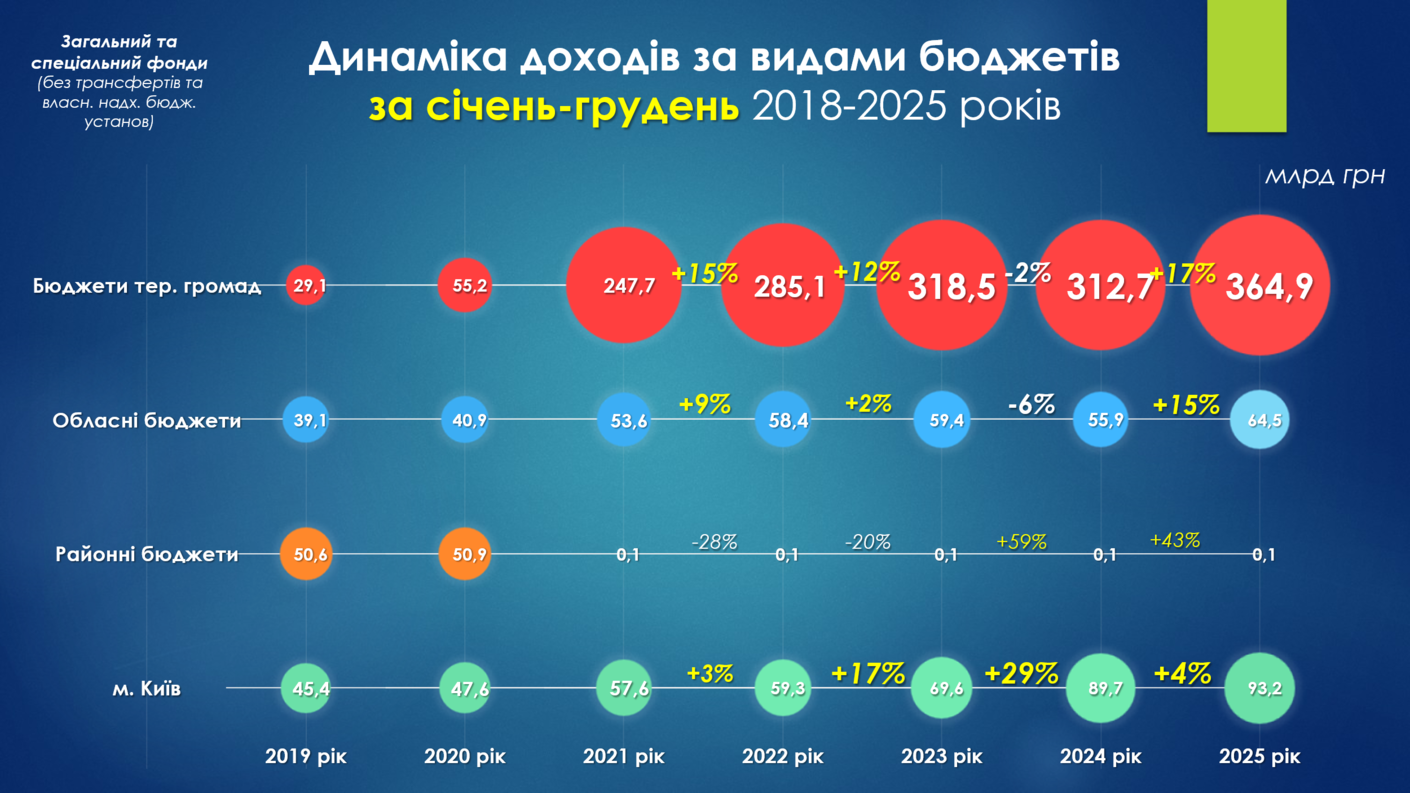
The dynamics of local budget revenues in recent years clearly demonstrates structural changes in the system of inter-budgetary relations resulting from the implementation of the decentralization reform. The most noticeable growth is observed in the budgets of territorial communities, which today form the basis of the financial capacity of local self-government.
If in 2019 the revenues of the budgets of territorial communities amounted to only UAH 29.1 billion, then in 2021 they increased to UAH 247.7 billion, and in 2025 – to UAH 364.9 billion. This dynamics became possible due to the assignment of stable sources of income to communities, primarily the share of personal income tax, as well as the expansion of their budgetary powers after the completion of the administrative-territorial reform of the basic level.
Even under martial law, the budgets of territorial communities maintain positive growth dynamics. In particular, in 2025, their revenues increased by another 17% compared to the previous year, which indicates the resilience of the established model of financial decentralization and its adaptability to crisis conditions.
At the same time, regional budget revenues show a more moderate growth trend – from UAH 39.1 billion in 2019 to UAH 64.5 billion in 2025, which corresponds to their functional role in the budget system after the transfer of a significant part of resources and powers to the level of territorial communities.
On the other hand, after the reform of the administrative-territorial structure, district budgets actually lost their own revenue base: their revenues decreased from more than UAH 50 billion in 2019 to a symbolic level of about UAH 0.1 billion in the following years. This reflects a change in their role in the public finance system.
Separately, it is worth noting the stable positive dynamics of budget revenues of the city of Kyiv, which increased from UAH 45.4 billion in 2019 to UAH 93.2 billion in 2025. This growth is due to both the concentration of economic activity in the capital and the receipt of income tax and personal income tax.
Thus, the above dynamics confirms that it is the budgets of territorial communities that have become the key beneficiaries of the decentralization reform and today play a central role in ensuring the financial capacity of local self-government in Ukraine.
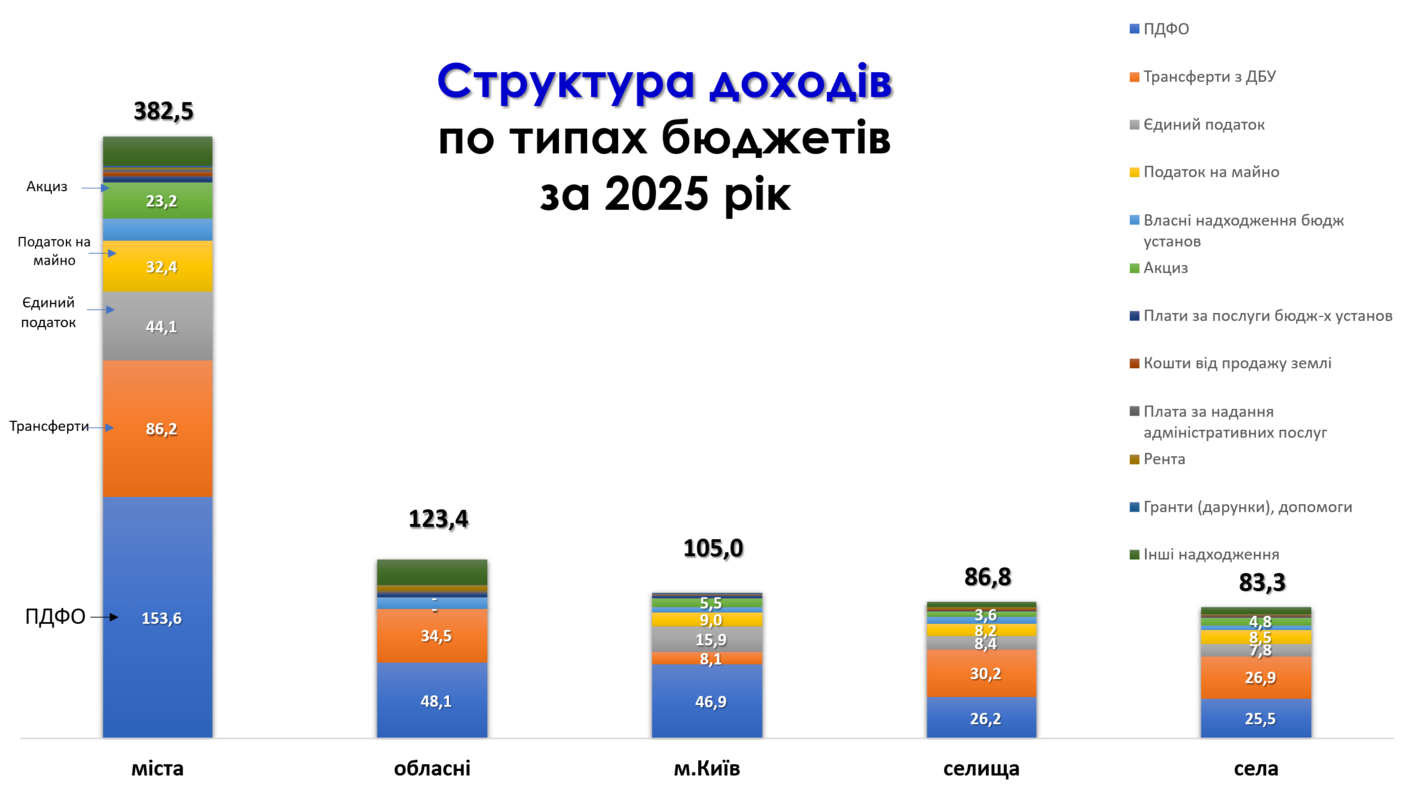
The structure of local budget revenues in 2025 differs significantly depending on the type of budget, which reflects the different level of economic activity of the territories, the tax base and the functional role of each level of local self-government in the budget system.
The largest amount of revenues is traditionally formed in the budgets of cities, which in 2025 accumulated UAH 382.5 billion. The main source of their revenues is the personal income tax – UAH 153.6 billion, which confirms the concentration of employment and economic activity in urban communities. Transfers from the state budget (UAH 86.2 billion) and the single tax (UAH 44.1 billion also play a significant role) and property tax (UAH 32.4 billion), which together form a stable financial basis for the functioning of urban infrastructure and the social sphere.
Revenues of regional budgets amounted to UAH 123.4 billion, while their structure remains more dependent on transfers from the state budget (UAH 34.5 billion) compared to the budgets of the basic level. At the same time, a significant part of the resources is formed by the personal income tax (UAH 48.1 billion).
A special place in the structure of revenues is occupied by the budget of the city of Kyiv, whose revenues in 2025 amounted to UAH 105.0 billion. The main source of its formation is also the personal income tax (UAH 46.9 billion), at the same time, a significant role is played by the property tax (UAH 9.0 billion) and the single tax (UAH 15.9 billion), which reflects the high level of economic concentration in the capital.
Revenues of the budgets of settlement communities amounted to UAH 86.8 billion, and rural communities – UAH 83.3 billion, while their structure is more balanced between personal income tax (UAH 26.2 billion and UAH 25.5 billion, respectively) and transfers from the state budget (UAH 30.2 billion and UAH 26.9 billion respectively). This indicates that the important role of state support in ensuring the financial viability of communities with a smaller tax base remains.
At the same time, even in the communities of the basic level, the role of their own tax sources of income is gradually increasing, primarily the single tax, property tax and excise tax, which is one of the key results of the financial decentralization reform and forms the basis of their budgetary independence.
Thus, the above structure confirms that after the completion of the reform of the administrative-territorial structure, it was the budgets of territorial communities that became the central element of the local finance system, while the regional level retains a coordinating role in the implementation of regional policy.
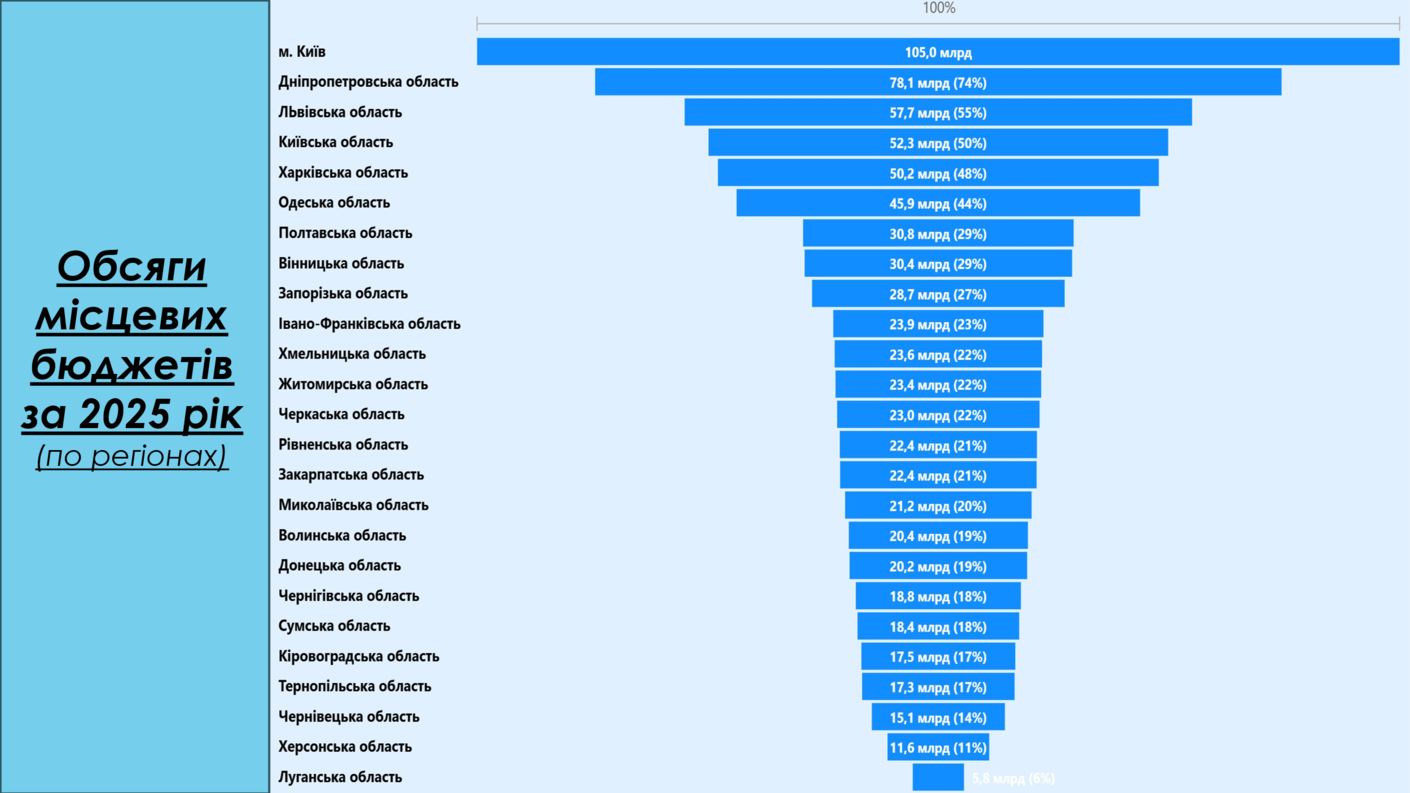
It should be noted that the volume of local budget revenues in 2025 in the regional context demonstrates a significant territorial differentiation of the financial capacity of the regions of Ukraine, which is due to differences in the level of economic activity, population, employment structure and the impact of security factors.
The largest amount of revenues is traditionally formed in Kyiv – UAH 105.0 billion, which is a benchmark of 100% in the presented comparison. This result is explained by the high concentration of business, jobs, administrative functions of the state and, accordingly, significant personal income tax revenues.
Among the regions, the leader is the Dnipropetrovsk region – UAH 78.1 billion (74% of the capital). The region's high positions are explained by significant industrial potential, a developed labor market and a large number of territorial communities with a strong tax base. The group of regions with the largest revenues of local budgets also includes Lviv (UAH 57.7 billion), Kyiv (UAH 52.3 billion), Kharkiv (UAH 50.2 billion) and Odesa regions (UAH 45.9 billion).
These regions form the core of economically active territories of the state, where the factors of urbanization, logistics potential, entrepreneurship development and concentration of labor resources are combined.
The average level of local budget revenues is typical for the regions of the central part of Ukraine. In particular, Poltava and Vinnytsia regions generated more than UAH 30 billion in revenues, and Zaporizhzhia region – UAH 28.7 billion, which indicates a relatively stable tax base even in conditions of proximity to the war zone.
For most regions of the western and central regions, revenues are in the range of UAH 20-25 billion, in particular, Ivano-Frankivsk, Khmelnytskyi, Zhytomyr, Cherkasy, Rivne and Zakarpattia regions. This level is typical for regions with a moderate industrial base and a significant share of small businesses in the structure of the economy.
At the same time, lower income indicators are observed in the frontline and partially occupied regions. In particular, local budget revenues amounted to UAH 11.6 billion in the Kherson region and only UAH 5.8 billion in the Luhansk region, which directly reflects the consequences of the temporary occupation of territories, loss of economic potential and reduction of the tax base.
In general, the regional structure of local budget revenues in 2025 confirms that the financial capacity of territories is formed primarily due to the economic activity of communities, the level of urbanization and the stability of local conditions. At the same time, even under martial law, most regions maintain a stable revenue base, which indicates the adaptability of the local finance system formed as a result of the decentralization reform.
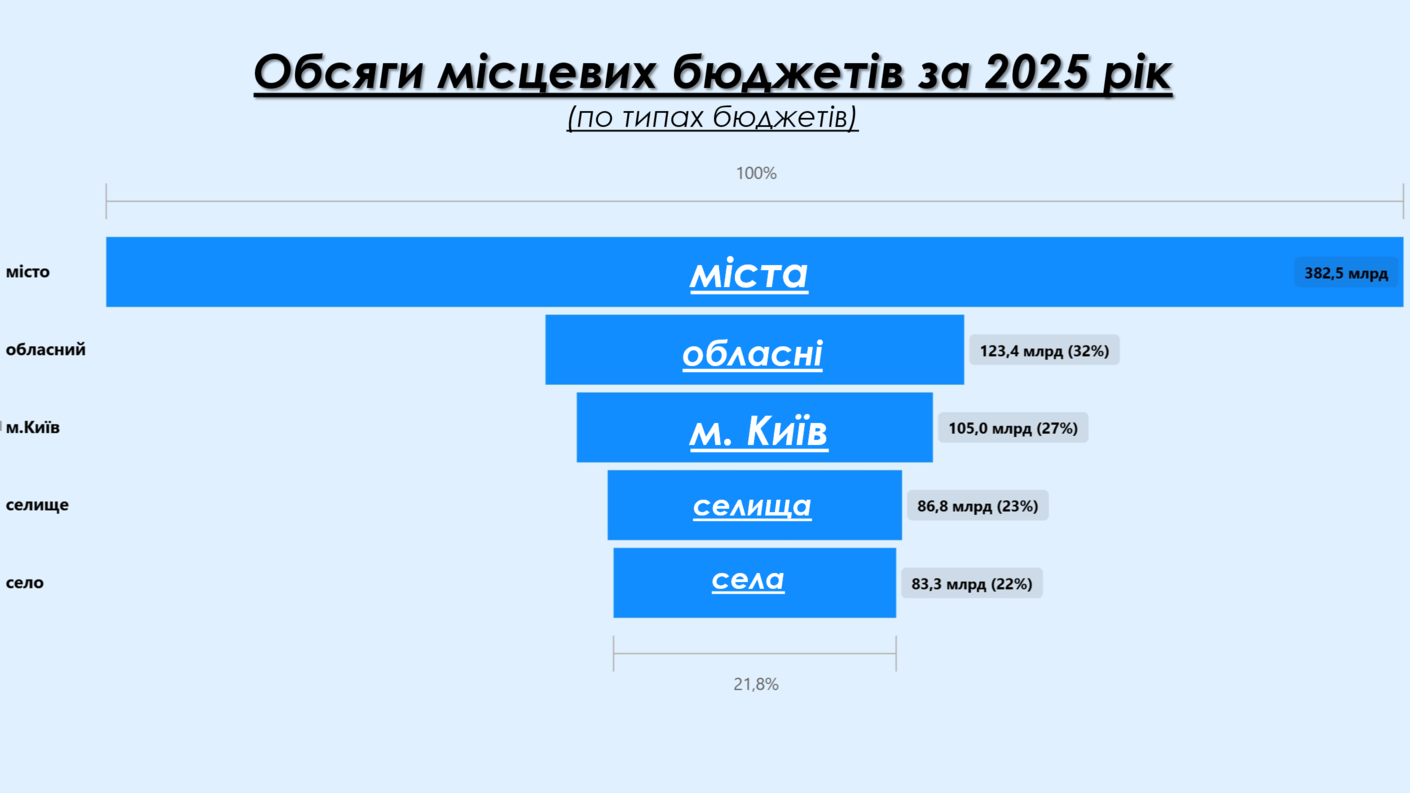
In 2025, the main financial resource of local self-government was traditionally concentrated in the budgets of territorial communities at the basic level. The largest amounts of revenues were formed by city budgets – UAH 382.5 billion, which confirms their key role in the system of local finance and the high concentration of economic activity in urban communities.
Significant amounts of resources were also accumulated by regional budgets – UAH 123.4 billion, and the budget of the city of Kyiv amounted to UAH 105.0 billion, which together ensures the implementation of regional development programs, financing of the network of institutions and the exercise of powers at the appropriate level of management.
At the same time, a significant share in the structure of local finances is formed by the budgets of settlement communities – UAH 86.8 billion and rural communities – UAH 83.3 billion, which, after the completion of the administrative-territorial reform, received an expanded revenue base and became full-fledged participants in the budget process at the local level.
In general, the above structure confirms that it is the budgets of territorial communities of the basic level – urban, township and rural – that accumulate the vast majority of local government revenues. This is a direct result of the decentralization reform, within which financial resources were as close as possible to the level of public service provision and management decision-making.
It is the budgets of cities that form the largest share of the financial resources of local self-government – their volume in 2025 amounted to UAH 382.5 billion, which exceeds the total revenues of the budgets of settlement and rural communities combined. Such a concentration of resources is primarily due to the high share of personal income tax revenues, the development of entrepreneurial activity, a significant number of employed population and the concentration of economic infrastructure in urban communities.
At the same time, the structure of local budget revenues indicates the need to further strengthen the financial capacity of rural and settlement communities, whose revenue base remains more dependent on transfers from the state budget and less diversified compared to urban communities. In this context, the issue of improving the mechanism for crediting personal income tax, in particular, a gradual transition to the principle of its crediting at the place of residence of the taxpayer, remains relevant. Such an approach would contribute to a fairer distribution of financial resources between communities, strengthen their motivation to develop housing infrastructure and increase the capacity of territories to provide an adequate level of public services for their residents.
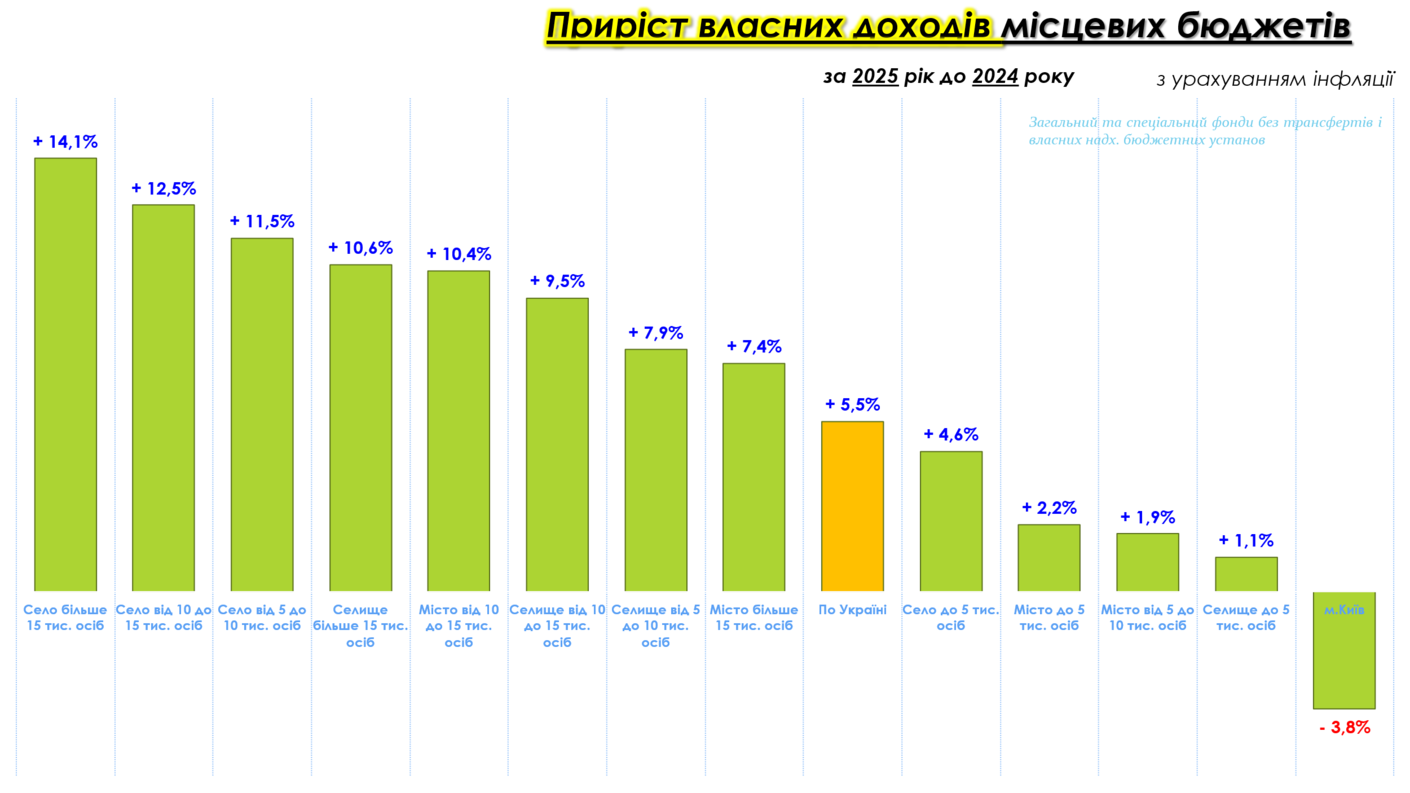
In 2025, own revenues of local budgets (excluding transfers and own revenues of budgetary institutions) showed generally positive growth dynamics – by an average of 5.5% in real terms, taking into account inflation. At the same time, growth rates differed significantly depending on the size of territorial communities.
The highest growth rates of own incomes were recorded in rural communities with a population of more than 15 thousand people +14.1%, as well as in communities with a population of 10 to 15 thousand people +12.5%. High positive dynamics were also demonstrated by medium-sized rural communities (5-10 thousand people) +11.5%, which indicates a gradual strengthening of their tax base and an increase in financial capacity.
Settlement communities also provided stable growth in their own incomes. In particular, communities with a population of more than 15 thousand people showed an increase of +10.6%, and medium-sized communities of about +9.5%, which is higher than the average for Ukraine.
Separately, it is worth noting that in the city of Kyiv, own revenues in 2025 decreased by 3.8% in real terms, which is explained by a high base of comparison of previous years, structural changes in individual tax revenues and the impact of wartime macroeconomic factors.
In general, the above dynamics confirms the trend towards a gradual strengthening of the financial capacity of communities of the basic level, primarily rural and settlement territorial communities. This is one of the important results of the financial decentralization reform, which ensured the expansion of the local government's own revenue base and created preconditions for a more balanced territorial development of the country.
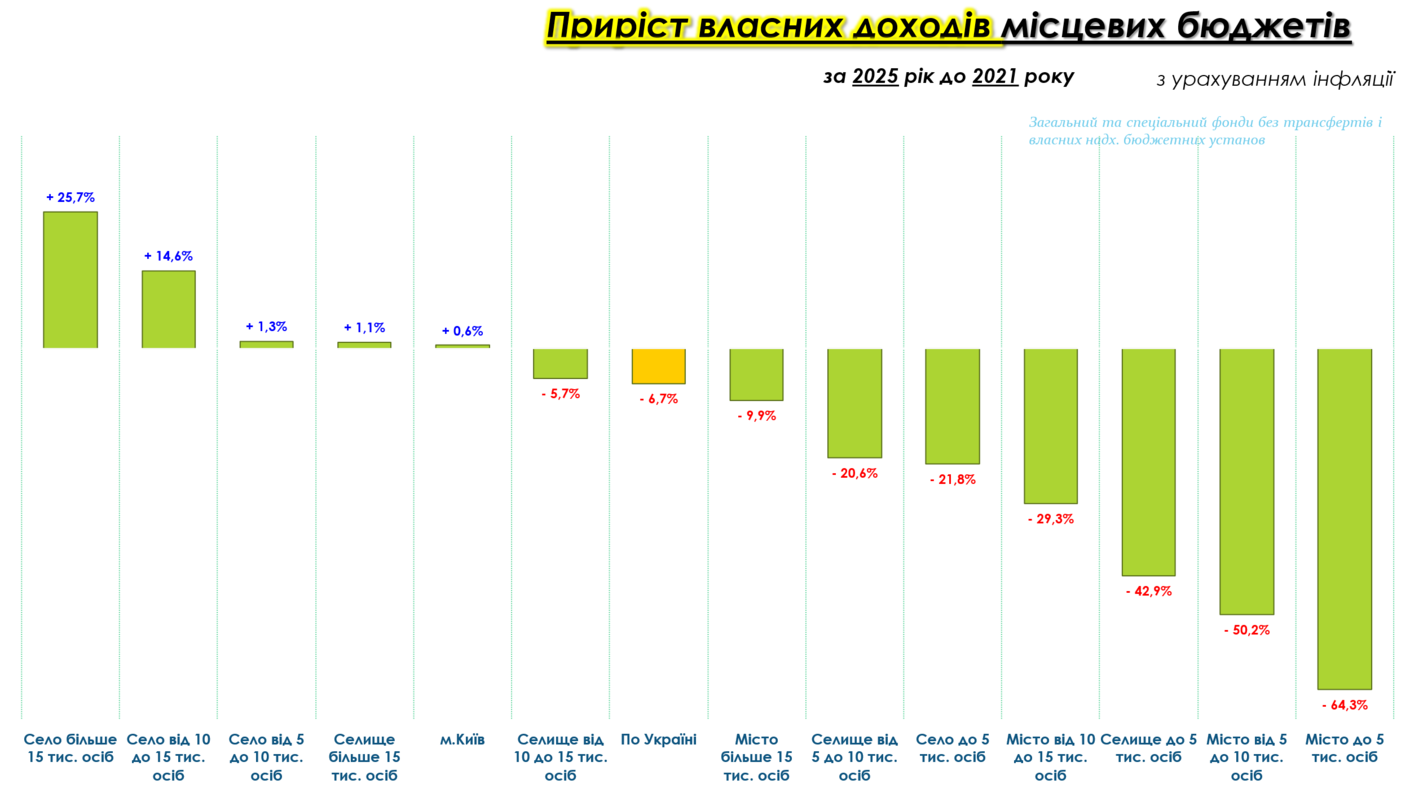
A comparison of the dynamics of local budgets' own revenues in 2025 compared to the pre-war 2021 (in real terms, taking into account inflation) demonstrates significant structural changes in the formation of the revenue base of territorial communities. In general, local budget revenues in Ukraine decreased by 6.7%.
At the same time, the greatest positive dynamics during this period was demonstrated by rural communities with a population of more than 15 thousand people +25.7%, as well as communities with a population of 10 to 15 thousand people +14.6%. Positive growth rates remained in some medium-sized rural and settlement communities, which indicates a gradual expansion of their own tax base even in wartime.
The largest decrease was recorded in small urban communities with a population of up to 5 thousand people. -64.3%, which is explained by the significant dependence of their income on certain sources of personal income tax and the change in the structure of its enrollment during the war period.
A significant reduction in own revenues was also observed in small settlement communities to -42.9%, as well as in some small rural communities of more than -21%, which indicates the uneven impact of military factors on the financial capacity of territories.
At the same time, the budget of the city of Kyiv during this period maintained the relative stability of its own revenue base, demonstrating a slight growth of 0.6%, which confirms the high diversification of its tax revenues and the stability of the capital's economic base even under martial law.
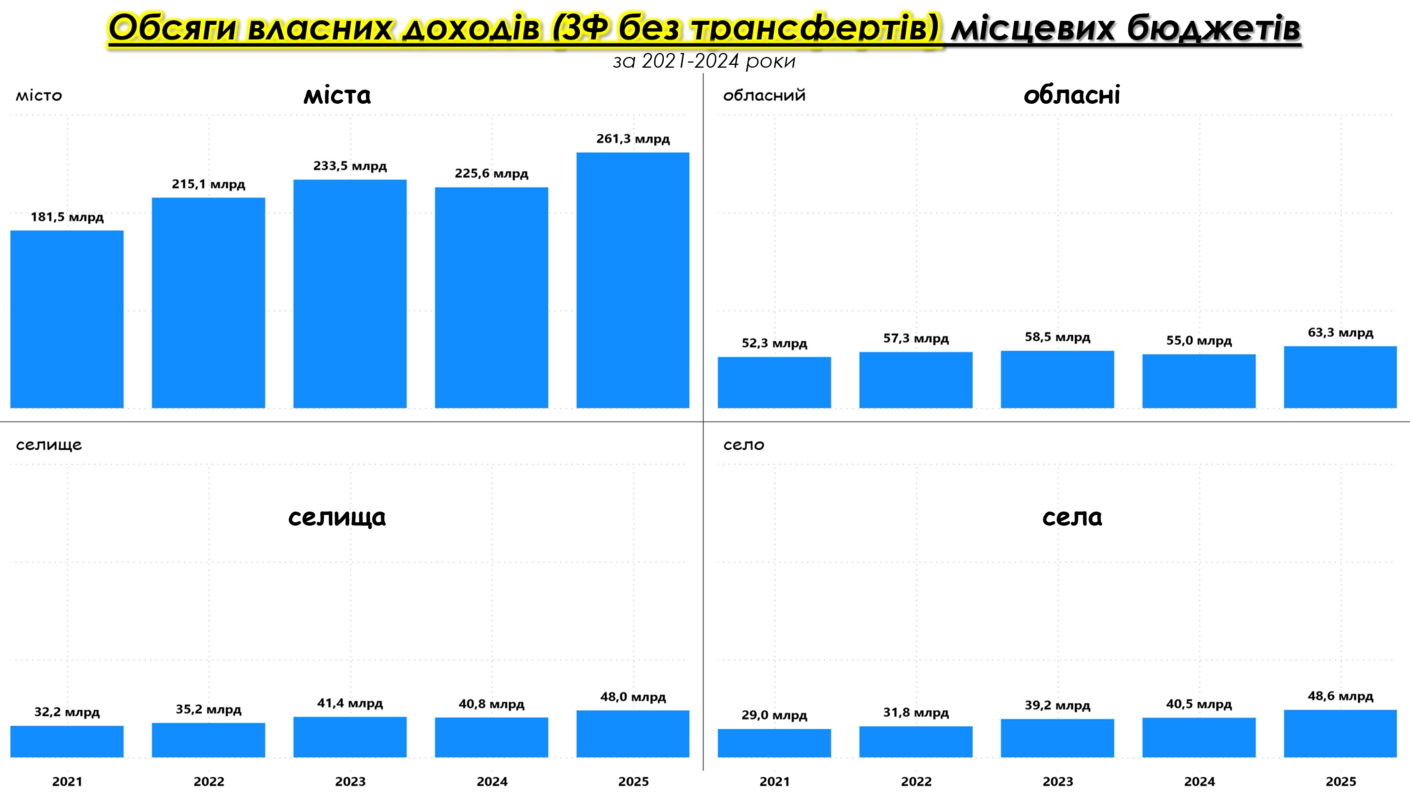
The dynamics of own revenues of local budgets (general fund without transfers) in 2021–2025 demonstrates a generally positive trend of increasing the financial capacity of territorial communities, even under martial law and structural changes in the crediting of certain taxes.
The largest amounts of own revenues are traditionally formed by the budgets of urban communities, which increased from UAH 181.5 billion in 2021 to UAH 261.3 billion in 2025, or by almost UAH 80 billion. Despite a temporary reduction in 2024 associated with the withdrawal of part of personal income tax revenues from the financial support of military personnel, positive growth dynamics was restored in 2025.
Stable growth in their own revenue base was also demonstrated by regional budgets, whose revenues increased from UAH 52.3 billion in 2021 to UAH 63.3 billion in 2025, which confirms their role in financing joint regional programs and the functioning of network institutions.
At the same time, the dynamics of settlement and rural communities, which during this period provided a significant increase in their own revenues, is especially indicative. Thus, the revenues of settlement communities increased from UAH 32.2 billion in 2021 to UAH 48.0 billion in 2025, and rural communities – from UAH 29.0 billion to UAH 48.6 billion, respectively. Thus, it was the baseline level communities that demonstrated the highest growth rates of their own revenue base among all types of local budgets.
In general, the above dynamics confirm that the model of financial support for local self-government formed as a result of the decentralization reform ensures the stability of the revenue base of territorial communities even in wartime conditions and allows them to gradually strengthen their budgetary autonomy.
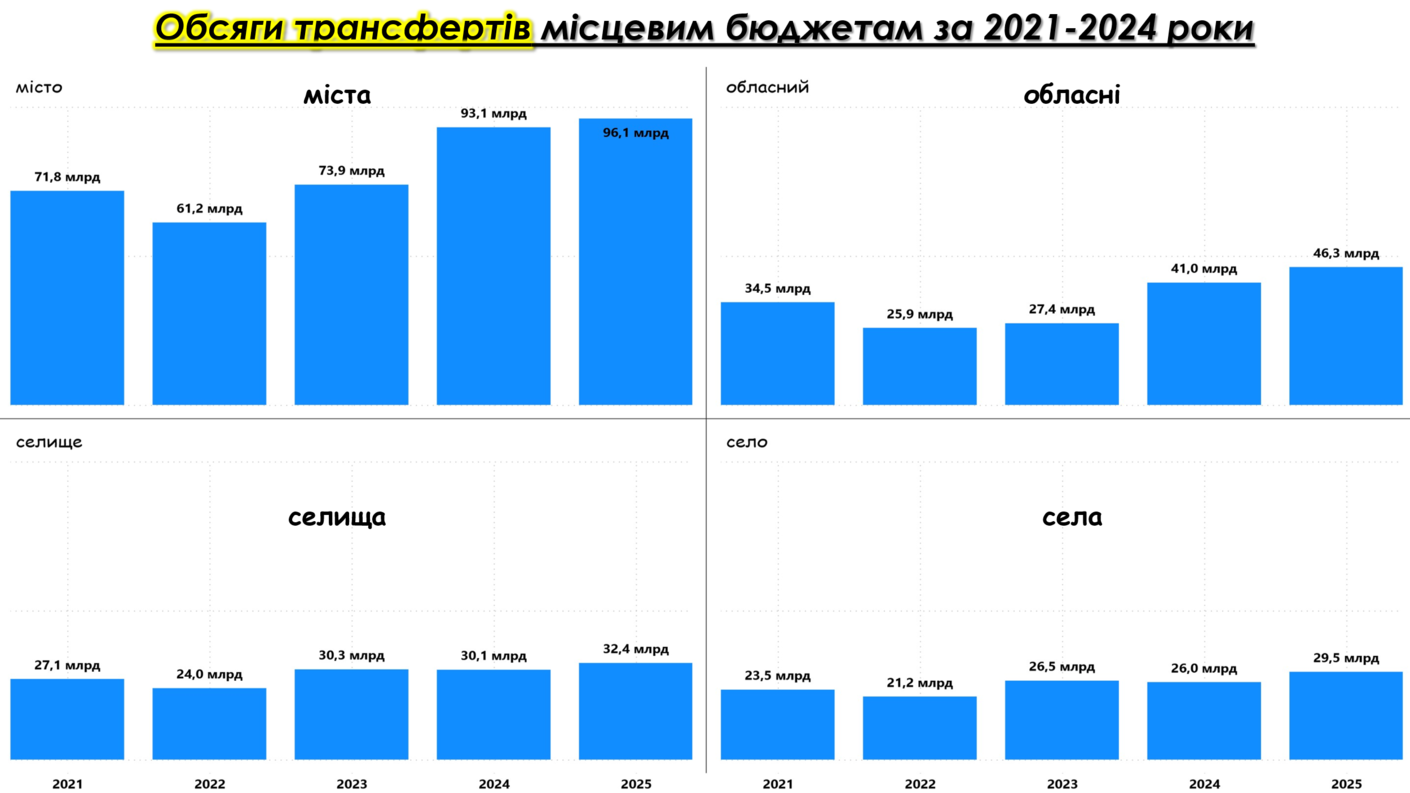
The dynamics of the volume of interbudgetary transfers in 2021–2025 indicates the strengthening of the role of state financial support for local budgets under martial law and structural changes in the system of interbudgetary relations.
The largest volumes of transfers were traditionally directed to the budgets of urban communities, which received UAH 71.8 billion in 2021 and already UAH 96.1 billion in 2025. The growth of transfer support in 2024–2025 is primarily due to the need to ensure stable financing of the powers delegated by the state.
The volume of transfers to regional budgets also increased significantly – from UAH 34.5 billion in 2021 to UAH 46.3 billion in 2025.
Positive dynamics of transfer support is also observed for the budgets of settlement communities, which received UAH 32.4 billion in 2025 compared to UAH 27.1 billion in 2021, as well as rural communities, the volume of transfers of which increased from UAH 23.5 billion to UAH 29.5 billion , respectively. This made it possible to ensure the stability of financing of basic public services in communities with a smaller tax base.
In general, the above dynamics shows that under martial law, interbudgetary transfers remain a significant tool for state support of territorial communities and ensure the implementation of delegated powers by local self-government bodies, while not changing the basic logic of financial decentralization, in which the basis of the financial capacity of communities is formed by their own revenues of local budgets.
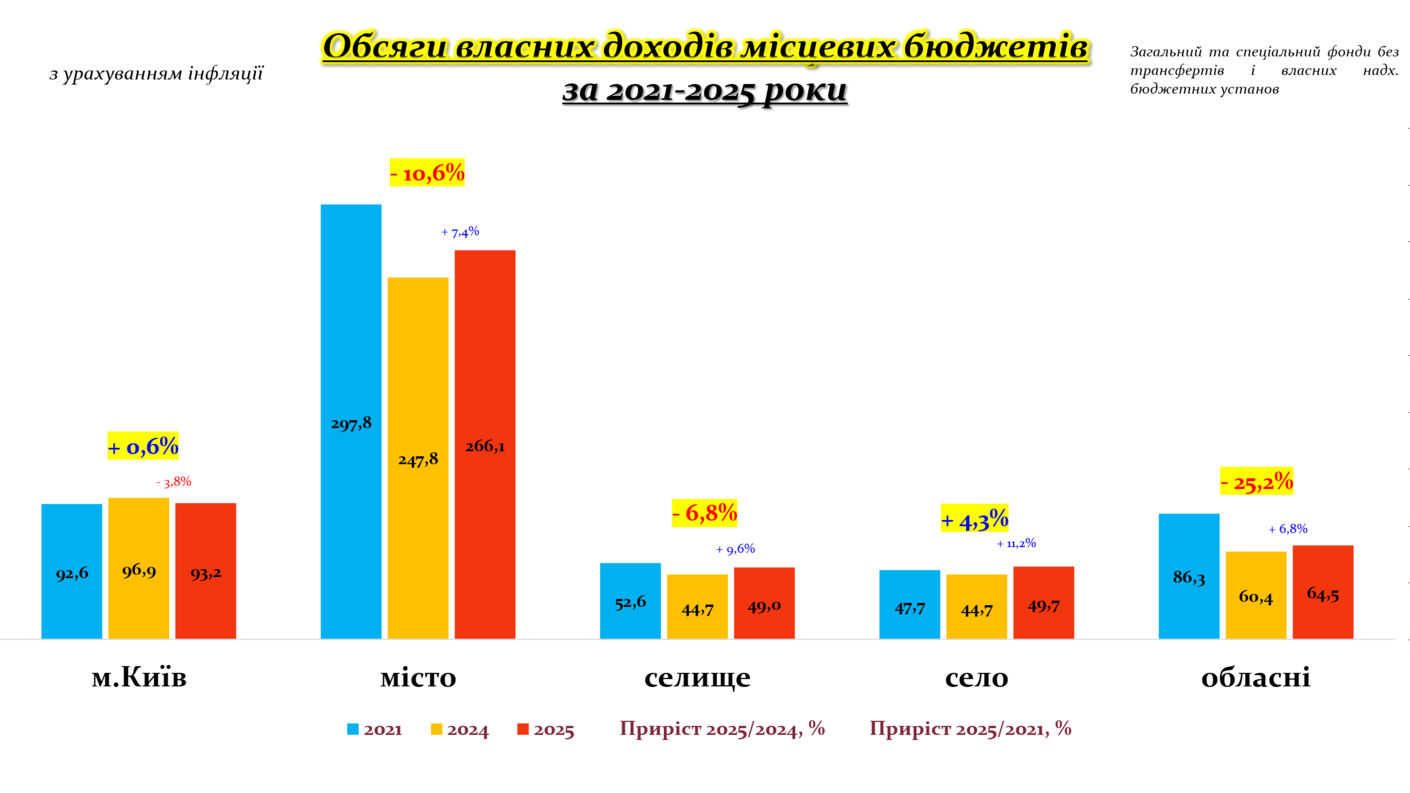
The dynamics of local budgets' own revenues in 2021–2024 (in real terms, taking into account inflation) demonstrates the uneven impact of military factors on different levels of the budget system and changes in the structure of financial resources between types of communities.
The most noticeable reduction in own revenues remains in regional budgets, where their volume in 2025 remains 25.2% lower than in 2021, despite an increase of 6.8% compared to 2024.
Urban communities also have only a partial recovery of their own income base: in 2025, their incomes increased by 7.4% compared to 2024, but remain 10.6% lower than in 2021, which confirms the slower dynamics of restoring the financial potential of large communities.
At the same time, settlement communities showed positive short-term dynamics - an increase in their own incomes by 9.6% compared to 2024, although their volume is still 6.8% lower than the level of 2021.
The most stable dynamics among all types of communities is demonstrated by rural budgets, where in 2025 own revenues increased by 11.2% compared to 2024 and exceeded the level of 2021 by 4.3%, which indicates a gradual strengthening of their income base even in the conditions of war.
The budget of the city of Kyiv generally maintains a stable position: despite a slight reduction of 3.8% compared to 2024, its own revenues remain 0.6% higher than in 2021, which confirms the relatively stable financial base of the capital in the medium term.
In general, the above dynamics show that in 2025, the fastest recovery of their own revenue base occurs in the communities of the basic level, while the budgets of the regional level remain the most sensitive to structural changes in the system of inter-budgetary financial relations and economic activity in wartime.
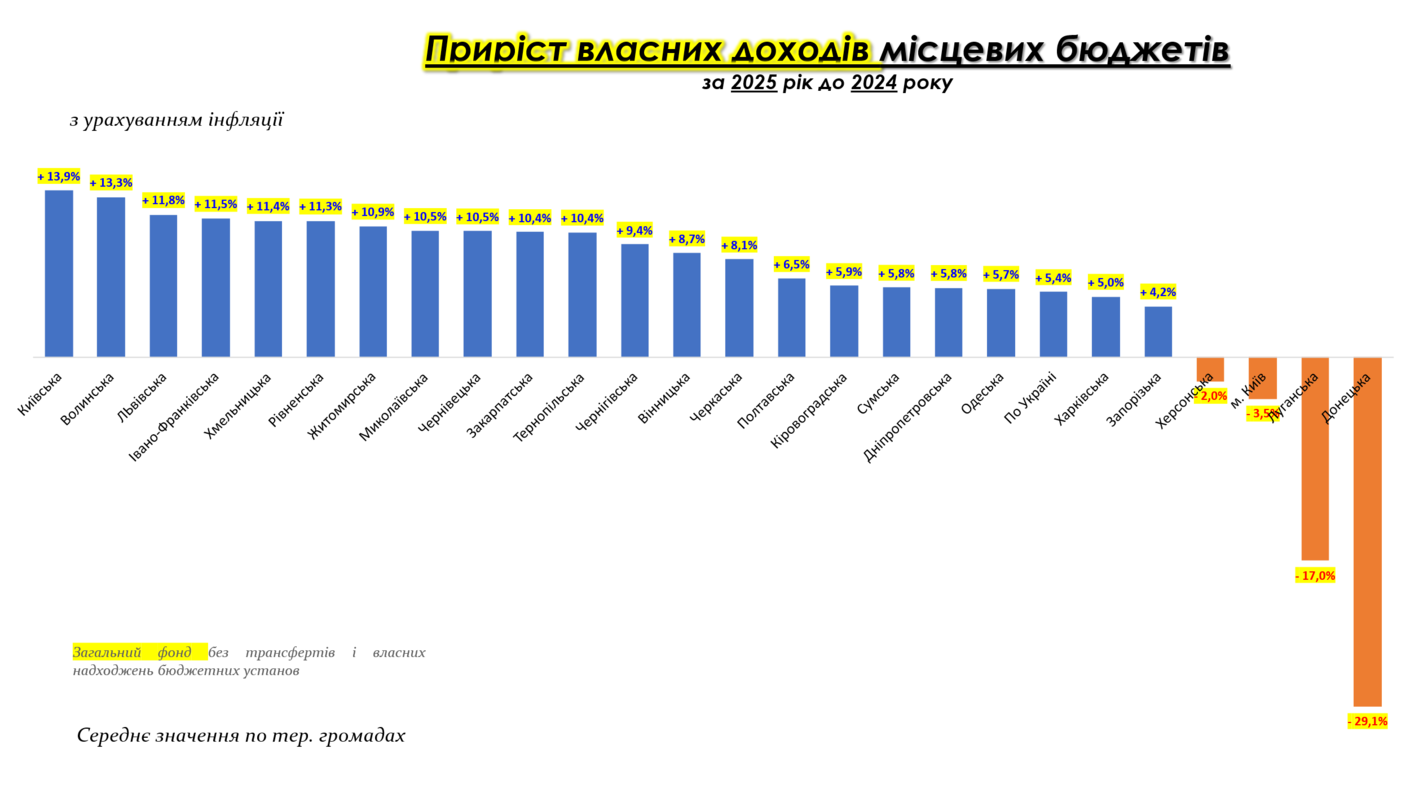
The dynamics of growth in local budget revenues in 2025 compared to 2024 (in real terms, taking into account inflation) indicates a general recovery of the revenue base of territorial communities in most regions of Ukraine, although the pace of such recovery remains uneven.
The highest growth rates of own revenues were recorded in Kyiv and Volyn regions of 13.9% and 13.3%, respectively, as well as in Lviv region (11.8%), Ivano-Frankivsk region (11.5%) and Khmelnytskyi region (11.4%). High growth rates are also demonstrated by Rivne, Zhytomyr, Mykolaiv, Chernivtsi, Zakarpattia and Ternopil regions, where the growth was more than 10%.
In most other regions, the growth rate was in the range of 5-10%, which generally corresponds to the average value for territorial communities of Ukraine at the level of 5.4% and indicates a gradual recovery of their own income base after a reduction in the previous year.
At the same time, negative dynamics remain in some regions. In particular, a decrease in own revenues was observed in the Kherson region (-2.0%), Kyiv (-3.5%), Luhansk region (-17.0%) and Donetsk region (-29.1%), which is due to the consequences of active hostilities, temporary occupation of certain territories and significant restrictions on economic activity.
In general, the regional distribution of growth rates confirms that in 2025 the recovery of local budgets' own revenues is uneven: communities in the western and central regions demonstrate more stable positive dynamics, while in the frontline regions, the revenue base remains the most vulnerable to the impact of war risks.
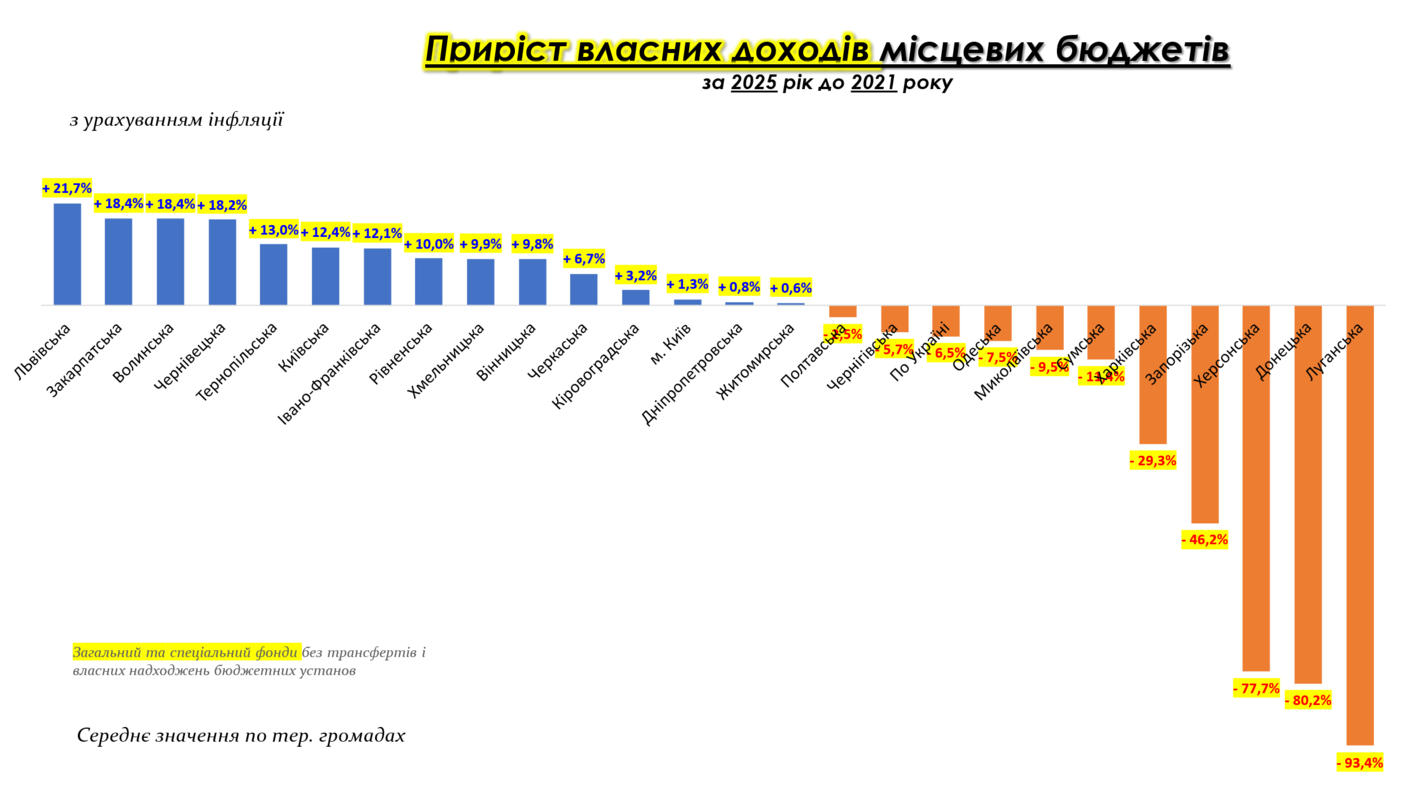
On the other hand, the dynamics of local budgets' own revenues in 2025 compared to 2021 (in real terms, taking into account inflation) demonstrates a more significant territorial differentiation of changes in the financial capacity of communities in the medium term of the war period.
The highest growth rates of own incomes are observed in the communities of the western regions of Ukraine. In particular, in the Lviv region, the increase was 21.7%, in the Zakarpattia region – 18.4%, in the Volyn region – 18.4%, in the Chernivtsi region – 18.2%, and in the Ternopil region – 13.0%. Positive dynamics is also demonstrated by the communities of Kyiv, Ivano-Frankivsk, Rivne, Khmelnytskyi and Vinnytsia regions, where the increase is about 10-12%.
In some central regions, the growth of own revenues is more moderate. In particular, in Cherkasy region it is 6.7%, in Kirovohrad region – 3.2%, while in Dnipropetrovsk and Zhytomyr regions the indicators remain close to the level of 2021.
At the same time, a decrease in own revenues was recorded in a number of regions compared to the pre-war level. In particular, in the Poltava region, the decrease is 5.5%, in the Chernihiv region – 5.7%, on average in Ukraine – 6.5%, in the Odesa region – 7.5%, in the Mykolaiv region – 9.5%, in the Sumy region – 11.4% , and in the Zaporizhzhia region – 29.3%.
The most noticeable reduction in the communities' own income base is observed in the regions that have been most affected by hostilities and temporary occupation. In particular, in the Kherson region, it is 46.2%, in the Donetsk region – 77.7%, in the Luhansk region – 93.4%.
In general, the above dynamics shows that in 2025, the restoration of the territorial communities' own revenue base relative to the pre-war level is uneven: the communities of the western regions demonstrate steady growth, while in the frontline and partially de-occupied regions, the financial base of local self-government remains significantly weakened due to the prolonged impact of military factors.
EXPENDITURE PART
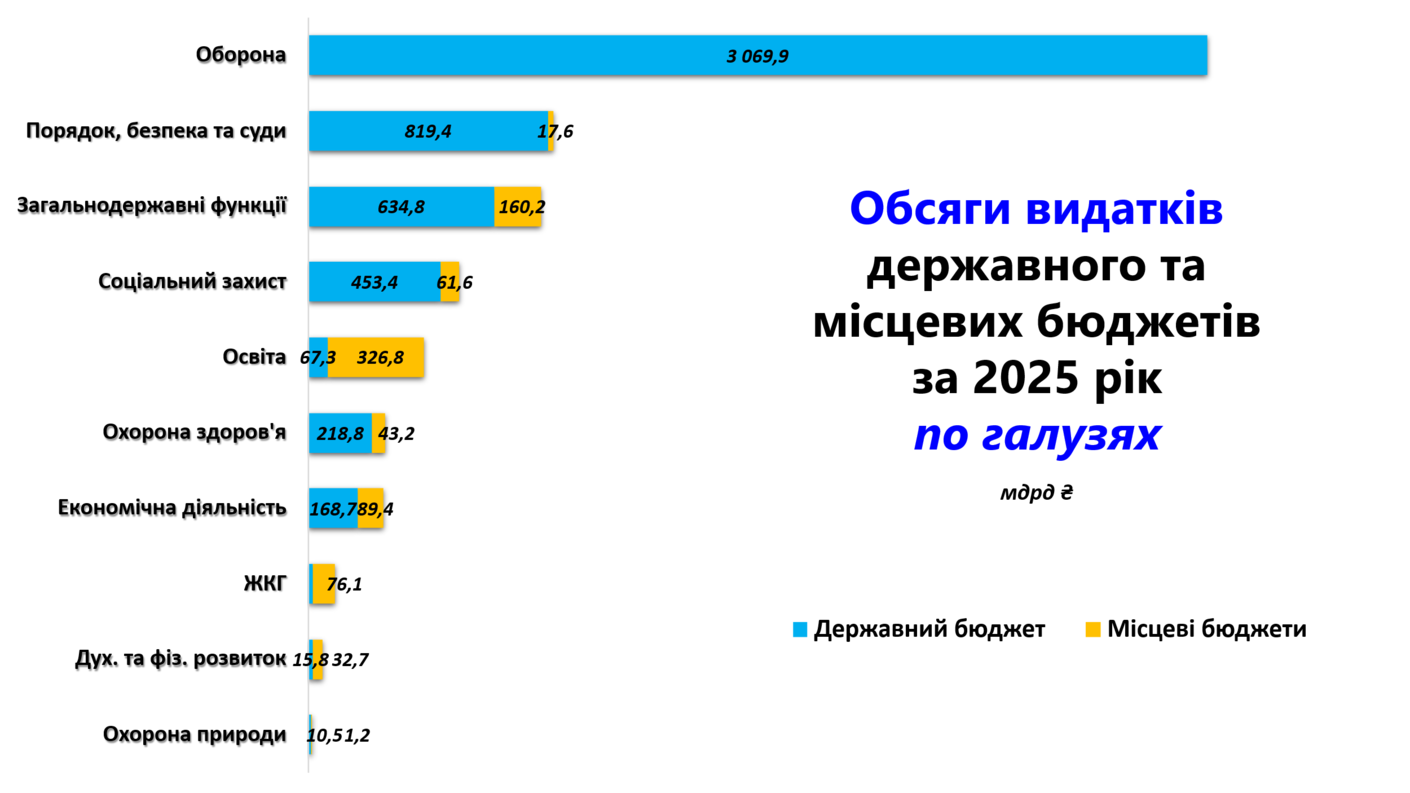
The structure of expenditures of the state and local budgets in 2025 clearly reflects the functional distribution of powers between the levels of the budget system and funding priorities under martial law.
The largest amount of state budget expenditures is traditionally directed to the defense sector, which in 2025 amounts to UAH 3,069.9 billion, which confirms the preservation of the security direction as a key priority of the state budget policy.
Significant expenditures of the state budget also fall on the sphere of law and order, security and the judiciary – UAH 819.4 billion, as well as on national functions – UAH 634.8 billion.
At the same time, the structure of local budget expenditures demonstrates their key role in financing sectors directly related to the provision of public services to the population. In particular, the largest amounts of resources are directed to education – UAH 326.8 billion, which confirms the decisive role of communities in ensuring the functioning of the educational network.
Economic activity – UAH 89.4 billion, housing and communal services – UAH 76.1 billion, social protection – UAH 61.6 billion, health care – UAH 43.2 billion, as well as culture and physical development – UAH 32.7 billion also remain important areas of funding at the local level.
Thus, in 2025, a clear functional model of the budget system is preserved: the state budget concentrates resources on financing the sectors of national security and national functions, while local budgets provide the bulk of expenditures on basic public services for the population – primarily education, housing and communal services, and territorial development. This confirms the systemic role of local self-government as a key level of meeting the daily needs of citizens.
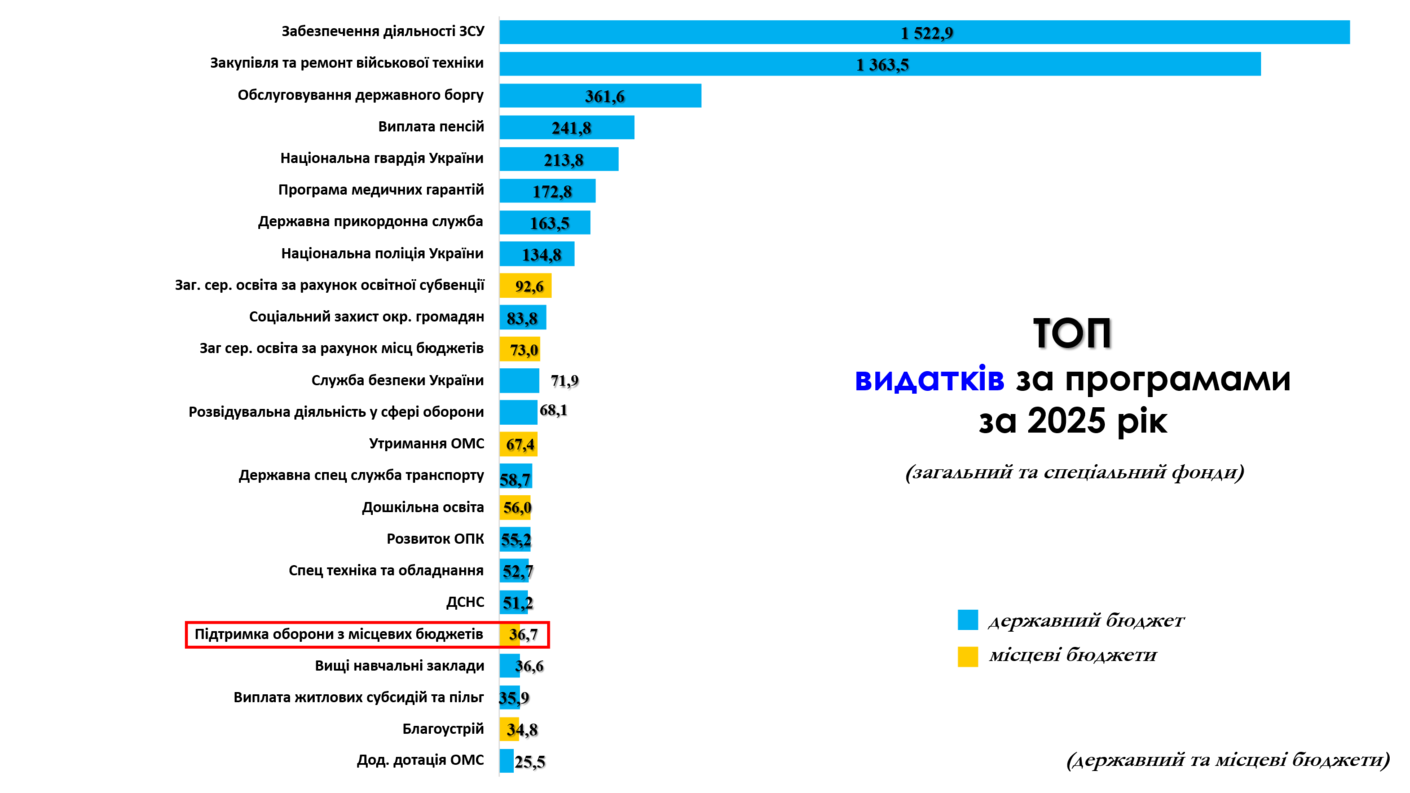
The structure of the largest expenditures of the state and local budgets under budget programs in 2025 demonstrates the concentration of budget system resources on financing the security and defense sector, which is a defining feature of budget policy under martial law.
The largest volumes of state budget expenditures are aimed at ensuring the activities of the Armed Forces of Ukraine – UAH 1,522.9 billion, as well as for the purchase and repair of military equipment – UAH 1,363.5 billion, which together forms the basis for resource provision of the state's defense capability.
The largest expenditure programs of the state budget also include public debt servicing – UAH 361.6 billion, payment of pensions – UAH 241.8 billion, financing of the National Guard of Ukraine – UAH 213.8 billion, Medical Guarantee Program – UAH 172.8 billion, State Border Guard Service of Ukraine – UAH 163.5 billion and National Police of Ukraine – UAH 134.8 billion.
At the same time, the structure of expenditures of local budgets confirms their key role in the provision of basic public services. In particular, significant resources are directed to general secondary education at the expense of educational subvention – UAH 92.6 billion, social protection of certain categories of citizens – UAH 83.8 billion, general secondary education at the expense of local budgets – UAH 73.0 billion, maintenance of local self-government bodies – UAH 67.4 billion, as well as preschool education – UAH 56.0 billion.
It should be noted separately that in 2025, local budgets continue to actively participate in financing the security and defense sector. In particular, the volume of expenditures under the defense support program from local budgets is UAH 36.7 billion, which indicates a significant strengthening of the role of territorial communities in ensuring the defense capability of the state under martial law.
In general, the structure of the largest budget programs confirms the transformation of the budget system of Ukraine during the war: the state budget concentrates resources on defense and the security sector, while local budgets provide stable funding for education, social protection, the functioning of local self-government bodies and territorial development, while at the same time contributing to the support of national defense.
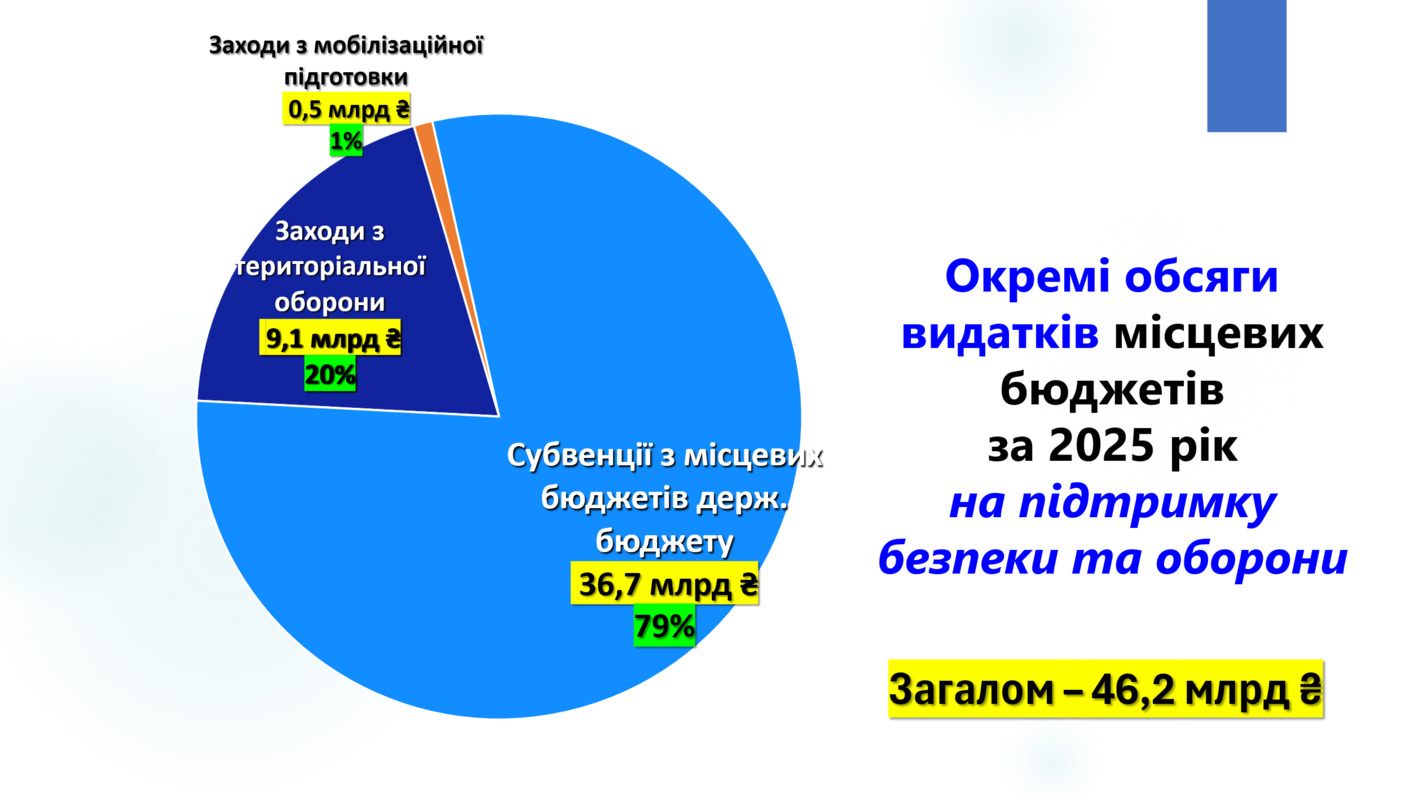
It is worth noting that in 2025, local budgets continued to support the security and defense sectors, providing additional support for state funding under martial law.
The total amount of expenditures of local budgets for relevant measures in 2025 amounted to UAH 46.2 billion, which indicates the systematic participation of territorial communities in strengthening the defense capability of the state.
The largest share of these resources is made up of subventions from local budgets to the state budget to support the security and defense sector – UAH 36.7 billion, or 79% of the total amount of relevant expenditures. This confirms the practice of direct financial allocation of community resources to the needs of national defense. And this is despite the withdrawal of military personal income tax.
In addition, UAH 9.1 billion, or 20%, was allocated for the implementation of territorial defense measures, which reflects the growing role of communities in ensuring security at the local level and supporting the functioning of territorial defense units.
At the same time, UAH 0.5 billion was allocated for mobilization preparation measures, which is about 1% of the relevant expenditures of local budgets.
In general, this structure of expenditures confirms that in 2025 territorial communities remain an important financial partner of the state in the field of security and defense, providing both direct support to the state budget and financing of territorial defense measures on the ground.
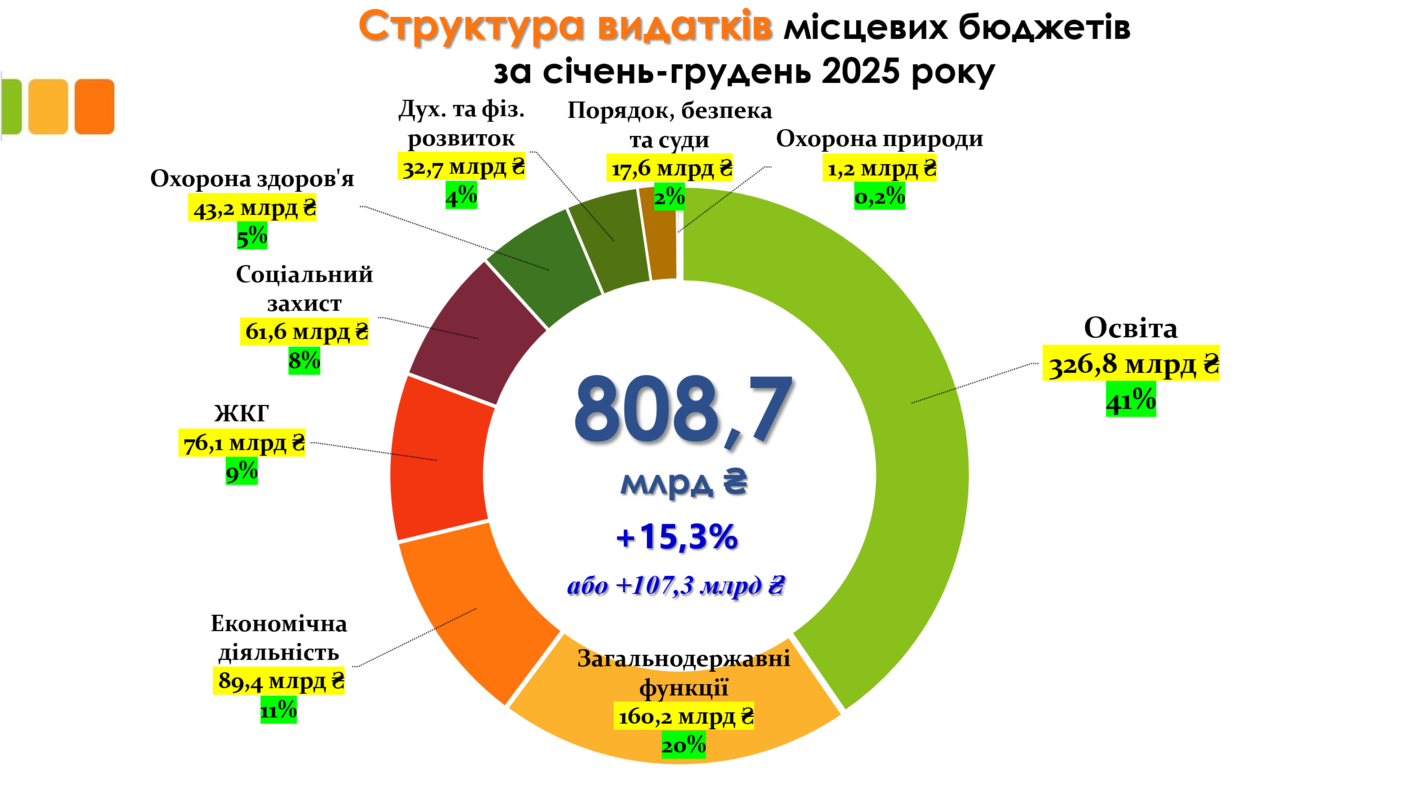
The structure of expenditures of local budgets in 2025 confirms their key role in financing basic public services and ensuring the functioning of the social infrastructure of territorial communities.
The total volume of expenditures of local budgets in January-December 2025 amounted to UAH 808.7 billion, which is 15.3% more than in the previous year (or UAH 107.3 billion).
The largest share in the structure of expenditures is traditionally occupied by education – UAH 326.8 billion, or 41% of the total expenditures of local budgets. This confirms the decisive role of local self-government bodies in ensuring the functioning of the educational network, primarily general secondary and preschool education institutions.
An important place in the structure of expenditures is also occupied by national functions – UAH 160.2 billion (20%), which include the maintenance of local self-government bodies and the implementation of powers delegated by the state at the local level.
Significant resources are directed to economic activity – UAH 89.4 billion (11%), which covers the development of transport infrastructure, life support of territories and the implementation of local development measures.
Expenditures on housing and communal services amounted to UAH 76.1 billion (9%), on social protection – UAH 61.6 billion (8%), on health care – UAH 43.2 billion (5%), and on culture, sports and spiritual development – UAH 32.7 billion (4%).
A relatively smaller share is spent on law and order and security – UAH 17.6 billion (2%) and environmental protection – UAH 1.2 billion (0.2%), which corresponds to the distribution of powers between the state and local levels.
In general, the structure of expenditures of local budgets in 2025 confirms their socially oriented nature and the key role of territorial communities in ensuring the availability of educational, social, housing and communal and basic administrative services for the population.
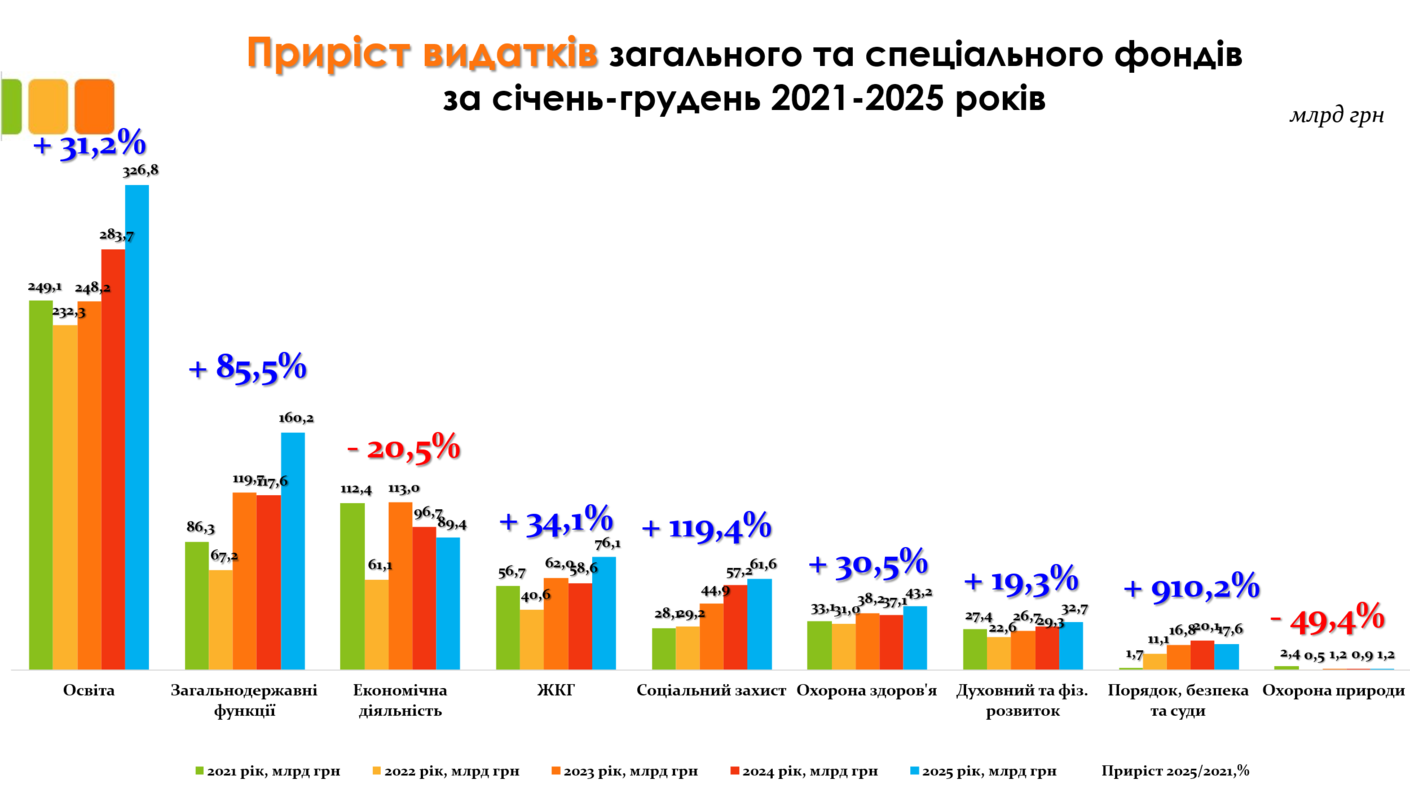
The dynamics of expenditures of general and special funds of local budgets in 2021–2025 demonstrates a significant transformation in the structure of budget priorities of territorial communities during the war period.
The largest growth in the medium term occurred in the direction of social protection, where expenditures more than doubled – by 119.4%, to UAH 61.6 billion, which indicates the strengthening of social support for the population at the local level.
Significant growth is also observed in the area of national functions, expenditures on which increased by 85.5% compared to 2021 and reached UAH 160.2 billion in 2025. This reflects the increasing role of local self-government bodies in the performance of managerial and organizational functions under martial law.
A noticeable increase in expenditures was also recorded in the field of housing and communal services – by 34.1%, to UAH 76.1 billion, as well as in the field of health care – by 30.5%, to UAH 43.2 billion, which is associated with the need to support the vital infrastructure of territorial communities during the war period.
Expenditures on education remain the largest among all functional areas and in 2025 amounted to UAH 326.8 billion, which is 31.2% more than in 2021.
Especially rapid growth was demonstrated by expenditures on law and order, security and courts, which increased more than ninefold – by 910.2% to UAH 17.6 billion, which reflects a significant increase in the participation of territorial communities in financing security measures under martial law.
At the same time, there is a decrease in expenditures in certain areas compared to the pre-war level. In particular, expenditures on economic activity decreased by 20.5%, to UAH 89.4 billion, and on environmental protection – by 49.4%, which indicates a reorientation of community budget resources to priority social and security needs.
In general, the above dynamics confirms that in 2021-2025 the structure of local budget expenditures has undergone significant changes: communities have increased funding for social protection, management, life support of territories and security measures, while reducing resource support for investment and environmental areas.
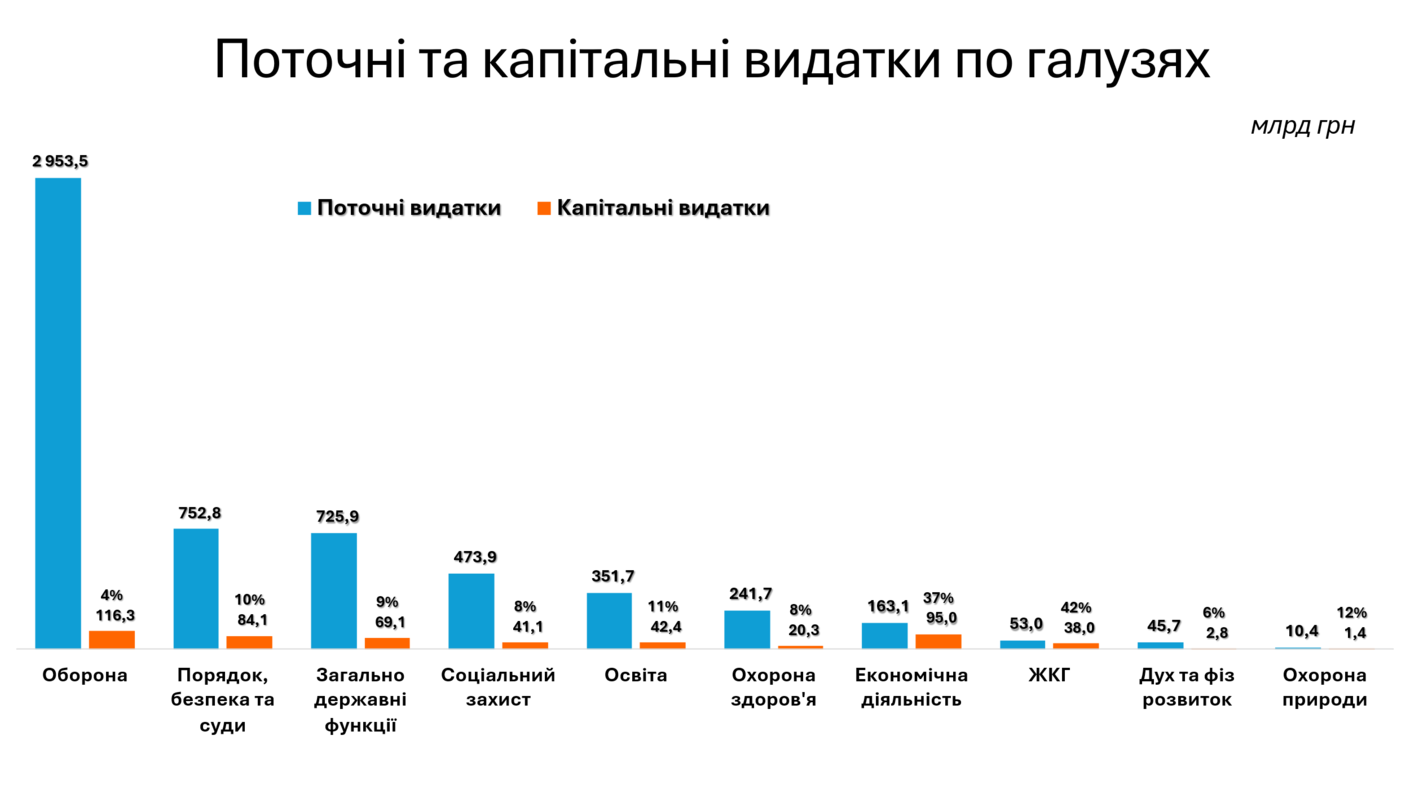
The analysis of the structure of expenditures of the state and local budgets by functional areas indicates a significant predominance of current expenditures over capital expenditures in 2025. Such a structure is natural for the war period, when budget policy focuses on ensuring the defense capability of the state, the stability of the functioning of institutions and the support of basic social services.
The largest volume of current expenditures is traditionally directed to the defense sector, where they amounted to almost UAH 3 trillion, while capital expenditures amounted to only UAH 116.3 billion, or about 4% of the total expenditures in this area. This is due to the fact that the bulk of defense financing falls on ensuring the activities of the Armed Forces of Ukraine, the payment of financial support to military personnel and current Logistics.
A similar situation is observed in the field of law and order, security and the judiciary, where capital expenditures amounted to about 10%, as well as in the sphere of national functions – about 9%, which indicates the dominance of expenditures on the maintenance of state institutions and ensuring their current activities.
In the social sector, the share of capital expenditures remains relatively low. In particular, in the field of education, it was about 11%, in the field of health care – 8%, and in the field of social protection – 8%, which confirms the predominance of labor costs, transfers to the population and the maintenance of the network of budgetary institutions.
At the same time, the most investment-oriented areas remain housing and communal services and economic activities, where the share of capital expenditures was 42% and 37%, respectively. These areas are traditionally associated with infrastructure modernization, the implementation of restoration measures and the development of territories.
The share of capital expenditures in the field of spiritual and physical development is also relatively high – about 6%, which is explained by the financing of the construction and reconstruction of sports and cultural infrastructure, although the total volume of expenditures in this area remains relatively small.
In general, the structure of expenditures by functional classification demonstrates that in 2025 the budget system of Ukraine works mainly in the mode of ensuring the current stability of the state and territorial communities. At the same time, maintaining a relatively high share of capital expenditures in the infrastructure and economic sectors forms the basis for a gradual transition to recovery and development after the end of the war.
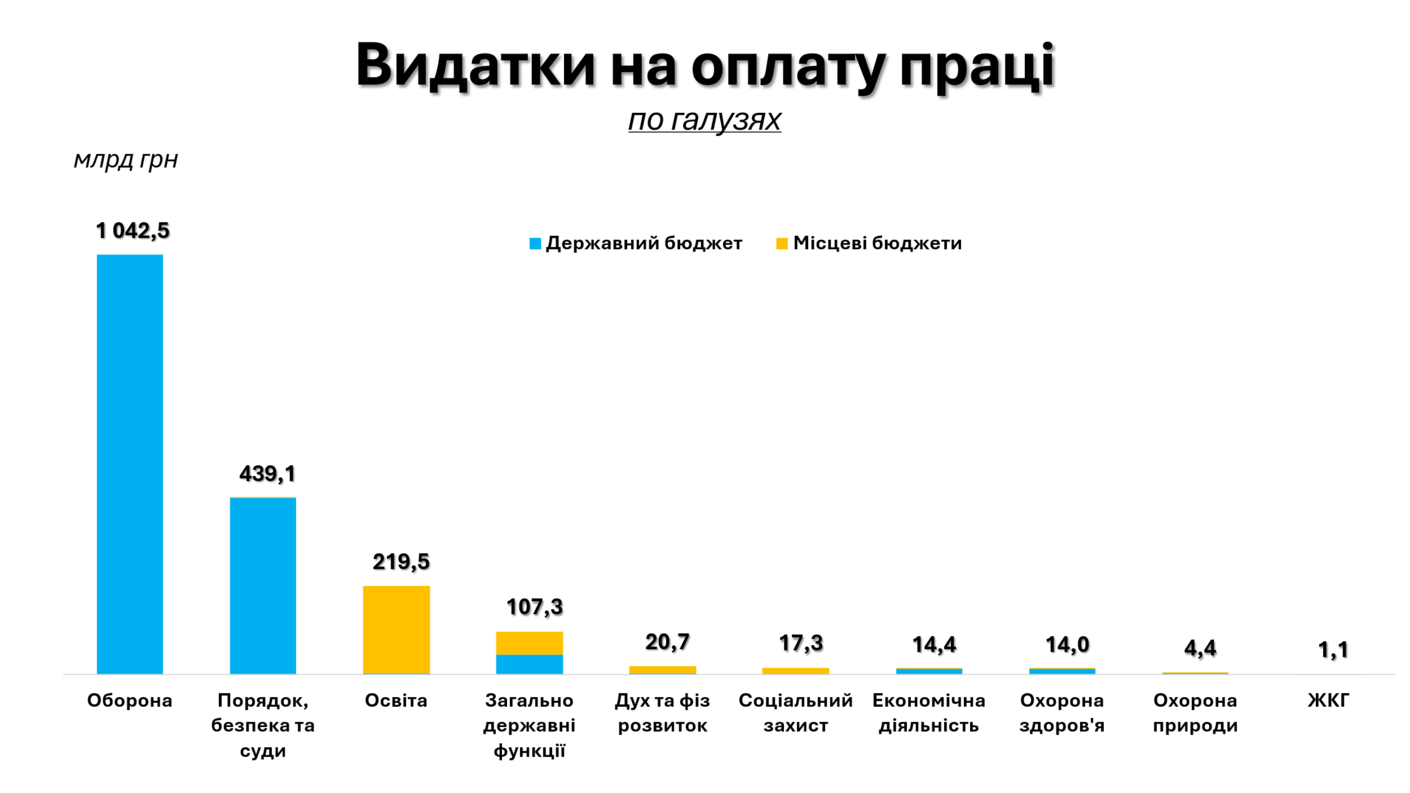
Labor costs remain one of the largest components of current expenditures of the budget system and determine the personnel basis for the functioning of the security sector, social services and local self-government.
The largest amount of labor expenditures in 2025 falls on the defense sector – more than UAH 1 trillion, which is an unprecedented indicator in the structure of public finances. This reflects the scale of human resources involvement in ensuring the defense capability of the state and the priority of financing the Armed Forces of Ukraine under martial law.
The second largest area is the sphere of law and order, security and the judiciary, where labor costs amounted to UAH 439.1 billion, which confirms the significant role of the security sector in the functioning of the state during the war.
At the same time, education traditionally remains the largest area of financing wages at the expense of local budgets, where such expenditures amounted to UAH 219.5 billion. It is the territorial communities that ensure the maintenance of the main network of general secondary education institutions, preschool education and out-of-school infrastructure.
Significant volumes of labor costs are also directed to ensuring the activities of public administration bodies. In particular, in the direction of national functions, they amounted to UAH 107.3 billion, which includes financing the activities of state authorities and local self-government bodies.
Expenditures on labor in the areas of social protection (UAH 17.3 billion), health care (UAH 14.0 billion) and economic activity (UAH 14.4 billion) are more moderate and are aimed mainly at ensuring the functioning of relevant institutions and the implementation of state and local programs.
At the same time, in such areas as housing and communal services (UAH 1.1 billion) and environmental protection (UAH 4.4 billion), the share of labor costs remains insignificant, which is explained by the predominance of investment and program costs over personnel maintenance costs in these areas.
In general, the structure of labor expenditures confirms that in 2025 the budget system of Ukraine operates in conditions of increased burden on the security and defense sector, while maintaining the key role of territorial communities in financing the educational network and ensuring the activities of local self-government bodies.
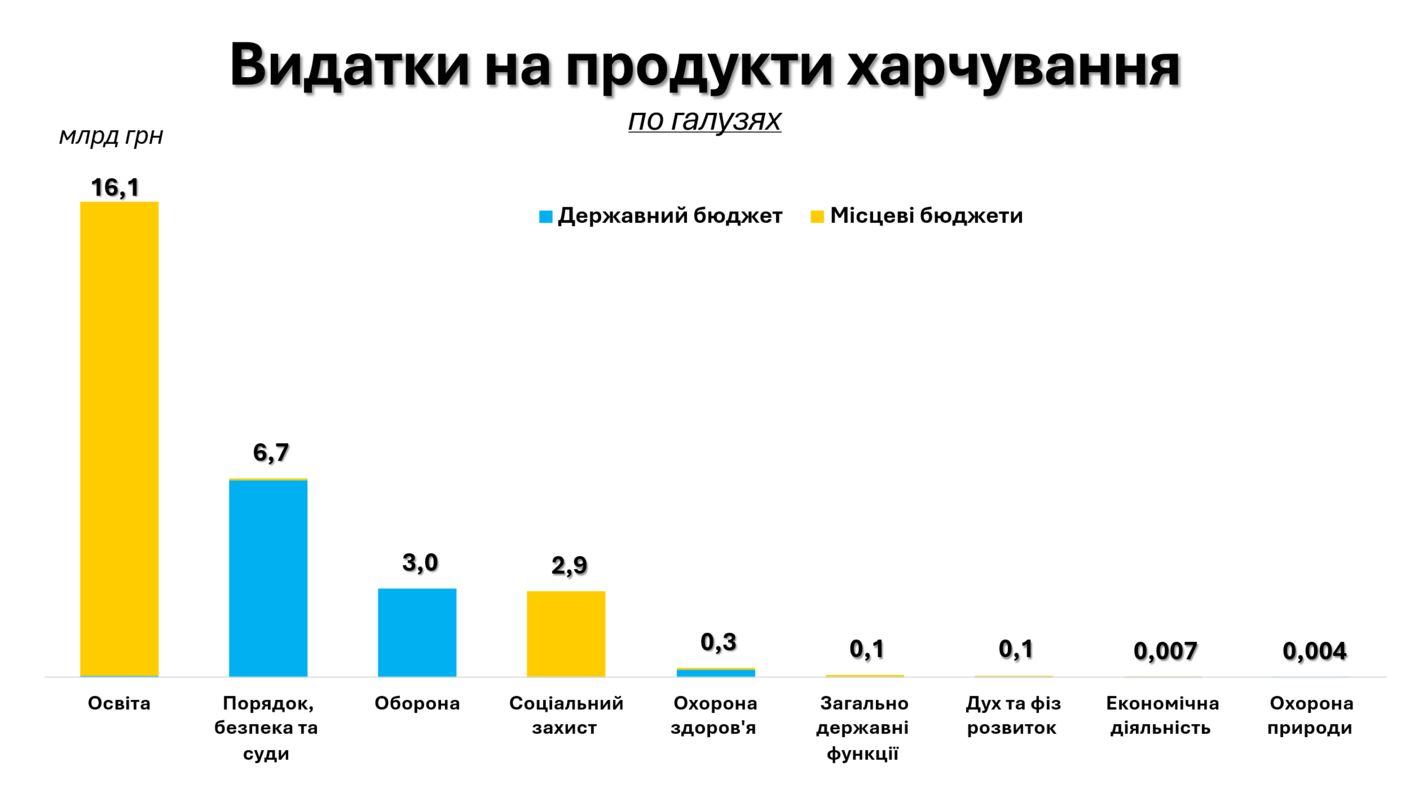
Food expenditures are an important component of current expenditures of the budget system and directly reflect the scale of functioning of the social, educational and security infrastructure of the state and territorial communities.
The largest amount of such expenditures in 2025 traditionally falls on the education sector – UAH 16.1 billion, and funding is almost entirely carried out at the expense of local budgets. This is due to the provision of food for children in preschool education institutions, primary school students, privileged categories of schoolchildren, as well as the functioning of boarding schools.
The second largest area is the sphere of law and order, security and courts, where food expenditures amounted to UAH 6.7 billion and were financed mainly from the state budget. Such expenses are related to the provision of food for the personnel of law enforcement agencies and other institutions of the security sector.
Significant volumes of food expenditures are also directed to the defense sector – UAH 3.0 billion, which reflects the scale of meeting the needs of military personnel within the functioning of the defense sector.
At the same time, in the field of social protection, food expenditures amounted to UAH 2.9 billion and were financed mainly from local budgets. First of all, it is about ensuring the activities of social institutions of inpatient care and supporting vulnerable categories of the population.
In the field of healthcare, food expenditures amounted to UAH 0.3 billion, which is due to the peculiarity of the mechanism for financing medical services at the expense of the NHSU in the relevant health care institutions, primarily communal ownership.
In other functional areas, food expenditures are insignificant and play an auxiliary role in ensuring the activities of budgetary institutions.
In general, the structure of food expenditures confirms the key role of territorial communities in financing basic social services to the population, primarily in the field of education and social protection, while the state budget provides food for personnel in the security and defense sector.
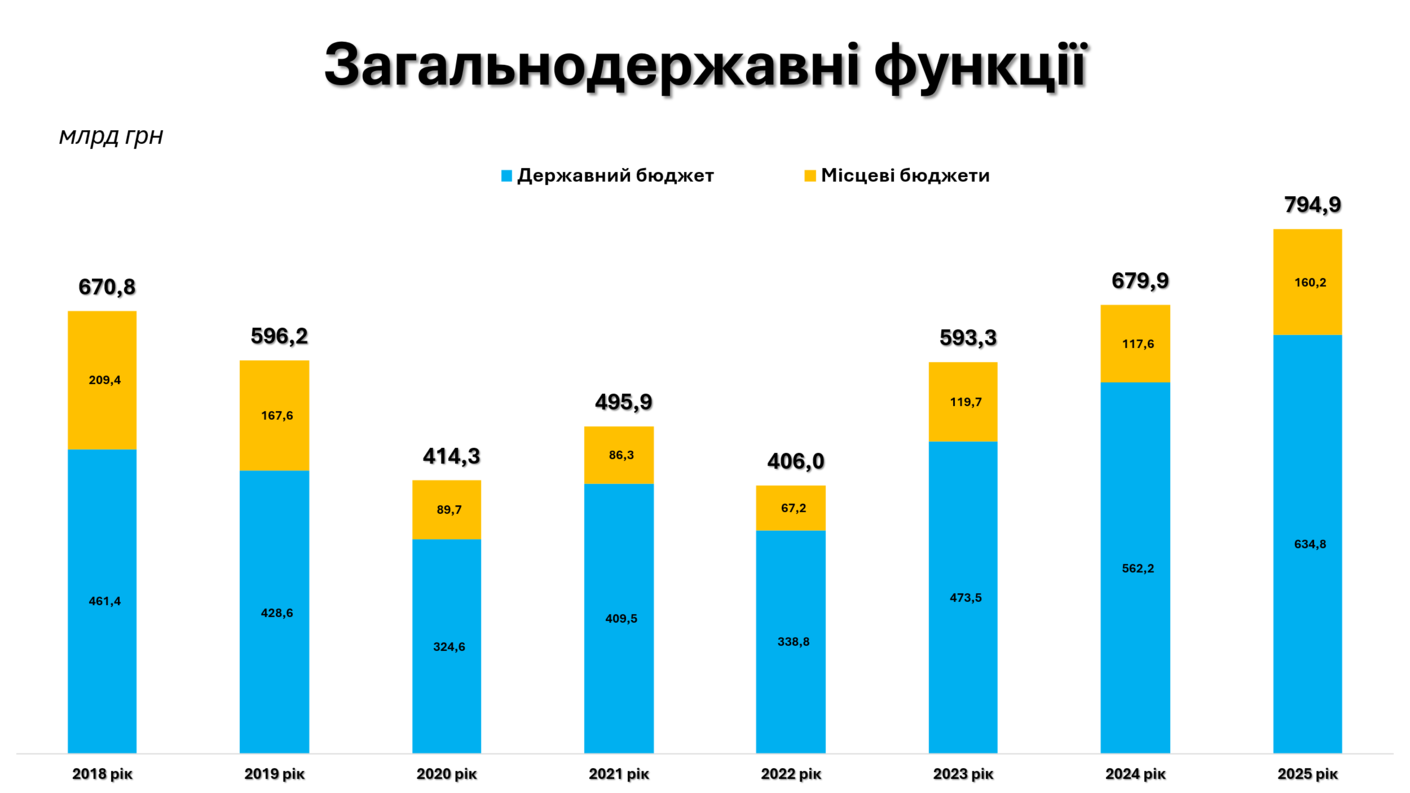
It is important to take into account that the dynamics of expenditures on national functions in 2018–2021 was formed not only under the influence of macroeconomic factors, but also as a result of the implementation of the decentralization reform. In particular, the consolidation of territorial communities and the completion of the formation of the basic level of the administrative-territorial structure contributed to the optimization of the network of government bodies at the local level and the gradual reduction of administrative costs in communities.
As a result, after the completion of the stage of formation of capable territorial communities, there was a decrease in the duplication of managerial functions between levels of government, a reduction in the cost of maintaining management apparatuses in some communities and an increase in the efficiency of the use of local budget resources. This, along with the impact of the COVID-19 pandemic, partly explains the decrease in expenditures on national functions in 2020-2022.
On the other hand, further growth in expenditures starting in 2023 is already of a different nature and is associated with inflationary processes, strengthening the role of state institutions during martial law, ensuring the sustainability of public finances, and coordinating recovery processes.
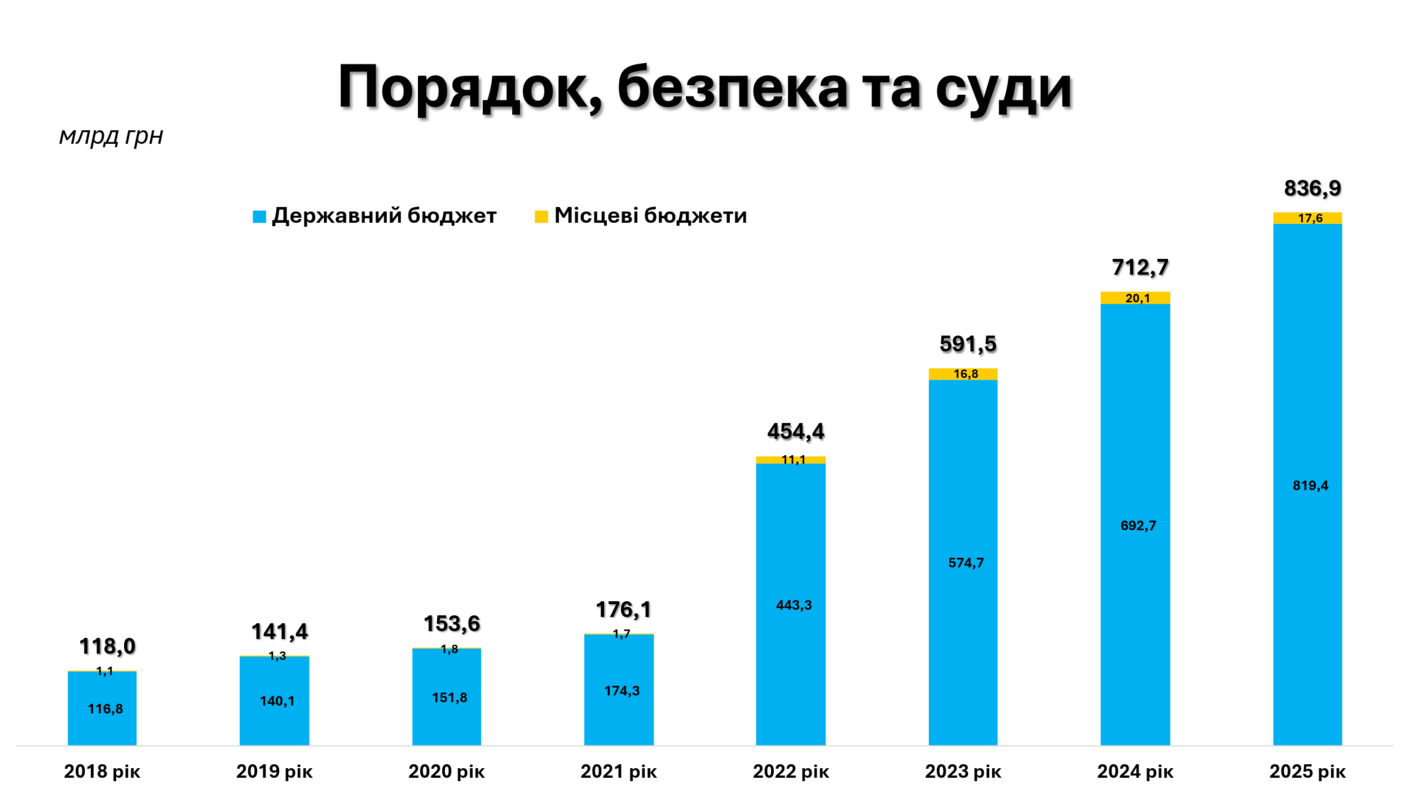
The dynamics of expenditures on law and order, security and the judiciary in 2018–2025 demonstrates one of the most pronounced transformations in the structure of the budget system of Ukraine.
In the period 2018–2021, expenditures in this area increased gradually – from UAH 118.0 billion in 2018 to UAH 176.1 billion in 2021. This was a gradual growth associated with the development of the security sector, the reform of law enforcement agencies and the provision of the judicial system.
At the same time, since 2022, there has been a sharp increase in funding for this area. Already in 2022, the volume of expenditures increased to UAH 454.4 billion, that is, more than 2.5 times compared to the previous year.
Further dynamics confirm the systemic nature of this growth:
In 2023, expenditures amounted to UAH 591.5 billion,
in 2024 – UAH 712.7 billion,
in 2025 – already UAH 836.9 billion.
Thus, compared to pre-war 2021 , the amount of funding for the law enforcement, security and judiciary sector has increased almost 5 times.
The main source of such growth is the state budget, which provides funding for the Armed Forces of Ukraine, the National Police of Ukraine, the National Guard of Ukraine, the State Border Guard Service of Ukraine, the Security Service of Ukraine, the judiciary and other institutions of the security sector.
At the same time, the participation of local budgets in financing this area remains relatively insignificant in volume, although it has also increased after 2022. This is due to the expansion of the participation of territorial communities in the implementation of territorial defense measures, support of law enforcement infrastructure and ensuring the functioning of the security environment at the local level.
In general, the above dynamics indicate that in 2022-2025, the law and order and security sector has become one of the key priorities of the state's budget policy, which is a natural response to the challenges of a full-scale war.
Do not forget that support from local budgets is provided by providing transfers to the SBU. Therefore, expenditures are reflected in the state budget.
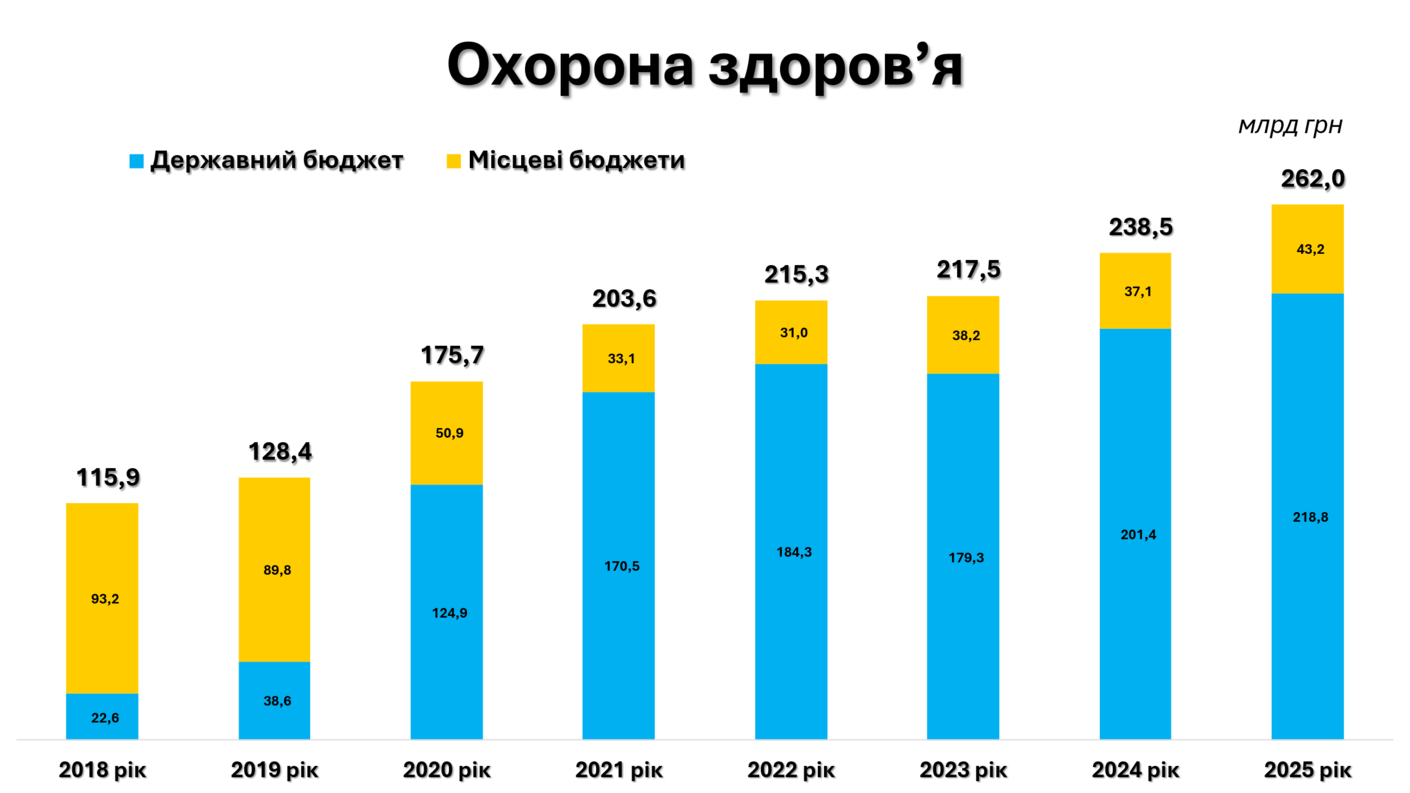
The dynamics of healthcare expenditures in 2018–2025 is largely determined by changes in the model of financing the health care system introduced as part of the health sector reform.
If in 2018-2019 the main amount of funding for the medical sector was carried out at the expense of local budgets (UAH 93.2 billion and UAH 89.8 billion, respectively), then since 2020 there has been a systematic transition to a new financing model through the Medical Guarantees Program, which is administered by the National Health Service of Ukraine.
As a result, already in 2020, the volume of state budget expenditures on health care increased to UAH 124.9 billion, exceeding the financing of local budgets. In the following years, this trend was consolidated.
At the same time, the role of local budgets in financing the health care sector has changed: if earlier they ensured the maintenance of the medical network, then after the introduction of the new financing model, their expenditures are focused mainly on co-financing of communal health care institutions, the development of the material and technical base, the payment of energy carriers and the implementation of local programs to support medical institutions.
After the start of the full-scale war in 2022, the financing structure of the industry remained stable: the main amount of resources continues to be provided by the state budget through the mechanism of the Medical Guarantee Program, while local budgets perform a supporting infrastructure function.
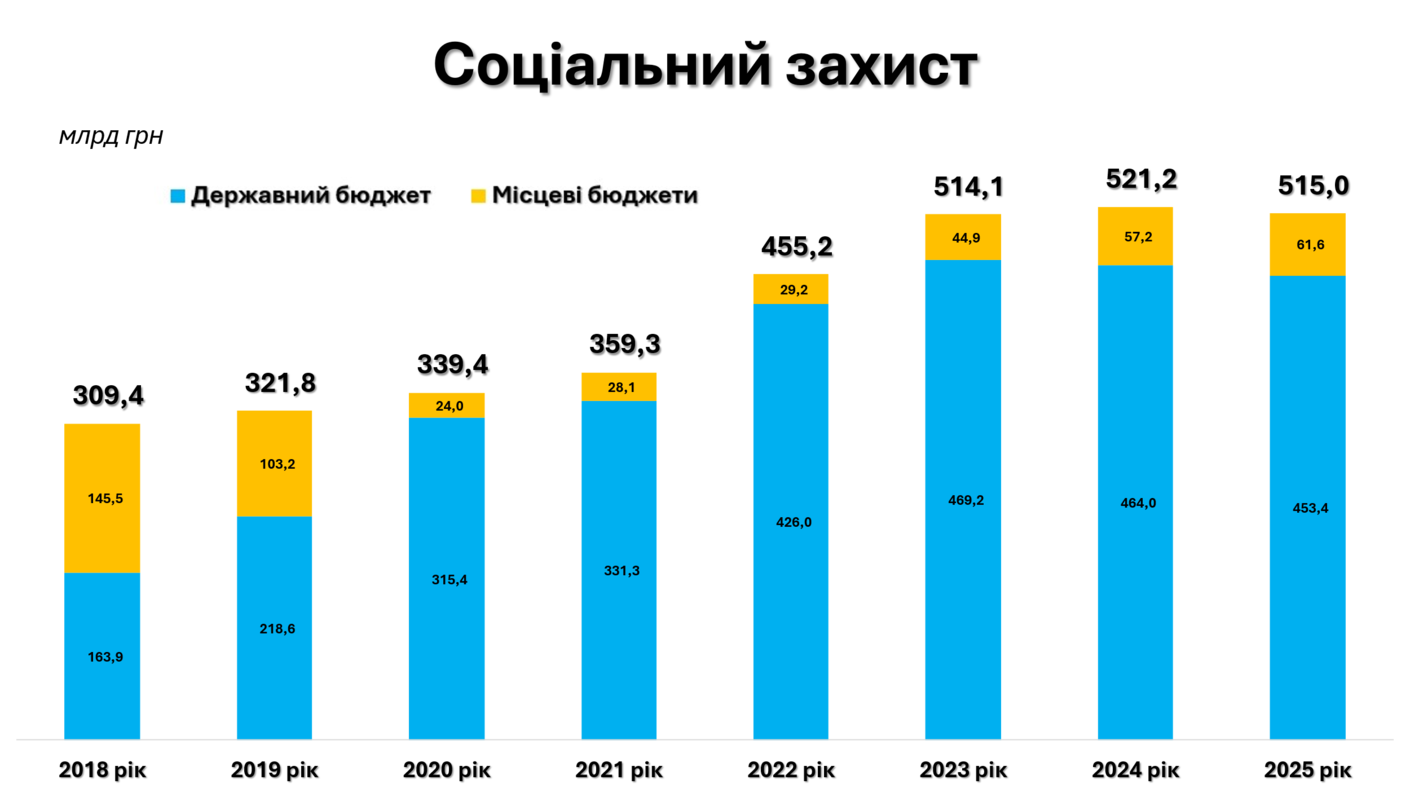
The dynamics of social protection expenditures in 2018–2025 reflects both structural changes in the system of inter-budgetary relations and a significant expansion of the state's social obligations in the context of a full-scale war.
In 2018-2019, a significant part of social protection expenditures was financed through local budgets, primarily at the expense of subventions from the state budget for the provision of benefits and housing subsidies to the population. In particular, in 2018, local budget expenditures in this area amounted to UAH 145.5 billion, which was almost equal to funding from the state budget.
Since 2020, after a change in the mechanism for financing housing subsidies and individual social benefits, there has been a significant reduction in their passage through local budgets and a corresponding strengthening of the role of the state budget in financing social protection. Already in 2020, state budget expenditures increased to UAH 315.4 billion, while the share of local budgets decreased significantly.
In 2022, after the start of the full-scale war, the volume of social protection expenditures increased to UAH 455.2 billion, which was due to the need to support internally displaced persons, families of military personnel, persons who lost their homes or sources of income, as well as the expansion of state social assistance programs.
Further growth occurred in 2023, when expenditures reached UAH 514.1 billion, and remained high in 2024–2025, amounting to UAH 521.2 billion and UAH 515.0 billion, respectively.
At the same time, the role of local budgets in financing social protection after 2022 is gradually increasing. In particular, their expenditures increased from UAH 29.2 billion in 2022 to UAH 61.6 billion in 2025, which is associated with the expansion of local programs to support military personnel, veterans, internally displaced persons and other vulnerable categories of the population.
In general, these dynamics indicate the strengthening of the centralized role of the state budget in financing basic social guarantees of the population, at the same time, territorial communities are increasingly forming their own social support instruments adapted to the needs of residents during the war.
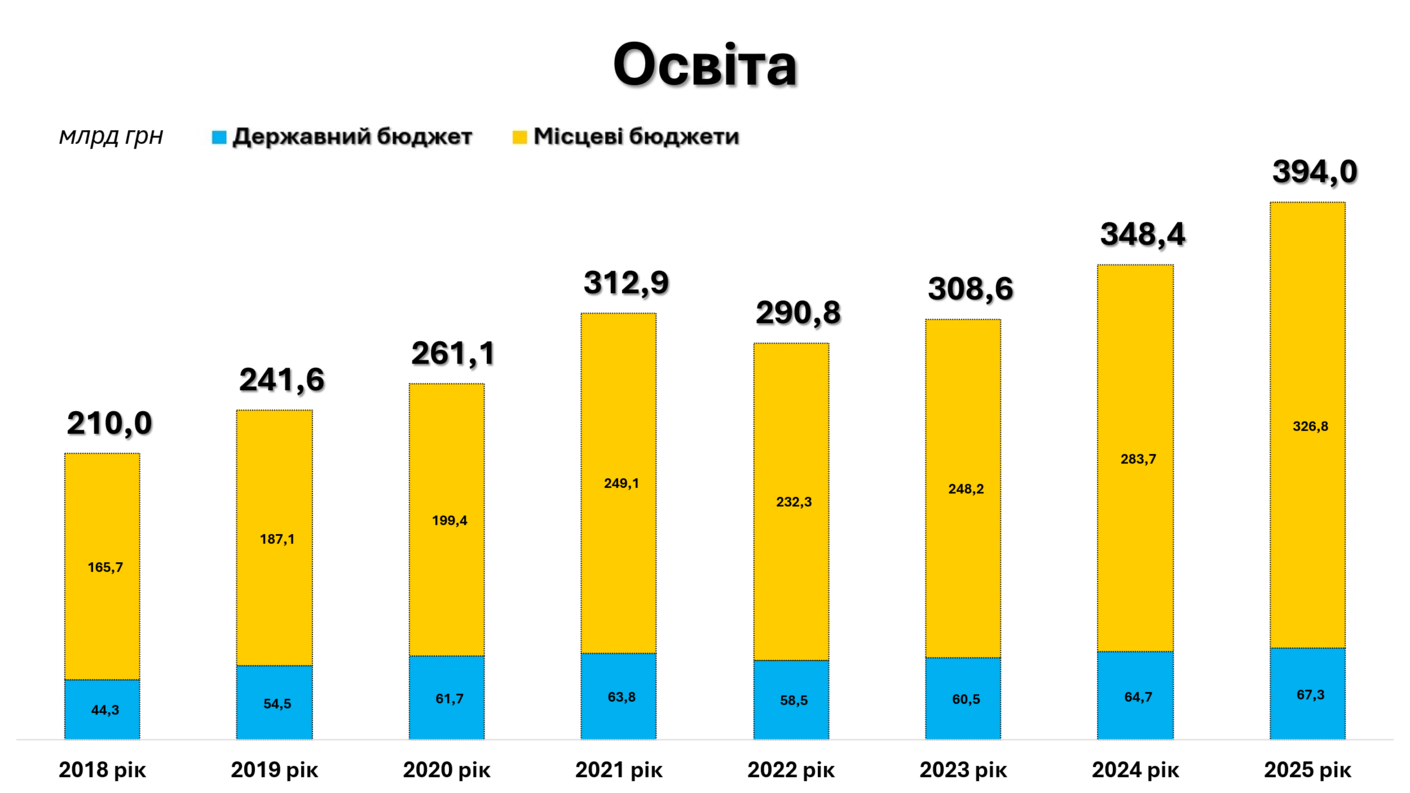
The dynamics of education expenditures in 2018–2025 demonstrates the consistently key role of local budgets in financing the educational system of Ukraine even in the context of a full-scale war.
Throughout the entire period, it is the territorial communities that provide the main amount of funding for the industry. In particular, in 2018, local budget expenditures amounted to UAH 165.7 billion, and in 2025 they increased to UAH 326.8 billion, that is, they almost doubled.
State budget expenditures on education have a more stable dynamics and are directed primarily to finance the educational subvention, which ensures the remuneration of teachers of general secondary education institutions. In 2018, they amounted to UAH 44.3 billion, and in 2025 – UAH 67.3 billion.
After the start of the full-scale war in 2022, there was a temporary reduction in the total amount of expenditures on education to UAH 290.8 billion, which was associated with the relocation of the population, changes in the forms of organization of the educational process, and a revision of budget priorities. At the same time, funding began to recover in 2023, and in 2024-2025 it reached its maximum values for the entire observation period – UAH 348.4 billion and UAH 394.0 billion, respectively.
It is important that even under martial law, territorial communities retained key responsibility for the maintenance of the network of educational institutions, including financing preschool education, out-of-school institutions, vocational education institutions, paying for energy, meals for students, and maintaining infrastructure.
Thus, the education sector remains one of the most decentralized areas of the budget system of Ukraine, and the growth in local budget expenditures in 2023-2025 indicates that the priority of supporting the educational network of territorial communities continues to be prioritized even in wartime.
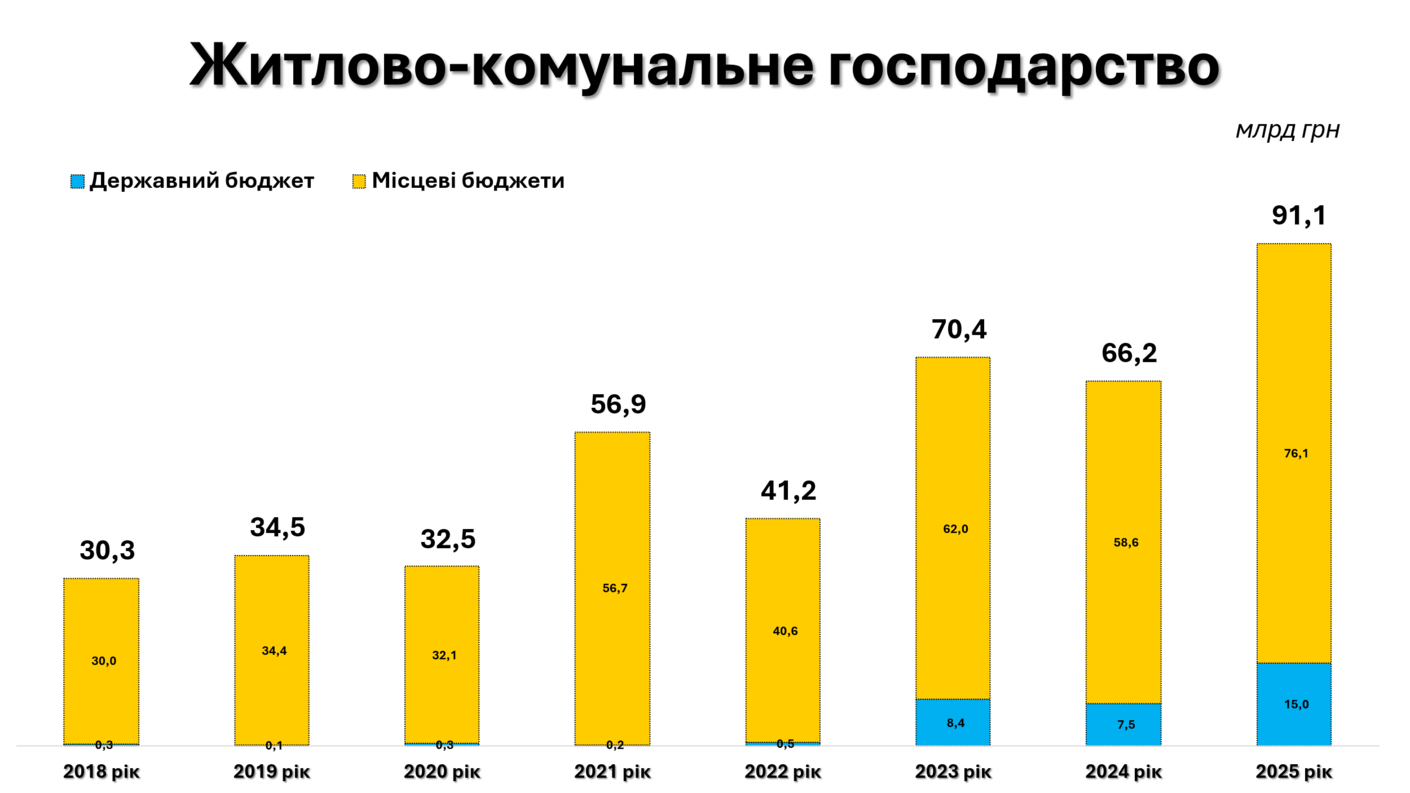
The dynamics of expenditures on housing and communal services in 2018-2025 confirms the key role of territorial communities in financing the life support infrastructure of the population.
During 2018-2021, the financing of housing and communal services was almost entirely carried out at the expense of local budgets. In particular, in 2018 they amounted to UAH 30.0 billion, and in 2021 it was already UAH 56.7 billion, while the participation of the state budget remained minimal.
In 2022, the total amount of expenditures on housing and communal services decreased to UAH 41.2 billion, which was due to the outbreak of a full-scale war and the reorientation of budget resources to finance the security sector and social support of the population.
At the same time, since 2023, there has been a new stage of growth in financing the industry. In particular, in 2023, expenditures increased to UAH 70.4 billion, in 2024 they amounted to UAH 66.2 billion, and in 2025 they reached UAH 91.1 billion, which is the maximum value for the entire observation period.
An important feature of recent years is the gradual strengthening of the participation of the state budget in financing housing and communal infrastructure. If before 2022 its contribution was insignificant, then in 2023 it already amounted to UAH 8.4 billion, in 2024 – UAH 7.5 billion, and in 2025 – UAH 15.0 billion. This is primarily due to the implementation of measures to restore damaged engineering infrastructure, support for heat and water supply systems, as well as preparation for the heating seasons in the face of war risks.
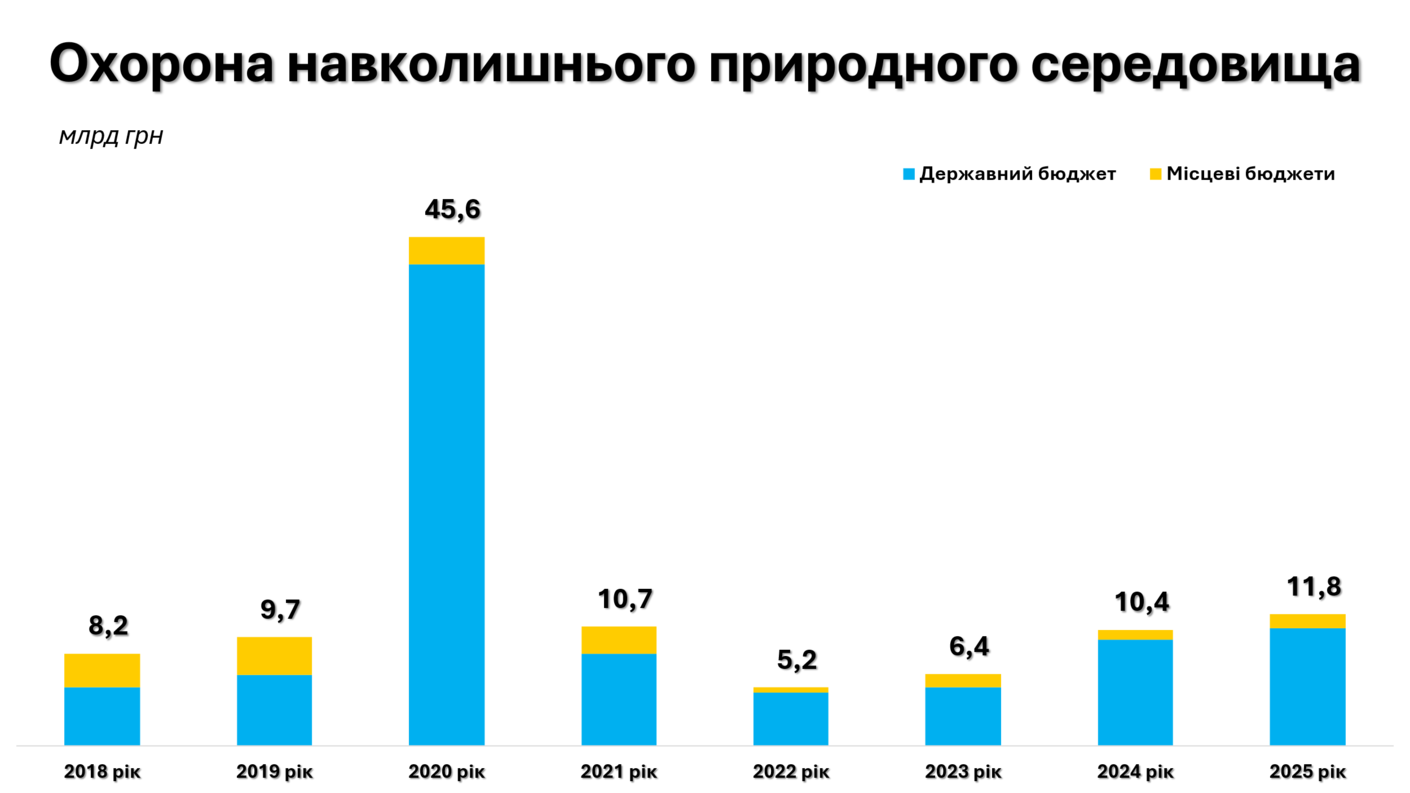
The dynamics of expenditures on environmental protection in 2018–2025 is characterized by relatively small amounts of funding compared to other sectors of the budget system, but at the same time demonstrates a significant dependence on state target programs and investment environmental measures.
In 2018–2019, the total amount of funding for the industry amounted to UAH 8.2 billion and UAH 9.7 billion, respectively, with the main burden provided by the state budget. Expenditures of local budgets in this sector remained auxiliary and were of a local nature.
The year 2020 was special, when the volume of funding increased to UAH 45.6 billion. Such dynamics was associated with the implementation of certain large-scale state environmental programs and the redistribution of resources of environmental funds, which significantly affected the financing structure of the sector.
In 2021, the volume of expenditures returned to a more typical trajectory and amounted to UAH 10.7 billion, after which in 2022 there was a reduction in funding to UAH 5.2 billion due to the reorientation of budget resources to meet defense needs and social support of the population.
Starting from 2023, funding for environmental measures is gradually resuming. In particular, in 2023, expenditures amounted to UAH 6.4 billion, in 2024 – UAH 10.4 billion, and in 2025 – already UAH 11.8 billion to the standards of the European Union.
At the same time, the structure of financing the sector remains mainly centralized: the main part of resources is provided by the state budget, while local budgets play a supporting role, financing mainly local environmental measures, waste management, improvement and protection of natural areas of local importance.
Thus, the environmental sector is gradually moving from a model of financing individual programs to a broader role in the system of post-war recovery and European integration transformation of public policy.
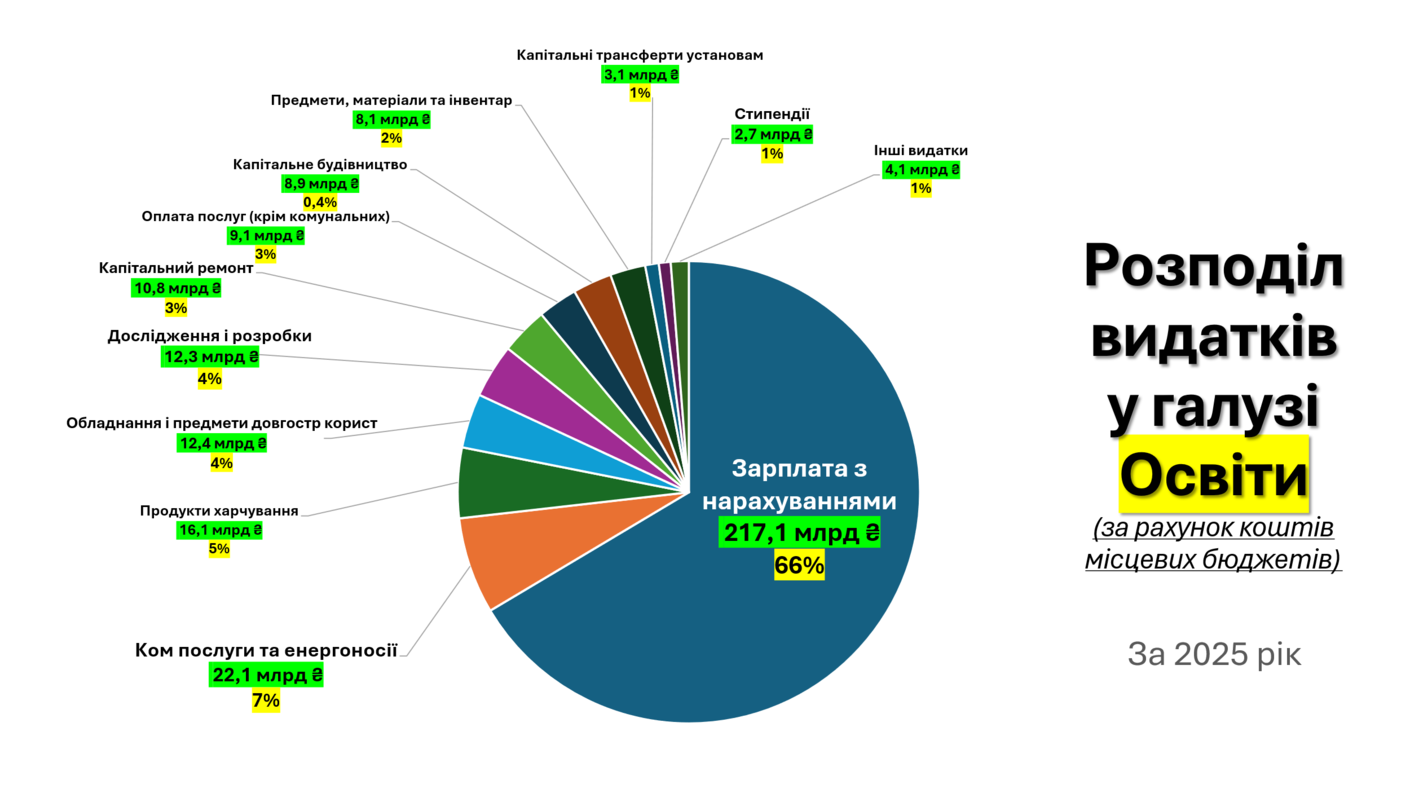
The structure of expenditures of local budgets in the field of education in 2025 demonstrates that this area remains one of the highest share of labor costs.
The volume of expenditures on salaries with accruals is UAH 217.1 billion, or 66% of all expenditures of local budgets on education. This confirms the key role of territorial communities in ensuring the functioning of the network of educational institutions, financing of teaching and support staff, as well as the maintenance of educational infrastructure.
The second largest area is the payment of utilities and energy carriers – UAH 22.1 billion (7%), which reflects the significant scale of the network of educational institutions and its energy intensity, especially in the context of rising tariffs and the need to ensure the continuous operation of institutions during martial law.
An important share is also spent on food – UAH 16.1 billion (5%), which indicates the active role of communities in ensuring the social functions of education, in particular support for primary school students and privileged categories of children.
Capital and investment expenditures have a much smaller share in the financing structure. In particular, expenditures on equipment and durable items amounted to UAH 12.4 billion (4%), research and development – UAH 12.3 billion (4%), major repairs – UAH 10.8 billion (3%), and capital construction – UAH 8.9 billion.
At the same time, a relatively small share of capital expenditures in the structure of education financing indicates the limited ability of communities to carry out systematic modernization of educational infrastructure without attracting state support and international resources, which is especially relevant in the context of restoring damaged educational institutions and adapting the educational environment to new security requirements.
Thus, the structure of education expenditures confirms that local budgets primarily ensure the current functioning of the educational system, while the investment component of the industry's development needs to be strengthened through state support mechanisms and public investment instruments.
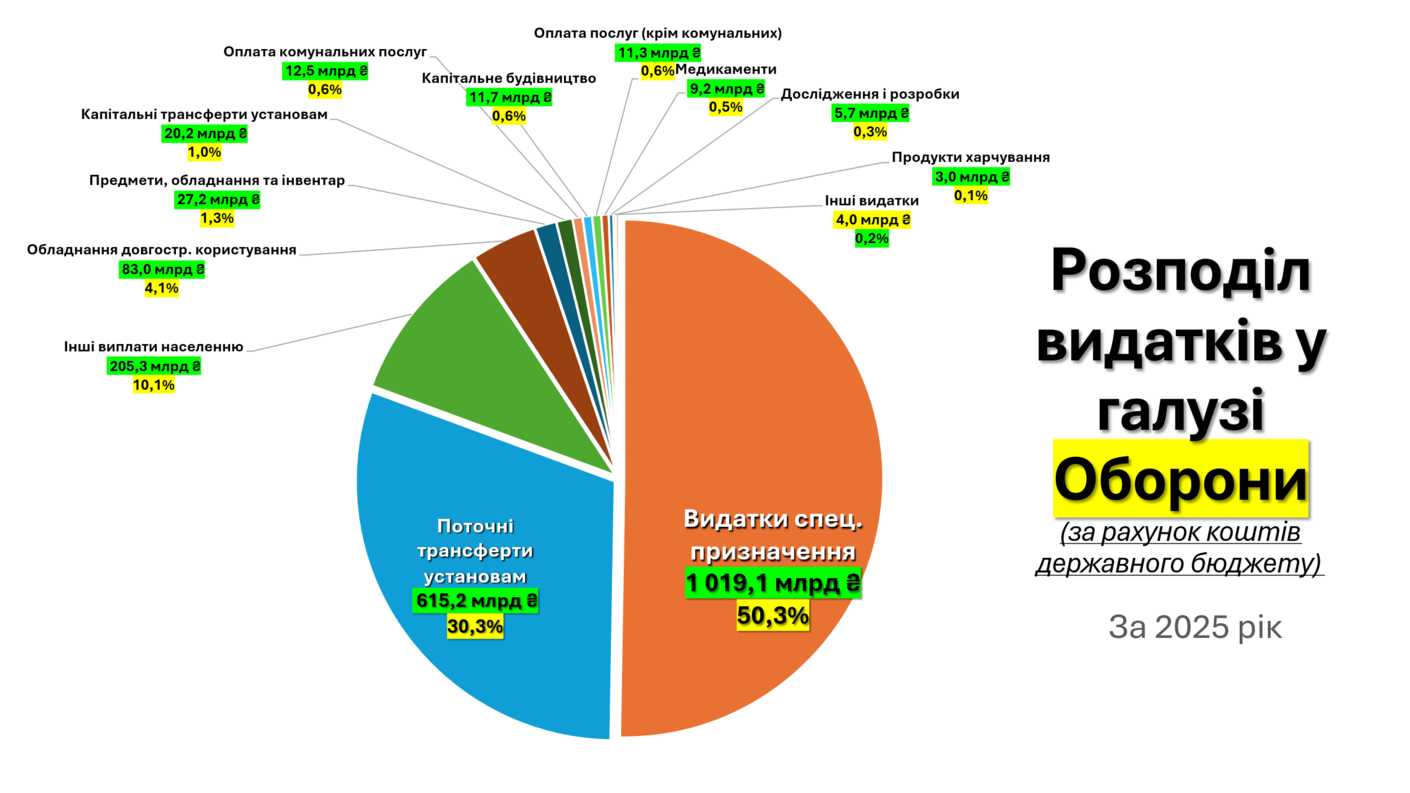
The structure of state budget expenditures in the field of defense in 2025 demonstrates an unprecedented level of concentration of resources on ensuring the security and defense sector in the context of a full-scale war.
The largest share is made up of special purpose expenditures – UAH 1,019.1 billion, or 50.3% of all state budget expenditures on defense. This category primarily includes resources aimed at financing defense programs, purchasing weapons, military equipment, ammunition and other measures to ensure the defense capability of the state.
The second largest area is current transfers to institutions – UAH 615.2 billion (30.3%), which reflects the scale of financing the activities of military formations, security forces and other institutions of the defense sector through budget transfer mechanisms.
A significant share is also made up of other payments to the population – UAH 205.3 billion (10.1%), which includes social payments, compensations and other forms of support for defense sector personnel and their families.
The investment component of defense expenditures is represented by expenditures on equipment and durable items – UAH 83.0 billion (4.1%), which includes the purchase of equipment, communications, special equipment and other logistics.
Other areas of financing have a much smaller share in the structure of expenditures, in particular, items, materials and inventory – UAH 27.2 billion (1.3%), capital transfers to institutions – UAH 20.2 billion (1.0%), payment for utilities – UAH 12.5 billion, capital construction – UAH 11.7 billion, as well as expenditures on medicines, research and development and other measures to support the activities of the defense sector.
Thus, the structure of defense expenditures in 2025 confirms that the main financial resource of the state is directed to operational support of the functioning of the security and defense sector, support for personnel and the purchase of the necessary weapons and equipment that meets wartime conditions and strategic priorities of state policy.
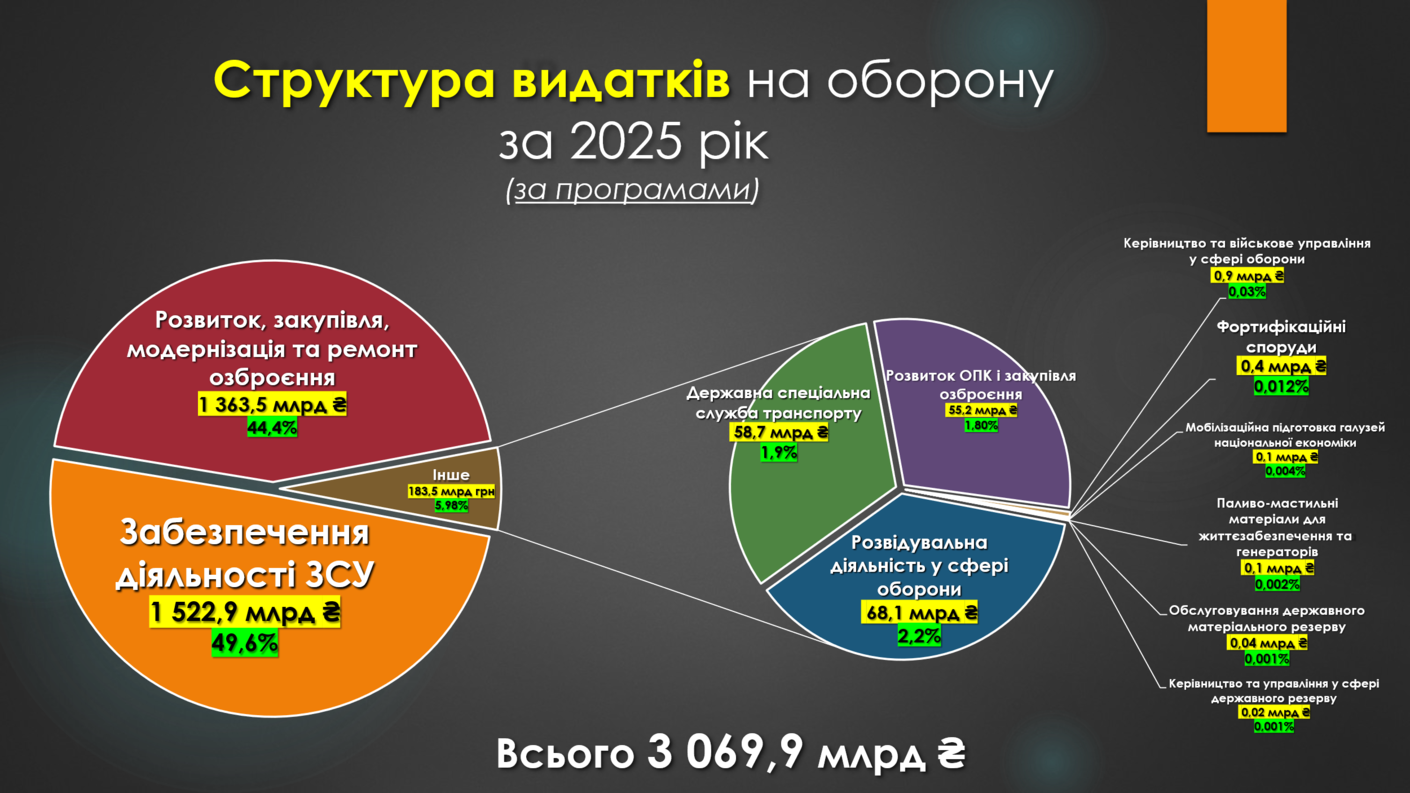
The structure of state budget expenditures on defense in 2025 under budget programs demonstrates a clear concentration of resources on ensuring the functioning of the Armed Forces of Ukraine and developing their capabilities in the context of a full-scale war.
The largest share is made up of expenditures to support the activities of the Armed Forces of Ukraine – UAH 1,522.9 billion, or 49.6% of total defense expenditures. This area includes financing the financial support of military personnel, logistics and technical support of units, logistics, maintenance of military infrastructure and other components of the current activities of the defense sector.
The second key area is the development, purchase, modernization and repair of weapons – UAH 1,363.5 billion (44.4%), which indicates a systematic reorientation of state policy to build up military-industrial capabilities and technological strengthening of the security and defense sector.
Other budget programs together form 5.98% of defense sector expenditures, but play an important role in ensuring the functioning of certain elements of the national security system. In particular, expenditures on intelligence activities in the field of defense amount to UAH 68.1 billion (2.2%), on the activities of the State Special Transport Service – UAH 58.7 billion (1.9%), and on development of the military-industrial complex and the purchase of weapons through certain programs – UAH 55.2 billion (1.8%).
Relatively insignificant but strategically important areas include financing the mobilization training of sectors of the national economy, maintaining the state material reserve, ensuring the functioning of the military command and control system and the construction of fortifications.
In general, the structure of defense expenditures in 2025 indicates the dominance of two key priorities of state policy – continuous support for the activities of the Armed Forces of Ukraine and a large-scale build-up of military-technical capabilities, which corresponds to the logic of waging a long-term war of high intensity and the formation of long-term defense resilience of the state.
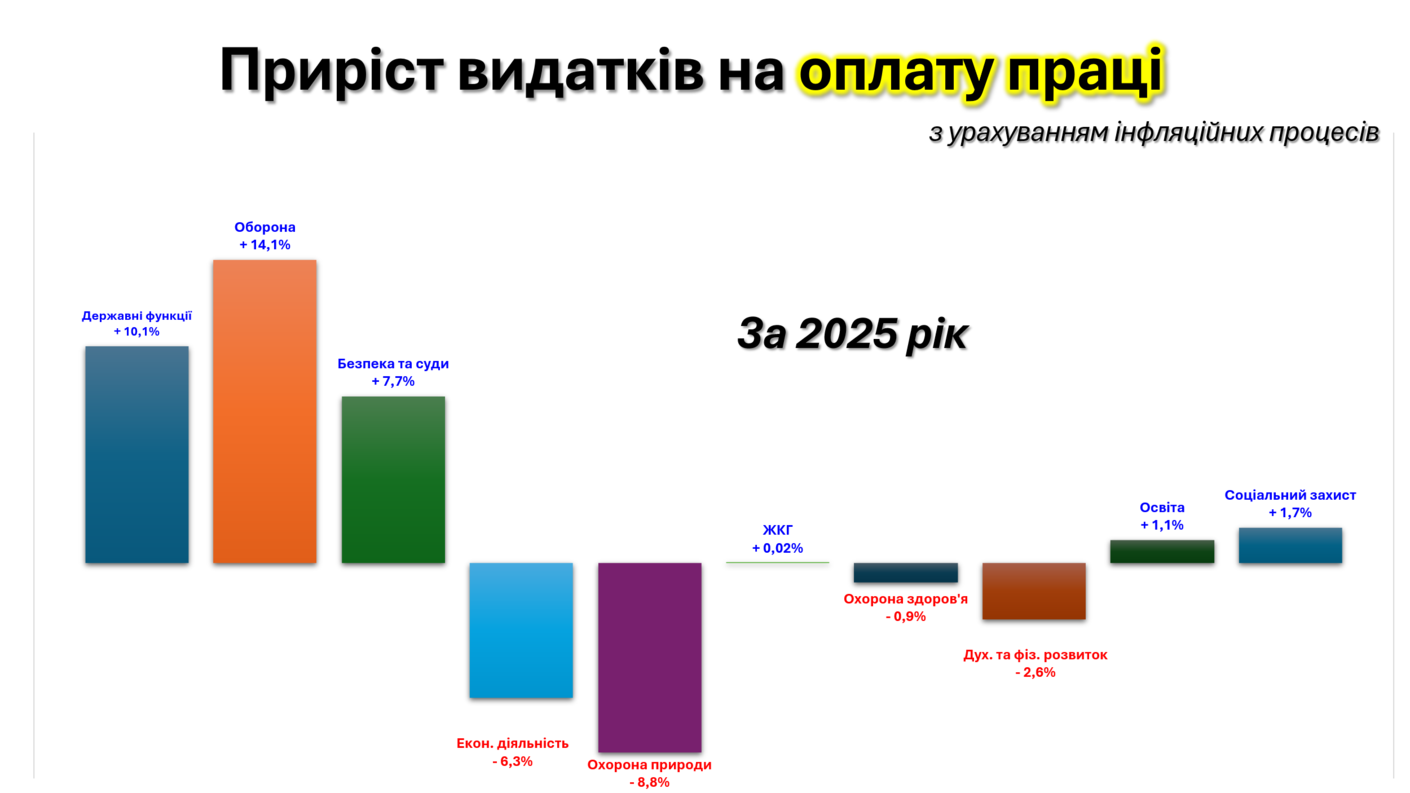
The dynamics of labor costs in 2025, taking into account inflationary processes, indicates the unevenness of changes in different sectors of the budget sphere and reflects the priorities of state policy under martial law.
The largest real increase in labor costs is observed in the defense sector – by 14.1%, which is a natural result of the increase in the number of personnel, the strengthening of material support for military personnel and the overall increase in the role of the security and defense sector in the structure of public finances.
There was also a significant increase in the sphere of national functions – by 10.1%, as well as in the sector of law and order, security and the judiciary – by 7.7%, which is associated with the strengthening of the institutional capacity of the state in wartime and the need to maintain the stability of the functioning of public administration.
At the same time, in socially oriented sectors, the growth rate of labor costs remains much more restrained. In particular, in the field of education, the real increase was 1.1%, and in the field of social protection – 1.7%, which indicates that the level of wages is actually maintained at a stable level without a significant expansion of financial opportunities to increase employees' incomes.
In the healthcare sector, even a slight reduction in the real level of labor costs (-0.9%) was recorded, which is explained by the peculiarities of the model of financing medical services through the system of medical guarantee programs and changes in the structure of financing the industry.
A reduction in real labor costs is also observed in the field of economic activity (-6.3%), environmental protection (-8.8%) and spiritual and physical development (-2.6%), which reflects the reorientation of budget resources to the priority needs of the security and defense sector.
Thus, the structure of changes in labor expenditures in 2025 confirms the preservation of a clear concentration of budget resources on financing the defense sector and public administration, while at the same time a moderate increase in wages in social sectors, which is a characteristic feature of wartime budget policy.
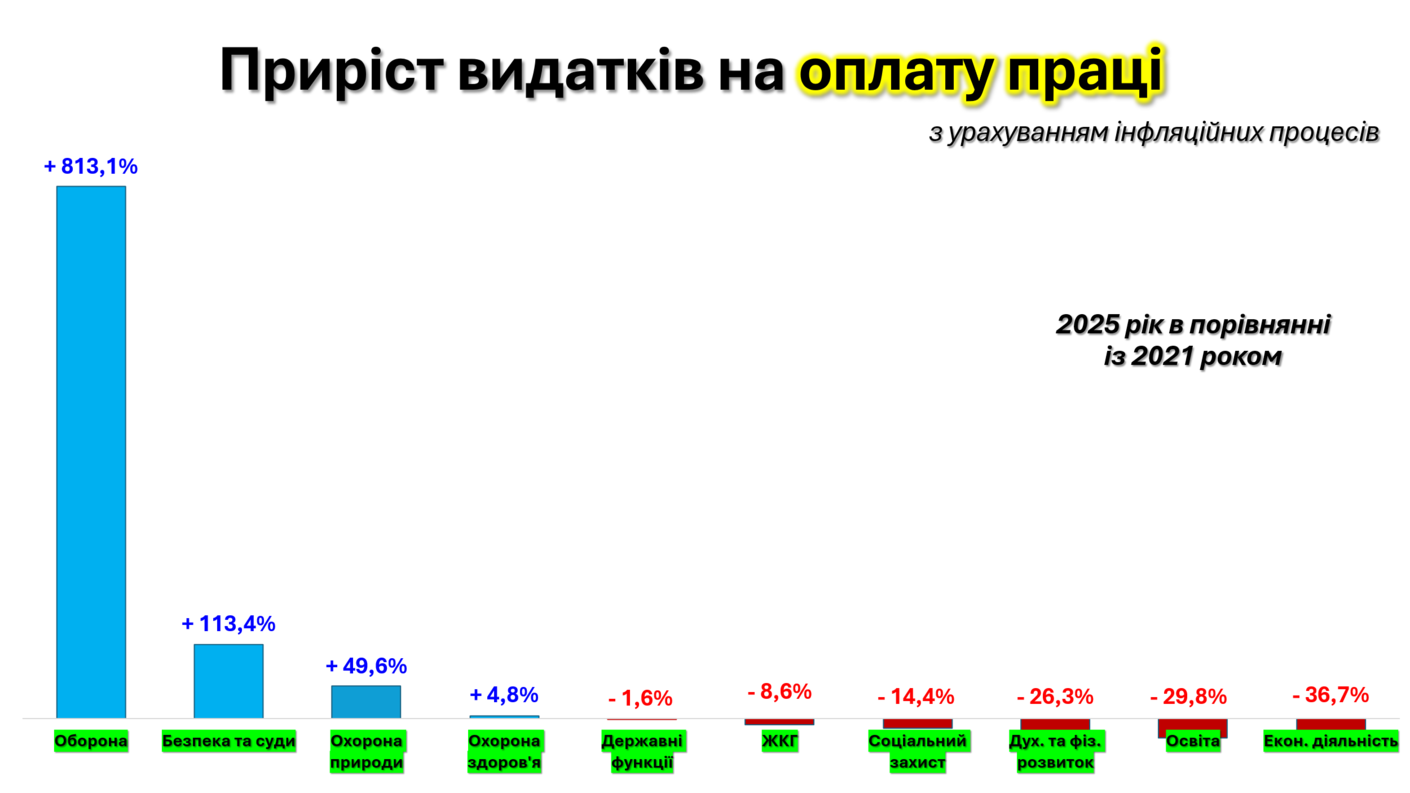
A comparison of changes in labor costs in 2025 compared to pre-war 2021 demonstrates a profound transformation of the structure of the state's budget policy under the influence of a full-scale war.
The most significant growth occurred in the defense sector – by 813.1%, which reflects a large-scale expansion of the security and defense sector, an increase in the level of financial support for military personnel and a general reorientation of budget resources to ensure the defense capability of the state.
Significant growth is also observed in the sector of law and order, security and the judiciary – by 113.4%, which indicates the strengthening of the role of law enforcement agencies and law enforcement institutions under martial law.
The environmental protection sector also demonstrates positive dynamics – by 49.6%, as well as health care – by 4.8%, which reflects the need to maintain the functioning of critical life support systems of the population.
At the same time, in most socially oriented sectors, there was a reduction in the real level of labor costs. In particular, in the field of education, the reduction was 29.8%, in the field of economic activity – 36.7%, in the field of spiritual and physical development – 26.3%, in the field of social protection – 14.4%, and in the field of housing and communal services – 8.6%.
A slight reduction is also observed in the sector of national functions – 1.6%, which indicates a general restraint in administrative expenditures of the state in wartime.
Thus, changes in the structure of labor expenditures between 2021 and 2025 reflect a systematic reorientation of public finances from the model of social and infrastructural development to the model of ensuring the defense resilience of the state, which is a characteristic feature of the functioning of public finances during the long war.
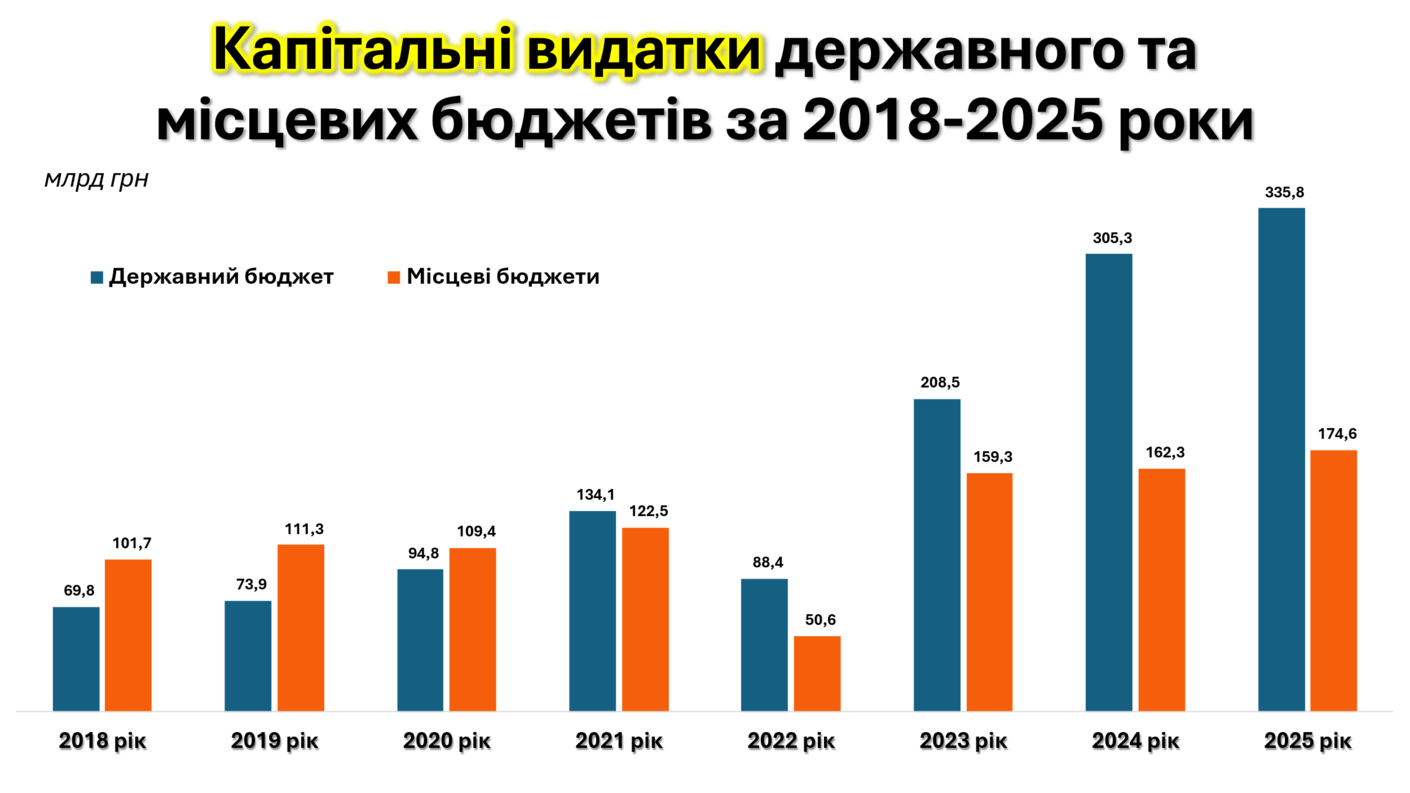
The dynamics of capital expenditures of the state and local budgets in 2018–2025 reflects a change in the structure.
In 2018-2021, local budgets played the main role in financing capital expenditures. In particular, in 2018, their volume amounted to UAH 101.7 billion against UAH 69.8 billion of the state budget, in 2019 – UAH 111.3 billion against UAH 73.9 billion, and in 2020 – UAH 109.4 billion against UAH 94.8 billion respectively. This was a direct result of the implementation of the decentralization reform and the expansion of the financial capabilities of territorial communities to invest in the development of local infrastructure.
In 2021, the ratio of capital expenditures of the state and local budgets actually equalized: UAH 134.1 billion of the state budget against UAH 122.5 billion of local budgets, which indicated the strengthening of the role of state investment programs in financing development.
In 2022 , there was a sharp reduction in capital expenditures, primarily local budgets, the volume of which decreased to UAH 50.6 billion, which was associated with the outbreak of a full-scale war and the reorientation of resources to meet the priority needs of defense and social support of the population. At the same time, capital expenditures of the state budget also decreased to UAH 88.4 billion.
Starting from 2023, there is a recovery in investment activity, but under a new financing model. In particular, in 2023, capital expenditures of the state budget amounted to UAH 208.5 billion, in 2024 – UAH 305.3 billion, and in 2025 – UAH 335.8 billion, which indicates a significant strengthening of the state's role in financing the restoration of infrastructure.
At the same time, capital expenditures of local budgets are also gradually increasing: from UAH 159.3 billion in 2023 to UAH 162.3 billion in 2024 and UAH 174.6 billion in 2025. This indicates a gradual recovery of the investment capacity of territorial communities after a sharp reduction in 2022.
Thus, in the post-war period, a new model of financing capital expenditures is being formed, in which the state plays a leading role in the implementation of large-scale infrastructure restoration projects, while local budgets are gradually restoring their investment function of territorial development.
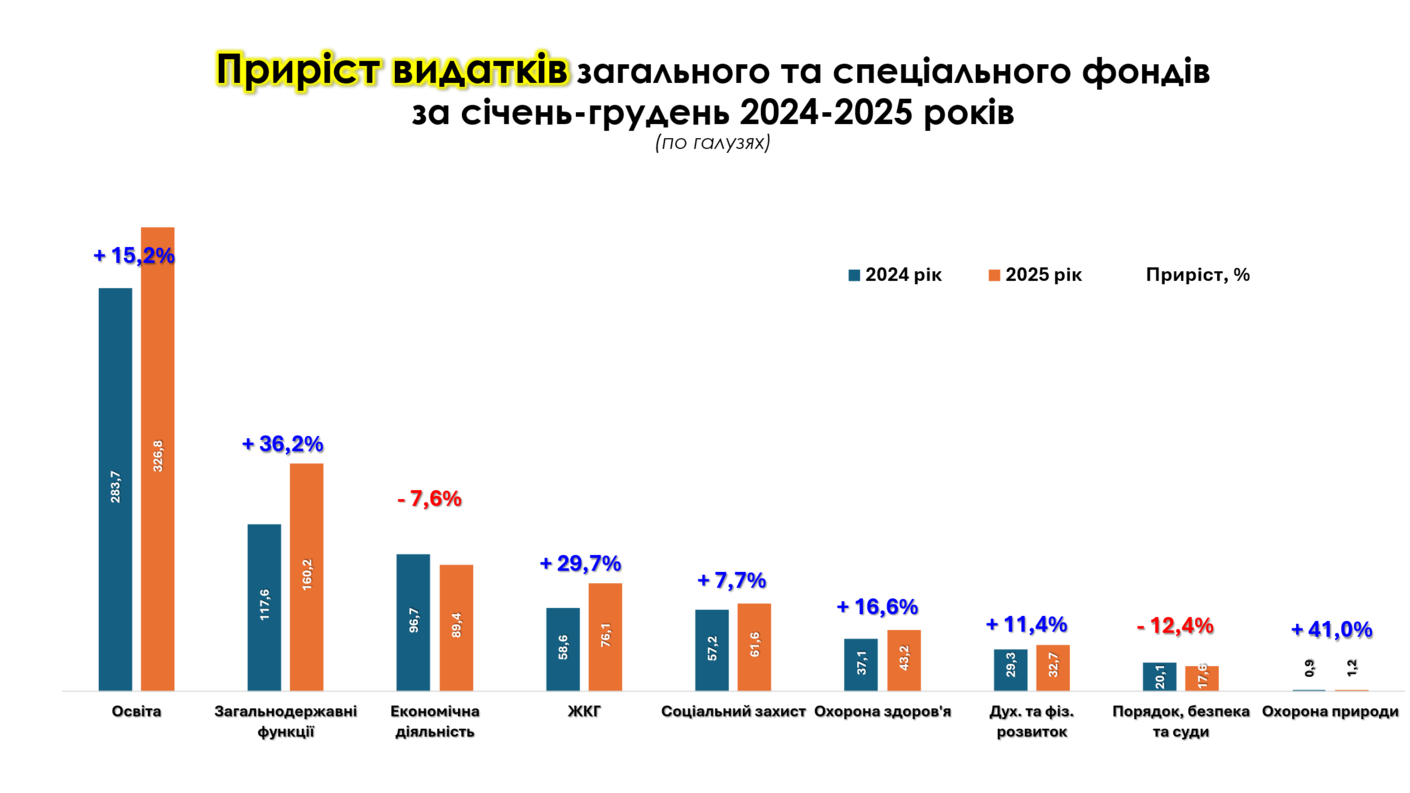
The largest increase in expenditures in 2025 was recorded in the sphere of national functions – by 36.2%, which reflects the strengthening of financing of the public administration system, international activities and servicing of budget instruments for the implementation of state policy in wartime.
A significant increase was also observed in the field of housing and communal services – by 29.7%, which is associated with the expansion of infrastructure restoration programs, preparation for the heating season and support for critical life support systems of territorial communities.
A noticeable increase in expenditures was recorded in the field of environmental protection – by 41.0%, although in absolute terms this sector remains relatively small in terms of funding.
Moderately positive dynamics remain in socially sensitive sectors. In particular, expenditures on education increased by 15.2%, on health care – by 16.6%, on social protection – by 7.7%, and on spiritual and physical development – by 11.4%, which indicates the maintenance of the stable functioning of social infrastructure even in wartime.
At the same time, a decrease in expenditures is observed in the field of economic activity – by 7.6%, which is partly explained by the completion of certain investment programs of the previous period, as well as in the sector of law and order, security and the judiciary – by 12.4%, which may be associated with a change in the structure of financing of the relevant budget programs between the general and special funds.
The structure of the largest expenditures of local budgets in 2025 confirms that the key financial priority of communities remains to ensure the functioning of the educational network and the local self-government system.
The largest amount of resources is traditionally directed to general secondary education. In particular, at the expense of the educational subvention, funding amounted to UAH 92.6 billion, and another UAH 73.0 billion – at the expense of local budgets' own resources. This means that even with state support, communities continue to play a decisive role in ensuring the activities of schools.
The maintenance of local self-government bodies also remains a significant area of expenditure – UAH 67.4 billion, which reflects the scale of functions performed by communities under martial law – from managing humanitarian processes to coordinating measures to restoring territories.
An important component of the budget policy of communities in 2025 is the financing of preschool education – UAH 56.0 billion, which confirms the preservation of the priority of basic social services even in conditions of limited resources.
At the same time, significant resources are directed to areas related to ensuring the stability of territories. In particular, local budgets allocated UAH 36.7 billion to support the defense sector, and another UAH 34.8 billion to improve the territories of communities, including infrastructure maintenance, restoration of facilities and ensuring the viability of settlements.
Among other significant areas of expenditure, it is worth noting the financing of measures of social protection of the population (UAH 17.5 billion), multidisciplinary inpatient medical care (UAH 17.1 billion), vocational education (UAH 16.1 billion) and contributions to the authorized capital of communal enterprises (UAH 16.0 billion), which is an important tool for supporting the local economy and communal infrastructure.
A separate group is formed by infrastructural areas of community development. In particular, UAH 14.2 billion is allocated for the construction and repair of local roads, UAH 7.2 billion for the construction of educational institutions, as well as significant resources for the maintenance of housing, cultural institutions, art schools and out-of-school education.
Thus, the structure of the largest expenditures of local budgets in 2025 shows that communities simultaneously perform three key functions: ensure the functioning of basic social services, maintain the resilience of territories in wartime, and continue to invest in the development of local infrastructure.
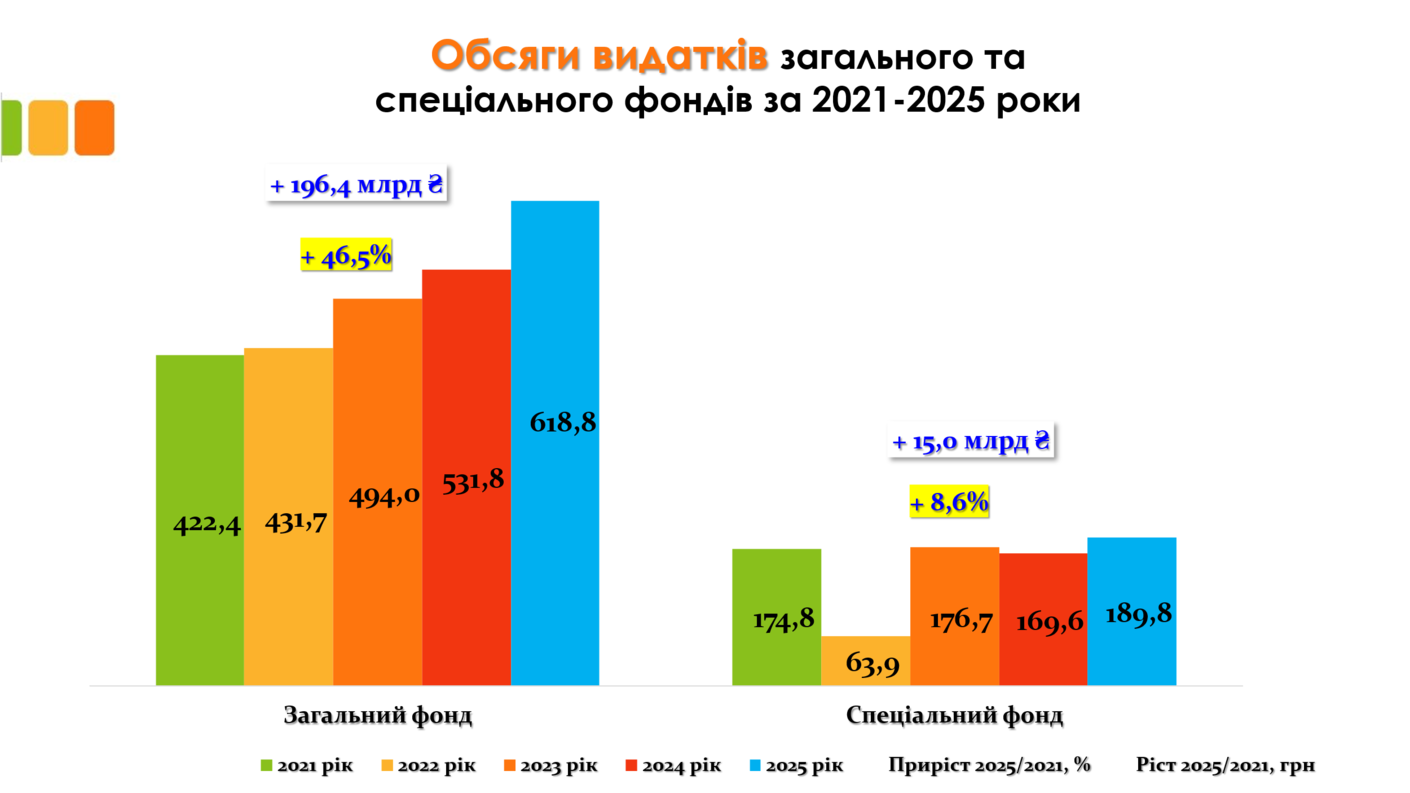
A comparison of the volumes of expenditures of the general and special funds of local budgets in 2021–2025 well illustrates how the financial model of the functioning of communities has changed during the full-scale war.
A noticeable increase occurred in the general fund, the expenditures of which increased from UAH 422.4 billion in 2021 to UAH 618.8 billion in 2025, i.e. by UAH 196.4 billion (+46.5%). Its expenditures in 2025 amounted to UAH 189.8 billion, which is only UAH 15.0 billion (+8.6%) more compared to 2021. Such relatively restrained dynamics is explained by the fact that it is the special fund that most depends on the investment resources of communities.
Especially indicative is the sharp reduction in the expenditures of the special fund in 2022 – to UAH 63.9 billion, which reflects the actual suspension of most investment projects of communities at the initial stage of the full-scale war.
Starting from 2023, the expenditures of the special fund are gradually recovering, but their dynamics remain more restrained compared to the general fund. This indicates that communities primarily ensured the stability of the current functioning of social infrastructure, postponing part of investment development projects for subsequent periods.
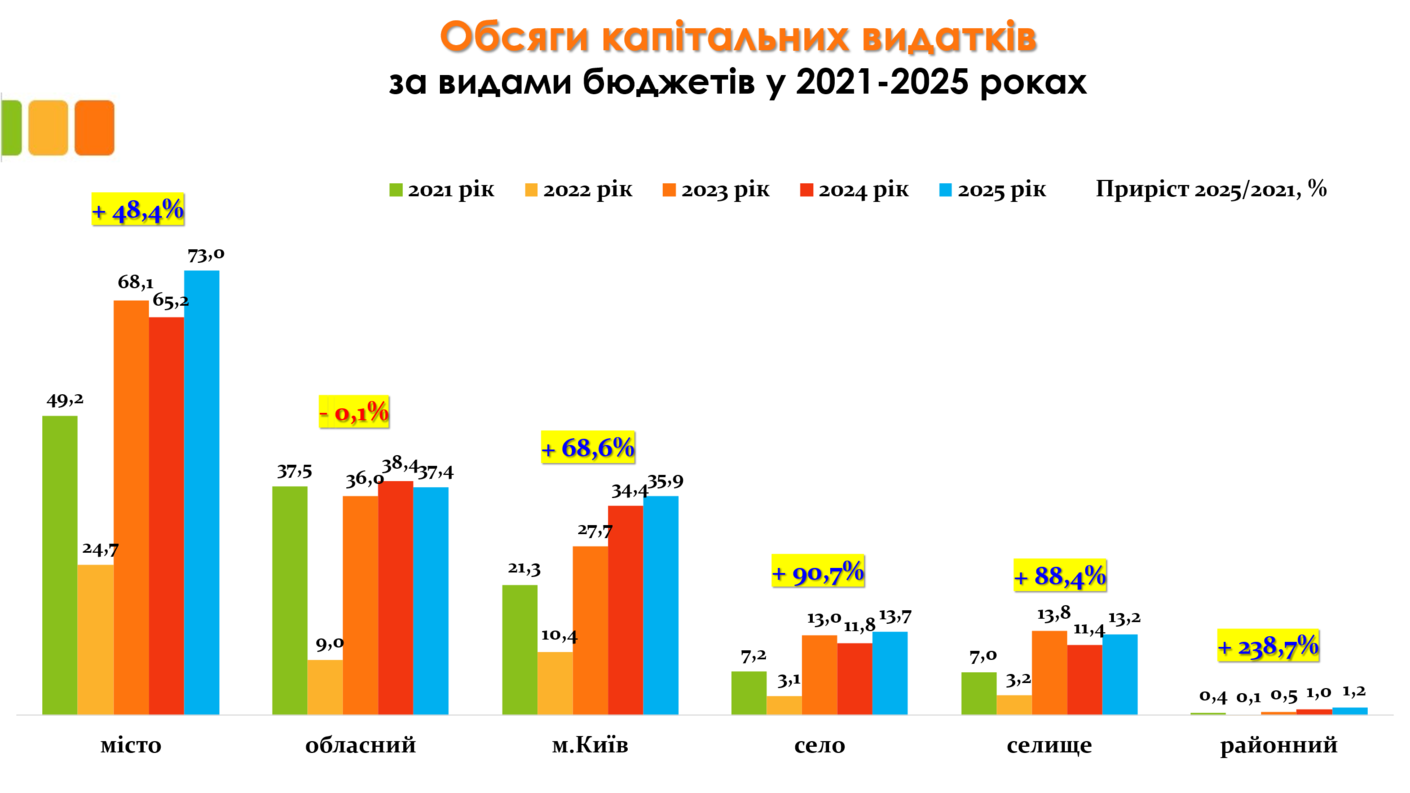
The dynamics of capital expenditures of local budgets by type of budget in 2021–2025 demonstrates a gradual recovery in the investment activity of territorial communities after a sharp reduction in the first year of the full-scale war.
The largest volumes of capital expenditures are traditionally in the budgets of cities, which in 2025 allocated UAH 73.0 billion for investment purposes, which is 48.4% more than in 2021.
At the same time, the dynamics of capital expenditures of the budget of the city of Kyiv is especially indicative, where their volume increased by 68.6%, to UAH 35.9 billion. This indicates the intensification of the implementation of infrastructure programs at the metropolitan level even in wartime.
Growth is also demonstrated by the budgets of rural territorial communities, where capital expenditures in 2025 reached UAH 13.7 billion, which is 90.7% more than in 2021. This dynamics reflects the gradual expansion of the investment role of the basic level of local self-government.
A similar trend is demonstrated by the budgets of settlement communities, where the volume of capital expenditures increased by 88.4% to UAH 13.2 billion, which indicates a gradual resumption of financing for local infrastructure projects.
At the same time, regional budgets in 2025 retain an almost unchanged level of capital expenditures compared to 2021 (-0.1%), which reflects the transformation of their role in the public investment system after the completion of the main stage of decentralization.
In general, the data show that after a sharp drop in investment activity in 2022, it is the budgets of the basic level of local self-government that are gradually restoring the role of drivers for the implementation of infrastructure projects in the territories of communities.
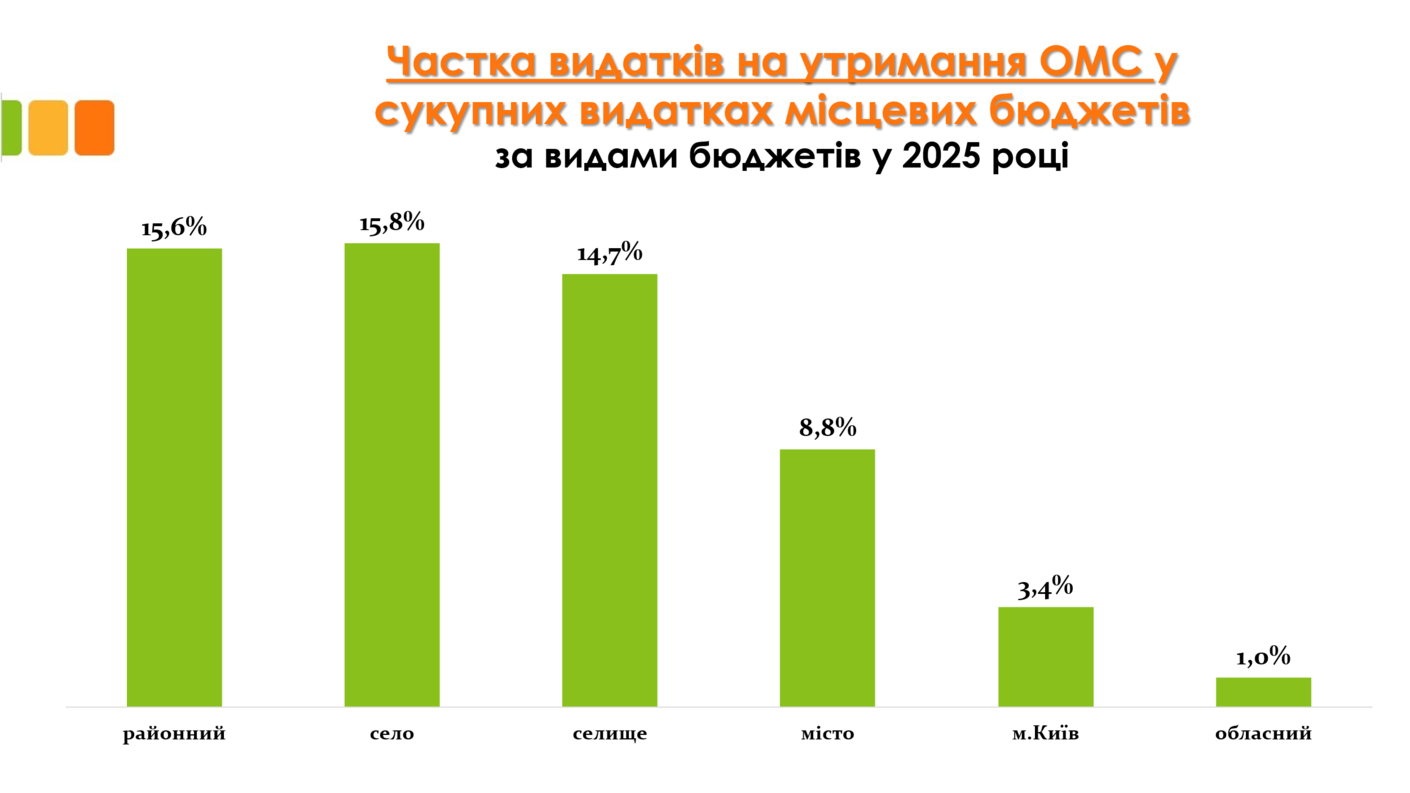
The share of expenditures on the maintenance of local self-government bodies in the structure of aggregate expenditures of local budgets differs significantly depending on the type of budget, which reflects the different scale of powers and resource base of the respective levels of government.
The highest share is in district budgets – 15.6%, which is explained by the limited scope of expenditure powers at this level after the administrative-territorial reform and, accordingly, by a higher share of expenditures to ensure their functioning.
In rural budgets, this share is 15.8% and settlement budgets – 14.7%, where a significant share of administrative costs is due to the small scale of the revenue base and the need to maintain the basic management infrastructure of communities.
In city budgets, the share of expenditures for the maintenance of local self-government bodies is noticeably lower – 8.8%, which indicates the effect of the scale of management and a wider resource base of such communities.
It is even lower in the budget of the city of Kyiv – 3.4%, which is explained by a significant amount of expenditures for the development and financing of sectoral programs in the structure of the capital's budget.
The smallest share of relevant expenditures remains in regional budgets – 1.0%.
Thus, the ratio of administrative expenditures in different types of local budgets reflects the level of management costs.
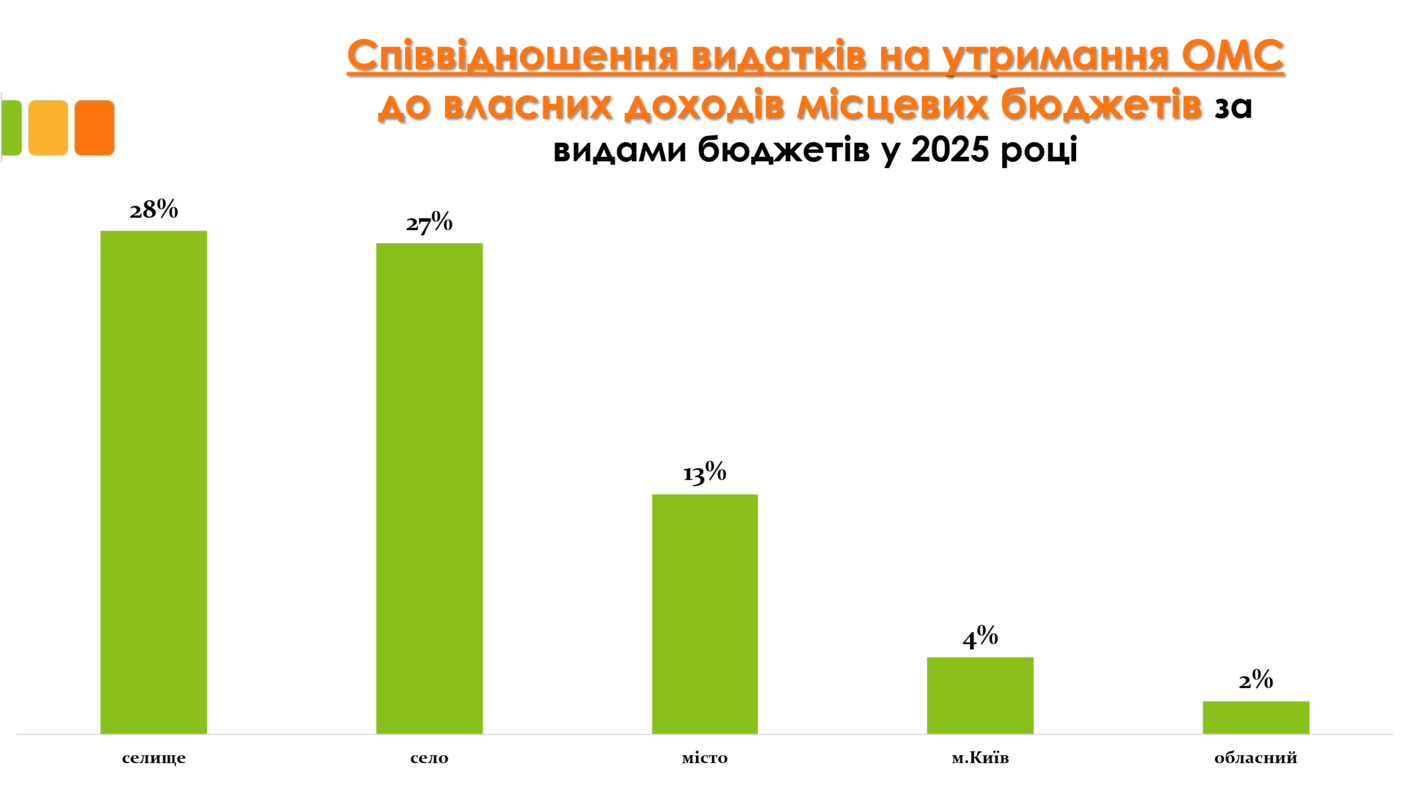
The ratio of expenditures on the maintenance of local self-government bodies to the own revenues of local budgets is one of the key indicators of the institutional capacity of communities and the efficiency of the use of their financial resources.
The highest level of this ratio in 2025 is observed in the budgets of settlement communities – 28% and rural communities – 27%, which indicates a significant burden of management costs on their own revenue base. This is a characteristic feature of baseline communities with a smaller population and limited financial resources.
In urban communities, the corresponding figure is 13%, which reflects a more balanced structure of expenditures due to a wider revenue base and the effect of scale management.
The burden of expenditures on the maintenance of government bodies in the budget of the city of Kyiv is much lower – 4%, which is explained by the high concentration of own revenues and a significant amount of development expenditures in the structure of the capital's budget.
The lowest ratio is observed in regional budgets – 2%, which is due to the specifics of their functional role in the budget system and the lack of an extensive network of basic public services at this level of management.
Thus, these indicators demonstrate that after the completion of the decentralization reform, the effect of the scale of governance remains one of the key factors of the financial efficiency of communities: the wider the budget's own revenue base, the smaller the share of resources needed to ensure the functioning of local self-government bodies.
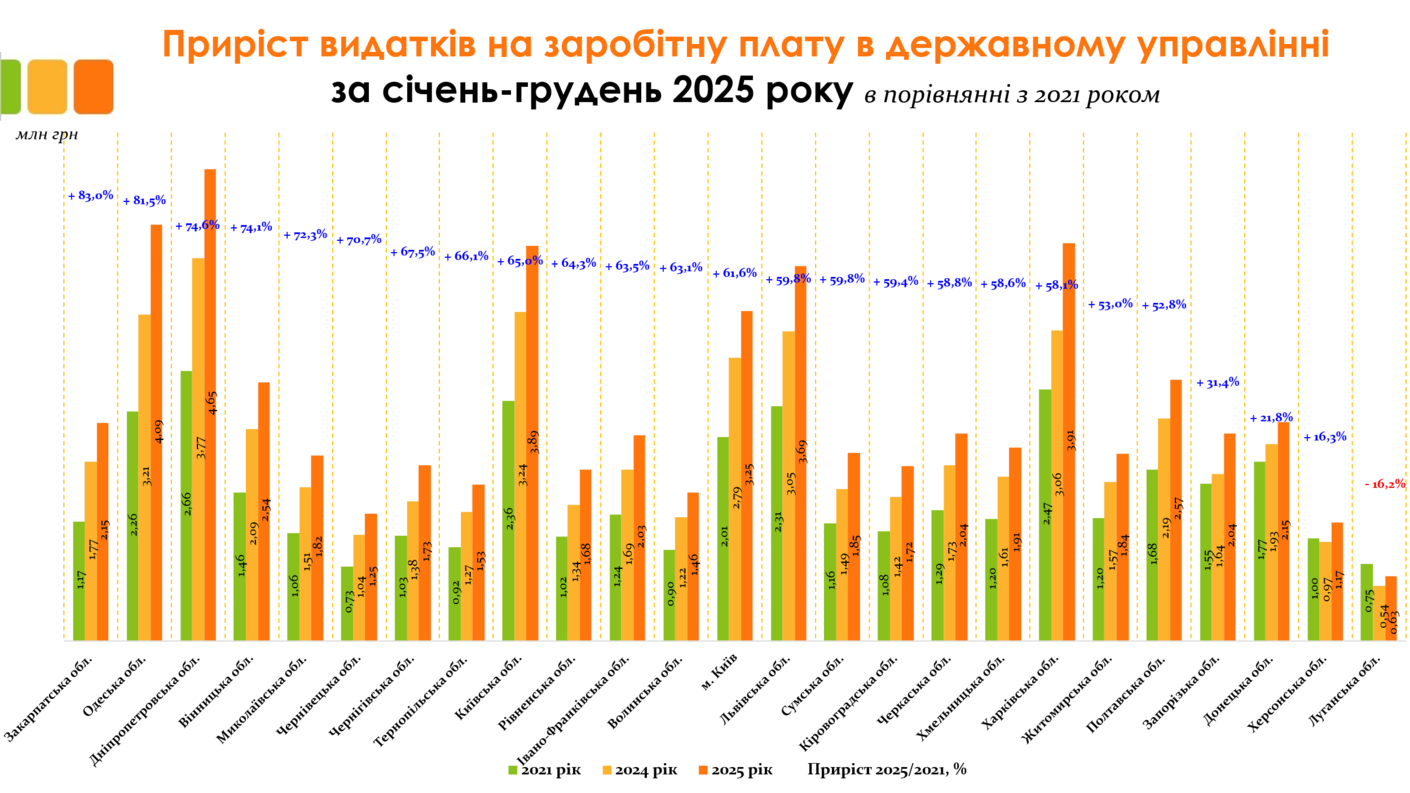
A comparison of labor costs in the field of public administration in January-December 2025 compared to 2021 demonstrates a significant increase in financing in this area in almost all regions of Ukraine.
In most regions, the increase in expenditures exceeds 60%, which reflects the simultaneous influence of several factors: a revision of the level of financial support for civil servants, compensation for inflationary processes, as well as an increase in the functional load on public authorities under martial law.
The highest growth rates are observed in Zakarpattia region (+83.0%), Odesa region (+81.5%), Dnipropetrovsk region (+74.6%) and Vinnytsia region (+74.1%), which may indicate the strengthening of the role of these regions in ensuring the managerial, logistical and coordination functions of the state in the context of a full-scale war.
In most other regions, expenditure growth is in the range of 58–67%, which forms a relatively uniform picture of wage increases in the public administration sector across the country.
At the same time, some regions show lower growth rates, in particular Zaporizhzhia region (+31.4%), Donetsk region (+21.8%) and Kherson region (+16.3%), which is explained by the difficult security situation and the limitation of the functioning of some state institutions in these territories.
The dynamics of the Luhansk region (-16.2%) is especially indicative, where the reduction in labor costs reflects the loss of the opportunity for the full functioning of some state authorities in the temporarily occupied territories.
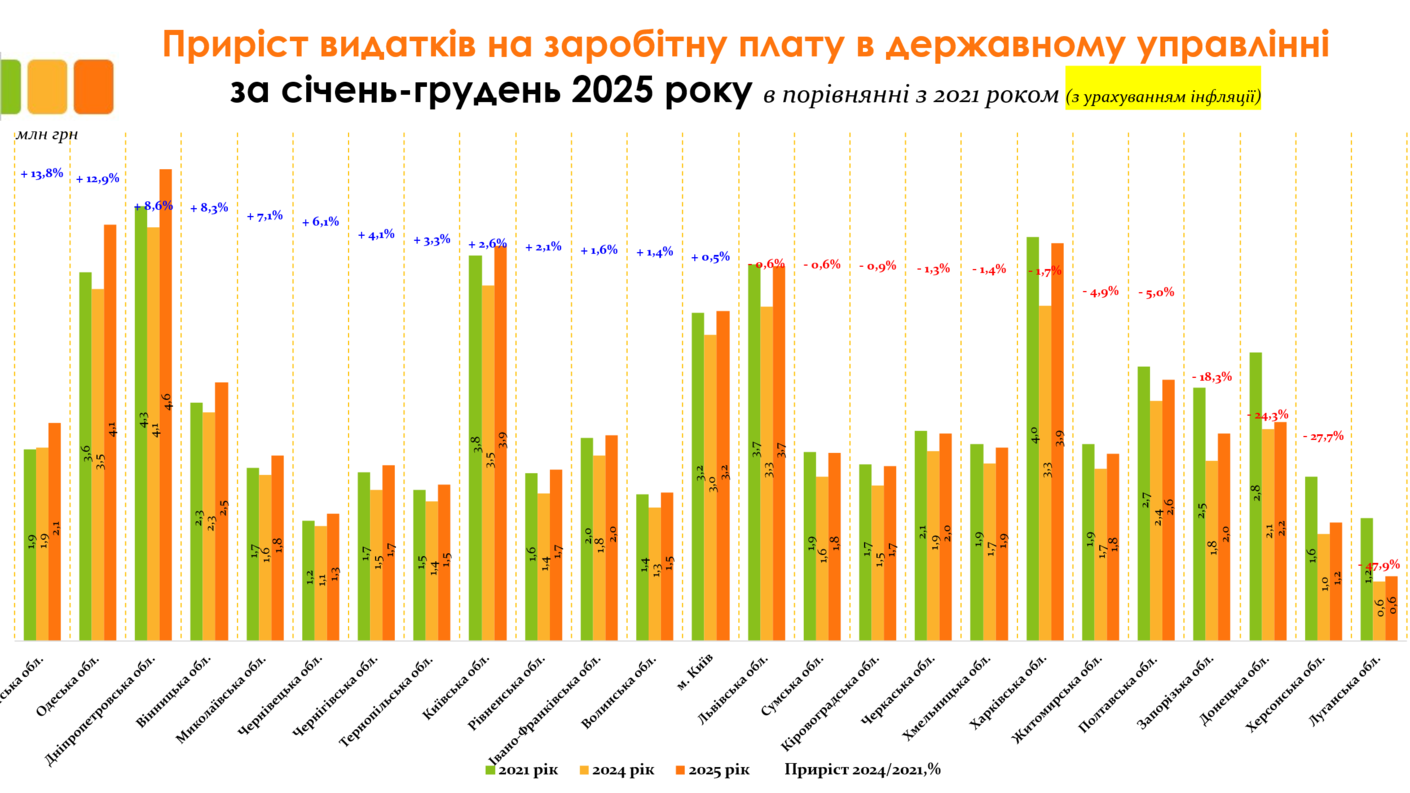
Taking into account inflationary processes, the dynamics of labor costs in the field of public administration in 2025 compared to 2021 shows a more restrained picture of changes than in nominal terms.
In most regions, the growth of real expenditures remains positive, but its level is mostly in the range of 1% to 9%, which indicates, first of all, the compensatory nature of the increase in wages in the public administration sector in the context of inflationary pressures during the war period.
The largest real growth was observed in Zakarpattia region (+13.8%), Odesa region (+12.9%), Dnipropetrovsk region (+8.6%) and Vinnytsia region (+8.3%), which reflects the increased functional load on public authorities in relatively safe regions that perform important logistics and coordination functions.
In a significant part of the regions, real growth is moderate and fluctuates between 1-6%, which actually means maintaining a stable level of staffing of public administration without significantly expanding its financial base.
At the same time, in a number of regions, there is a decrease in real labor costs, in particular in Kherson region (-27.7%), Donetsk region (-24.3%), Zaporizhzhia region (-18.3%) and Luhansk region (-47.9%). Such dynamics is directly related to the security situation and the partial loss of the ability to function state institutions in the respective territories.
It is significant that even in regions with positive dynamics, the compensatory nature of changes prevails, which indicates the adaptation of the public administration system to the conditions of the war economy without a significant expansion of the administrative sector.
Thus, in real terms, the growth of labor costs in public administration in 2021-2025 is mainly stabilizing.
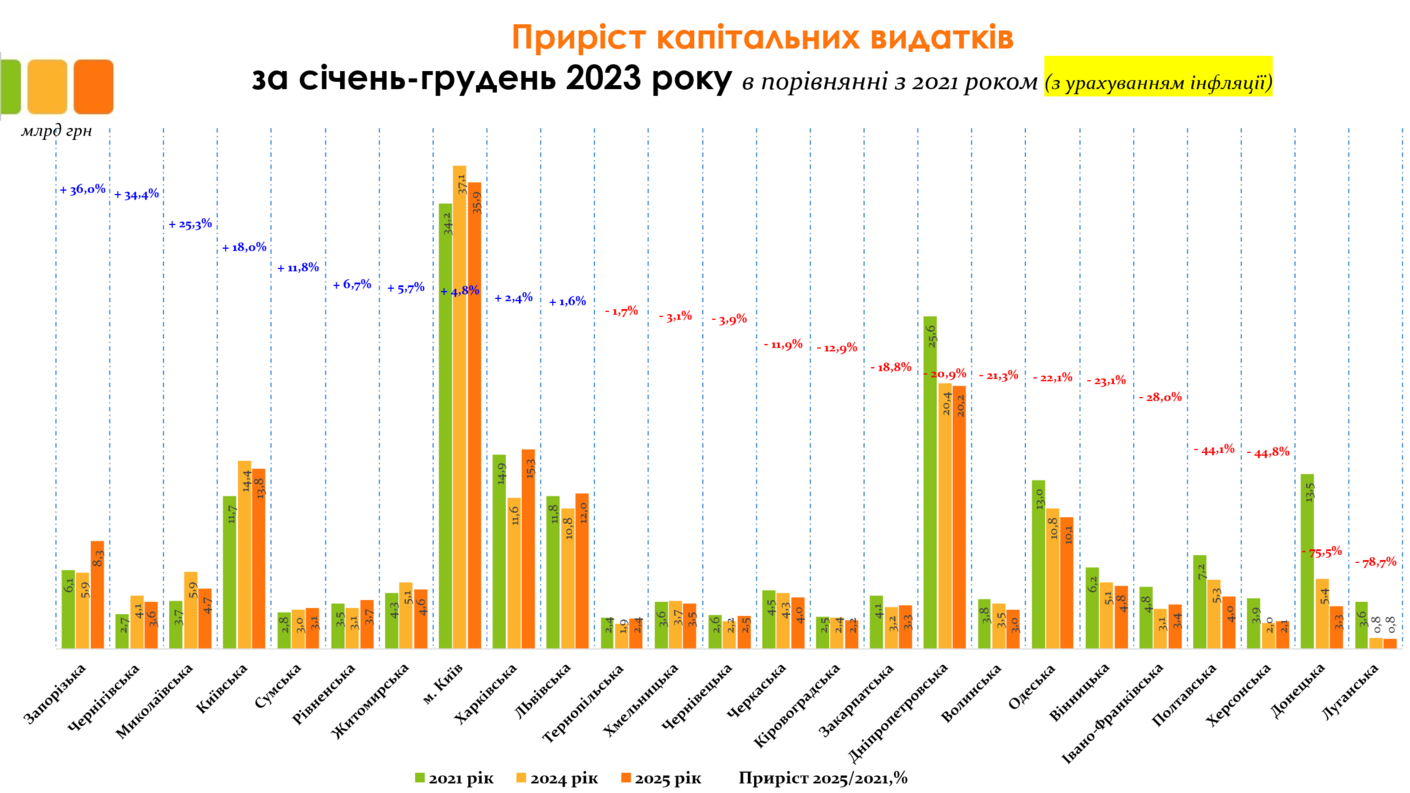
A comparison of the dynamics of capital expenditures of local budgets in January-December 2023 compared to 2021, taking into account inflationary processes, demonstrates an uneven recovery of investment activity of communities after a sharp contraction in 2022.
In a number of regions, already in 2023, there was a noticeable real increase in capital expenditures. In particular, the largest increase was recorded in Zaporizhzhia region (+36.0%), Chernihiv region (+34.4%), Mykolaiv region (+25.3%) and Kyiv region (+18.0%).
Moderate growth in investment activity is also demonstrated by Sumy (+11.8%), Rivne (+6.7%) and Zhytomyr regions (+5.7%), which reflects the gradual resumption of the implementation of local infrastructure projects after the stabilization of the budget situation of communities.
At the same time, in most regions of Ukraine in 2023, capital expenditures remained below the level of 2021. In particular, negative dynamics is observed in Odesa (-22.1%), Volyn (-21.3%), Zakarpattia (-18.8%), Kirovohrad (-12.9%) and Cherkasy (-11.9%) regions, which indicates a cautious investment policy of communities during a period of high uncertainty.
The largest reduction was recorded in the regions directly affected by hostilities or were in the zone of increased security risks, in particular in Donetsk (-75.5%) and Luhansk regions (-78.7%), where the possibilities for implementing investment projects were significantly limited.
Thus, already in 2023, a new geography of capital expenditures of local budgets can be traced: some regions have moved to the active phase of infrastructure restoration, while others have focused resources mainly on ensuring the current functioning of territories.
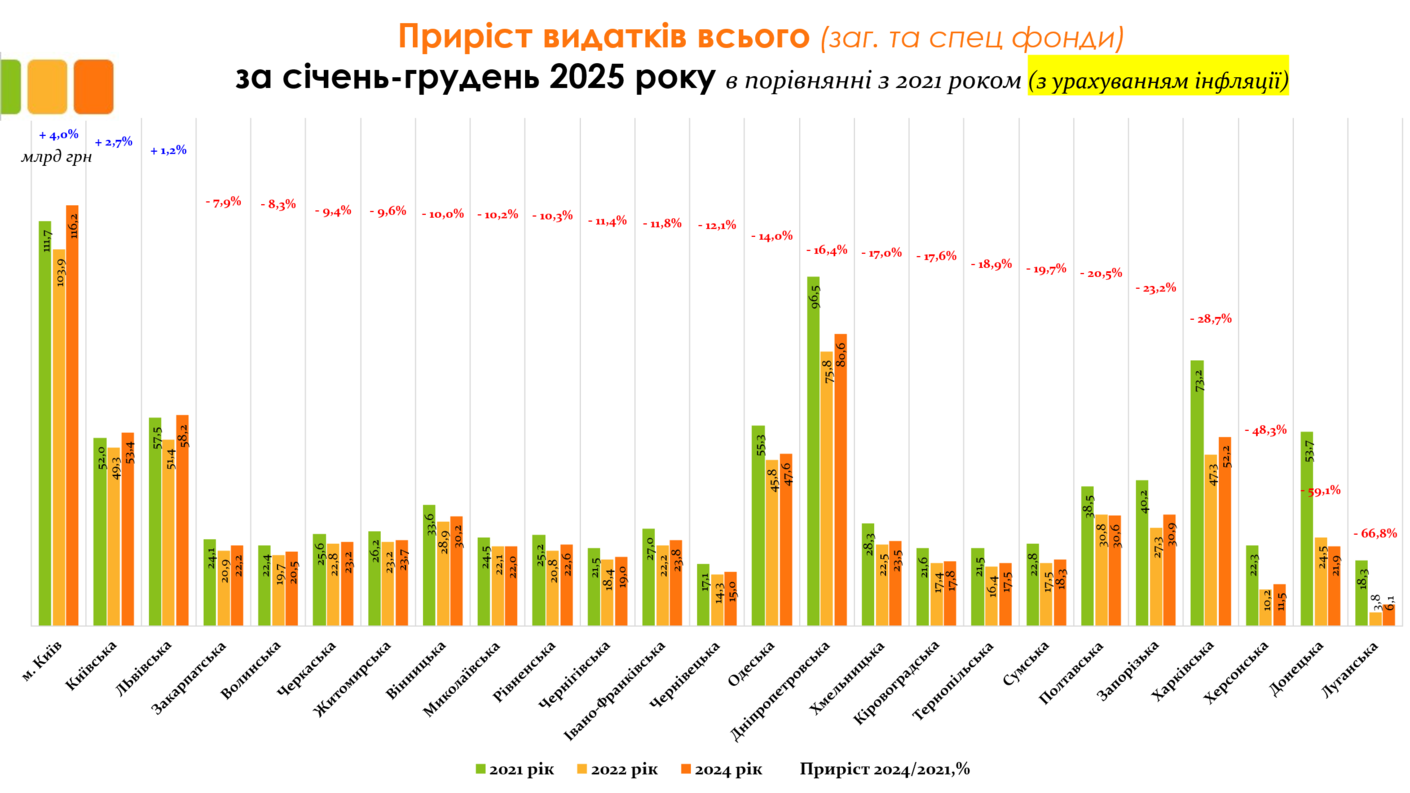
A comparison of the total volume of expenditures of local budgets for January-December 2025 compared to 2021, taking into account inflationary processes, demonstrates the heterogeneous dynamics of the financial capacity of territorial communities in different regions of Ukraine.
Only in some regions a real increase in aggregate expenditures of local budgets was recorded. In particular, positive dynamics is observed in Kyiv (+4.0%), Kyiv region (+2.7%) and Lviv region (+1.2%), which indicates the preservation of a relatively stable financial base of communities in these territories even in the context of a war economy.
At the same time, in most regions of Ukraine, real expenditures of local budgets in 2025 remain below the level of 2021. For a significant part of the regions, the reduction is in the range of 7-20%, which reflects the reorientation of resources to the priority needs of the functioning of communities and the restriction of investment activity under martial law.
The most noticeable decrease was recorded in Kharkiv region (-28.7%), Kherson region (-48.3%), Donetsk region (-59.1%) and Luhansk region (-66.8%), which is directly related to the consequences of hostilities, destruction of infrastructure and temporary occupation of part of the territories.
The reduction in real expenditures in a number of relatively rear regions, in particular Poltava (-20.5%), Sumy (-19.7%), Ternopil (-18.9%) and Kirovohrad regions (-17.0%), which indicates a general decrease in the investment component of local budgets during the war, is also indicative.
Thus, even despite the nominal growth of community budgets in 2022-2025, in real terms, the financial capacity of most local budgets remains below the pre-war level, which creates new challenges for the implementation of the policy of territorial restoration and the development of local infrastructure.
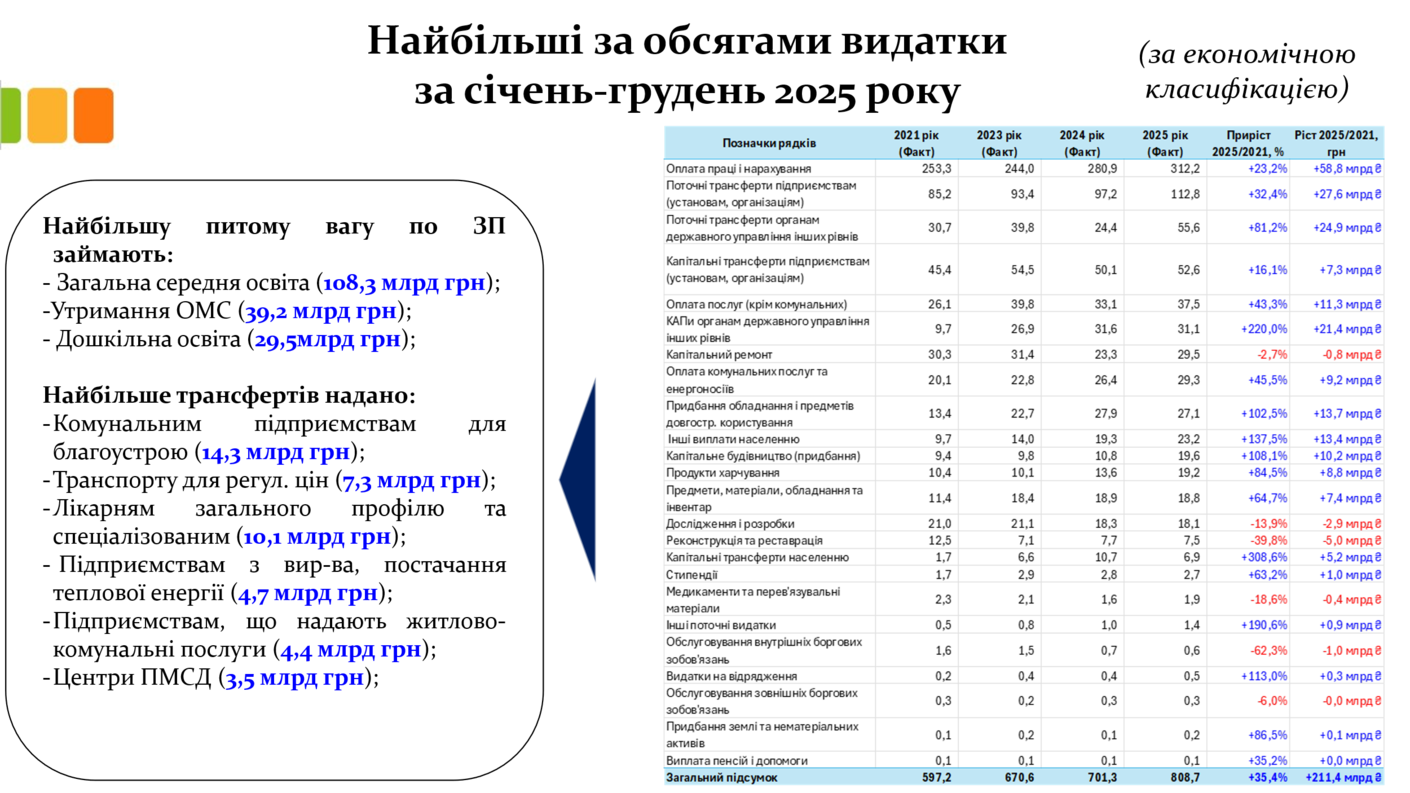
The largest share is traditionally made up of labor costs with accruals, the volume of which in 2025 reached UAH 312.2 billion, an increase of UAH 58.8 billion compared to 2021. This confirms that local budgets remain primarily budgets for the provision of public services through the financing of human resources in education, medicine and local governments.
Current transfers to enterprises and organizations also remain significant in terms of volumes, which increased to UAH 112.8 billion, which is associated with supporting the functioning of the communal sector and ensuring the stability of housing and communal infrastructure of communities.
At the same time, transfers to other levels of government have increased significantly, the volume of which has increased by more than 80%, which reflects a more active involvement of local budgets in financing joint state and regional tasks under martial law.
Special attention should be paid to the increase in expenditures on capital transfers to enterprises, which exceeded UAH 52 billion, which indicates the preservation of critical infrastructure support tools even despite the general reduction in the investment component of development budgets.
At the same time, the structure of transfers shows that the largest amounts of support are directed to housing and communal services, transport and health care institutions, which ensure the continuity of basic services to the population.
In general, the data confirm that in 2025 the economic structure of local budgets retains a social and service nature, where the key are expenditures on wages, support for the communal sector and ensuring the stability of the functioning of the basic infrastructure of communities.
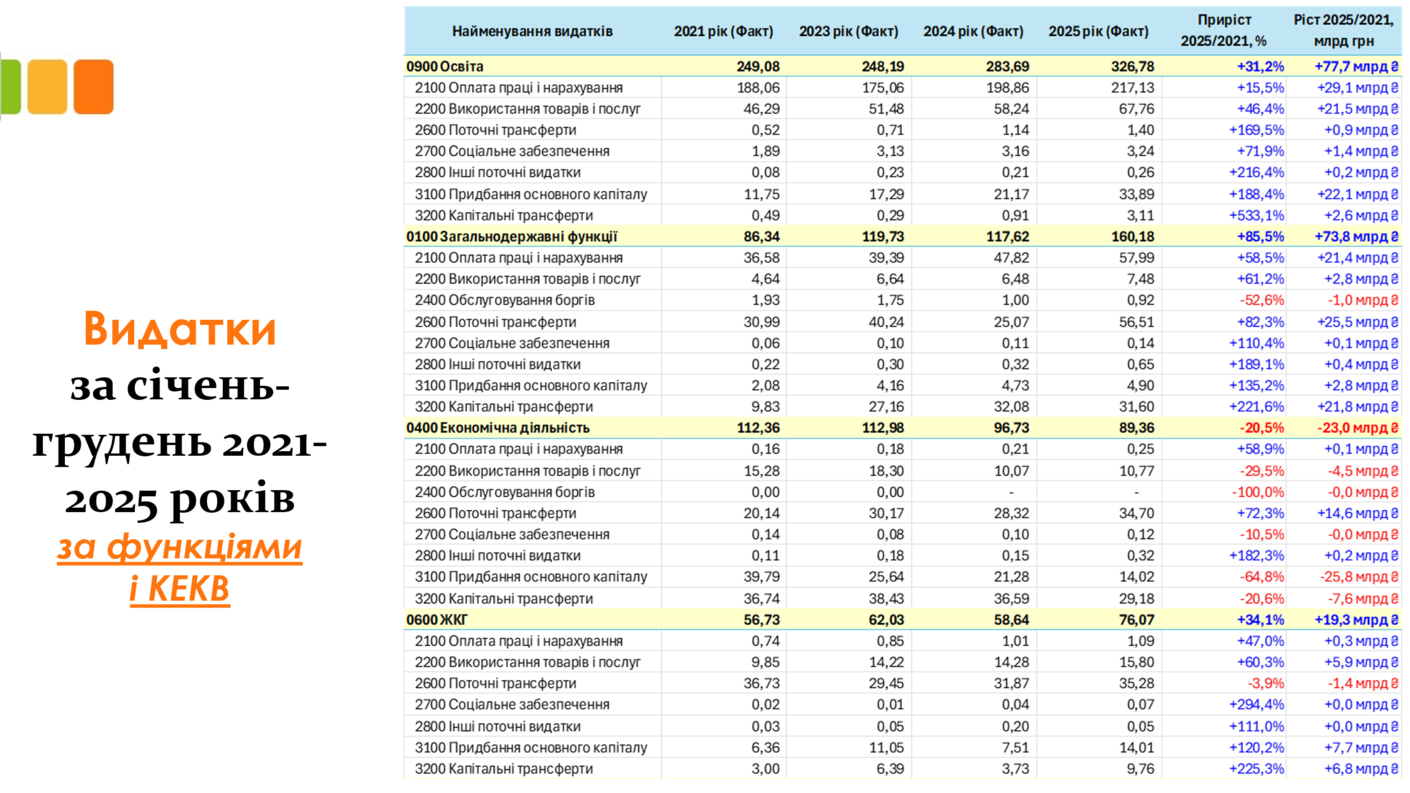
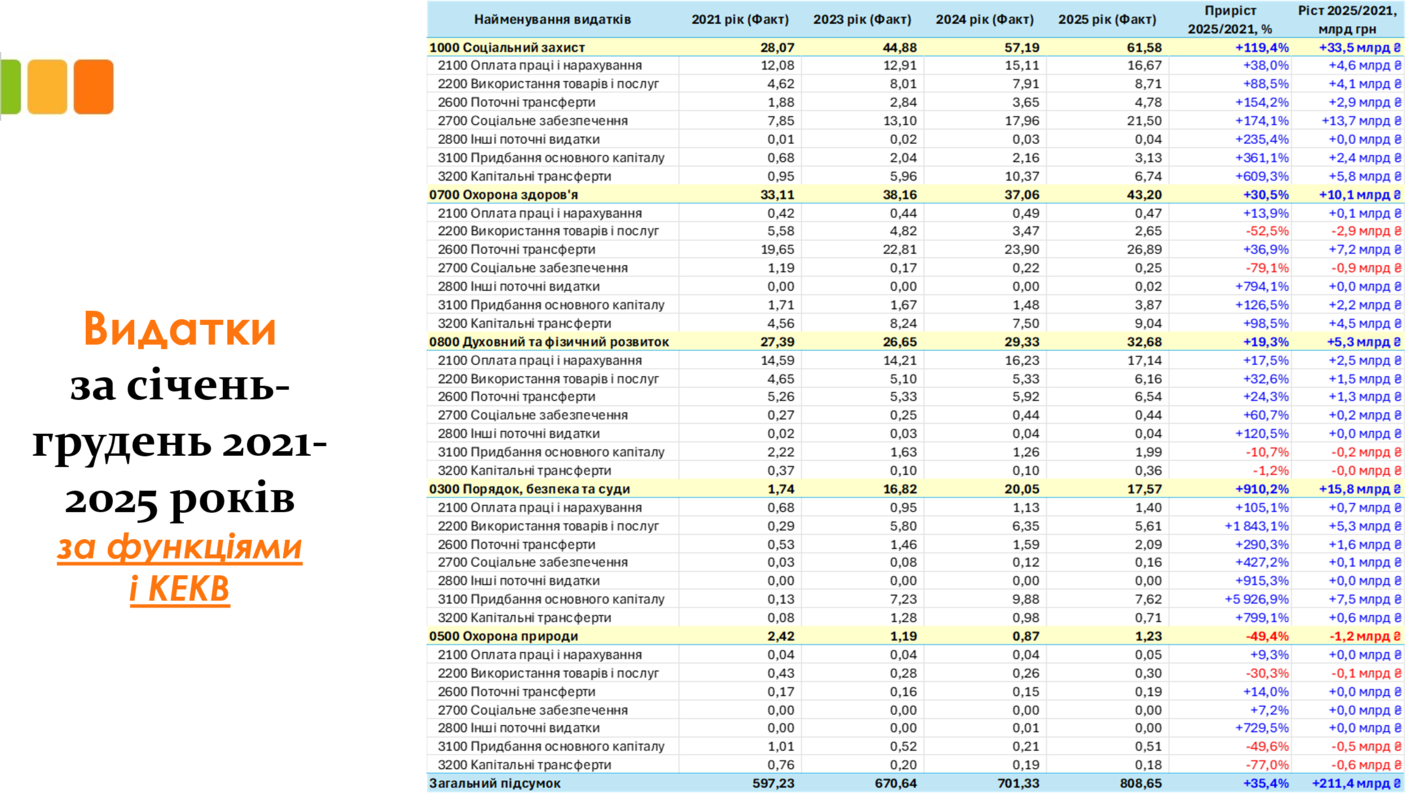
The analysis of the structure of expenditures of local budgets by functional and economic classification in 2021–2025 shows a significant transformation of the priorities of the budget policy of territorial communities in the conditions of the war period.
Education traditionally remains the largest area of expenditure in terms of expenditures, the financing of which in 2025 amounted to UAH 326.8 billion, which is UAH 77.7 billion more than in 2021. The bulk of the increase falls on the remuneration of employees in the educational sector and the financing of material and technical support of educational institutions.
Expenditures in the area of national functions also increased significantly, reaching UAH 160.2 billion in 2025, an increase of UAH 73.8 billion compared to the pre-war period. This growth is largely due to the expansion of interbudgetary transfers and the financing of measures to ensure the functioning of the management system under martial law.
At the same time, in the direction of economic activity, there is a decrease in expenditures by UAH 23.0 billion (-20.5%), which reflects a decrease in the investment component of local budgets and a reorientation of resources to the priority needs of the functioning of communities.
A noticeable increase is demonstrated by expenditures on social protection of the population, which more than doubled to UAH 61.6 billion, which indicates the strengthening of the role of local budgets in supporting the population during the war.
Expenditures on housing and communal services also increased, which in 2025 amounted to UAH 76.1 billion, which is UAH 19.3 billion more than in 2021. A significant part of these resources is directed to support the functioning of critical infrastructure of communities.
A significant increase occurred in the areas of order, security and the judiciary, where expenditures increased almost tenfold to UAH 17.6 billion, which is associated with the financing of territorial defense measures and security programs at the local level.
At the same time, spending on nature protection has almost halved, which is a characteristic sign of the redistribution of resources in favor of priority social and security areas.
In general, the data show that in 2021-2025, local budgets gradually changed their functional structure: the share of development expenditures decreased, while the role of expenditures on basic services, social support for the population and territorial security measures increased.
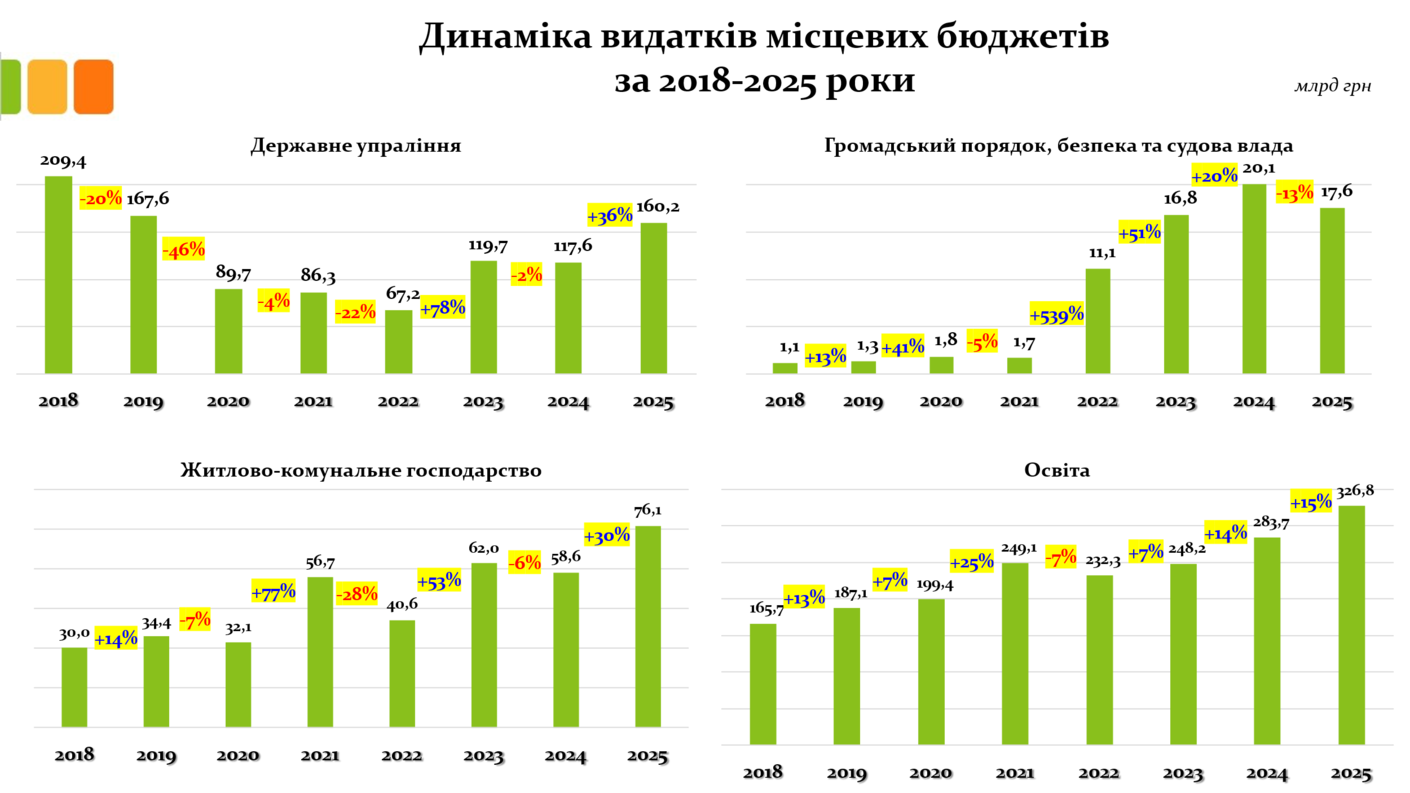
The graphs reflect the change in the functional priorities of local budgets in 2018–2025 and well demonstrate the impact of both the decentralization reform and the war period on the structure of community expenditures.
First of all, attention is drawn to the significant reduction in expenditures on public administration in 2018-2022. This reduction was a direct result of the implementation of the decentralization reform and administrative-territorial changes, in particular the consolidation of territorial communities and the optimization of the network of government bodies at the basic level. loads of communities during the war.
At the same time, expenditures on public order and security are growing most dynamically, which is a direct consequence of the expansion of the role of local self-government in ensuring the territorial resilience of communities. Since 2022, local budgets have been actively financing territorial defense measures, support for security units, and responding to wartime challenges.
Expenditures on housing and communal services have shown gradual growth throughout the period, with the exception of a brief drawdown in 2022. This indicates that communities are forced to take on more and more responsibility for maintaining critical infrastructure, energy resilience and continuity of basic services to the population.
The most stable and systematic direction remains education, where there has been a consistent increase in expenditures throughout the entire period. The educational sector traditionally forms the largest share of expenditures of local budgets, which confirms its status as the basic function of local self-government bodies delegated by the state.
Thus, the overall dynamics of local budget expenditures reflects two key trends: on the one hand, the effect of optimizing administrative costs due to decentralization, and on the other hand, the reorientation of community resources to provide basic services, maintain infrastructure, and strengthen the security component in wartime.
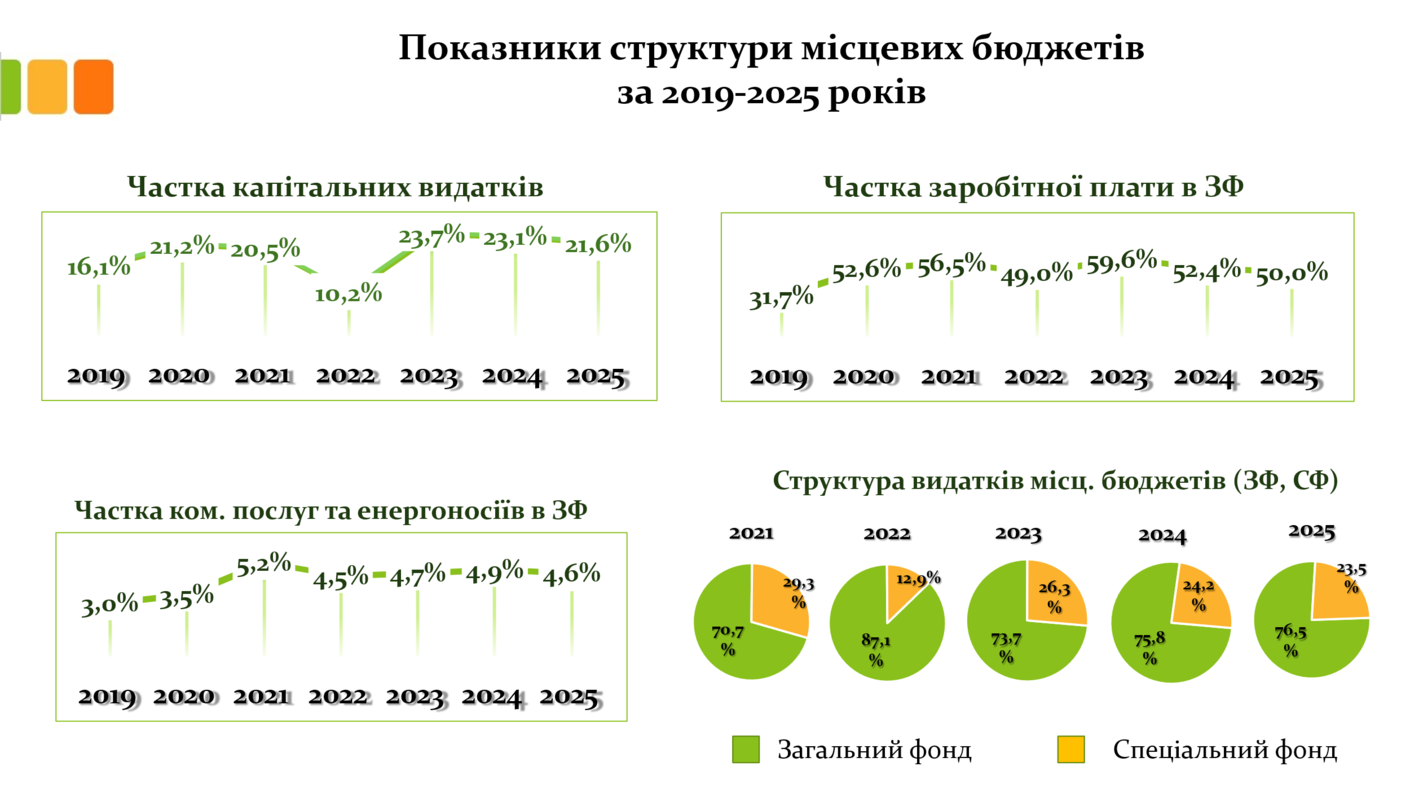
The graphs show:
- Investment capacity of communities,
- Rigidity of the expenditure structure,
- Energy load,
- Changing the role of the special fund.
First of all, the dynamics of the share of capital expenditures is indicative. After a stable level of about 20% in 2019-2021, their share sharply decreased in 2022 to 10.2%, which was a direct consequence of the reorientation of community resources to the priority needs of functioning in the conditions of a full-scale war. In the future, in 2023-2025, the share of capital expenditures is gradually recovering and exceeds the pre-war level, which indicates the return of communities to investment activity and resumption of infrastructure development.
At the same time, a significant characteristic of the structure of expenditures is the high share of wages in the general fund, which after 2020 steadily exceeds half of its volume. This confirms that the general fund of local budgets remains mainly a fund for financing protected and current expenditures, primarily the maintenance of the network of budgetary institutions of education, health care and the social sphere.
Separately, it is worth noting the change in the share of expenditures on utilities and energy, which increased in 2021 to more than 5% of the general fund, and subsequently stabilized at the level of about 4.5-5%. This reflects the increase in the energy burden on local budgets and the need to maintain the functioning of the budget network in the face of energy risks during the war period.
In 2022, the share of the special fund decreased sharply, which was due to a decrease in development budget revenues. In the following years, it gradually recovers, but does not return to the pre-war level. This means that the investment component of local budgets remains sensitive to macroeconomic and military factors.
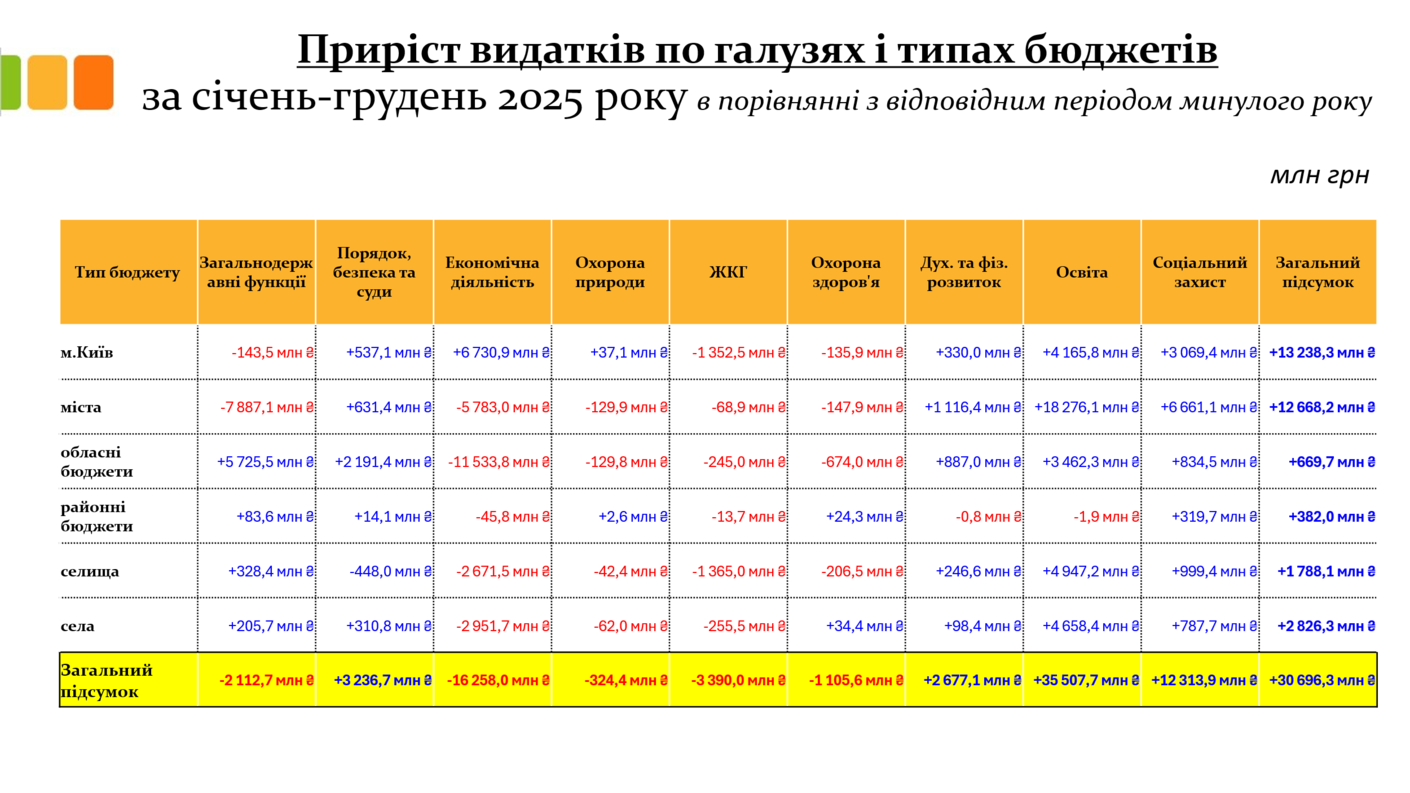
The table shows which industries and what types of budgets accounted for the increase in local budget expenditures in 2025 compared to the corresponding period in 2024.
First of all, it is worth noting that the main driver of expenditure growth remains education, where the increase amounted to more than UAH 35.5 billion. This confirms that the educational function remains a key burden on local budgets and responds most sensitively to changes in the level of remuneration and maintenance of the network of institutions.
The second largest area of growth is social protection, where expenditures increased by UAH 12.3 billion, which reflects the strengthening of the role of communities in supporting the population in wartime.
A noticeable increase was also in the area of public order and security, where the increase amounted to more than UAH 3.2 billion, which is a continuation of the trend of involving local budgets in financing territorial security measures.
At the same time, there is a reduction in expenditures in the direction of economic activity by more than UAH 16 billion, which indicates a decrease in the investment component of local budgets and a reorientation of resources to finance basic social functions.
Expenditures on housing and communal services also decreased, which is partly explained by the completion of certain infrastructure support programs in the previous year and more restrained investment activity of communities in 2025.
If we look at the distribution of growth between types of budgets, it can be seen that the largest contribution to overall growth was provided by city budgets and budgets of territorial communities, primarily due to the financing of education and social protection.
At the same time, regional budgets are characterized by a decrease in expenditures on economic activity, which confirms the gradual narrowing of their role in financing infrastructure development programs.
In general, the structure of expenditure growth in 2025 shows a clear trend: local budget resources are directed primarily to financing basic social functions and security, while investment directions remain more restrained.
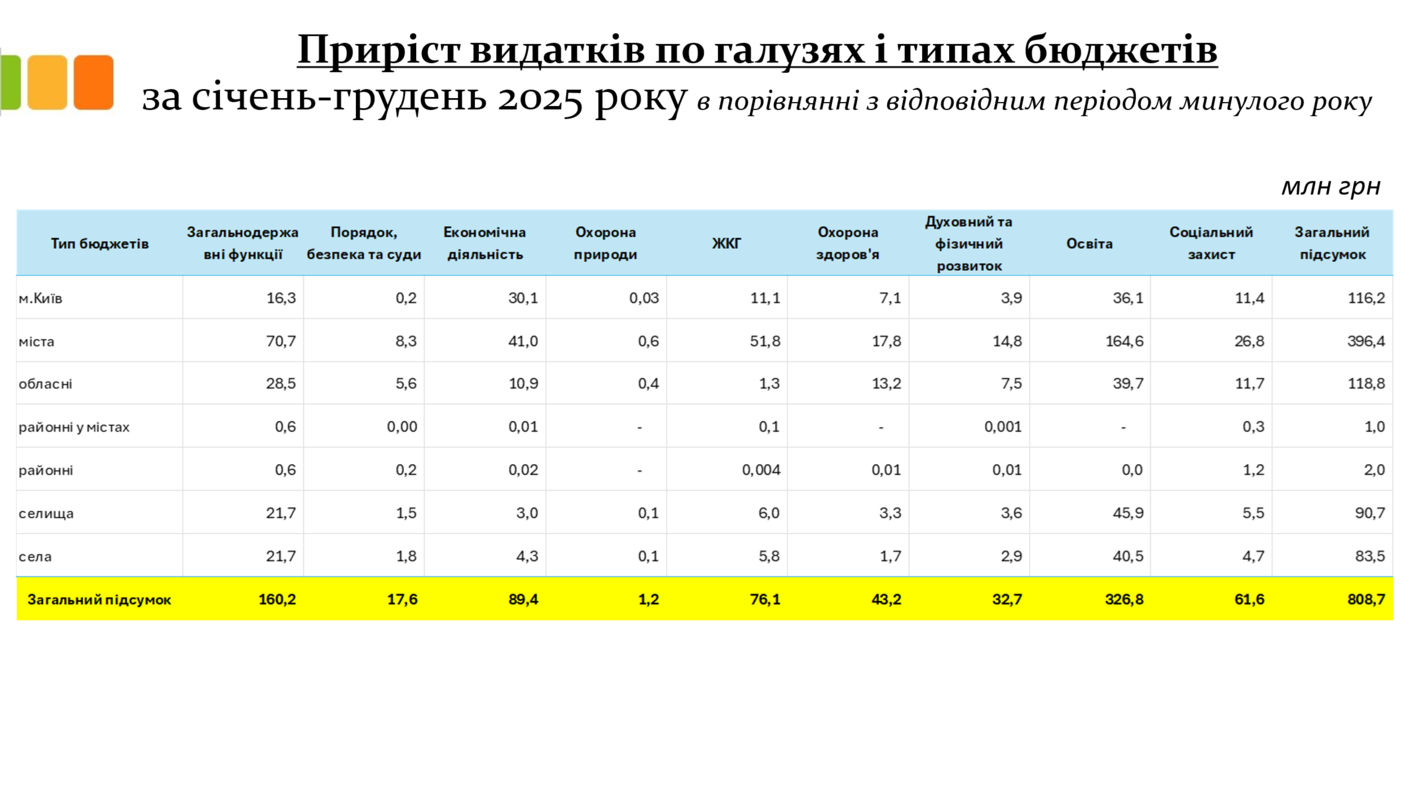
The table shows the distribution of local budget expenditures in 2025 between different types of budgets in the main functional areas and actually shows what level of local self-government provides funding for key public services.
First of all, it can be seen that the main volume of expenditures of the local budget system is formed by city budgets in all areas – primarily education, housing and communal services, economic activity and social protection.
Expenditures on education, which are the largest in the structure of local budgets as a whole (UAH 326.8 billion), are formed mainly at the level of budgets of territorial communities, primarily cities, as well as towns and villages. This corresponds to the logic of the decentralization reform, which transferred the maintenance of the educational network to the basic level.
At the same time, expenditures on economic activities are also largely concentrated in city budgets, which reflects their key role in financing infrastructure for the development of territories and supporting the local economy.
Financing of housing and communal services is almost entirely carried out at the level of territorial communities, primarily city budgets, which corresponds to the nature of this function as the basic responsibility of local self-government.
It is also indicative that expenditures on social protection of the population are formed mainly at the level of community budgets, which confirms the strengthening of the role of the local level in supporting the population in wartime.
In general, the above structure confirms the key result of the decentralization reform: it is the budgets of territorial communities that are the main level of financing of public services today.Початок формиКінець форми
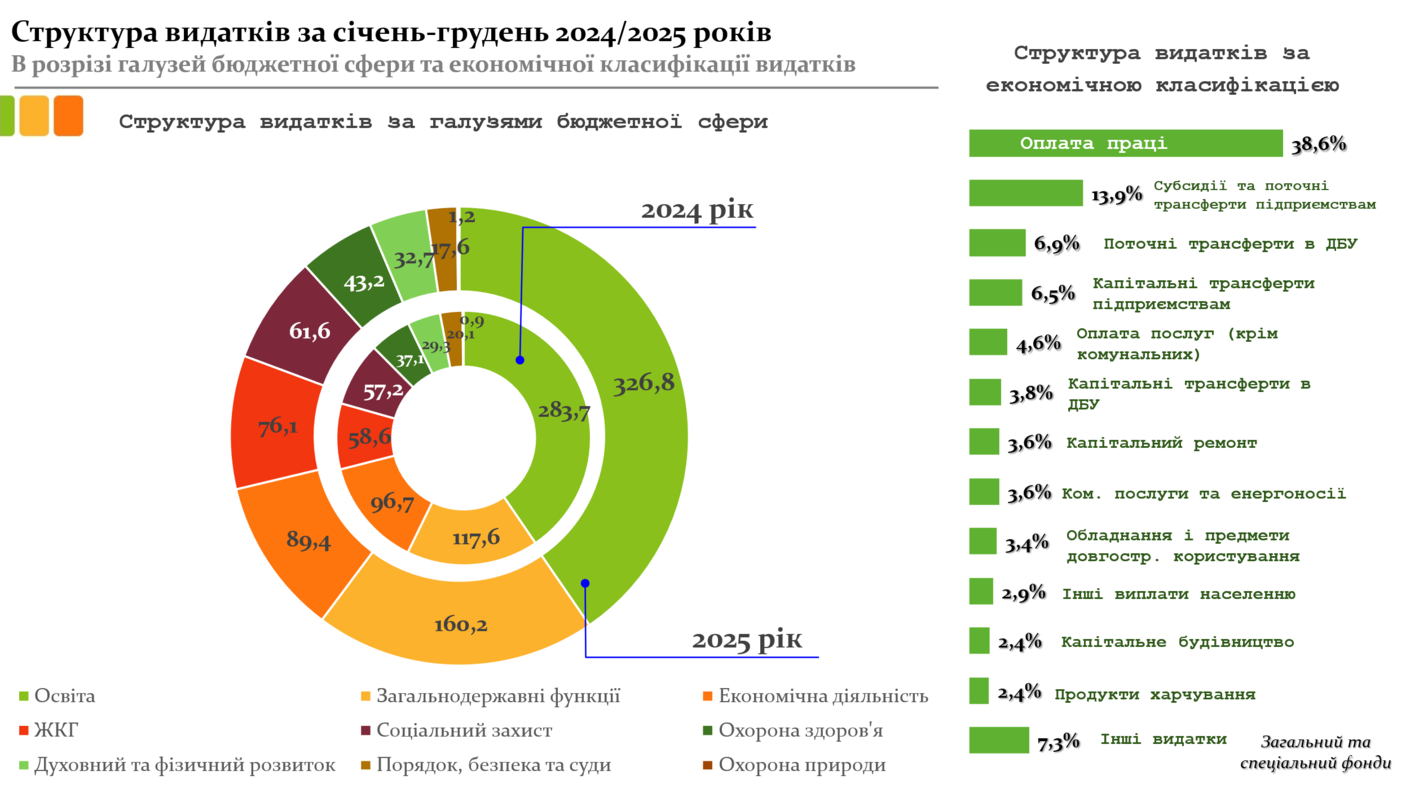
The graphs show the structure of local budget expenditures simultaneously in two dimensions – by function and by economic classification, which allows assessing both the priorities of communities and the nature of resource use.
In the functional structure, the largest share is traditionally occupied by education, which in 2025 amounts to UAH 326.8 billion, which confirms that it is the financing of the network of educational institutions that remains the key basic function of local self-government. The growth of these expenditures is primarily due to an increase in the level of remuneration of educators and support for the functioning of institutions in wartime.
The second largest area is national functions, which in 2025 amount to UAH 160.2 billion. Their growth reflects the strengthening of the role of local budgets in the implementation of state tasks, including interbudgetary transfers and financing of community management infrastructure.
Expenditures on housing and communal services are growing significantly, reaching UAH 76.1 billion, which indicates an increase in the burden on communities to support critical infrastructure, energy resilience and continuity of basic services.
At the same time, expenditures on social protection of the population remain one of the key areas of support for communities during the war, forming a significant segment of local budgets.
Separately, it is worth noting the increase in funding for order and security, which is a characteristic feature of the transformation of the role of local self-government in wartime and the strengthening of its participation in ensuring territorial stability.
If we look at the structure of expenditures by economic classification, we can see that the main element remains remuneration, which forms 38.6% of all expenditures of local budgets. This means that local budgets are mainly of a service nature and are aimed at maintaining the network of budgetary institutions.
Transfers to enterprises also account for a significant share, reflecting the need to support the utility sector, transport, and critical infrastructure of communities.
At the same time, the share of major repairs and construction remains relatively limited, which indicates the restrained investment activity of local budgets during the period of war risks.
Summary: The structure of local budgets clearly shows their current role: these are budgets for providing services, supporting infrastructure and community resilience, and not classic peacetime development budgets.
Conclusions
The analysis of the implementation of local budgets in 2018-2025 shows the following.
First, the results confirm the long-term effect of the decentralization reform. The main part of the financing of basic public services today is carried out at the level of territorial communities. The reduction in the share of administrative expenditures in previous years was the result of optimization of the management structure after the consolidation of communities and the redistribution of powers.
Secondly, since 2022, the structure of local budgets has undergone a significant transformation under the influence of military challenges. There has been a temporary reduction in the share of capital expenditures, the role of expenditures on security, social protection of the population and support for the functioning of critical infrastructure has increased.
Thirdly, despite the difficult macroeconomic conditions, in 2023-2025 there is a gradual recovery of the investment component of local budgets. The share of capital expenditures is returning to pre-war values, which indicates the restoration of the financial capacity of communities and their ability to implement development projects.
At the same time, the structure of expenditures confirms that local budgets remain primarily budgets for the provision of public services. The largest amounts of resources are traditionally directed to education, social protection of the population, housing and communal services and support for the functioning of the budget network.
Separately, it should be noted the growing role of local budgets in ensuring the territorial stability of communities, which is manifested in an increase in spending on public order, security and support of critical infrastructure.
In general, the analysis of the implementation of local budgets in 2025 demonstrates that territorial communities retain the financial ability to perform key powers even in wartime and gradually restore the investment function of local development.
Local budgets today are not only budgets for maintaining a network of services, but a full-fledged tool for ensuring the resilience of communities and the gradual restoration of territories.Початок форми


07 October 2026
Проєкт Держбюджету-2027: громади обговорили ресурс для послуг, освіти та підтримки дітей
Проєкт Держбюджету-2027: громади обговорили...
Фінансова спроможність громад у 2027 році, міжбюджетні відносини, доступність послуг для дітей і сімей стали темою...
07 October 2026
Молодь Хмельниччини та Івано-Франківщини...
Платформа соціальних змін відкрила набір на акселератор Skills Future For Youth для молоді віком 15–29...
07 October 2026
Short-term (by 2027) and mid-term (by 2030)...
This article of the U-LEAD series consolidates the main short-term (by 2027) and mid-term (by 2030) recommendations...
07 October 2026
How Blyzniuky community turns war challenges...
Hennadii Korol, Mayor of Blyzniuky in Kharkiv region, talks about implementing large-scale projects 100 km from the...