‘Some on bikes, some in their own cars’: How a volunteer fire brigade was created in Myloradove, Poltava region
Firefighters have to travel 29 kilometres to reach the most remote villages in Velyka Rublivka community in Poltava region. The 20-minute response time target was not met in parts of the community. However, there is now a volunteer fire brigade operating in Myloradove: twelve local men who know how to put out fires and have the equipment to do so.
The story of volunteers in Myloradove shows that it is possible to set up a fire brigade in a village even without a dedicated budget. This requires people who are already used to working together, support from local authorities, and partners willing to help with equipment.
Forests, peat bogs, and 29 kilometres to the nearest fire station
Velyka Rublivka community in Poltava district comprises 29 localities. The largest starosta district, Myloradivka, consists of 16 villages scattered amongst forests and meadows. The municipal organisation “Velyka Rublivka Village Council Local Fire Service” is based in the village of Velyka Rublivka, and the villages in the district are between 10 and 29 kilometres away from it.
‘By the time the fire engine reaches the village – especially if there is a forest fire and the location still needs to be pinpointed on a map – valuable time is lost,’ says volunteer Vasyl Lutsenko.
According to locals, forests cover a third of the community’s territory. In some places, there are peat deposits where a fire can smoulder for weeks. The H-12 Sumy–Poltava road runs through the community; according to the village council, its most accident-prone sections are near Myloradove.
According to the volunteers, 2024 proved to be a particularly difficult year. A total of 62 fires were recorded in the community, of which 35 involved dry vegetation and 14 involved forest litter. A state of emergency was declared due to the forest fires. Leonid Bilokin, Head of “Myloradove Firefighters” NGO, helped extinguish the fires alongside others at the time.
‘The State Emergency Service did the majority of the work, and we grabbed fire beaters and put out the hotspots. Our backs and our whole bodies were completely soaked. We worked as best we could,’ he recalls.
The rescuers were simply unable to cope on their own at the time. Immediately after this, Myloradove decided to set up its own team.
From a community watch to a fire brigade
Many of the prospective volunteers had already worked together. Almost all of them are members of “Bulava”, a community organisation that has been active in the district since 2018; some of the members had previously served together in the territorial defence forces.
‘Almost all team members are also members of another community organisation that deals with law and order in the community. So one activity has smoothly evolved into another,’ explains volunteer Serhii Hrebinnyk, Chief of Affairs of the Executive Committee of the Velyka Rublivka Village Council.
Their fellow villagers were inspired by professional firefighters: several local men serve in Poltava’s fire brigades. Serhii Hrebinnyk recalls a fire in 2021, when a short circuit caused a communal outbuilding near some residential buildings to catch fire. Local firefighters, who were not on duty that day, were the first to arrive.
‘Some on bikes, some in their own cars, but they took on the hardest initial part of the job professionally, efficiently, and without panic. They contained the fire and prevented it from spreading to the whole site even before the fire engines arrived,’ he says.
‘Our fellow firefighters inspired us to try. They gave us the confidence that we are doing the right thing,’ adds Serhii Hrebinnyk.
The journey to establishing the Volunteer Fire Brigade: organisation, training, depot
In 2025, the community joined the “Firefighters” project run by the Representative Office of the International Solidarity Fund in Ukraine. Activists registered NGO “Myloradove Firefighters”, and on 10 December 2025, its general meeting approved the regulations on the fire and rescue unit to provide a voluntary fire service. All twelve members underwent initial training at the training centre of the Main Directorate of the State Emergency Service in Poltava region and received their certificates. They later completed a first-aid course as well.
At first, the team did not have a fire engine, so the volunteers had to use their own vehicles to respond to calls. ‘Have you ever seen a forest fire? People used to run to forest fires on foot because they were afraid the fire would spread to residential buildings,’ says Serhii Hrebinnyk.
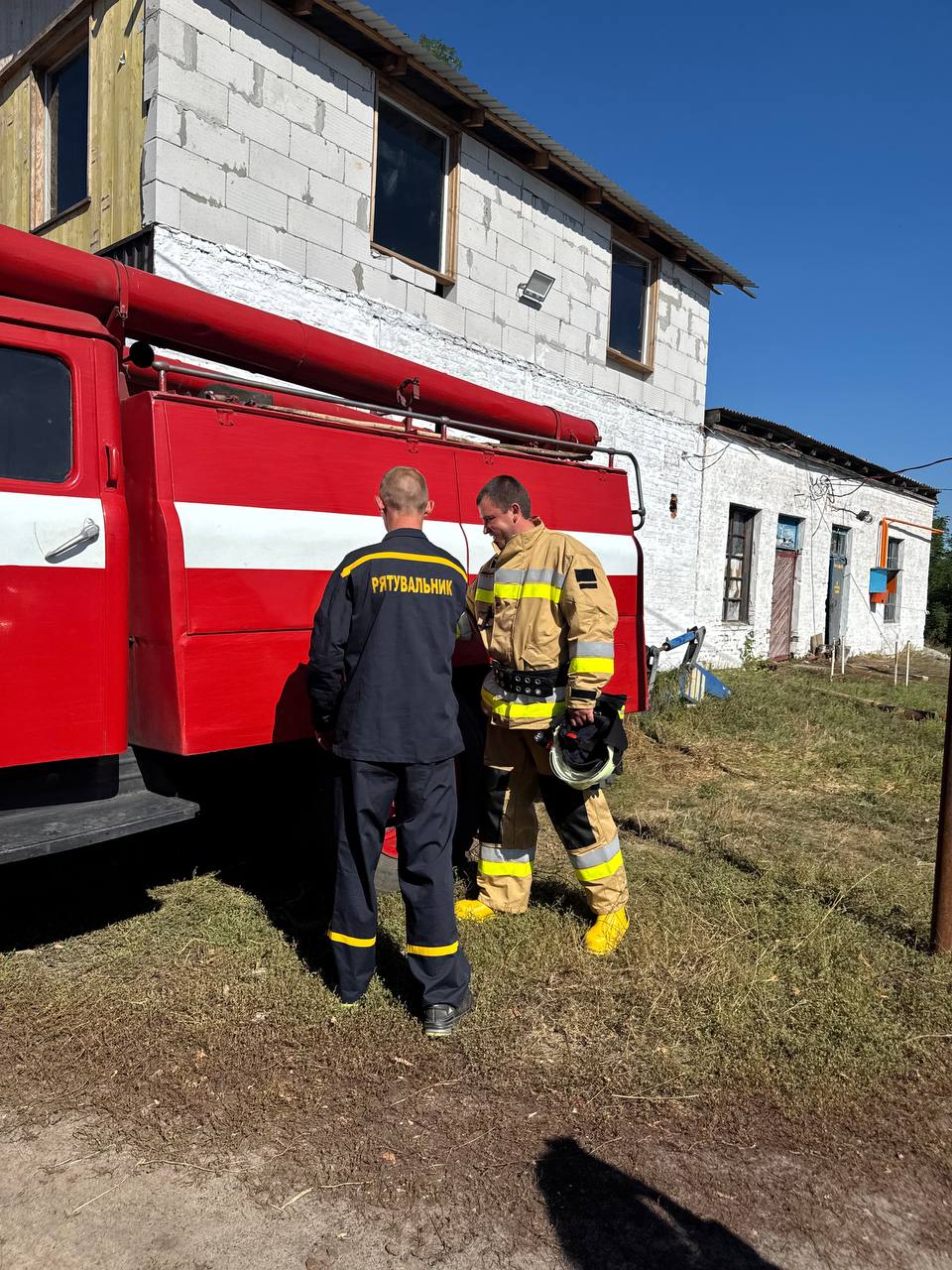
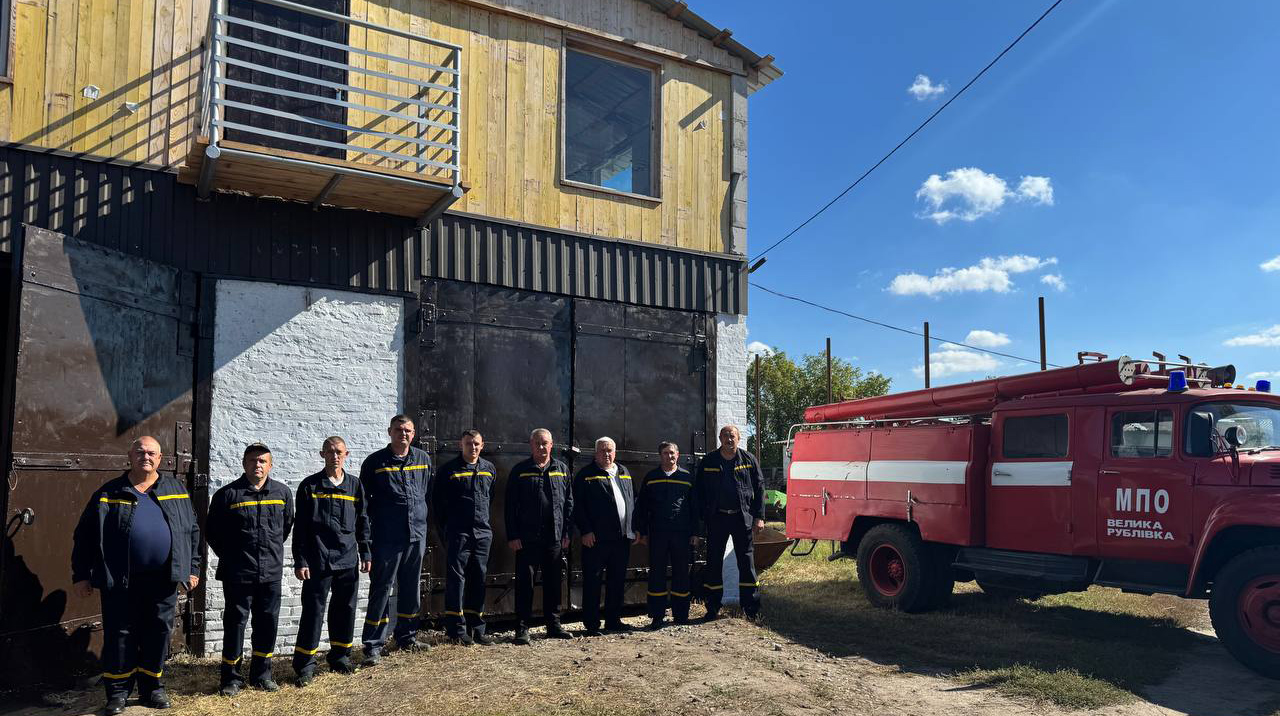
At the same time, a depot was equipped. An old collective farm building was repurposed for this, where a fire engine had once been stationed: it had been left abandoned after the collective farms were dissolved.
‘There was no floor, just an inspection pit. We had to replaster the walls and build an extension – a second floor,’ explains Vasyl Lutsenko.
The renovation took about a year. The volunteers did the work themselves; local residents helped with building materials, and the community purchased some of them. Heating is now being connected to the depot from the boiler room of the neighbouring kindergarten.
What has changed thanks to the “Firefighters+” project
In 2026, the development of the team was supported by the “Firefighters+. Support for the establishment and development of volunteer fire brigades in target communities” project. It is implemented by NGO DOBROVOLTSI-VOHNEBORTSI in a consortium with the Solidarity Fund PL in Ukraine.
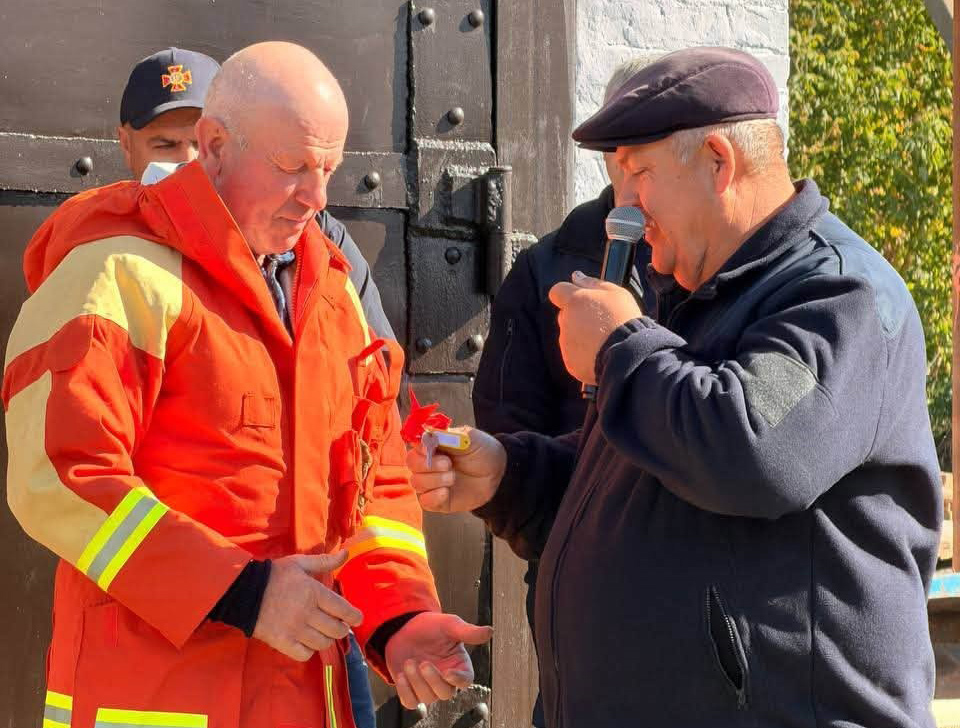
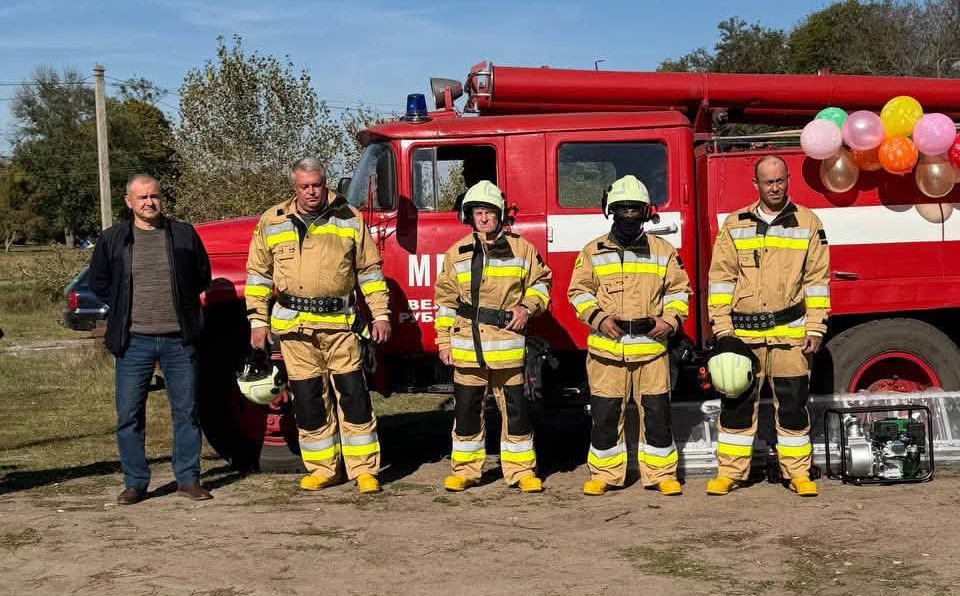
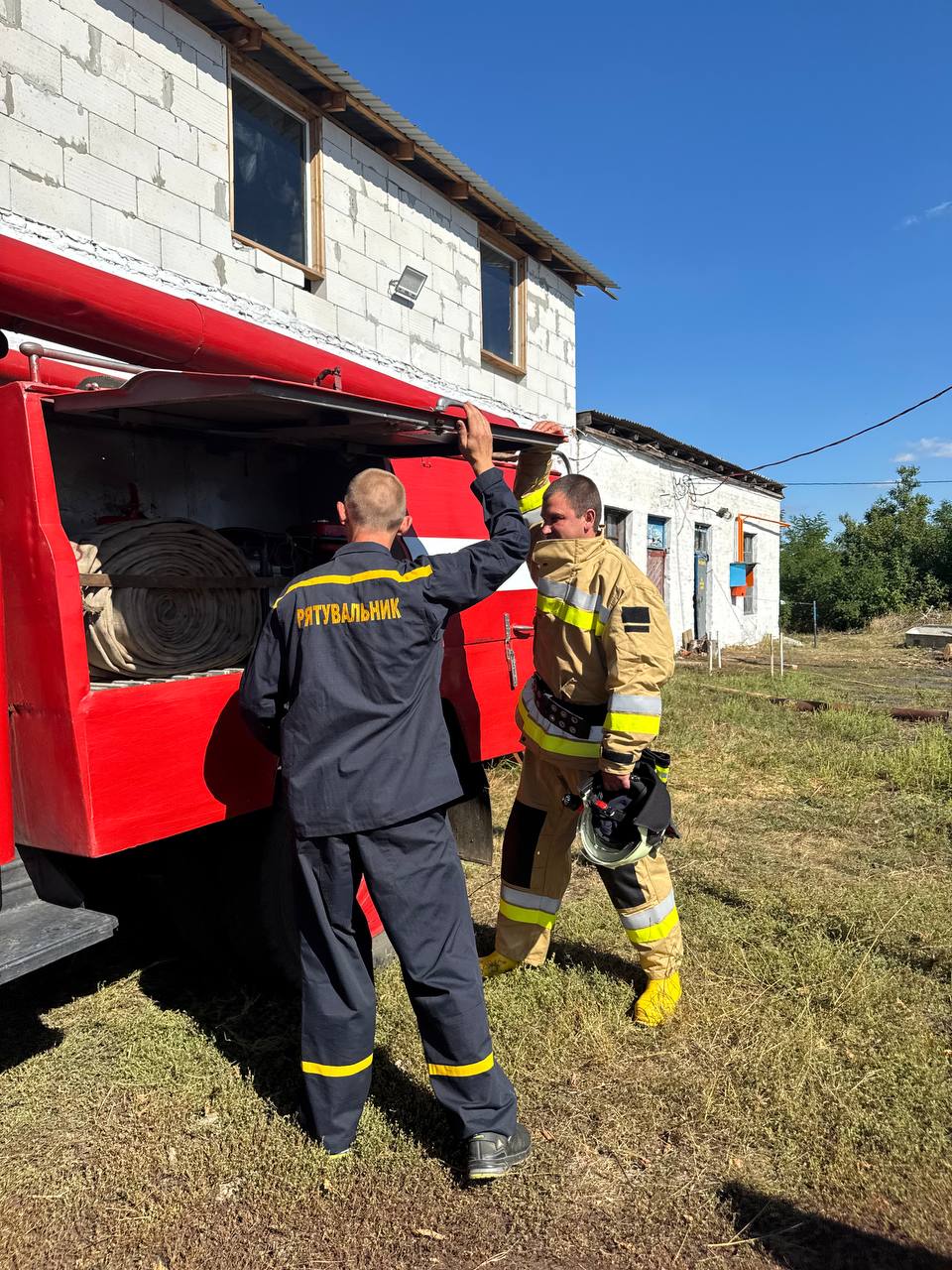
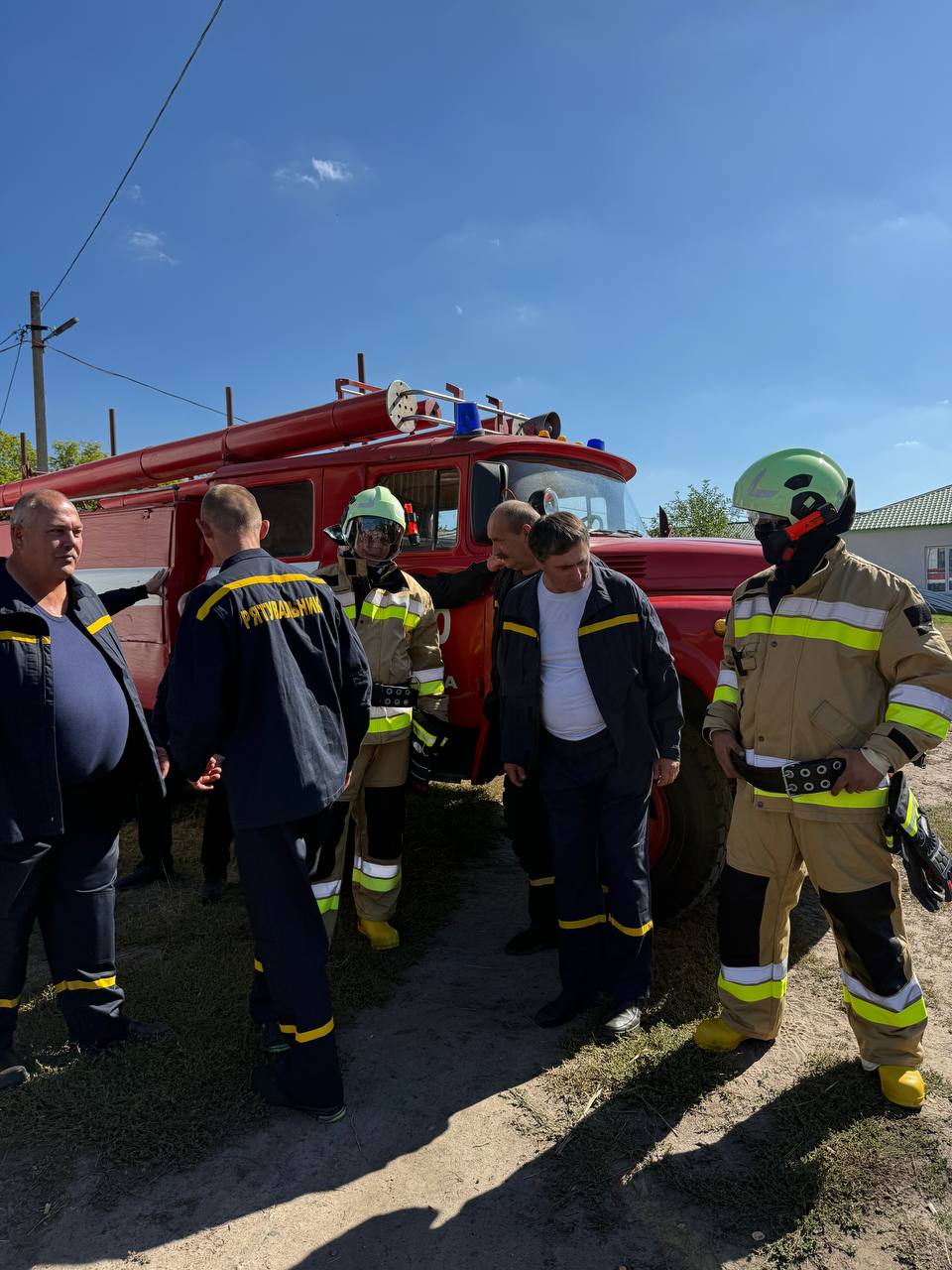
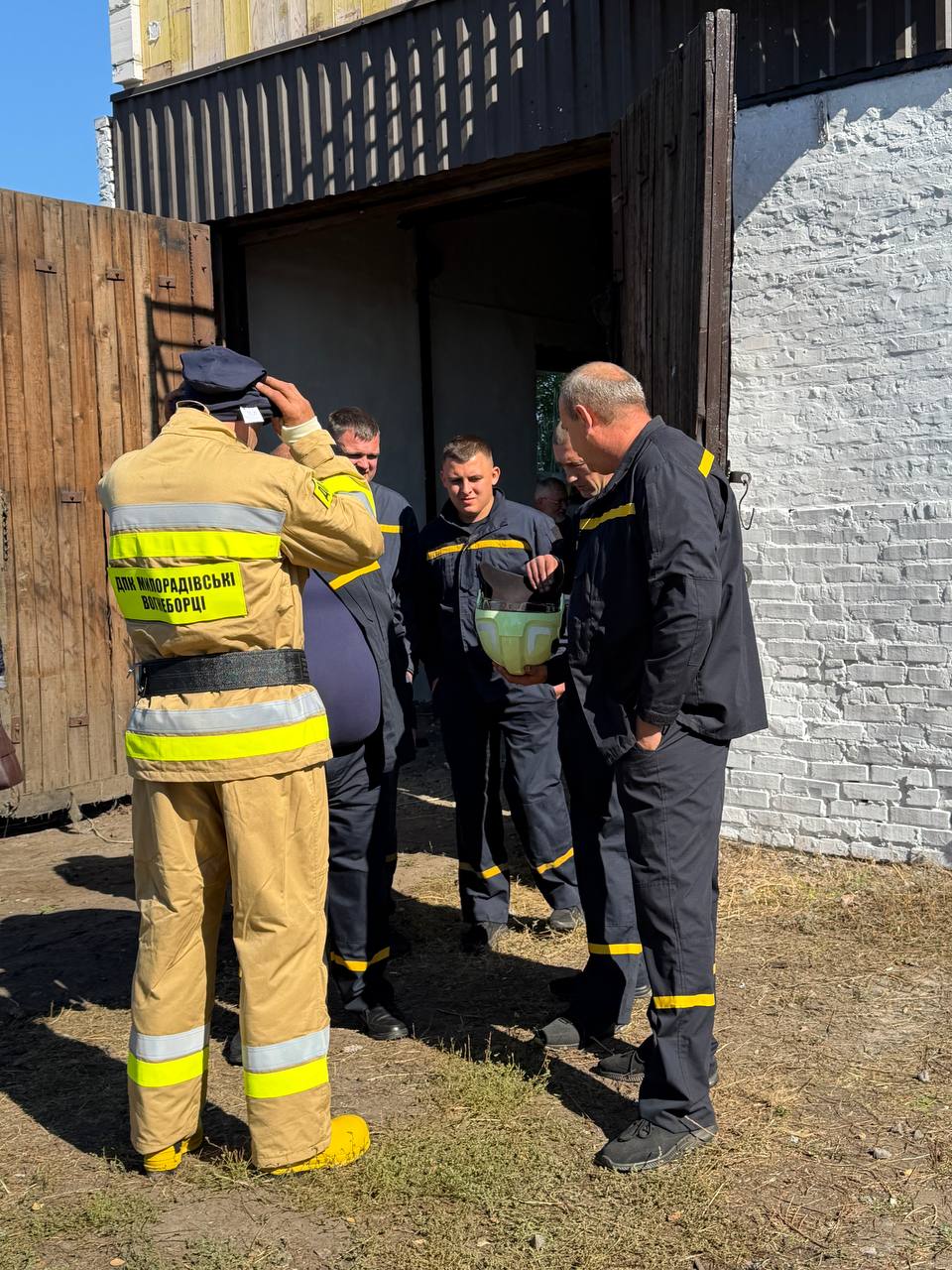
The team received six sets of protective equipment: firefighting uniforms, helmets, helmet liners, rescue belts, gloves, boots, and torches, as well as resources to organise a series of events for the team and the community at their own discretion. For example, a training session on psychological resilience was held for the volunteers.
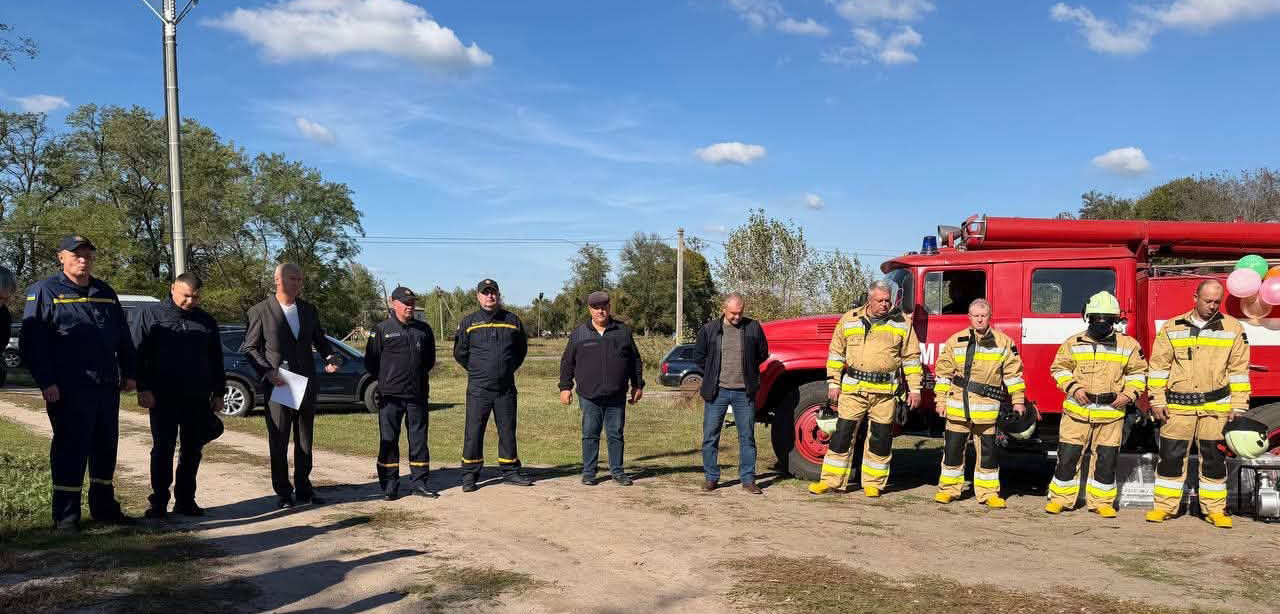
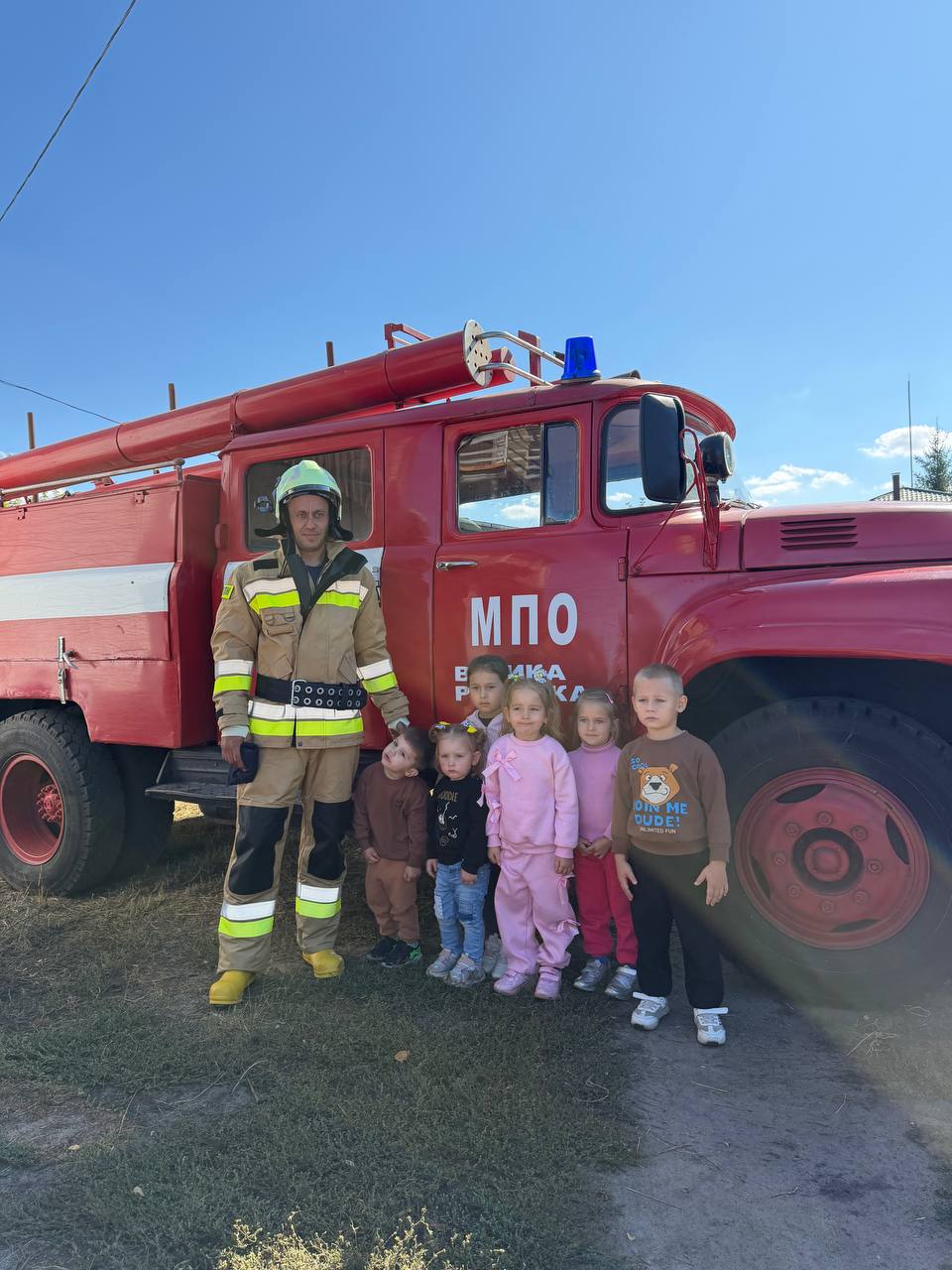
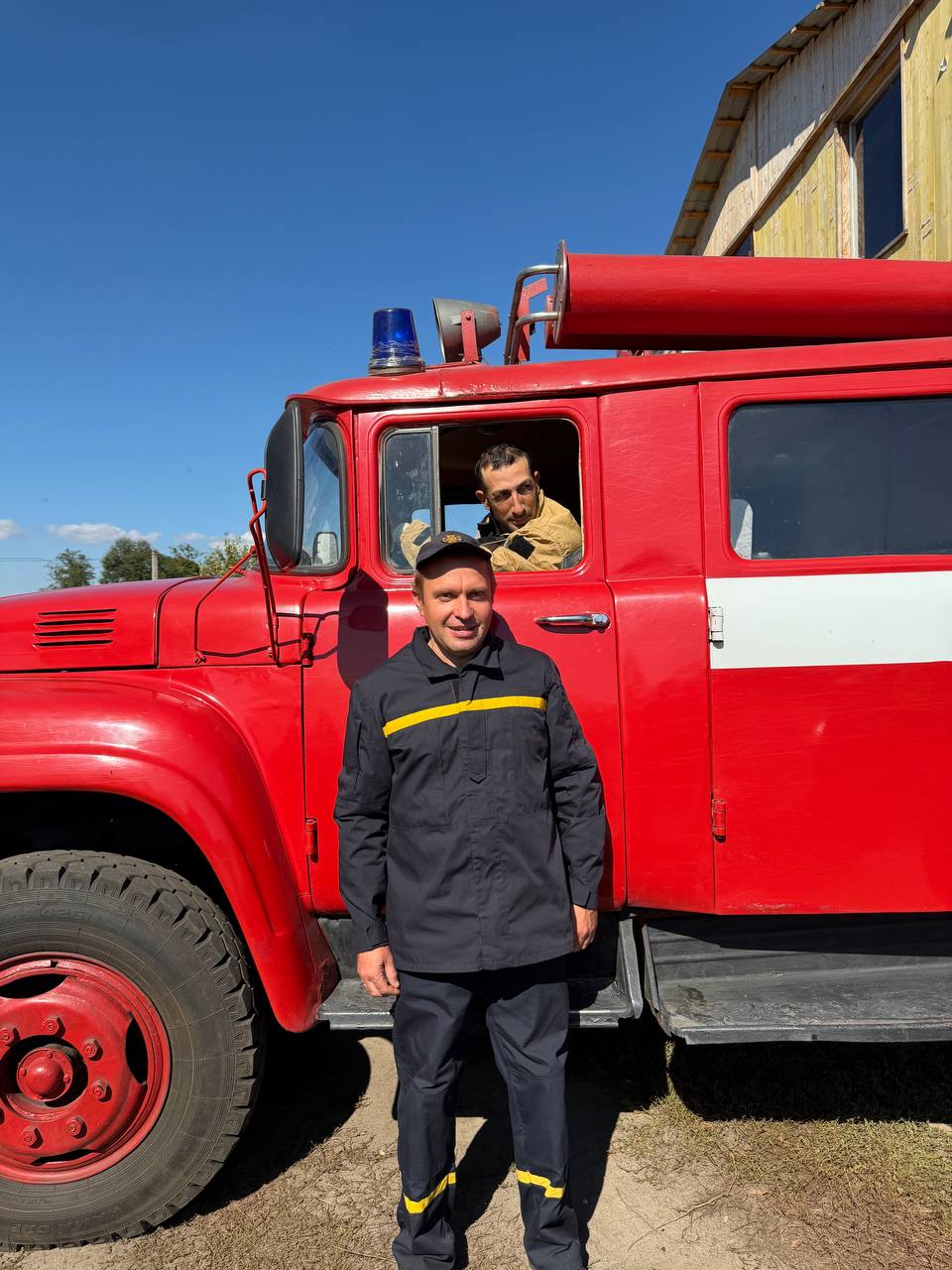
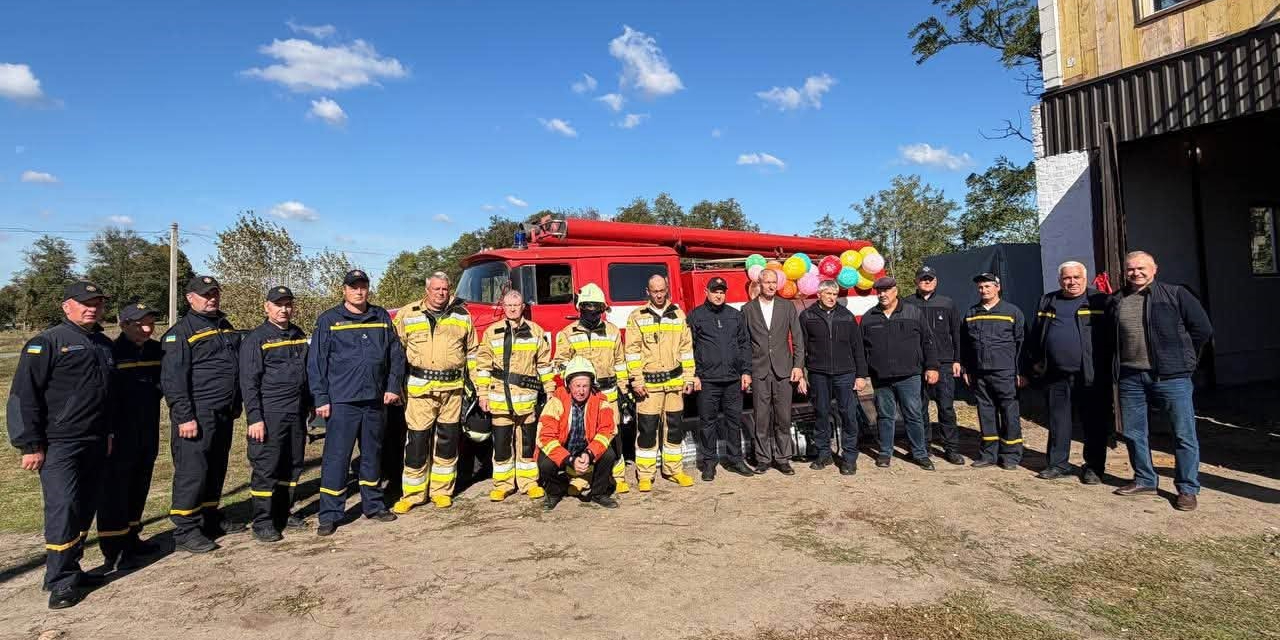
In early October 2026, the unit was officially opened, and the local community-based voluntary organisation handed over an AC-40 water tanker on a 1989 ZIL chassis to the volunteers for temporary use free of charge. The vehicle had served for years at the Poltava fire station and later at the community’s voluntary fire brigade. It was handed over to the volunteers when the voluntary fire brigade received a newer vehicle. The village council insured all members of the volunteer fire brigade, and the unit was included in the community’s emergency response plan, with coordination established with the voluntary fire brigade.
Members of the team
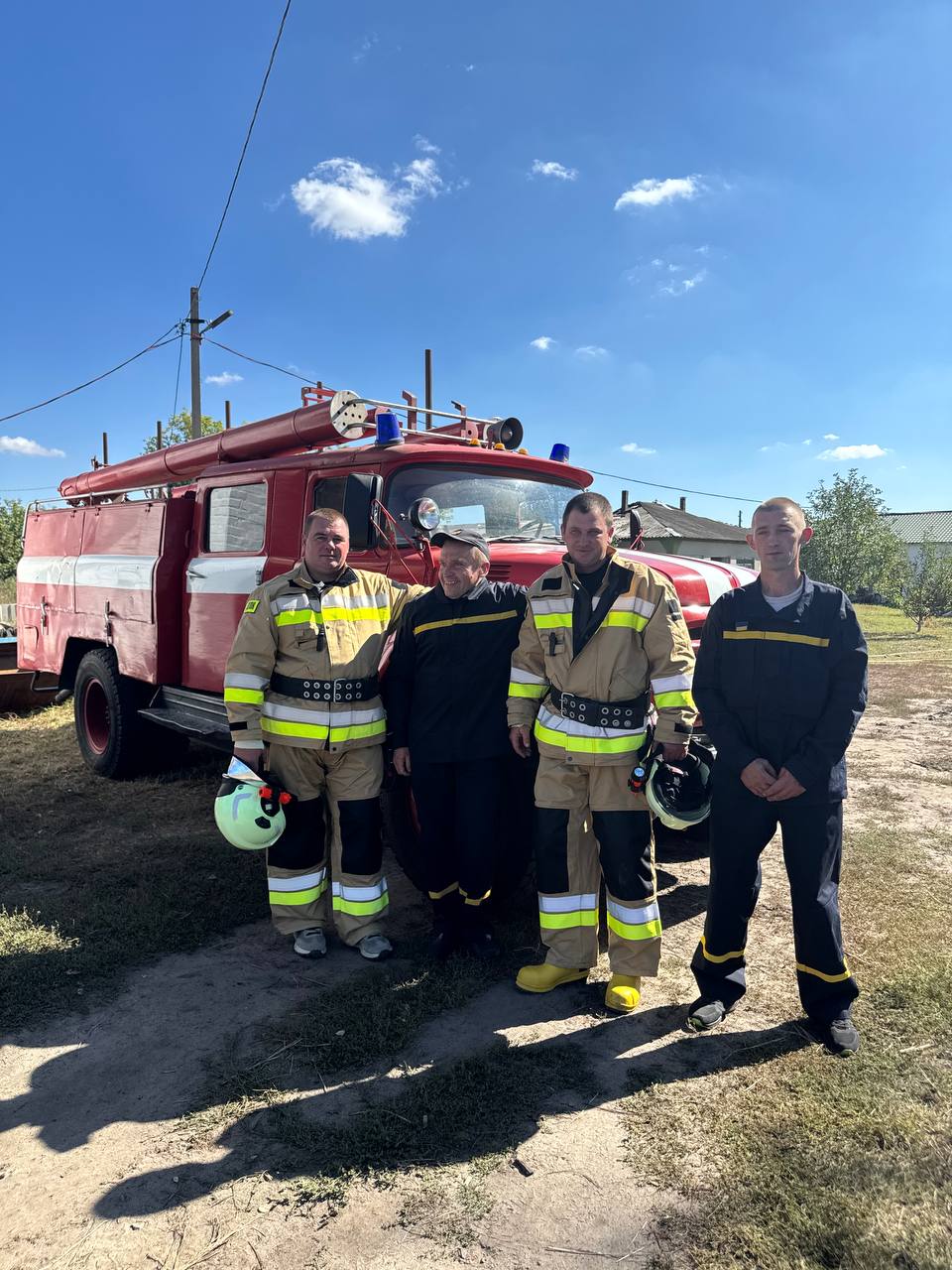
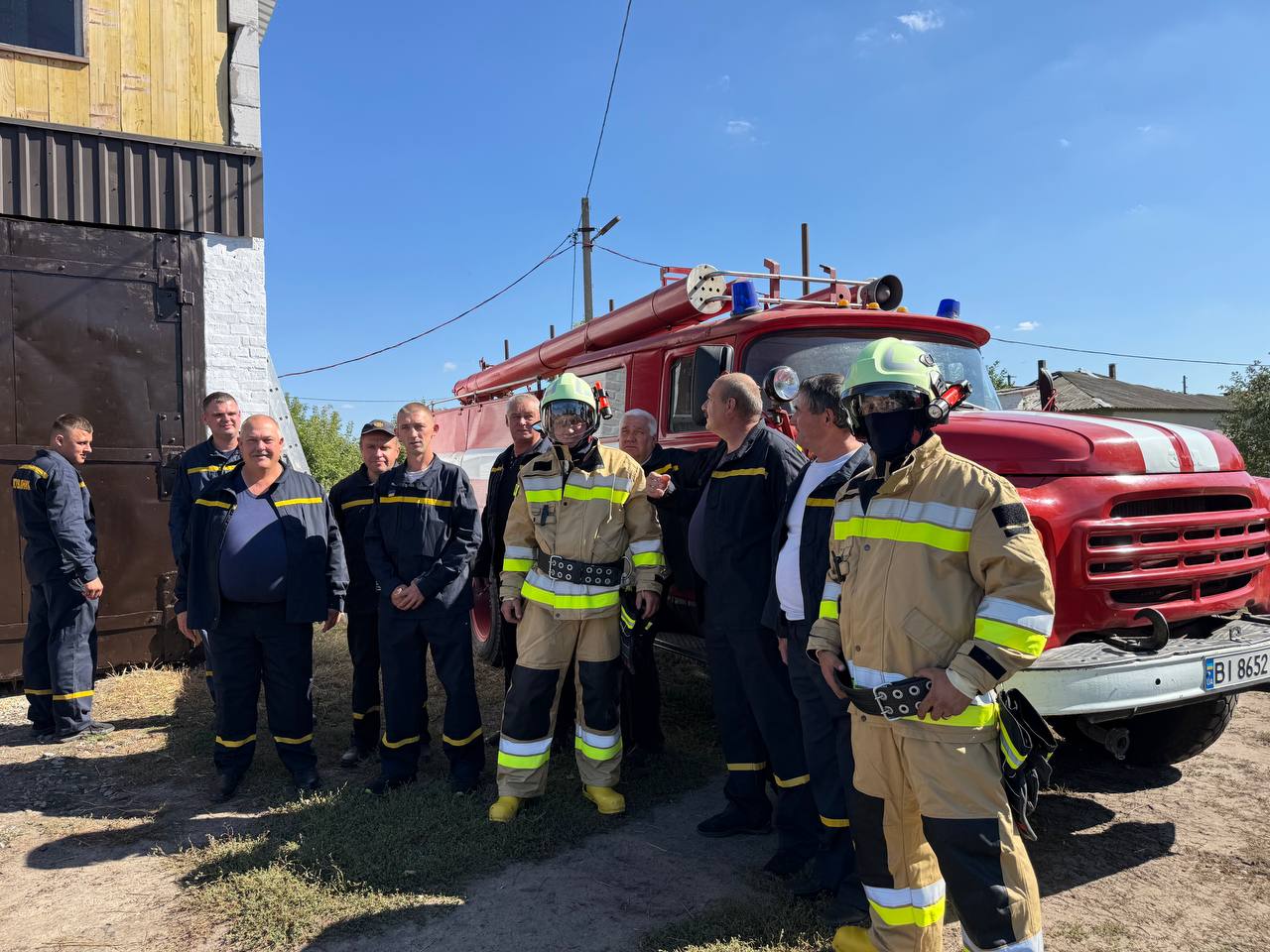
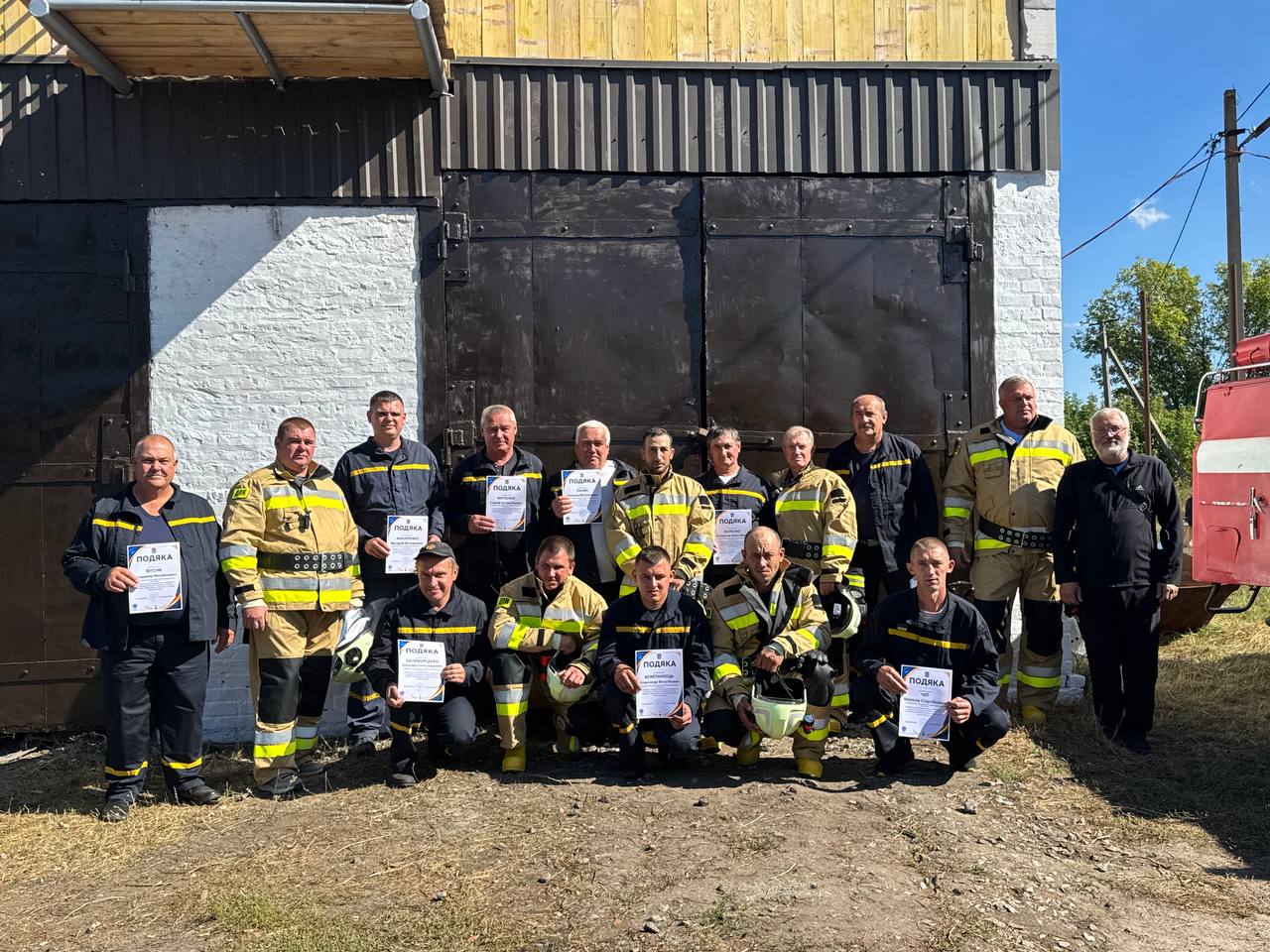
The first members of the voluntary fire brigade:
- Leonid Bilokin, Serhii Hrebinnyk, Ruslan Lykhvar, Vasyl Lutsenko, Yurii Merenianu, Oleksii Nazarenko;
- Viacheslav Oliinyk, Oleksandr Pysanko, Serhii Porokhnevskyi, Oleksandr Spytsia, Mykhailo Stets, Oleh Shtelman.
The team consists of a team leader, six drivers, and five firefighters.
The team is led by Leonid Bilokin, Director of the local cultural centre. Vasyl Lutsenko works at the Myloradove Gymnasium. The volunteers also include the village starosta, a forester, electricians, entrepreneurs, and veterans. The village mayor Viacheslav Oliinyk is also amongst them.
‘He lives in this village too, so he has nowhere else to go,’ smiles Serhii Hrebinnyk.
The volunteers say that the community owes its ability to work together largely to Vasyl Lutsenko. Since 2009, he has headed the village community organisation “Svitanok”, which seeks grants for the village: for a school bus, sports grounds, and sports facilities.
‘He is our teacher and mentor, not only for the children but for us adults too,’ says Serhii Hrebinnyk.
Vasyl Lutsenko talks to schoolchildren about fire safety. Recently, the fire station organised an excursion: the children tried on protective suits, and the firefighters showed them the fire engine and their equipment.
Without salaries and with fuel paid for from the budget
The volunteers do not receive any remuneration, and for local government officials, the law also restricts additional income.
‘Our model is simple: nobody receives any remuneration,’ says Serhii Hrebinnyk.
No separate funding has yet been allocated for the unit’s operations. According to the volunteers, fuel and vehicle maintenance are to be covered by the local budget. There is still a great deal of work ahead. The roof, gates, doors, and windows at the depot need replacing. The NGO’s documents also include a list of requirements:
- a boat with a trailer for water rescues;
- medical kits;
- body armour;
- a second vehicle for transporting people and equipment;
- a power generator and a fuel supply in case of power outages.
The volunteers themselves are cautious when discussing their needs. ‘The biggest priority is to make sure there are no fires,’ says Leonid Bilokin.
‘In the beginning was the word’
Since the unit received its vehicle, it has not yet received any emergency calls. The volunteers joke that fires in the village have ceased simply because the team exists.
‘When a community organisation for law and order was set up in the village, there were no criminal incidents at all in the starosta district for about five years. It is written in a holy book: in the beginning was the word. First the word, and then it begins to work on its own,’ says Serhii Hrebinnyk.
When asked whether other communities need such teams, the volunteers respond unanimously.
‘A fire is a natural disaster of such a nature that the quicker the vehicle arrives, the greater the chances of saving both property and, possibly, someone’s life. Therefore, the more such teams there are, the better, especially in areas remote from the central villages,’ says Vasyl Lutsenko.
‘The shorter the distance and the less time it takes, the more likely it is that a life can be saved. So it is essential to set up these teams,’ adds Leonid Bilokin.
Conclusions: What other communities can learn from this case
- Rely on people who already know how to unite. The core of the team was made up of members of a community-based law and order organisation, so they already possessed trust and discipline even before their first training session.
- Engage local professionals. Firefighters from Poltava’s fire stations who live in the village served as both role models and mentors for the volunteers.
- Use the resources already available in the community. An abandoned collective farm building became a depot, while a vehicle that had been replaced by the municipal fire service was given a new use in the volunteer unit.
- Officially register the unit’s legal status straight away. The community organisation and the approved regulations for the unit enabled them to take equipment into use, participate in projects, and obtain equipment.
- Agree on the fundamentals with the community. Insurance for volunteers, fuel and a place in the emergency response plan cost the budget relatively little, but without them the team cannot operate.
- Do not forget about training and psychological preparation. State Emergency Service certificates, first aid training, and resilience training give volunteers confidence and professionalism.
Serhii Hrebinnyk believes that equipment is only half the story.
‘The most important thing is the people, because the work depends entirely on them. There is not always a willingness to join forces: in villages, people are often more used to doing things on their own than as a group. But we already had experience. This made it easier for us than for others. To be honest: it was not without difficulties, but it was easier,’ he says.
Now, in Myloradove, there are twelve people, a depot, equipment, and a vehicle. They will be able to reach even the most remote corner and stop the spread of the fire until the main State Emergency Service unit has driven 29 kilometres.
This material was prepared by NGO DOBROVOLTSI-VOHNEBORTSI with the support of the Askold and Dir Foundation, administered by ISAR Ednannia as part of the project “Strong Civil Society in Ukraine – Driving Force for Reforms and Democracy”, funded by Norway and Sweden. The content of this material is the sole responsibility of NGO DOBROVOLTSI-VOHNEBORTSI and does not reflect the views of the governments of Norway, Sweden or ISAR Ednannia.
Attached images:





Tags:
Область:
Полтавська областьГромади:
Великорублівська територіальна громадаSource:
ГО «Добровольці-вогнеборці»
16 November 2026
‘We cannot imagine how we used to live without...
Avanhard community is situated in the immediate vicinity of Odesa. Due to this proximity, local school...
15 October 2026
‘My community and my country value me.’ How...
In Zymne community in Volyn region, career guidance is no longer just a formality. Here, students are not...
22 September 2026
Live in the city, not struggle to get through...
Barrier-free urban spaces begin with specific solutions that give people greater independence in their daily lives....
17 September 2026
Barrier-free beach in Odesa: How accessibility changes seaside holidays
Barrier-free beach in Odesa: How accessibility...
The Decentralisation portal is launching a series of articles on community initiatives that make public spaces and...