Deliberative Democracy Workshop: Materials and Outcomes of All Meetings
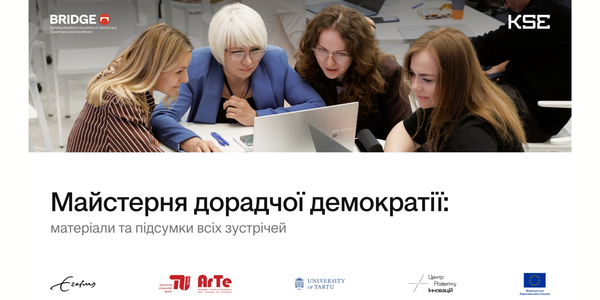
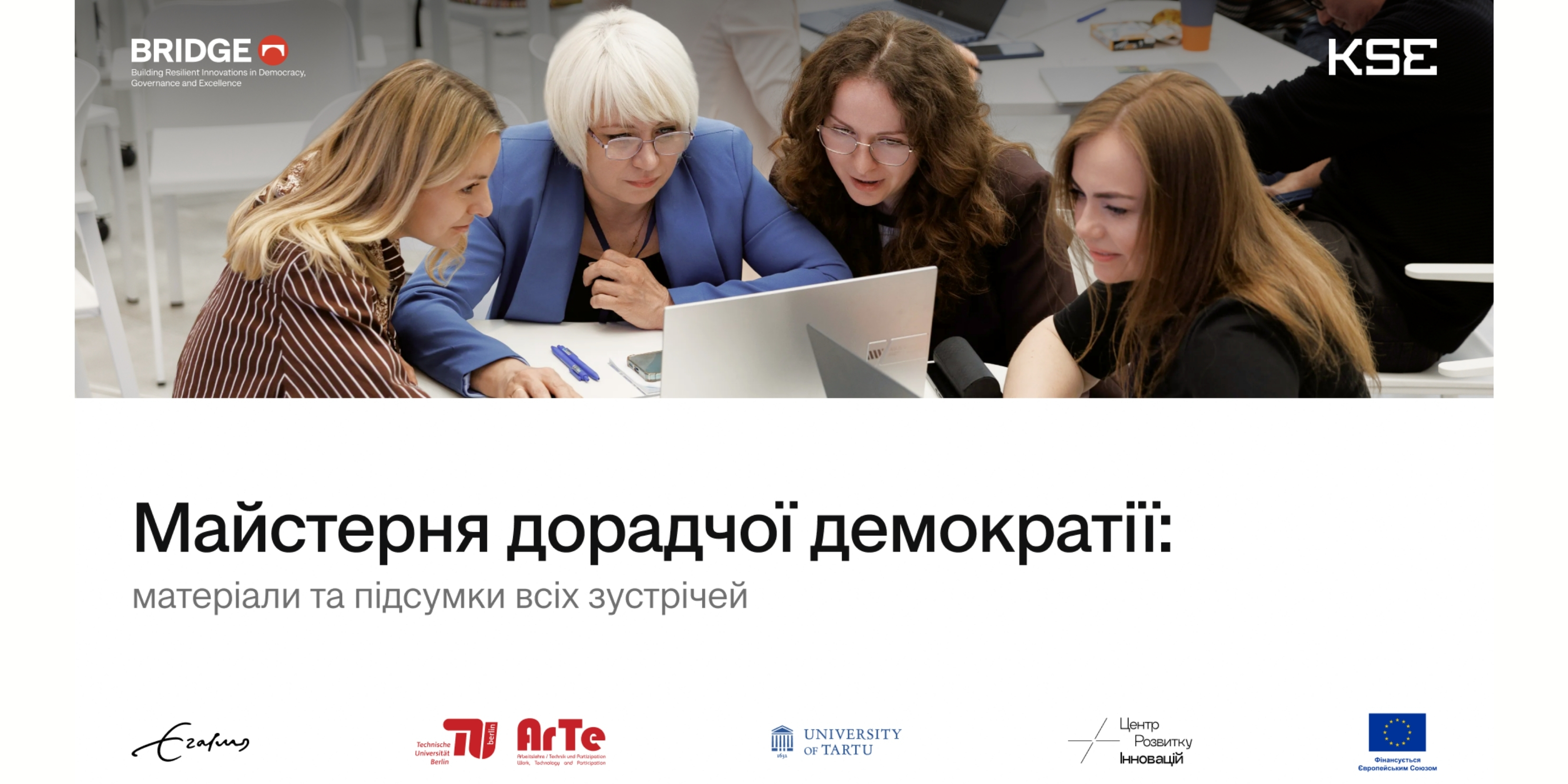
How can residents who do not usually attend public consultations be encouraged to take part in discussions about local decisions? Can a randomly selected group of people represent the interests of the entire community? How can the results of public consultations be ensured to influence local authorities’ decisions? Participants in the Deliberative Democracy Workshop, which brought together representatives of public authorities, civil society organisations, researchers, and international experts between February and July 2026, sought answers to these questions.
The Workshop was held as part of the international research project BRIDGE. Over the course of five sessions, the participants explored the Ukrainian experience of public assemblies and citizens’ panels, discussed the legislative scope for the use of consultative procedures, digital tools for participation, and the prospects for incorporating these into local governance processes. They paid particular attention to the practices of Zviahel, Slavutych, Konotop, and Zhytomyr, where such formats have already been tested.
BRIDGE team published materials from all the meetings, including presentations, video recordings, and summaries of the discussions. These materials provide an insight into how deliberative processes were organised in Ukrainian communities, what difficulties arose, and which issues remain unresolved. Based on the results of the Workshop, joint recommendations on the development of deliberative democracy have also begun to be drafted. The final documents state that they require finalisation and approval by the participants.
The work of citizens’ assemblies
Citizens’ assemblies and citizens’ panels are instruments of consultative, or deliberative, democracy. Their distinctive feature lies in the way participants are selected and discussions are organised. Unlike public hearings, which are usually attended by those who have expressed an interest themselves, participants in assemblies are selected at random in accordance with specified socio-demographic proportions.
This approach is designed to ensure that different sections of the population are represented, particularly those who rarely participate in public life. During the assembly’s proceedings, they receive information about the issue, hear from experts, learn about different viewpoints, and discuss possible solutions. This results in recommendations which are forwarded to the authorities for further consideration.
Importantly, the citizens’ assembly does not take over the powers of the local council or its executive bodies. It creates an additional mechanism for residents to participate in the decision-making process. However, the effectiveness of such a mechanism depends on how well the selection of participants is organised, how effectively discussion is facilitated, and how the process for following up on the proposals put forward is defined.
The analysis of Ukrainian practices at the March meeting of the Workshop focused on these issues.
Selection of participants: How four communities sought their own solutions
The experience of Zviahel, Slavutych, Konotop, and Zhytomyr has shown that achieving representativeness begins long before the draw. The organisers have to start by determining exactly whom the assembly is meant to represent, what population data can be used, and how to invite people who usually remain detached from public discussions to take part.
In Zviahel and Slavutych, the age, gender, and place of residence of residents were taken into account when forming the assemblies. However, even these basic criteria required different organisational approaches. In Slavutych, for example, quotas were drawn up for the city’s districts, taking into account the specific characteristics of the housing stock: invitations were sent to every second flat in blocks of flats and every second private house. In Zviahel, due to the lack of a single source of population data, information on electoral constituencies and the number of voters was used to calculate population density and determine the routes for distributing invitations. In both communities, 4,000 letters were distributed.
In Konotop, during the preparation of the citizens’ panel, data from the community register – obtained via the Administrative Service Centre – was cross-referenced with official statistics. It transpired that the information on the age structure of the population differed between these sources. The organisers had to work with the available data and adjust their approach to sample selection. Housing associations and neighbourhood committees were involved in distributing invitations, and building chat groups were used. The participants’ level of education was also taken into account during the final selection process.
In Zhytomyr, a different solution was found. To send targeted invitations to residents, data from the municipal water utility company was used without disclosing any personal information. Staff from the company delivered 2,520 letters to addresses selected at random. In addition, telephone invitations, communication via homeowners’ associations and an information campaign were organised. From among those who responded to the letters or registered independently, 119 participants were selected by lottery. Two-thirds were those who responded to the targeted invitations, and one-third were people who registered independently.
The experience of Zhytomyr is particularly interesting because the selection process took into account a criterion directly linked to the theme of the assembly. As the discussion centred on sustainable urban mobility, the organisers sought to ensure representation of people with different experiences of getting around the city – depending on the mode of transport they use or whether they mainly walk.
A comparison of these practices revealed a common problem: communities do not always have sufficient and relevant data on the composition of their population. Information from different sources may vary, and access to certain data is restricted by data protection requirements. Further difficulties arise from the need to ensure that residents from different localities within the community, as well as different age and social groups, are represented.
Even after the sample has been selected, the question of actual participation remains. Some of those invited do not respond, decline or are unable to attend the meetings. The organisers therefore used additional methods to encourage participation, maintained reserve lists, and combined targeted invitations with open registration. Workshop participants discussed separately how such decisions affect the representativeness of the assemblies and whether they create advantages for people who already have experience of civic engagement.
Compensation for participation: An issue that proved more complex than expected
Another area of comparison was the financial aspect of organising citizens’ assemblies. Participation in several sessions takes time, often at weekends, so the organisers considered the possibility of financial compensation. However, Ukrainian experience has shown that even a solution that seems, at first glance, quite simple has its own particular challenges.
At the first assemblies in Zviahel and Slavutych, no compensation was paid due to a lack of financial resources. For later events, the organisers planned to pay UAH 3,000 for three sessions, partly to assess whether this would affect residents’ willingness to get involved.
In Konotop, participants in the citizens’ panel received UAH 2,500 each before tax. However, a problem arose for some elderly people: the additional income could affect their entitlement to housing benefits. Thus, compensation intended to facilitate participation could, under certain circumstances, have unintended consequences.
In Zhytomyr, compensation of UAH 3,000 was provided. At the same time, the results of a survey of participants showed that money was the least significant motivation for joining the assembly. This experience became part of a wider discussion on the accessibility of consultative processes for people with different levels of income, employment status, and life circumstances.
Special attention was paid to youth participation. The practices examined used different approaches to age: some organisers restricted participation to those of legal age, whereas others involved younger participants under appropriate conditions. During the Workshop, the participants discussed how to define age criteria and ensure the participation of young people in the consideration of issues affecting the development of their community.
Trust in the assembly and the impact of its outcomes on local decisions
Organisational issues were only part of the discussion in March. Equally important were the choice of topic for the public assembly and trust in the process itself. The participants discussed who should determine the issues for consideration and by what procedure, how to ensure that different viewpoints are represented, and how to avoid situations where participants are simply asked to validate a decision that has already been prepared.
The organisation of the discussions plays a key role in this. Assembly participants are expected to be able to learn about the arguments of different sides, ask questions to experts, and make up their own minds. This means that the independence of the facilitators, the balance of the information provided, and clear rules of procedure are all crucial.
However, trust also depends on what happens after the assembly has ended. If residents have spent time examining the issue and preparing recommendations, it is important for them to understand how these proposals will be considered by local governments. During the Workshop, the mechanisms for feedback, the organisers’ responsibilities, and the possibilities for tracking the outcome of the recommendations were discussed.
These issues are of fundamental importance in determining the role of consultative instruments within the local governance system. The mere fact that an assembly has taken place does not in itself indicate its influence on decision-making. What is important is the link between the outcomes of public consultation and the working procedures of the relevant authorities.
Whether public assemblies should be enshrined in legislation
The possibilities for the legal regulation of deliberative democracy were discussed during the April meeting of the Workshop, and the issue of institutionalisation was revisited at the end of July. The participants analysed the provisions of the Law of Ukraine “On People’s Power at the Level of Local Self-Government”, Ukrainian practice of regulatory enshrinement of civic participation instruments, and international experience.
During the discussion, the participants concluded that the institutionalisation of deliberative democracy can take many forms. This encompasses both the legislative definition of procedures and the incorporation of deliberative instruments into existing governance processes, or their application at the discretion of the relevant authorities.
International experience, as presented at the Workshop, shows that permanent consultative mechanisms remain a relatively rare phenomenon. According to OECD data presented in the materials from the July meeting, out of 733 consultative processes organised with the participation of public authorities between 1979 and 2023, 41 were institutionalised. Of these, 19 operated at the local level, 15 at the regional level, and seven at the national level.
The experiences of Belgium and Mongolia were examined as examples of more extensive institutionalisation. In particular, Eastern Belgium has a permanent citizens’ council, whose members are selected by lottery, whereas Brussels uses mixed committees comprising elected councillors and randomly selected residents. In Mongolia, deliberative polling is incorporated into the procedure for amending the Constitution.
However, the Workshop participants also drew attention to the Ukrainian experience in developing instruments of civic participation. One example mentioned was the school participatory budgeting, which has spread to around 120 communities without the introduction of a universally mandatory procedure at the national level. In contrast, civic councils, whose activities are regulated in detail by subordinate legislation, exist in some cases largely in name only.
The final document from the July meeting notes reservations about the premature introduction of uniform, mandatory procedures for communities with different organisational and financial capacities. The participants discussed the risk of merely going through the motions in meeting the requirements, given the lack of necessary resources, trained specialists, and experience in organising consultative processes.
No single model for the regulatory framework for citizens' assemblies was agreed upon during the meeting. Instead, the discussion focused on possible ways of gradually introducing consultative mechanisms and the conditions under which they could become an integral part of the work of public authorities.
Digital deliberation and residents’ participation in public investment
The June meeting of the Workshop was devoted to digital tools for deliberative democracy. The participants examined international practices in online discussions, the methodology of deliberative polling, and the possibilities for using digital platforms to engage with large numbers of people.
The solutions presented included the Ukrainian e-democracy platform E-DEM, the Polis tool, which helps identify common ground among discussion participants, and digital approaches to conducting deliberative surveys. Considerable attention was paid to issues of representativeness, accessibility, trust, and the quality of discussion in an online environment.
For Ukraine, digital forms of participation take on added importance in the context of war and forced displacement. Meanwhile, the meeting also addressed the limitations of such tools, in particular the need to ensure a meaningful exchange of views and the participation of people with different digital capabilities.
At the final meeting on 29–30 July, the participants looked at another area of application for consultative approaches: citizens' participation in the planning and implementation of public investment. The discussion centred on ways of involving residents in identifying needs, setting priorities, selecting projects, and evaluating the results of their implementation.
In this context, the capabilities of the DREAM digital ecosystem were presented and the role of citizens’ participation at different stages of the public investment lifecycle was discussed. This meant that the discussion centred not only on individual citizens’ assemblies, but also on the possibility of using advisory procedures within existing processes for the planning of community development and recovery.
What hinders the development of deliberative democracy
During the July meeting, the participants mapped out organisations and experts that work in deliberative democracy in Ukraine. This helped to assess existing resources, areas of activity, and gaps in the development of this sector.
Based on the results of the exercise, 19 organisations were identified across seven functional areas of the ecosystem as active participants or driving forces behind the relevant processes. However, in the area of resource provision and funding, no organisation was identified by the participants as a leading driving force for development.
The problems identified in the final document include a lack of funding for organising deliberative processes (particularly in local budgets), insufficient awareness of the potential of such tools, and a limited number of trained, impartial facilitators. The need for a better understanding of the powers of public authorities and existing mechanisms for public participation was also discussed.
These circumstances formed an important part of the discussion on institutionalisation. The participants viewed the development of deliberative democracy as a process that depends simultaneously on the regulatory environment, practical experience, funding, professional training, and interaction between public authorities and civil society.
Workshop conclusions and next steps
The final meeting in July was the wrap-up of the five-month Workshop on deliberative democracy. In addition to analysing Ukrainian and international practices, the participants agreed to establish an open, informal network of deliberative democracy practitioners in Ukraine. It is intended as a space for interaction between organisations and specialists involved in the development of deliberative tools.
The agreed next steps include finalising the Workshop’s joint recommendations, setting up communication and training-focused working groups, and holding annual meetings of the network. The final document from the July meeting set September–October 2026 as the target date for completing work on the recommendations, with a public presentation to follow.
Therefore, the published materials from the five meetings reflect Ukraine’s experience, expert discussions, and the participants’ interim findings. They do not constitute final, agreed recommendations on the implementation of deliberative democracy.
At the same time, these documents provide an opportunity to gain a detailed understanding of the practical aspects of organising citizens’ assemblies, the different approaches to running them, and the issues that arise when applying such tools in communities.
All Workshop materials, including presentations, written summaries of the meetings and other documents, are available in the BRIDGE project’s open archive.
BRIDGE project is implemented by the Kyiv School of Economics (KSE), Erasmus University Rotterdam (Netherlands), Technical University of Berlin (Germany), University of Tartu (Estonia), and Centre for Innovations Development (Ukraine), and is funded by the European Union under the “Horizon Europe” research and innovation programme. The views and opinions expressed herein are the author’s solely and do not necessarily reflect the position of the European Union or the European Research Agency. Neither the European Union nor the grant provider can be held responsible for them.
18 November 2026
Громада чи її органи: чому Україні варто...
Коли йдеться про такі речі, як правильний переклад міжнародного договору, це часто видається суто технічним...
18 November 2026
7 Steps to Making Urban Agglomerations Work in Ukraine
7 Steps to Making Urban Agglomerations Work in...
Urban agglomerations already exist in Ukraine in functional terms, but they have yet to become institutional...
18 November 2026
Безпечне дитинство: бюджетні пріоритети та спільна відповідальність держави і громад
Безпечне дитинство: бюджетні пріоритети та...
24 листопада о 14:00 в Українському кризовому медіа-центрі відбудеться публічна дискусія «Безпечне дитинство:...
17 November 2026
Стартувала програма для організацій, які хочуть...
Нові послуги та можливості для організацій, які підтримують підприємців та/або ветеранів і ветеранок та хочуть...