Seek allies, not the guilty. The history of the youth movement in frontline Rohan
When Rohan community was liberated, young people started gathering in the basement of the local university.
‘We learnt how to apply a tourniquet and played “Mafia” – there was no set programme of events, but we wanted to stay together. The teenagers were happy to be back home,’ recalls Vitalii Ryshkin, Head of NGO “Centre for the Development of Culture, Youth and Sport”.
There, in an empty student café, the community’s youth movement began to revive. It eventually grew into the community’s first own space.
Vitalii Ryshkin told #SHOTAM how a team of activists negotiated support for the community but, instead of using public funds, raised over UAH 2 million through grants and partnerships.
The university basement became the first gathering place for young people after de-occupation
My involvement in community work began whilst I was still studying at the university in Dokuchaievsk. My friends and I set up our own non-governmental organisation – “Centre for the Development of Culture, Youth and Sport”.
This was a time when youth councils and amalgamated territorial communities were only just beginning to emerge. We were eager to learn how young people could transform the place where they lived.
When Rohan community was occupied, part of our team left for other regions and abroad. I stayed in Kharkiv. And when Rohan and Dokuchaievsk were liberated, I returned to the community and was ready to do what I do best: work with young people.
It was easier to cope with what was happening around us when we were together. The community was under constant shelling, so we started meeting in the basement of a café at the university.
We ran first-aid training sessions and all kinds of creative workshops, and played board games – for the teenagers, this was a chance to unwind psychologically.
A meeting of young people from Rohan community in the basement of the university café. Photo courtesy of Vitalii Ryshkin
The community provided the premises, and the young people renovated it themselves
We realised that if we wanted young people to stay and return, we needed to create a place where they wanted to be. So, we decided to set up our own youth centre.
We involved the local authorities straight away: we asked them to allocate a space to us. The community provided us, free of charge, with the premises of a former nursery school, which had stood empty since the 1990s, to use as a youth centre.
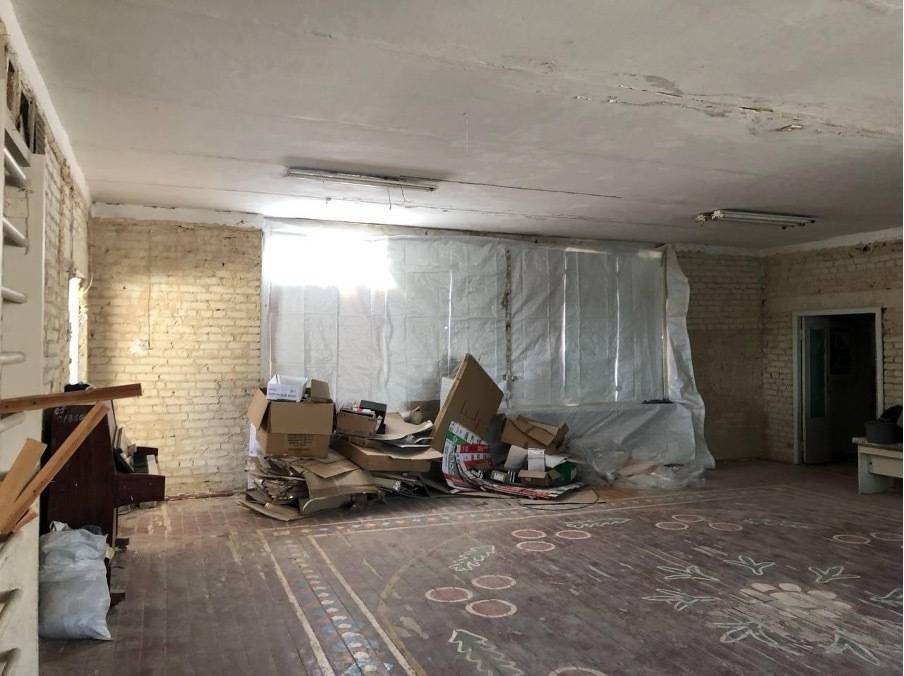
The premises of the former nursery school before renovation. Photo courtesy of Vitalii Ryshkin
The young people from our community, together with volunteers from different parts of Ukraine, renovated the old building. The local military administration fitted new windows and provided our teams with tools and transport.
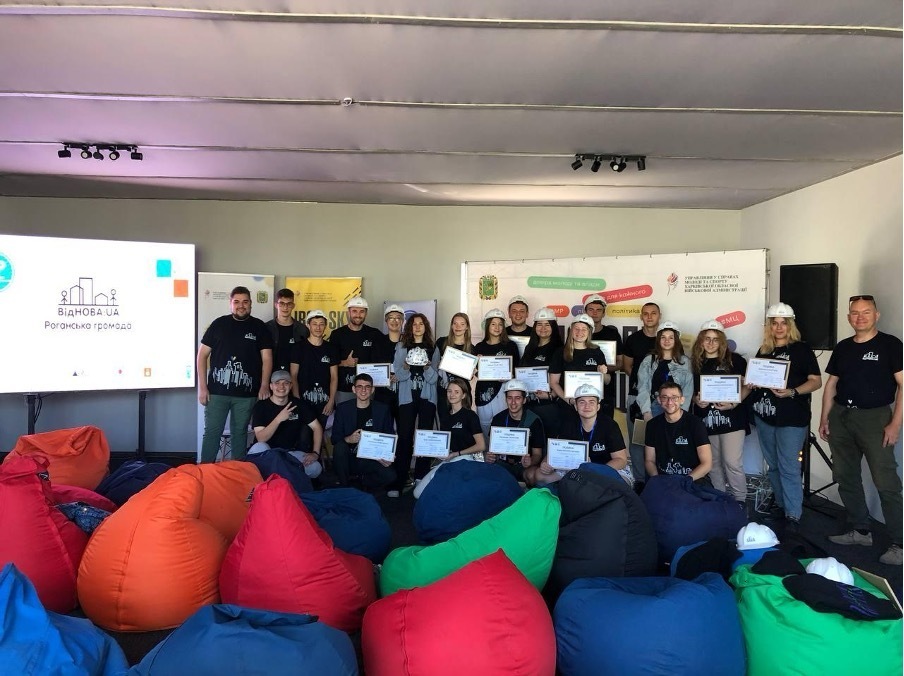
A team of volunteers who worked on arranging the space for the youth centre. Photo courtesy of Vitalii Ryshkin
Partnership with the community helped attract donors
Once the main renovation work was complete, we developed a concept for our youth centre and agreed it with the military administration. The hub then officially opened. Using grant funding, we fitted it out with furniture, computer equipment, and everything else needed to run it.
At the same time, from the very beginning, we developed this project in close cooperation with the local authorities. As the space was located in a council-owned building, all decisions were made jointly.
The military administration provided us with letters of guarantee confirming their willingness to hand over the premises for youth use and to develop them together with us. We also signed a memorandum of cooperation. These documents served as a key selling point for donors and strengthened our applications for grant funding.
In parallel, we relaunched the youth self-governance body: we formed a new Youth Council comprising twenty active young people.
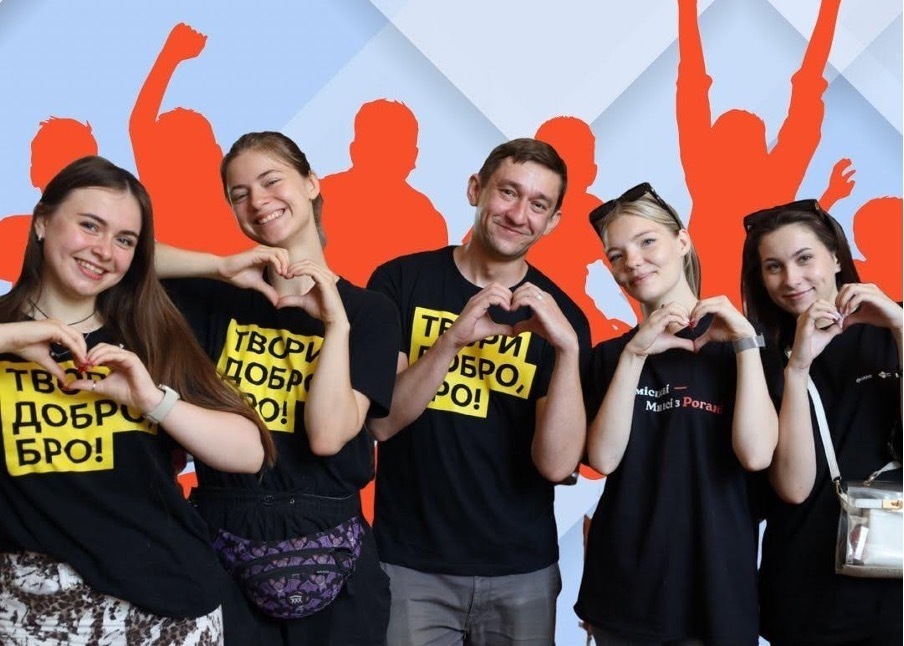
Members of the Youth Council of the Rohan Settlement Council. Photo from social media
The space quickly became the hub of youth life in Rohan. It hosts training sessions and events organised by different organisations; young people have free access to the internet and laptops, and there is a board games and informal education club. The Youth Council also holds its meetings here.
We need not just one grant, but a change in youth policy
When the youth centre first opened, we realised that whilst grants help to launch projects, sustained support is needed for the centre to operate on a long-term basis. However, there was no programme in Rohan community that provided funding for youth projects. We took the initiative to set one up.
Together with the Youth Council, we set up a working group and invited representatives from local civil society organisations, the education department, the military administration, and the executive committee to join it.
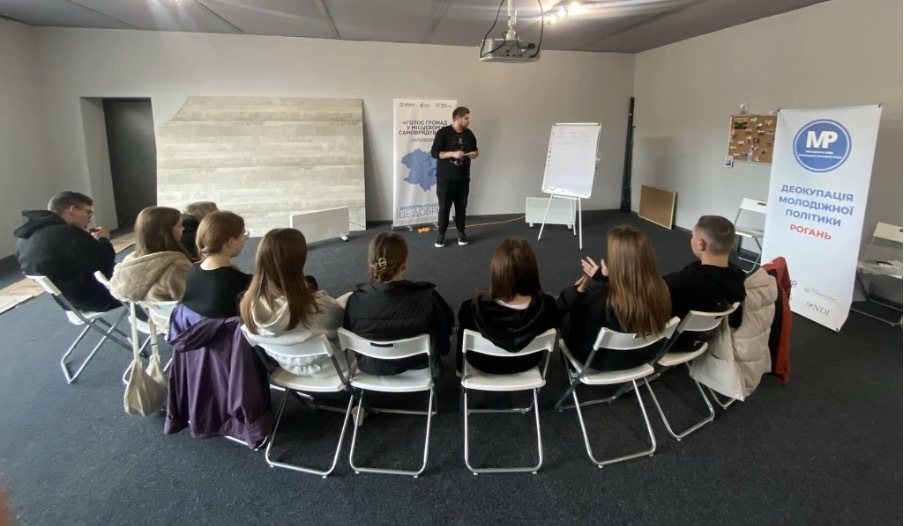
A meeting of the working group that worked on the Programme for the Support of Youth Policy in Rohan community. Photo: roganska-gromada.gov.ua
First, we held several meetings with young people, and then launched an online survey to find out what they really need. We have been regularly surveying teenagers for several years now and have seen how their needs have changed.
Whereas young people previously asked for more leisure activities and clubs, their current interests lie in non-formal education and entrepreneurship courses, as well as making a difference to community development. These requests formed the basis of the Programme for the Development and Support of Youth Policy in the community.
The community backed this Programme and allocated UAH 450,000 for youth activities for 2025–2027.
However, its main value lay not so much in the budget as in a new approach: youth development has become a shared responsibility of different community organisations. They implement some of the activities themselves – without separate funding.
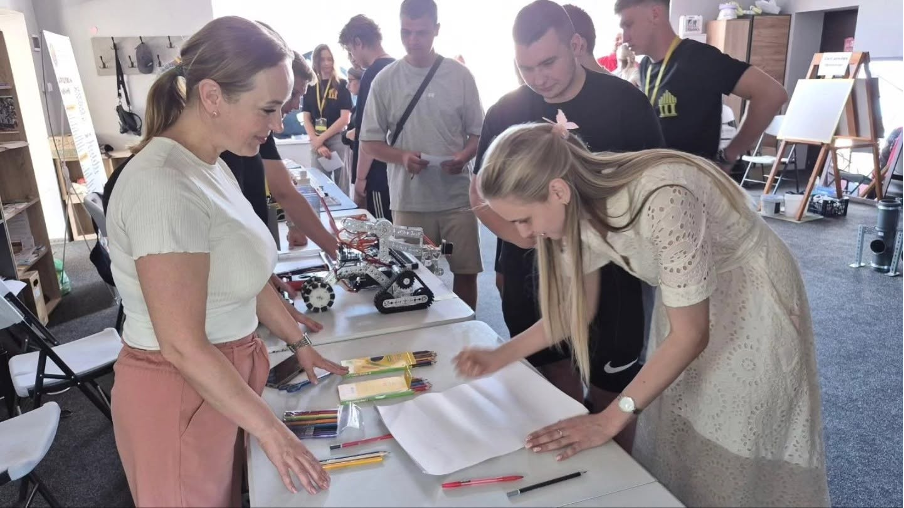
A career guidance quest for young people organised by the Kharkiv Vocational College of Construction and Industry at the VidNOVA:HUB youth centre in Rohan. Photo from social media
The community has become a partner, not a donor: why we do not take funds from the budget
Although the programme was approved, we hardly make any use of these funds. The reason is simply that we understand all too well the conditions under which Rohan community is living today.
After the relocation of large enterprises, the community has become dependent on government subsidies, and all resources are spent on defence, healthcare, and the restoration of critical infrastructure, which continues to be destroyed by russian shelling. If, following yet another attack, the boiler house needs to be rebuilt, that is what should be the priority.
The community has not refused us funding, but we have deliberately chosen not to apply for these funds. Instead, for each project, we seek grant funding and support from partners. Last year alone, we managed to raise more than UAH 2 million. This sum included grants, partnership projects, and material assistance from businesses in Kharkiv.
In return, the local authority helps us in whatever ways it can today: it covers utility costs and provides transport to bring young people in from remote villages.
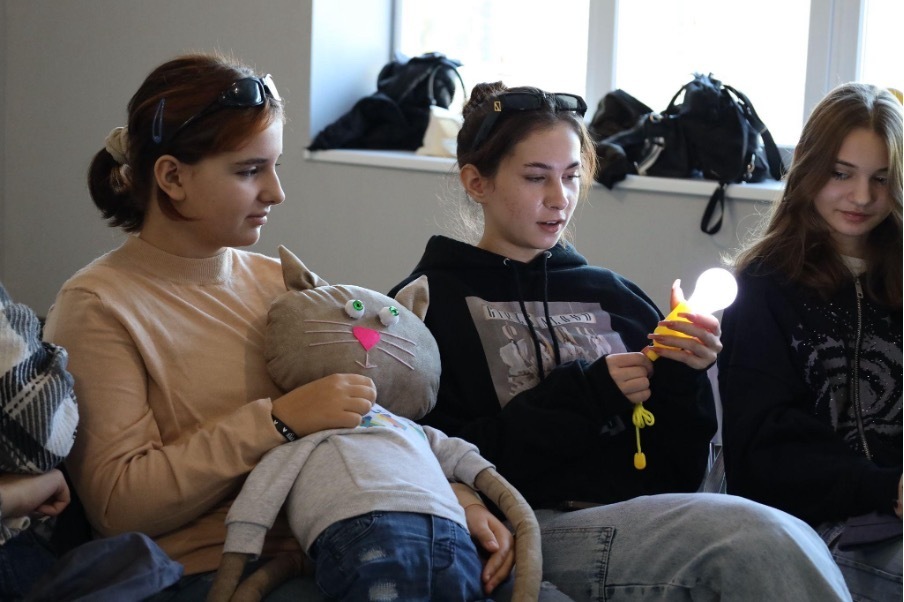
Young people at a meeting on the development of youth projects in the community. Photo courtesy of Vitalii Ryshkin
Seek allies, not the guilty
For me, this is the main outcome of advocacy – to build a real partnership, where the community supports youth initiatives with all the resources at its disposal, however few they may be at present.
Our main lesson from our advocacy experience is very simple: instead of arguing, we should work together. I see many young NGOs that begin their work by opposing the authorities or other organisations. And I must admit that we, too, went through this phase at one time.
But over time, we realised that the problem often lies in the fact that people simply do not know how things work. It is easy to say that funds are allocated incorrectly. It is much harder – but more important – to understand how local government works, how the budget is drawn up, how decisions are made, and how these can be influenced.
When a civil society organisation simply comes forward with a complaint, saying, ‘Here is the problem – why is no one doing anything?’, that is one approach. It is quite another when it proposes a solution because it already understands the process. The transition from confrontation to cooperation is what helps to bring about change in the community.
Tags:
youth participation of citizens
Область:
Харківська областьГромади:
Роганська територіальна громадаSource:
ШОТАМ
30 July 2026
On career guidance that involves everyone. How...
In Vasylkiv, the career guidance system works in cooperation with all the bodies involved in ensuring that students...
17 July 2026
Developing Skills and Keeping Young People in the Municipality: Talent Hub Opened in Drohobych
Developing Skills and Keeping Young People in...
As part of the project "Creating a Supportive Inclusive Environment for Children and Youth," the "Stay at Home"...
08 July 2026
Accessible healthcare in rural areas: Experience of Bilotserkivka community
Accessible healthcare in rural areas:...
In small communities, quality medical care often seems like a luxury: there is a shortage of equipment, doctors, and...
02 July 2026
Social taxi in Bucha: How community created barrier-free service that really changes lives
Social taxi in Bucha: How community created...
Bucha community was one of the first in Kyiv region to face a sharp rise in demand for social services after the...