Farmers who refuse to surrender: Stories of resilience from the borderlands, where farmland turned into a frontline
By Dmytro Syniak
They have a legal right not to pay a single hryvnia in taxes. Their fields are attacked by drones daily, and their homes have been reduced to rubble. The state often freezes their accounts due to bureaucracy, and banks refuse to give them loans because of their ‘dangerous’ registered address. Nevertheless, Ukrainian farmers in the borderlands continue to pay into local budgets voluntarily and engage in what seems a futile act: sowing 170 hectares of wheat just a few kilometres from the enemy. They are perhaps the only link that still sustains the economy of frontline communities, providing people with jobs and keeping life going where there should seemingly only be scorched earth. How can communities maintain this economic backbone? Why does the state often stand in the way instead of helping? And what do these unbreakable farmers really need? The Decentralisation Portal asked farmers and community leaders in Sumy and Donetsk regions, who work tirelessly every day.
Farmers voluntarily pay taxes to the local budget
Yevhen Kovalenko is a 59-year-old farmer who has spent his entire life working the land in his native village of Khotin, near the russian border in Sumy region. Now, the village has been devastated by russian drones. As a result of the russian invasion, Yevhen has lost half of his 130 hectares of land. Where he used to grow wheat and barley, mines, anti-tank barriers and Ukrainian military positions now stand, and russians have occupied a small part of the Ukrainian border in Sumy region.
‘At the beginning of 2024, I was working relatively calmly because russian artillery was firing somewhere far above our heads and causing us virtually no damage,’ says Yevhen Kovalenko. ‘But last year, the russians acquired a large number of drones and began literally hunting down our agricultural machinery. These drones seriously damaged my disc harrow, tractor, and combine harvester. Fortunately, none of my employees were injured. Although once, a fragment the size of a small bucket flew a few centimetres from the head of my combine harvester operator – not from a drone, but from a missile...’
Yevhen Kovalenko now plans to plant corn and soybeans on the rest of his land, but admits that he does not know if he will be able to harvest in the autumn. He would be happy to work further away from the border, but no matter how hard he searches, he cannot find any vacant land. And, in his opinion, there is no other land in Ukraine as fertile as that in Sumy region.
‘I want to stay here,’ he admits. ‘This is my home, I was born and raised here. Therefore, every step the Ukrainian army takes away from the border is a personal tragedy for me. Because with every metre, I am losing not only my business, but also my homeland.’
There are 51 communities in Sumy region, and three of them are recognised as being in the zone of active hostilities. Khotin community is one of them. Therefore, its entrepreneurs are relieved of all taxes. However, Yevhen Kovalenko and other farmers pay taxes to the local budget voluntarily, because they know that the community needs their support.
‘Our farmers are heroes, and I am truly proud of them,’ says Mykola Torianyk, Head of Khotin community, enthusiastically. ‘Their funds are a great help to us because we have considerable expenses and almost no income. This year, we have allocated UAH 6 million in the budget for our relocated medical facilities alone. And then there are schools, municipal institutions, social protection…’
To reward the farmers, the Khotin Village Council is looking for land for them in neighbouring districts. Mykola Torianyk is very optimistic about this.
‘There is a lot of unused land in Sumy region because certain plots were inherited or simply purchased at some point as a profitable investment,’ he says. ‘Our farmers can lease this land. Some of them still have machinery and personnel. For example, our agricultural company Lan lost more than 1,000 hectares of sown land on the border. Now we are looking for land for it in Romny and other districts. I am convinced we will find it.’
Mykola Torianyk says that he tries to help all farmers in the community, even those who are already working in other regions of Ukraine. The community leader has no doubt that they will return as soon as the fighting stops. After all, the community has 15,000 hectares of exceptionally fertile land. This is so-called powerful black soil, with fertility ranging from 80% to 94%. For comparison, the fertility of most of the land in the north of Chernihiv region is only 35%. So the black soil in Khotin will definitely not be overgrown with weeds.
‘The resilience of our farmers deserves special respect,’ says Oleksandr Bilytskyi, Head of the Zvanivka Military Administration of Donetsk region. ‘In such difficult times, they remain virtually the only taxpayers in our community. This is despite the fact that since 2022, our land has not been cultivated because the community is located in the zone of active hostilities. However, taxes are still being paid, and we can use them to address the most pressing issues and help our people and the army.’
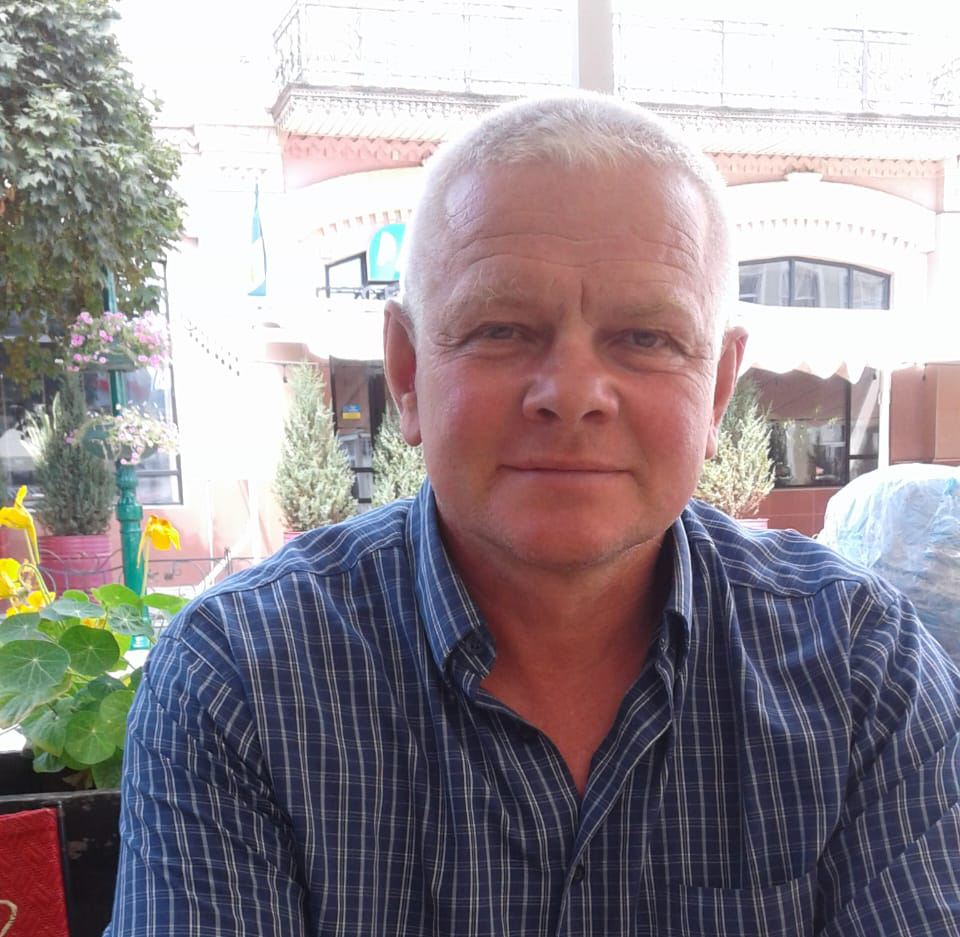
Farmer Yevhen Kovalenko refuses to leave his native community
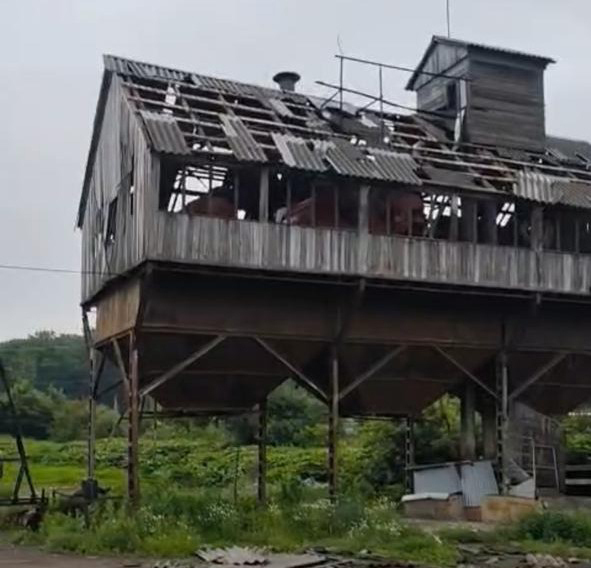
Yevhen Kovalenko’s automatic grain winnower and storage facilities in Khotin, Sumy region, destroyed by russian artillery
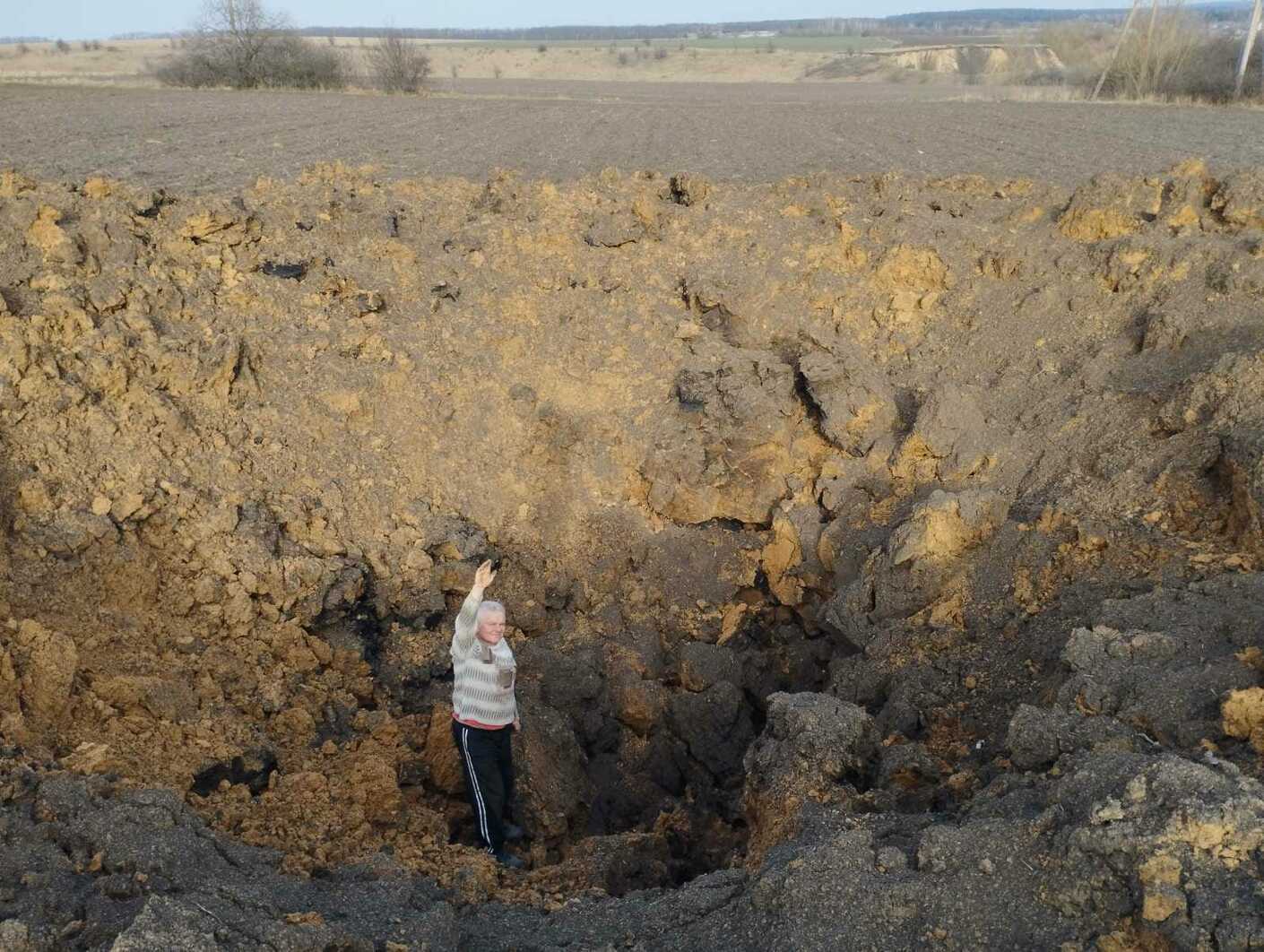
Yevhen Kovalenko and the aftermath of the strike on his field
The last farmer in Bakhmut district
‘People call me the last farmer in Bakhmut district,’ says Andrii Zhuravliov, a tall, stocky man. ‘I suppose that’s true. Many people also tell me that I’m crazy to still be working. But what else can I do?’
Two years ago, Andrii Zhuravliov was harvesting decent crops in the north of Donetsk region. Although some of his fields were less than 8 km from russian trenches, he continued to work. Then the russians sent in whole swarms of drones, which began to strike at anything that moved and sometimes deliberately set fire to the fields. Andrir Zhuravliov lost 700 hectares of wheat alone. He also lost warehouses, elevators, agricultural machinery…
In 2022, when Mr Zhuravliov was working on his farm, his tractor hit one of the russian munitions scattered around by a cluster missile launched from a Uragan multiple launch rocket system. Luckily, the farmer himself remained unharmed, but his tractor was seriously damaged.
Usually, the farmer asks the relevant military administration for help with demining, but when he sees that it will take too long, he defuses the explosive materials himself. Andrii Zhuravliov attaches a long wire to the missile or shell and pulls it out of the field with his tractor. The ammunition often explodes in the process, which is better than leaving it unexploded. Because then the danger remains.
Before the war, the farmer cultivated 1,800 hectares of land. In 2022, only 350 hectares remained, with the rest being used in one way or another for military operations. But Andrii Zhuravliov refused to give up and began to lease vacant land left behind by other farmers. Last year, he was already managing 2,000 hectares, where he grew mainly sunflowers, corn, and wheat. However, due to the autumn-winter offensive of the russian army, Mr Zhuravliov again lost control of 1,300 hectares. Now all he has is 750 hectares near Kramatorsk.
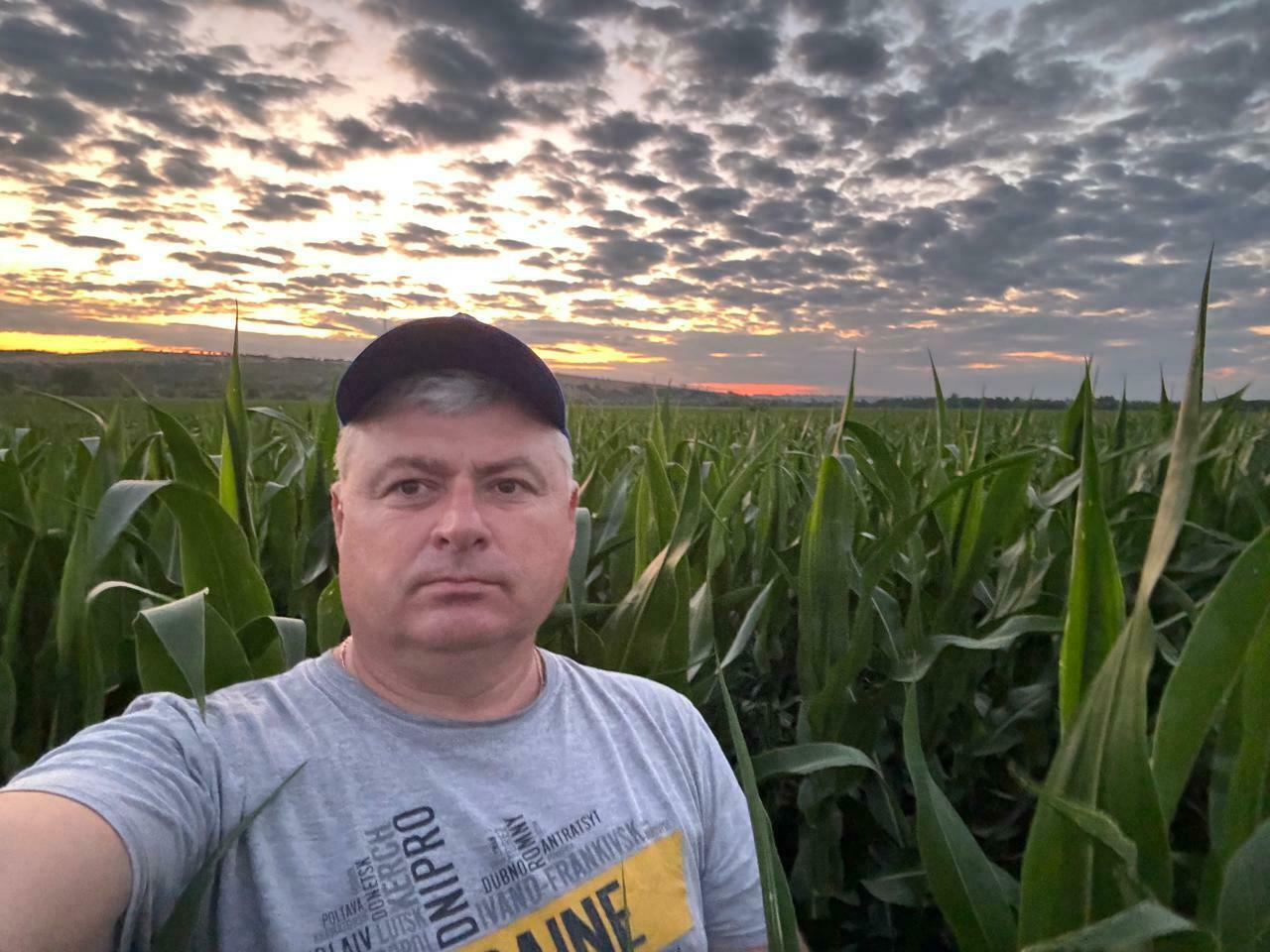
‘The last farmer in Bakhmut district’ Andrii Zhuravliov
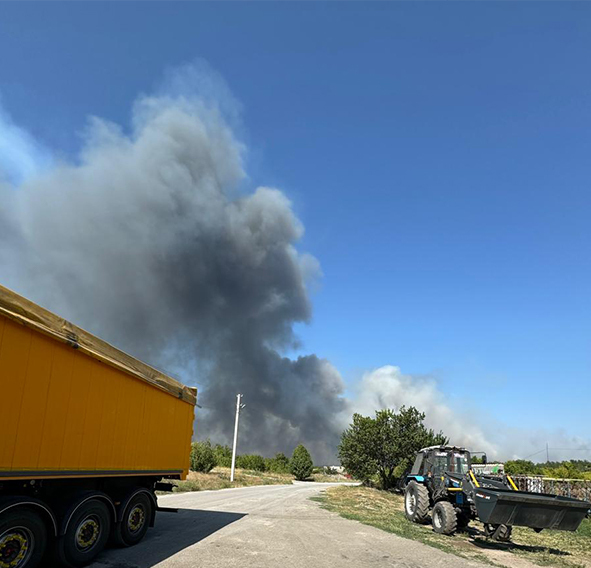
One of the farms in Donetsk region under fire
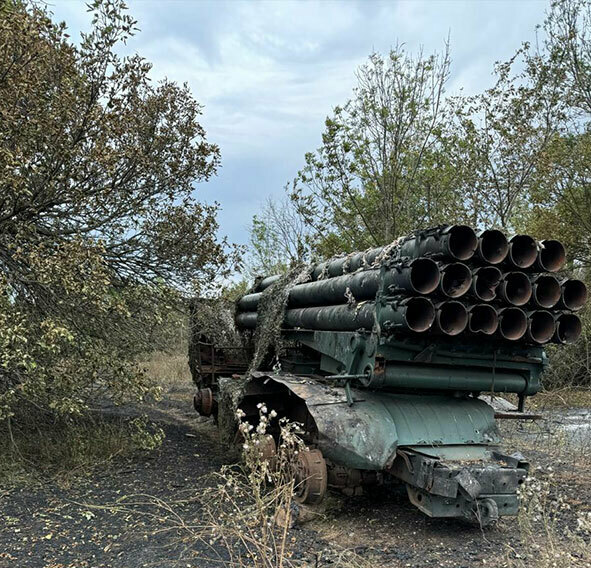
Destroyed Russian military equipment often litters Ukrainian fields and planting areas. Photo by Andrii Zhuravliov
The ‘Donetsk registration’ of the enterprise is a ‘black mark’ for the tax authorities
‘I cannot afford to stop working because I owe the bank UAH 16 million in loans,’ says Andrii Zhuravliov. ‘Neither the bank nor the state will release me from my obligation to pay it back, even though there are clearly force majeure circumstances. I work to avoid falling into debt.’
To be fair, the state did try to help farmers in frontline and border areas with russia. Last year, it allocated a special subsidy for this purpose (UAH 1,000 per hectare per year). However, according to Mr Zhuravliov, this assistance is often received by farms that have suffered much less damage than those located in close proximity to the front line. Ultimately, according to the farmer, it is not so much subsidies that are necessary as the ability to take out loans for the sowing campaign. And banks do not give them to entrepreneurs from frontline territories. The work of the tax authorities to stop any cooperation with the occupied territories also hinders their work.
‘For example, my native village of Pereizne, where four generations of my ancestors were born and raised, is now marked on the DeepState map as being under the control of the russians,’ says Andrii Zhuravliov. ‘But when I was harvesting, it was still controlled by the Ukrainian army. Now no one in the tax office wants to understand this – my commercial transactions are blocked without any explanation. Recently, I wanted to buy a spare part for a combine harvester. They refused to sell it to me, but gave it to me as a gift and apologised for not being able to do business with me in the future. This is because every transaction made by a Donetsk-based company is checked by the tax authorities. Those are the rules now. Therefore, at the very beginning of our email correspondence, suppliers or buyers often respond with something like, “Your company has not been accredited by our company.” Is this a state-oriented approach? We must fight against traitors, but protect our people!’
These kinds of things force farmers to re-register in other regions. Andrii Zhuravliov is constantly looking for alternative plots in other regions of Ukraine. But usually, local farmers are already working there, and they are not happy to see outsiders. So Andrii is forced to move along with the front line, constantly risking not being able to harvest his crops.
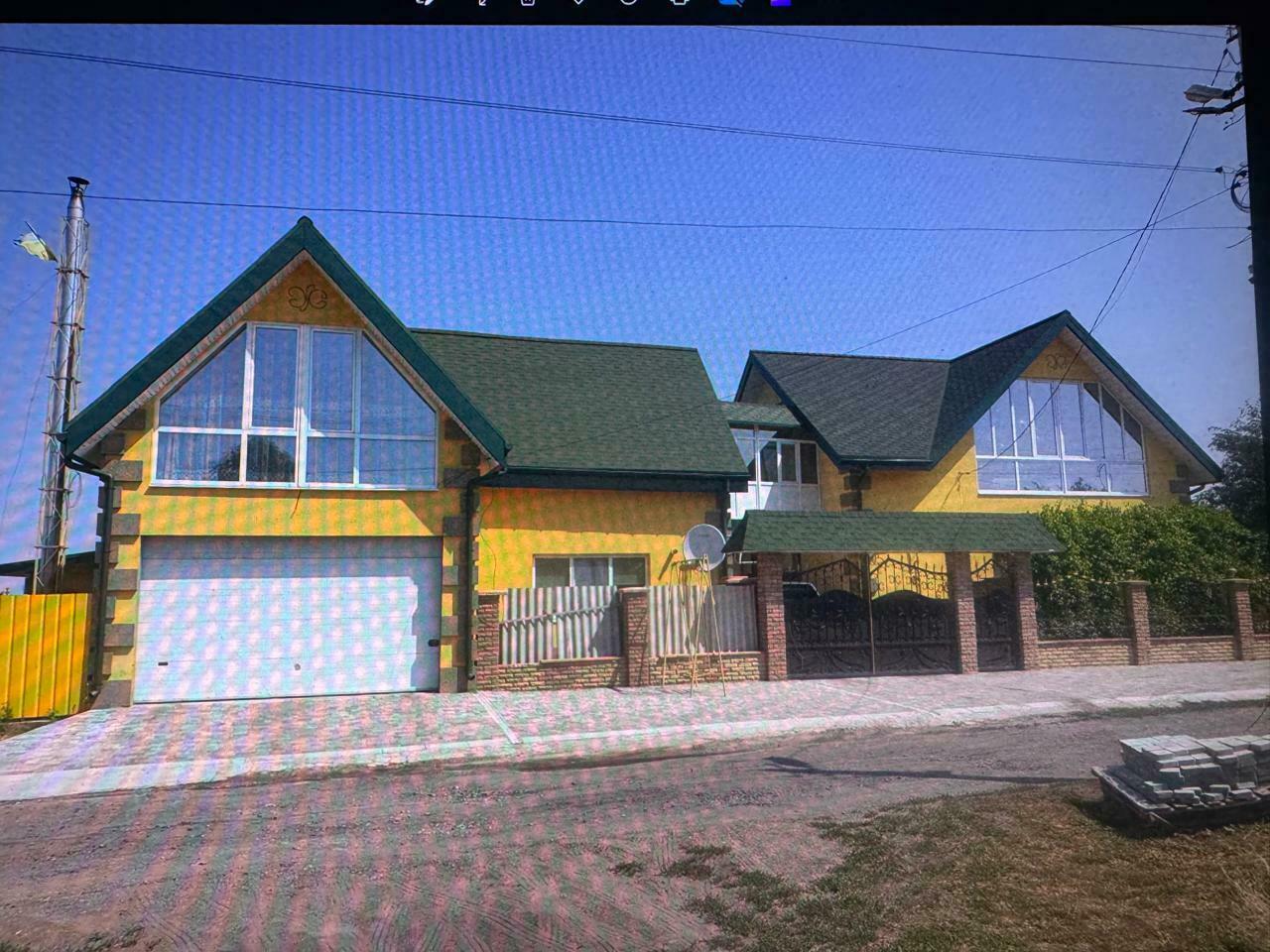
Andrii Zhuravliov’s family home in Pereizne, Siversk community…
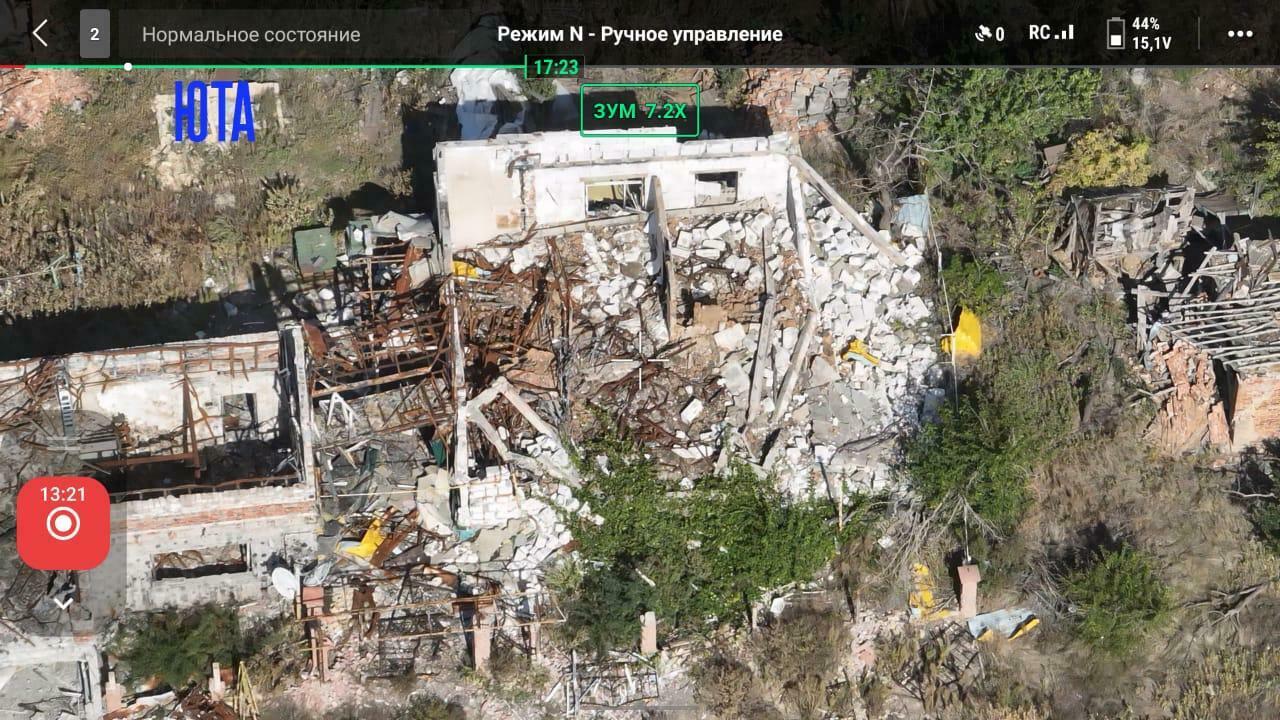
. … and what russian barbarians left of it
Life is more important than the harvest
‘More than 12,000 enterprises have been relocated from the occupied territories,’ comments Pavlo Koval, Director General of the Ukrainian Agrarian Confederation. ‘However, the peculiarity of farms is that they cannot relocate their main asset – land. Therefore, many farmers decide to work until the last possible moment. But in this case, this last chance must be recognised in advance in order to save people and machinery. For example, our employees in Sumy region witnessed a targeted russian attack on farmers’ agricultural machinery. More than ten combine harvesters were destroyed in a single artillery strike. But most importantly, people were killed. No harvest is worth that, especially when it comes to true patriots...’
Pavlo Koval says he knows of many cases where farmers found vacant land in western or northern Ukraine or even changed their profile, so to speak. For example, one large farm that grew grain in Luhansk region began to engage in animal husbandry in Zhytomyr region.
The Ukrainian Agrarian Confederation lobbies for farmers’ interests in the Government and Parliament, demanding the adoption of urgently needed laws and resolutions. One of these is a proposal to increase subsidies for farmers working in border and frontline areas this year, and to extend these subsidies not only to grain cultivation, but also to horticulture and animal husbandry.
‘In order for a farmer to make a timely decision about evacuation, they need to understand where they will be going and under what conditions,’ explains Pavlo Koval. ‘After all, it is one thing to leave behind everything you have worked hard for over the years, but quite another to have certain state guarantees about how and where you will continue to work. This requires large-scale comprehensive programmes, and we are currently working on their implementation. We meet with understanding in the highest levels of government, so I hope that the rules of the game will change somewhat this year. And farmers working in frontline and border areas will have better prospects.’
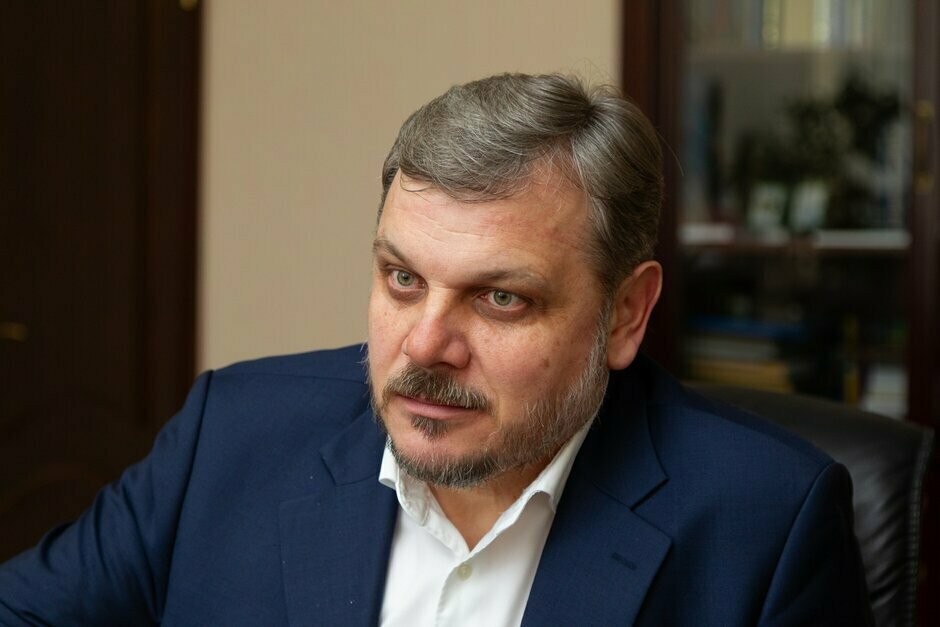
Pavlo Koval, Director General of the Ukrainian Agrarian Confederation. Photo: mind.ua
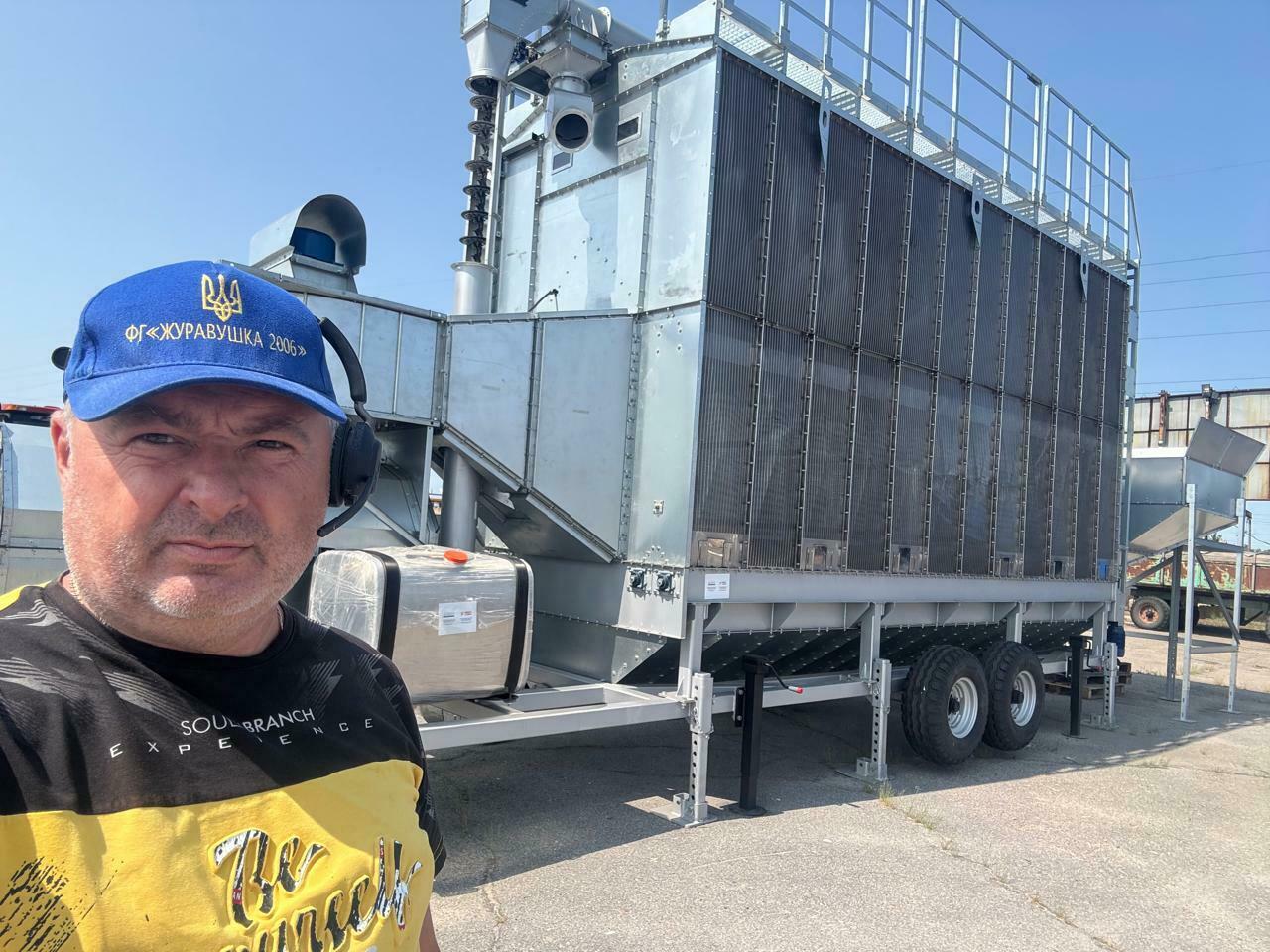
Andrii Zhuravliov and his new drying machine, which he purchased with the help of the international donor organisation Mercy Corps
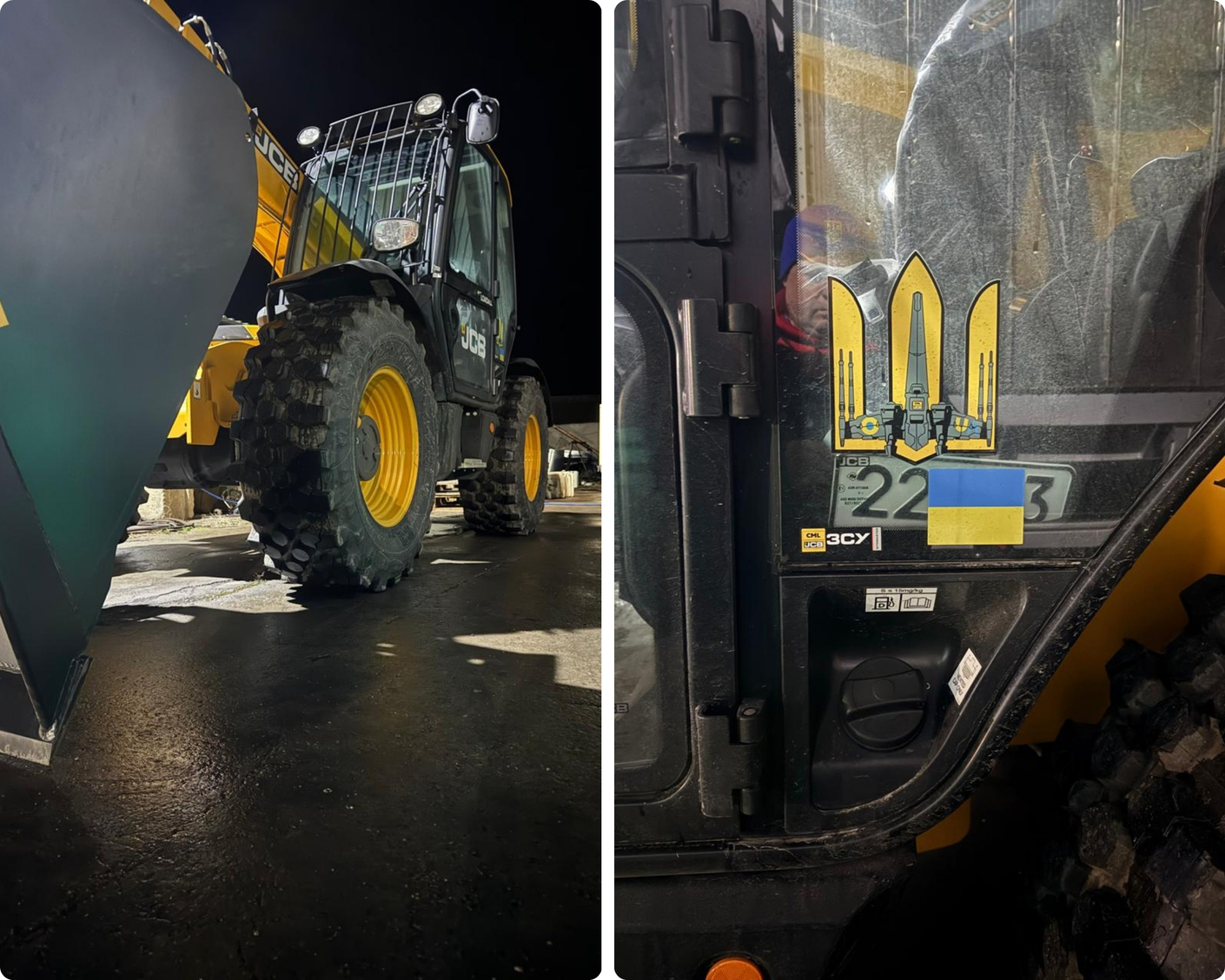
Despite the extremely difficult situation, Andrii Zhuravliov is purchasing new equipment…
… and is adorning it with Ukrainian symbols
The virus of resilience
Oleksii Vorobiov, Head of the Siversk Military Administration, says that conscientious entrepreneurs are the foundation of every community.
‘We always work closely with such people, as if we were mountaineers,’ he says. ‘It would be difficult for us to work without the support of businesses, and vice versa. The simplest example is this: after almost every russian attack, unexploded ordnance remains in the fields. Only the military administration can organise the rapid and free demining and inspection of certain areas. However, we do not have enough personnel or equipment to solve all the problems, which can be numerous on certain days. At such times, it is crucial to know that an entrepreneur working in your area will respond to your requests. So, we depend on each other. Recognising this, the military administration supports all entrepreneurs, especially farmers, in every way possible. After all, land is our most valuable asset. Those who continue to work the land prove that it is ours and that it is alive.’
‘Our community has been in the zone of active hostilities for three years now, and because of this we have lost almost all of our businesses – except for the farmers,’ adds Ihor Ostrivnyi, Head of Bilozerka community in Kherson region. ‘The fact that farmers work under conditions of constant risk to their lives, in my opinion, deserves great respect. Although the community budget does not receive the main tax from them – land tax, from which the state has freed them, the community still benefits. Thanks to the farmers, our people can feed their own families. And we are not only talking about salaries, but also about share payments. This creates a certain virus of stability. People see that the community is alive, that the fields are being sown, that the spark of life is not fading, and they feel calmer. After all, if farmers believe in the state, perhaps others who are still hesitant should believe too?’
Several community leaders say that most farmers actively support the Ukrainian army, and not only out of patriotism. After all, this army protects their main asset – their land.
‘Many people say they believe in the Ukrainian army, but they flee abroad,’ says Andrii Zhuravliov. ‘My faith is purely material: last autumn, I sowed 170 hectares of winter wheat. I believe that I will harvest it in the summer. I also have seeds ready for sowing in my warehouses. Together with the international donor organisation Mercy Corps, I bought a new drying machine. This is my land, and only here can I be myself.’
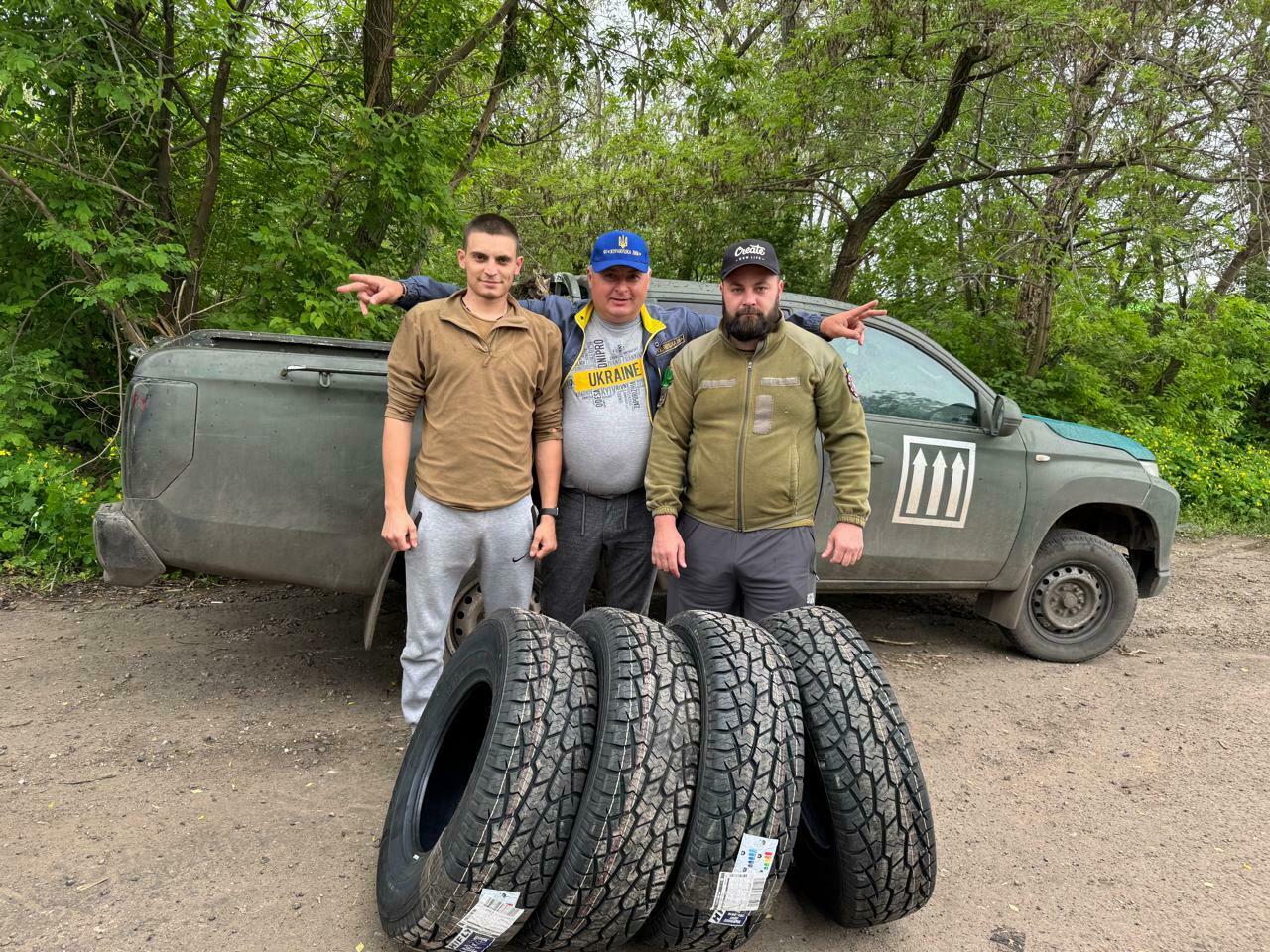
Most Ukrainian farmers help the Armed Forces of Ukraine not only for patriotic reasons. The Ukrainian military protect farmers’ main asset – their land
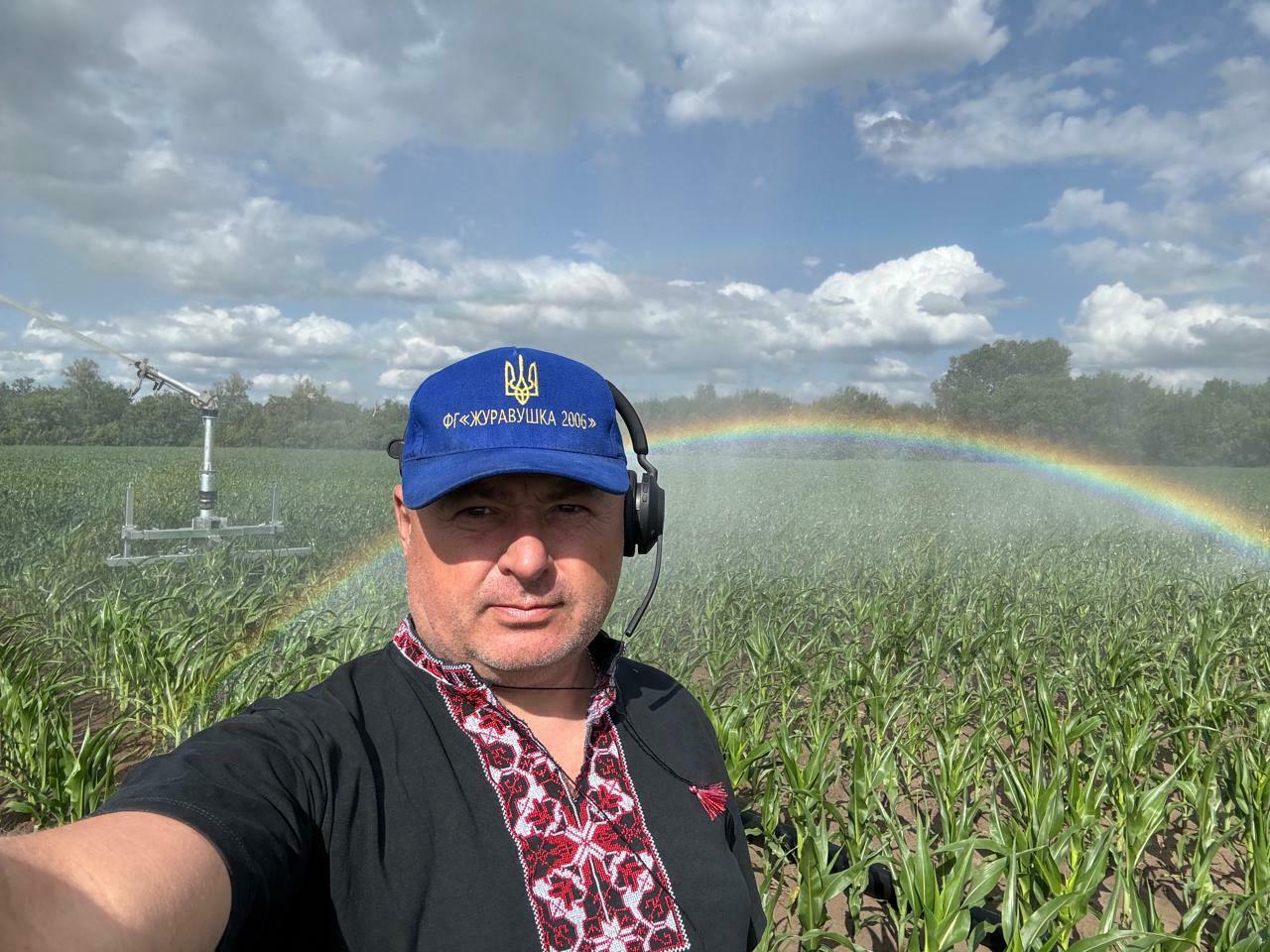
Farmer Andrii Zhuravliov believes in Ukraine and its Armed Forces and therefore continues to work
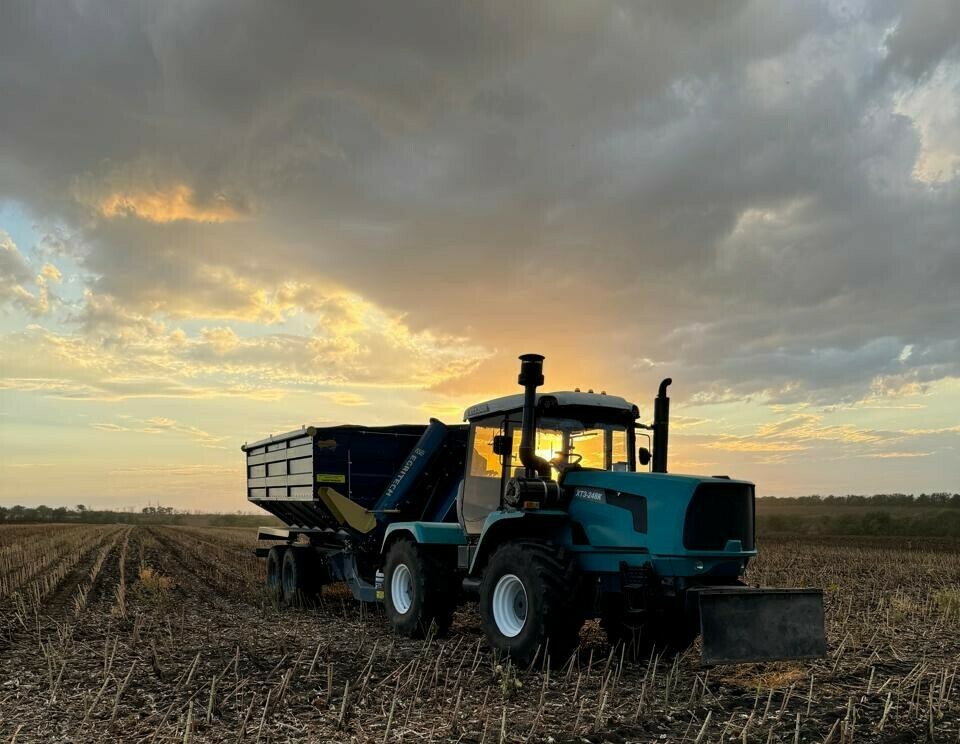
Ukrainian farmers often work under dark clouds, but they continue regardless
23 October 2026
Для представників громад Харківщини,...
Громадська організація Housing Institute запрошує представників територіальних громад Харківщини, Чернігівщини та...
23 October 2026
Мінрегіон та МОМ посилять підтримку ВПО: житлові рішення та підготовка громад до зими
Мінрегіон та МОМ посилять підтримку ВПО:...
Мінрегіон та МОМ оцінять потреби громад, які приймають переселенців, і визначать пріоритети для залучення додаткової...
23 October 2026
Доступні послуги для кожного: як Тростянецька громада виявляє та усуває бар’єри у ЦНАП
Доступні послуги для кожного: як Тростянецька...
Портал «Децентралізація» продовжує серію матеріалів про рішення громад, які роблять публічні послуги та простори...
23 October 2026
Олександр Корнієнко на Вінниччині обговорив фінансування громад і міжнародні програми
Олександр Корнієнко на Вінниччині обговорив...
Під час робочого візиту на Вінниччину Перший заступник Голови Верховної Ради України Олександр Корнієнко зустрівся з...