‘Entire families found safety here.’ A shelter has been renovated at Gymnasium No. 13 in Chernihiv
When the full-scale russian invasion broke out in 2022, the bomb shelter at Chernihiv Gymnasium No. 13 became a place of refuge for many local residents.
‘In 2022, in the early days of the full-scale invasion, our lives changed dramatically. Neighbourhood residents came to the bomb shelter with their entire families, seeking safety and support. As we were more familiar with the premises, we were able to assist everyone who came to us and organise the necessary conditions. While people were in the bomb shelter, a real sense of community developed. People supported and helped each other, and, most importantly, they had the opportunity to bond. This gave them the strength to get through the most difficult moments and not lose hope,’ says Inna Levchenko, principal of Gymnasium No. 13.
In April 2023, in-person classes resumed in the gymnasium. However, this posed a problem as the bomb shelter could not accommodate all the students. Furthermore, the frequency of air raid sirens was increasing, making the need for a safe and comfortable space for everyone even more urgent.
As a long-standing partner of Chernihiv, the Swiss-Ukrainian DECIDE Project undertook the major renovation of Gymnasium No. 13 in 2023, along with the refurbishment of the bomb shelter and kitchen unit. Having completed the preparatory work, renovation of the bomb shelter began in April 2024.
‘This is one of the largest bomb shelters we have worked on – a kind of underground school. It is urgently needed here because the problem of air raid alerts in Chernihiv is very serious. In September 2025, for example, air raid alerts sometimes lasted up to 15 hours. This meant that children had to spend the whole day in the bomb shelter. Our aim is to keep them safe and comfortable,’ says Valentyna Poltorak, Swiss-Ukrainian DECIDE Project Manager.
On 1 September 2025, Gymnasium No. 13 opened its doors to schoolchildren, complete with a fully renovated and equipped bomb shelter.
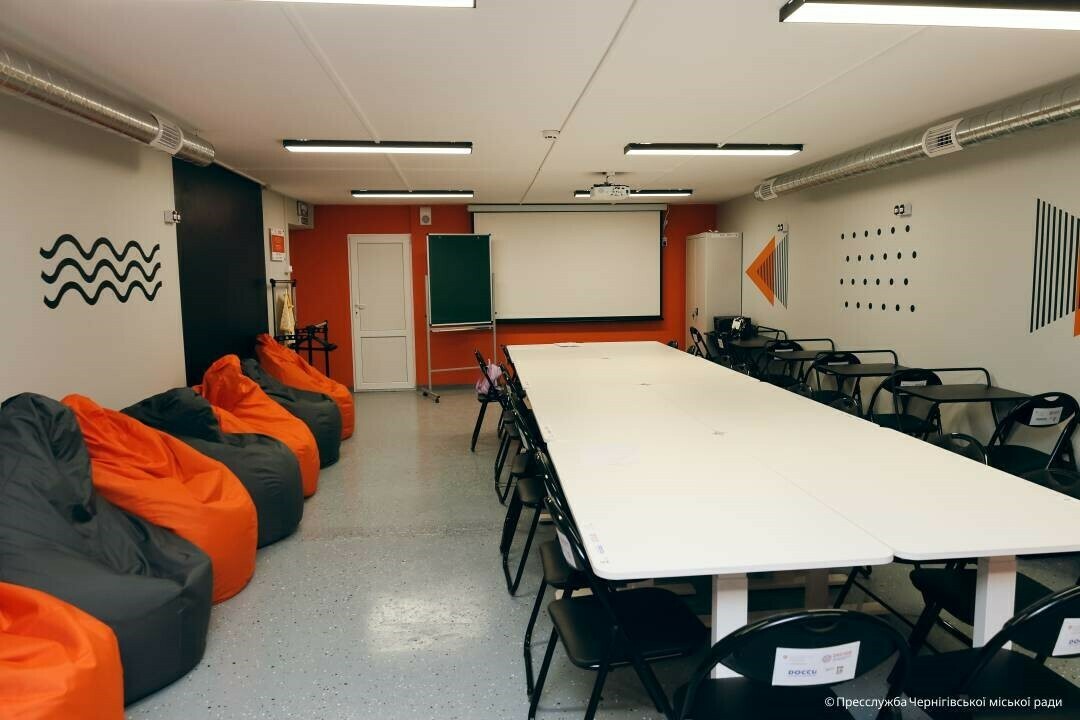
‘In wartime, educational institutions cannot function without proper bomb shelters. With the help of the Swiss-Ukrainian DECIDE Project team, we transformed the simplest shelters in five secondary schools in the city into real educational spaces. Gymnasium No. 13 was one of them. We now have two large rooms that look modern and are well lit; they have powerful ventilation and equipped restrooms. The rooms are also equipped with projectors, tablets, comfortable furniture, poufs, and games. There is also an electric lift at the entrance to the shelter. Everything has been done to ensure that children feel as comfortable and safe as possible in the bomb shelter,’ says Vasyl Bilohura, Head of the Education Department of Chernihiv.
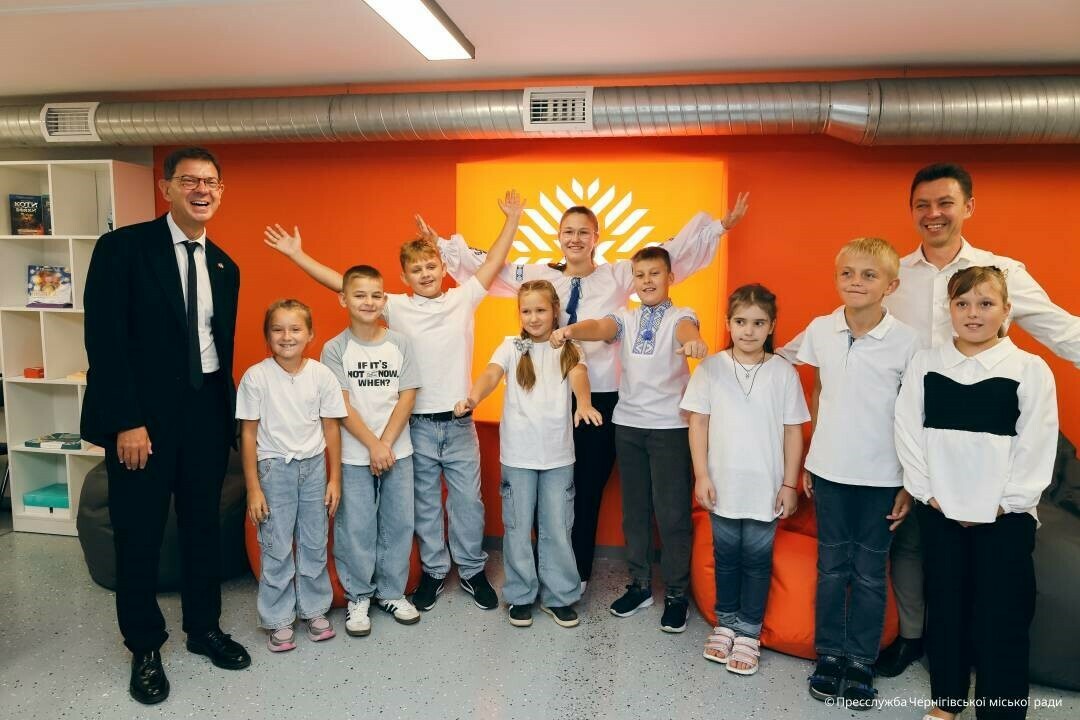
 In the photo: Felix Baumann, Ambassador of the Swiss Confederation to Ukraine, Vasyl Bilohura, Head of the Education Department of Chernihiv, and schoolchildren
Work progress and the final state of the bomb shelter
‘As part of the project, old structures were dismantled and the floor levels were lowered. This created more comfortable and safer conditions for those staying in the bomb shelter. Self-levelling floors were installed and new water, sewage, and ventilation systems were put in place. The bomb shelter is now fully functional for long-term stays,’ says Serhii Omelichkin, DECIDE Grant Manager.
The experts also installed modern electrical equipment and decorated the walls and ceilings, giving the room a modern, neat style. They also repaired the stairs and tiled the entrance area for easier access to the bomb shelter.
Attention was also paid to inclusivity: a modern sanitary facility for people with disabilities was installed, along with a stair lift to greatly facilitate access to the premises for those with disabilities.
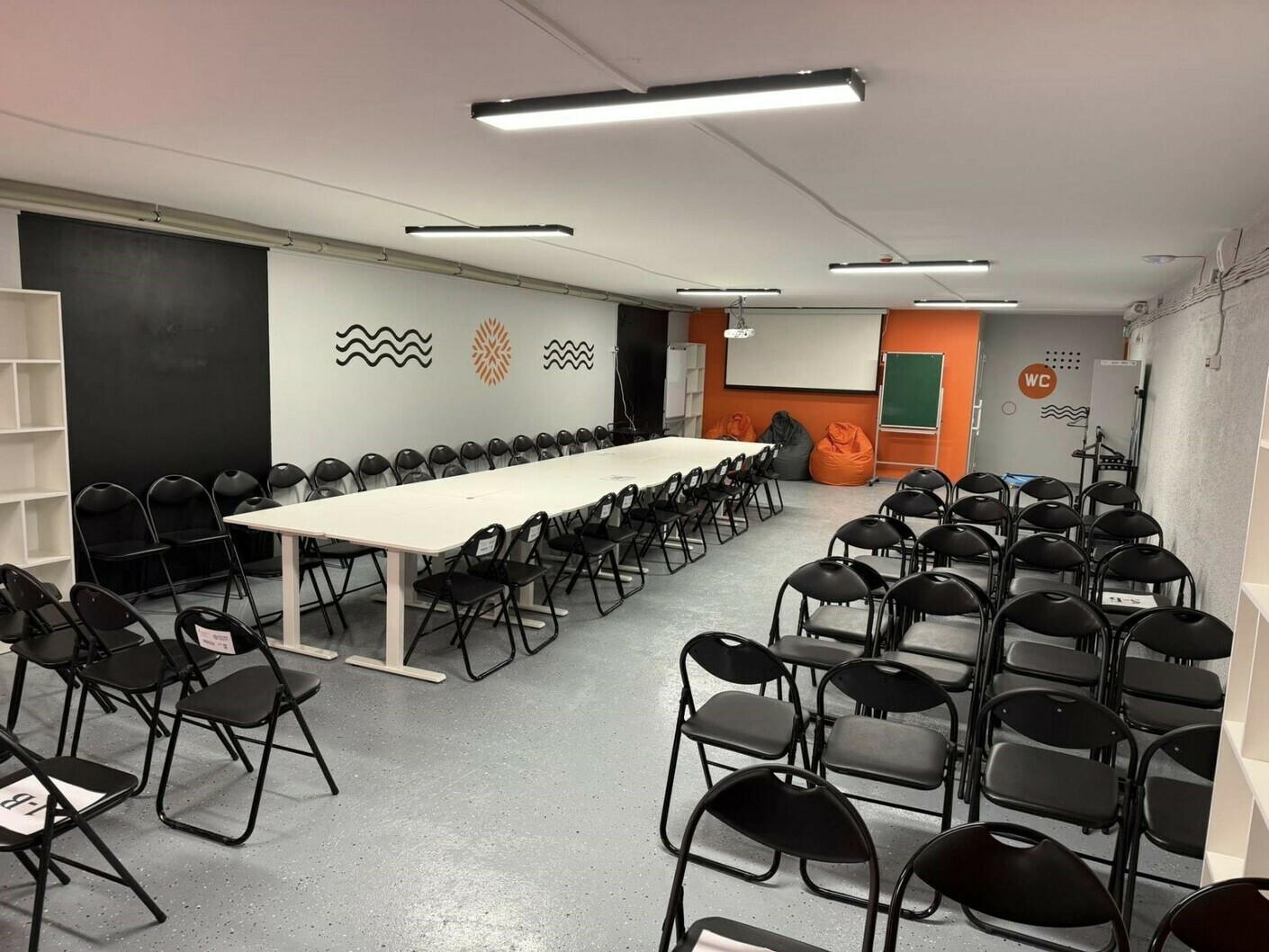
Finally, the bomb shelter was furnished with modern equipment and furniture to ensure a comfortable stay and the possibility of conducting lessons. It is equipped with computers and multimedia technology, as well as furniture for work and leisure, lighting and a fire extinguishing system.
‘An important stage was our joint work with the Education Department. Together, we inspected the school and the bomb shelter, including all of its rooms, even those that were not in use. We also worked with engineers, architects, teachers and other experts. This approach enabled us to plan and carry out all the renovation work efficiently,’ says Serhii Omelichkin.
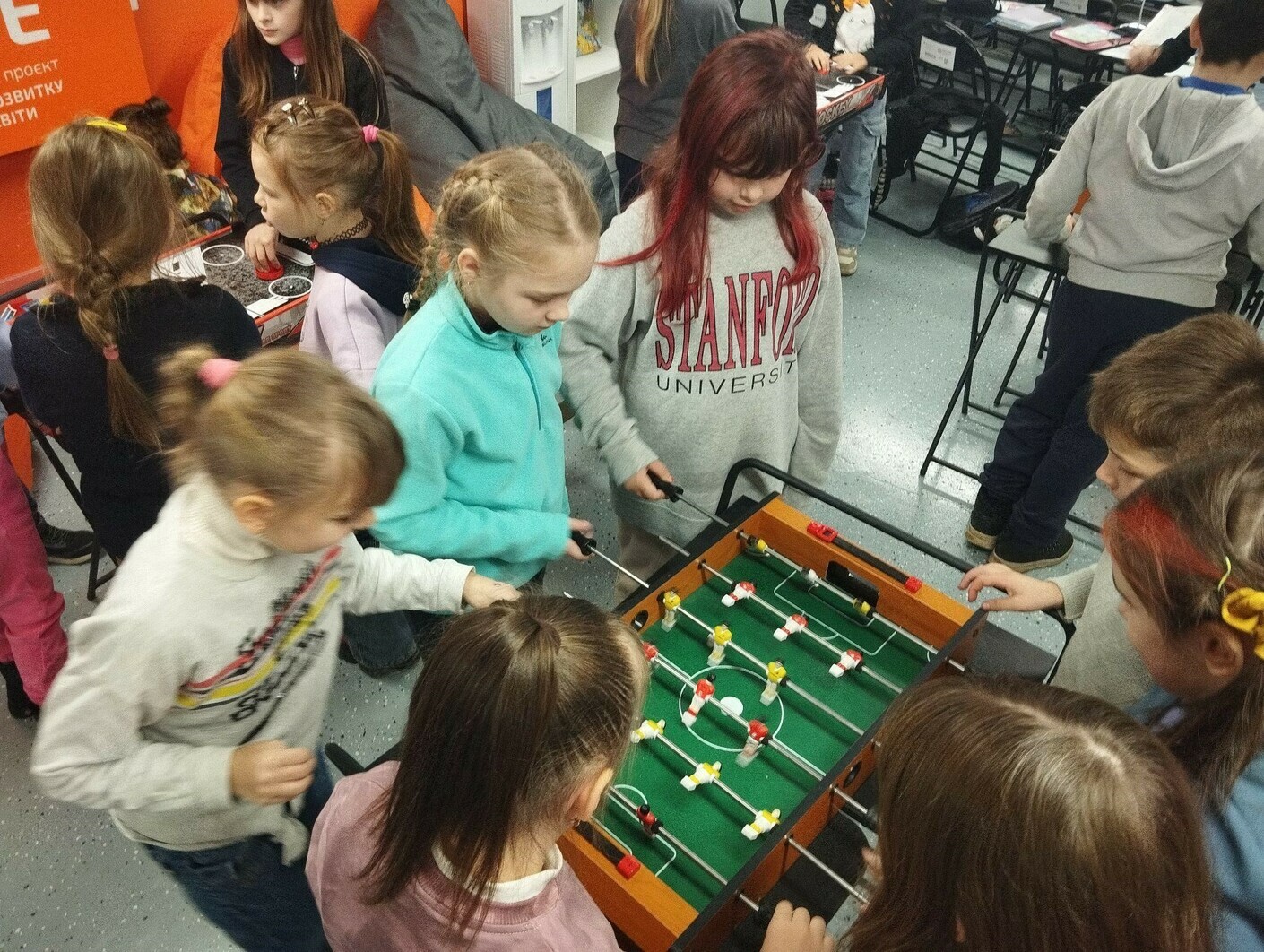
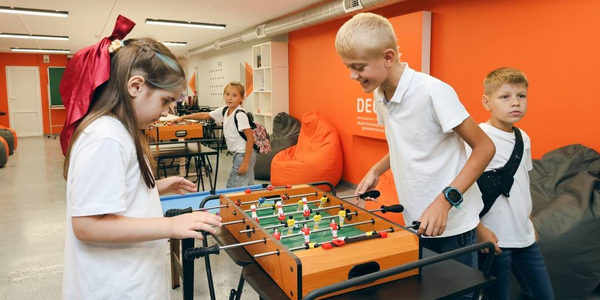
The bomb shelter at Gymnasium 13 is now safe, cosy, and comfortable. Librarians regularly check that there are interesting books available. There are also board games, an air hockey table, a table football set and an electronic basketball game.
Lanterns provide backup lighting in case the regular lighting fails. A high-quality ventilation system has been installed to allow people to breathe freely and stay indoors for long periods.

‘I sincerely thank the parents who were understanding about the renovation. Last academic year, we only studied online, which was difficult for everyone. Parents were at work and could not check if their children had gone down to the bomb shelter. Clearly, they were worried and, like everyone else, were waiting for the children to return to their desks. Here, everything is under control. The safety of the children is always our priority,’ says Inna Levchenko.
Renovating the bomb shelter cost about UAH 6 million in total.
On the mini-grant and children’s ideas
A notable aspect of the renovation was the construction of the bomb shelter, funded by a mini-grant received by the gymnasium through its participation in the Swiss-Ukrainian DECIDE Project. The schoolchildren themselves came up with the ideas with the help of their teachers.
‘First, the students took part in training sessions, developed their project proposals and voted on how to equip the bomb shelter. All of this was done to make the bomb shelter more “their own”, cosier, and more comfortable, and to enable them to contribute their own efforts to filling it. DECIDE allocated UAH 50,000 for this purpose. As a result, the bomb shelter is not only safe, but also equipped with modern amenities where children can study and enjoy themselves during air raid alerts,’ says Serhii Omelichkin.
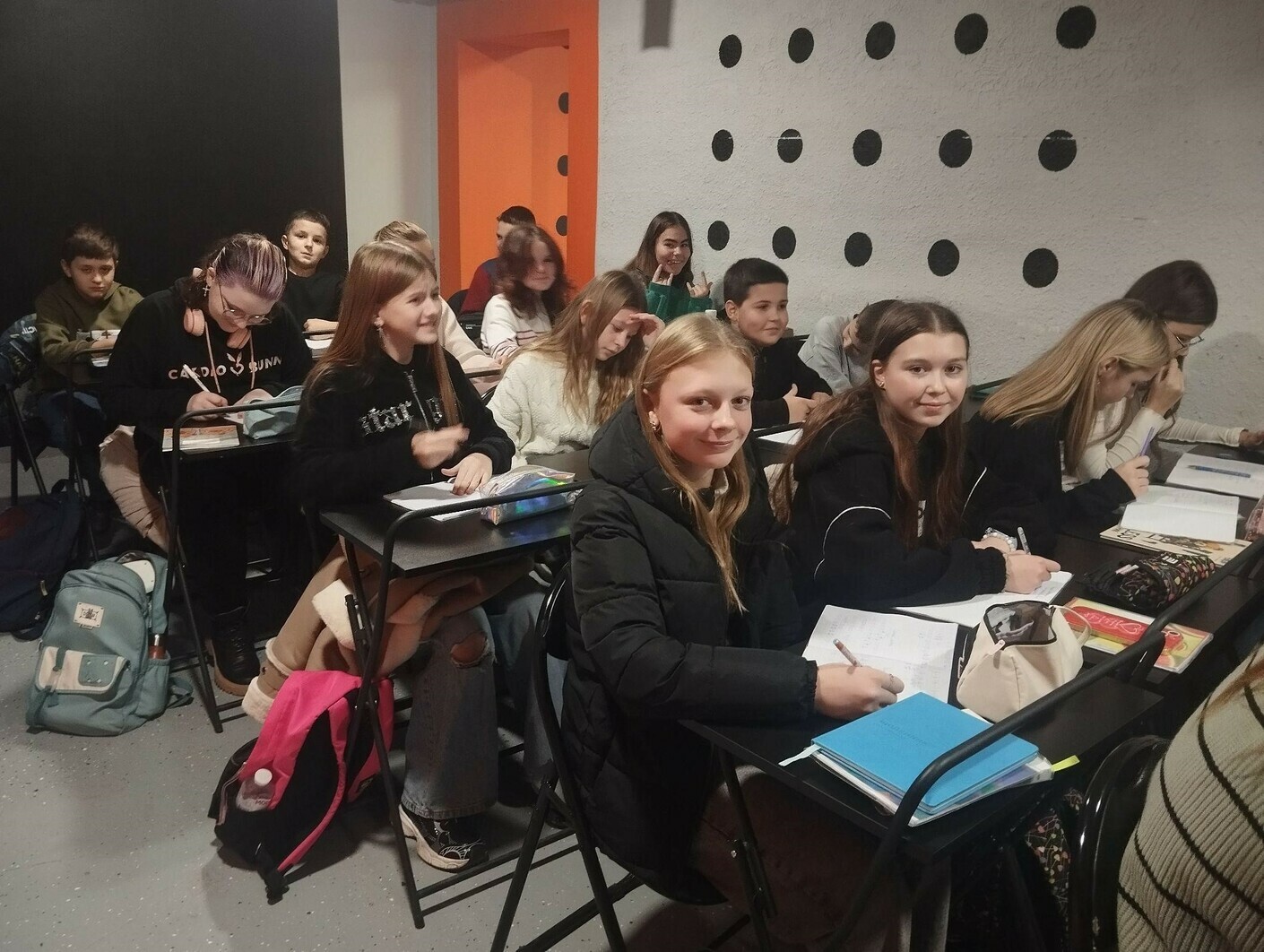

The students were responsible for setting up the corners, which included board games, books and posters with positive messages. They also designed the colour scheme for the walls.
The children who participated in the mini-grant programme are now enrolled at lyceums or vocational schools. After all, Gymnasium 13 only goes up to Grade 9. However, Olha Hutnyk, the teacher-organiser who helped the Grade 9 students with their presentation and the implementation of their ideas, says that there were three teams and therefore three projects.
‘The children came up with so many ideas that each team was ready to present two or more projects. However, to improve the quality of implementation, they decided to focus on fewer, more thoughtful ideas. One of the proposals was to set up a mini-shop in the bomb shelter. The students wanted to be able to buy various treats and make coffee or tea in a safe space during breaks. To this end, they planned to set up an area with comfortable tables and chairs where children could hide, relax and socialise,’ recalls Olha Hutnyk.
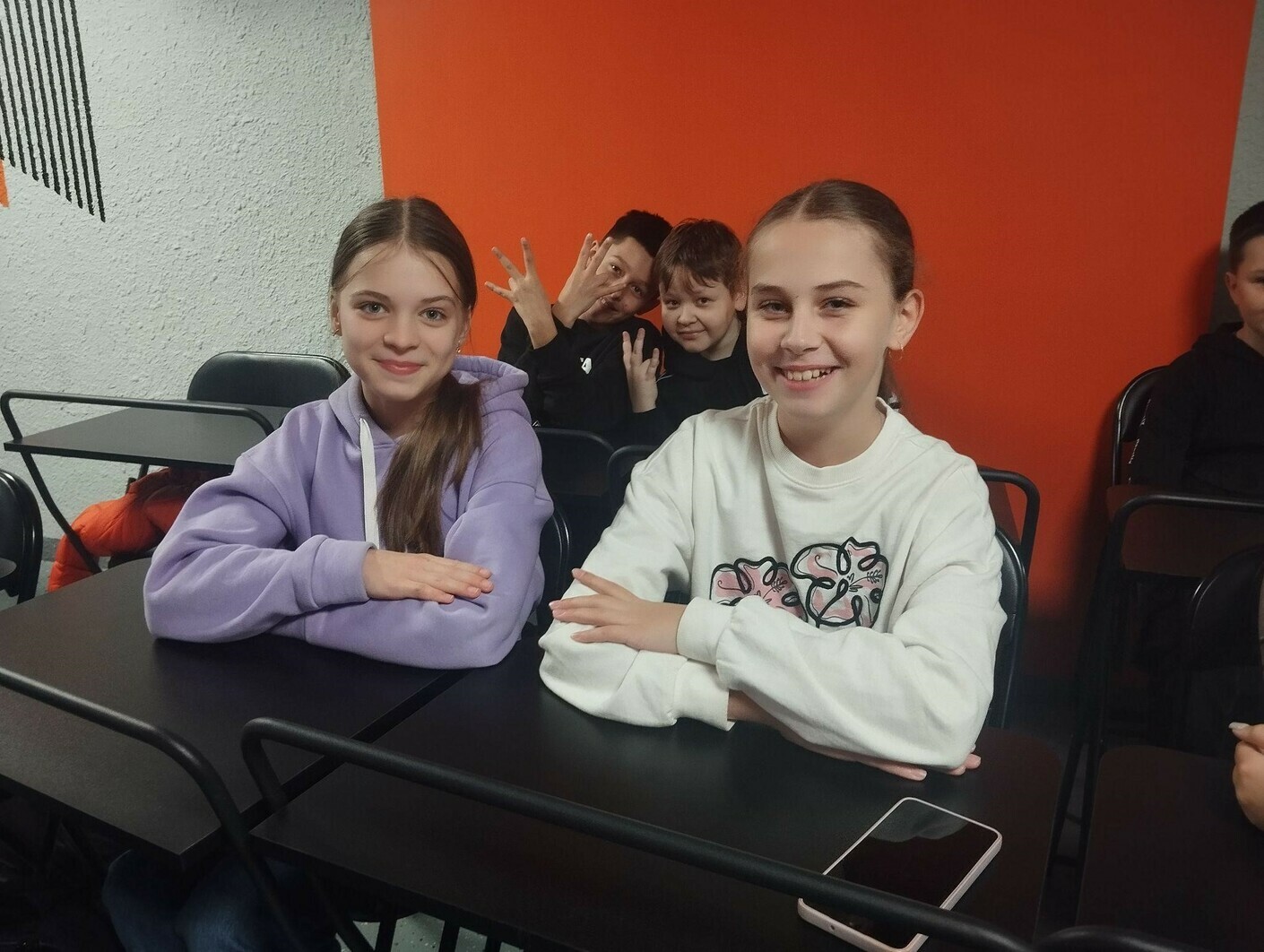

The second idea for the project was to create a quiet corner for relaxation in the bomb shelter. However, since children tend to be more sociable, the ‘Oasis of Tranquillity’ project won. Now, books, anti-stress colouring books and mini basketball courts can be found in different areas of the bomb shelter. This creates an atmosphere in which children can relax and unwind, even in the bomb shelter.

On student and teacher impressions
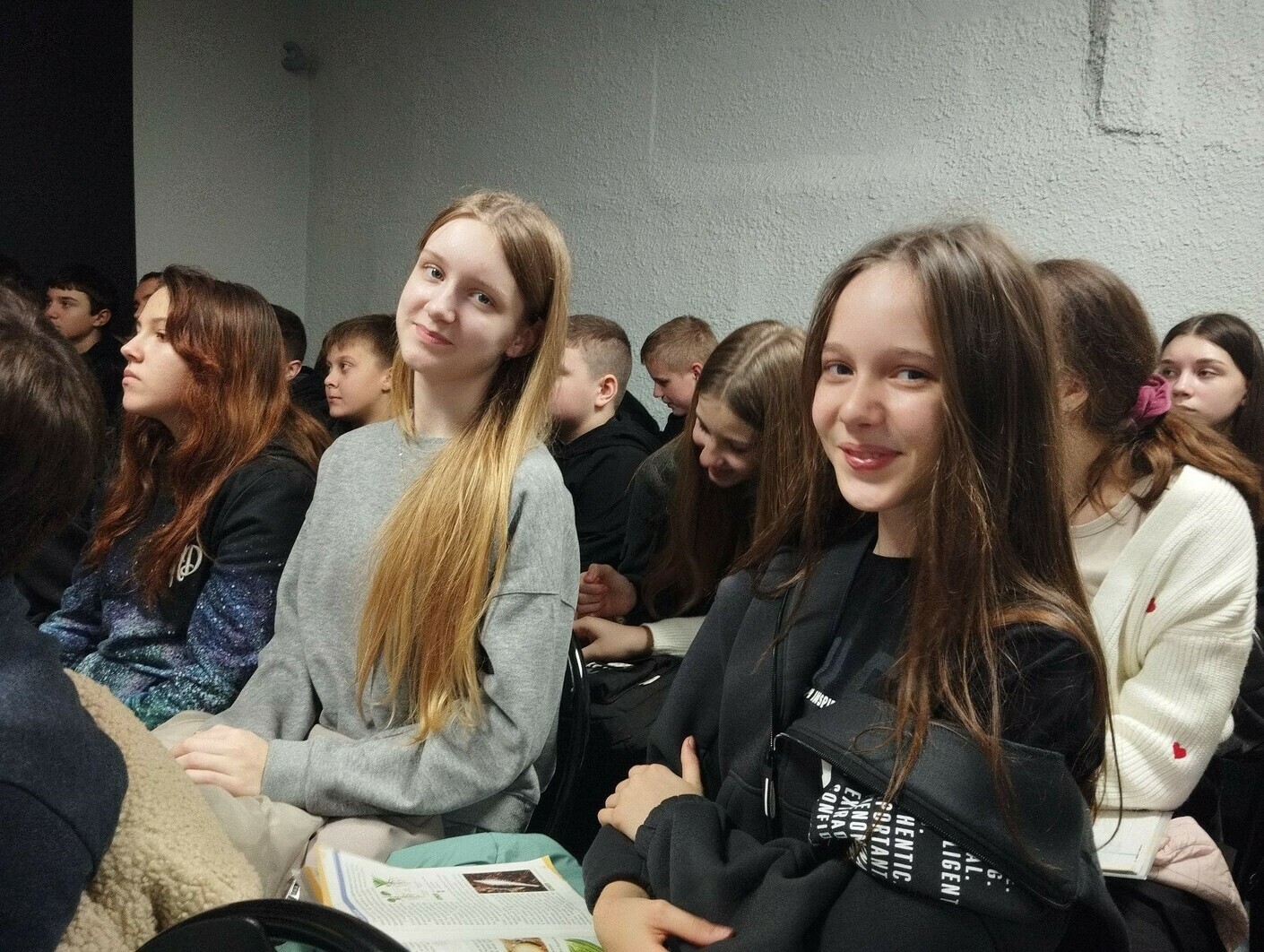
The bomb shelter in the gymnasium has been designed to accommodate around 700 people. As there are more than 800 students enrolled at the educational institution, lessons are organised into two shifts to ensure everyone’s comfort and safety.

‘When I first entered the shelter, I didn’t recognise it at all. The space has been significantly expanded and there is now plenty of room. Overall, the “before” and “after” are two completely different places. We study here and we’re not at all worried about spending a lot of time here. What’s more, they even bring us food in lunch boxes, so comfort is guaranteed,’ says Anna Babak, a Grade 9 student.
Practical psychologist Viktoriia Havrylenko remembers the grey walls of the bomb shelter before it was renovated. She also remembers that it was not very convenient or safe to enter the bomb shelter from the street. Now, however, everything has changed.

‘The colour scheme of the bomb shelter is also very fitting. These colours symbolise energy, warmth and joy. This provides children with positive emotions, which they are lacking at the moment. In addition, the bomb shelter has special relaxation and communication areas, creating a comfortable and supportive atmosphere for students,’ says Viktoriia Havrylenko.
Daria Davyskyba, a Grade 5 student, also noticed the colours in the bomb shelter:
‘I like that the colours match the overall colour scheme of the school. They are not different. There is nothing dark or bright. Nothing hurts the eyes. It’s also cool that the desks are smaller and more minimalist, designed for one person. Yet they can still hold everything needed for learning.’
Grade 9 student Yehor Barsuk also recalls that there used to be sand on the floor of the bomb shelter, which often left things dirty:
‘It used to be uncomfortable here – the sand would constantly get on our clothes and belongings. Now everything has changed: the floor is clean and well-maintained, and it’s very pleasant.’
Viktoriia Oliinyk, also in Grade 9, is impressed by the dancing and exercise area:
‘It’s an incredible place where we can stretch our legs and relax during breaks. We even danced there on 1 September – we had a lot of fun. I really feel safe here.’
Zlata Papernyk, a Grade 5 student, likes the fact that the bomb shelter is warm and has fresh air:
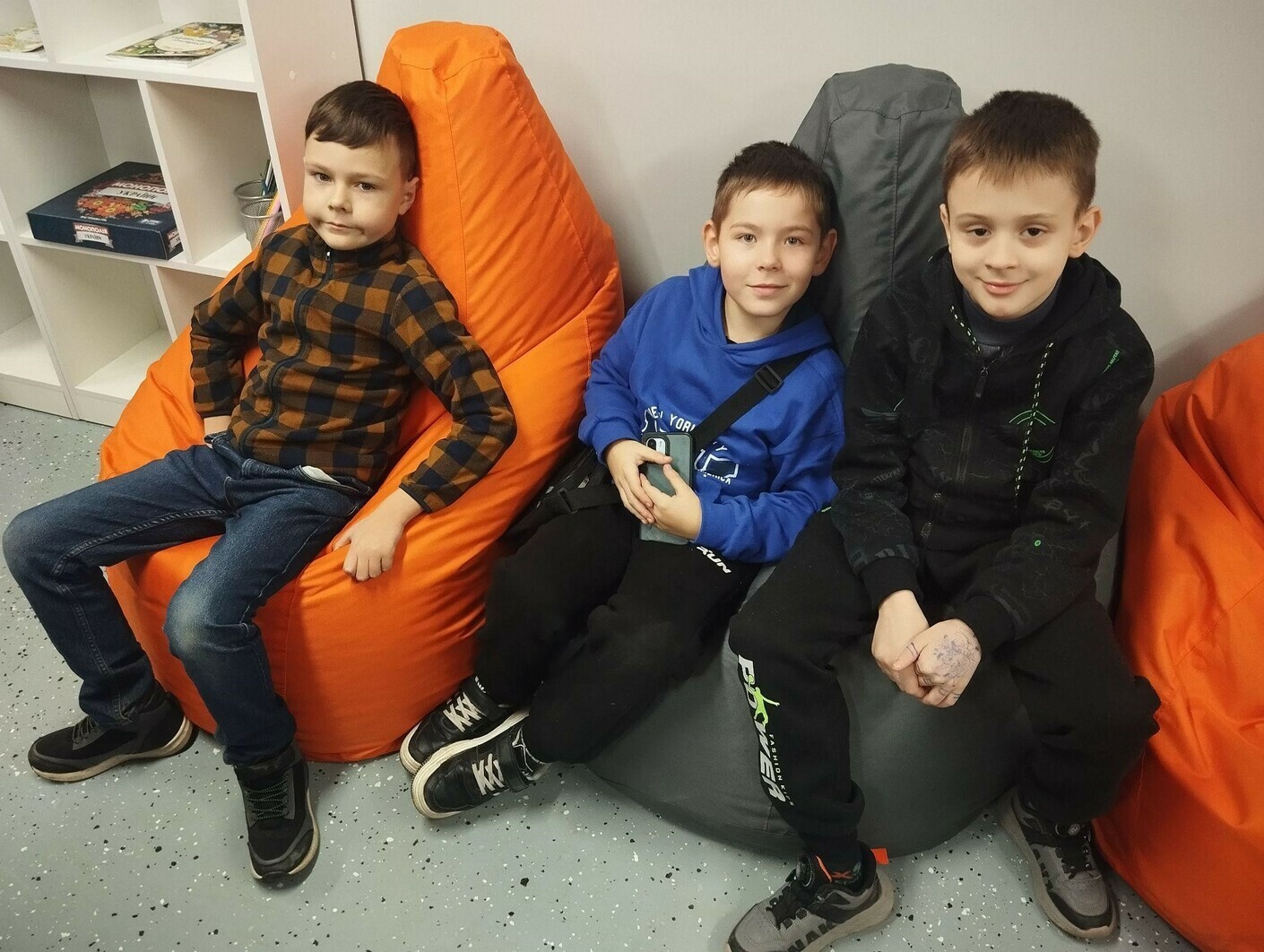
‘There is also space to move around. There are lots of poufs, beanbag chairs and board games. There are also boards you can write on, a table football set, an air hockey table and an electronic basketball game. I like everything very, very much.’
Besides, the atmosphere in the bomb shelter should be calming, as Veronika Tarhonska, a Grade 5 student, believes:
‘You know, this underground school distracts us from what is happening above.’

‘We are rebuilding educational institutions amid the ongoing war, thereby demonstrating our strength of spirit and resilience to the whole world. When educational institutions resume work in a community, it signals that life in that community is continuing. We are learning to adapt to constant anxiety and power outages in our daily lives. Our resilience lies in our refusal to stop, in our determination to continue working despite everything, while adhering to safety measures,’ concludes Vasyl Bilohura.
Mariia Buleiko (Markovska)

05 January 2026
Train Kyiv – War. Interview with Head of Kostiantynivka City Military Administration
Train Kyiv – War. Interview with Head of...
‘I would very much like the state to change its attitude towards utility workers in communities like ours. These...
05 January 2026
НАДС затвердило методичні рекомендації щодо...
Національне агентство України з питань державної служби затвердило Методичні рекомендації щодо забезпечення...
05 January 2026
Japan to transfer 66 technical equipment units to frontline regions
Japan to transfer 66 technical equipment units...
In the framework of the Emergency Recovery Programme supported by the Japan International Cooperation Agency (JICA),...
04 January 2026
‘More than a city: How Lviv is building a...
By Dmytro Syniak Ukraine is still developing its own model of decentralisation. The next logical step after...