Number of regional development projects in recent years exceeds 16 thousand, - Head of Government
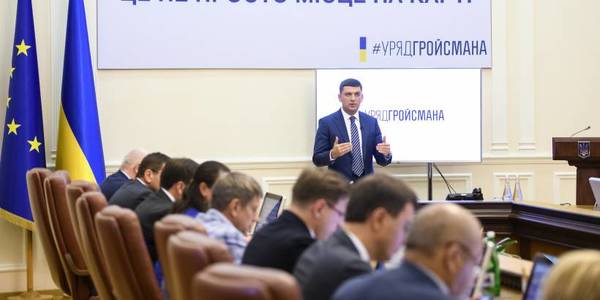
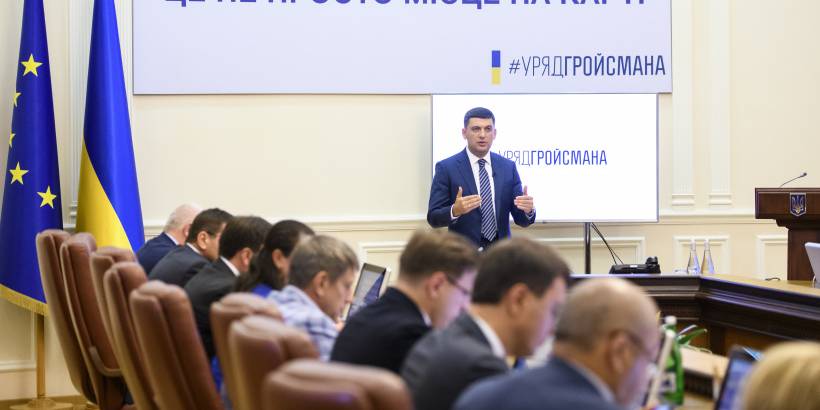
The number of projects implemented in the regions and aimed at the development of territories – dedicated to different topics and directions, in the recent years (2016-2019) exceeds 16 thousand, said the Prime Minister of Ukraine Volodymyr Groysman.
During the Cabinet of Ministers meeting, the Prime Minister presented the current state of affairs in the economy, social sphere, education, healthcare, defense and outlined the main priorities that need to be continued.
The Prime Minister stressed that decentralisation – the transfer of administrative powers and financial resources to local self-government – gave a significant impetus for development of the regions.
Due to the reform since 2014, local budget revenues have almost quadrupled. According to the results of this year, the planned volume of revenues should amount to at least UAH 262 billion.
“There are lots of decentralisation supporters today. Many people are united by the reform. And it pleases. But it's important not to stop. At the legislative level, the rights of local self-government should be enshrined through amendments to the Constitution. We need to complete hromadas’ amalgamation process and focus on supporting small cities,” said Volodymyr Groysman.
21 October 2026
Школа без бар’єрів: як у Запоріжжі створюють...
Портал «Децентралізація» продовжує розповідати про рішення громад, які роблять послуги доступнішими для...
21 October 2026
NALAS supports Ukrainian municipalities in building international partnerships
NALAS supports Ukrainian municipalities in...
Authors: Olena Kalinina, Miodrag Kolić The article was prepared by Olena Kalinina and Miodrag Kolić as a...
21 October 2026
Як фінансуватимуть «Карпатську зміну»: що варто знати громадам
Як фінансуватимуть «Карпатську зміну»: що варто...
Уряд дозволив місцевим бюджетам співфінансувати підтримку та відновлення дітей із прифронтових територій у межах...
20 October 2026
The European Partnership Hub and the Bridges of Trust Community
The European Partnership Hub and the Bridges of...
Durmish Guri, Director Projects and Programmes at the Council of European Municipalities and Regions (CEMR) Ivan...