Investment Forum: How Bibrka municipality finds new opportunities for business development
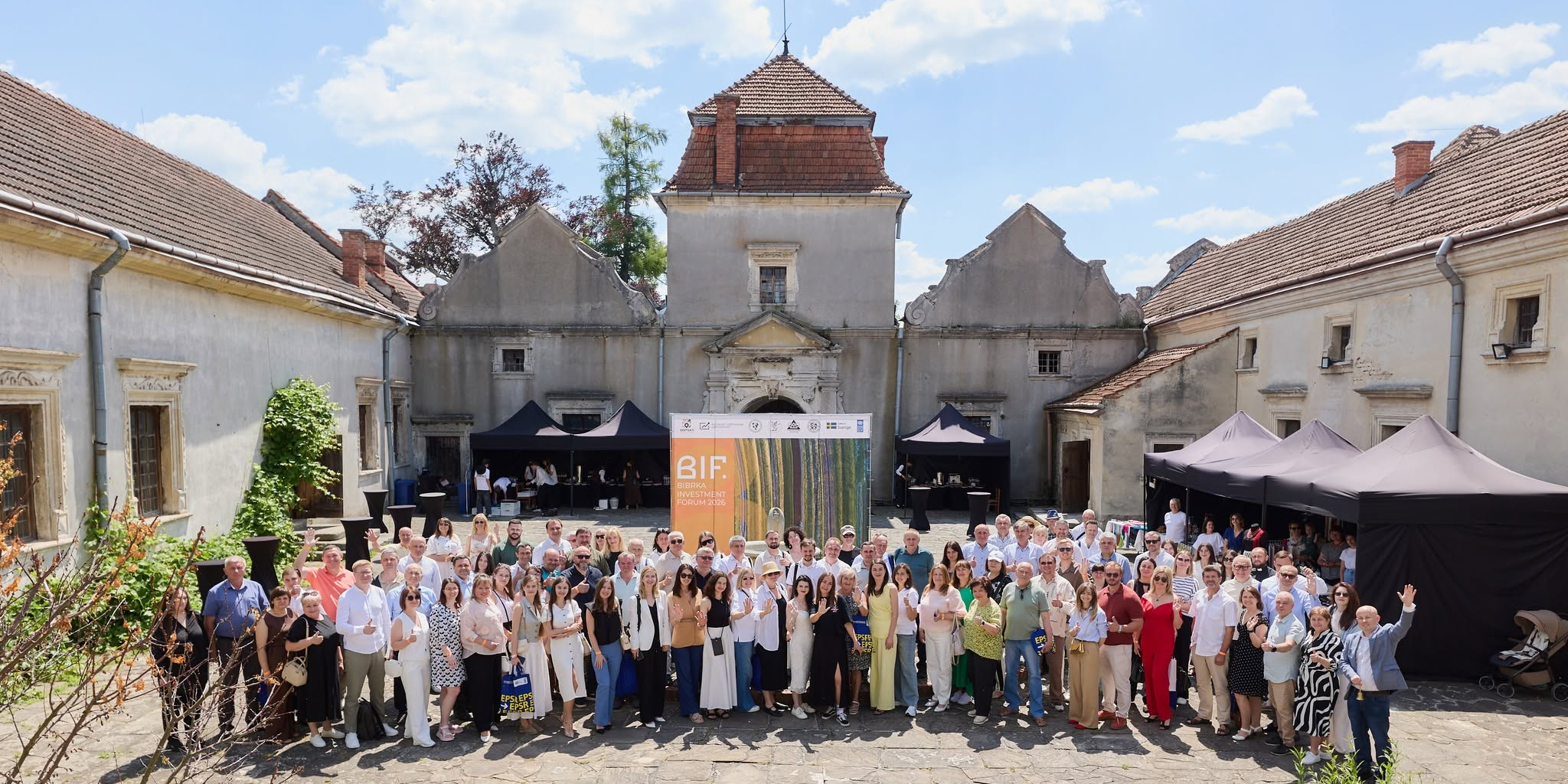
136 participants from 12 Ukrainian oblasts, new investment proposals and a USD 170,000 deal finalised whilst preparations for the event were still underway. This is how the Bibrka municipality’s first investment forum in Lviv Oblast went. How did the local team manage to bring together entrepreneurs and partners — which proved to be the most challenging part — and what lessons can other municipalities learn from this?
Attracting an investor is more than just finding a vacant plot of land or premises and preparing a proposal. You need to get them interested in the municipality, understand the needs of local businesses and establish a partnership that will not end after the first meeting. Participants in the U-LEAD’s infosession, “Investment Forum as a Tool for Developing Business Environment in a Municipality”, discussed how an investment forum can help with this. Infosessions are a traditional format for U-LEAD with Europe Programme to engage with municipalities. These are monthly meetings that feature experts helping local self-government officials tackle pressing issues, offering practical advice and sharing the success stories of municipalities that have already found effective solutions.
“An investment forum is not just a one or two day event; it is a comprehensive project centred around an offline activity. It entails showcasing the municipality’s investment potential, discussing its areas of development, and fostering connections between stakeholders who are prepared to invest their resources in the municipality. The investment forum begins long before the day of the event itself and does not really end until we start preparing for the next forum,” explained Olha Todorova, an Adviser on Municipal Finance and Governance at the Regional Office of the U-LEAD with Europe Programme in Odesa Oblast.
The municipality of Bibrka in Lviv Oblast already knows how this works in practice. That is why their experience was presented at the infosession. After taking part in the U-LEAD training programmes, Bibrka team decided to organise their own investment forum, which ultimately attracted over 130 participants from 12 of Ukraine’s oblasts.
From training to their own investment forum
Located near Lviv, Bibrka comprises 46 settlements and has a population of around 17,000. The municipality sees potential for development in agri-processing, tourism, construction and manufacturing. However, even with interesting projects and business ideas in place, the question remains: How can potential investors be made aware of them?
Bibrka City Council started exploring new approaches to developing the local economy. In 2025, municipal officials took part in U-LEAD programmes, learning, among other things, how to set up a project office, organise management processes, assess business environment and identify measures to improve it. Among the ideas they decided to put into practice was to hold an investment forum.
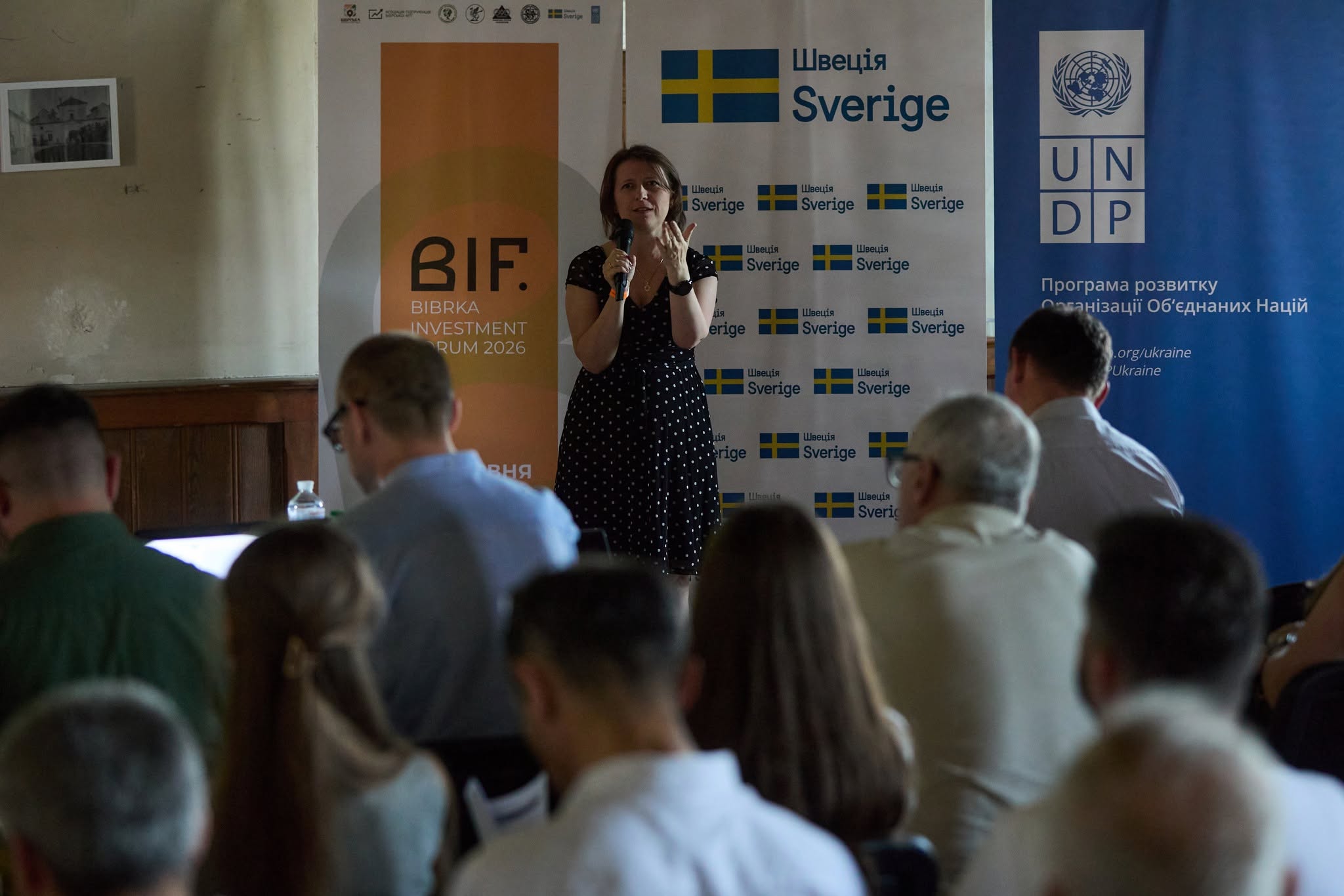
“We are always delighted to see alumni of our training programmes putting their knowledge into practice. Money can be spent quickly, but project management skills, built-up human capital and developed processes remain in the municipality forever. This is the best investment in the people who work every day for the benefit of their local area,” said Halyna Khrushchak, the Head of the Regional Office of the U-LEAD with Europe Programme in Lviv Oblast, speaking at the Forum’s opening.
Preparations began in January 2026, when the opportunity arose to secure financial support from the United Nations Development Programme to raise the municipality’s profile. Of the several tools the team had previously considered, they chose an investment forum.
Anton Vdovychenko, a Mayor’s Adviser on Economic Affairs and the Chair of Bibrka Municipality Entrepreneurs’ Association, explains that the primary aim was to raise the municipality’s profile and showcase what it is all about.
“We wanted to share what’s happening here with people, both locals and people from the wider area,” he explained.
A forum organised in collaboration with businesses
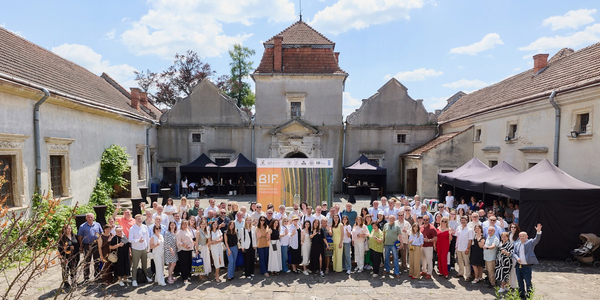
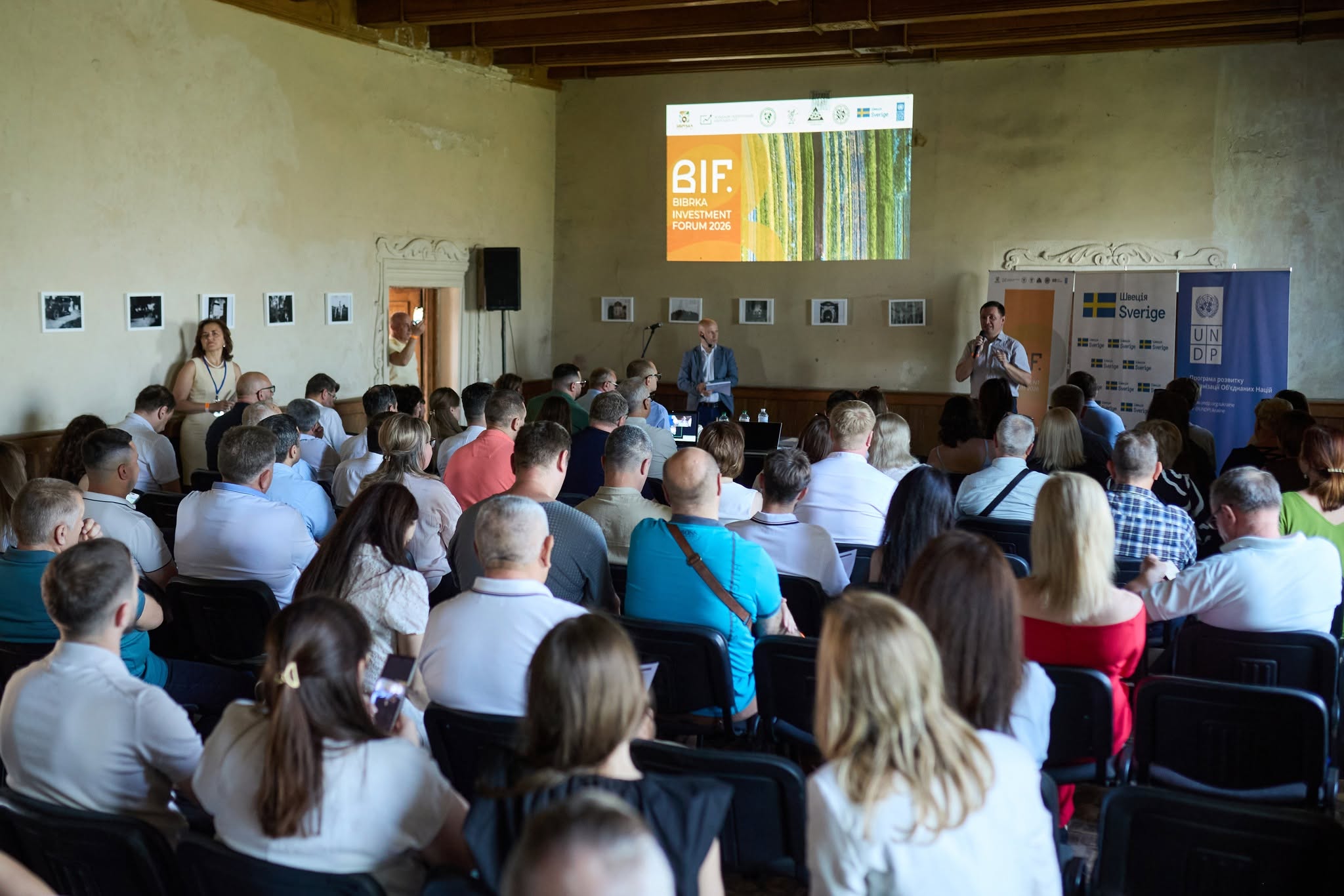
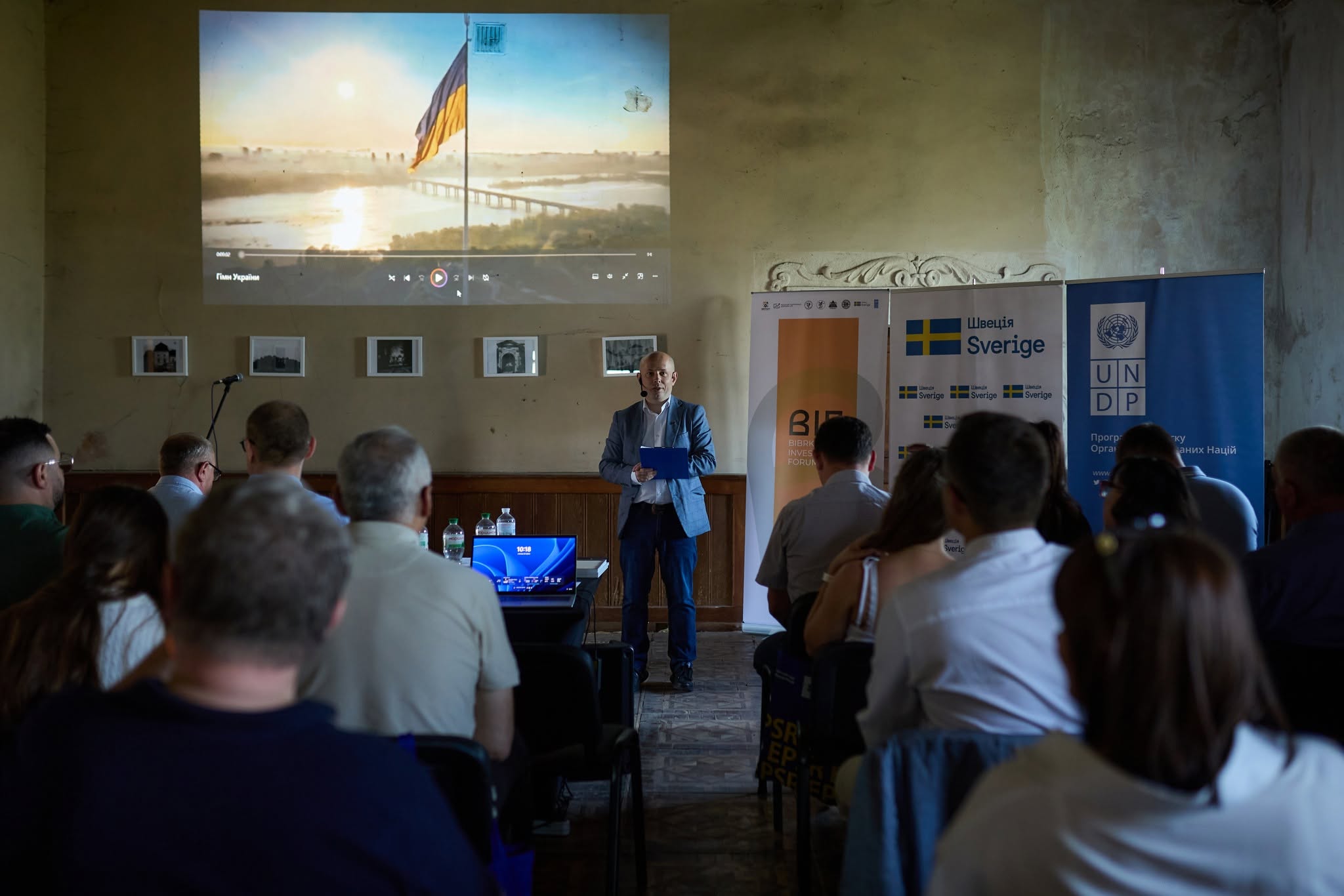
On 26 June, 136 participants from 12 oblasts of Ukraine arrived at Svirzh Castle. Among them were entrepreneurs, investors, local self-government and state officials, representatives of international organisations, architects, experts and public figures.
What made the Forum unique was that local businesses were involved not only in the discussions but also in the organisation itself. This effort was led by Bibrka Municipality Entrepreneurs’ Association. Its partners included the City Council, the Business People Club Ukraine, the Lviv Regional Office of the National Union of Architects of Ukraine and Spadshchyna.UA Charitable Foundation.
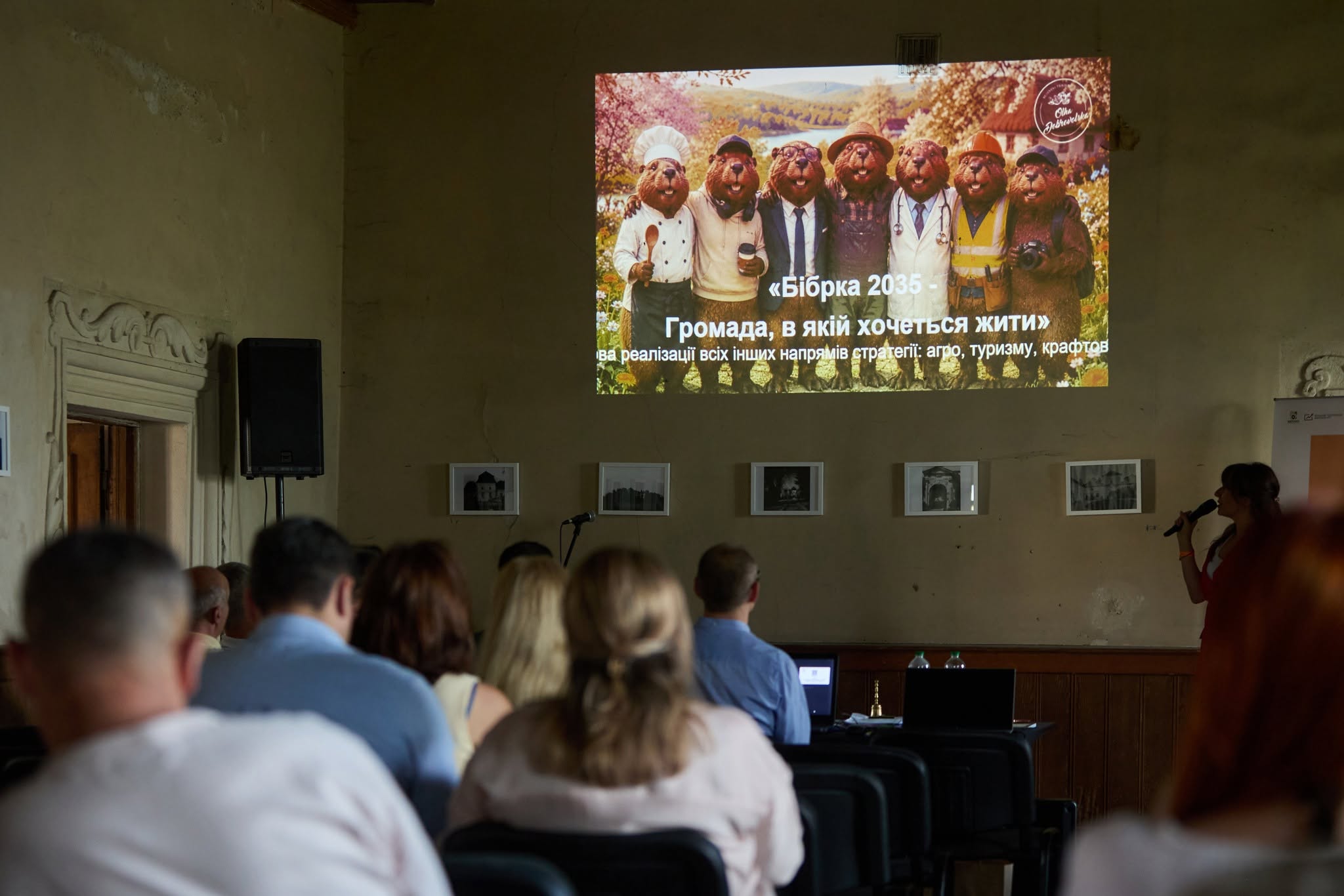
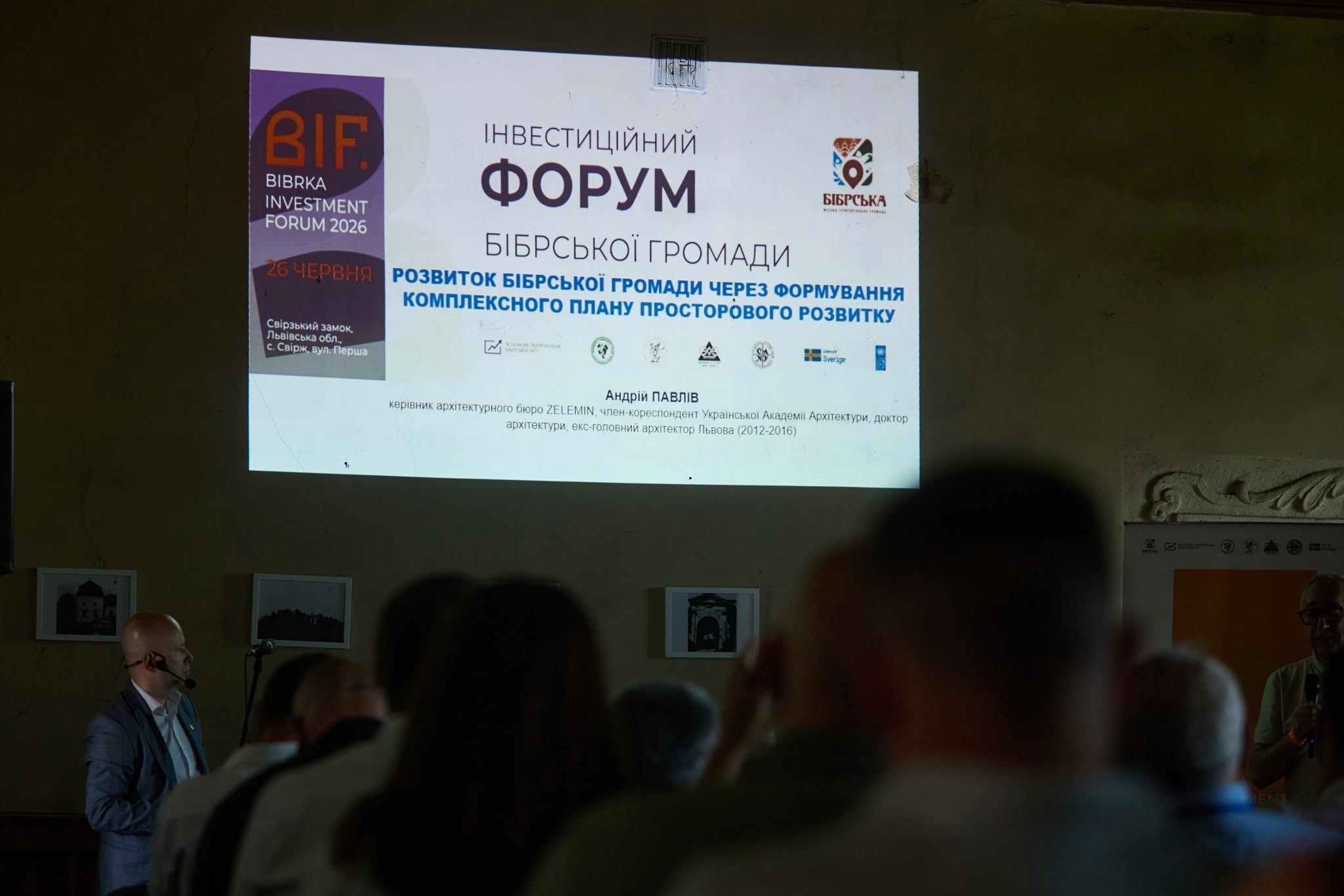
The event was co-funded by Bibrka City Council and UNDP. The Forum addressed key areas of development identified by the municipality: agri-processing, tourism and hospitality, construction, industry and human capital. Participants learned about the vision for the development of Bibrka municipality up to 2035, investment proposals and projects that local teams were already working on.
It was important for the organisers to showcase not only individual projects but also the municipality’s plans for future growth.
“We are currently working on a comprehensive spatial development plan and would like to tell investors – both domestic and foreign — more about all these things, because not everyone understands what this entails or what impact it has on the municipality,” said Anton Vdovychenko.
Local craft producers were also invited to showcase their work. At the fair, they introduced attendees to their products, talked about their businesses and networked with potential partners. Meanwhile, volunteers from the local Youth Centre helped the organisers welcome and escort forum participants.
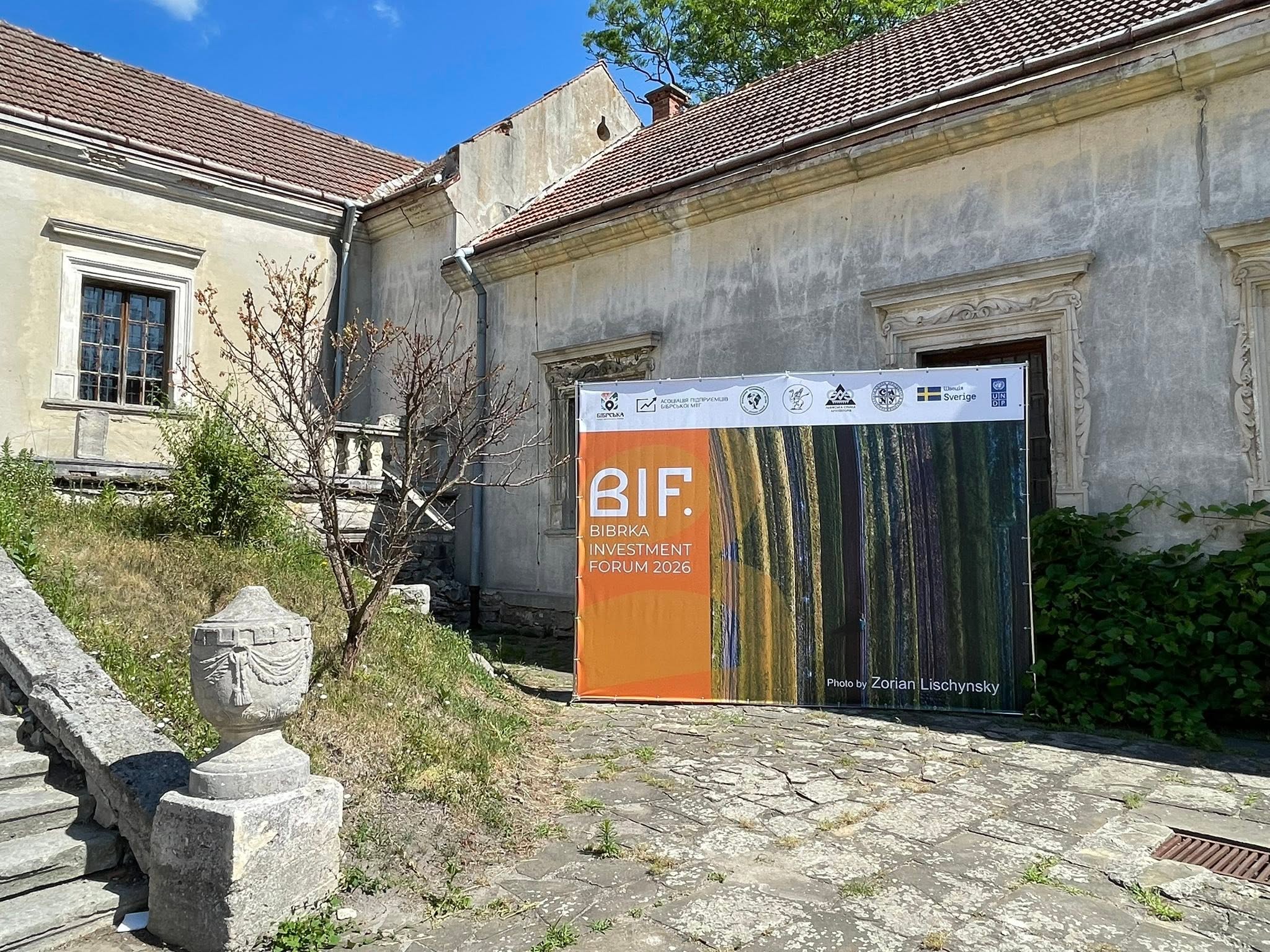
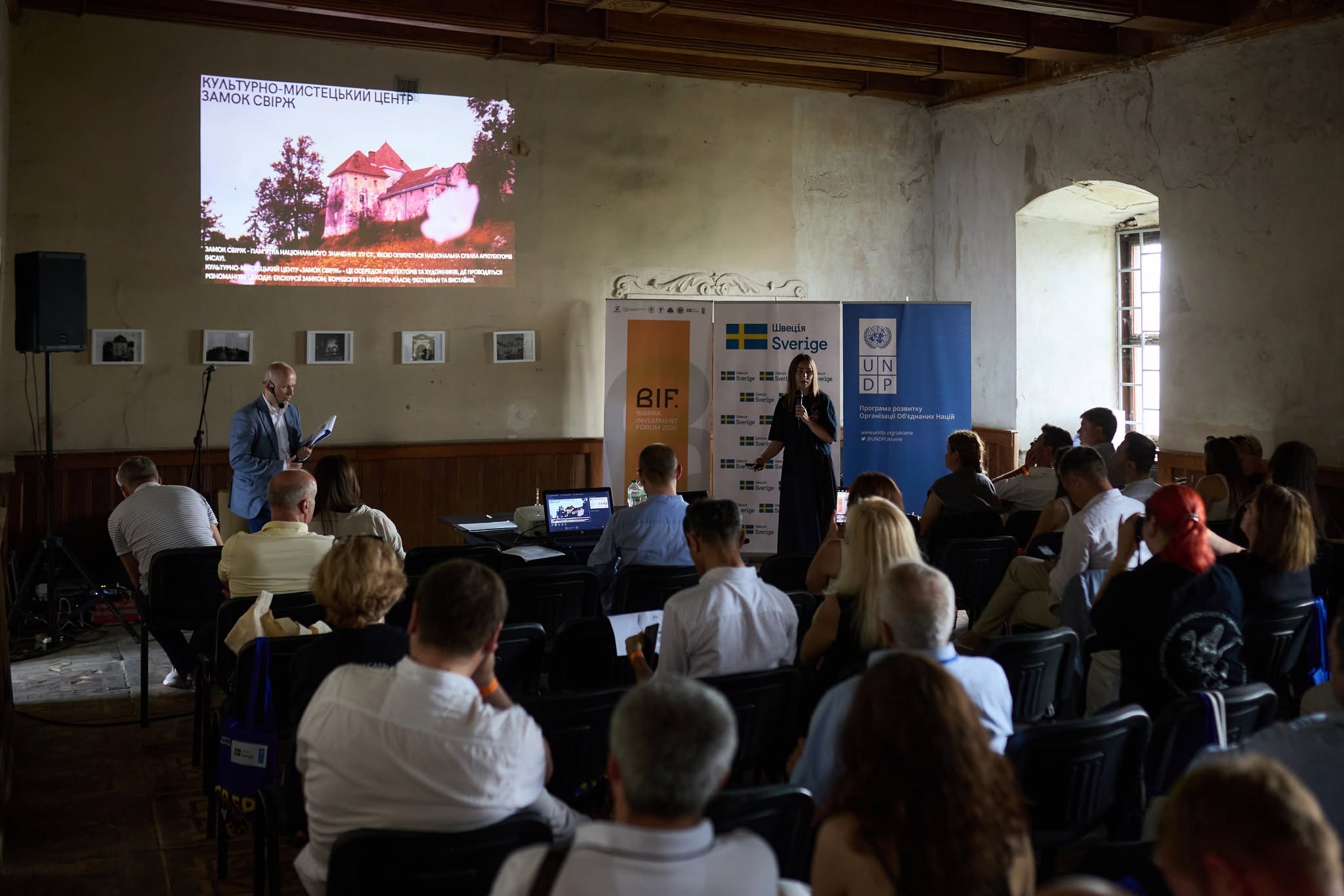
The forum was held at Svirzh Castle, one of Bibrka municipality’s main tourist attractions. The organisers took advantage of the opportunity to ensure that guests did not only hear about the area’s potential but also saw it for themselves. The tour of the castle provided an insight into the municipality’s historical heritage and its potential for tourism development.
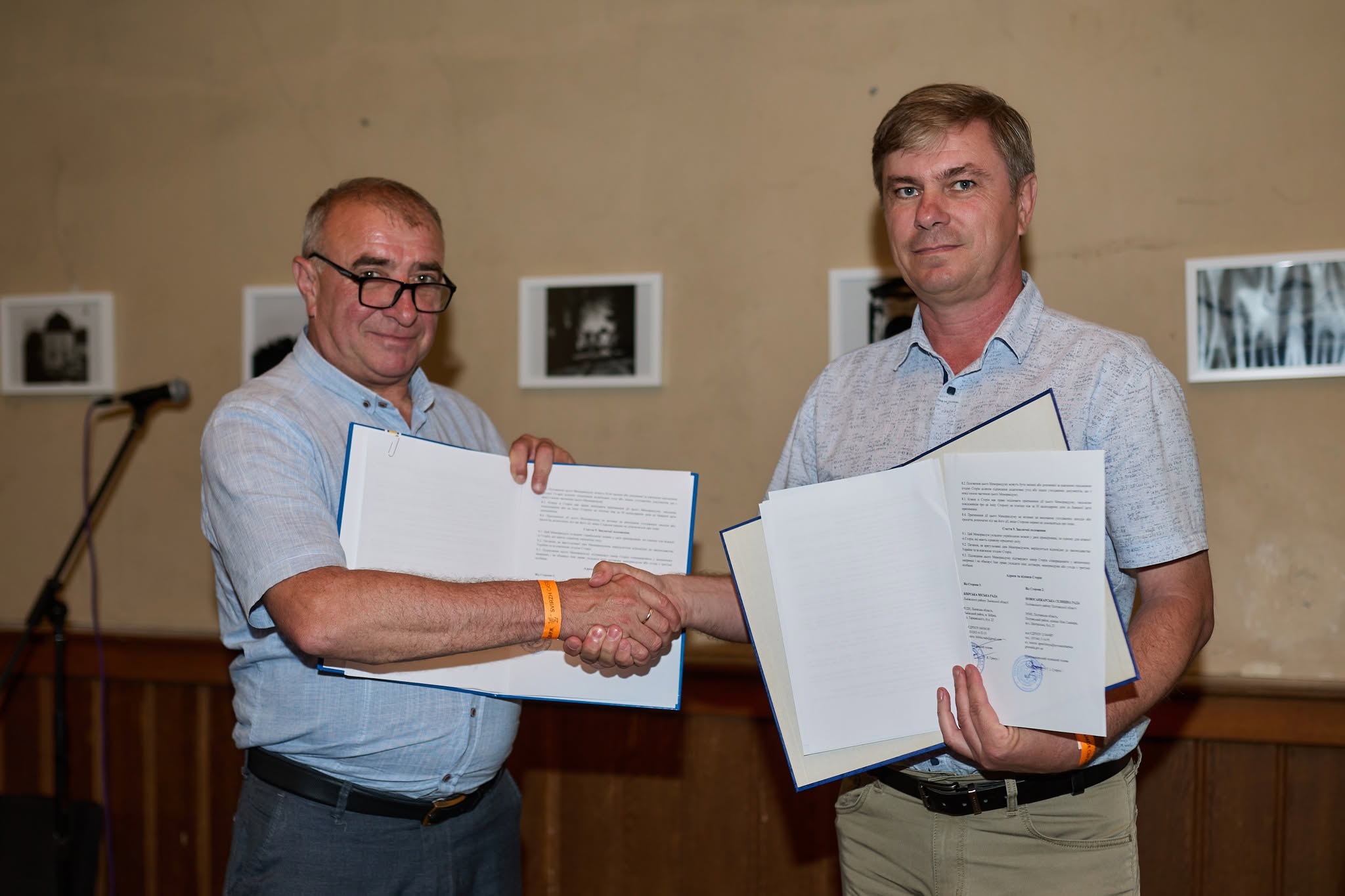
The Forum also opened up new opportunities for inter-municipal cooperation. During the event, the municipalities of Bibrka in Lviv Oblast and Novi Sanzhary in Poltava Oblast signed a memorandum of cooperation. The municipalities intend to jointly seek grants and investors, exchange experiences in supporting local businesses, develop tourism and work on joint projects, notably for war veterans and internally displaced persons.
Early results: from initial contacts to concrete projects
Work with potential investors began as early as the preparatory phase for the Forum. The team sought out promising sites, gathered proposals, spoke with entrepreneurs and invited those who might be interested in investing in the municipality.
One example of this investment activity is the old school in downtown Bibrka. According to Anton Vdovychenko, attempts had been made to sell the building for around four years. Whilst preparations for the Forum were underway, a potential buyer came forward and was invited to the event. The parties signed an agreement for the purchase of the property for USD 170,000.
The new owner plans to convert the former school into a history-themed hotel. Documentation and design plans are currently being finalised.
Several other investment initiatives have also emerged. The municipality has been approached by entrepreneurs who purchased a plot of land in Bibrka to build a shopping centre there. The local team is assisting them with paperwork.
Enquiries have also been received regarding the creation of energy and humanitarian hubs. At the same time, the municipality is drafting a comprehensive spatial development plan to help determine where new facilities can be located and how land can be used for future projects.
Not all of these initiatives have been implemented yet. Some are still at the preparation or discussion stage. However, the municipality has attracted interested investors and partners to continue working with.
The biggest challenges
In addition to new contacts, the first Forum taught Bibrka municipality a great deal about organisation. The preparations took longer than expected: the event was originally planned for the end of May; however, it was subsequently postponed to 26 June.
Funding turned out to be a major hurdle. Anton Vdovychenko explains that the team had initially anticipated a much larger budget.
“For some reason, we assumed we’d be able to raise around USD 10,000 from donors, the City Council and local businesses. However, we only managed to raise about half that amount, so the entire process of organising the Forum operated under a budget shortfall,” he recalled.
They had to work out where they could save money and where additional expenditure was unavoidable. There were also quite a few complications regarding the venue, Svirzh Castle. Although the location helped draw attention to the municipality’s historical heritage, it needed to be specially adapted to host a business event.
“I probably wouldn’t recommend holding the first forum in a castle, since you have to find contractors for the castle and then pay them. Contractors for furniture, equipment, sound, screens and lighting. We also had to bring in an electrician because the castle didn’t have enough power,” said Anton Vdovychenko.
Logistics proved to be another challenge. Since the castle is roughly 15 kilometres away from Bibrka, participants without their own transport found it difficult to reach the venue. Furthermore, the organisers had expected around 100 participants, only to have 136 people sign up. This led to parking complications.
Plans had to be adjusted even right before the Forum. Notably, the team decided against visiting investment projects located in different parts of the municipality. These trips would have required additional funds and at least a few hours.
Another lesson concerned local businesses. The organisers had assembled around 20 investment proposals, but only about five were presented at the Forum itself. Not all entrepreneurs felt confident enough to speak publicly about their plans.
“People were reluctant to talk about themselves because it was the first forum. I think they’ll be willing to do so at the second one because they’ve seen how it all works and realised there’s nothing to be afraid of,” said Anton Vdovychenko.
Despite all the difficulties, the team stuck to its plans. This gave them valuable experience that will make it easier to organise the next Forum: to estimate the budget more realistically, plan the logistics, clearly allocate responsibilities amongst partners, and involve entrepreneurs in designing the itinerary well in advance.
How to make a forum beneficial for the municipality
At the U-LEAD infosession, Elvira Moldovan, a consultant on sustainable municipal and business development at ASTAR Sustainable Development Agency, shared practical advice on organising investment forums.
According to her, the outcome depends not only on the number of guests or the quality of the presentations, but also on how well the municipality has prepared for the meeting with potential investors.
What to bear in mind:
- Determine your goals. Do you want to attract investors to specific sectors, showcase promising projects, find partners, or raise the municipality’s profile? The forum’s programme, the line-up of participants and the next steps will depend on your answer.
- Prepare specific proposals for investors. Check that the information on land plots and premises is up to date, put your documents in order, and identify which projects the municipality is ready to offer to businesses.
- Put together a team and allocate responsibilities. Decide in advance who is responsible for the itinerary, invitations, liaising with partners, the budget, logistics and security. This will help avoid situations where an important task is left without a designated person in charge.
- Engage local entrepreneurs. Give them the opportunity to present their own projects, meet potential partners and get involved in preparing for the forum. After all, local businesses know best what opportunities and challenges exist within the municipality.
- Don’t stop working once the forum is over. Stay in touch with potential investors, respond to enquiries, assist with paperwork and provide ongoing support for projects. Inform residents not only about the event itself, but also about its specific outcomes.
Elvira Moldovan also highlighted a problem that teams often face when organising large-scale events: when everyone is responsible for a single task, it often ends up not being completed at all.
“Functional roles need to be defined and responsibilities set out. Why is this necessary? Because it allows you to avoid the so-called ‘collective irresponsibility’ effect,” explained the expert.
To better understand the changes required by residents and business owners themselves, Bibrka municipality uses a business environment assessment based on the U-LEAD methodology. First conducted in 2025, the assessment is to be repeated annually.
Local self-government officials, businesses and residents are invited to take part in the survey. They are asked about living and working conditions, as well as the municipality’s problems and needs. This gives the local team a perspective on the situation that goes beyond that of officials alone.
“I would advise every municipality to carry out this assessment at least once a year to see how different groups perceive the municipality, as the results are very informative. Everyone sees the municipality differently: some have roads, others don't; for some, business is thriving, whilst others are struggling,” said Anton Vdovychenko.
For the municipality, this information is useful not only when preparing for the Forum. It helps to identify the problems that need to be tackled first and what should be taken into account when planning new projects.
Moving forward
Bibrka municipality is already planning its next Investment Forum, scheduled for 2028. Until then, the team intends to continue working with investors who have shown an interest in the municipality, build new partnerships and prepare more proposals for businesses.
Initial experience has shown that a municipality does not necessarily need a long history of attracting investment to embark on this kind of endeavour. Rather, it needs to understand its own capabilities, be willing to collaborate with entrepreneurs, and have a team that will work on investment projects not only while the forum is taking place, but also afterwards.
An investment forum does not guarantee immediate results. However, it can kickstart long-term efforts that view investment not just as funds, but also as new businesses, jobs, partnerships and opportunities for the residents of the municipality.
Attached images:
Tags:
Область:
Львівська областьГромади:
Бібрська територіальна громадаSource:
Програма U-LEAD
26 November 2026
The Powers and Resources of Communities and the...
Gunn Marit Helgesen, President of the Congress of Local and Regional Authorities of the Council of...
25 November 2026
Adult Education: Ukrainian delegation learns from Sweden’s experience
Adult Education: Ukrainian delegation learns...
As part of the Polaris Programme ‘Supporting Multilevel Governance in Ukraine’, implemented by SALAR International,...
25 November 2026
Платформа SRP пояснила, як громадам шукати обладнання від швейцарських донорів
Платформа SRP пояснила, як громадам шукати...
За останні тижні на платформі SRP зареєструвалися понад тисячу українських громад та установ. На платформі...
25 November 2026
“Hear Tulchyn”: How the municipality translates Leontovych’s legacy into a tourist route
“Hear Tulchyn”: How the municipality translates...
Every year on Christmas Eve, you can hear Shchedryk playing in different corners of the world. But behind the...