The Powers and Resources of Communities and the Limits of State Supervision: An Interview with Gunn Marit Helgesen, President of the Congress of Local and Regional Authorities of the Council of Europe
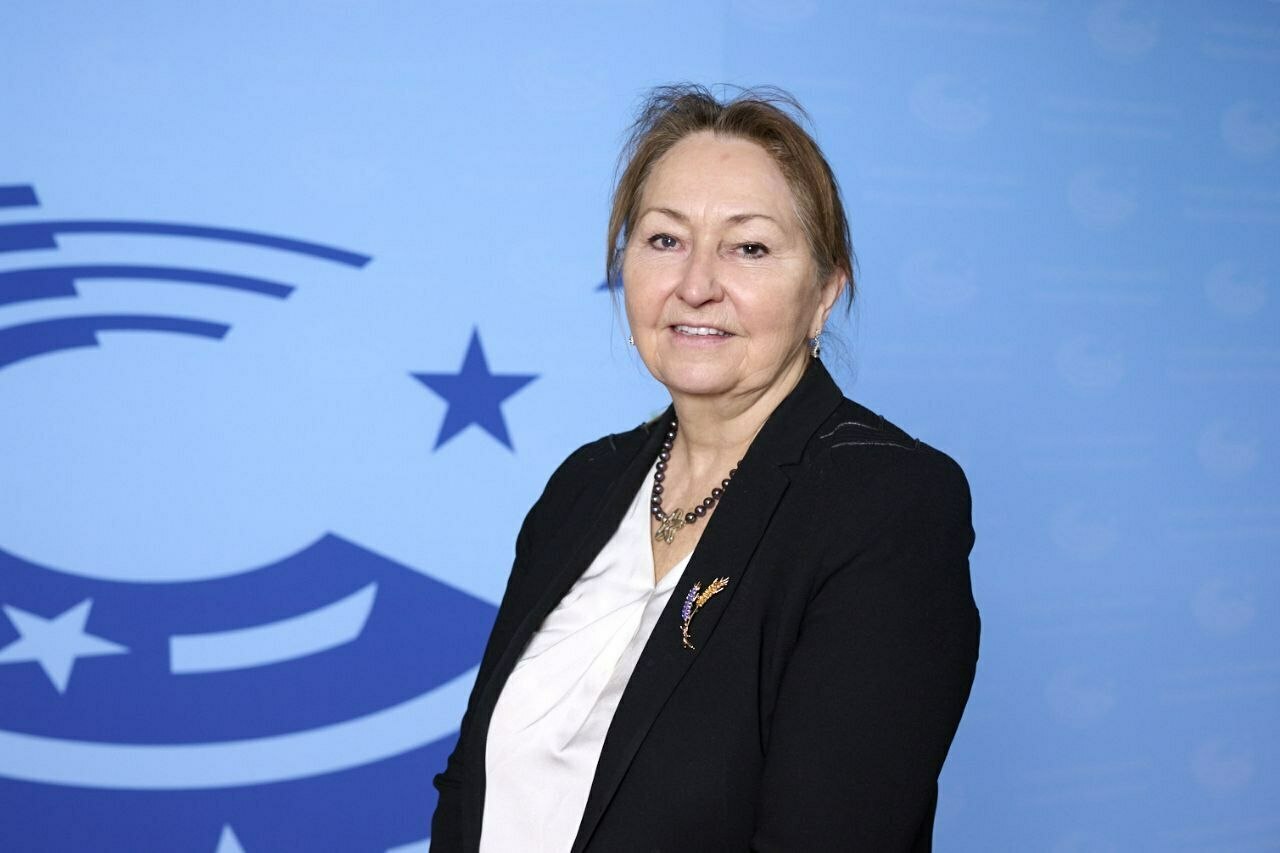
Gunn Marit Helgesen, President of the Congress of Local and Regional Authorities of the Council of Europe
How can communities be given the resources they need to exercise their powers while ensuring that state supervision of the legality of local authorities’ decisions does not undermine the independence of local self-government? In the first part of the interview, Gunn Marit Helgesen, President of the Congress of Local and Regional Authorities of the Council of Europe, assesses Ukraine’s implementation of the European Charter of Local Self-Government and explains the principles that should guide the allocation of powers and the supervision of local authorities’ decisions.
Gunn Marit Helgesen is a Norwegian politician and an experienced leader in local and regional government, with extensive experience in political leadership and international cooperation. She is President of KS – the Norwegian Association of Local and Regional Authorities – a position she has held since 2021, having previously led the organisation from 2012 to 2020. After serving as First Deputy President from 2020 to 2021, she was re-elected in 2024 for a new four-year term.
A qualified chemical engineer, Ms. Helgesen began her professional career as a Senior Engineer at Statoil and Norsk Hydro before moving into politics. She chaired the Telemark County Council from 2003 to 2011, following two terms as Vice Chair. She currently serves as a member of the Telemark County Council and leads the Conservative Party group.
Her international engagement includes long-standing work with the Congress of Local and Regional Authorities of the Council of Europe, where she has been a delegate since 2012 and leads the Norwegian delegation. She has served as Vice-President of the Congress and President of its Chamber of Regions from 2016 to 2021. Her work has included promoting the localization of the Sustainable Development Goals (SDGs), monitoring the implementation of the European Charter of Local Self-Government in Moldova, Ukraine, Cyprus, Armenia and Ireland, and participating in election observation missions in Albania, Denmark, the Netherlands, Armenia and Morocco.
Since December 2022, Ms. Helgesen has served as President of the Council of European Municipalities and Regions (CEMR), having previously held the positions of Vice-President and Co-President. She also represents KS on the World Council and Executive Bureau of United Cities and Local Governments (UCLG).
Since 31 March 2026, she has also served as President of the Congress of Local and Regional Authorities of the Council of Europe.
You served as rapporteur for the Congress on the implementation of the European Charter of Local Self-Government in Ukraine. How do you assess the changes that have taken place in recent years? Where do you see the greatest progress, and which issues remain unresolved from the perspective of the Charter? What place does its implementation occupy in Ukraine’s European integration process?
The most recent monitoring of the application of the European Charter of Local Self-Government in Ukraine was adopted by the Congress in 2013.
The next report for which I was a rapporteur, was due to be submitted to the Monitoring Committee of the Congress in February 2022, but the process was suspended because of the Russian Federation’s war of aggression against Ukraine. Therefore, from the monitoring perspective, questions requiring an up-to-date Congress assessment of the situation in Ukraine can be answered only after the next monitoring visit has taken place, and on the basis of its findings.
Nevertheless, it is fair to admit that Ukraine’s decentralisation reform became one of the most important, successful and popular reforms in the country. By 2022 we recorded considerable progress in this area, notably concerning its two aspects: territorial amalgamation and fiscal decentralisation. I will just mention one figure: as a result of the reform, Ukraine’s communities became responsible for over 31% of all public expenditures which placed Ukraine close to OECD average for unitary states.
The 2022 Russian Federation’s war of aggression led to tremendous and unprecedented consequences across the country. Still thanks to the decentralisation reform, bigger, stronger and more resilient communities proved to be capable to adapt to the unprecedented and volatile war-time context, take up new responsibilities with limited resources, and introduce innovative solutions at local level.
However, while that progress was important, the reform was not complete before February 2022. There were concerns about unclear or overlapping competences of state and local self-government entities and amongst their tiers, insufficient financing and limited local fiscal autonomy, dependence on earmarked grants, a lack of executive committees at rayon and regional councils, and the absence of a comprehensive system of administrative supervision. Many initiatives to enhance decentralisation and local democracy reforms cannot be fully implemented due to the martial law – not to mention Constitutional amendments.
What I can say is what meaningful progress should look like under the European Charter of Local Self-Government. Local authorities must be able to regulate and manage a substantial share of public affairs under their own responsibility, in the interests of their residents. They need democratically constituted decision-making bodies, a clear legal mandate, the practical capacity to act and the financial, organisational and administrative resources to fulfil that mandate. Citizens should be able to clearly see which elected authority is responsible for decisions affecting their community.
Importantly, local authorities must receive both the resources and room for decision making needed to fulfil the responsibilities entrusted to them. Reforms should strengthen their role, while making sure that the allocation of powers, the resources available and any supervision remain consistent with the Charter. Local authorities should also be consulted in good time on decisions that directly concern them, including the reforms.
We welcome Ukraine’s government resolution of December 2025 to revamp the Decentralisation Reform Concept. This is a strong step towards advancing this fundamental reform and achieving a balanced multilevel governance system in Ukraine. The new resolution complements the basic reform document – the Concept of 2014 – by adapting its implementation in view of the progress achieved by 2022, wartime challenges and new opportunities in view of the current EU integration process. The Council of Europe is ready to help Ukrainian partners in the design and execution of a dedicated long-term Action Plan for the reform implementation under martial law and in the post-war period.
To conclude, I would like to underline that the Charter is a binding Council of Europe treaty and a common European standard for local democracy. Its implementation is important for aligning local self-government system and practice with European democratic standards. Respect for the principles enshrined in the Charter provides a clear test of whether local democracy is genuine, accountable and protected both in law and in practice. For any candidate country, implementing the Charter can in itself make a valuable contribution to the European integration process.
In the context of Draft Law No. 14412 on the division of powers between levels of public governance, which aspects are key to assessing its compliance with the principles of the Charter? Why is it important for powers and responsibilities to be clearly defined?
Speaking about this specific draft law no. 14412, it is worth noting that the Council of Europe has not prepared a legal opinion on it. I would like to remind you that our Centre of Expertise prepares legal opinions and policy advice reports only on request of central authorities – either Government or Parliament. We know that this draft is now being processed by the Verkhovna Rada for the second reading. Therefore, I will not comment on its substance as such. But clearly in the Congress we welcome the progress made by Ukrainian partners to resolve this long-lasting drawback in the system. We are pleased that a “Strasbourg format” meeting helped Ukrainian stakeholders to achieve a broad agreement on the principles of such division and launch the law-making process.
(NOTE: This is a special format that was tailored by the Council of Europe first for Ukraine (in 2018) to hold negotiations among national stakeholders and to help them achieve consensus on politically sensitive issues, where their positions are very diverse or even polar. Since then, it was implemented several times in Ukraine, once in Albania and once in the Republic of Moldova.)
The Charter provides clear tests for a reform or legislative changes concerning the division of powers: responsibilities should be allocated clearly in law, the level closest to citizens should generally exercise them – unless the scale or nature of the task, or efficiency and economy, justify another allocation – and local authorities should normally have full and exclusive powers, with discretion to adapt delegated functions to local conditions where possible.
Unclear or overlapping powers can create ambiguity and shift decision making upwards.
When it is clear which level of government is responsible for a public service or decision, public bodies are less likely to duplicate tasks or leave gaps.
Let us also remember that a clear division of competences matters to citizens far more than might appear at first glance. It can either strengthen their trust in public institutions or undermine it. Clearly defined responsibilities tell residents who is responsible for delivering a service and whom they can hold accountable, and also make clear who takes the final decision, who implements it, who pays for it, how own and delegated responsibilities are distinguished, and whether local authorities have the capacity to respond to local needs.
Across member states, the Congress has repeatedly observed that overlapping or fragmented responsibilities can weaken local decision making and worsen the quality of services delivered to citizens. This was also a concern for Ukraine during the previous monitoring process.
Article 9 of the Charter links the financial resources of local authorities to their responsibilities. How does the Congress assess the balance between the powers and resources of Ukrainian communities? What challenges does it identify?
The Charter’s requirements are that local authorities must have adequate financial resources, commensurate with the responsibilities assigned to them.
The assessment is whether a local authority has the means to discharge its competences effectively, while retaining appropriate discretion over its own resources.
In assessing that balance, the Congress looks at all the resources available to an authority, including revenues it raises itself.
Local authorities should have resources of their own and meaningful freedom to decide how to use them within their powers. At least part of those resources should come from local taxes and charges whose rates local authorities can determine within the limits of the law. This creates a link between local decisions, the cost of services and accountability to local residents.
The Charter does not require every task to be paid for entirely from local taxes. It does require a sound relationship between the authority’s responsibilities and its funding.
When a new or delegated task is assigned, the accompanying funding should be calculated against the actual cost of delivering it.
Across the member states the Congress monitored in 2021 – 2024, it repeatedly identified inadequate funding for delegated tasks, limited local revenue-raising capacity, dependence on state transfers and restrictions on local spending choices. Those are recurring issues in Europe.
How do Council of Europe standards define the boundary between supervising the legality of local authorities’ decisions and interfering with their autonomy?
Generally speaking, the boundary is between checking whether a local authority has acted lawfully and taking over a decision that belongs to that authority.
The Congress’s review of recurring issues identified in the implementation of the Charter across Europe shows that excessive regulation and disproportionate supervision can erode local autonomy even where powers formally remain at local level.
There are two major Council of Europe standards relating to administrative supervision of local authorities’ activities: the European Charter of Local Self-Government, namely Article 8, and the Committee of Ministers’ main Recommendation on this matter – Rec(2019)3.
First, I would like to remind you that the framework for legality supervision is an important element of the local government system in all European states. In 2019, the Committee of Ministers recommended to member states to, and I quote, “Adopt, having regard to the guidelines set out in the appendix hereto, appropriate measures to […] put in place an appropriate legal, institutional and regulatory framework for supervision of local authorities’ activities […]”.
Therefore, efforts of Ukrainian authorities to create an effective and balanced mechanism of administrative, in particular legality, supervision are welcomed by the Congress. We stand ready to continue assisting Ukraine in this important work. The Council of Europe already produced a very solid set of legal opinions on this matter which remain relevant. Furthermore, our Centre of Expertise has facilitated two dedicated “Strasbourg format” meetings.
Second, I would like to explain in more detail fundamental principles of supervision enshrined in the Charter:
- legality: meaning that it should be exercised only in case and by procedures provided specifically by law;
- functional autonomy: supervision over own competences should normally concern only legality, while for delegated competences it can also concern expediency;
- and finally, proportionality: intervention to be kept in proportion to the importance of the interests which it protects. I would like to stress that this principle is enforceable in courts: the core aspects of local powers and autonomy thus can and will be protected, where the supervisory body failed to comply with the principle of proportionality. In other words, local authorities must also have access to a judicial remedy when their powers or the principles of local self-government need protection.
According to the Contemporary commentary by the Congress on the explanatory report to the Charter, administrative supervision should normally take place after the exercise of the competences, while a priori supervision should be kept to a minimum and be normally reserved for delegated competences.
In reality legal frameworks and practices across member states vary, but it is important that a mechanism of legality supervision should exist in them all. For example, in my home country – Norway – after the recent reform there may only be state supervision if stipulated in the specific sectorial law, and the sectorial law shall specify the tasks that can be subject to state supervision.
To sum up, the Council of Europe standards set a very clear and solid basis for protecting local autonomy on the one hand, and on the other – for ensuring compliance with the law and with constitutional principles.
Tags:
Konhres mistsevykh ta rehionalnykh vlad Council of Europe separation of powers
Source:
Портал "Децентралізація"
26 November 2026
Досвід французьких громад — для українських...
Французькі муніципальні фахівці можуть долучитися до підготовки українських проєктних менеджерів, які допомагатимуть...
26 November 2026
Як громадські організації можуть підсилити муніципалітети у проєктах Interreg
Як громадські організації можуть підсилити...
Фонд Східна Європа та організація Cities4Cities запрошують вас 8 грудня долучитися до презентації звіту "Участь ОГС в...
26 November 2026
«Ідея крутилася в голові років десять»: як у...
У Лепетисі вже є дванадцятеро навчених добровольців, захисне спорядження й офіційно зареєстрована добровільна пожежна...
26 November 2026
DECIDE and Ministry of Education and Science...
On 20 November, Lviv hosted the Forum “Reform of Specialised Senior Schools: Opportunities and Challenges for...