About respect for a child’s time and effort. How Varash Academic Lyceum tackles challenges, piloting reform of senior school
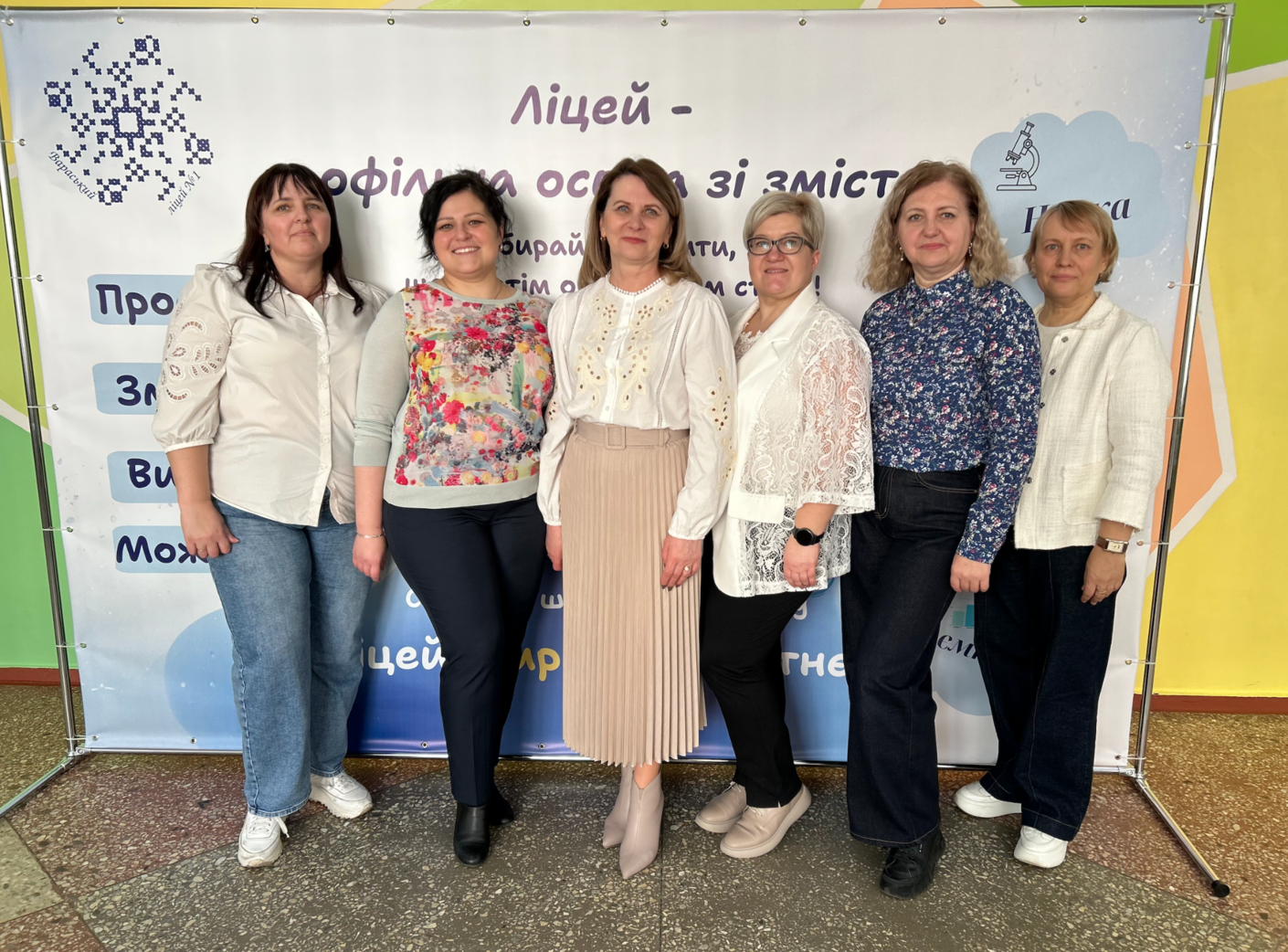
The Varash Academic Lyceum, located in Rivne region, has become one of 150 educational institutions in Ukraine to pilot the reform of specialised senior secondary education. This marks a shift to a model in which Grades 10–12 are not merely a ‘continuation of school’, but a space for making conscious decisions about a future profession, in-depth study of subjects, and preparation for further education.
The transformation of the lyceum began in 2024 – not only with new classrooms and a new timetable, but also with a shift in the community’s perception of the initiative. Learn more about what the pre-pilot and pilot projects look like, and why experienced teachers have changed their attitude to the reform.
Reorganisation of the network: From six lyceums to a single centre of learning
Varash is a city with a population of around 40,000, where six secondary schools traditionally operated. All of them were “old-style” institutions – from grades 1 to 11. On average, 920 students studied at each of these schools, and the average class size was 27 schoolchildren. Despite the favourable demographic situation in the region, the dispersal of resources across all the lyceums prevented the creation of a comprehensive and large-scale specialised programme.
An order from the Rivne Regional Military Administration and a decision by the Department of Education and Science of the Rivne Regional State Administration determined that one academic lyceum would be sufficient for this community. The choice fell on Lyceum No. 1 due to its solid reputation, strong teaching staff, capacity, and achievements.
‘From September 2026, we became the city’s only educational institution with 10-grade students. The remaining lyceums will complete the education of their 11th-grade students this academic year and will acquire the status of gymnasiums from next year. In future, if the number of students wishing to study at our lyceum exceeds our capacity, another lyceum will be established,’ explains Liudmyla Bondar, Deputy Director of the Varash Academic Lyceum.
How we became a part of the pilot project
The path to pilot status was not an easy one. One of the key requirements set by the Ministry of Education and Science was the enrolment of several classes in a three-year specialised education programme, offering at least three specialisms. In Varash, the situation was complicated by the fact that the community did not have any New Ukrainian School (NUS) pilot classes in the local primary school – meaning that parents were not familiar with the reform from the outset.
‘The children who were in Grade 9 last academic year were still following the old state standard and were due to complete Grade 11. However, they had the option, with their consent, to “switch” to a three-year specialised education programme,’ explains Liudmyla Bondar.
Kateryna Sydorchyk, Deputy Director of the Varash Academic Lyceum, was not sure whether they would manage to enrol the required number of students:
‘Initial surveys showed only 12–13 interested applicants. But we went out into the community: we met with parents and children from every school in the city, invited them to our premises, and showed them our STEM laboratories, classrooms, and the updated equipment in them. The visuals worked, but we still needed more convincing arguments.’
Arguments that worked:
- In 2029, there will be no mass graduation of 11th grade students in Ukraine. Graduates of the pilot project will be the only ones to apply to higher education institutions that year, which will give them an advantage in the rankings.
- Three-year bachelor’s degree. From 2029, the Ministry of Education and Science plans to offer graduates of the pilot classes three-year bachelor’s degree programmes in specific specialisms, provided their training aligns with the relevant profile.
- Equipment: the state allocates funds for modern laboratories and digital facilities.
- Learning without private tutors: with twice as many hours devoted to their chosen subject, students can fully master the curriculum at school.
- Mild adaptation: Grade 10 becomes a year of adaptation and self-discovery
- Combined courses, such as natural sciences or an integrated literature course, for those profiles where this is sufficient.
- Teaching in pairs.
- Forming cross-class groups.
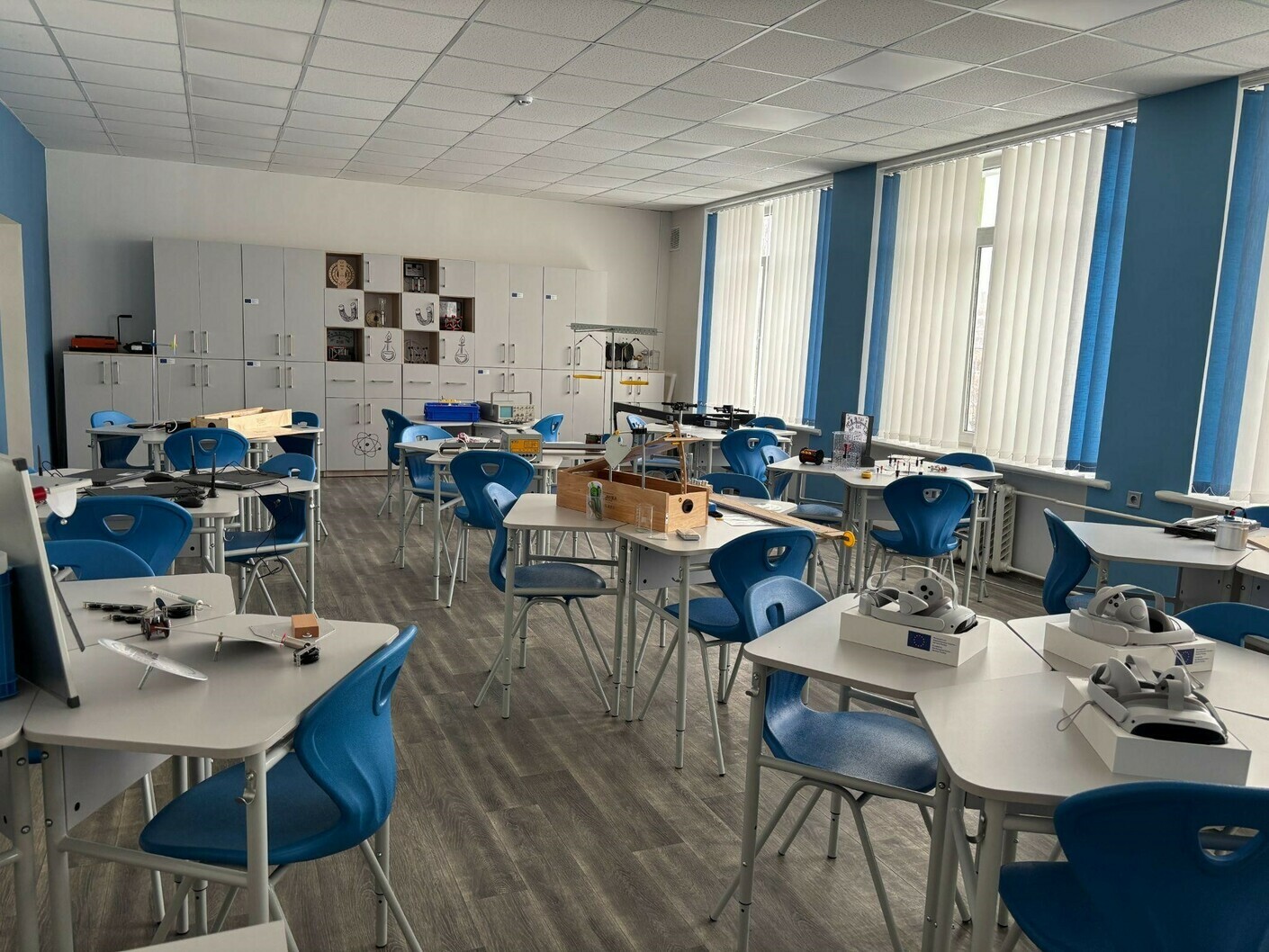
One of the renovated classrooms
From this year onwards, the lyceum is operating under two models simultaneously: a three-year (pilot) programme and a two-year programme for 10-grade students, in order to ensure that all students in the community have a choice.
“If it works, keep it as it is”: a story of internal transformation
Stepping out of their comfort zone proved to be a challenge not only for parents but also for some of the lyceum’s teachers. Liudmyla Bondar admits frankly that, at first, she was among those sceptical of the reform.
‘My personal view was: why break something that works so well? Our lyceum was running brilliantly. I lacked confidence that there would be adequate support – both in terms of content and resources. Besides, I realised that, on a purely human level, I would miss the little children, those carefree little eyes. And this reluctance to step out of my comfort zone held me back a great deal,’ recalls Liudmyla.
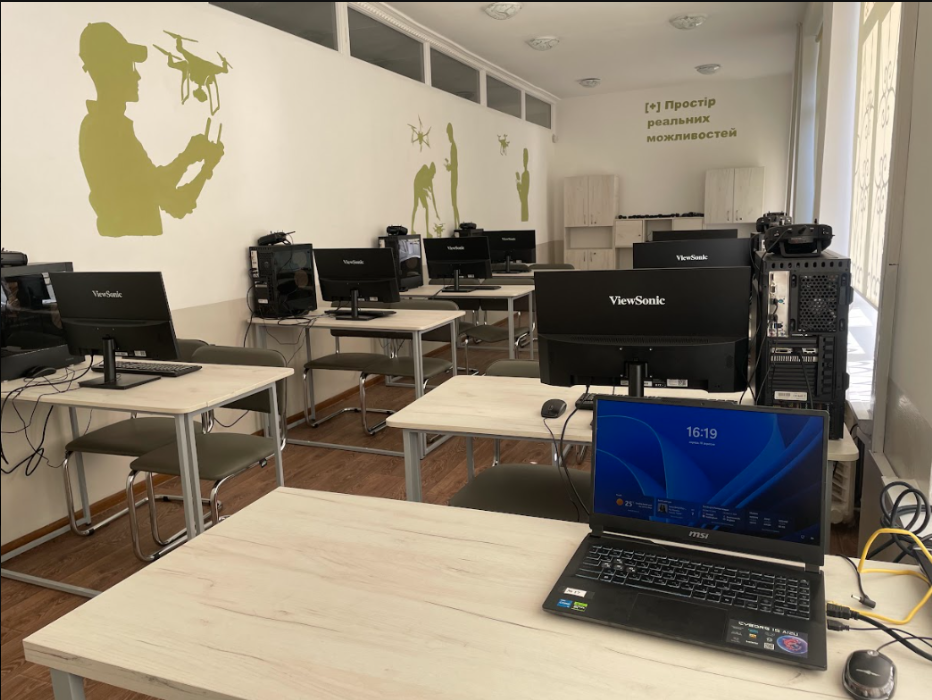
However, the opinion began to change as the reform took on a tangible form. The first thing that worked was the visual aspect: ultra-modern laboratories and classrooms for science, maths and technology, digital laboratories, a 3D factory, digital machine tools, virtual reality headsets, huge interactive panels, and the fitting out and renovation of the “Defence of Ukraine” study centre, to name but a few.
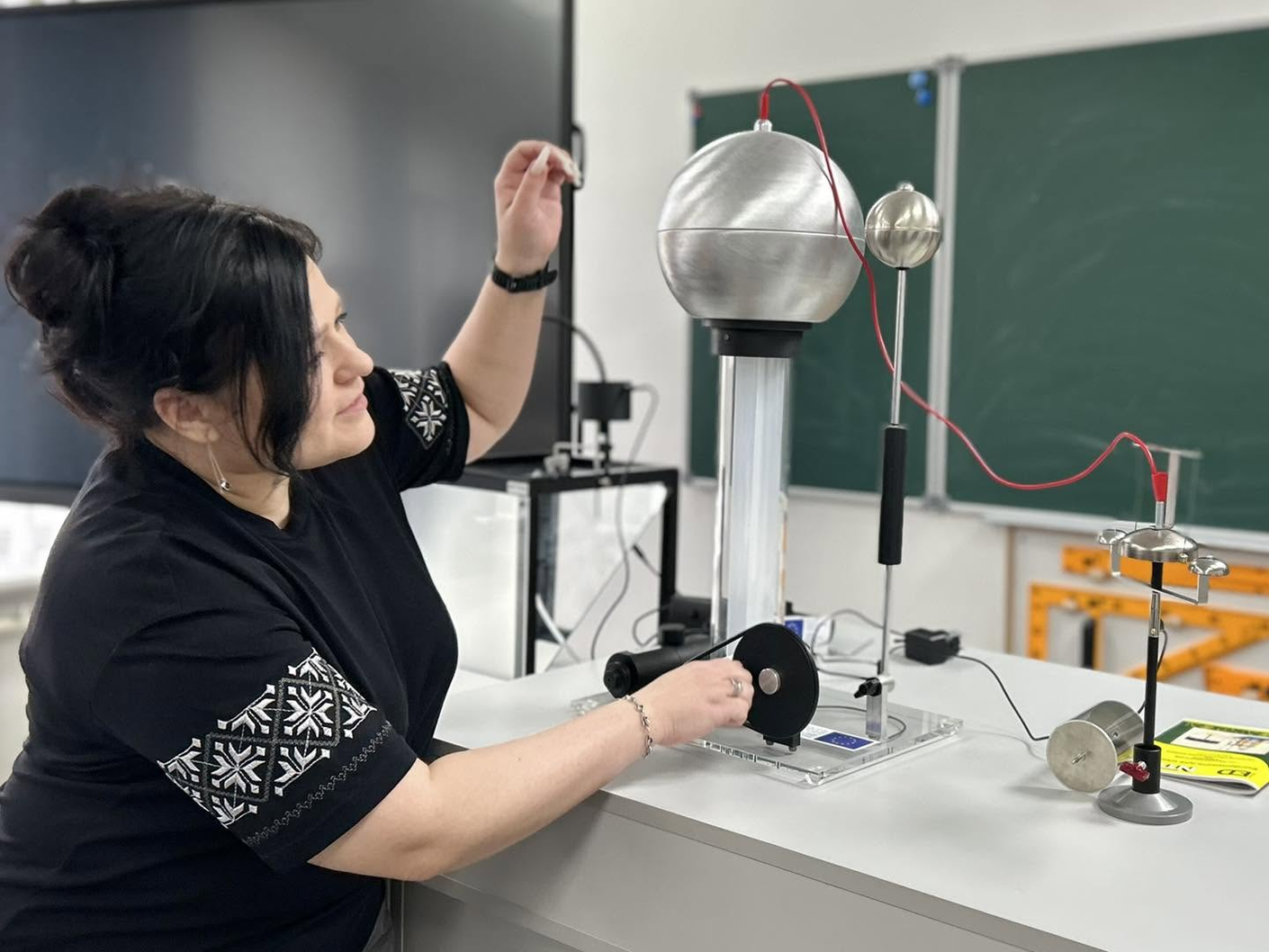
When teachers saw the State Standard for Specialised Secondary Education and realised that classes could be divided into groups when studying specialised subjects, this became a compelling argument in favour of the idea. The experience of their colleagues also proved significant. After visiting one of the lyceums, which is attended exclusively by senior students, the teachers observed a completely different, positive atmosphere.
‘We saw that 10th-12th-grade students are like a community of like-minded people. Teenagers feel quite at ease in an environment with peers of the same age. They feel grown-up, free, equal, and responsible,’ concludes Liudmyla Bondar.
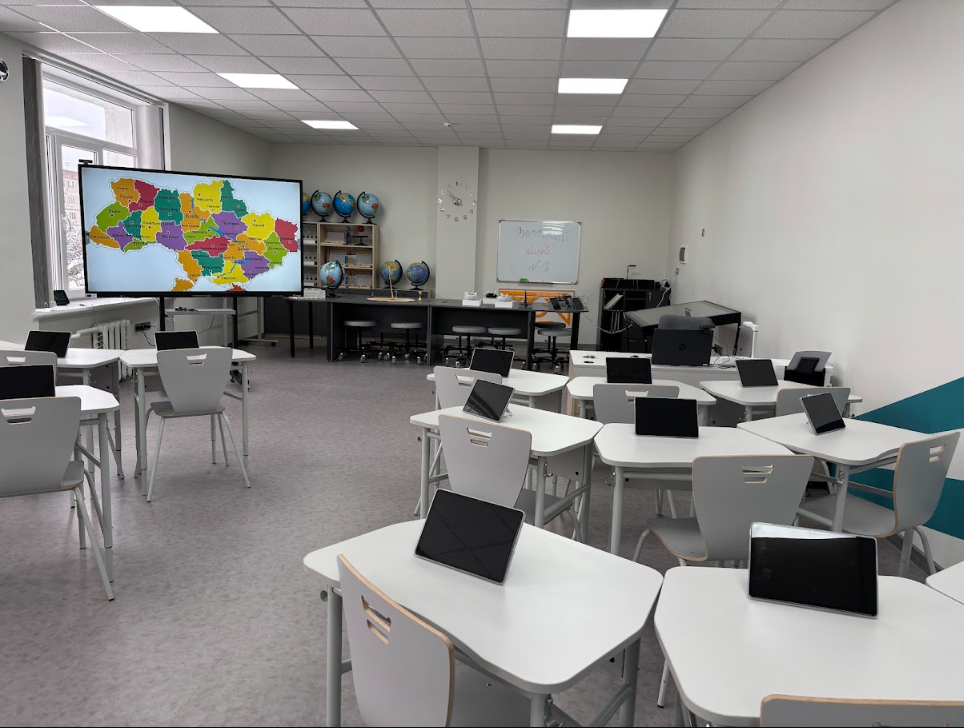
One of the renovated classrooms
The stages involved and changes to the lyceum’s structure
The transformation took place in two stages:
- Pre-pilot (organisational, 2025/2026 academic year). The lyceum’s founder decided to transfer students in Grades 1–4 to another school in the city from 1 September 2025. This freed up space and, for the first time in the lyceum’s history, enabled all students to attend the first shift. At this stage, new logistics and the organisation of the educational process were tested: instead of 7–8 different lessons a day, lessons were organised in pairs. The most interesting experiment involved dividing students into English language groups based on their proficiency levels: children from four different classes were simultaneously split into five different classrooms so that each could learn at their own pace.
- Pilot (content-based, 2026/2027 academic year). Introduction of a three-year specialised school (Grades 10–12). Instead of 15–20 subjects, teenagers focus on their chosen profile and independently select courses outside that profile.
‘It was a difficult and lengthy organisational process to enable every child to move away from being tied to a specific class and to offer them a real choice. If one student wants to take “financial literacy” and another “geography of religions”, we have to ensure that the timetable accommodates both at the same time,’ explains Deputy Headteacher Kateryna Sydorchyk.
Special attention was paid to the natural sciences. In line with the recommendations of the Ministry of Education and Science, the lyceum now has a huge geography classroom with several functional zones and two classrooms each for physics, biology and chemistry: one for theory and the other a fully-equipped laboratory.
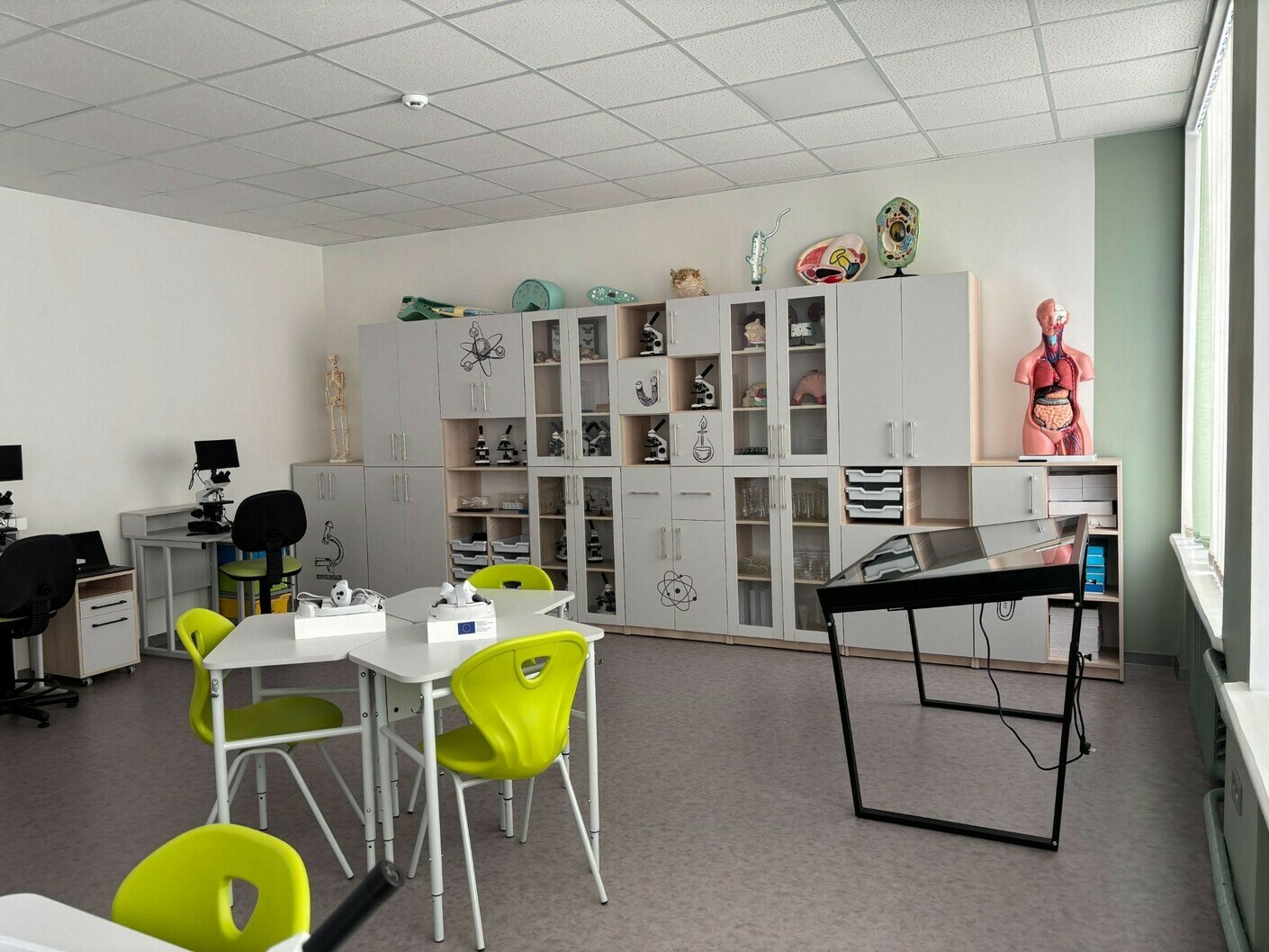
One of the renovated classrooms
The development of the STEM programme at the lyceum began back in 2018, and in 2020 the school acquired its first STEM laboratory. Today, it is a high-tech complex with robotics, digital systems, and even a 3D printing facility. STEM is taught here as an interdisciplinary course from Grade 5 to Grade 7 – as part of the standard curriculum.
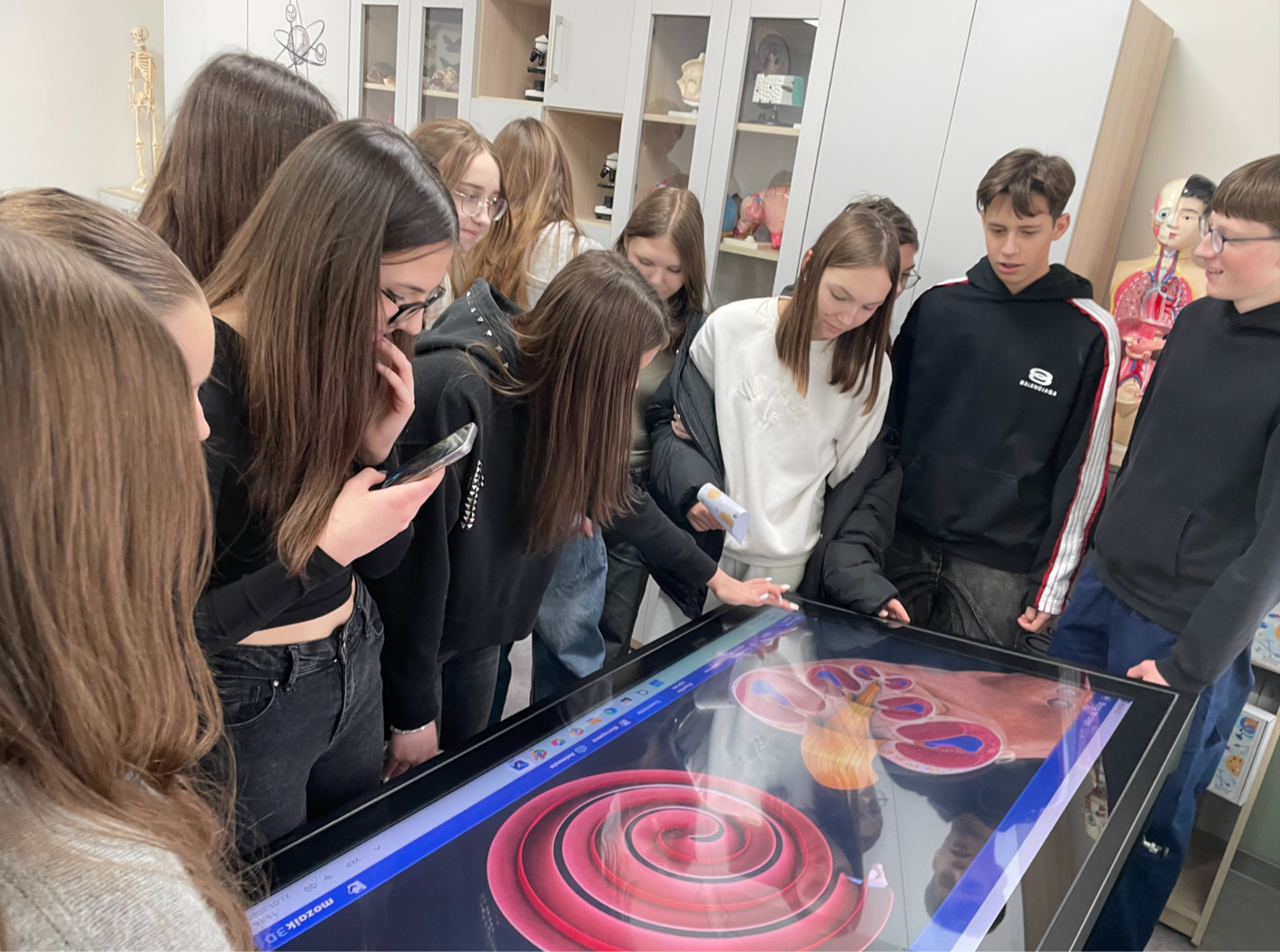
Students in one of the lyceum’s modern classrooms
One more reason to be proud is the “Defence of Ukraine” study centre, which has now been running for three years. 920 children from across the city attend this centre. Every day, around 60 students from different educational institutions come here, for whom separate specialised premises and a shooting range in a bomb shelter have been set up. In October 2024, the lyceum was officially included in the list of 30 ambassador institutions for specialised education.
What is the approach to profiles and optional courses?
Subject-specific profiles are not new to the lyceum – since 1986, students have been grouped according to their chosen subject areas. However, the range of options has now expanded. The subject-specific profile system at the Varash Academic Lyceum is a dynamic entity. The profiles are not set in stone: every year, the system is restructured to meet the specific needs of the students and the opportunities the lyceum can offer. For example, this year the lyceum has twenty Grade 10 classes, across which 13 profiles are offered:
Pilot specialised classes (Grades 10–12):
- Language and Literature Cluster: Humanities profile (specialised study of Ukrainian and English) – 1 class;
- STEM cluster, two profiles in one class: in-depth study of mathematics and physics; in-depth study of mathematics, computer science and technology – 1 class.
Profile classes (Grades 10–11):
- Biomedical profile (specialised study of biology and chemistry) – 2 classes;
- “Intellect of Ukraine” scientific and educational project – 2 classes;
- Mathematics (specialised study of mathematics, begins in Grade 10) – 1 class;
- Mathematics and computer science profile (specialised study of mathematics, begins in Grade 10, and computer science) – 2 classes;
- Physics and mathematics profile (specialised study of mathematics, begins in Grade 10, and physics) – 1 class;
- Ukrainian philology (specialised study of the Ukrainian language and literature) – 1 class;
- Humanities profile (specialised study of the Ukrainian and English languages) – 4 classes;
- Social sciences and humanities profile (specialised study of the Ukrainian language and the history of Ukraine) – 2 classes;
- National security and law (specialised study of the subject “Defence of Ukraine”, the history of Ukraine and law) – 1 class;
- Arts and technology profile (specialised study of technology and the arts) – 1 class;
- Global class (specialised study of English and geography) – 1 class.
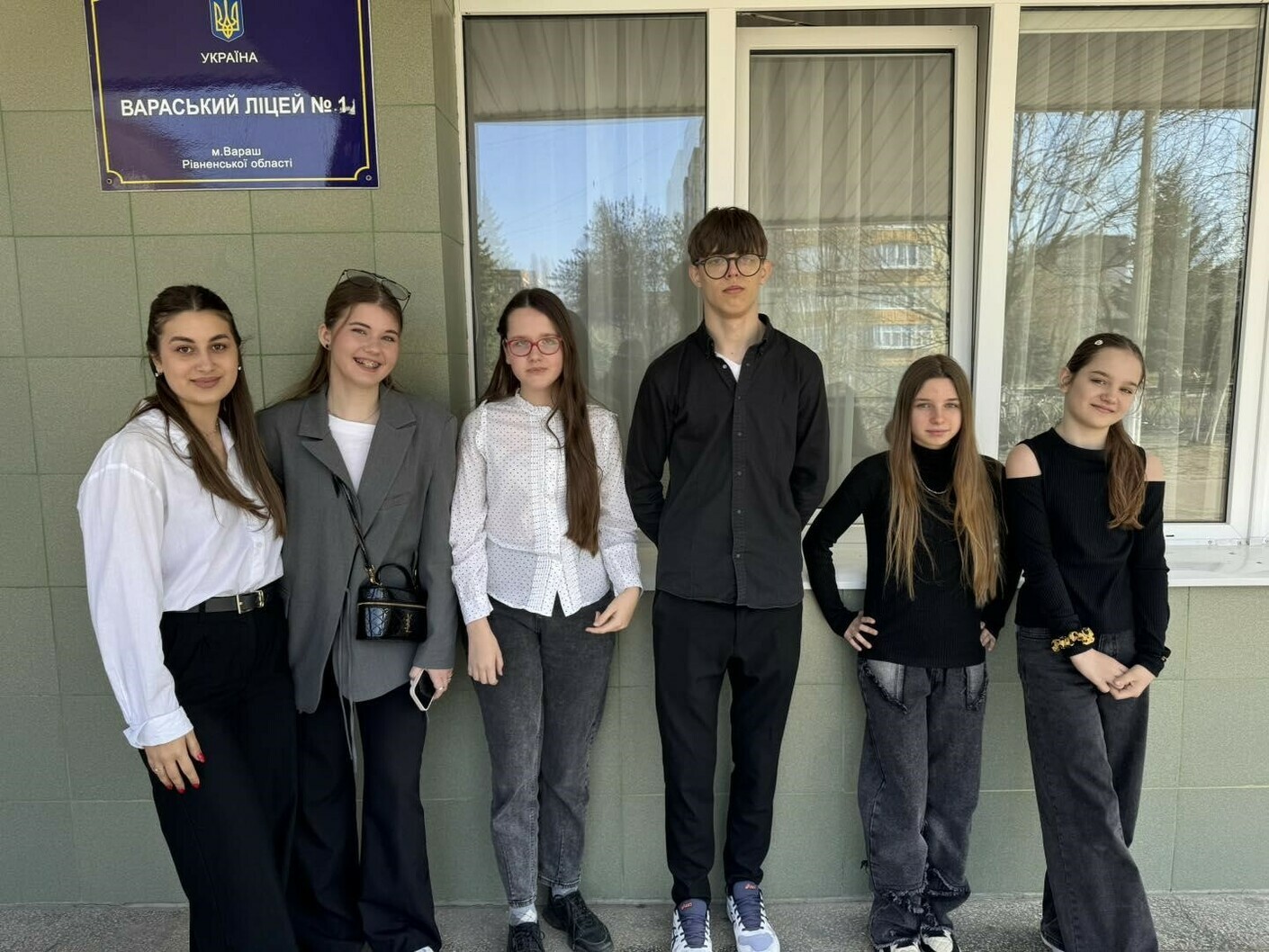
Lyceum students. The photo was taken before the lyceum was rebranded as an academic one
‘A specialised senior school is not about stability in a teacher’s workload, but about the child’s needs. Today we might have two humanities classes, and next year – five maths classes. We base our decisions on the children’s actual needs and, at the same time, have no fear of changing the profiles every year in line with the students’ educational needs,’ explains Kateryna Sydorchyk.
Apart from that, the teachers developed their own courses, acted as testers for specialised education textbooks, and met with curriculum authors to find ways of engaging today’s teenagers.
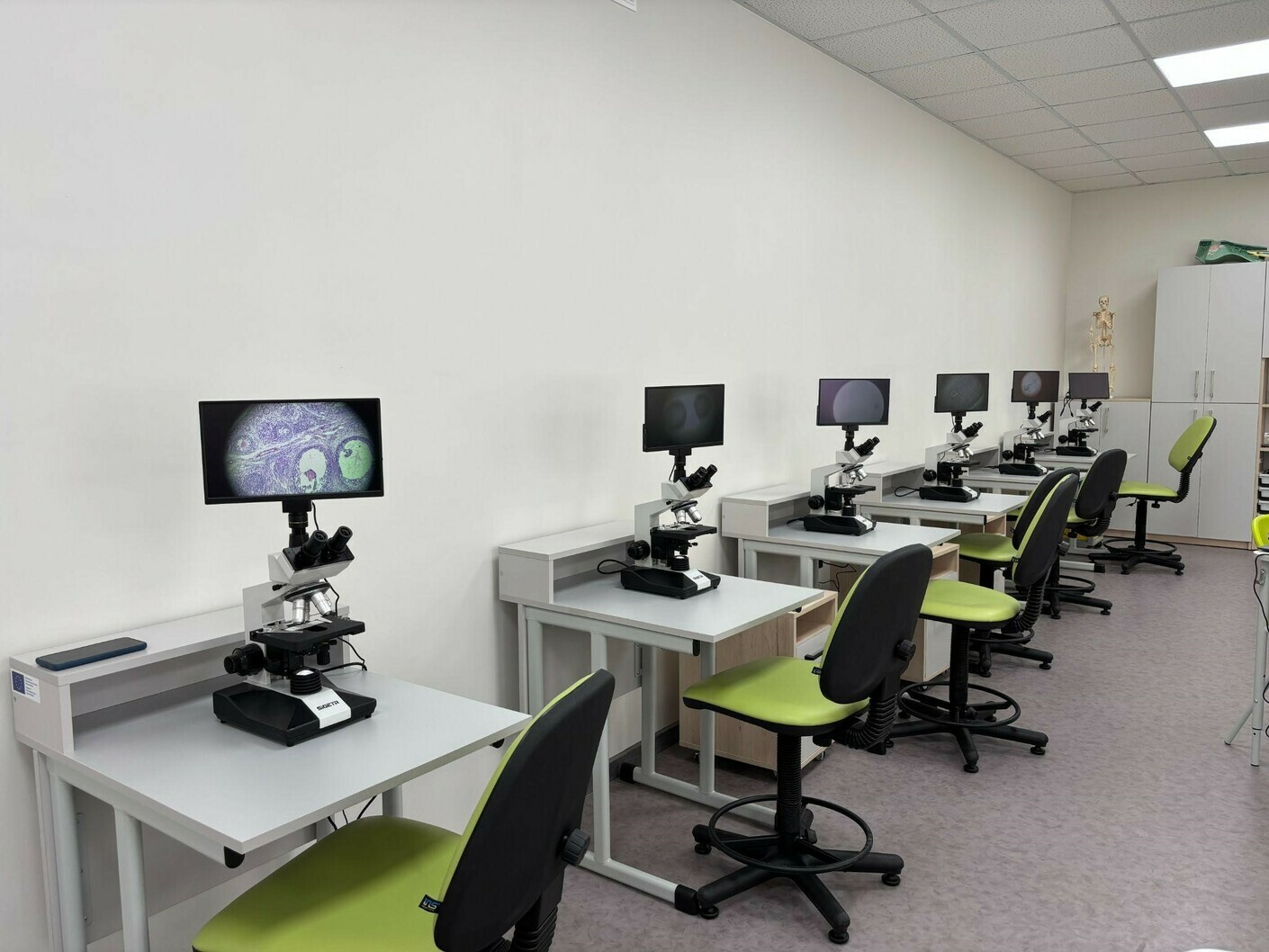
One of the renovated classrooms
Indeed, the reform gives teachers the opportunity to take on unexpected roles. For example, a physics teacher chose to teach the optional course “Geography of Religions”. In general, students choose from the following optional courses:
- Virtual Worlds: Basics of 3D Modelling;
- Homo sapiens: Mysteries of the Inner World;
- History of World Art Culture;
- Personal Development and Career Guidance;
- Language in the Space Around Us;
- Rhetoric as the Art of Communication;
- First Steps in Business Communication in English;
- Fluent English Through World Hits;
- Language and Media;
- Practical Geography;
- Tourism Geography;
- STEM-Project: From Idea to Implementation;
- My Financial Plan;
- German;
- Polish.
Support that scales up
On such a challenging journey, teachers certainly need support, so the community is actively working with the New Ukrainian School (NUS) Reform Implementation Office and the Swiss-Ukrainian DECIDE Project. Varash is a special case. As the Project experts explain, this community is already performing at a fairly high standard, with an established team and external funding secured. Hence, the focus of the cooperation has shifted from “building from scratch” to development and scaling up.
Special emphasis is placed on inter-municipal cooperation, to ensure that high-quality specialised education is accessible to children from neighbouring communities, as well as on establishing partnerships with universities. Experts emphasise that the lyceum’s team has come a long way from initial resistance to recognising the value of change, and today the teachers can see the practical benefits of these changes.
An important part of the pilot project has been the career guidance system, overseen by Deputy Director Nataliia Kyliukh. The lyceum has introduced the additional role of a careers counsellor, who helps teenagers find their professional path.
‘We are taking part in the national pilot project of the DECIDE career guidance system. Our careers counsellor works with grades 8–9 students, helping them identify their aptitudes, talents, and strengths, and guiding them in choosing an academic profile or profession. These consultations are very popular with both students and parents. The community also organises excursions to local businesses for students in grades 7–9.
If, over time, we see that the majority of students are consistent in their choices – that after selecting a suitable profile, they go on to specialised higher education institutions in the same field – then our work will have been a success. We want them to make a conscious choice of profession rather than flitting from one thing to another,’ says Nataliia Kyliukh.
Challenges: From mistrust to infrastructure and logistics
Although there was no strong opposition in the community, teachers admit that there are some difficulties. A certain proportion of parents are wary of change and say, ‘What’s the point of all this? Just let our child finish their education.’
‘We are as open as possible. Sometimes parents come in on their own initiative and say, “Show us the classrooms.” We show them round, demonstrate the modern facilities, and explain the benefits. When people see the reality for themselves, they have fewer questions,’ the lyceum teachers say.
For former 9th-grade students from rural areas, enrolment at the lyceum was voluntary. Other infrastructure challenges include the condition of the sports hall, football pitch, and sports ground, which need modern renovation to match the standard of the renovated laboratories and cope with the workload.
‘Moreover, the process of equipping classrooms often becomes a real-life test. There are instances where funding is delayed, tenders do not go ahead at the first attempt, and renovations are postponed. This forces us to be flexible: combining classes or even temporarily switching some children to distance learning in order to have time to prepare the premises,’ explains Liudmyla Bondar.
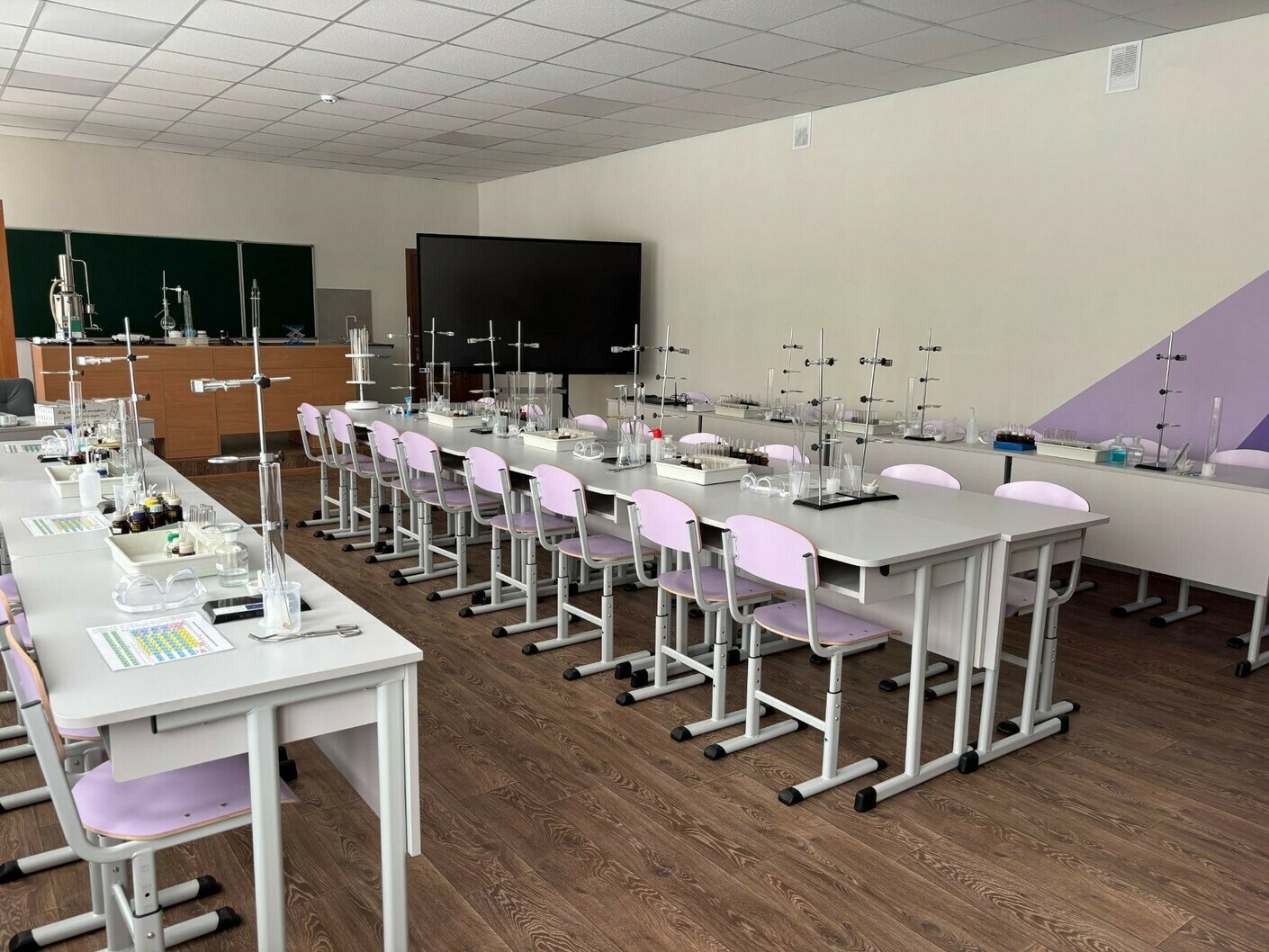
One of the renovated classrooms
On the plans and benefits of the reform
The transformation of the Varash Academic Lyceum is not a sudden change, but a clearly planned roadmap.
‘We are gradually phasing out the secondary level: this year, we have not admitted any new fifth-grade students. Our aim is to create a classical lyceum where 10th- to 12th-grade students are in a single age group and share a common intellectual environment,’ the administration explains.
Nataliia Sereda, Director of the Lyceum, is convinced that the reform is, primarily, about respecting children’s time and efforts. She highlights several key benefits that are already transforming the quality of education in Varash.
‘The first and most significant benefit is the single-age environment. When only senior students remain at the institution, they develop shared interests and a completely different level of maturity. They are free, open, and feel like people who are trusted,’ notes Nataliia Sereda.
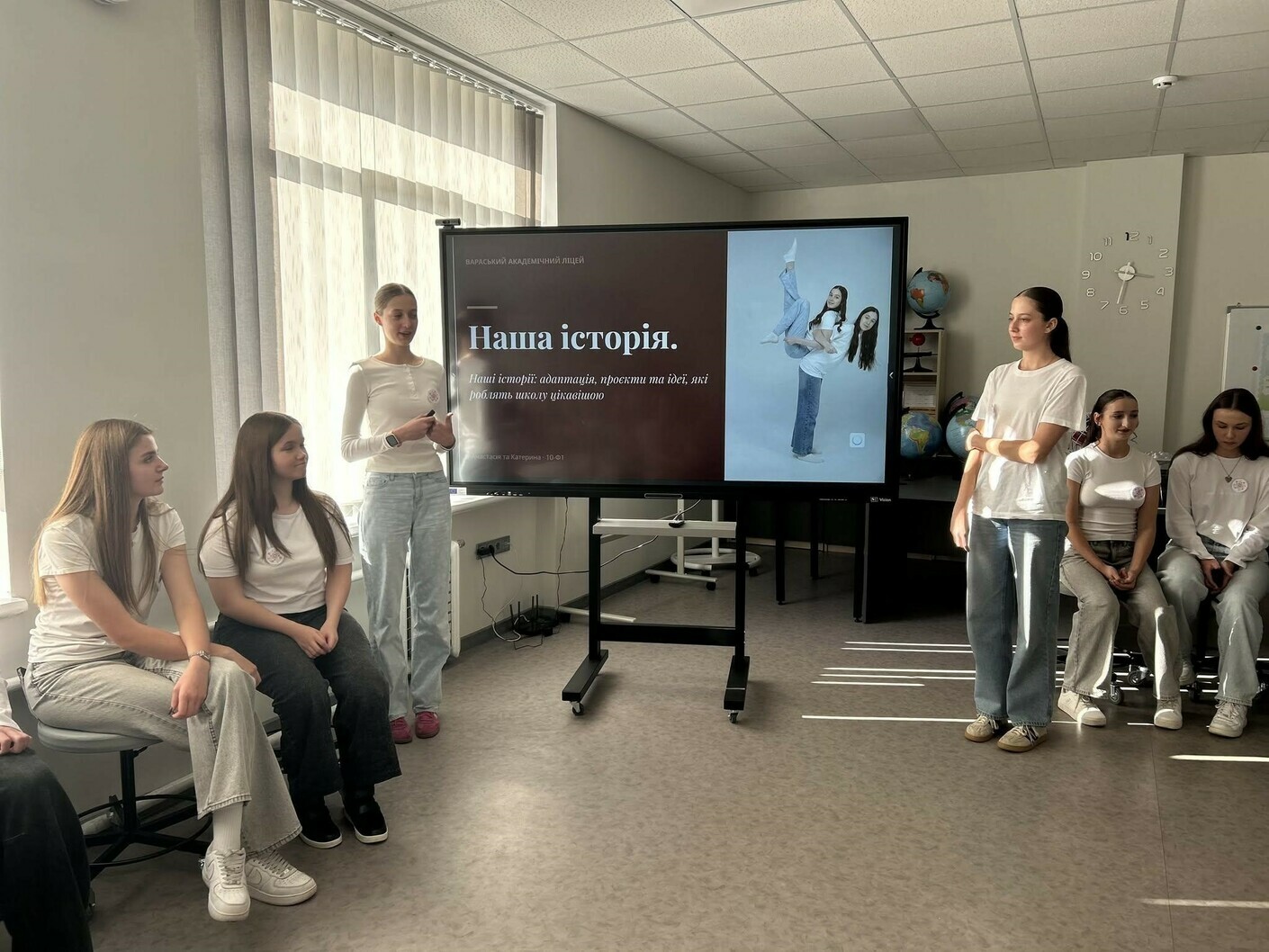
Students of the Varash Academic Lyceum during a lyceum assembly. Photo from the lyceum’s official website.
The second aspect is the reduction in the number of subjects in senior school. Under the old system, students in Grade 11 were forced to prepare for 7–8 different lessons a day, which led to chronic fatigue and shallow knowledge.
‘The number of subjects for children will be reduced. Grade 10 is an adaptation period when they can explore different fields, whereas Grades 11 and 12 are about focusing fully on their chosen profiles. A child should not have to come home after seven lessons and sit down again with textbooks for subjects they will not need for their chosen career. This is simply an inhuman workload,’ comments Nataliia Sereda.
The director pays special attention to the issue of private tuition. In her view, senior schools should at least reduce this practice, if not eliminate it altogether.
‘Private tuition is nothing but negative. Sometimes, because they are so busy, parents say, “Why should I go through this topic with my child? Let them go to a tutor.” This is the worst possible option. The child goes to the tutor, who explains everything in detail – and then they can relax in class. With us, however, the child has the opportunity to listen to the teacher, and in the afternoon – to attend individual consultations right here at the lyceum. With twice as many hours devoted to their chosen subject, the child should gradually become an expert right here, within these walls.’
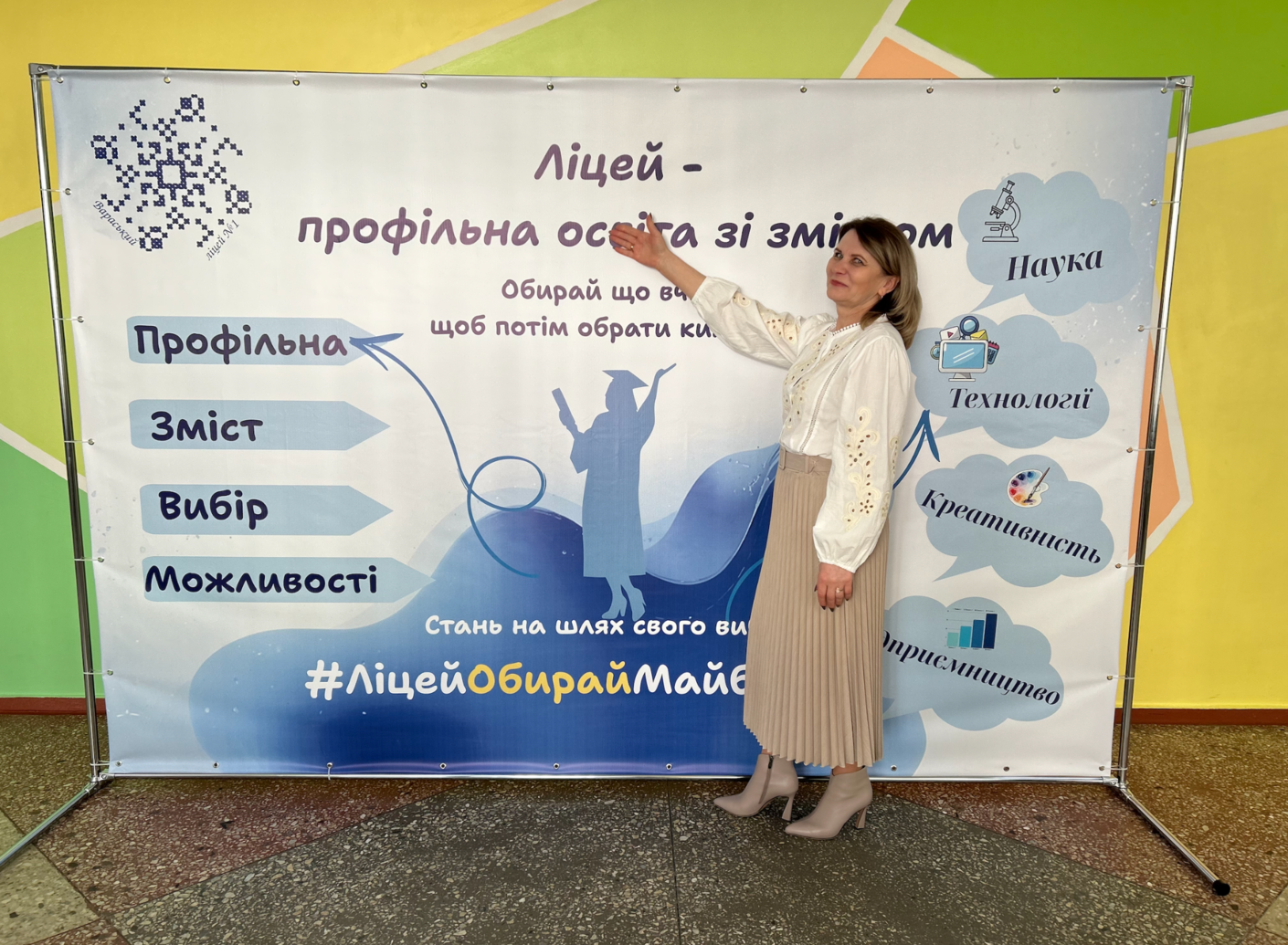
Nataliia Sereda, Director of the Lyceum
The Varash Academic Lyceum proves that the reform of senior education is not about restrictions, but about the deliberate concentration of intellectual, infrastructural, and emotional resources. Teachers prepare students who know exactly what they want from life. Here, everyone is convinced that there is no turning back. Nor is there any desire to do so.
Comprehensive advisory and consultative support for the implementation of the reform of specialised senior education, aimed to create a network of academic lyceums, is provided within the framework of the Swiss-Ukrainian DECIDE Project, implemented by NGO DOCCU and Zurich University of Teacher Education – International, with the support of the Embassy of the Swiss Confederation in Ukraine, in partnership with the Ministry of Education and Science of Ukraine.
Mariia Buleiko (Markovska)
Tags:
war education education vocational training college
Область:
Рівненська областьГромади:
Вараська територіальна громадаSource:
Проєкт DECIDE
18 November 2026
Громада чи її органи: чому Україні варто...
Коли йдеться про такі речі, як правильний переклад міжнародного договору, це часто видається суто технічним...
18 November 2026
7 Steps to Making Urban Agglomerations Work in Ukraine
7 Steps to Making Urban Agglomerations Work in...
Urban agglomerations already exist in Ukraine in functional terms, but they have yet to become institutional...
18 November 2026
Безпечне дитинство: бюджетні пріоритети та спільна відповідальність держави і громад
Безпечне дитинство: бюджетні пріоритети та...
24 листопада о 14:00 в Українському кризовому медіа-центрі відбудеться публічна дискусія «Безпечне дитинство:...
17 November 2026
Стартувала програма для організацій, які хочуть...
Нові послуги та можливості для організацій, які підтримують підприємців та/або ветеранів і ветеранок та хочуть...