Polaris Programme Selects 13 Rural Hromadas for Cooperation to Strengthen the Starosta Institution
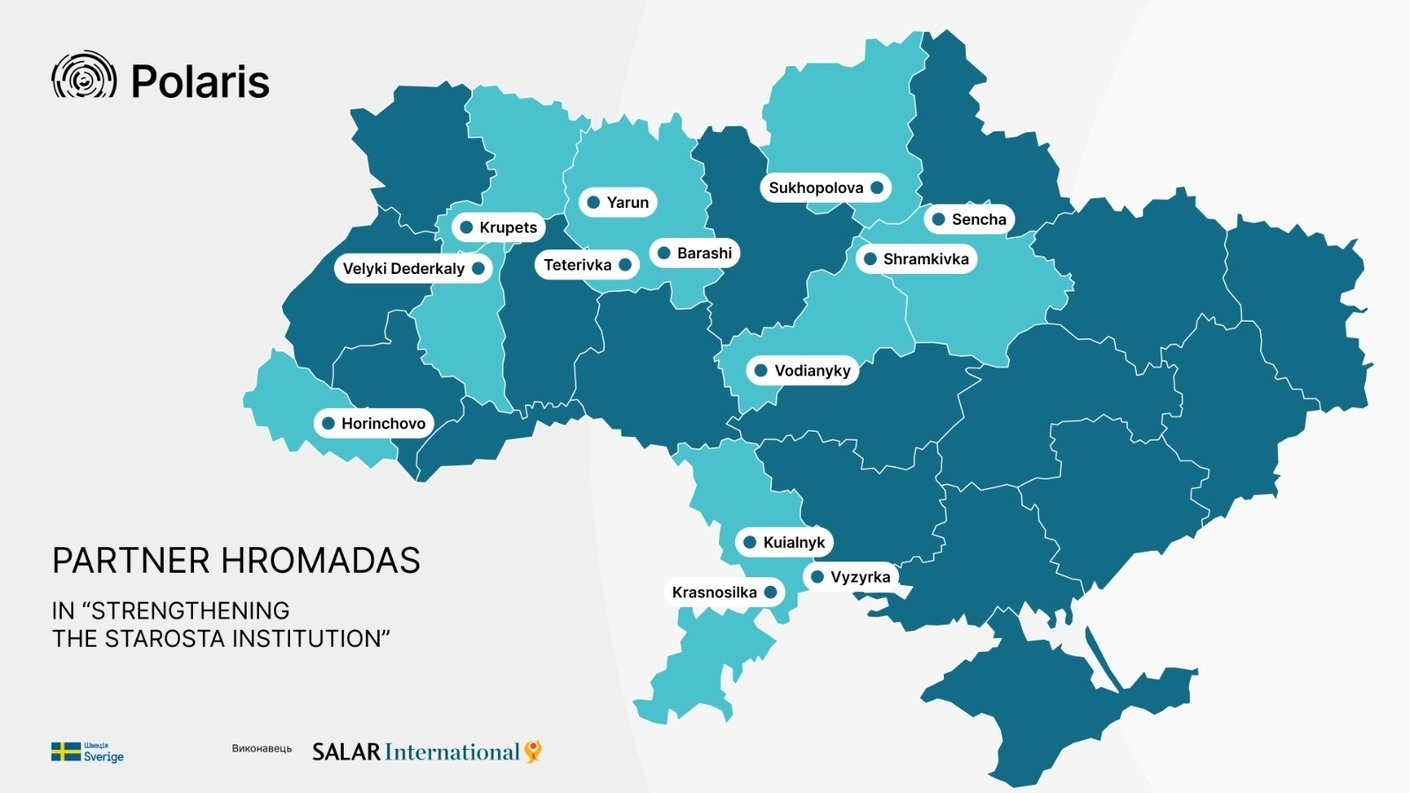
Following the Open Call, 13 rural hromadas from 8 oblasts of Ukraine were selected for cooperation with the Polaris Programme in “Strengthening the Starosta Institution”.
The cooperation aims to strengthen hromadas’ capacity to identify the needs of residents in starosta districts, ensure the accessibility and quality of public services, enhance the role of starostas in local development, and improve mechanisms for engaging residents in addressing issues of local importance.
A total of 61 applications from 18 oblasts of Ukraine were submitted under the Open Call. The applicant hromadas have 425 starosta districts with a combined population of more than 504,000 residents.
19 hromadas were selected for the interview stage. The selection took into account the population and number of starosta districts, the availability of an Administrative Service Centre (ASC), the impact of the war, including whether a hromada had been de-occupied, mountainous area status, as well as the hromadas’ motivation to cooperate, the accessibility of public services, and their readiness to implement changes aimed at strengthening the starosta institution.
As a result, the following hromadas were selected:
Zhytomyr Oblast
- Barashi Rural Hromada
- Teterivka Rural Hromada
- Yarun Rural Hromada
Zakarpattia Oblast
- Horinchovo Rural Hromada
Odesa Oblast
- Kuialnyk Rural Hromada
- Krasnosilka Rural Hromada
- Vyzyrka Rural Hromada
Poltava Oblast
- Sencha Rural Hromada
Rivne Oblast
- Krupets Rural Hromada
Ternopil Oblast
- Velyki Dederkaly Rural Hromada
Cherkasy Oblast
- Shramkivka Rural Hromada
- Vodianyky Rural Hromada
Chernihiv Oblast
- Sukhopolova Rural Hromada
“A strong starosta institution is not only about the capacity of an individual starosta. It is important for a hromada to have a coherent system of interaction between starostas, executive bodies and residents, where everyone understands their role and has effective tools to address local issues. These are the systemic changes we will work on together with the selected hromadas,” said Andrii Matsokin, Starosta Support Coordinator at the Polaris Programme.
As part of the cooperation, Polaris experts will analyse how the work of starostas and the provision of public services in starosta districts are organised, help hromadas identify effective operating models, and develop recommendations for improving governance. The support will also include advisory assistance in implementing changes, training for starostas and local government staff, peer exchange between hromadas, and technical support for selected starosta districts.
20 November 2026
Безбар'єрність як частина післявоєнної відбудови: досвід відновлення Тростянецької лікарні
Безбар'єрність як частина післявоєнної...
Під час російської окупації в підвалі Тростянецької міської лікарні приймали пологи – там народилося 21...
20 November 2026
Return of abducted Ukrainian children – a...
On 20 November 2026, in Brussels, during the first meeting of the Joint Consultative Committee between the European...
20 November 2026
European standards need resources: What...
Ukrainian communities need not only new operating rules in line with European Union legislation, but also experts,...
20 November 2026
Ukrainian local self-government gained a...
On 20 November 2026, the first meeting of the Joint Consultative Committee between the European Committee of the...