Korosten economic miracle. Interview with Volodymyr Moskalenko, Mayor of Korosten
Volodymyr Moskalenko, Mayor of Korosten, who has been in office for 28 years, talks about how to ensure sustainable growth for the local economy, the Drevlian tenacity of the local residents, and the 25 wind turbines currently under construction in his community
By Dmytro Syniak
Volodymyr Moskalenko has been serving as mayor for almost the longest period in Ukraine – since 1998. Therefore, he is a living chronicle of Ukrainian local self-government, having witnessed virtually every stage of its development: the poverty of the 1990s, the uncertainty and stagnation of the Yanukovych era, and the rapid development of the mid-2010s driven by the decentralisation reform. Since 2022, Mr Moskalenko’s wide-ranging administrative experience has been further enriched by leading the community during a full-scale war. (Literally the day after our conversation, russian troops struck the village of Khotynivka in Korosten community, damaging more than 300 houses) Despite the dangerous proximity of hostile Belarus and the constant attacks by russian Shahed drones, the Mayor of Korosten not only ensures the smooth running of all municipal services but also drives the development of the community. Volodymyr Moskalenko told Decentralisation how he manages to do this.
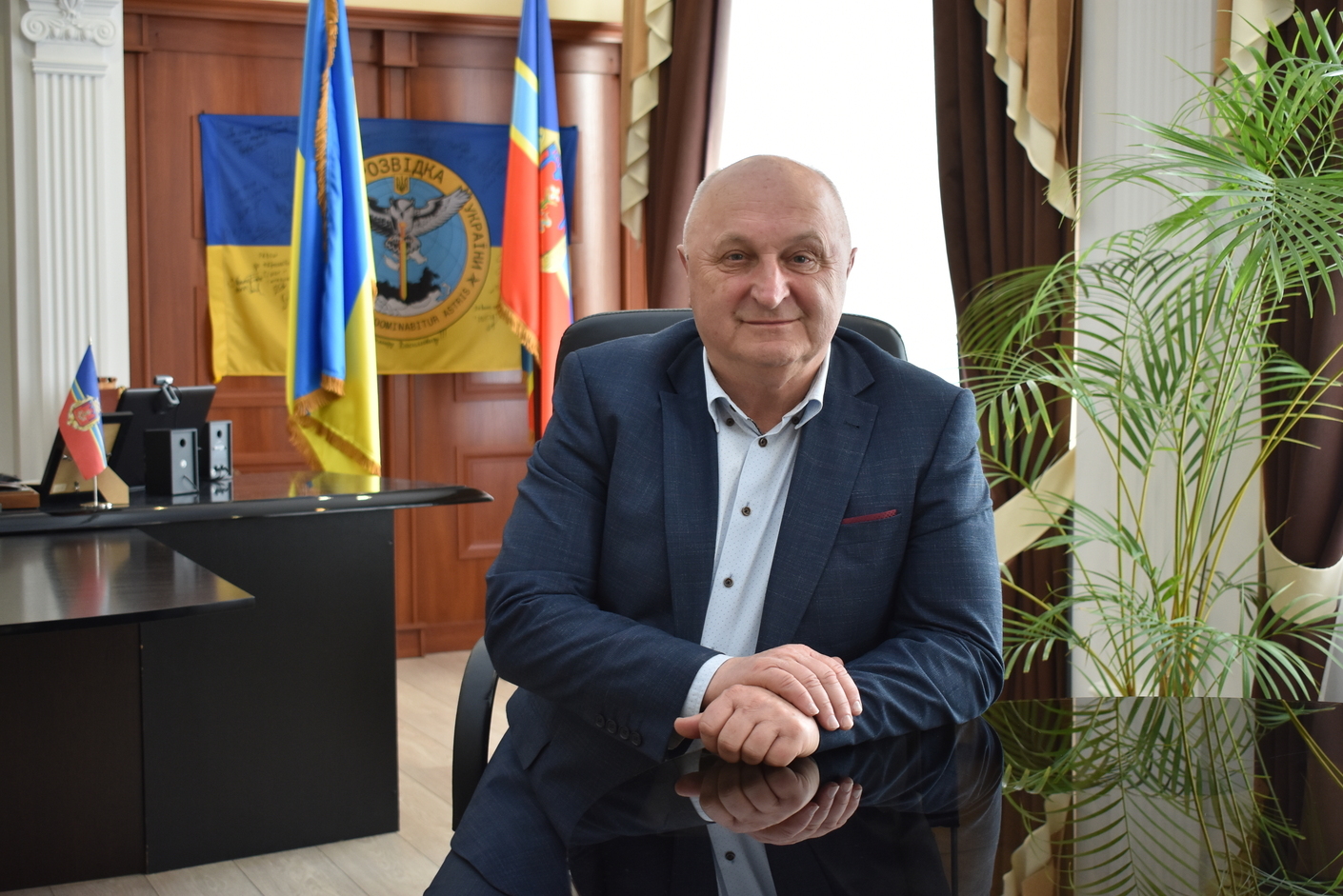
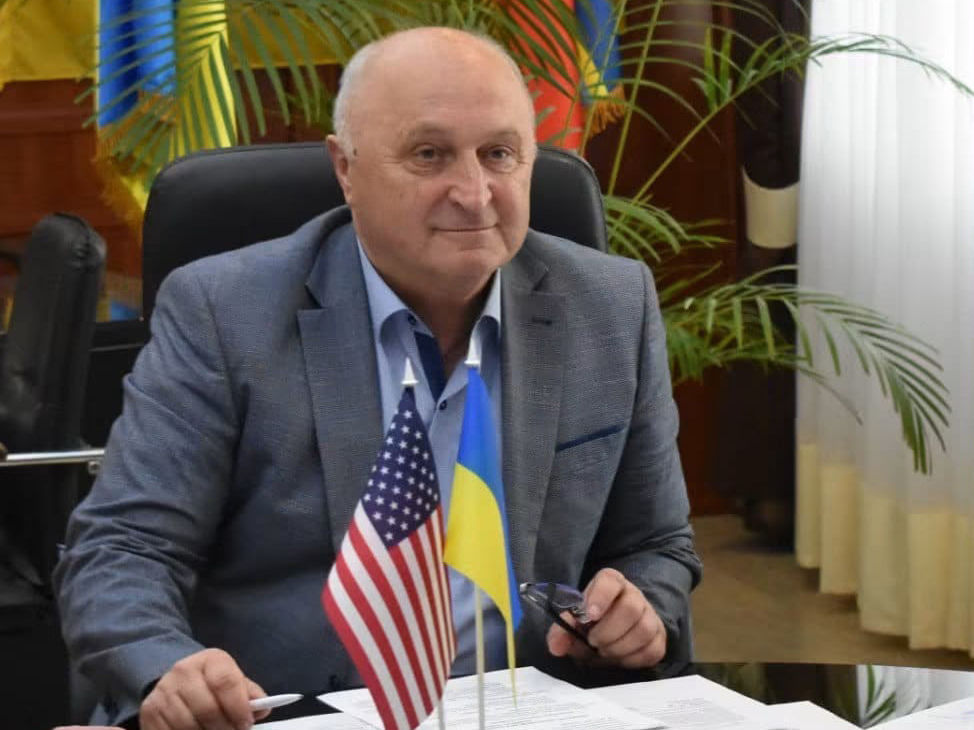
Volodymyr Moskalenko, Mayor of Korosten
‘We are the Drevlians!’ A history lesson from the Mayor
You have been re-elected six (!) times. What is the secret of your popularity, in your opinion?
There is no big secret, really. Firstly, I am a local – I was born here and hope to die here. Secondly, I love both my city and my fellow Drevlians very much. I try to work for them openly and honestly. I never look down on anyone and always treat every resident as an equal. I have gathered a very good team who are also passionate about doing good for the city and, most importantly, who know how to deliver results. People appreciate that.
Do you refer to the residents of Korosten community as Drevlians humorously?
Why humorously? I believe we have a very unusual mindset, quite different from others. For example, it is difficult to force us to do something we are unwilling to do. We are defiant, patriotic, and deeply love our little homeland. The war has only strengthened this feeling: we are literally prepared to fight tooth and nail for our Korosten. Making us bow down is simply impossible. Probably because of this, in my 28 years in local governance, I have had conflicts with every administration of the President. There have been numerous attacks, but I have never once changed my stance. If there is a law, then I ask that it be enforced!
Recently, a proposal was made in the Verkhovna Rada to set up a city military administration in Korosten. Was that yet another attack on you? Korosten is, in fact, a long way from the front line…
Of course, another attack. There are people who want to rule in Korosten. They have the audacity to demand that I appoint particular people to particular positions. And if only these people were qualified! Therefore, there is a conflict between us and one of the MPs. But for me, nothing is new here. Prince Ihor did the same! But princes, councillors, and presidents come and go, whilst the community remains. Hence, I view the conflict itself as a window of opportunity: it will motivate the councillor to help the community more, in order to justify his position as a “saviour”. So be it!
You actively use the “Drevlyans’ myth” and your historical heritage. You even invest in historical research. Is this a luxury, or, on the contrary, a strategic resource that helps the community survive in difficult times?
Local identity is particularly important to our community. Our city was first mentioned in the ‘Tale of Bygone Years’ back in 945! At that time, Iskorosten, as it was then called, was in no way inferior to Kyiv. That is where our DNA lies! Therefore, in my opinion, it is very important to invest in historical research of all kinds, which is precisely what Korosten City Council has been doing for years. And I can proudly say that Korosten is now probably the most extensively researched city in Ukraine by archaeologists, as the Institute of Archaeology of the National Academy of Sciences of Ukraine has been conducting excavations here almost continuously since 2003! We have also hosted seven (!) international archaeological conferences.
But you have to agree that researching history does not fall within the remit of the city council. Surely spending budget funds on this is not a good idea? Or did you do this with a view to attracting future tourists?
We did, of course, consider the tourism aspect, but it was not the main focus. As you yourself said, we wanted to bring people together, awaken their pride in their community, and instil a love for it in them. Historical research is very helpful for this. When this local identity is in a person’s heart, they will never harm their community, and when the time comes, they will defend it without hesitation. Besides, the archaeological discoveries that Korosten region has revealed to scholars are part of the history of Ukrainian statehood, for which our soldiers are shedding blood today, and which russia so stubbornly refuses to recognise. This is what we paid for! I am truly glad that the work to restore our historical heritage, initiated by Korosten community 20 years ago, has found its continuation in Anatolii Herasymchuk’s book “From Rus to Ukraine: Restoring History”… You say that your portal is the number one resource for local self-government. But did you know that the roots of Ukrainian self-government actually originate in Korosten? The story is well known: after the murder of Prince Ihor, the Drevlians brought down the wrath of his wife, Princess Olha, upon themselves. But do you know who sentenced Ihor to death? It was not the Drevlian Prince Mal, but the general viche! This means that even back then, our ancestors consulted the whole community on important decisions. And do you also know that one of the first steps leading to the creation of the system of state administration in Kyivan Rus is linked to Korosten?
No, I do not. What do you mean?
Ihor was killed after he decided to collect the tribute for the second time. This was because neither he nor anyone else knew exactly how much people owed him; it was estimated roughly. That is why Ihor’s wife, Olha, implemented what we would call a fiscal reform. According to the “Tale of Bygone Years”, she set a fixed rate for the tribute, established administrative centres for its collection, and appointed officials responsible for collecting it. As a result, the system became more predictable and centralised, which reduced the risk of abuse.
Since you consider the study of local history so important, I cannot resist asking one question on this subject. Does it not strike you as somewhat surreal that, in a city which Olha once destroyed, there is a cult dedicated to her: after all, the monument to the princess in Drevlianskyi Park is one of the city’s main tourist attractions?
This is a very good question! That is what Korosten could teach the whole of Ukraine in the future – a philosophical attitude towards its enemies. In this park, there is not only a monument to Olha, but also one to Mal, the Drevlian prince who defended the city against Olha. In fact, they stand right next to each other. Yes, the chronicles do indeed state that Princess Olha killed 5,000 inhabitants of Iskorosten. But it is also beyond doubt that she was one of the most outstanding rulers of Kyivan Rus. Notably, she converted to Christianity in Constantinople, thereby laying the foundations for the future baptism of Rus. Historical figures are often complex, and this is another lesson that the history of Korosten teaches us.
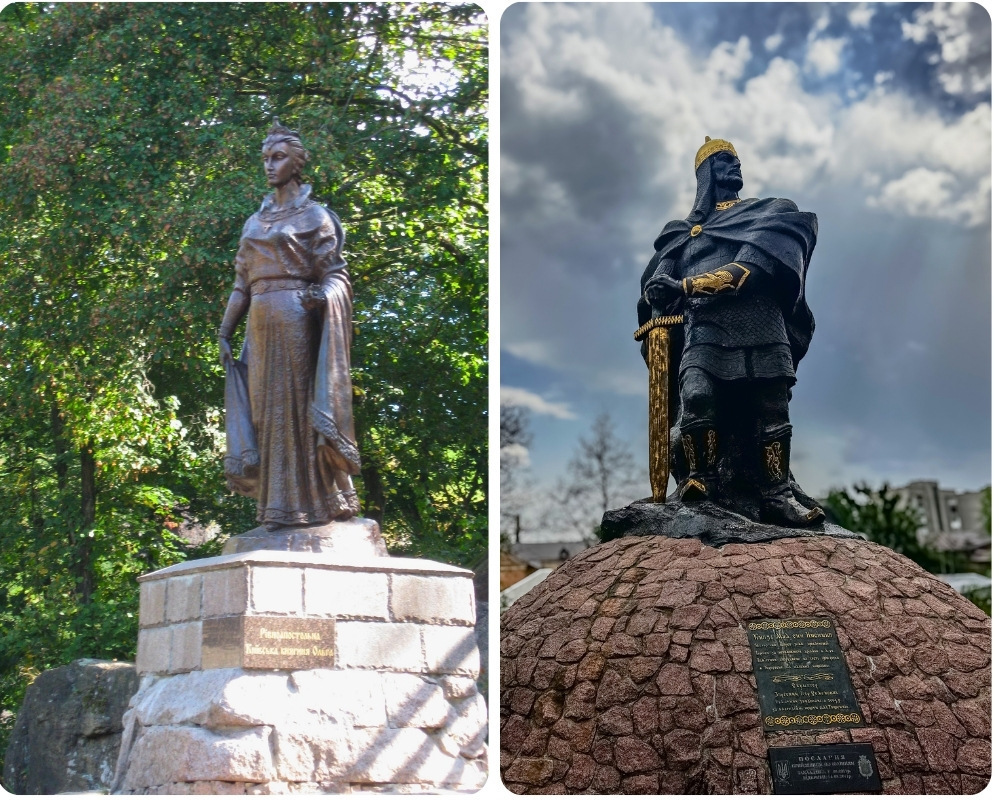
The monument to Princess Olha near the site known in Korosten as “Olha’s Baths”. According to legend, this is where Olha bathed in the River Uzh. The monument to Mal, Prince of the Drevlians, in Korosten. Mal defended Korosten against Princess Olha’s forces
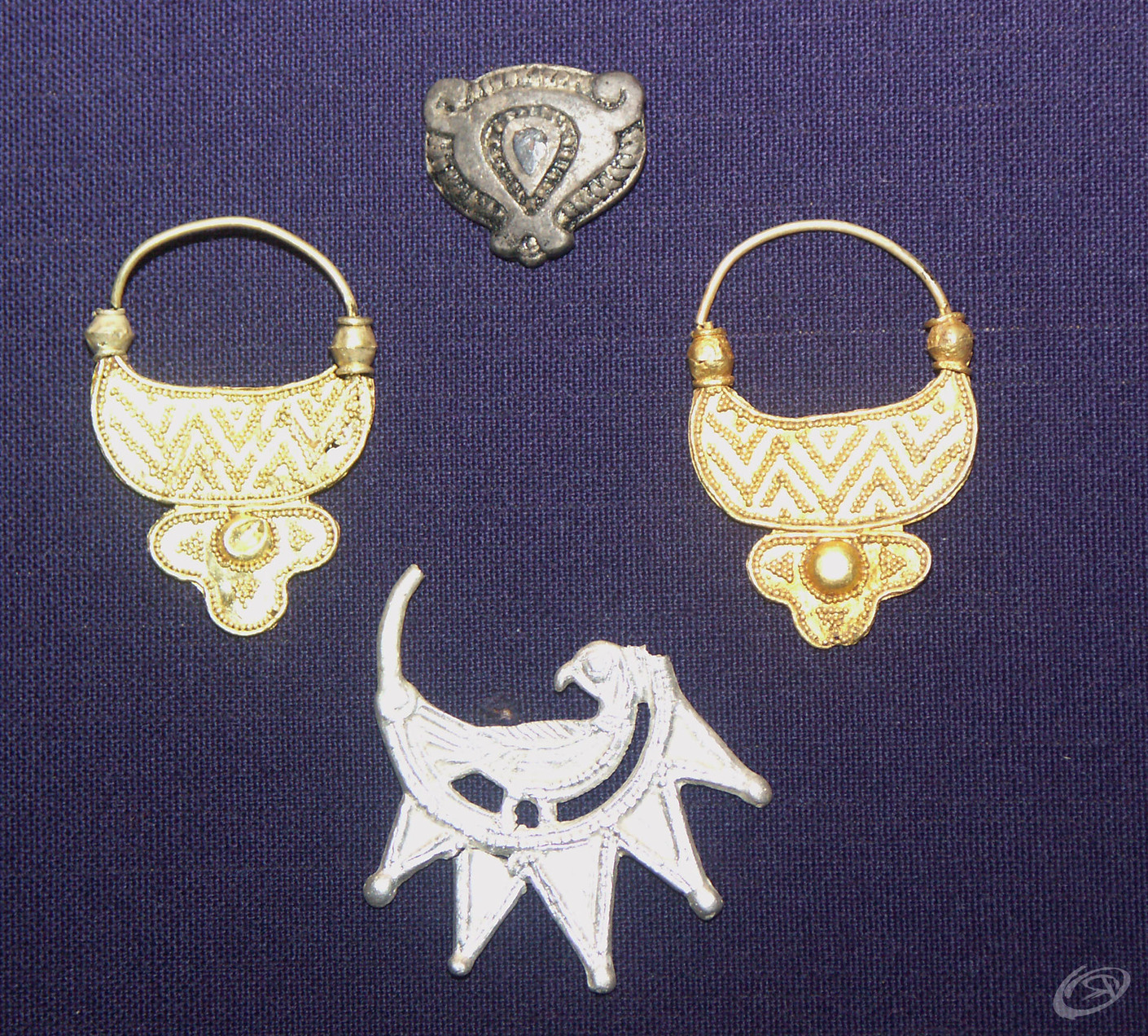
Old Rus jewellery from the 7th–8th centuries, found in Korosten shortly before a comprehensive archaeological excavation, in which the city council had invested
Where do the remaining funds go?
There is no mystery about the collection of tribute in Princess Olha’s time. But what is the situation with the collection of taxes in your community now? Has the community budget been severely depleted as a result of the war?
It has, of course, because local businesses have scaled back their operations. The outflow of the population is also a factor. Before the full-scale invasion, our population numbered 74,000, and during the first three months of the full-scale war, we evacuated around 40,000 of them, mainly women and children. A third of these people have not yet returned. Several hundred residents of Korosten have been killed at the front or are missing in action. Nine soldiers are prisoners of war in russia… On the other hand, we have over 3,000 internally displaced persons, who have gone some way towards making up for the loss of our people. We hope that the displaced persons will stay with us once the war is over. We already care for them as if they were our own, and perhaps even better. We meet with them regularly and try to help everyone. Most importantly, we participate in government housing programmes so that our new residents will indeed stay with us for ever.
Does this mean that, in general, the economic situation is stable?
In terms of figures, everything has actually increased: we have around UAH 1.1 billion in revenue this year, of which around UAH 800 million is own revenue. But more importantly, for the second year running our enterprises have shown some growth. As a result, payments to the budget are rising. Thanks to this, we have even significantly exceeded our revenue target for the first half of this year.
Where do the remaining funds go?
To the Armed Forces of Ukraine, of course! During the entire course of this full-scale war, we have already transferred over UAH 240 million to our Armed Forces. There has not been a single parliamentary session in which we have not allocated funds to the Ukrainian military. Not to mention the direct support we provide to our 143rd Korosten Territorial Defence Battalion, which forms part of the 115th Separate Territorial Defence Brigade. Besides, we run several programmes to support the families of military personnel. This support is really important for the relatives of those who have been killed in action. I am deeply affected by every funeral, as if one of my own relatives had died: when you attend such a funeral, you feel you no longer want to go on living. Then you start thinking about the mothers, wives, and children of those who have died… Who will help them, if not the city council? But most importantly, the city council can and must show that these deaths were not in vain. Therefore, we have created a war memorial and are displaying photographs of the fallen in the city centre; soon we will also install a large screen there, which will continuously show the latest information about those missing in action. We want their relatives to feel our sincere gratitude and support!
Does Korosten help other communities?
Of course! Our twin city is Sloviansk. We signed the relevant agreement back in 2014, when our 95th Airborne Brigade from Zhytomyr was stationed in Sloviansk. At that time, we delivered equipment for the boiler rooms in Sloviansk, as well as everything their nursery school needed. In addition to Sloviansk, we help Shevchenkove rural community in Mykolaiv region within the “Shoulder-to-Shoulder” project. Nearly 90% of its territory has been affected by hostilities, and eight villages have endured russian occupation. Within the framework of this cooperation, we welcome children from there for recreation and recuperation and organise activities for them. Of course, we also helped Kyiv get through the difficult winter we had last year, both by sending teams of our specialists and by providing equipment. Ultimately, we also receive assistance from other communities: when, on 3 April this year, an old neighbourhood with private housing was bombed, causing damage to 180 houses, 13 communities in Zhytomyr region transferred a total of over UAH 2 million to us, as well as sent their own specialists and provided construction materials.
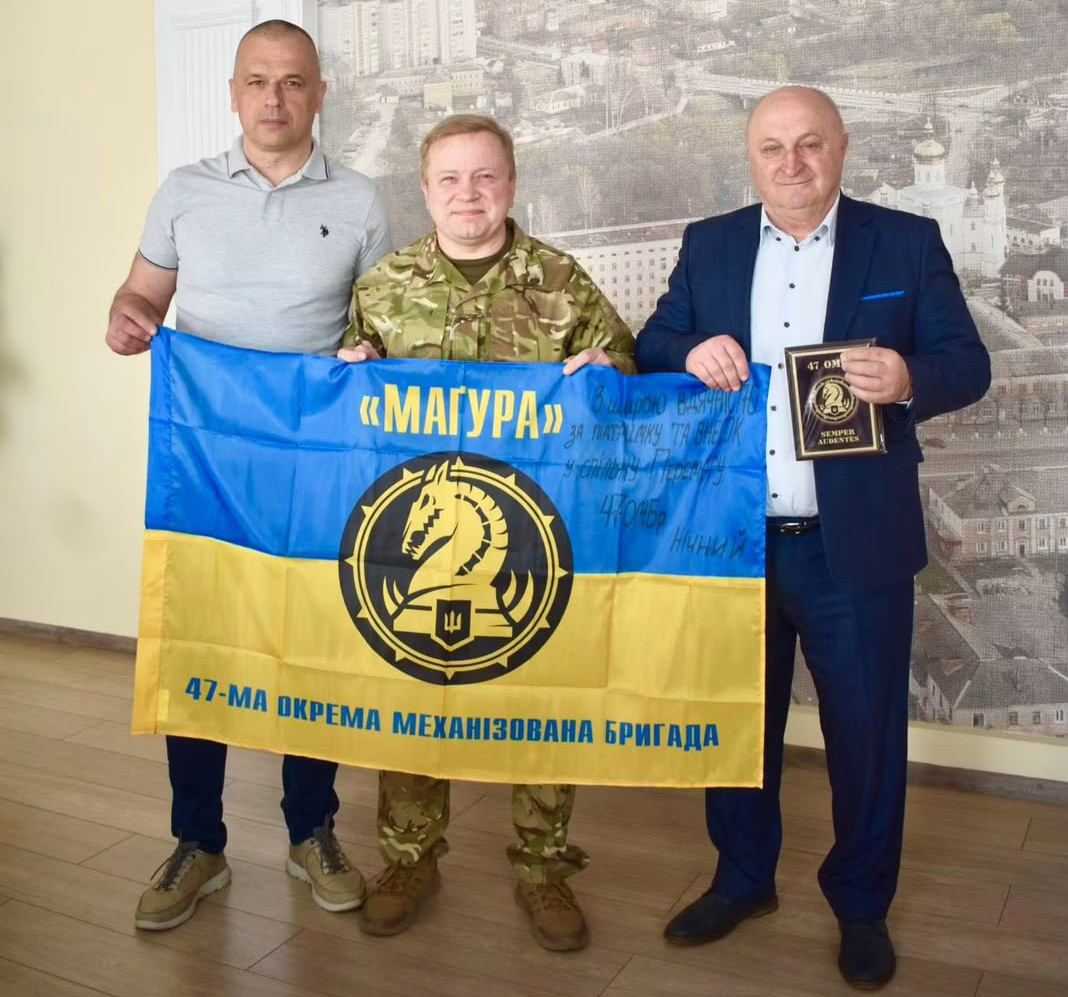
Volodymyr Moskalenko (right), a soldier from the 47th Mechanised Brigade “Magura”, which was based in Korosten at the outbreak of the war, and Oleksandr Oleksiichuk, Secretary of the Korosten City Council, handing over the shipment of aid to the brigade
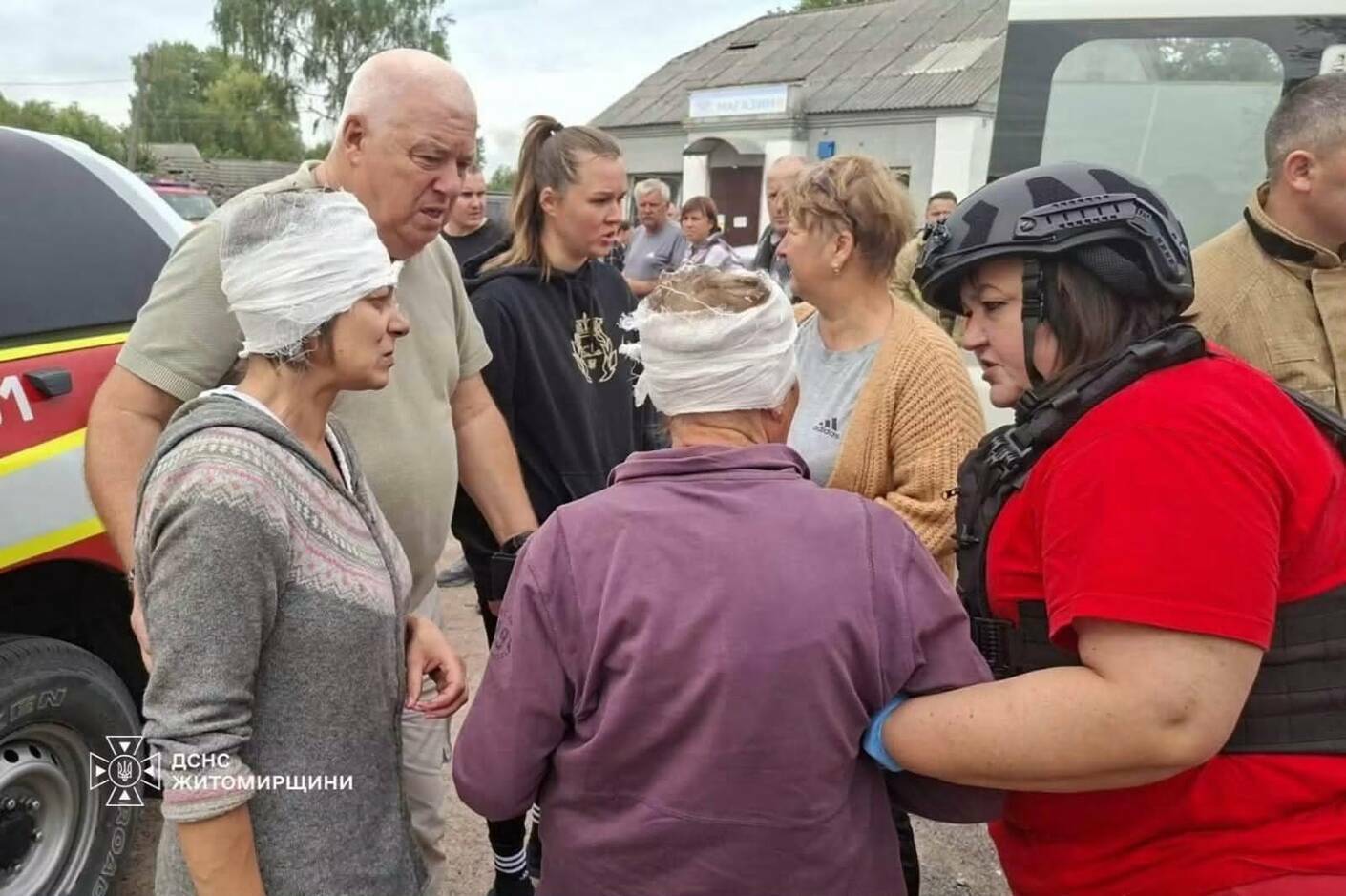
Volodymyr Moskalenko speaking with residents of Khotynivka village
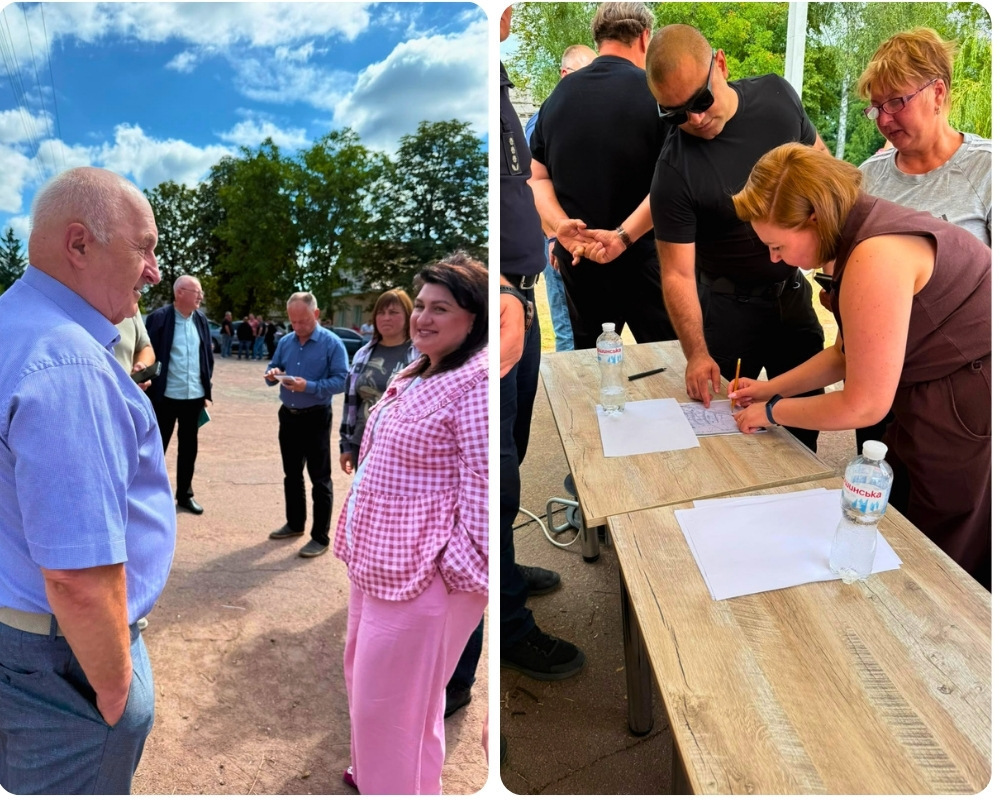
Volodymyr Moskalenko says he has been re-elected six times, partly because he has never looked down on anyone and has always treated local residents as equals (on the left). Фото 25. While developing a plan to evacuate residents from the epicentre of the explosion. The documents are signed by Olena Ryzhova, Chief of Affairs of the Korosten City Council; behind her stands Valentyna Paliushkevych, starosta of Khotynivka village, which was hit by shelling on 30 June 2026; all the others are representatives of the State Emergency Service (on the right)
How Korosten has fostered the growth of local businesses (and its own budget)
You have been serving as mayor for perhaps longer than anyone else in Ukraine. Which years were the most difficult for you?
None of them were easy! First there was Chernobyl with its terrible consequences, then the economic depression of the 1990s, and then the financial crisis of 2008. The revolutions of 2005 and 2008, the COVID-19 pandemic, russia’s invasion in 2014, and now a full-scale war. There was never a moment’s rest! At first, there were no funds at all, and when they did become available, there was no legislative framework to spend them wisely. We had to set up some municipal structures from scratch. But we never gave up and tried to set an example for others, and above all for entrepreneurs. From the very first days of our work, we realised that if our businesses grew, so would the budget. Of course, there are different ways to manage to increase it, but the best and most effective way is to ensure business growth. Local business is also the best glue that holds the community together – it shapes its future and its potential.
As far as I know, there is a council of business leaders in Korosten, which comprises some 150 people. What does it do?
It was most important up until 2015, when there was still no question of personal income tax being allocated to us. Back then, we would get together and discuss whatever needed to be discussed. We tried to involve the business community in tackling issues of public importance. Without a single kopiika from the city budget, we managed to create parks, fountains, monuments, playgrounds and so on.
Do you agree that this approach to business is, in many ways, Soviet-style and inconsistent with modern realities? That a request for paint to repair a school is a form of concealed racketeering? An entrepreneur should not be involved in school repairs; they should simply pay their taxes. Moreover, it is difficult for them to refuse the mayor, on whom they depend.
We never forced anyone to do anything. Instead, I always told business owners, ‘You have a unique chance to become part of your city’s history and, at the same time, to gain public recognition. If a child asks their father who built such a beautiful fountain in the city centre, let him reply, ‘It was the company I work for.’ Is there anything wrong with that? Be that as it may, now we do not ask anyone for anything of the sort. Firstly, because of the war, and secondly, because the owners of many companies are abroad, and they certainly have other things on their minds than fountains and sports grounds.
Has Korosten become a refuge for companies from frontline and occupied territories?
I cannot boast about that much. Belarus is right on our doorstep – yet another factor in attracting business. The businesses you mention prefer to relocate to relatively safer cities: Lviv, Khmelnytskyi, Chernivtsi… Therefore, our focus is on opening new businesses and expanding the existing ones.
Is that really possible during a war? How would that be funded?
The secret is simple: we have two industrial parks, which we began developing back in the late 1990s, when nobody had heard of such things and there was no legislative framework in place for them. But even then, we knew that such a framework would emerge sooner or later. Many communities talk about industrial parks, and the Ministry for Development’s register lists nearly 200 of them, but I reckon no more than ten are actually operational. Two of them are ours.
What is the Korosten Industrial Park?
Registered in 2014. Area: 42.2 hectares. Key sectors: enterprises in the woodworking cluster and manufacturers of components for them. The park comprises four large enterprises: BF Engineering Ltd, Korosten MDF Plant Ltd, Rezalt Eco Ltd and BF Parquet Ltd, as well as two other entities: BF Project Ltd and UHLK Ltd. The volume of investment attracted amounts to UAH 371.4 million, with 168 jobs created. This year, a bio-adhesive production facility is due to commence operations in the park, which will create a further 40 new jobs. Budget revenues from the park’s enterprises average UAH 20–23 million per year.
Was the work on establishing industrial parks not halted even by the full-scale invasion?
It has even accelerated this work: we opened our second Korosten-Podilskyi industrial park just last year. It covers 77 hectares. The first Korosten park is already 80% full… This is the economic miracle we have achieved. To ensure the parks are managed effectively, we have set up management companies for each of them, which have taken on responsibility not only for the smooth running of the entire local infrastructure, but also for its development. The management companies have decided to form entire clusters of businesses that will benefit from being located close to one another. Businesses are also attracted by the parks’ strategic location: they are situated close to the Warsaw motorway and the railway line connecting Korosten with the European Union. Tell me, which other city of this size has as many as three railway stations? Ours does. By the way, because of this, our community is now the number one target for russians in Zhytomyr region.
By the way, how does Korosten community cooperate with Ukrzaliznytsia? Are there any joint infrastructure projects that help to retain jobs and develop the areas around the stations?
As I have already said, our city is a strategic transport hub. Our railway junction, one of the largest in Ukraine, has become even more important due to the russian blockade of Ukrainian ports and Black Sea routes. Hence, our railway workers have recently been targeted by russian missiles and drones, which are striking railway stations, power stations, transformers, and even locomotives. But Korosten community does not remain indifferent to this, doing everything possible to develop an effective air defence system – naturally, in cooperation with the military. But I will not discuss this here.
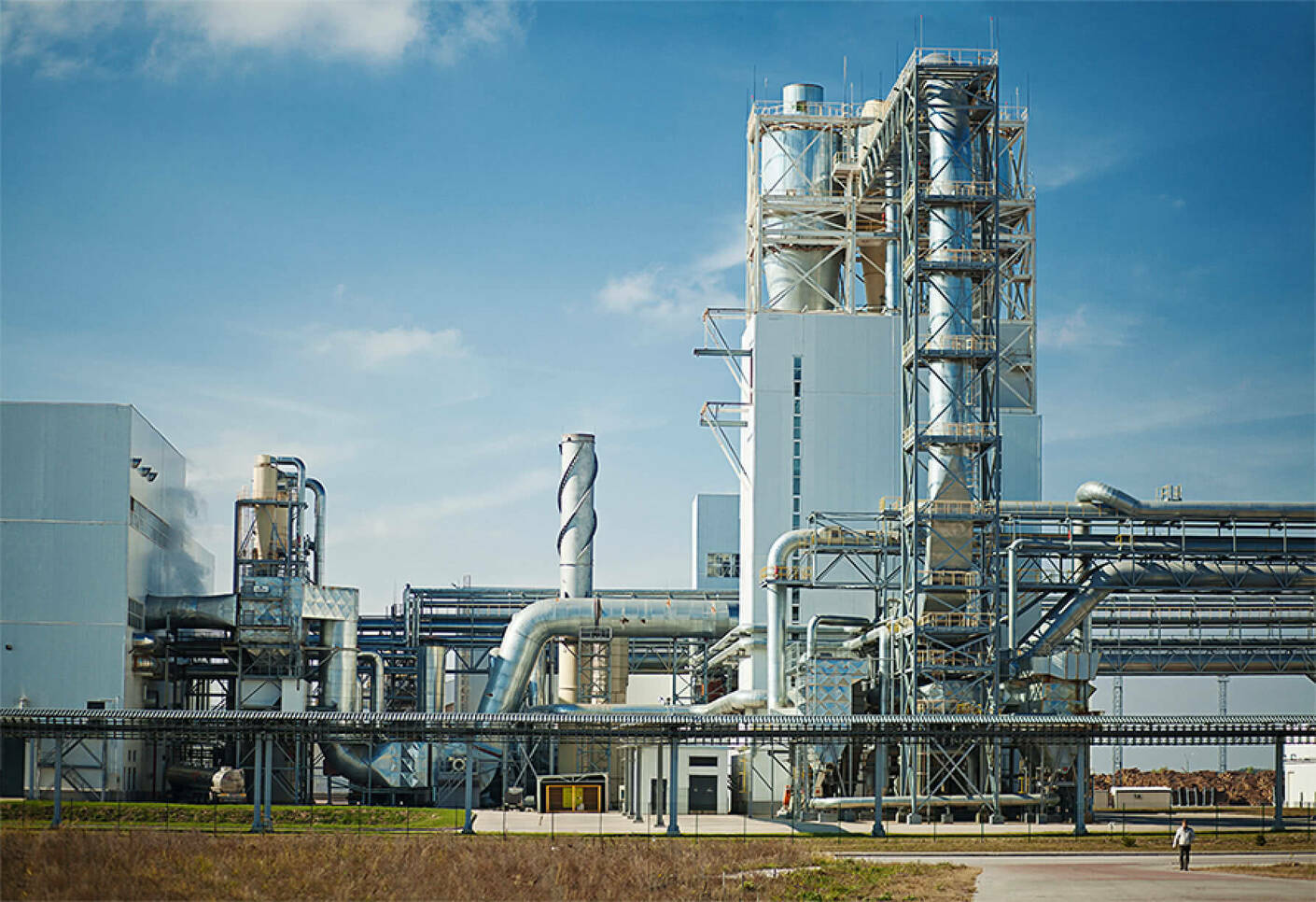
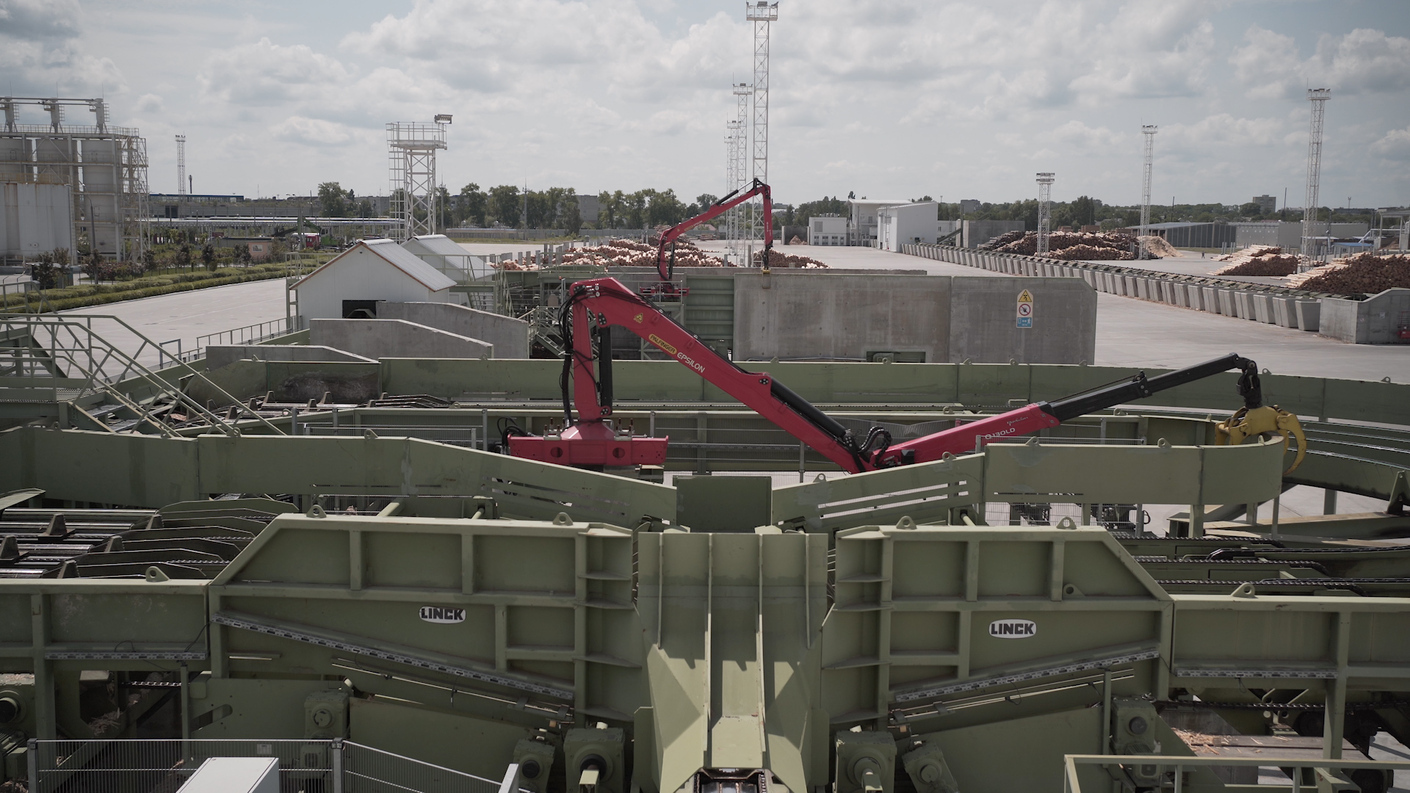
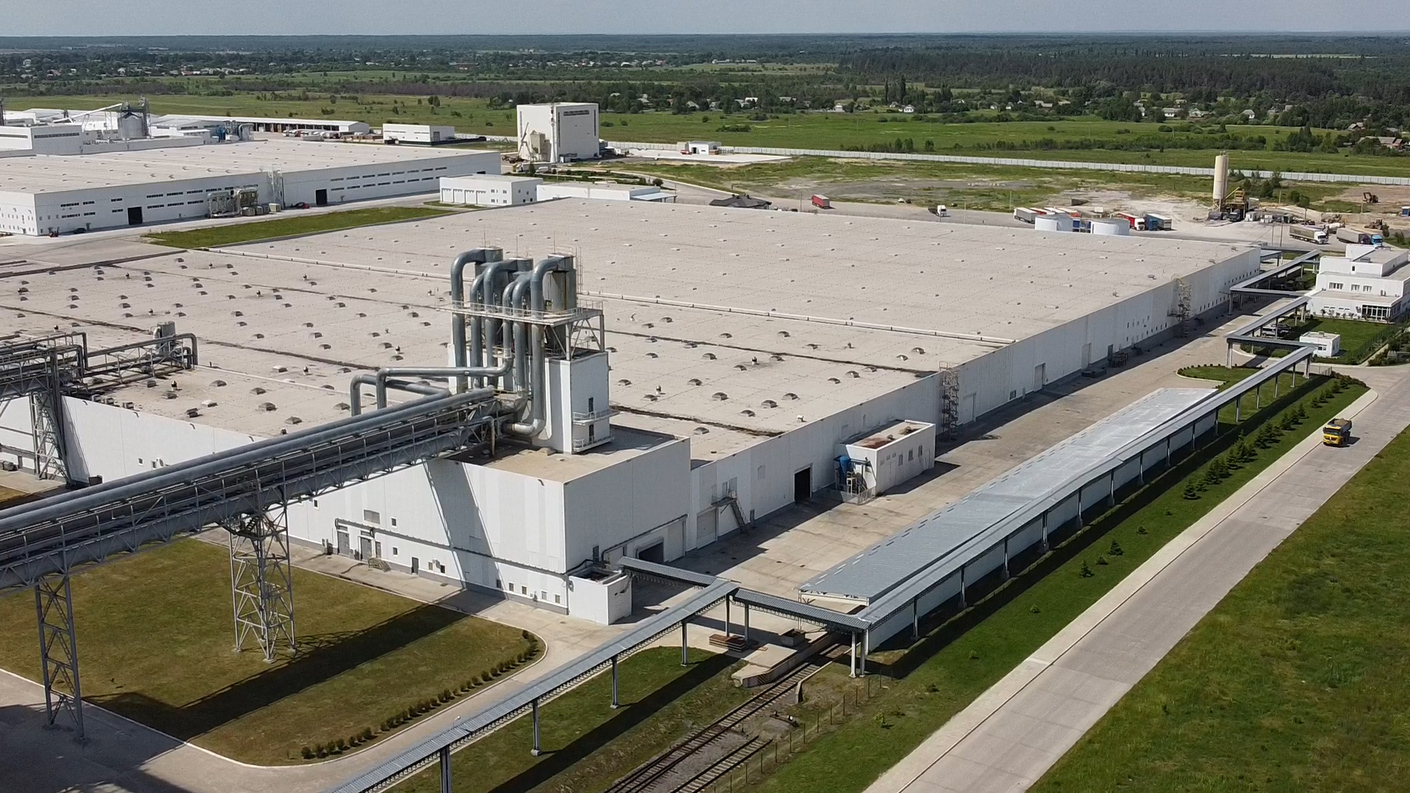
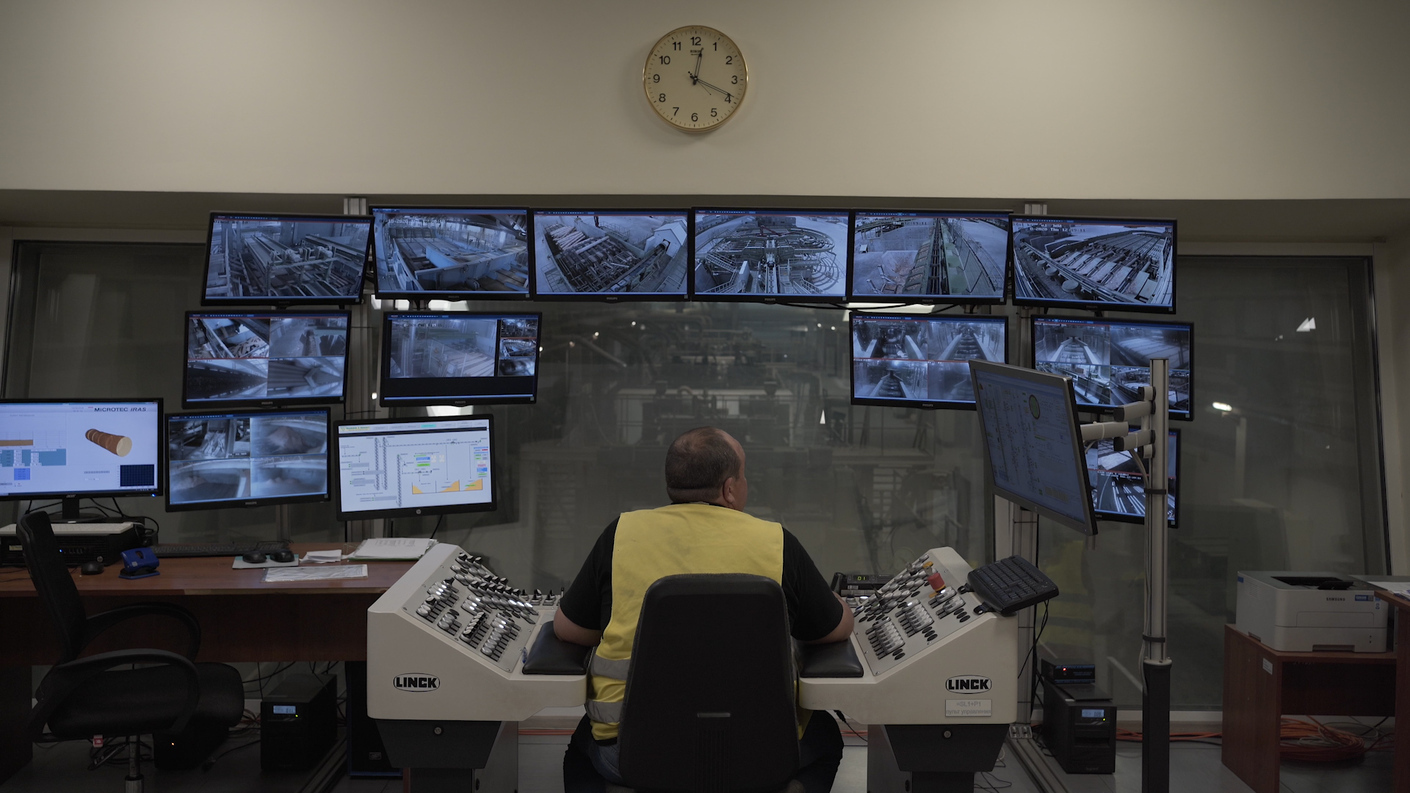
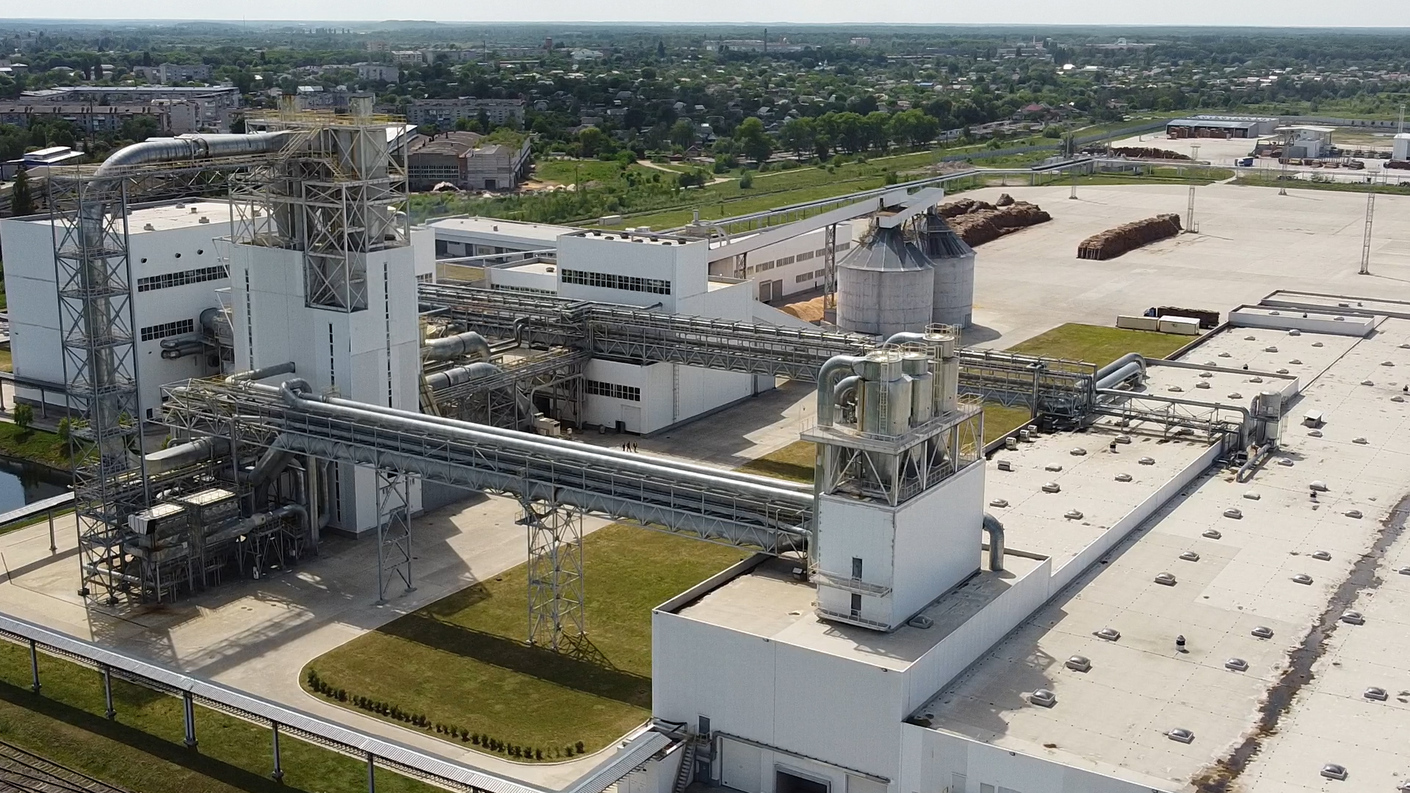
Korosten Industrial Park
On a commercial project worth EUR 160 million
You said that the enemy is targeting the railway’s power supply. How do you assess the community’s energy independence? Are you trying to strengthen it?
We work closely with Ukrenergo, and we have a deep mutual understanding. Whenever necessary, we supply this company’s branches with our equipment, materials, and specialists. Most importantly, we use our connections to engage the international community in repairing and reinforcing Ukrenergo’s facilities in our territory. Not long ago, we also installed solar panels at our water supply company, at the sewage treatment facilities, and at the hospital. However, all this seems insignificant compared to an international project worth EUR 160 million. Under the terms of the project, 25 large wind turbines with a total capacity of up to 200 MW are to be installed in Korosten community, which together will supply half of the electricity for the entire Zhytomyr region. All the necessary infrastructure will also be built: access roads, power lines, and a substation. Now this is what true decentralisation of the energy system looks like! This project has been underway for a year and a half now…
Who was able to allocate such a huge sum – EUR 160 million!? How did you find such an investor?
These funds are contributed by a private Lithuanian company which has secured an EU grant. The project is implemented through the Ukrainian company Lyt Viter. This is a perfect example of constructive cooperation with Members of Parliament, because the company was brought to our community by Ihor Hudz, Member of the Verkhovna Rada who is responsible for relations with Lithuania in our Parliament. Incidentally, Ukrenergo promptly provided us with all the necessary documentation. We have already earmarked 25 plots, each measuring 0.6 hectares, and work is already underway on some of them. As far as I am concerned, wind turbines are a brilliant, modern, environmentally friendly solution to our energy problems. If we manage to get the first wind turbines up and running before the frosts set in, it will be easier to get through the winter. Our Lithuanian twin city of Ukmergė has also promised to help us. It has been supporting us in many ways since the outbreak of the war.
How do you search for project and grant funding?
We have an international department for this purpose, which employs, depending on the circumstances, two or three people who are fluent in English and other languages. Both they and the entire leadership of the city council actively communicate with different partners and go on business trips. Each person is responsible for their own area: energy independence, construction, environmental projects… Thanks to this, during the war we have established several partnerships with sister cities: in the United States, the United Kingdom, Lithuania and France... They provided us with a significant amount of humanitarian aid. We installed most of those solar panels using funds we had raised. Just two installations at the city hospital cost UAH 8 million, so you can imagine the scale of the investment. Thanks to our proactive approach, Korosten was included in the Marshall Fund’s* plans last year. And out of the 100 cities in Ukraine that took part in the competition for future reconstruction, the Marshall Fund chose us. They want to use our example to show others how one can and should work. We also try to take part in all conferences on the recovery of Ukraine. At the moment, for example, we are preparing for a conference in Tallinn, which is due to take place next year. An MRI diagnostic facility is now under construction at our hospital with Estonian funding, and the total investment amounts to UAH 16 million. The Estonian Government has also allocated financial aid to our residents who were affected by the missile strike on 3 April.
You have witnessed many different periods in the history of Ukrainian local self-government and have a huge amount of practical experience. Please tell us, which part of the decentralisation reform has proved to be the most effective? And which instruments of local self-government still need further improvement?
The local government reform resulted in the amalgamation of Korosten with 18 village councils, comprising 43 villages. Some of these were very prosperous, as they had granite and other quarries, but the majority were poor, practically without prospects, and in a state of disrepair. But we refused to abandon them – quite the opposite! We have done everything we could to improve people’s lives there. In total, there are 66 communities in Zhytomyr region, and the picture is the same everywhere: following the decentralisation reform, the villages have come back to life – for the first time in many years, roads, schools, clubs and other facilities have been repaired in these remote areas…
Have any interesting business projects emerged? Without a school, a village cannot survive, and neither can it without local businesses...
Indeed, we have much to be proud of here. For example, in one of our villages, Danish entrepreneurs have set up a livestock farm which is now the largest in Zhytomyr region: with more than 22,000 pigs. Farming is also on the rise, even though our land is not very fertile – not like in Poltava or Kyiv regions. But our farmers are growing corn and sunflowers successfully. Potatoes, flax, and hops also grow well here... Unfortunately, the Government does not pay much attention to small-scale farming. This could really revitalise the village! Large agricultural holdings, which own tens of thousands of hectares of land and whose owners often live abroad, simply cannot manage this task. If the village were to have not only agricultural production but also processing facilities, there would be jobs, people would earn a wage and would have no reason to leave the village. Without processing, they will move to larger cities where they can earn more. Kyiv is nearby, after all, and security guard jobs at supermarkets are always available. Therefore, we have always tried to organise at least some form of local processing. By the way, we are currently in talks about building a non-narcotic hemp processing plant here. Processing offers real prospects!
* The Marshall Fund is the informal name for the non-governmental organisation The German Marshall Fund of the United States, abbreviated to GMF. It was established in 1972 as a symbolic continuation of the ideas behind the Marshall Plan – the American programme of aid to Europe following WWII. Since the outbreak of russia’s full-scale war against Ukraine, the Fund has also been funding reconstruction projects, training for local government officials, and support for independent media and civil society, amongst other initiatives.
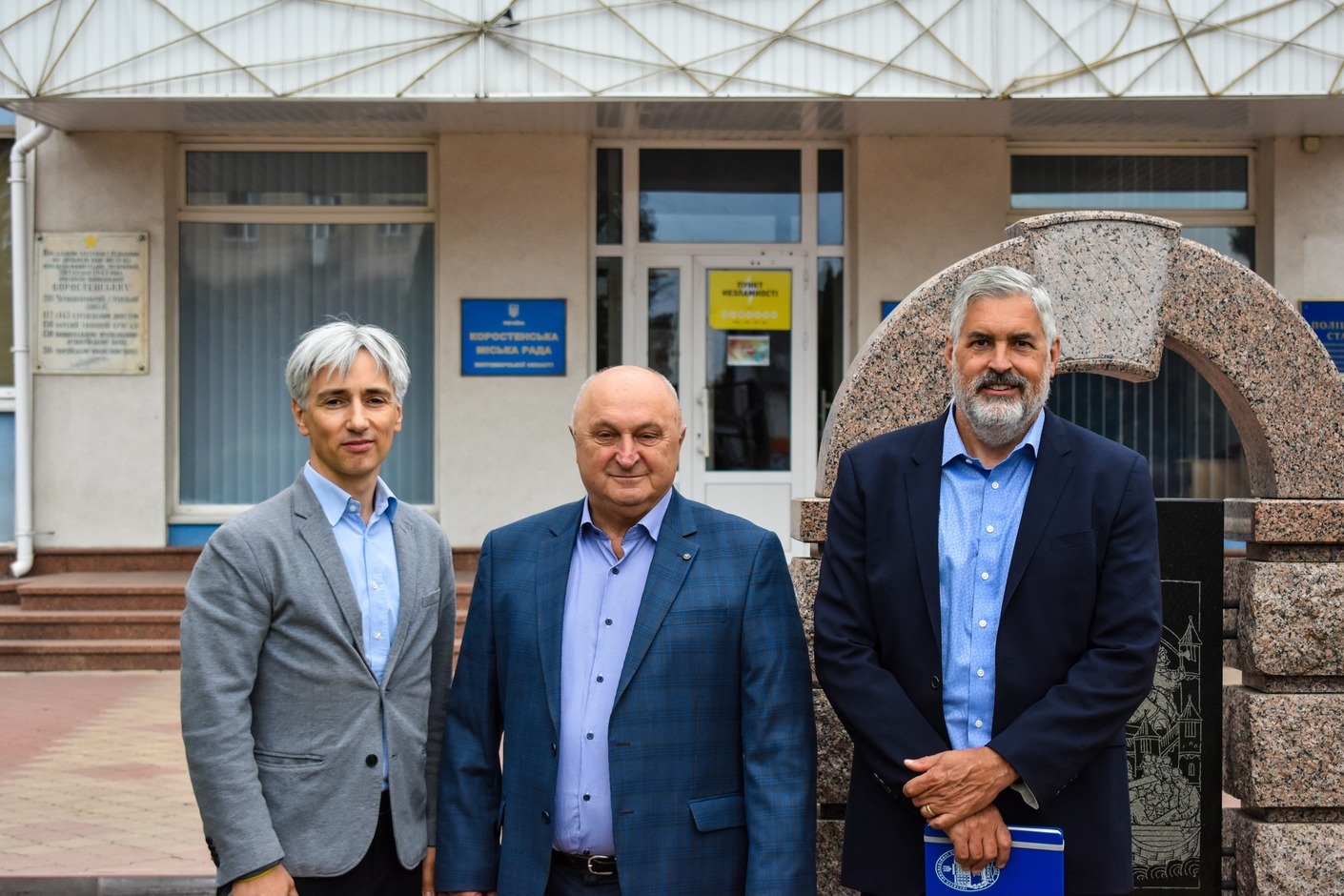
After signing the agreement with the Marshall Fund within the framework of the Ukraine Cities Partnership for Sustainable Local Recovery (UCP) programme. From left to right: Nedim Useinow, representative of the Marshall Fund; Volodymyr Moskalenko, Mayor of Korosten; and Tom Austin, representative of the Education Alliance for Ukraine
Volodymyr Moskalenko after signing an agreement with an Estonian company to build 25 wind turbines in his community, at a cost of EUR 160 million
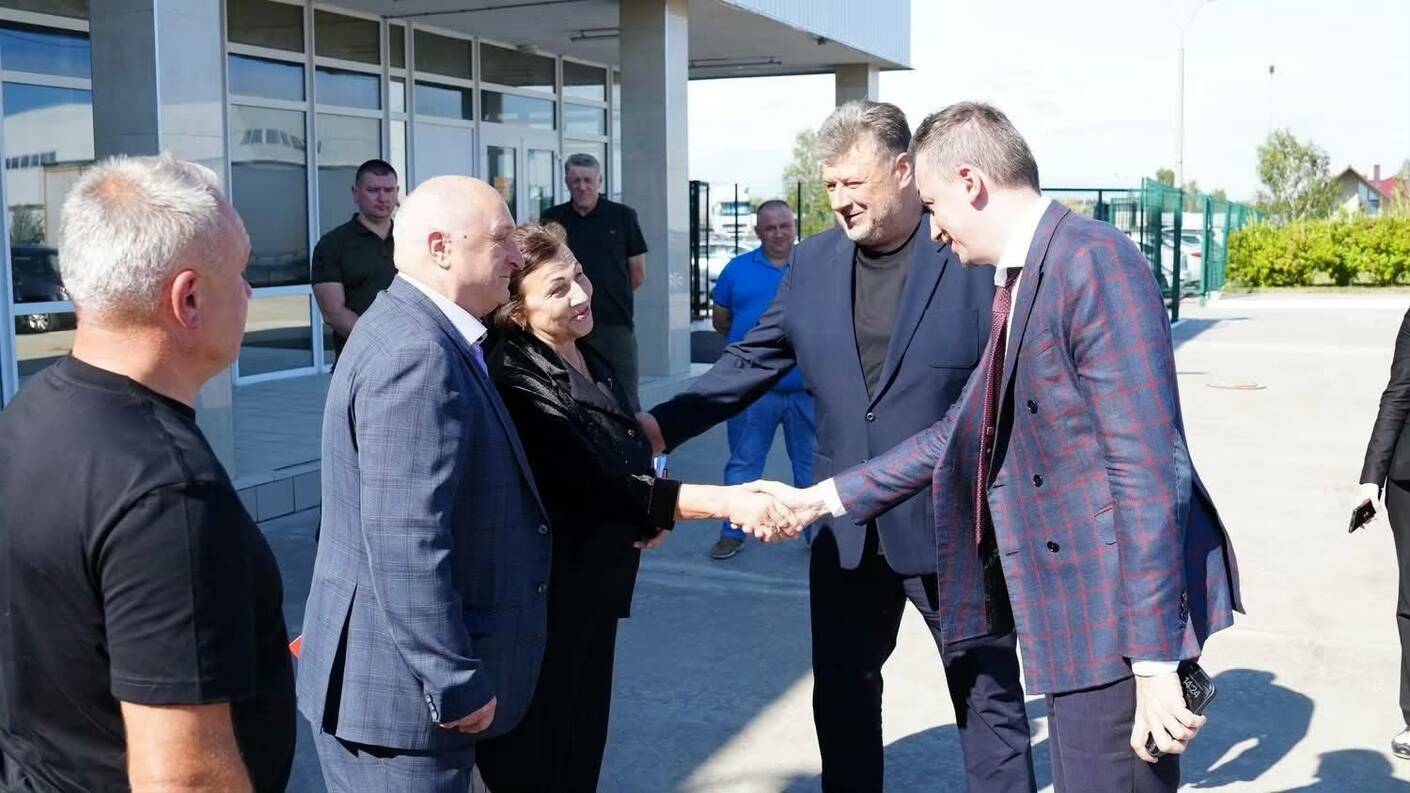
Kateryna Samchuk, Director of the MDF factory, located in the Korosten Industrial Park, shows her company to Vitalii Bunechko, Head of the Zhytomyr Regional Administration (second from the right), and Volodymyr Moskalenko, Mayor of Korosten (second from the left)
‘I want the state to turn its attention to local self-government…’
What would you like to say to the Government, the President, and Parliament?
I would like the state to turn its attention to local self-government. I would like it to behave in a more predictable and respectful manner. For example, last autumn we prepared the budget as required. And then, on 27 December, the Cabinet of Ministers suddenly passed a resolution that local governments had to increase the salaries of teaching and social workers – and by specific amounts at that. Is that how the system works? First, secure the funding, discuss the draft resolution with local government associations, and get everything sorted in good time!.. Another issue on which we cannot reach an understanding with the state concerns benefits for those affected by the Chernobyl nuclear power station accident.
What is the problem here? It seems that everything related to the aftermath of the Chernobyl accident has long since been resolved…
Not at all; in fact, we are the largest city outside the exclusion zone to have been severely affected by the accident. Our residents are therefore entitled to both benefits and payments. However, the Government recently transferred all powers in this regard to the Pension Fund, which, to put it mildly, is not particularly keen on accommodating people’s needs. He suddenly started demanding that people provide proof of their Korosten residence from 1986 to 1993. Such proof is often difficult to find, as this was 40 (!) years ago, in a different country, when everyone had different passports… People have to go to court. In my view, the situation is a disgrace. However, it is right outside the city council building that all the protests by the discontented take place. I explain to people that we owe them an apology, and that they need to go to Kyiv. But this is how they see it: we elected you as the city’s leader, so you are responsible for our problems and must sort them out, whatever they may be.
Do you sort them out?
Well, we are trying to do something: we write all sorts of appeals to every institution, but to no effect. The Verkhovna Rada even set up a temporary investigative commission on this issue, but it was useless. Because of this, some people who have lived their whole lives in the so-called “contaminated zone” have neither benefits nor compensation. That is the Government’s position.
Is there nothing good? Is it all a disaster?
Of course not! I can certainly commend Vitalii Bunechko, Head of our Regional Military Administration.
What a surprise. Is this turning into a eulogy?
This is no joke – I am not trying to flatter him or anything like that. Ultimately, in 28 years of service, I have seen so many heads of administration come and go! So, I would like to commend the current head for trying to build a friendly relationship with the local authorities, rather than simply issuing orders and decrees from on high. Mr Bunechko listens to the community leaders with respect, seeing them not as subordinates but as partners. He values their opinions. On Mr Bunechko’s initiative, all the community leaders meet once every two or three months in one of the communities to learn from local experience and exchange views. This is the first time in my 28 years of service that this has happened. It is also the first time that I can ring the head of the regional administration at any time of the day or night, and he will never miss my call – he always answers. Such cooperation benefits the entire region.
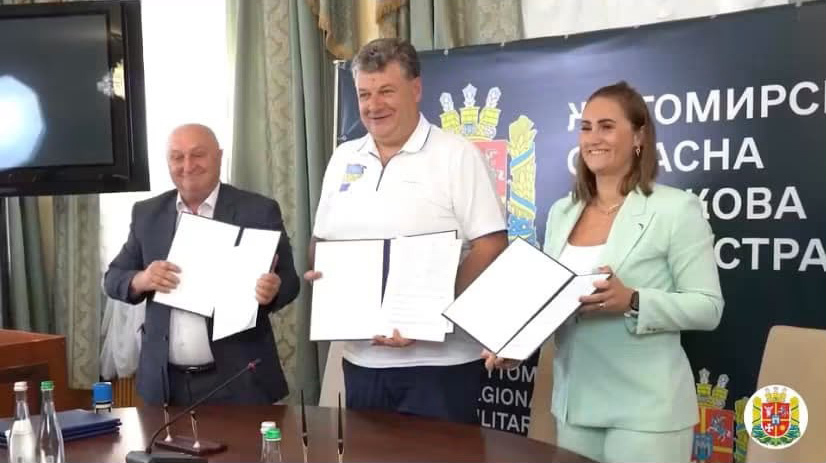
Volodymyr Moskalenko, Head of Korosten community (left), and Vitalii Bunechko, Head of the Zhytomyr Regional Military Administration, during the signing of a cooperation agreement with the Government of Estonia
02 October 2026
«Середа з U-LEAD»: каталог інформаційних заходів для громад на жовтень 2026 року
«Середа з U-LEAD»: каталог інформаційних...
У жовтні Програма «U-LEAD з Європою» проведе серію відкритих інформаційних заходів для представників органів...
02 October 2026
Comprehensive support programme for frontline territories to be launched in early 2027
Comprehensive support programme for frontline...
MinRehion is working on the “The State is Nearby. Frontline” programme, which aims to bring together support measures...
02 October 2026
Як реалізувати проєкт Interreg без проблем – поради від ДАСУ
Як реалізувати проєкт Interreg без проблем –...
Державна аудиторська служба України є Національним контролером програм Interreg. Вона перевіряє усі проєкти Interreg...
02 October 2026
Віталій Безгін підтримує тимчасову перереєстрацію великих держпідприємств у прифронтових громадах
Віталій Безгін підтримує тимчасову...
Великі державні підприємства, зареєстровані в Києві, варто на період воєнного стану перереєстровувати у прифронтових...