Budget Declaration for 2027–2029: Why communities are proposing to change the rules of the game
The Budget Declaration for 2027–2029 has not yet been adopted – and that is why communities are trying to get involved in its drafting, whilst the rules have not yet been finalised and are being determined for the next three years. The Ministry of Finance previously announced the start of drafting the document. In compliance with the Budget Code, the document must be submitted to the Government by 15 May and approved by 1 June.
The budget is usually discussed in terms of figures: limits, forecasts, and balances. At the open dialogue forum ‘Communities of the Future: Drafting the 2027–2029 Budget Declaration – People-Centred Approaches to State and Local Policy’, this perspective was deliberately changed.

An open dialogue held at the Ukraine Crisis Media Centre, organised by the All-Ukrainian Association of Amalgamated Territorial Communities in partnership with the UNICEF Office in Ukraine, the UCMC and the Decentralisation portal, shifted the focus from figures to substance: the budget is not merely a system of indicators, but a tool that determines whether a community can withstand the burden and whether people will receive the necessary support. This was precisely the framework set by moderator Nadiia Petruniak: every budget decision affects specific people – children, parents, veterans, internally displaced persons – and it is their needs that should form the basis of state policy.
The scale of the discussion confirmed this: more than 500 representatives from 322 communities from all over Ukraine joined in.
The first fundamental stance was immediately outlined by Oleksandr Korinnnyi, Chairman of the All-Ukrainian Association of Amalgamated Teritorial Communities and Mayor of Novoukrainka. According to him, everything adopted by the Verkhovna Rada or the Cabinet of Ministers is ultimately implemented in the communities, where local authorities are forced to find resources for education, social services, healthcare, and support for vulnerable groups.
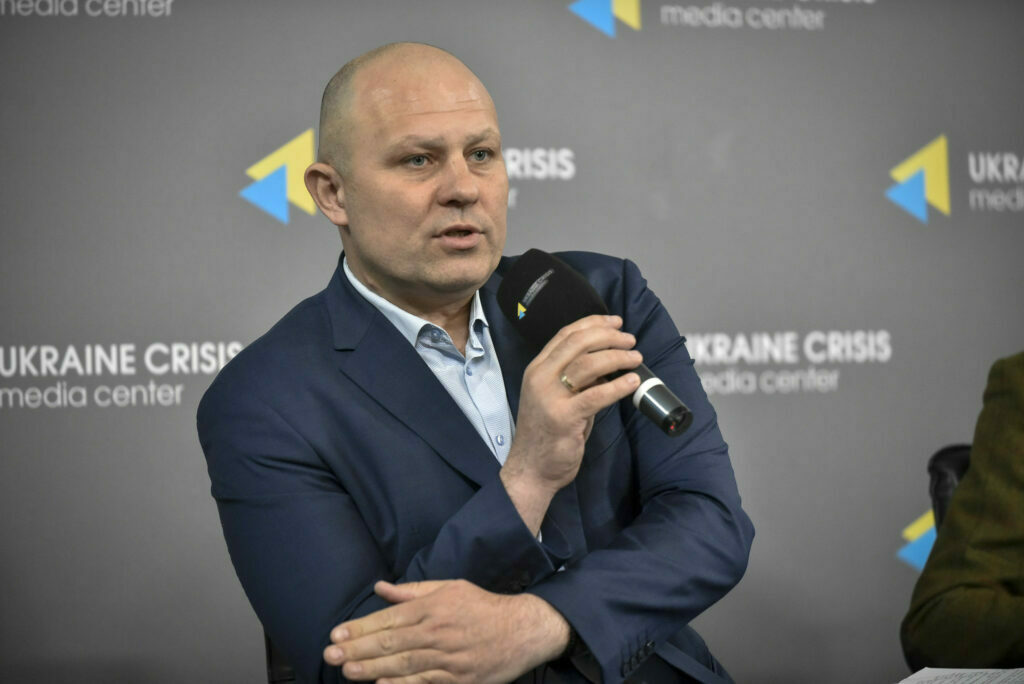
‘Today, this is not a trend; today, it is a necessity,’ he emphasised, speaking about the people-centred nature of budgetary policy in the context of war and an unstable funding system.
His assessment of the rules of the game at the end of the budget year was particularly blunt: if, on 26 December, new expenditure on pre-school or extra-curricular education is added to local budgets when the budgets have already been approved, medium-term planning loses any meaning.
Under such conditions, communities cease to develop and switch to a mode of constant reaction. And the cost of this is quite tangible. For a small community, the withdrawal of part of the ‘military’ personal income tax means a loss of UAH 70 million a year from a budget of approximately UAH 240 million.
Therefore, the Association insists on establishing clear rules. The key focus: personal income tax as the primary source of fiscal capacity for communities. The Association proposes allocating 64% of personal income tax to local budgets, with a subsequent increase to 75% following the end of martial law.

‘We should finally be able to draw up the budget for the first year without this political ‘back-and-forth’ – 60% or 64% personal income tax,’ emphasised Oleksandr Korinnyi.
Alongside this, there is a suggestion to change the very principle of how this tax is collected – to link it to where a person lives, rather than where they work. The logic is simple: if a community provides services to a person where they live, then the resources to fund those services should stay there too.
Part of the proposals concerns the sustainability of local budgets. The Association insists on preventing further narrowing of their revenue base, reviewing horizontal equalisation mechanisms, and transitioning to the use of up-to-date population figures from the Register of Communities of the State Migration Service. Otherwise, as communities emphasise, any planning will continue to be based on figures that do not reflect reality.
People-centred approach: How the logic of budgeting is changing
Paul von Kittlitz, Chief of Social Policy Section UNICEF Ukraine, proposed changing the very logic of planning. According to him, the budget should be formulated not on the basis of existing assets or infrastructure, but on the basis of people’s real needs at the community level. In other words, first comes an understanding of what a child, a family or a person in difficult life circumstances needs. And only then comes the calculation of the resources required to provide for this.

‘We must place the child – and indeed the individual – at the heart of planning for any process. Otherwise, there is a risk that limited resources will be allocated incorrectly – not where the need is greatest,’ emphasised Paul von Kittlitz.
This approach, he said, is critically important for medium-term planning. A three-year budget declaration should not merely be a forecast of figures, but a document that sets out the priorities of state policy and enables communities to plan for development, rather than mere survival.
Government: Budget declaration as a framework, not a decision
In this context, the Government’s position sounded more cautious and, at the same time, more structured – as an explanation of exactly how the budgetary instrument works and where its limits are. The Ministry of Finance emphasises: the budget declaration is not a document of decisions, but sets the framework for their subsequent formulation. As Svitlana Boiko, Director of the Department of Public Expenditure at the Ministry of Finance, noted, it contains indicative revenue and expenditure figures based on macroeconomic forecasts, whilst specific programmes, priorities, and funding levels are determined at the stage of adopting the state budget. She also drew attention to the scale of the social sector in the budget, ‘The social sector is ranked second in terms of expenditure after the defence sector.’
This once again confirms the key feature of the declaration as a tool: it sets a framework but does not contain final budgetary decisions. According to Oleksandr Moroz, Director of the Department of Inter-Budgetary Relations and Local Budgets at the Ministry of Finance, the declaration functions as a medium-term planning tool that sets guidelines but does not determine the final allocation of resources.

However, at the Ministry of Social Policy, the focus is shifting towards the nature of the expenditure itself. Serhii Sobchuk, Director-General of the Directorate for Strategic Planning and Policy Coordination, emphasises the need to move away from a model centred primarily on cash payments towards a system in which social services and the infrastructure for delivering them play a key role. This is an approach in which the community becomes the primary level of interaction with the individual, where most social decisions are formulated and implemented.

At the Ministry for Development of Communities and Territories, this approach is complemented by an institutional dimension. As Liudmila Damentsova, Deputy Director of the Department of Multi-Level Governance, notes, the key issue remains the clear delineation of powers between levels of authority, which must finally enshrine the basic principle of decentralisation: every power must be accompanied by a clearly defined resource.
Ultimately, the Government’s position outlines an important formula: the budget declaration sets the direction and parameters of policy, but its effectiveness depends directly on the extent to which these parameters are filled with specific decisions and resources at the community level.
Parliament: Between commitments of the State and available resources
Halyna Tretiakova, Chair of the Verkhovna Rada Committee on Social Policy and the Protection of Veterans’ Rights, was the most vocal critic of the systemic injustice in budgetary policy. According to her, the state still does not have a complete picture of its own social finances. Formally, the expenditure of the Ministry of Social Policy amounts to UAH 466 billion, yet the total resources allocated to the social sector reach UAH 1.26 trillion.
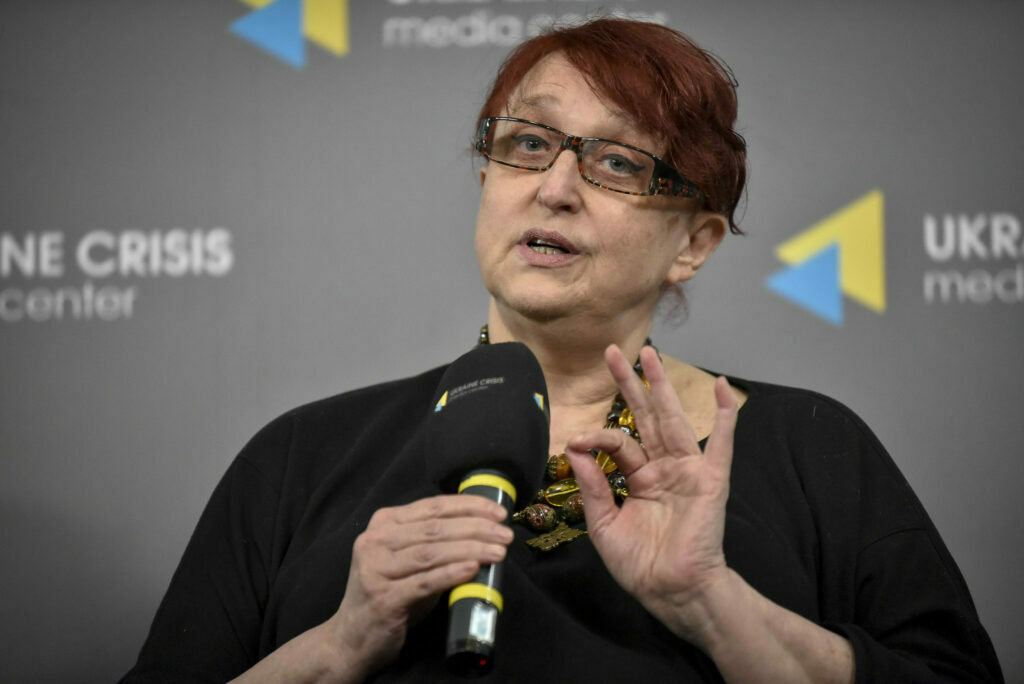
‘This is, in fact, the country’s second budget, which is not integrated into the declaration,’ she emphasised. This means that a significant portion of funds, particularly those relating to the social insurance system, remain outside the full scope of budgetary planning.
The evaluation of the fulfilment of obligations was even harsher. ‘Fulfilling all social policy obligations… does not seem possible,’ said the MP. And the consequence of this discrepancy is not merely theoretical. We are talking about 768,000 court rulings that have not been enforced for years. According to the Chair of the Committee, the state’s debt under these rulings now exceeds UAH 100 billion. This is chronic debt that has been weighing on the state and local budgets for years.
Separately, Halyna Tretiakova drew attention to another dimension of the problem: inequality. According to her, the gap in the solidarity-based pension system is 94.7-fold: from UAH 2,595 to UAH 240,000. This effectively calls into question the very principle of solidarity upon which this system is built. That is precisely why she proposed shifting the focus of budgetary policy – from a person-centred approach to a family-centred one, where the household, as the basic unit of social stability, is at the heart of decision-making.
Another, but no less fundamental, issue was raised by Olena Shuliak, Chair of the Committee on the Organisation of State Power, Local Self-Government, Regional Development and Urban Planning. Her focus is on the lack of a clear delineation of powers between levels of authority.
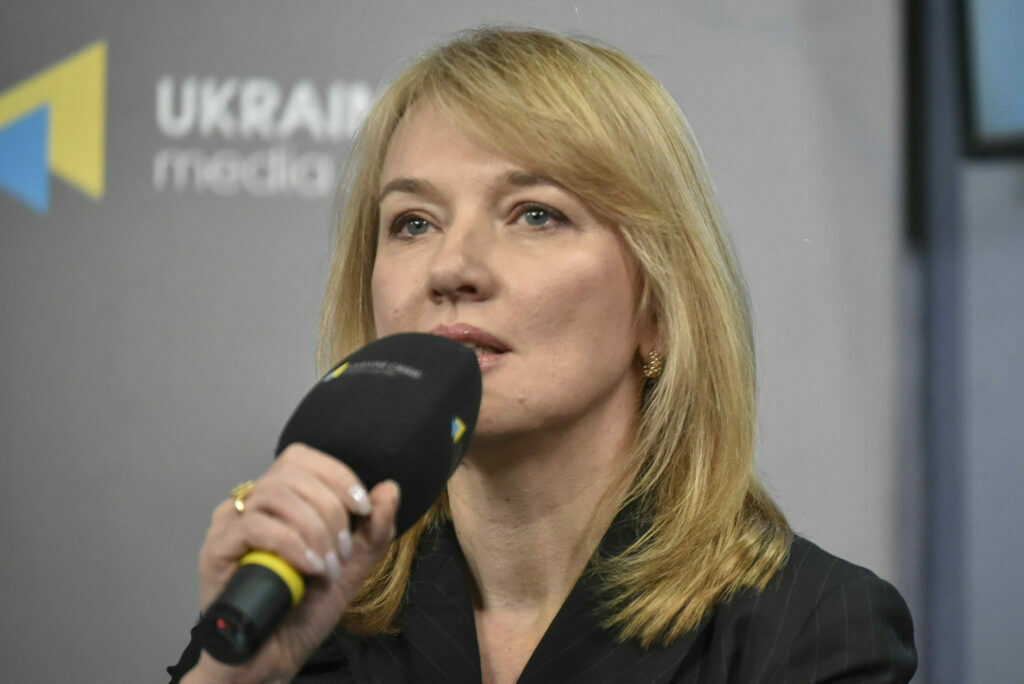
‘Until it is determined exactly who is funding specific services, the community will always be the one forced to fill all the gaps with its own resources,’ she emphasised.
This is a fundamental problem of governance: the state delegates powers but does not always back them up with sufficient financial resources. She also pointed out that the Parliament is only now beginning to address this issue systematically – in particular by legislating to clarify the delineation of powers between levels of authority.
In this context, the budgetary problem ceases to be a financial one and becomes a matter of governance.
This view was echoed by MP Dmytro Mykysha, who shifted the discussion towards the tools involved, ‘The budget declaration is a form, a set of tools through which this should be achieved.’
According to him, the key problem lies not only in the content of the document, but in the fact that the country has still not transitioned to full-fledged medium-term budgeting. Without this, the declaration risks remaining a formal document that has no impact on real processes.
Taken together, the views of the Parliament highlight several key issues: an incomplete picture of public finances, a mismatch between commitments and resources, deep social inequality, and a lack of clear rules for the allocation of responsibility.
These issues are key to determining whether the new budget declaration will be able to change the situation, or whether it will remain yet another framework document with no real impact.
Communities in practice: Between responsibility and a lack of resources
The communities themselves spoke about what budget policy looks like in day-to-day practice – with specific constraints, decisions and responsibilities.
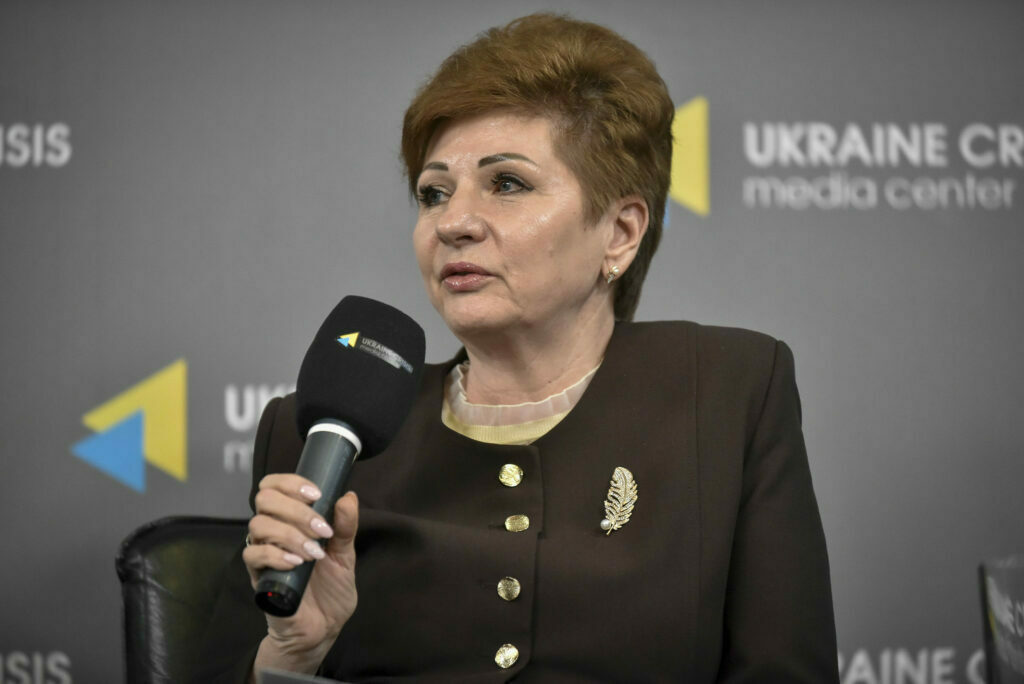
Svitlana Spazheva, Head of the Pokrovsk Settlement Military Administration (Dnipropetrovsk region) expressed this as clearly as possible, ‘We, as communities, have already become a source of support for people. But without systemic changes to the budget declaration, we are simply taking a risk: we have the responsibility, but not the capacity.’
Communities are effectively performing the state’s functions at the local level – providing social protection, working with internally displaced persons, maintaining infrastructure and responding to crisis challenges.
Svitlana Spazheva outlined the main expectation of budget policy, ‘To ensure that communities do not merely survive, but develop.’ She also systematised the key challenges that communities face: chronic underfunding, a mismatch between service standards and resources, a sharp rise in needs due to the war, and limited budget flexibility.
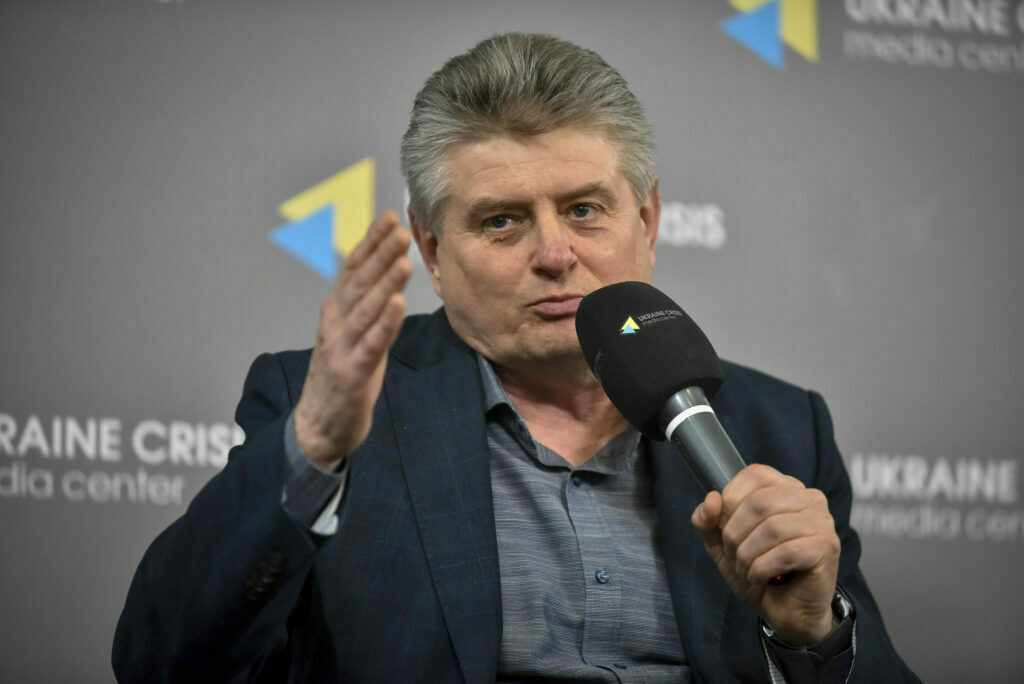
Ihor Hnatusha, Head of the Komysh-Zoria Settlement Military Administration (Zaporizhzhia region) highlighted another critical issue: the withdrawal of unspent funds at the end of the financial year. His question was like a diagnosis of the system, ‘How are you supposed to manage your finances effectively over the course of a whole year?’
This means, in effect, that communities have no guarantee that the resources they accumulate over the course of the year will be preserved. Under such conditions, planning effectively loses its meaning: it is difficult to implement long-term solutions in healthcare, social protection or restoration when any financial reserve may be withdrawn at the end of the budget period.
He also drew particular attention to the healthcare sector, where the burden on communities is growing especially rapidly – from maintaining hospitals to ensuring staffing levels. In many cases, these costs remain the responsibility of local budgets without adequate support.

The same concerns were raised by representatives of Biloziria, Shulhynka, Poltava, and Merefa communities. Volodymyr Mitsuk, Nataliia Petrenko, Kateryna Yamshchykova, and Veniamin Sitov expressed their views differently, but all agreed on one point: the burden on local authorities is growing faster than their financial capacity. As Nataliia Petrenko emphasised, if all the obligations for which the community is responsible are taken into account, there will not be enough funds not just for the development budget – there will not even be enough for the general budget with its protected articles.
This is not about individual projects or initiatives, but about basic functions: maintaining the social sector, fulfilling state obligations, and supporting people in difficult life circumstances. With resources allocated in this way, the community effectively has no room for development – the budget is swallowed up by current expenditure. And this burden has long since gone beyond individual sectors. It encompasses several critical areas at once: social services, veterans’ policy, security, support for internally displaced persons, and infrastructure maintenance – in other words, the entire spectrum of responsibilities that is currently concentrated at the community level.

Volodymyr Mitsuk also addresses this systemic issue, ‘In our system, funding determines powers, rather than the other way round. As a result, communities remain responsible for everything, yet lack sufficient resources.’
Conclusion: Without changing the rules, the system does not work
Communities have in fact ended up in a situation where they are forced every day to ‘bridge’ the gap between state decisions and real resources. That is precisely why their expectations of the budget declaration sound as pragmatic as possible: predictability of decisions, up-to-date data on the population, and resources linked to a person’s place of residence rather than to formal indicators. Without this, as communities say outright, any medium-term planning will remain merely declarative and will once again be passed back to the local level in the form of unfulfilled commitments.

This discussion has clearly highlighted an important fact: the problem is not that local authorities are asking for more money ‘for everything’. The problem lies in the fact that the state’s social, educational, veterans’ and healthcare obligations have long since been devolved to the local level, yet the resources allocated to them remain inadequate, unstable or unfairly distributed. That is precisely why the Budget Declaration for 2027–2029 for communities is an opportunity to change the fundamental logic of the system. So that the budget finally begins with people’s real needs, rather than formal indicators. The ‘Communities of the Future: Opportunities for Every Child and Family’ open dialogue platform is a forum for discussing decisions that shape community development, with a focus on service accessibility, financial capacity and support for vulnerable groups. The initiative is implemented by the All-Ukrainian Association of Amalgamated Territorial Communities in partnership with the UNICEF Office in Ukraine, the Ukrainian Crisis Media Centre, and the Decentralisation portal. This publication was developed with financial support from the German Federal Ministry for Economic Cooperation and Development (BMZ) via the state development bank KfW. The content of this material is the sole responsibility of the All-Ukrainian Association of Local Governments ‘Association of Amalgamated Territorial Communities’ and does not necessarily reflect the views of the German government and/or UNICEF.
The original article in Ukrainian is available on the Ukrainian Crisis Media Centre website: https://uacrisis.org/uk/byudzhetna-deklaratsiya-2027-2029-chomu-gromady-proponuyut-zminyty-pravyla-gry
Source:
Український кризовий медіа-центр
26 October 2026
«Свобода бути там, де хочеш»: як соціальне таксі допомагає Людмилі та Олегу пересуватися Дніпром
«Свобода бути там, де хочеш»: як соціальне...
Портал «Децентралізація» продовжує серію матеріалів про рішення громад, які роблять публічні послуги та простори...
26 October 2026
«Держава поруч. Старости»: на початку грудня стартує національна ініціатива
«Держава поруч. Старости»: на початку грудня...
На початку грудня стартує національна ініціатива «Держава поруч. Старости». Вона має наблизити важливі послуги до...
26 October 2026
Як релокована лікарня стала частиною життя громади: досвід Мирнограда й Оринина
Як релокована лікарня стала частиною життя...
Майже два роки тому Мирноградську лікарню з Донецької області евакуювали до села Оринин на Хмельниччині. Медики...
26 October 2026
Мобільність без кордонів: як громадам з’єднати транспорт, дані й фінансування
Мобільність без кордонів: як громадам з’єднати...
Мобільність не закінчується на межі громади, але транспортні системи часто залишаються розділеними між містами,...