‘Community leader should not just sit in their office and talk to people on their designated reception day. They must always be open to communication.’ Interview with Myroslav Nosa
Miroslav Nosa, Head of Hradyzk community in Poltava region, posts videos he shoots and edits himself on social media almost every day. These videos receive up to 10 million views per month
Decentralisation is about more than just budgets, subsidies, and powers. It is primarily about people and how authorities communicate with them. Over the years of reform, it has become clear that even the right management decisions do not work if the community does not understand the reasoning behind them, and trust cannot be taken for granted – it must be earned through daily, honest, and easy-to-understand communication. This is why we are sharing the experiences of community leaders who view communication as a valuable management tool, not an additional task. In this interview, Myroslav Nosa, Head of Hradyzk community, shares his insights on how openness, a strong public presence, and clear communication convert into tangible decisions, resources, and community development.
By Dmytro Syniak
Sloviansk community recently refused to grant us an interview. ‘We receive six or seven requests a day from the foreign press alone, but unfortunately, the community leader is constantly busy,’ said the press secretary over the phone. Responding to our observation that Sloviansk is losing money every day due to this information policy, the press secretary laughed heartily and asked, ‘What kind of money can be made from publishing an interview?’ Myroslav Nosa, Head of Hradyzk community, does not need this explained to him. Communication, including external communication, forms the basis of his policy. He moved away from the Soviet model of presenting information a long time ago – on the official website, purely for show, in officialese, with meaningless thanks to senior management. Instead, Mr Nosa actively manages his own social media pages, including Facebook, Instagram, and TikTok, and his posts receive up to a million views. In an interview with Decentralisation, Myroslav Nosa discussed communication as a conscious tool and an integral part of management processes, rather than just an additional task.
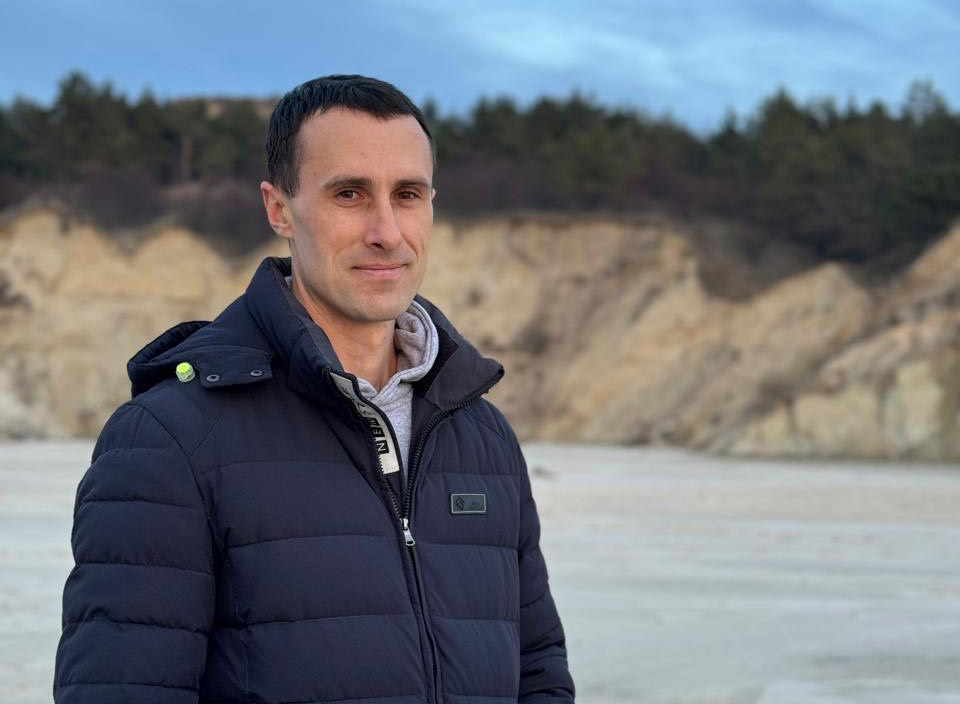
Myroslav Nosa, Head of Hradyzk community and blogger
Why is it important to explain everything to people?
Is Hradyzk community more focused on stability and development today, or on constantly balancing crises?
More on stability. Of course, there are crises because of the ongoing war, but these do not endanger the community’s livelihood. Our stability is primarily based on our balanced approach to managing resources, taxpayers’ funds and personnel. We also enhance our capabilities annually by attracting funding from various international organisations. For example, the Polish government recently renovated the medical laboratory at our hospital at a cost of USD 40,000. Last year, we also completed a major project to set up a hub kitchen. Kitchens are not necessarily required in every school; one kitchen can serve five schools, for instance. We provided UAH 4 million in co-financing (19%) and built a hub kitchen in two years. Our community's total budget for this year is approximately UAH 154 million, of which around UAH 129 million comes from our own revenue. This is up from half that amount a few years ago. And we have over 15,000 residents.
A decline in population is a key indicator of a community’s development or stagnation. Is this crisis evident in your community?
Yes, it is quite evident. Unfortunately, for every birth, there are an average of five deaths. This is a very alarming statistic. I felt it was necessary to raise awareness of this issue, so I started talking to people about it a few years ago. I also sincerely believe that the arrival of around 2,000 displaced people, who have significantly strengthened the community, is linked to my efforts to raise awareness of the issue. After all, some of these people chose us for a reason. How do people choose where to move? They search for information online, compare options and ask friends or relatives. The community and I need new residents, so I post this information almost every day.
What management challenges do you most often face? Are they related to resources, people or the expectations of your constituents?
Fortunately, the expectations of our residents are not too high, which is the result of effective communication. Here is an example: Hlobyno community is located near us and has a budget of UAH 0.6 billion for this year. Hlobyno is home to the district’s major industrial enterprises, including a pig farm, a meat processing plant and an agricultural holding. People therefore understand that our community does not have the same opportunities as Hlobyno, and you hardly ever hear criticism such as, ‘Why are they building a road there and not here?’ I also constantly remind people that our fellow villagers who work in Hlobyno increase its wealth, not ours. After all, taxes go there too. Some of these people have already ‘returned home’, that is, found work here. We are currently in dire need of workers. For example, a wonderful confectionery company has recently relocated to us from Druzhkivka. It has been operating actively for two years now and is increasing its production rates. However, it cannot find new employees. I organised a meeting between the starosta and the company’s management, and we agreed to launch an advertising campaign in neighbouring villages. In turn, the company agreed to provide transport for its staff.
At what point did you realise that making decisions was not enough, and that you also needed to constantly explain them?
Back during the previous convocation in around 2020. I noticed that, when people lack information and have no access to the primary source, they inevitably distort it. It turns out that even if you have done something good, you can still be accused of embezzlement and misuse of funds. In other words, it is better to do the right thing from the outset than to have to clean up and counteract disinformation later. For example, a few years ago, we changed the management structure of the local utility company that supplies water to Hradyzk. We were not providing this utility company with any financial support, and there was a deep crisis involving wage arrears, a lack of permission for special water use, poor material support, a lack of meters, illegal connections and low payment for services from the population. After six months of discussions, we decided to transfer the utility company to the regional Vodokanal. However, we failed to communicate this decision to the people in a timely manner. Then, the opposition gathered around 200 people near the settlement council and claimed that I had sold the utility company. This was despite the fact that the transfer was free of charge and was an anti-crisis measure. Time has shown that this was the right move: the tariff was reduced; the enterprise received a new 10-year permit for water extraction; it paid off its wage debts; and it achieved better payment discipline overall. The company also modernised and automated the operation of wells, networks, hydrants, and so on. Had I explained all this to the people in time, there would have been no protests. I would not have ruined my nerves or my reputation.
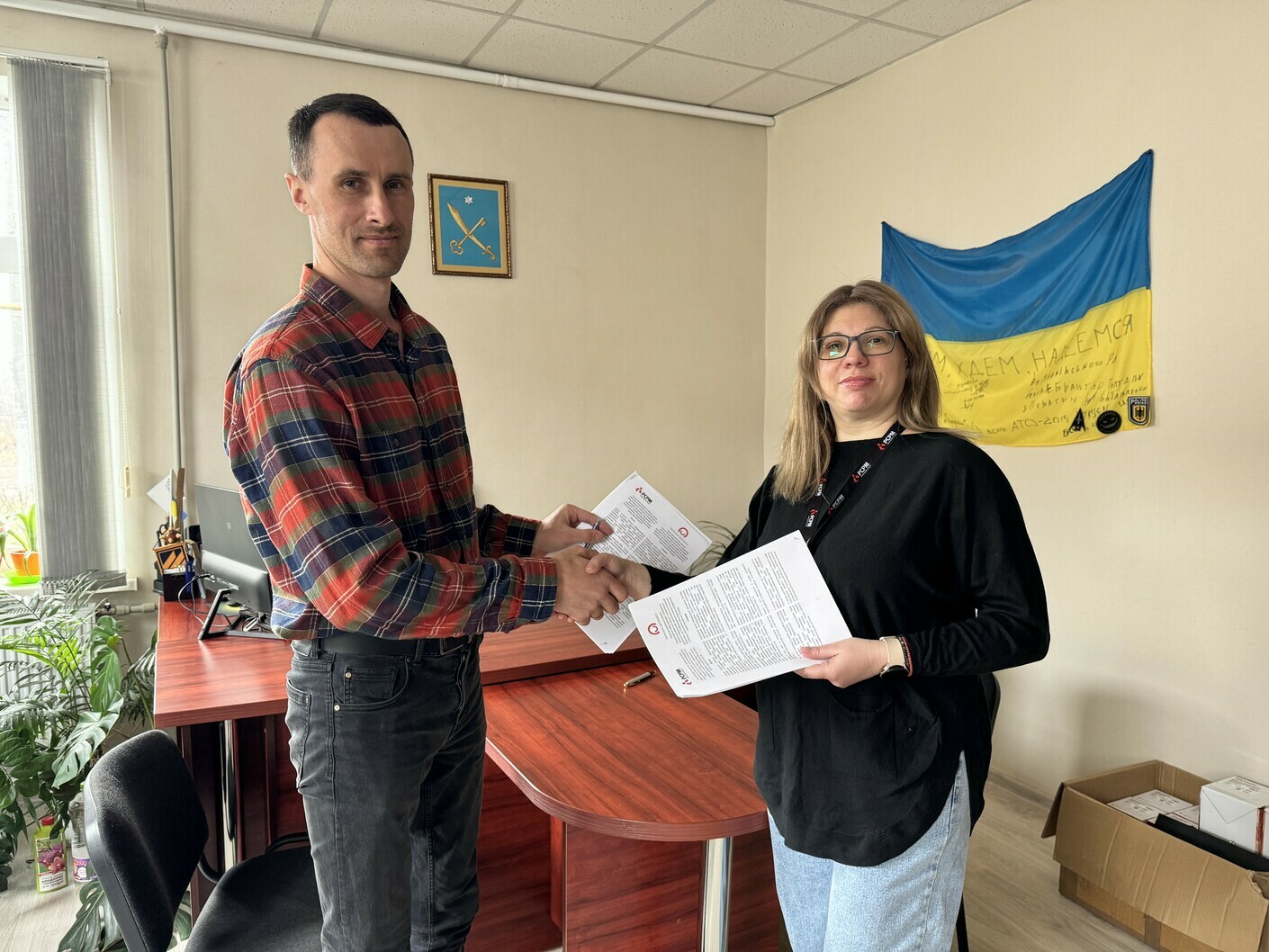
Signing of an agreement with a representative of the Polish government, which allocated USD 40,000 for the renovation of a medical laboratory in Hradysk
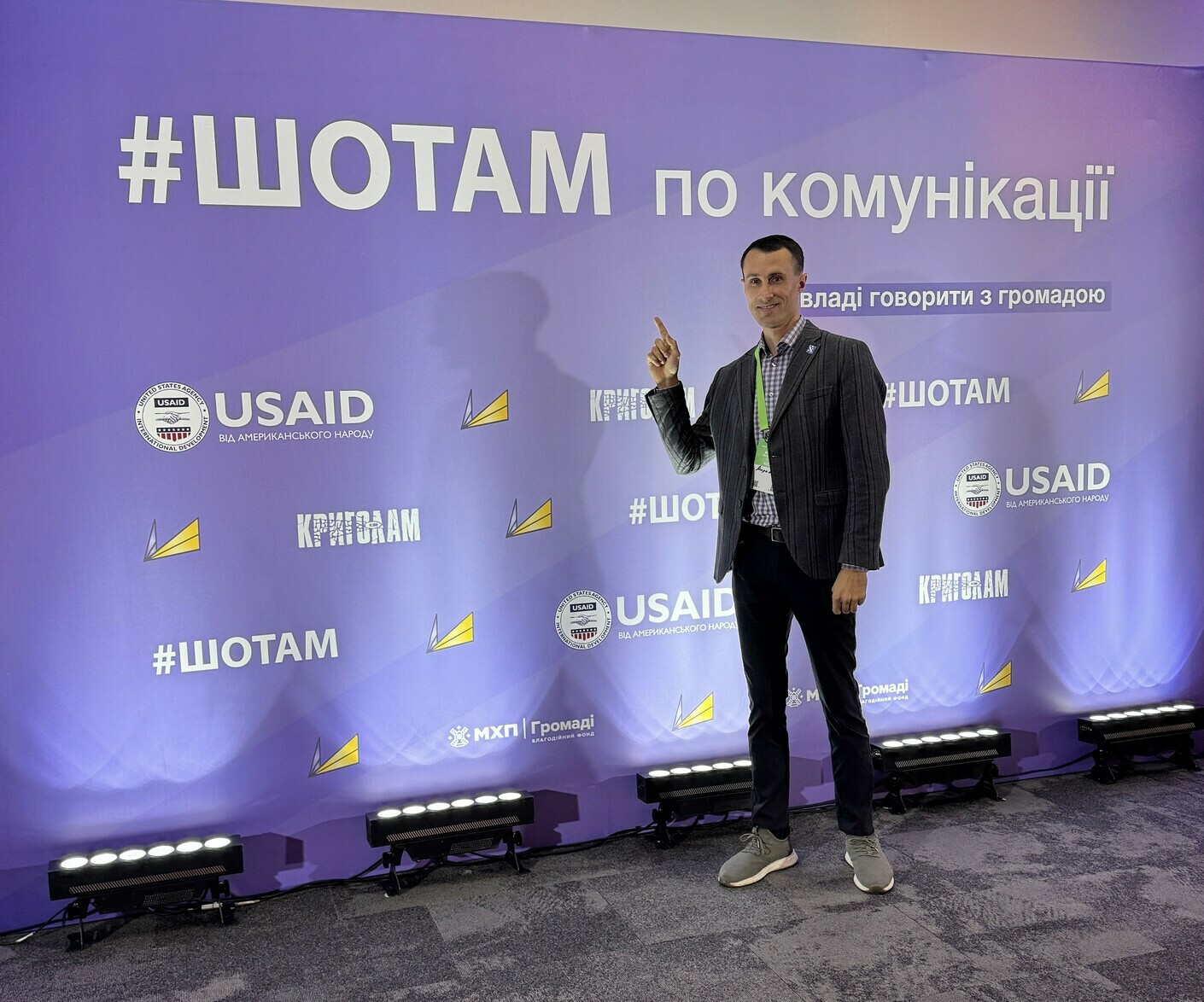
Myroslav Nosa – one of the speakers of the USAID project ‘What’s up with communications?’ In one of the panel discussions, he shared his experience of inter-municipal cooperation with a neighbouring community
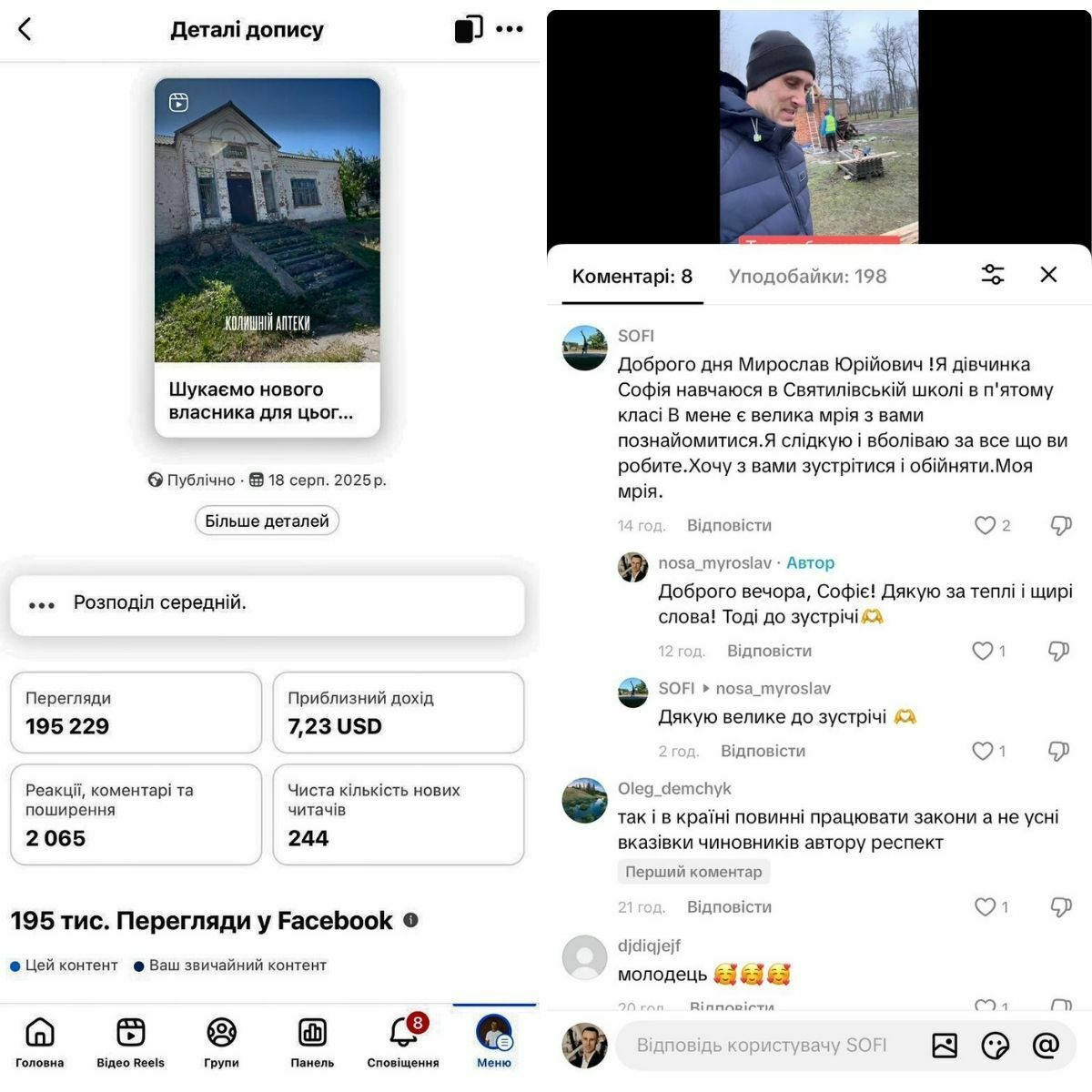
Miroslav Nosa sold the neglected premises of a former pharmacy solely by posting on Facebook (photo on the left). ‘I want to meet you and give you a hug!’ ‘See you then!’ *photo on the right(
Communication as part of community management
You communicate openly with people. Is this your natural style, or a management strategy you have consciously chosen?
This is my style. In recent years, however, it has also formed the basis of my management strategy. My approach is to communicate with people as much as possible. This means not only telling them about successes, but also about problems. I am in no way trying to create the illusion that everything is great with us or that we are better than anyone else. No, I tell it like it is. People then start to give suggestions and advice, and sometimes criticism and support. The most important thing for me is that they become active and gain a better understanding of the authorities. For this reason, I always try to respond to all comments. I must say that this approach has eased some of the pressure on me. Before, people would call me about every little thing – every resident in the community has my phone number – but now they write to me. Social media is much more convenient for responding than the phone.
How much time do you spend communicating in this way each day?
It is difficult to say because I do it alongside other activities. I do not allocate any specific time to Facebook, TikTok or Instagram. I visit a facility to check on how the work is going, shoot a video on the way there, edit it in a few minutes, and then post it on my page. Everything is done on the spur of the moment. Therefore, some of my stories are very emotional. But the audience is drawn to this. If I were to write something down, no one would listen. However, when I express my thoughts freely and without holding back when the situation requires it, the result is completely different.
Have you changed your approach to communication throughout your time in the office?
Yes, because I can immediately see what has worked and what has not, and what has been successful and what has not. Previously, I only reported on the results of the work of the settlement council, but now I also report on the work itself. You can do your job honestly and to the best of your ability, but your opponents or simply some misanthropes may turn the results against you simply because you did not inform people about them in time. Therefore, each project must be reported on step by step, from conception to completion. Then no one will be able to distort the final result. We announced that we wanted to buy another school bus this year. We bought one and handed it over to the school. Everything is clear. Then, imagine this: a criminal case was brought against me as if I had done something illegal. But everyone knew what was going on from the beginning. Now people are standing up for me. This is the result of effective communication! They could have said, ‘If they’re taking the head to the police, who knows? Maybe he really did steal something from the purchase of those buses.’
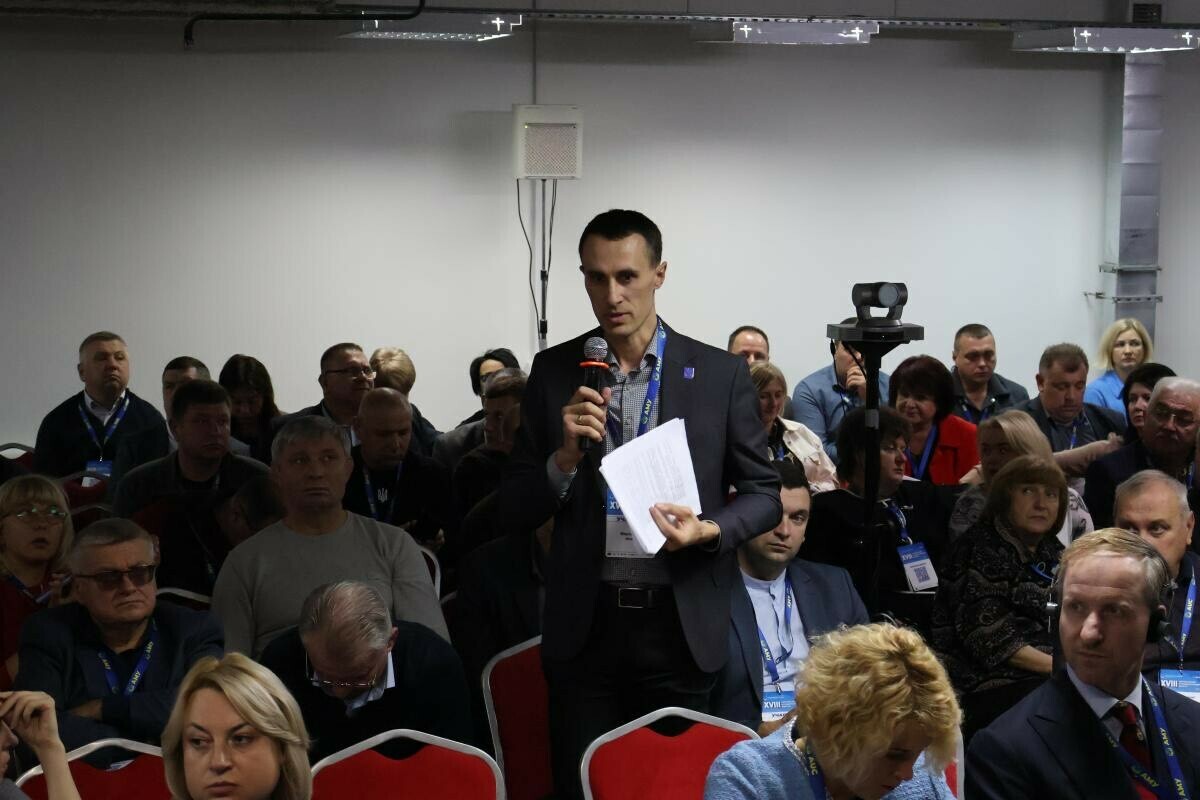
At the final meeting of the Association of Ukrainian Cities in Kyiv last year, Myroslav Nosa asked how communities should cope with pressure from law enforcement agencies targeting local governments and the persecution of certain community leaders
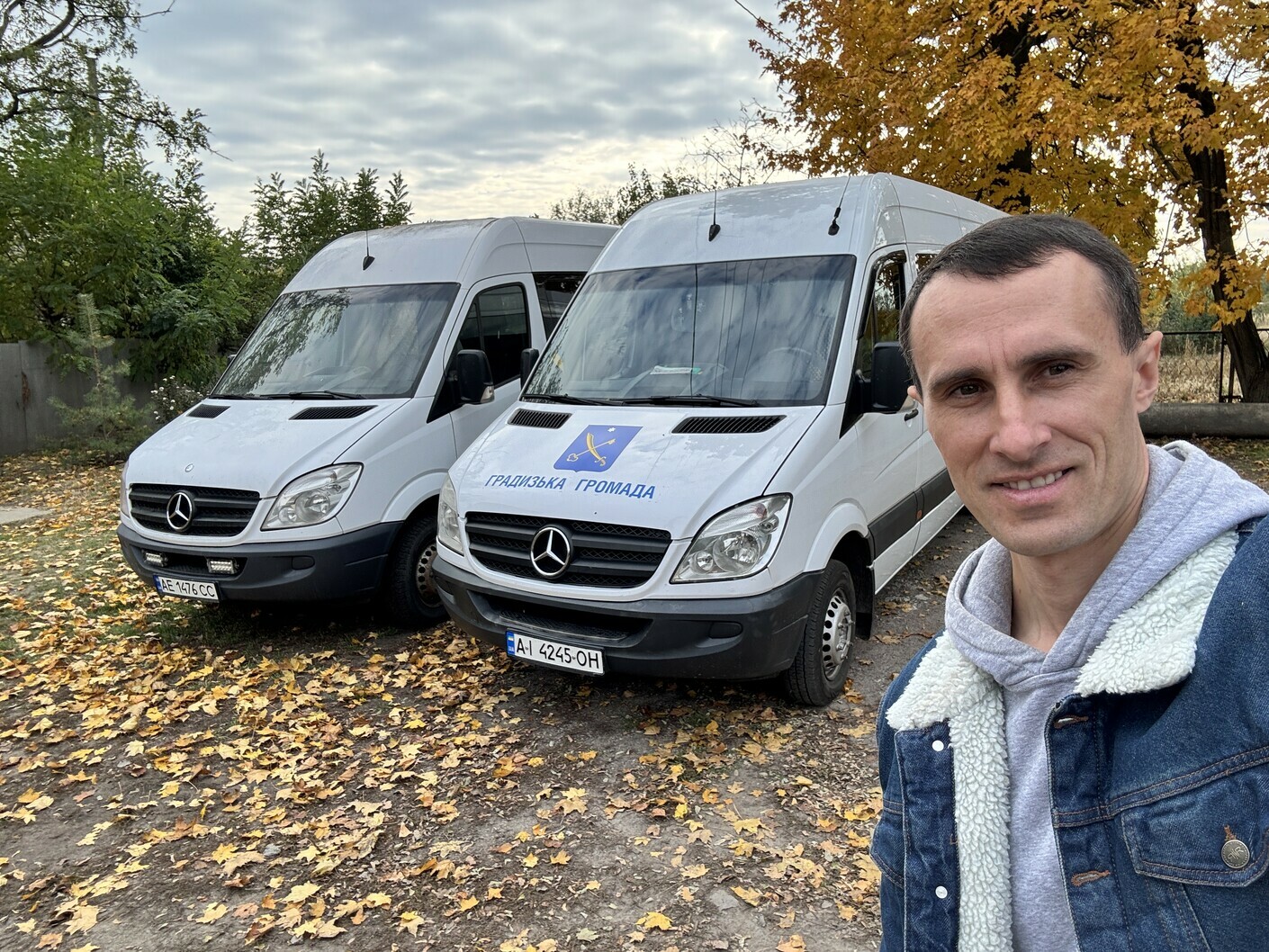
Myroslav Nosa and the school buses of Hradyzk community. It was precisely because of the purchase of these buses that the police initiated a criminal case against the head of the community, accusing him of purchasing transport at an inflated price. ‘What should have been an achievement for the community was twisted into a crime by the police,’ wrote Myroslav Nosa.
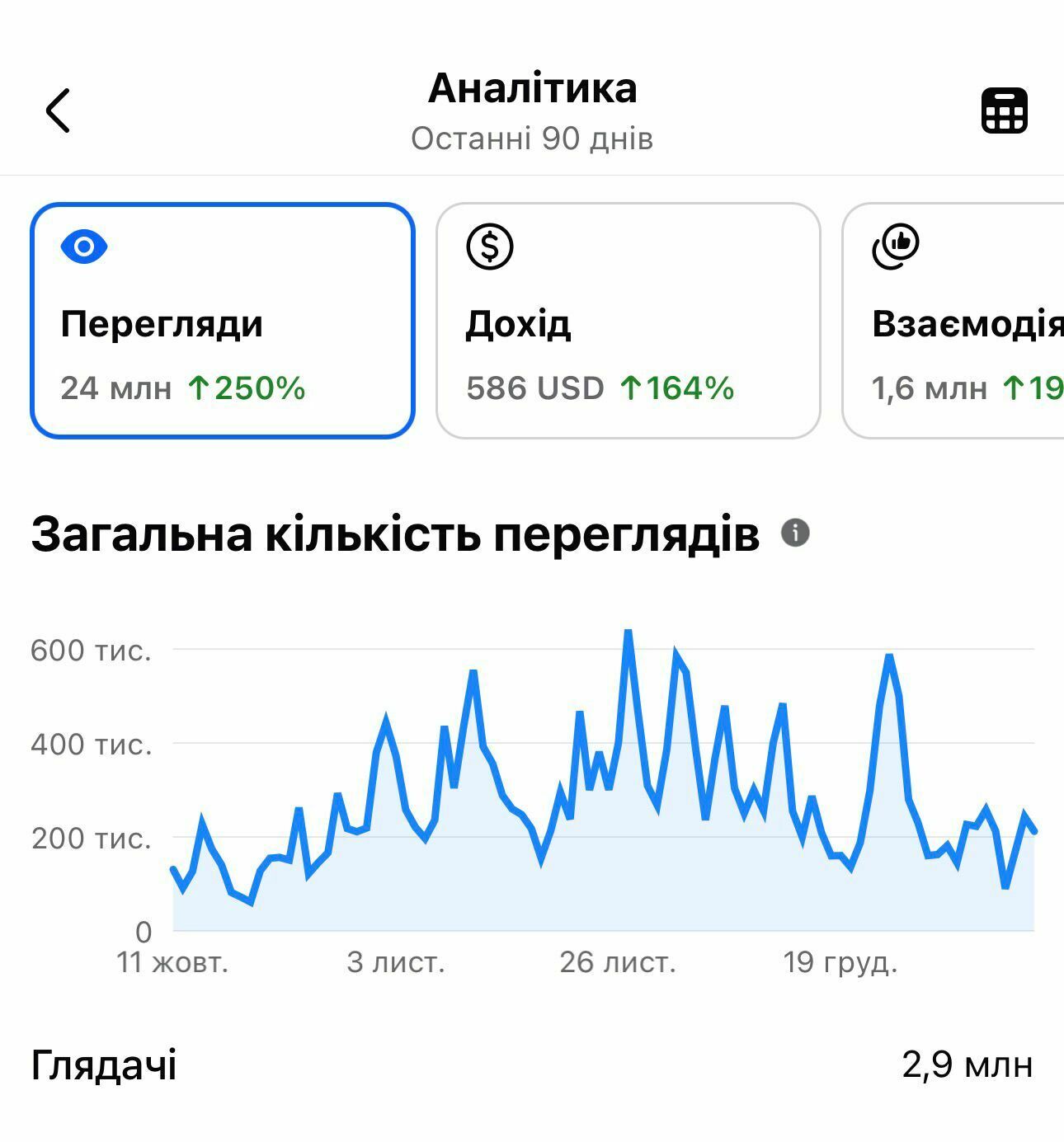
Analytics for Myroslav Nosa’s Facebook page over the last 90 days of 2025 show that his posts were viewed 24 million times and interacted with 1.6 million times. The community leader earned USD 586 for this. After paying taxes, he plans to spend this money on upgrading his video equipment
What effect does properly structured communication have?
Do you think that communication from the head of the community is a separate function or part of a management decision?
It is a management decision and a choice. Unfortunately, not all community leaders do this. If people are not given an explanation, they will assume that the settlement council is not doing its job, which will result in a negative attitude towards the council and the community as a whole. Moreover, the consequences of this will be specific and measurable in hryvnias. This must be clearly understood.
How does the community change when people understand the logic behind the actions of the authorities, even if they do not agree with everything?
A conscious society is key to community development, and communication with the authorities is what makes society conscious. For example, I recently informed people about the situation on our islands. One person wrote to me to suggest organising a clean-up of the islands, adding that she was ready to be the first to take part. So, I plan to organise a boat trip to the islands in the spring. Please note that this is not my own initiative, but was suggested by individuals who already feel they are in charge of their community. Often, after a gathering, people write, ‘Let us know next time, we’ll come too!’ This shows that they are ready to take action personally. They have become active and conscious. It is communication that stimulates their activity. Furthermore, anyone who has helped the community improve begins to appreciate what has been done. They act as a voice for others. They become an activist in their neighbourhood. I no longer run around saying, ‘Oh dear! What have you done!?’ Now, this person says to their neighbour, ‘Why are you doing that? Don’t do that!’ This is how public control emerges – over parks, playgrounds, and streets.
Which communication channels with residents are effective, and which are merely necessary?
Facebook is the best and most popular channel with the widest reach of the target audience. TikTok is also necessary for reaching a younger audience, as there is no other effective way to do so. Personal contact with residents is also important. For example, I often walk or cycle around the settlement. People approach me in the street and talk to me. They value this. This means that the head of the community should not just sit in their office and talk to people on their designated reception day. They must always be open to communication
Opishnia community has launched its own radio station, Opishnia FM. Michelle Tereshchenko also used radio to communicate with residents when he was mayor of Hlukhiv. Have you considered promoting traditional channels of communication, so to speak?
I thought about it, but without a radio frequency licence (which some communities still have) setting up your own radio station is very difficult. Not to mention the cost. Another traditional channel of communication is the community website. However, I purely see it as a library of official documents containing all resolutions and information on public hearings. This ‘officialdom’ gets more than a thousand views, by the way. In other words, people read both official and draft resolutions. For example, I might post on Facebook that at today’s session meeting, we decided to allocate UAH 2 million to the Armed Forces of Ukraine, and that this resolution can be viewed on the website. People look at it.
You said that news stories on the community’s official website receive an average of 1,000 views. How many views do your Facebook posts receive?
Sometimes more than a million, depending on the post. For example, my videos have had a total of 7.1 million views over the last month. 489,000 users interacted with the posts by liking or commenting on them. In November 2025, my posts were viewed 9 million times. This is despite the fact that our community only has 15,000 residents. However, the fact that I have 5,000 friends and 22,000 followers on Facebook probably plays a big role here. 94 per cent of my viewers are from Ukraine, 1.9 per cent are from Poland, 0.8 per cent are from Germany and 28 per cent are from the Kremenchuk district.
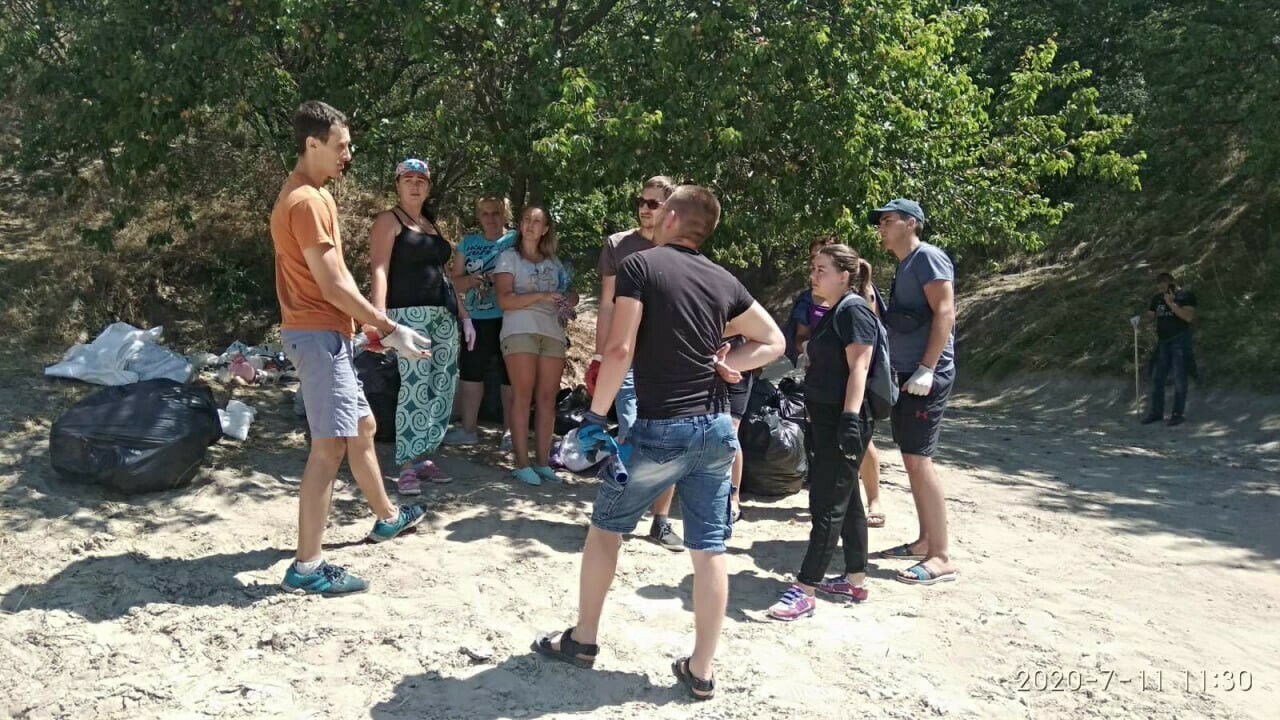
After cleaning up Mount Pyvykha Myroslav Nosa talks to the people who responded to his call for help.
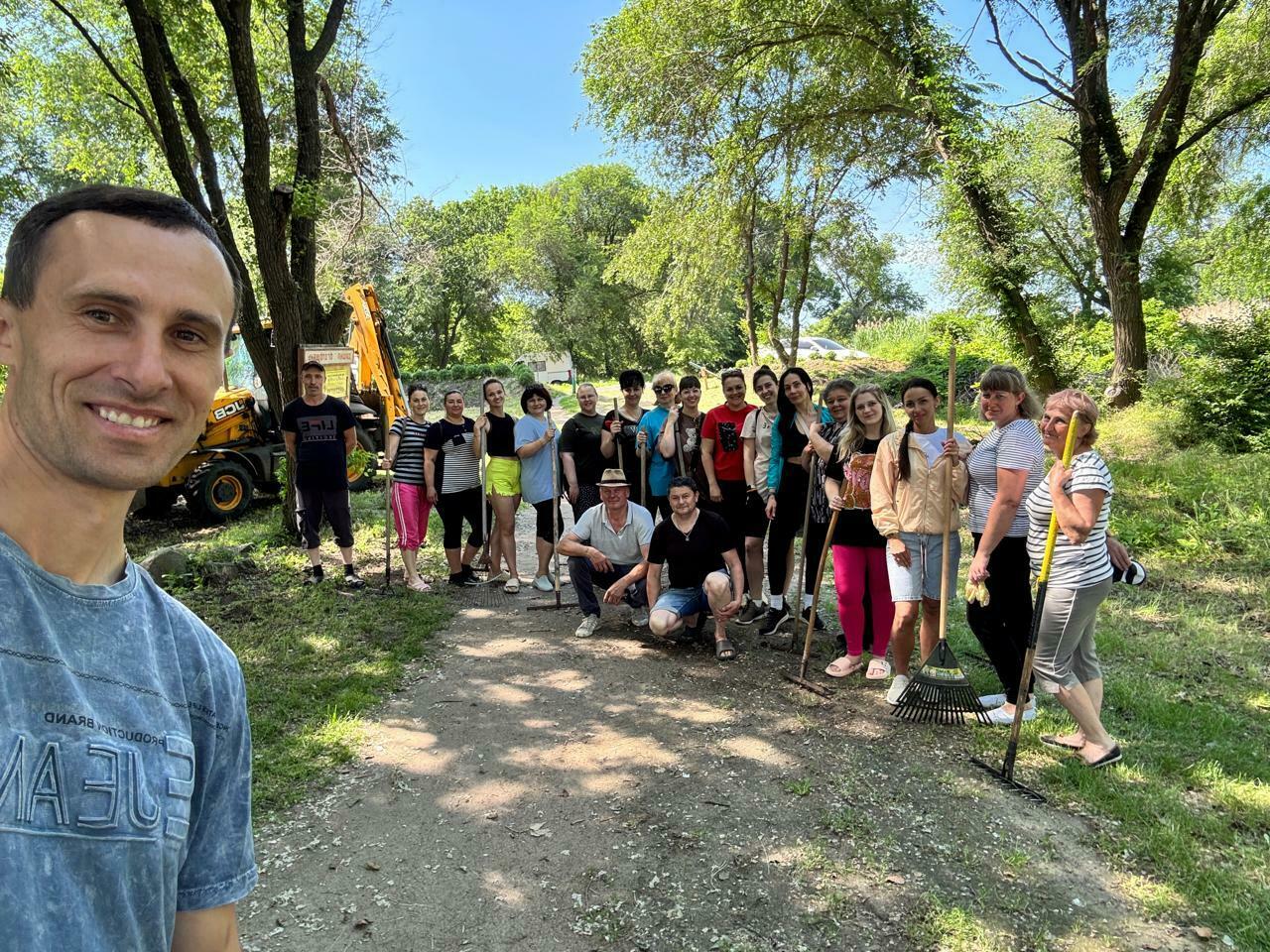
After cleaning up the beach together last spring
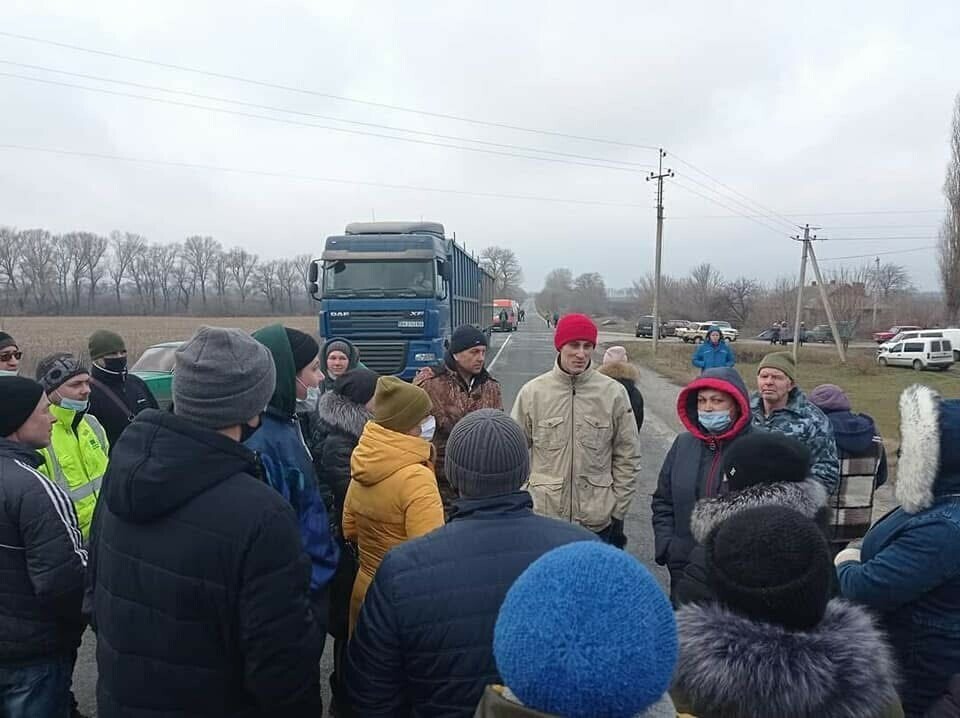
During the last pre-war rally against gas price increases in January 2022, Myroslav Nosa was with the people. A month later, Russian tanks crossed the Ukrainian border
Using simple language
You often speak to people in simple language, avoiding bureaucratic jargon. Is this something you consciously strive for, or does it come naturally to you?
It comes naturally. This is how I normally speak. The only thing I try to do is speak more politely and avoid swear words when filming videos about our security forces, with whom I have a conflict, as I have already said.
In what ways does your public dialogue with the community affect the situation within it?
After several years of such dialogue, I noticed that people had become much more polite. These ultimatums and speculative demands have stopped. People no longer shout as they used to, ‘Why is there no electricity? What are you getting paid for at the settlement council?!’ Now, they politely ask by phone or in writing, ‘Good afternoon, may I ask a question? Why is there no electricity at such-and-such an address?’ They already know that neither I nor the settlement council supply electricity, but we can sometimes help. I often reply that I will call the power company to find out what is going on. But to those who call with complaints, I reply directly, ‘I will not speak to you in that tone! Ask me politely and I will be happy to help. I will call the head of the power company and ask them to assist you. We are all human, so let’s talk like human beings.’ As it turns out, my efforts have made our people more polite! Take another example. Last year, we collected a record 5 tonnes of plastic and sent it for recycling. I have often seen people carrying plastic bottles on their bicycles or taking them to recycling containers. I consider this a victory for communication. If I had not been campaigning for this for years, no one would have done it. Yesterday, for example, a man stopped me while I was cycling through the village and asked me to put a plastic collection container on his street. Despite being on holiday, I immediately contacted the head of our utility company and instructed him accordingly. The man left satisfied.
Politicians who become media personalities can easily resort to populism, making promises to their viewers purely to generate hype. How do you manage to maintain balance?
Quite simply, I want to be seen as a man of my word. I say what I mean and mean what I say. I cannot do it any other way – probably because of the way I was brought up. We took a plot of land from the former head of the Kremenchuk tax office via legal proceedings. It was pasture land that had been illegally ploughed up. Local councillors asked me what we were going to do with it, as they were concerned that history might repeat itself. I replied, ‘Let’s plant a forest on this land.’ We raised the issue at a session meeting, secured funding, and planted 10 hectares of forest. Throughout the process, people were kept informed with a series of announcements, plans, reflections and, of course, the announcement of the result. There was no room for populism here. It was more a matter of honour.
Is it easier to work with businesses, partners, and donors when the community is open and transparent to the outside world?
Much easier! We resolve issues worth millions with top taxpayers over the phone. They know that their money will not be stolen or wasted. I report on practically every penny, and everyone watches these videos. For example, we agreed with one company to direct UAH 15 million of its taxes to the Armed Forces of Ukraine. We did just that, and I posted about it on Facebook, sharing links to the relevant documents. I also frequently publicise the top taxpayers, which acts as advertising for the best companies and builds their positive image. They appreciate it. I also created a Viber group for taxpayers, where we can resolve various issues together. There is no need for long, Soviet-style meetings.
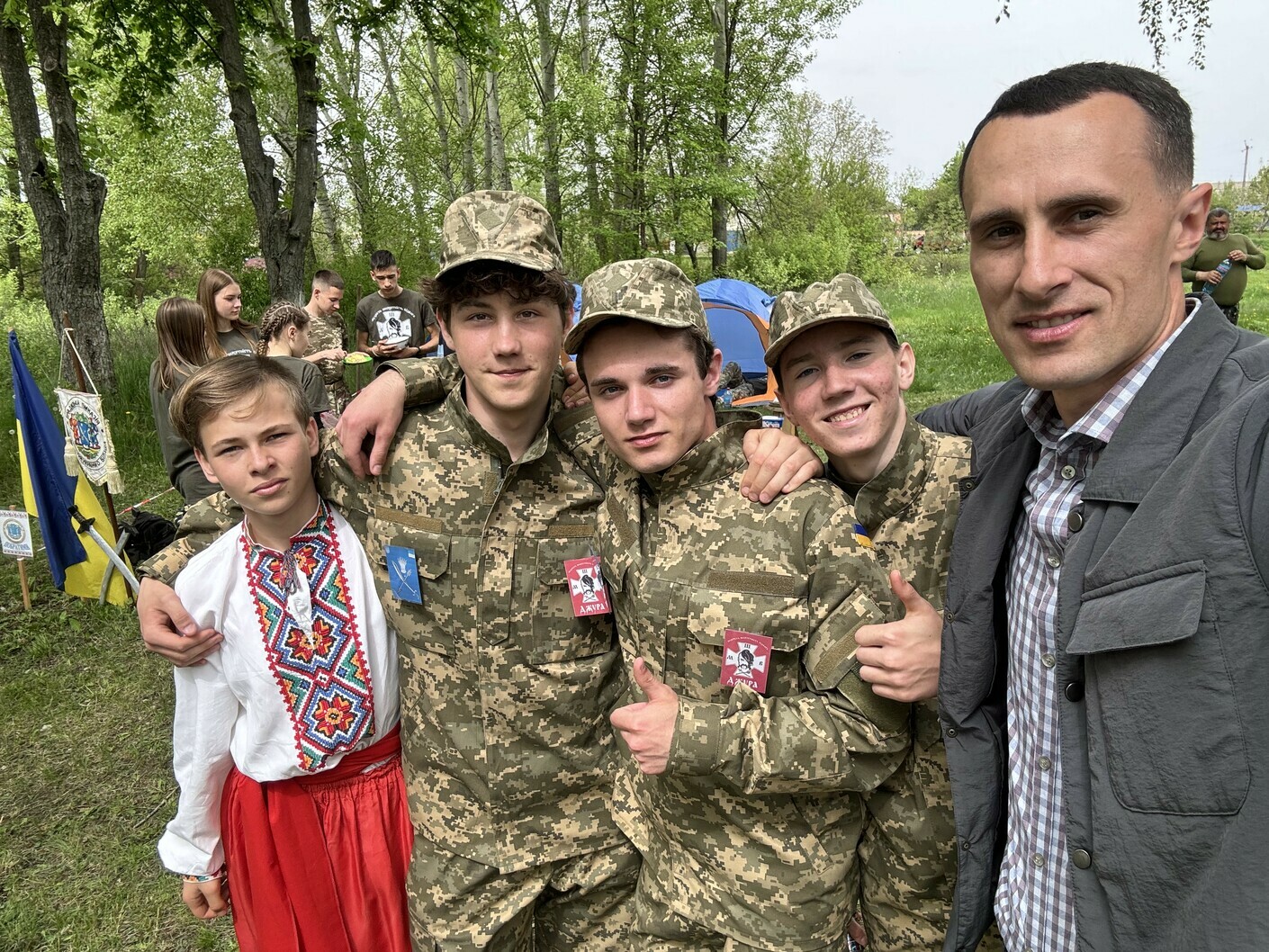
Myroslav Nosa attends the all-Ukrainian military-patriotic game of the Ukrainian Cossacks ‘Sokil’ (‘Dzhura’)…

. … and enjoys Cossack meals
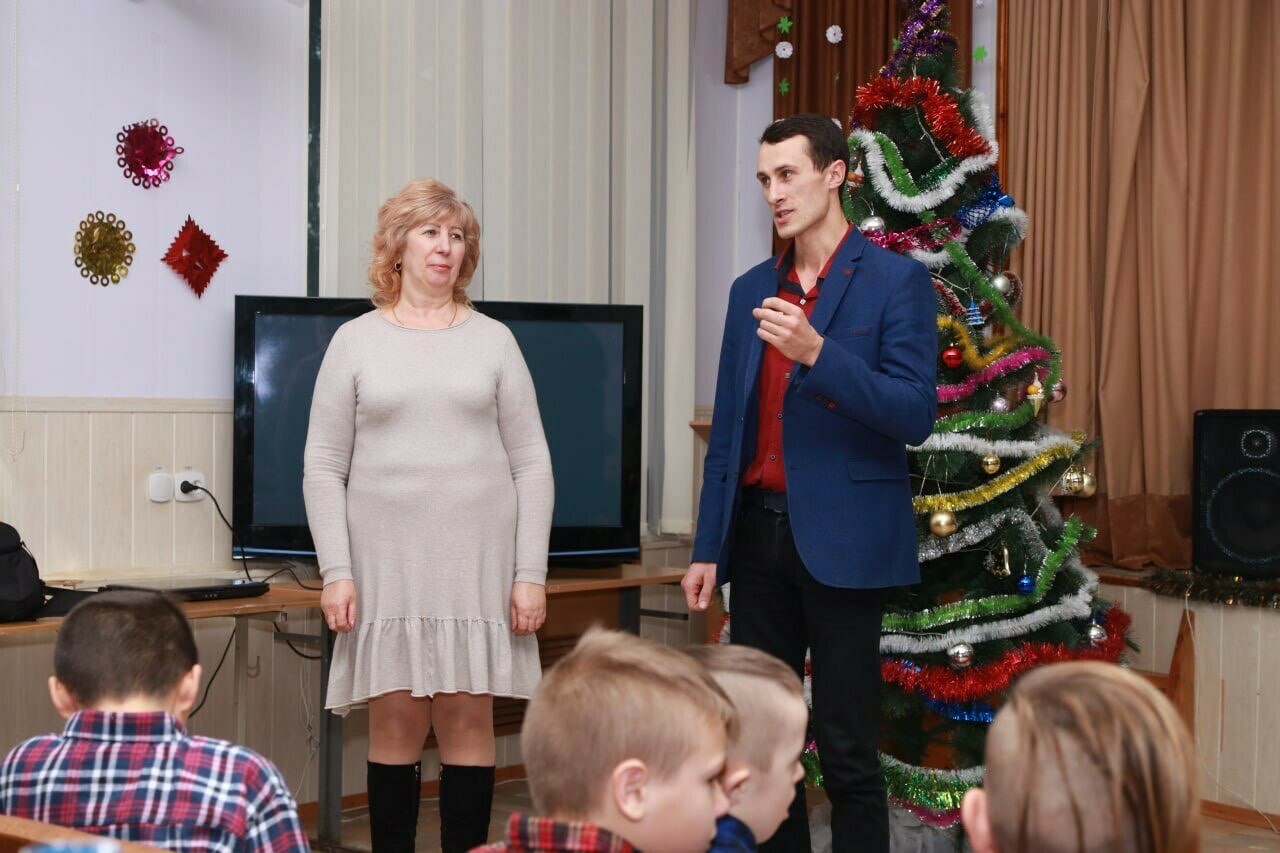
Speech to schoolchildren at the Hradyzk School for Children with Special Educational Needs
Openness to the press
How important is it for a community to be open to the press?
I always respond to press enquiries and comments, and I react to articles and videos about us. After all, this is how we present our community to the world. We have a wonderful example of how communicating with the press can promote our community’s brand. I am referring to our neighbours, the Opishnia community. Now, I think everyone in Ukraine knows where they are and what they are famous for. It is no longer Mykola Riznyk, the community leader, who seeks out journalists, but rather the other way around. These are journalists from national channels. This is why I always seize every opportunity to publicise our community in the media. I contact different editorial offices and suggest topics. For example, the banks of the Dnipro River are currently being reinforced. Why not cover it in a story?
Journalists generally prefer to write about problems and criticise rather than praise…
Let them criticise us. If their criticism is constructive, they should highlight our problems. Then it will be easier for us to communicate with the government about these issues. This is exactly how we resolved the issue of strengthening the dam in Mozoliivka. After numerous reports about it in the press, including on public television, the state built an additional 1.5 km of the dam. Now, public television reporters often ask me for comments because they know I will always give them an objective account of the situation. Many journalists also follow my Facebook page and use my posts as inspiration for future articles or video reports. For example, the regional media company Zmist recently posted my photo of beautiful ice formations and captioned it ‘Photo of the day’. They indicated that the photo was mine and where it was taken. After that, many people went there to take photos.
Can we say that trust built through communication is a standalone community resource?
Yes, of course – we have nurtured and cultivated this trust. Now it works for us. Sadly, many community leaders do not recognise this or feel it, and remain closed off. On the other hand, I must say that this kind of communication is inevitably tied to personalities. In other words, people trust me and my team. If someone else came along, they would have to earn the trust.
Why do you think community leaders avoid public communication?
Many of them are already in their senior years and find it difficult to grasp the new role of communication, or to understand how to use popular resources such as Facebook and TikTok. Not to mention mastering them! Some community leaders still use push-button phones! Many of them are also afraid of television cameras and the press in general. They think that the press will dig up something negative about them, so they would rather stay away from it. However, if you are a public figure who has been elected by the people, you must communicate with them using all available means. On the other hand, I know of cases where videos shot by community leaders hardly get watched. This is because it depends not only on whether the leader has authority, but also on whether they can shoot an interesting video.
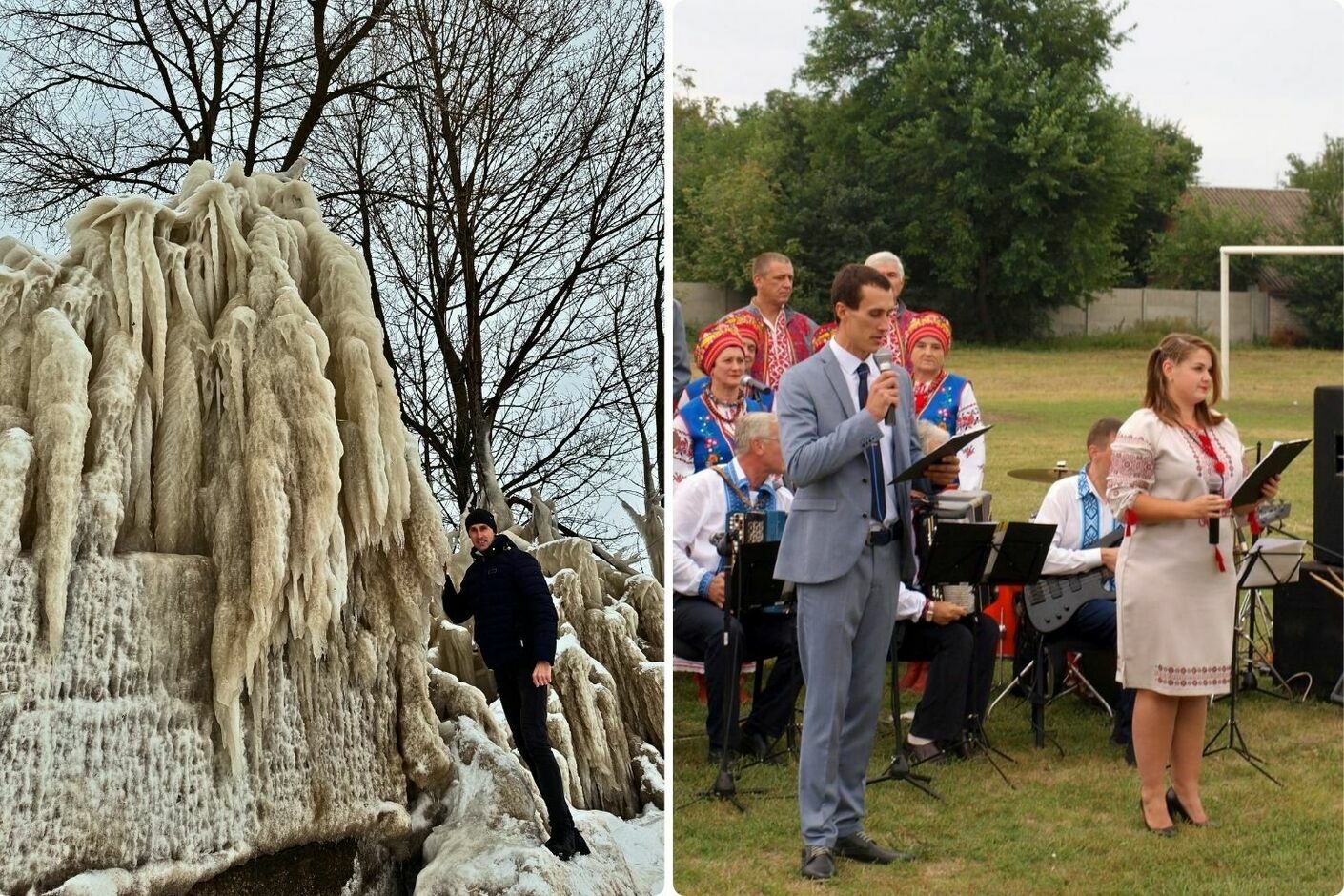
This natural ‘sculpture’ in Hradyzk community has become a local attraction thanks to Myroslav Nosa’s social media posts (pthoto on the left). Фото 6а. Day of Рradyzk 2021. Myroslav Nosa acts as the host during most of the celebrations in the community (photo on the right)
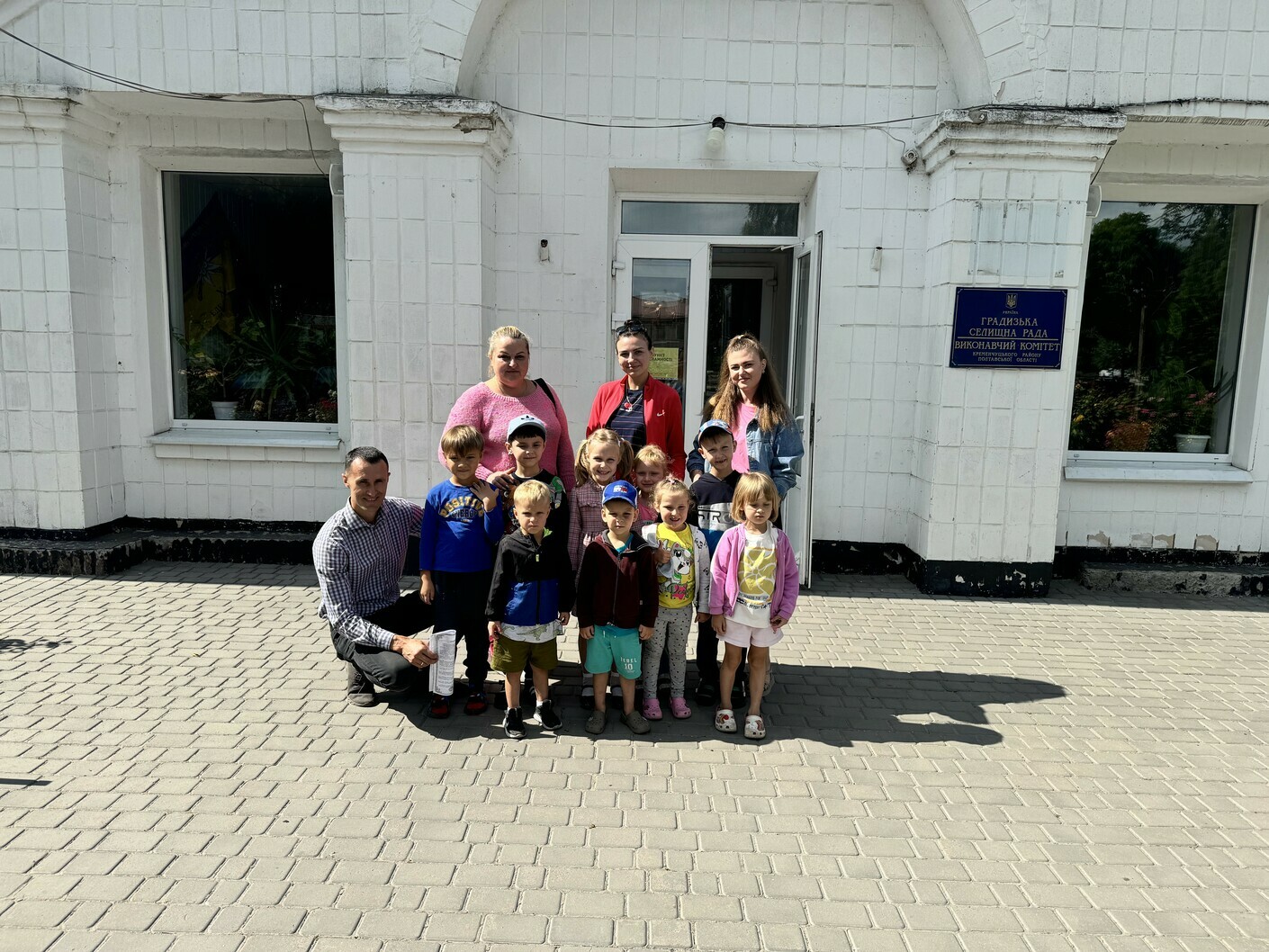
After the tour organised by the settlement council for the preschoolers, Myroslav Nosa took a commemorative photo
Secrets of communication
For a community where communication is challenging, where should one start: with channels, style, or a change in mindset?
It is better to start by deciding what you want to talk about, and then consider which channels to use. For example, start with basic budget reporting and explain to people how the community spends its budget. Over time, you will find your niche with this type of news. Do not try to show off or only present positive information. Just let people know the real state of affairs.
And what is your unique feature?
I think in my own language. After all, I speak the same language as everyone else. I use the same words and characteristics as anyone else. Even when it comes to the police. It is also important to remember that every story should have a positive element. You should wish people a good day and talk about everyone as individuals, not as part of a faceless crowd. In other words, you address everyone, but see each person as an individual.
In one sentence, what does the community lose when the leader either remains silent or speaks ‘from a piece of paper’?
The community is losing its future. This is like watching from the sidelines during an important match. Neither you nor your team will become part of history.
Do you think that effective communication will become one of the most important skills for community leaders?
I think it should. After all, communication is the rope that connects the authorities with each individual citizen. This connection is important because the assets of the community are provided by the people. The people are the community’s main asset. The better the authorities communicate with them, the more the community will benefit.
Which aspects of communications would you definitely not outsource, and which would you?
I would only outsource technical tasks. For example, someone needs to publish the resolutions of the settlement council on the website and provide competent descriptions of them. Right now, a photo showing power outage schedules has been viewed 450,000 times. However, posting such information does not require any creativity, and that is exactly what I would outsource. No one can replace me in my video speeches, as they are very personal and that is what makes them special. If this work were done by a department or authorised person – a public relations specialist, for example – there would be far fewer views. People are always more interested in communicating with the person in charge than with anyone else. Moreover, the more intermediaries there are between a leader and their constituents, the more difficult it is to maintain contact with them. Ideally, there should be no intermediaries. Otherwise, the essence and trust are lost. After all, trust is the main result of proper communication.
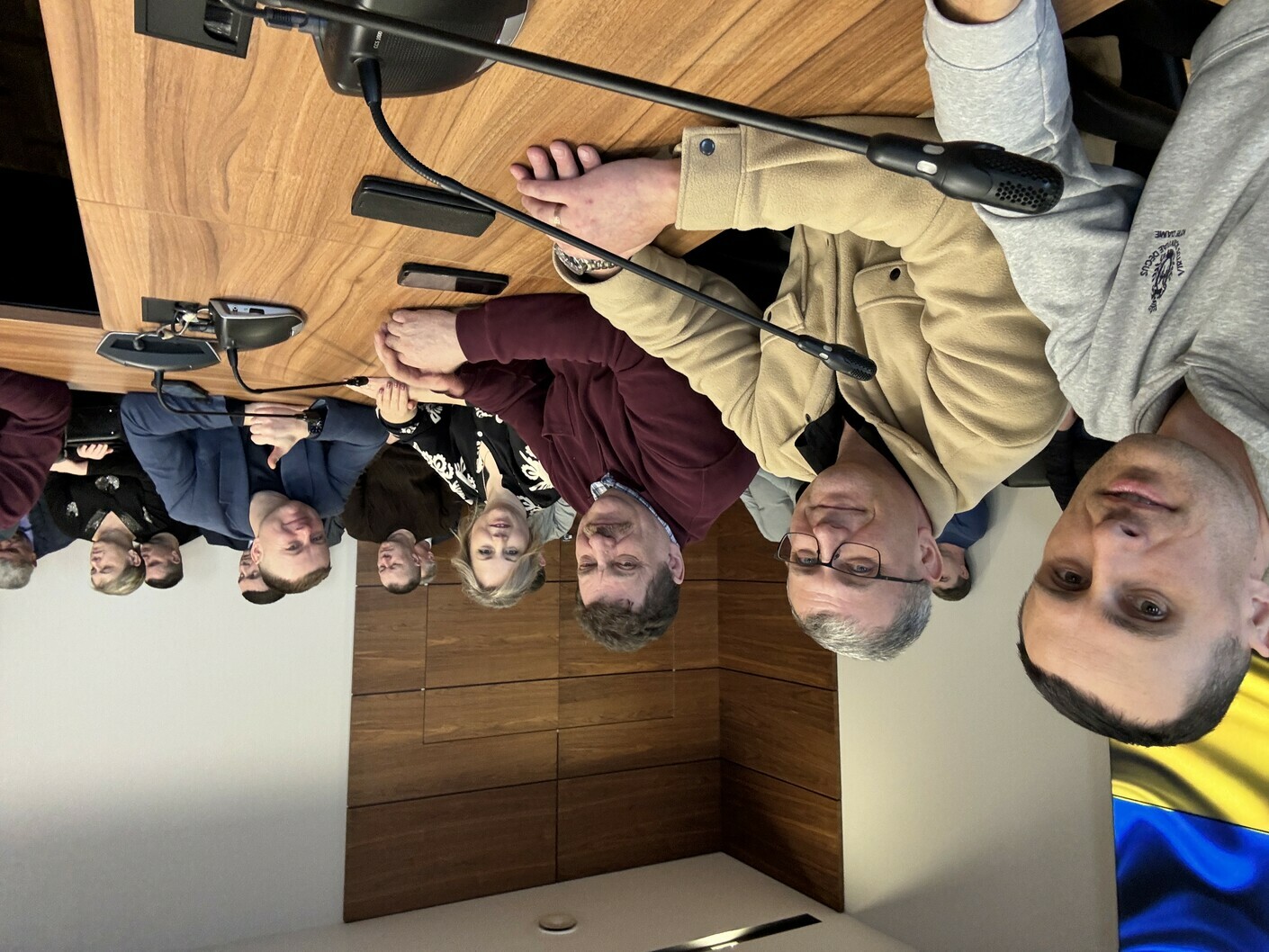
A working meeting of Poltava region community leaders with the Head of the Poltava Regional State Administration, during which Myroslav Nosa did not hesitate to ask directly, ‘Why are regional authorities engaged in collecting statistical data rather than assisting communities in their development?’
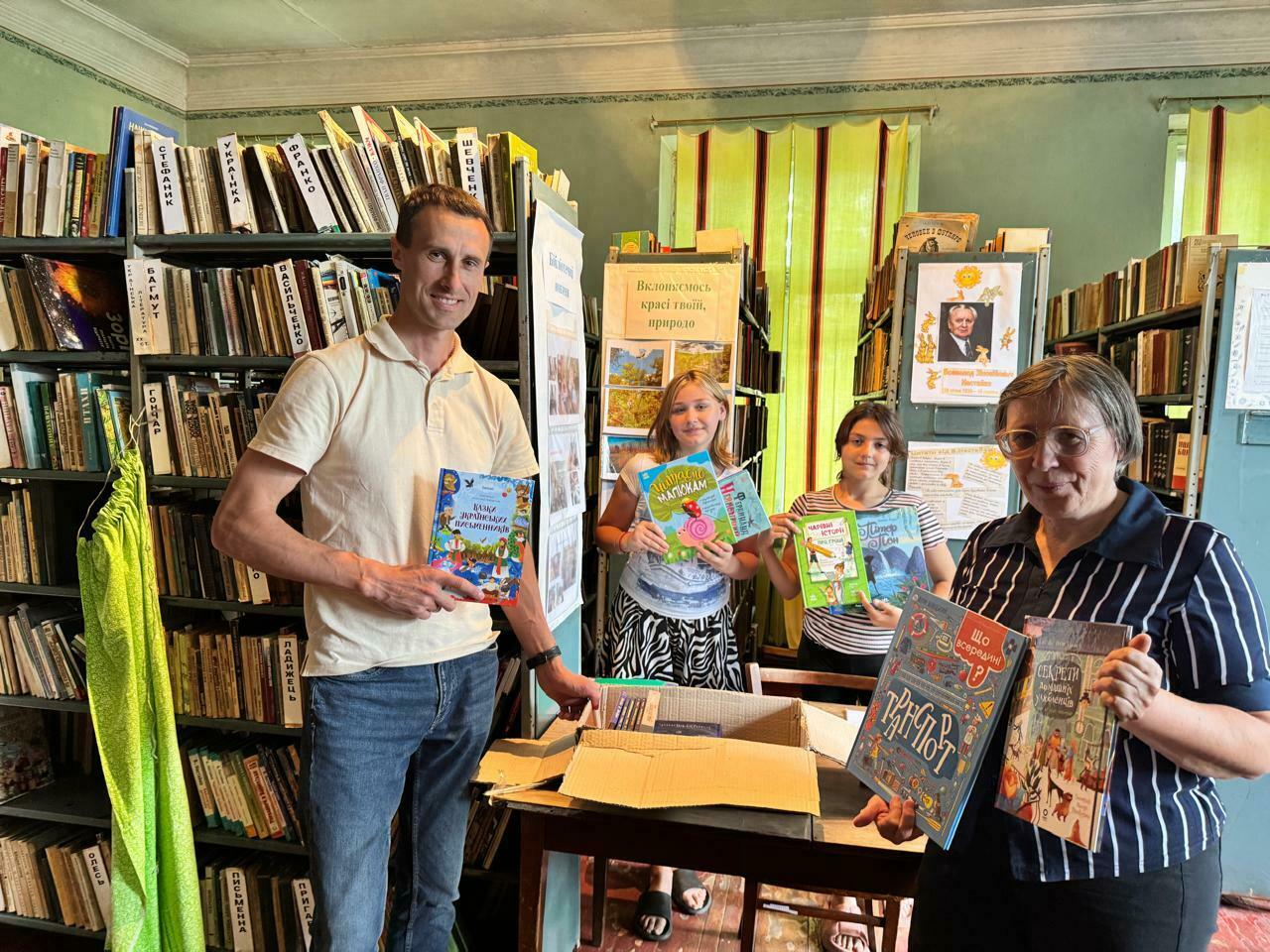
Myroslav Nosa brought new books to the village library
10 March 2026
П'ять громад з різних областей України об'єдналися для співпраці з польським містом Грибів
П'ять громад з різних областей України...
Міністерство розвитку громад та територій погодило проєкт унікальної угоди: до співпраці з одним польським містом...
10 March 2026
З 18 % до 30 % вступників профтехів. Як у Решетилівці профорієнтаційний хаб працює на благо громади
З 18 % до 30 % вступників профтехів. Як у...
Шоколадний фонтан поруч із віртуальним зварювальним апаратом, тренажер вантажівки і власноруч зібраний симулятор...
10 March 2026
НАДС затвердило методичні рекомендації щодо...
Національне агентство України з питань державної служби (НАДС) затвердило Методичні рекомендації щодо здійснення...
10 March 2026
Українські громади запрошують на 5-денну резиденцію “Місто, що навчається: освітня модель Львова”
Українські громади запрошують на 5-денну...
Міський департамент освіти та культури спільно зі Школою муніципального врядування Університету UNBROKEN оголошують...