



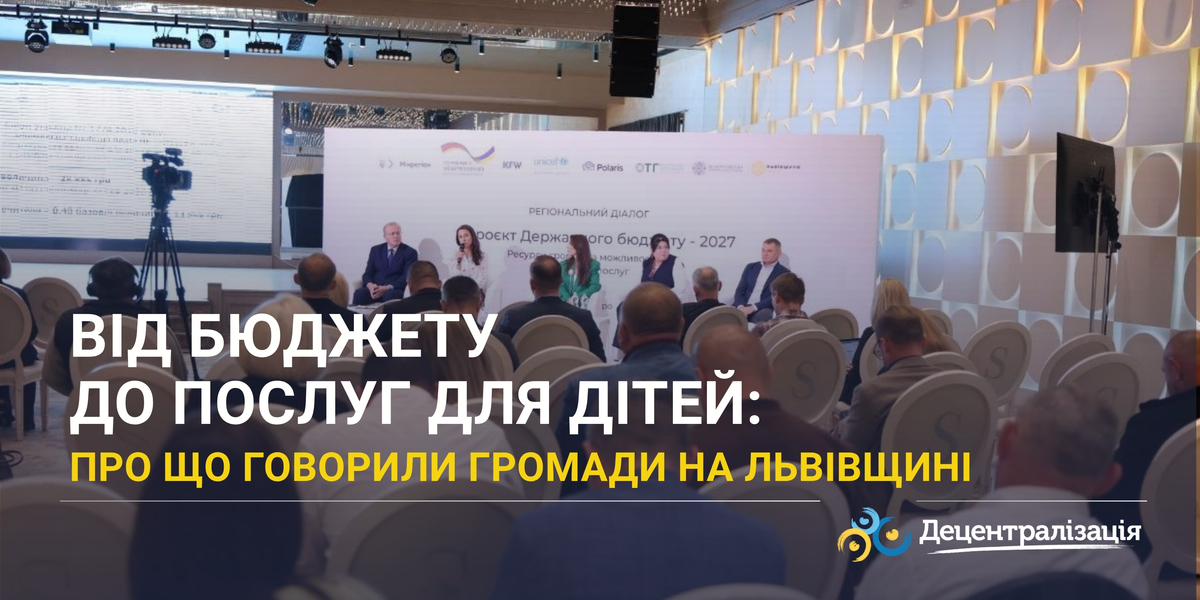
The first part of the budget discussion in Lviv region focused on the financial capacity of communities and the rules for allocating funds. The second part was devoted to how these decisions affect children and families: whether they have access to high-quality education, a safe environment, and inclusive and social services.
A cross-cutting theme was the shift in focus: to assess not only the volume of expenditure or the number of facilities built, but also what children actually gain as a result of budgetary investments. The event was organised by the All-Ukrainian Association of Amalgamated Territorial Communities (AAATC) with the support of the Swedish-Ukrainian Polaris project and UNICEF Office in Ukraine.
Grants and preparation of teams
Mykhailo Khmil, Acting Executive Director of the Association of Local Authorities “Carpathian Euroregion – Ukraine”, presented a practical tool to search for funding. It is a digital platform with a map of communities, a catalogue of grant programmes, a Community Development Academy and a participant’s dashboard.
Mykhailo Khmil explained that the catalogue contains over 300 programmes. Communities can search for opportunities by region, type of applicant, and topic. However, the fact that a programme is listed in the catalogue does not necessarily mean that the call for applications is open: before preparing an application, it is essential to check the conditions and submission deadlines.
The Association also plans to set up training groups for communities that lack specialists in project and grant management. According to Mykhailo Khmil, teams of five or more people will be able to take part in the training, and the Association plans to develop the training programme in cooperation with Lviv Polytechnic National University.
The outcome of these investments is children who receive services
Anastasiia Sofiienko, Deputy Minister of Education and Science of Ukraine, called on communities to view educational expenditure in terms of its impact on children.
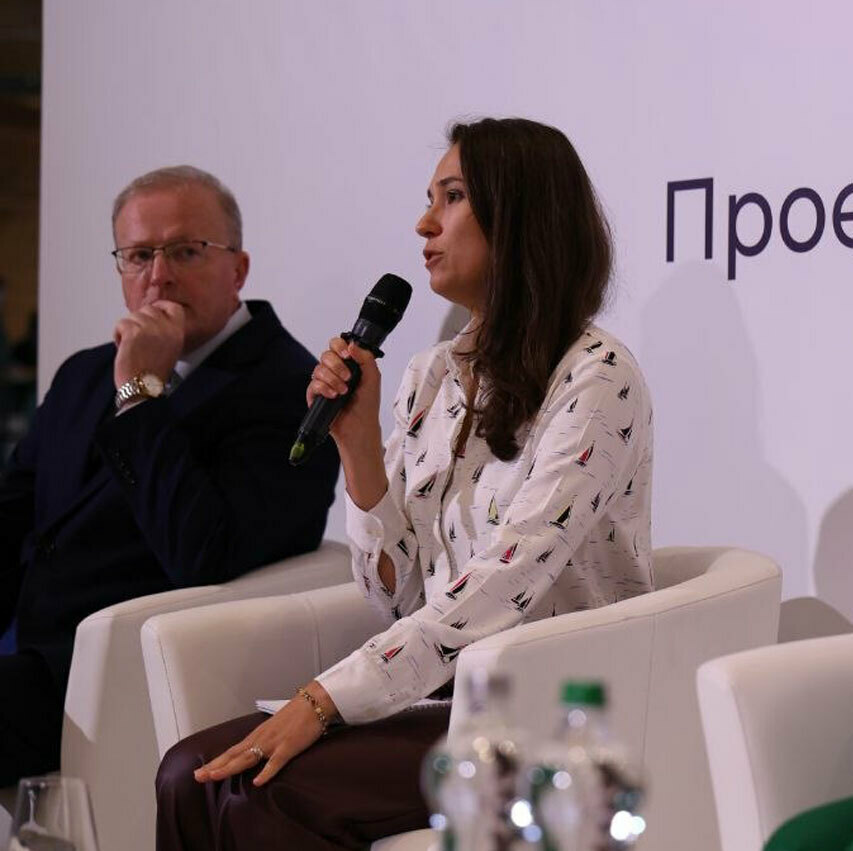
‘The indicator is not the number of bomb shelters or the amount of funding allocated to them, but the number of children who, thanks to these bomb shelters, have returned to classroom learning,’ she emphasised.
Anastasiia Sofiienko reported that, in the draft budget for 2027, funding for school meals is set to increase from 14 to 19 billion hryvnias. Other areas she mentioned included bomb shelters, school kitchen units, modern educational spaces, the development of pre-school education, and school buses. From September, the calculation of the education subvention formula has once again taken into account all hours in the curriculum, some of which communities covered at their own expense after the outbreak of full-scale war.
The issue of inclusive education was raised separately during the discussion. Ihor Kobryn, a representative of UNICEF Lviv regional office in Ukraine, highlighted the need to coordinate educational and social services for children with disabilities. Support for a child will not ensure access to education if the school building itself is inaccessible to them.
Anastasiia Sofiienko explained that teaching assistants are funded through the education system, whereas support for children falls within the remit of social policy. Therefore, full support requires cooperation between the two systems. She also reported that funding for the inclusive education subsidy will amount to UAH 450 million this year and UAH 490 million next year, although the estimated requirement, she said, stands at UAH 1.5–1.8 billion.
Planning the budget around children’s needs
Oksana Tsiupa, UNICEF National Consultant on Child-Friendly Budgeting, emphasised that planning should not begin with a list of institutions that need to be maintained, but with the needs of children and the services required to meet those needs.
‘We need to understand and answer four questions together: what to fund, for whom, to what extent, and what outcome we want to achieve,’ said the expert.
This approach involves that the community first identifies the needs of different groups of children and families, assesses the availability of services and its own financial capacity, and then sets budget priorities and outcome indicators.
The data helps identify what needs to be changed
Andrii Korniienko, a public finance expert at the Institute for Budgetary and Socio-Economic Research, presented the findings of a study on child-centred budgeting. He said that in most of the communities studied, nominal expenditure on children had risen; however, when adjusted for inflation, it remained below the 2021 level.
The analysis also revealed significant differences in expenditure per child, even in the same community. This is partly due to the nature of the services provided, but in some cases it is due to insufficient capacity of the facilities. Andrii Korniienko pointed out that the number of children in communities is falling, yet the network of facilities is not always adapting accordingly.
‘It is not always the case that more funds spent by communities mean better services for children,’ he noted.
The expert’s recommendations included the use of relevant and detailed data, the evaluation of the outcomes of budget programmes, and the strengthening of cooperation between community departments. For small communities with insufficient resources to maintain separate institutions or employ specialist staff, one solution could be to cooperate with neighbouring communities.
Community practices: From school buses to accessible ground floors
Oleh Paska, Director of the Department of Education and Science at the Lviv Regional Military Administration, emphasised that the primary outcome of education policy should be the quality of teaching. He called on communities to ensure that good teachers are recruited to lyceums and spoke about a pilot project for early career guidance: schools identify children’s aptitudes as early as Grade 4 to help them choose a direction for their future learning.
Ivana Popyk, Secretary of the Novoiavorivs community, shared examples of local investment in children: the community supports 20 different sports, funds training sessions and competitions, as well as a programme for gifted children and young people. For children from rural areas, transport to arts and sports schools has been organised, with travel costs covered by the local budget.
At the same time, she highlighted the need for more stable funding for individualised and inclusive education. According to her, 57 students in the community receive individualised tuition, and the costs for 39 teaching positions are covered by the local budget. Due to the growing need for teaching assistants, the community is requesting that subsidies be allocated more frequently, rather than just once a year.
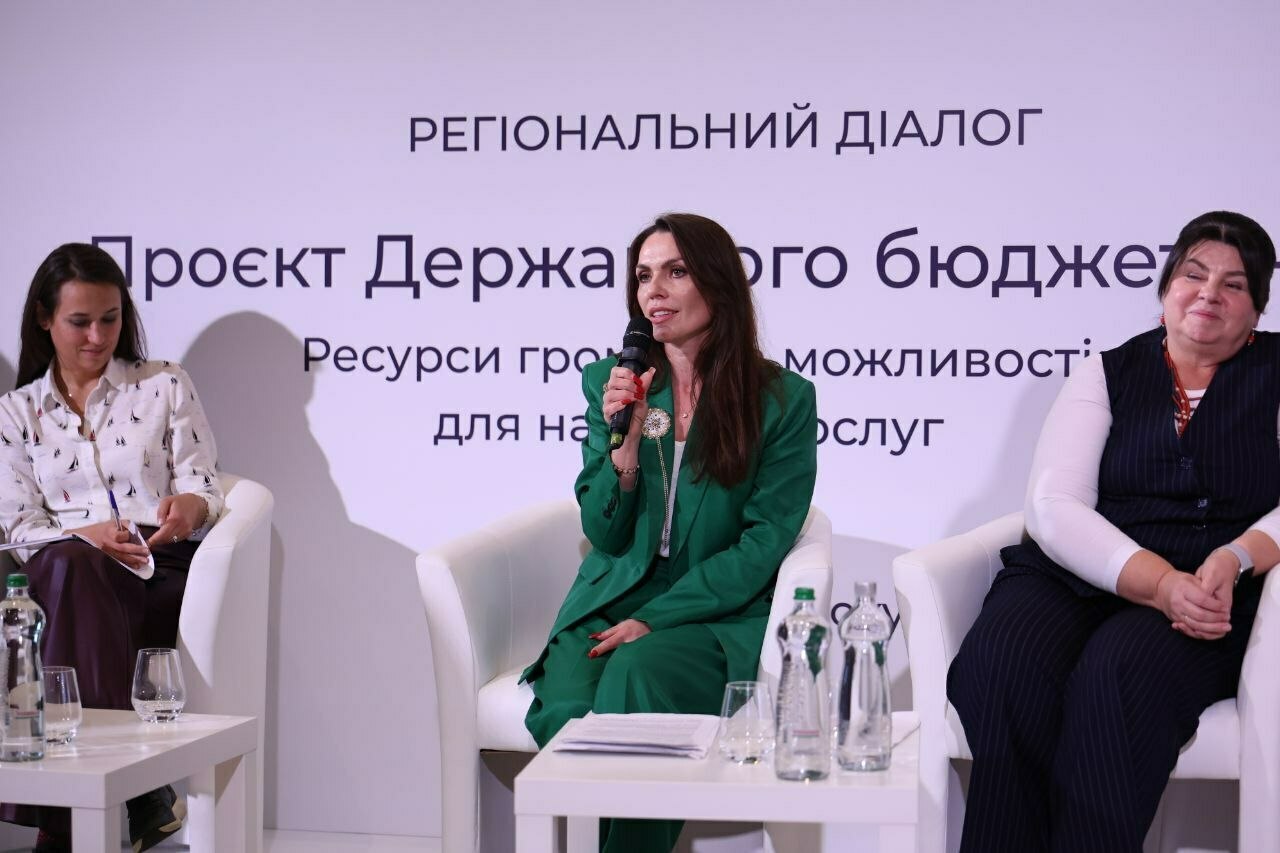
Nadiia Hnatkovska, Head of the Humanitarian Department at Mostyska City Council, explained that around 70% of the community’s budget is allocated to education. Practical solutions include adapting an old school building for a pupil who uses a wheelchair: core educational services have been organised on the ground floor so that the child can access them.
She also shared an example of a family with three children who, she said, had saved around UAH 6,000 in two months thanks to school meals. She called for predictable funding for the programme so that communities would not have to review it mid-year.
Taras Dobrivskyi, Executive Director of the All-Ukrainian Association of Amalgamated Territorial Communities, raised the issue of errors in the calculations of the education subvention, which had resulted in some communities receiving excess funds whereas others had been underfunded. He asked representatives of the Ministry of Education and Science to explain how these errors would be corrected.
Anastasiia Sofiienko explained that the transfer of funds for school meals via the regional authorities should enable a more rapid adjustment of their distribution, particularly in view of changes to the format of teaching. She said that the errors identified are due to be corrected by December.
Taras Dobrivskyi linked this situation to the broader issue of budgetary relations between the state and communities. He emphasised that communities need to know in advance how much funding they can expect, and that allocation via the regions raises questions about the reliability of the data and the fairness of the decisions.
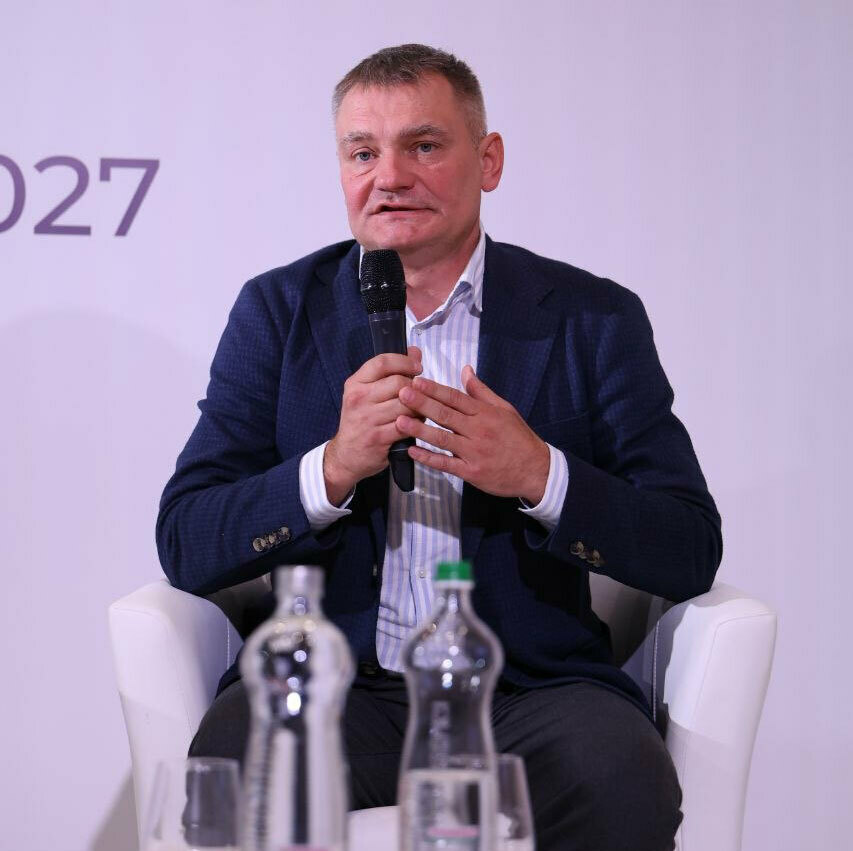
‘The best option is to establish direct budgetary relations straight away. Funds should be channelled to communities, as required by the principles of decentralisation,’ said Taras Dobrivskyi.

 PIT, reverse transfer, and community needs: All-Ukrainian Association of Amalgamated Territorial...
 The Multiannual Financial Framework 2028 – 2034: Commission proposals, main changes and the state...