Social taxi for an accessible life: how U-LEAD helped Kremenets municipality introduce a new service
The Social Taxi service has been operating in the municipality of Kremenets in Ternopil Oblast since 1 July 2026. It was introduced by the Social Services Centre with expert and advisory support from U-LEAD with Europe.
For people whose mobility is limited due to age, disability or medical conditions, even ordinary everyday tasks can be difficult. A trip to the doctor, a medical examination or rehabilitation, sorting out paperwork, visiting the bank or the Pension Fund — all these things require not only time but also the ability to physically get to the right place. If a person is unable to use public transport independently, even these seemingly ordinary tasks present a considerable challenge. Therefore, accessible transport for this demographic is about much more than simply getting from one place to another. It offers the opportunity to manage everyday affairs independently, receive the necessary assistance and stay involved in public life.
Social taxi service helps to overcome these barriers. The service has been operating in the municipality of Kremenets in Ternopil Oblast since 1 July 2026. It was introduced by the Social Services Centre with expert and advisory support from U-LEAD with Europe.
More than just transport: access to essential services
The municipality of Kremenets is one of the largest in Ternopil Oblast. It comprises over 40 settlements, so accessibility of social and healthcare services is a key concern here. For people who are unable to use public transport independently due to their health or age, even a routine trip to a hospital or healthcare facility can be a daunting task.
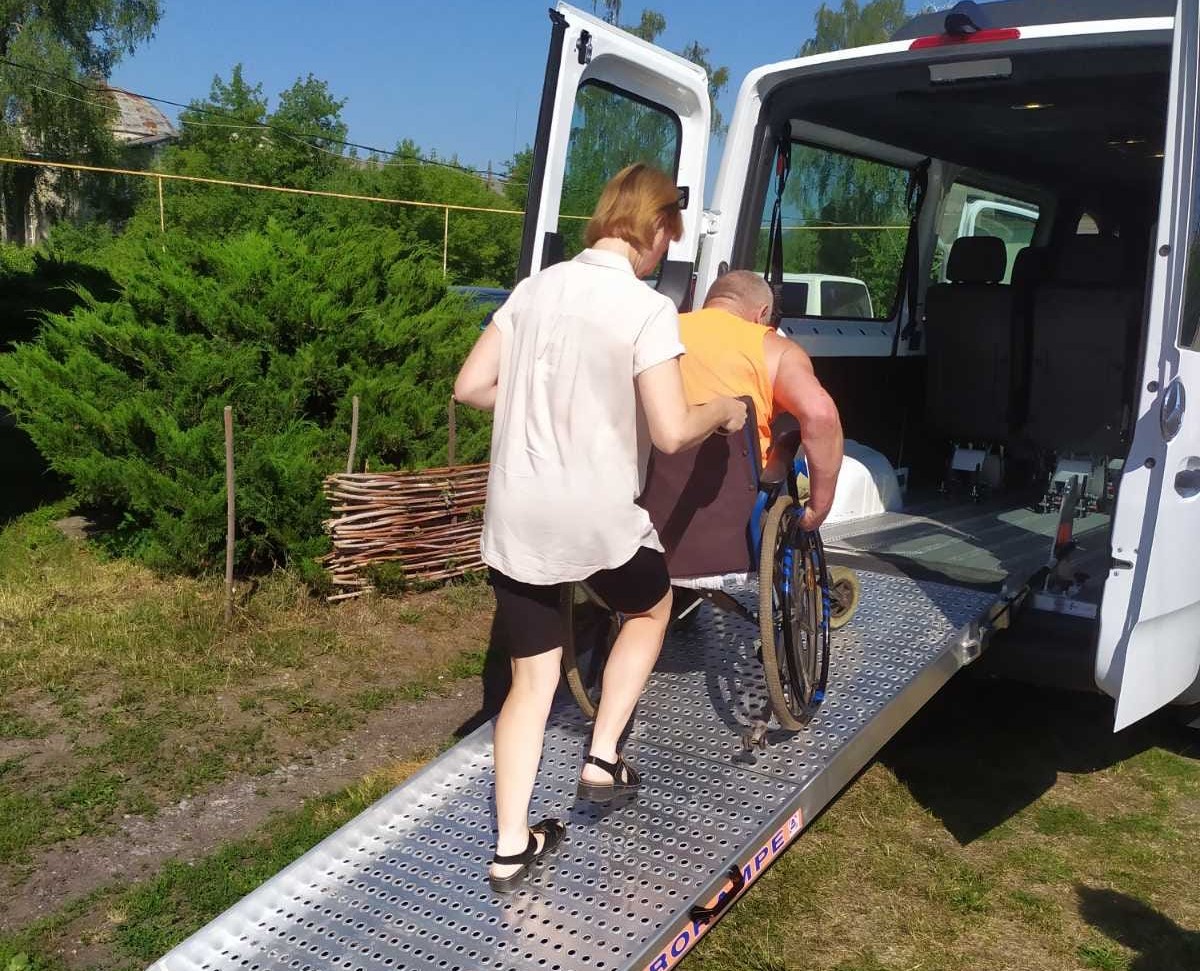
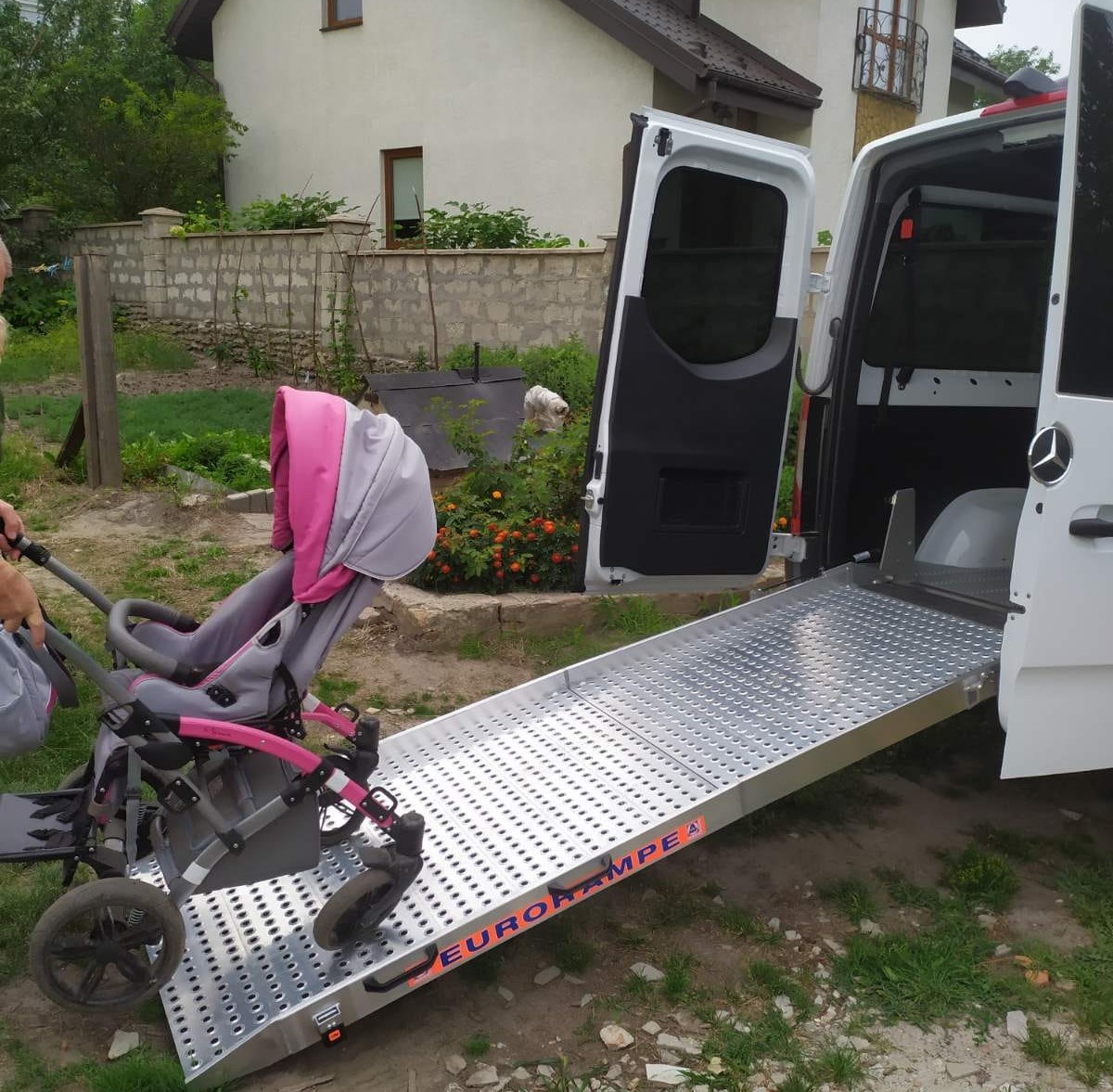
To overcome this obstacle, the municipality introduced the Social Taxi service. A specially equipped vehicle with a ramp helps residents with reduced mobility to access healthcare and social services, the Administrative Services Centre, banks and the Pension Fund, as well as to attend cultural, sporting and other events.
“There was a case where an elderly woman who uses a wheelchair needed special footwear. It was only available in Ternopil, but she couldn’t get there on her own. The social taxi meant she was able to travel to the regional capital and get what she needed. Without the social taxi, dealing with this issue would have been much harder,” says Liliia Shydlovska, the Deputy Director of the Social Services Centre.
The service is available free of charge. It is offered to people with disabilities, including those with musculoskeletal or visual impairments, children with disabilities, people aged 60 and over, as well as other categories of residents with reduced mobility, as defined by the Regulation “On the Provision of the Social Taxi Transport Service by the Municipal Institution ‘Social Services Centre’ of Kremenets City Council”. War veterans and combatants with mobility impairments are entitled to priority access to the service. To date, no veterans have applied for this service, but the Social Services Centre continues to inform them of this option.
“We can see that people are interested in the social taxi service, and demand is gradually increasing. We explain how to use it and what situations we can help with. Importantly, people outside Kremenets are also learning about the social taxi service. We’re teaming up with starostas, who spread the word in the municipality’s villages, as well as with social workers who work directly with people on the ground. Every case comes with its own specific needs and circumstances,” says Liliia Shydlovska.
From need to service: the help provided by U-LEAD
The municipality of Kremenets has long been aware of the need for a social taxi. According to Mykola Matviiuk, the Deputy Mayor for the Affairs of the Council’s Executive Bodies, the municipality had made several attempts to secure funding to purchase the vehicle, but previous applications had been unsuccessful.
Ultimately, through a partnership with a German town of Ilsenburg and cooperation with German partners, the municipality received the specialised vehicle. However, acquiring it was only the first step. For the vehicle to begin operating regularly and effectively to meet residents’ needs, decisions had to be made regarding who would organise the transport, who would be eligible for the service, how to apply, the rules governing journeys, and how the vehicle’s running costs would be funded.
In other words, the municipality needed not just to have a vehicle, but to create a clear and effective system for delivering this new social service.
It was this stage in particular where support from U-LEAD with Europe proved crucial. U-LEAD experts provided the municipality with expert and advisory assistance, covering both the practical organisation of the service and its regulatory framework.
“During the consultations, municipal officials, together with specialists from the Social Services Centre and lawyers, examined how similar services are organised in other municipalities, which models could be adopted, which target groups should be given priority, and which organisational and legal issues needed to be resolved before the service could be launched,” says Valerii Mikulich, an Adviser on Decentralisation and Local Self-Government at the Regional Office of U-LEAD with Europe.
U-LEAD experts helped structure the process, shared the hands-on experience of other municipalities, highlighted important details and provided recommendations on drafting the Regulations on the Provision of Social Taxi Services.
“It was crucial for us to understand not only the general principle behind the social taxi service, but also all the practicalities. How to define the categories of beneficiaries, how to manage applications, where and how frequently transport can be provided, and how to organise rides to destinations outside the municipality. The Regulations needed to cover many aspects that we hadn’t even considered at the outset. The advice and assistance from U-LEAD experts allowed us to systematically address these issues, identify potential difficulties and draft a document to regulate the service’s operations,” notes the Deputy Mayor Mykola Matviiuk.
This is a significant outcome of the expert support: the municipality has been able to understand how the service works, identify its own needs and adapt the practices of others to the local context.
The Regulation that was drawn up set out the procedure for providing the service, the terms of use, the categories of beneficiaries and organisational aspects of transport. The document served as the basis for the operation of the social taxi service and helped transform the existing transport system into a fully-fledged tool for supporting local residents.
“U-LEAD’s assistance in drafting the Regulation was critical for us. We studied other municipalities’ social taxi models, the specific considerations to bear in mind, and who could qualify for the service. The experts provided guidance and advice on what to focus on. Their input enabled us to draw up a document governing the service’s operation,” adds Liliia Shydlovska.
A service the municipality assumes responsibility for
Launching the social taxi service involved not only organisational decisions but also the municipality’s commitment to ensuring its continued operation. Vehicle maintenance, the driver’s wages, fuel and servicing all require ongoing expenditure. The municipality has therefore taken on these costs, allocating funding from the local budget.
According to Mykola Matviiuk, this was a conscious decision: this service matters to everyone who can reach their destination with its help. The value of the service, he says, is not measured solely by the number of trips or revenue from paid services.
“We recognise that running the social taxi service represents an additional cost to the budget. However, we have consciously taken on these obligations so that people can use the service, meet their needs, be amongst others and socialise. It’s about quality of life. The service is still developing; we are gaining experience and resolving operational issues, but the main thing is that it is already up and running and helping people,” says the Deputy Mayor.
In addition, he specifically commends the work of the team that ensures the day-to-day running of the social taxi service. According to him, Nataliia Dranchuk, the Director of the Social Services Centre, together with her team, has done a tremendous job in implementing the service. Indeed, it is the Centre’s team who have put in a great deal of effort both in organising the service within the municipality and in the ongoing management of the process, coordinating bookings, communicating with residents and helping to make the service accessible to those who need it.
“We are also sharing information about the social taxi service through starostas and social workers. This is especially important for a large municipality where people are spread across different villages and cannot always find out about new opportunities on their own,” adds Liliia Shydlovska.
The social taxi as part of advancing the municipality’s social services
For the woman who was able to travel to Ternopil to buy the shoes she needed, the social taxi provided a way to meet a specific practical need. For others, it might be a trip to get a medical check-up, undergo haemodialysis, attend physical therapy, sort out paperwork or meet with loved ones. In every case, the journey is about more than just the destination; it’s about what matters to the passenger: health, independence, social interaction, and the chance to remain in control of their circumstances without having to go without essential services simply because transport is unavailable.
“The case of Kremenets municipality highlights how a combination of local initiative, team commitment and expert support from U-LEAD can translate a long-standing need into a service that is already up and running,” says Nataliia Onyshchuk, the Head of the Regional Office of U-LEAD in Ternopil Oblast.
Introducing a social taxi service is also an important step in the development of social services in Kremenets municipality. After all, accessibility begins beyond just wheelchair-accessible entrances or barrier-free premises. It begins with the understanding that people have different needs and capabilities. The municipality must therefore seek solutions that enable everyone to access services, exercise their rights and be part of public life. This is about human dignity, listening to people’s needs and being ready to respond to them with concrete actions rather than just words.

Attached images:

Область:
Тернопільська областьГромади:
Кременецька територіальна громадаSource:
Програма U-LEAD

27 November 2026
Government raises basic salaries for staff at...
The Cabinet of Ministers of Ukraine adopted a resolution to increase the basic salaries of staff at Administrative...
27 November 2026
Безпечне дитинство в бюджеті-2027: як узгодити державні гарантії та можливості громад
Безпечне дитинство в бюджеті-2027: як узгодити...
У Ружинській громаді Житомирщини безпечне підвезення учнів ускладнює незадовільний стан сільських доріг, якими щодня...
26 November 2026
Experience of French communities for Ukrainian...
French municipal experts can help train Ukrainian project managers who will assist communities in developing projects...
26 November 2026
Як громадські організації можуть підсилити муніципалітети у проєктах Interreg
Як громадські організації можуть підсилити...
Фонд Східна Європа та організація Cities4Cities запрошують вас 8 грудня долучитися до презентації звіту "Участь ОГС в...