From agreements to investment projects: What URC-2027 should be for communities
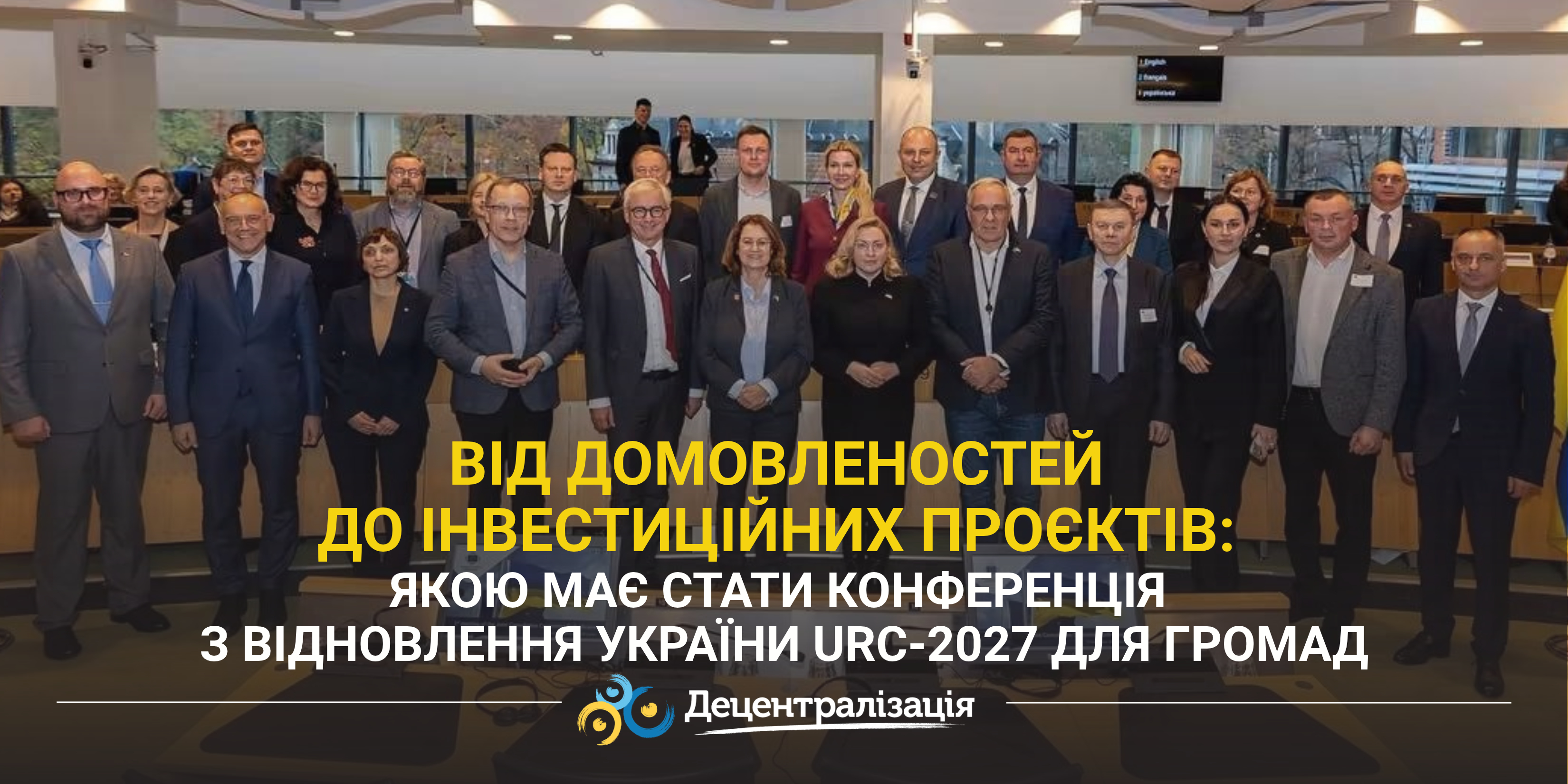
Preparation of Ukrainian communities to use EU cohesion policy instruments, attract investment, develop municipal partnerships, and transform international agreements into practical recovery projects. These issues formed the focus of discussions on the forthcoming URC-2027 Ukraine Recovery Conference in Tallinn during the first meeting of the Joint Consultative Committee between the European Committee of the Regions and Ukraine, which was held in Brussels on 20 November 2026. Representatives of the Ukrainian Government, Estonia, and local self-government discussed the future agenda of the Conference, as well as how to ensure the practical involvement of communities in its preparation and in the use of its outcomes.
The Joint Consultative Committee (JCC) was established to facilitate ongoing dialogue between representatives of Ukrainian local self-government and the European Committee of the Regions. Its activities are designed to promote the participation of communities and regions in European integration processes, the exchange of experience, and the development of joint recommendations. At the inaugural meeting in Brussels, the participants approved the Committee's Rules of Procedure and Work Programme for 2026–2030.
One of the practical areas of cooperation was the preparation for URC-2027, which is scheduled to be held in Estonia. A separate session was devoted to this issue, chaired by the Ukrainian JCC Co-Chair, Head of the Kharkiv Regional Council Tetiana Yehorova-Lutsenko.
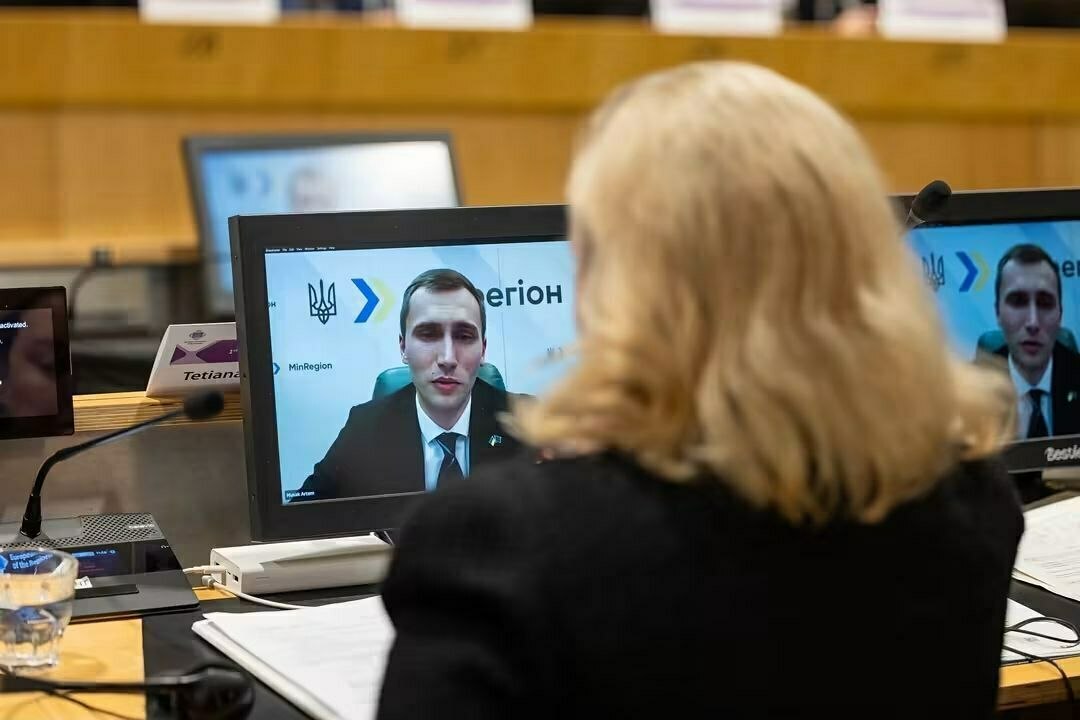
Artem Husak: From humanitarian support to joint projects
Artem Husak, Deputy Minister for Communities, Territories and Internally Displaced Persons of Ukraine responsible for European integration, who joined the meeting remotely, welcomed the establishment of the Joint Consultative Committee and emphasised the importance of this new format for deepening cooperation between Ukrainian communities and regions and their European counterparts.
He stressed that Ukraine has already taken a few steps in regional policy and decentralisation, which are essential for progressing towards EU accession. In particular, he referred to the development of a regulatory framework for the classification of territories, the advancement of strategic planning, the updating of Ukraine’s plan for fulfilling its commitments to the EU, and the preparation of a methodology for the delineation of powers in line with the principle of subsidiarity.
At the same time, the Deputy Minister stated that a considerable amount of work still lies ahead, related to harmonising approaches to territorial development, integrating national and regional strategies, and fulfilling the country’s commitments to European integration.
Turning to the issue of preparations for URC-2027, Artem Husak emphasised the need to present specific results of work at national, regional, and local levels.
‘We need to prepare and present specific, practical results at Government level, as well as at regional and local levels. One opportunity to put our cooperation into practice is the Conference, which we are currently organising jointly with our Estonian colleagues, the European Commission, our associations and communities. Our aim is to build on the work of previous Conferences, in particular by emphasising regional development and Ukraine’s preparation for participation in European cohesion policy,’ noted the Deputy Minister.
Thus, the forthcoming Conference is perceived not only as an international event to mobilise aid for reconstruction, but also as an opportunity to strengthen the readiness of Ukrainian local self-government to work with European financial and governance instruments.
According to Artem Husak, the priorities of the conference include supporting frontline regions, meeting urgent needs to get through the winter, preparing communities for the implementation of the EU cohesion policy, investment projects, and capacity-building for municipalities and regions.
The Conference plans to pay particular attention to the resilience of communities and the reintegration of people who have been forced to flee their homes due to the war, particularly those who have left the country.
‘We will also focus on the resilience and reintegration of people who have been forced to flee their homes and go abroad. It is important that communities can continue to provide essential services, such as housing, employment, education, and social support. We will pay special attention to inter-municipal and inter-regional cooperation and to establishing partnerships to facilitate their practical development,’ he emphasised.
This approach involves combining the restoration of infrastructure with the provision of living conditions for the people. Indeed, the reconstruction of housing, the development of the local economy, and access to education and social services directly influence the population’s ability to return and integrate.
One of the key messages of the Deputy Minister’s speech was the need to move away from international support that is predominantly humanitarian in nature towards long-term joint projects.
‘We will encourage the participation of Ukrainian regions and communities. We are convinced that this should be a practical tool for recovery and resilience. We need to move beyond humanitarian aid and move towards joint projects,’ emphasised Artem Husak.
He announced plans to organise a working group in 2027 to present practical examples of inter-regional and inter-municipal cooperation. The Deputy Minister referred to the partnership between Zhytomyr and Estonia as one example of such cooperation.
The Conference will also include an exhibition area where the experience of cooperation between Ukrainian communities and international partners can be showcased.
‘It is important to us that the Conference becomes a platform where Ukraine not only presents its needs, but where negotiations also take place on priorities and ways to achieve them,’ noted Artem Husak.
He said that, at the time of the SCC meeting, work was ongoing to invite representatives of Ukrainian regions and communities to take part in the forthcoming Conference.
Kadri Tillemann: URC-2027 focuses on regional policy, investment, and partnerships
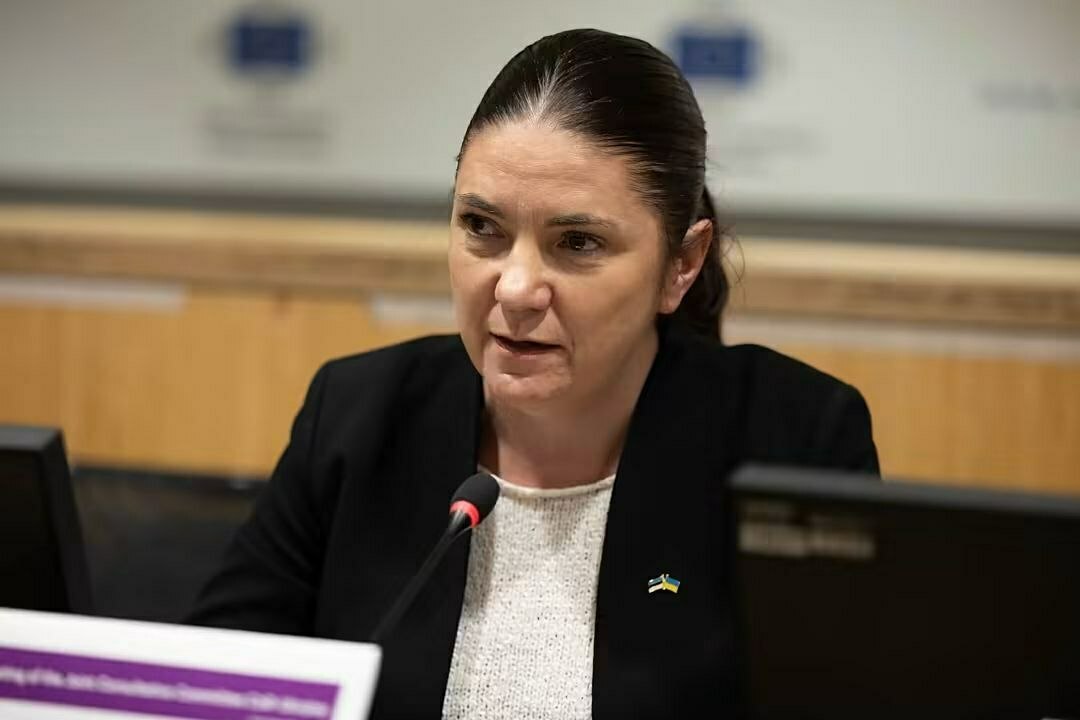
The Estonian perspective was presented by Kadri Tillemann, Project Manager responsible for the preparation of URC-2027 at the Ministry of Regional Affairs and Agriculture of Estonia.
She stressed that hosting the Conference is a great honour and responsibility for Estonia. However, it is important that its outcomes contribute not only to addressing Ukraine’s immediate needs, but also to sustainable recovery and development in the long term.
One of the key topics will be Ukraine’s European integration, including the preparation of regions and municipalities to meet the requirements of Negotiating Chapter 22 “Regional Policy and Coordination of Structural Instruments”.
Kadri Tillemann highlighted Ukraine’s progress in reforming local self-government and its ability to continue with these changes amidst the full-scale war. She also drew attention to the experience of Estonia, which had undergone its own decentralisation reform, and the complexity of such transformations even in peacetime.
A separate part of the Conference will focus on municipal investment, access to credit, and capacity-building for small communities.
The Estonian representative supported the idea, raised earlier during the JCC meeting, of developing centres of municipal expertise, in particular to assist small communities in preparing projects and working with international financial institutions.
‘We know that there are both challenges and opportunities in municipal investment, particularly in terms of access to credit. This is particularly true of small rural municipalities, whose capacity needs to be developed. We have already discussed the creation of centres of expertise today. Such centres exist in other countries, so the possibility of replicating this experience to support small communities and ensure their access to assistance from international financial institutions is worth considering,’ noted Kadri Tillemann.
Housing policy will be another priority. According to the Estonian representative, the challenges in Ukraine's housing sector require a comprehensive approach, particularly taking into account the needs of internally displaced persons, socially vulnerable groups, and veterans.
The relevant questions will be addressed together with international partners, combining housing solutions with access to social services and opportunities for people’s reintegration.
Special attention will be paid to developing partnerships between Ukrainian and European municipalities. This will involve both bilateral cooperation and the use of European programmes and instruments, in particular Interreg. Related thematic events and meetings with donors interested in supporting Ukraine’s recovery are also planned.
Russian assets, investment incentives, and the involvement of small communities: proposals during the discussion
Members of the Joint Consultative Committee discussed their own expectations for URC-2027 and put forward issues which, in their view, need to be taken into account when preparing for the Conference.
Mayor of Mykolaiv Oleksandr Sienkevych raised the issue of funding sources for the restoration of Ukrainian territories. He emphasised that the rapid restoration of destroyed infrastructure needs significant resources, and proposed including a discussion on the use of russian assets to finance the reconstruction of Ukraine on the Conference agenda.
To explain his position, the Mayor drew an analogy with liability for breaches of the rules: the costs of the damage caused should not be passed on to those who did not cause it.
‘I want this Conference to address the issue of russian assets and their use to finance the reconstruction of Ukraine,’ said Oleksandr Sienkevych.
His second proposal was to discuss the possibility of creating special economic conditions to attract investment to the territories most affected by the war.
‘We need to create free economic zones that will attract investment. And we need to start thinking about this now. Both issues must be discussed before the war ends – the use of russian assets and the creation of free economic zones in frontline regions,’ emphasised the Mayor.
The question of making the results of the Conference accessible to small communities was raised by Oleksandr Korinnyi, Head of the Novoukrainka City Council in Kirovohrad region.
He pointed out that a significant proportion of Ukrainian communities would not be able to take part in the event directly. Yet the outcomes of international agreements, technologies, and tools for cooperation should be accessible not only to large cities or Conference participants.
‘We have to find a way for small and medium-sized communities to benefit today from the outcomes, best practices, agreements, and technologies that will emerge in Tallinn,’ noted Oleksandr Korinnyi.
He said that small communities often have limited human resources, in particular a shortage of suitably trained specialists capable of working with international partners and preparing complex investment projects.
He also highlighted the difference in the ability of large cities and small rural communities to ensure the continuity of services after russian attacks. Whereas a large city can sometimes arrange for a damaged facility to continue operating from alternative premises, for a small community the loss of its sole facility or a key piece of infrastructure creates a far more difficult situation.
‘I am not talking now about the physical presence of the heads of village, settlement, and small councils in Tallinn. I am talking about the need for us to consider how to make use of the best practices and how to help these people prepare their teams. We need to start discussing how to use the URC as effectively as possible right now,’ emphasised Oleksandr Korinnyi.
He called for mechanisms to be put in place to involve small and medium-sized communities in the outcomes of the Conference, regardless of whether their representatives are physically present.
Oleksandr Vasylenko, Head of the Cherkasy District Council, emphasised the need to combine long-term restoration tasks with the urgent needs of Ukrainian territories that continue to face russian attacks. He said that frontline communities and regions need special attention, and that energy security should remain a key international priority.
‘This Conference should be dedicated not only to long-term reconstruction, but also to the immediate needs in the energy sector and other areas necessary to ensure Ukraine’s resilience today,’ noted Oleksandr Vasylenko.
He also supported the need to create opportunities for small communities to access international funding for their projects.
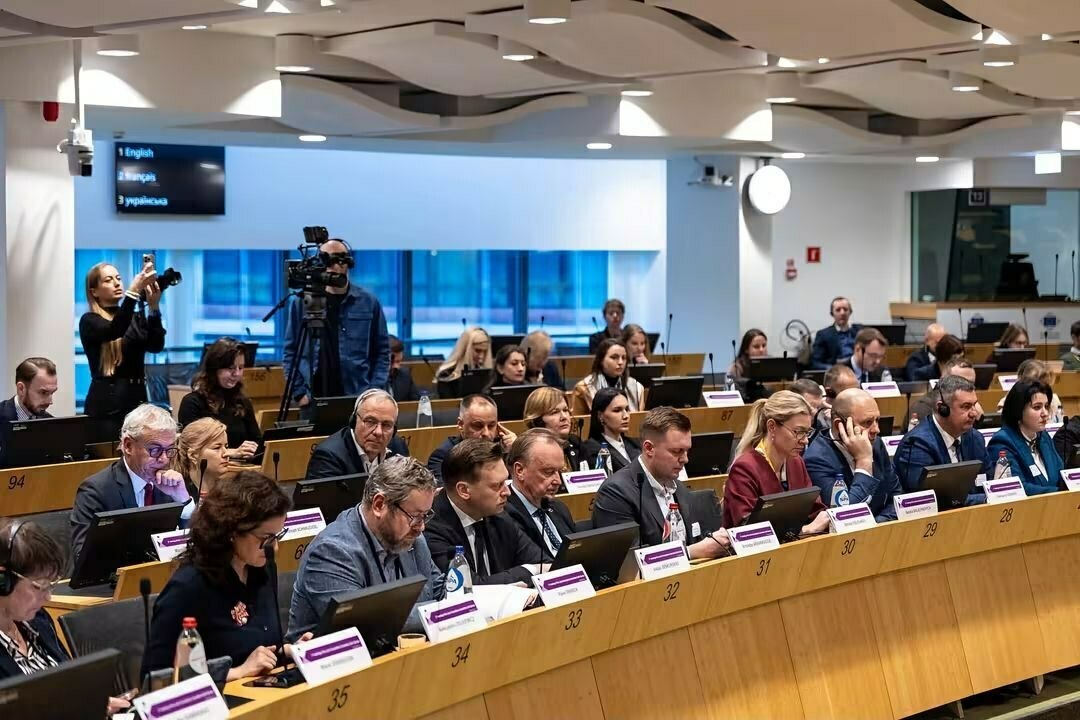
Serhii Morhunov: Conference results should be measured by the implemented projects
Mayor of Vinnytsia Serhii Morhunov proposed that preparations for the URC-2027 municipal track should focus on practical investment outcomes.
In his view, the main criterion for the success of the conference should not be the number of participants, memoranda signed or intentions announced, but the real possibilities for financing and implementing projects.
‘The most difficult part of international partnership is not reaching an agreement, but turning it into a completed project that really changes people’s lives. In my view, the success of URC-2027 and all future conferences should be measured not only by the number of participants, memoranda signed, or declarations of intent, but rather by the number of projects for which the conference itself has opened up a real path to funding and implementation,’ emphasised Serhii Morhunov.
He proposed five practical steps.
Firstly, the preparation of municipal projects has to begin before the Conference. Every priority project, he said, has to include a clear objective, a preliminary cost estimate, expected outcomes, a dedicated team, an assessment of the community’s financial capacity, and potential sources of funding.
The second proposal concerned the creation of a support system for project preparation. He emphasised that many communities lack sufficient resources to develop feasibility studies, project documentation, financial models, and to complete the necessary procedures.
‘We need a support system for project preparation, not just a search for funding for projects that are already prepared. Many Ukrainian communities lack the resources to prepare feasibility studies, project documentation, financial models, and to complete the necessary procedures. This is particularly true of small and medium-sized communities,’ said Serhii Morhunov.
He proposed, with the support of the European Commission, international financial institutions, and partner states, to establish a separate mechanism for technical and financial assistance, within the framework of existing instruments, to prepare municipal projects for funding.
The third proposal was to introduce, as part of the municipal section of the Conference, a special format known as the Municipal Investment Deal Room – a space for subject-specific negotiations between communities and potential financial partners.
The fourth direction is the use of varying financing models depending on the actual capabilities of communities.
Serhii Morhunov pointed out that not all Ukrainian cities are able to take out additional loans. This applies in particular to frontline territories, communities that have suffered significant destruction, and municipalities that have taken in large numbers of internally displaced persons.
Therefore, he believes it is necessary to use grants, preferential loans, a combination of grant and loan funding, guarantees and mechanisms to mitigate investment risks.
The fifth proposal was the introduction of a mechanism to follow up on the agreements reached after the Conference.
‘For hundreds of Ukrainian communities, restoration is not an abstract concept. It means reliable heating in winter, drinking water, public transport accessible to everyone, housing for people who have lost their homes, hospitals, schools and safe urban infrastructure. And behind every such project are people who cannot wait for years,’ emphasised Serhii Morhunov.
He proposed that the Joint Consultative Committee should contribute to the preparation of practical outcomes for the municipal track of URC-2027, in cooperation with the organisers of the Conference, the European Commission, financial institutions, and European municipalities.
The discussion revealed that Ukrainian representatives associate their expectations of URC-2027 primarily with the opportunity to move from general agreements to prepared investment projects, accessible financial instruments, and long-term partnerships.
Different priorities were highlighted: the use of russian assets for restoration, investment incentives for affected territories, access for small communities to the conference outcomes, support for energy resilience, and the need to follow through on agreements until they are implemented in practice.
All these proposals need further consideration. They do not constitute decisions adopted by the organisers of URC-2027 or the Joint Consultative Committee. However, their discussion at the first JCC meeting provides an opportunity to take the views of Ukrainian local self-government into account during the stage of shaping the agenda for the forthcoming Conference.
For Ukrainian communities, an important outcome of the preparations for URC-2027 could be not only the presentation of their own needs to international partners, but also the development of specific cooperation mechanisms that will help to mobilise resources, prepare investment projects, and implement them at the local level.
Decentralisation portal previously reported on the launch of the Joint Consultative Committee between the European Committee of the Regions and Ukraine, the adoption of its Rules of Procedure and Work Programme for 2026–2030, as well as the positions of representatives of the European Commission and the Ukrainian Government on the role of local self-government in European integration.
In a separate article, Decentralisation portal reported on proposals from representatives of Ukrainian communities on preparing to meet European standards, developing human resource capacity, accessing funding, and the involvement of local self-government in setting priorities for international support.
Tags:
Source:
Портал "Децентралізація"
27 November 2026
«Середа з U-LEAD»: каталог інформаційних заходів для громад на грудень 2026 року
«Середа з U-LEAD»: каталог інформаційних...
У грудні Програма «U-LEAD з Європою» проведе серію відкритих інформаційних заходів для представників органів...
27 November 2026
4 грудня відбудеться Форум цивільного захисту: синергія заради безпеки 2026. Реєстрація триває
4 грудня відбудеться Форум цивільного захисту:...
Представництво Фонду міжнародної солідарності в Україні запрошує долучитися до Форуму цивільного захисту: синергія...
27 November 2026
Уряд підвищив посадові оклади працівників органів місцевого самоврядування: оприлюднено постанову
Уряд підвищив посадові оклади працівників...
Кабінет Міністрів України переглянув розміри посадових окладів керівних працівників, спеціалістів та службовців...
27 November 2026
Безбар'єрність на етапі проєктування: як Дніпро змінює міські простори
Безбар'єрність на етапі проєктування: як Дніпро...
Перед ремонтом вулиць у Дніпрі фахівці вивчають, куди люди ходять і що ускладнює їм дорогу. Історія амбасадорки Ольги...