Half a million hryvnias for relocation. Interview with the community leader
Andrii Portnyi, Mayor of Sosnytsia in Chernihiv region, talks about his community’s efforts to tackle population decline and develop business, despite its proximity to the russian border
By Dmytro Syniak
In Sosnytsia community, a doctor who moves here and signs a ten-year contract is offered a salary of over UAH 40,000 a month, accommodation, a service car, and a further UAH 500,000 over two to three years. Yet even such a package does not help in attracting specialists. Over the years of full-scale war, the community has lost over 1,500 residents — almost a tenth of its population. Still, sewing workshops have opened here, the agricultural sector is growing, and 11 solar power stations already operate at municipal facilities. Andrii Portnyi, Mayor of Sosnytsia, spoke to Decentralisation about keeping people in the community and developing this border community despite the war and its remoteness from major centres.
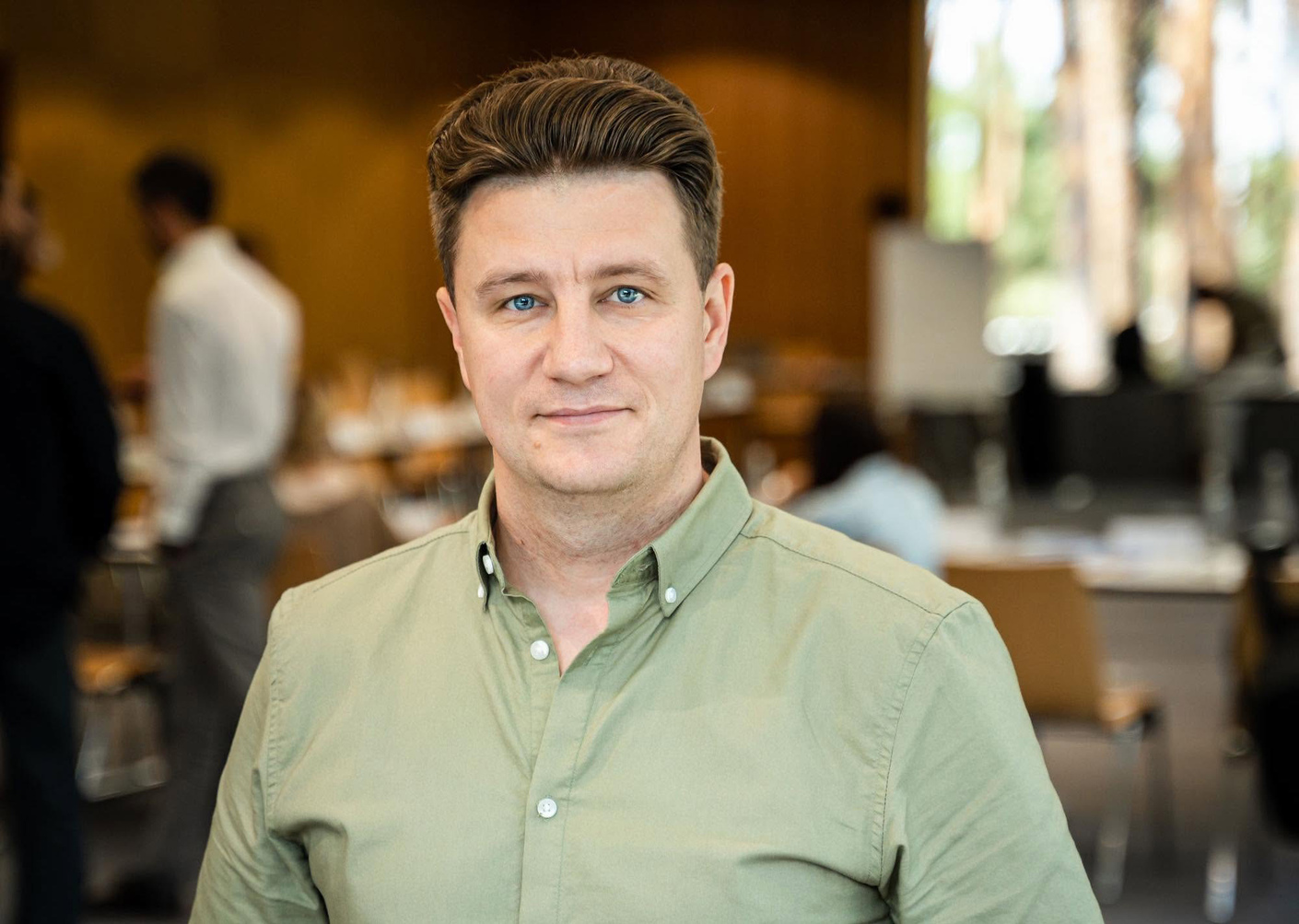
Фото 1-5. Andrii Portnyi, Mayor of Sosnytsia
How can the depopulation of the community be halted?
Over the past hundred years, Chernihiv region has lost around 1 million residents. In other words, the exodus of people from your region is a very lengthy process. To what extent has the war worsened it?
It has worsened it quite seriously. Before the full-scale invasion, we were literally fighting to keep every young family, every skilled worker, and every schoolchild… Then suddenly, many of them simply packed up and left. The majority of them were economically active, young people with a bright future. In total, because of the war, we have lost more than 1,500 residents – almost 10% of our population. Moreover, over 90 of our young men and women have been killed, over 50 are considered missing in action, and over 1,000 have joined the army. For a small community like ours, that is a great many, a great many…
Have internally displaced persons replaced these losses?
Very slightly, we only have around four hundred displaced people. But they do not come here not just because of security concerns. The fact is that we are quite far from major centres of economic activity, so most food and goods are generally a bit more expensive here, as they still have to be transported here over many kilometres. Besides, the lorries have to return empty, as there is nothing for them to take away from here, except for timber, perhaps, and this also increases the cost of transport. As the population of the community is declining, utility bills are rising too, because the infrastructure still needs to be maintained…
But the community covers a large territory…
Just think about these figures: we transport children to six of our schools from 41 different villages! Moreover, there are so many children in these schools that they could easily all be brought together in one large school. But how can this be done given the current state of the roads and such long distances? Over the past 10 years, we have closed 10 schools, and now our smallest school has around 60 children. That means this school is also a candidate for closure. However, although closing each new school saves us money, it simultaneously creates significant logistical problems. For example, our vehicles currently serve villages within a 20-kilometre radius of each school. If we continue to cut back on schools, the transport radius could increase to 30 km or even 40 km, and the number of children who need to be transported could rise to seventy or even a hundred. That means we will need extra buses and, most importantly, extra time for the journeys. And I am not even mentioning the difficulties in supplying schools with firewood, or the rising cost of school meals – again, due to the high logistics costs. But the state seems to turn a blind eye to these specific challenges we face. It allocates the same amount of funding per child to us as it does to schools in Chernihiv and Kyiv. How can we ensure high-quality educational services under such conditions?
In your interviews, you have repeatedly raised the question of additional state support for residents of the border zone. In particular, you have asked the state to support residents at least in preparing for the heating season…
I believe that any sparsely populated territories should be governed by separate rules. Otherwise, in twenty years’ time, these territories could turn into a desert. Is that what the state wants? If not, then why, for example, does it not allocate more funds per child to the education department than in densely populated regions? Why do GPs not receive more funding per patient?
This problem could be partly solved by establishing a belt of “fortress communities” along the border with russia or on the front line. At the very least, this concept forms the basis of the “Shoulder-to-Shoulder: Cohesive Communities” project. What is your opinion of this project?
I am positive about it. Without these “fortress communities”, russian Mordor – the absolute evil of the modern world – will continue to advance. Someone or something must hold it back. But these fortresses cannot stand empty; people have to live in them. That is what government officials need to be thinking about right now. Of course, the state could send the military here, but these soldiers would need to use some sort of civilian services. Who would provide them in these deserted communities?
Are there any other ideas on how to keep people in the community?
All this has been known for a long time; there is no need to reinvent the wheel. For a community to grow, business needs to flourish in it. I can say with pride that in recent years, even despite the war, our agricultural sector has grown significantly. Salaries there are high, and it is a strategically important sector of the economy for the state, which attracts people to it. Light industry has made progress: as many as six garment factories have opened here during the years of the war! Two supermarket chains have also opened. The next idea is to offer bonus payments to specialists to make it more attractive for them to work here. We have been doing that too.
Do you give bonuses to doctors and teachers in particular?
Exactly! By the way, I would like the government to change the flawed pay system in education, under which only older teachers receive decent salaries in schools – and because of this, they are reluctant to retire. Young teachers, on the other hand, are paid a poverty wage, and are therefore not motivated to take up teaching… This year we have increased teachers’ salaries by about a third; however, despite this, we still have a shortage of physics and maths teachers. Hence, starting next January, we will raise salaries by a further 20% and see what that achieves. Now, by the way, the school principal earns UAH 45,000 a month – more than I do, as community leader…
Does this mean your ideas work?
Not really. Take doctors, for example… Honestly, I have no idea what else to offer them to get them to come here. We have a programme whereby a doctor who moves here and signs a ten-year contract with our community is to receive a salary of over UAH 40,000 a month, accommodation, a service car, and a further UAH 0.5 million over the next 2–3 years. Well, what other community offers such financial terms? And yet they still refuse to come. Without the state’s support, we simply cannot manage here either.
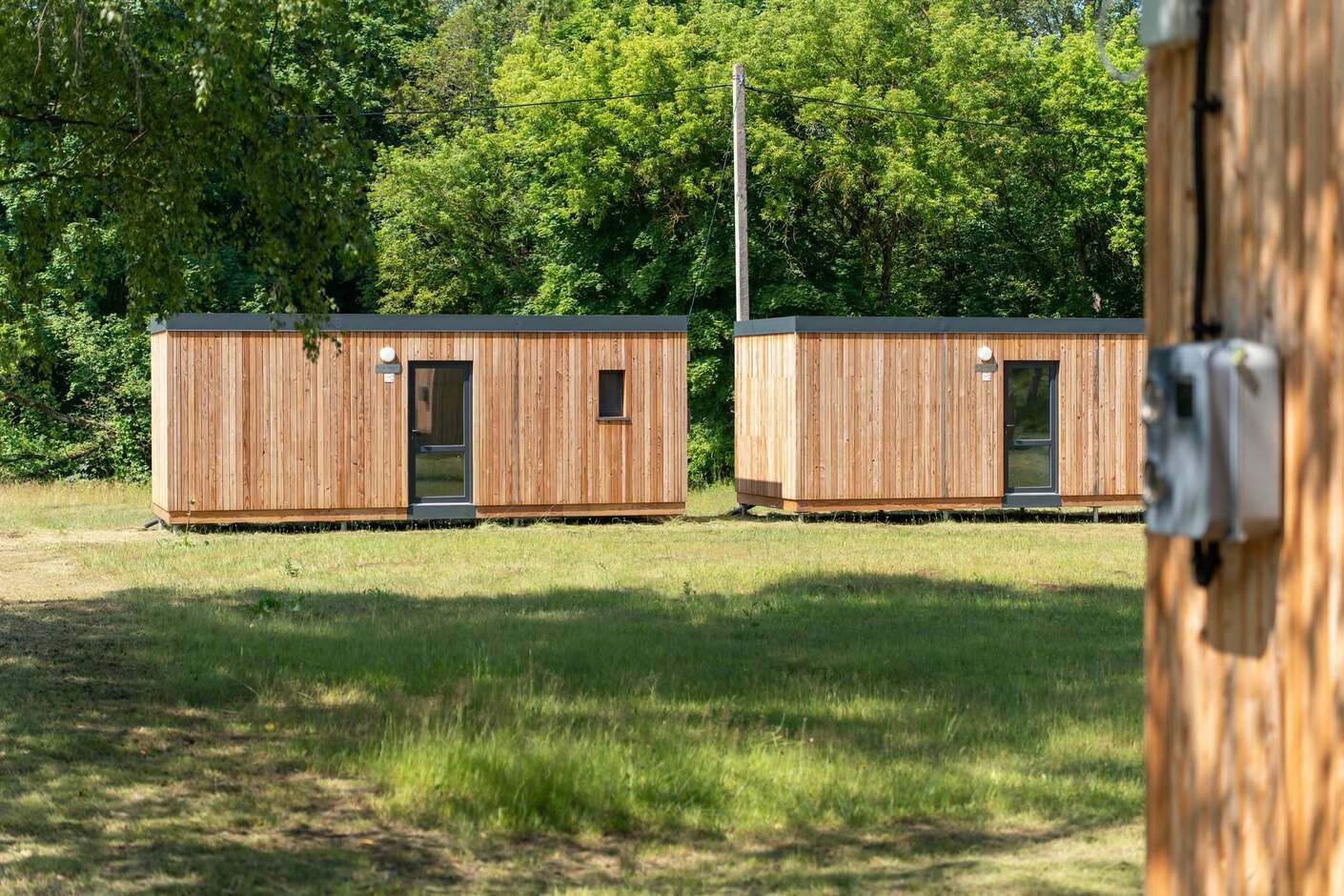
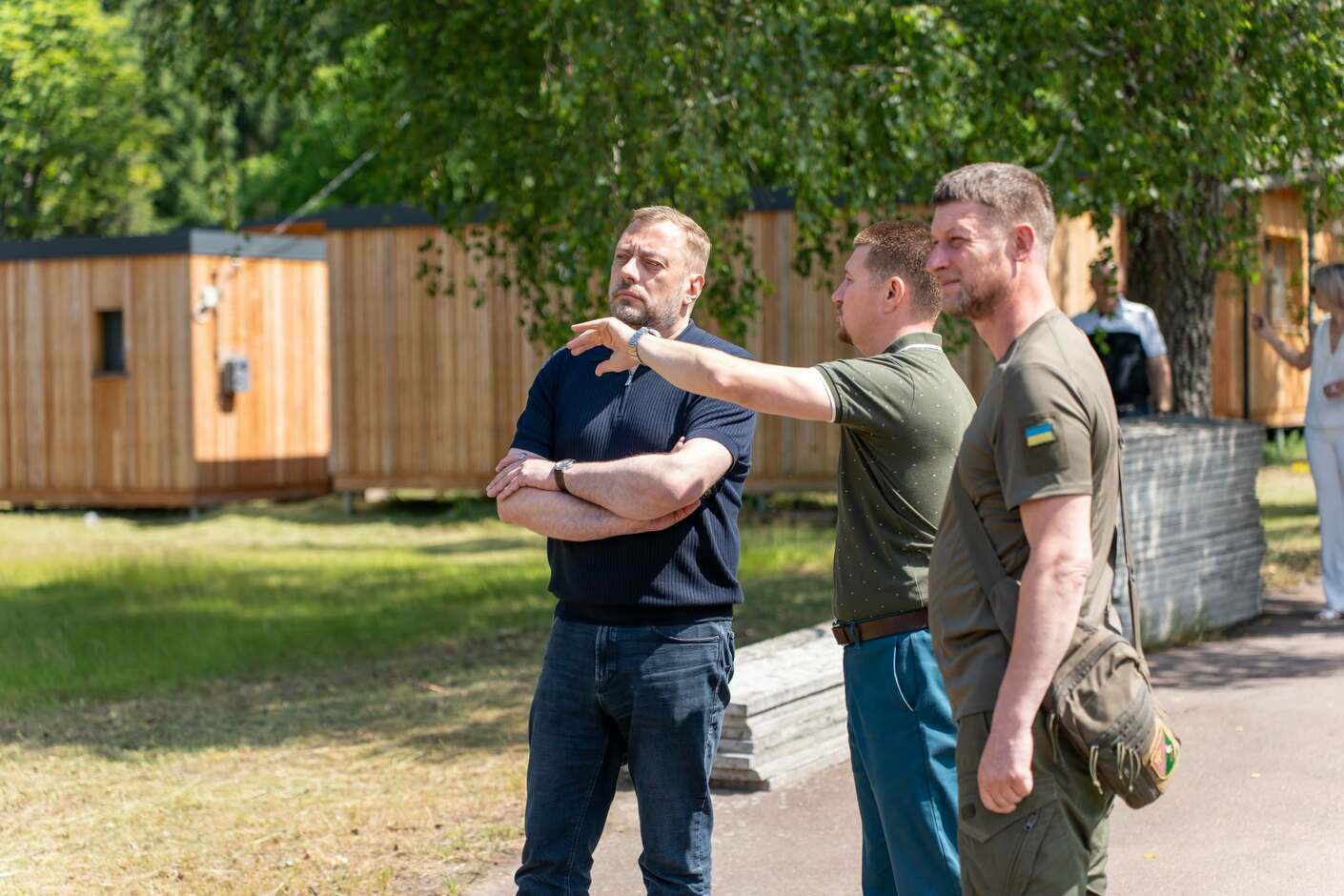
Modular houses in Sosnytsia, where displaced persons live
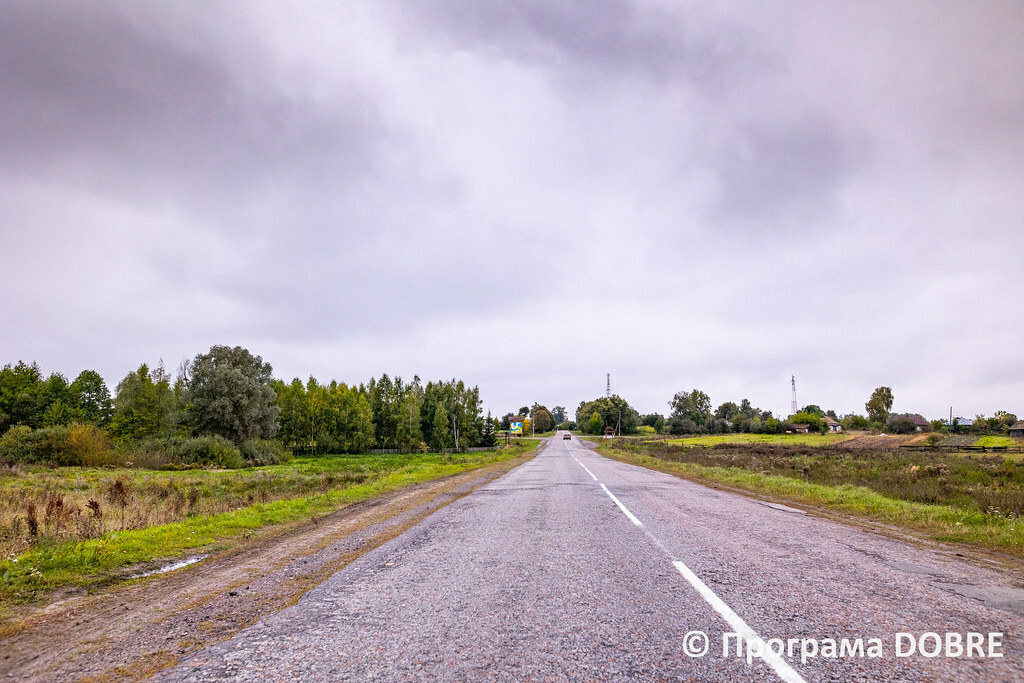
A street in Sosnytsia community
A destructive national tradition
You have openly spoken out against the transfer of powers to the local level without the funds to exercise those powers – an evil with which, it seems, everyone has long since accepted. Can anything be changed simply by speaking out in the press?
I believe we must not remain silent. The transfer of powers without funding is no longer merely a harmful practice – it is a destructive national tradition. Perhaps we will stop “getting used” to it? What is the problem? The local level has to deal with everything that is handed down to it. For better or worse, it carries the burden, and those at the top take advantage of this. Yet we really need to establish some rules of the game. The state must stop treating local self-government like a cash cow. We want to be taken seriously. How is a community supposed to be responsible for people’s quality of life when the government is taking more and more funds away from it for that very purpose?
How much does Sosnytsia community have to spend each year on performing state functions?
Hard to say. In some years, this accounted for up to 30% of our budget. We even owed money to public sector workers for a while because of this, but last year we finally received a government subsidy, which covered most of our debts. This year, we have around UAH 200 million in the budget, of which over UAH 120 million comes from our own revenue. Thanks to that lifesaving government subsidy, last year we lost only UAH 5–6 million – on salaries for social workers, school technical staff, and teachers who work with children after school. However, I am not at all confident that this subsidy will be included in the budget again. After all, the government has changed…
You mentioned that, because the state transfers powers without providing funding, the community has had to reduce its support for the army. What proportion of the budget is currently allocated to support for the army?
Around 10% of our own revenue – that is, roughly UAH 12 million a year. But that is only about 5% of what has been requested. (And I consider these expenditures to be a top priority!) But what can we do when there is simply no money?
If there was enough money, what would you spend it on?
Firstly, on support for the army. I would cover all of their needs, and then I would tackle the thermal modernisation of our municipal facilities and residential buildings. We are already doing this, but only on a limited basis – due to a lack of funds.
Does the community have any reserve sources of revenue to increase the budget?
Five years ago, we could have talked about untaxed land or businesses where people were working ‘off the books’. But there are none of those now. We have used up every reserve we could. I think the situation is similar in other communities. The war has also had an impact: some businesses and some residents have left the community. The proximity of the russian border prevents us from attracting serious investors or implementing any major infrastructure projects with donor or state funding. Meanwhile, we remain on an equal footing with the communities on the right bank, many of which, let’s be frank, have benefited from the war. At the very least, because that is where our businesses and our people are now.
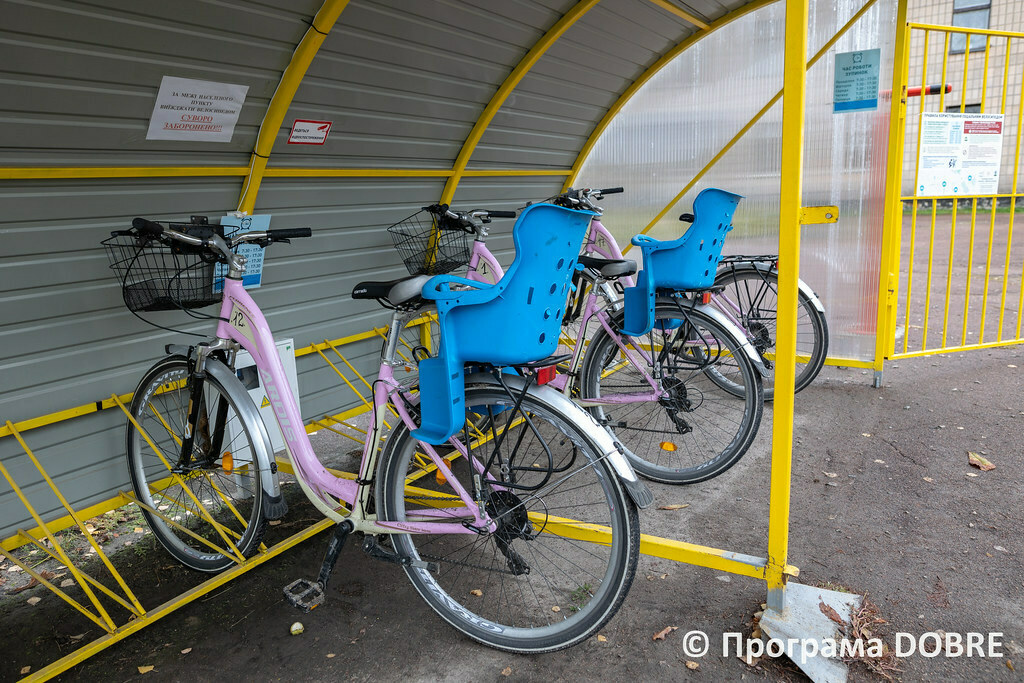
Bicycle parking for the “Social Bicycle” project. Anyone who wishes can use these bicycles
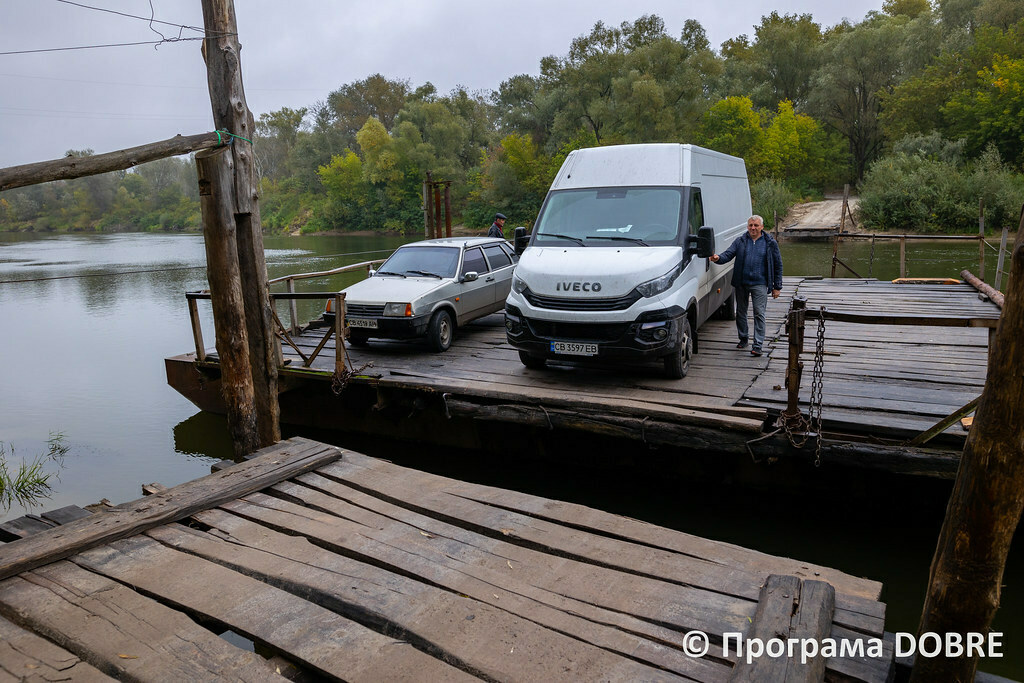
Ferry crossing over the Desna River in Sosnytsia
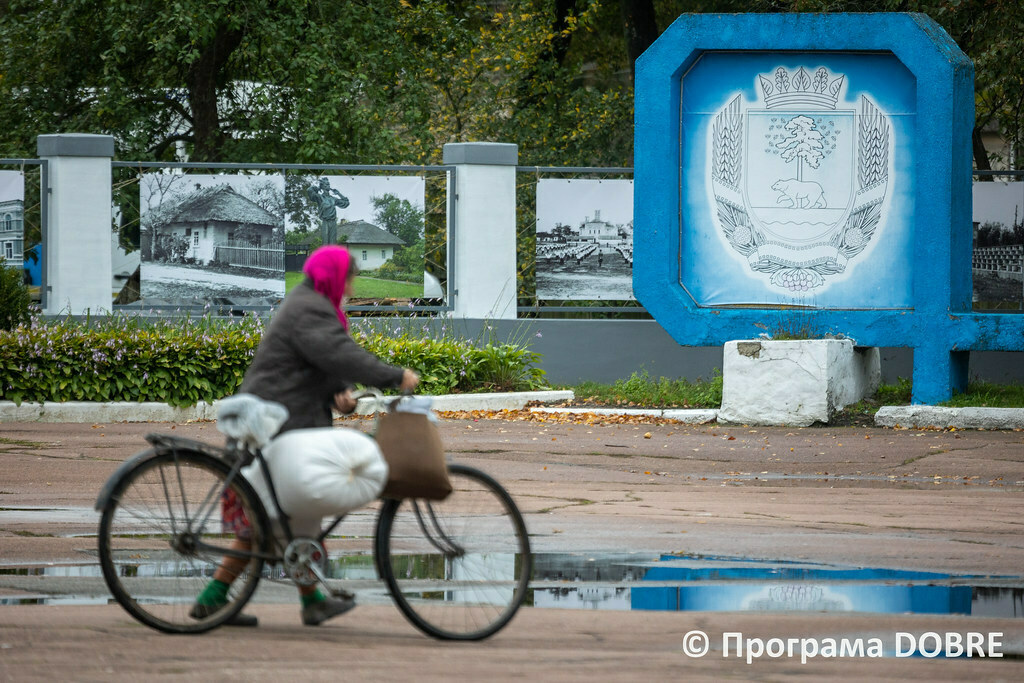
Streets in Sosnytsia community
‘We borrow as long as we can…’
Donor funds could significantly boost your budget. Have you been seeking them?
Over the years of the full-scale war, the city council’s fundraising team has grown slightly. It now consists of six people, all of whom are true experts in their field. Both my team and I constantly monitor the calls for proposals published by MinRehion or any other donors. In addition, we liaise directly with numerous donor organisations; we are already on first-name terms with many of their representatives. This personal connection has proven very fruitful. For example, the Charitable Foundation “Green Crystal” from Switzerland, with whom I have been in direct contact for over three years, has invested no less than UAH 50 million in our community during that time.
How much extra-budgetary funding do you attract each year? Has it become easier for you to talk to donors since the start of the full-scale war?
This year we received UAH 100 million, and I am truly proud of this figure. For a small community like ours, this is a very good result. Donors’ interest in border regions has indeed grown significantly during the war. Well, we have also grown considerably as an organisation during this period and learnt a great deal. For example, we have learnt to attract not only grant funding but also loan funds. Under the government’s “5-7-9%” programme, we have been purchasing municipal equipment on credit for several years now. Last year we acquired a refuse collection lorry, and this year – a multi-purpose road maintenance vehicle. This is very cost-effective: you get a machine worth UAH 5 million for UAH 1.1 million, and then pay for it in monthly instalments over three years – UAH 100,000 per month – with no interest at all! By the time the loan is paid off, the value of the machine we purchased has at least doubled, so the savings are substantial. We have also learnt to bid for large-scale projects involving substantial sums. We now try not to take on projects worth less than EUR 1 million. Perhaps this is a small amount for the European Union, but for us it is a huge resource!
Tell us about the most unusual donor-funded project in which you have been involved.
Right now, we are competing for funding from the European Investment Bank. If everything goes to plan, we will be able to purchase five public utility vehicles and build a sewage treatment plant in our city. And we will only be required to start repaying this loan in ten years’ time!
Is it not risky, in such uncertain times, to take on commitments that you have to fulfil so far in the future?
Exactly, the reason we are taking the money is that times are uncertain. We have no idea whether this opportunity will still be available to us tomorrow. And we really want the sewage treatment plant to benefit our people! Later, one way or another, we will find a source of funding. The main thing is that the enemy is not here.
In April this year, the community approved a new development strategy, which includes 82 projects and 29 programmes. For the first two years, the strategy requires UAH 1 billion, which is five times more than your current budget, even including transfer payments. Is this not too ambitious a target?
Ambitious, no doubt about it. However, in this document, all projects are ranked according to the urgency of the needs. For example, our first priority is to complete the renovation of our lyceum, and we are currently embarking on the second phase of this work. The first phase involved building a bomb shelter there, which cost UAH 53 million. The Belgian government funded this work through the ‘Annabelle’ agency. It is now funding the renovation of the kitchen unit and catering facilities, which will cost a further UAH 30 million or so. This will be followed by the third, fourth and fifth phases: insulating the façade and attic, reinforcing the floors, replacing the windows, carrying out interior renovations and landscaping the grounds. I estimate that this project will cost a total of around UAH 200 million.
What is in second position in the rankings?
Our hospital, where we want to open a hospice, also requires a similar large-scale renovation. In addition, we are developing three further major water supply projects. The first, worth around EUR 1.5 million, involves supplying water to two of our city’s neighbourhoods. At present, there is a shortage of water there, and the quality is poor. The second project, worth approximately EUR 2 million, aims to provide high-quality water to all localities with at least 150 residents. For these communities, we plan to drill several boreholes and install water points with hand pumps. Even just 2–5 hours of operation per day is sufficient for such a borehole to supply water to everyone who needs it. To ensure the borehole pumps are not affected by power disruptions, we plan to purchase generators or install solar panels. The third project involves the reconstruction of the water supply network in Sosnytsia, where the pipes have not been replaced since the 1960s. This will require several million euros more.
What can you say about your community’s energy resilience now that power outages are no longer unusual?
We have already built 11 solar power stations at public facilities, and we have done so entirely with donor funds. These power stations generate around 200 kW of electricity per day. In line with our strategy, by 2050 we aim to make our community completely energy-independent – relying solely on renewable energy.
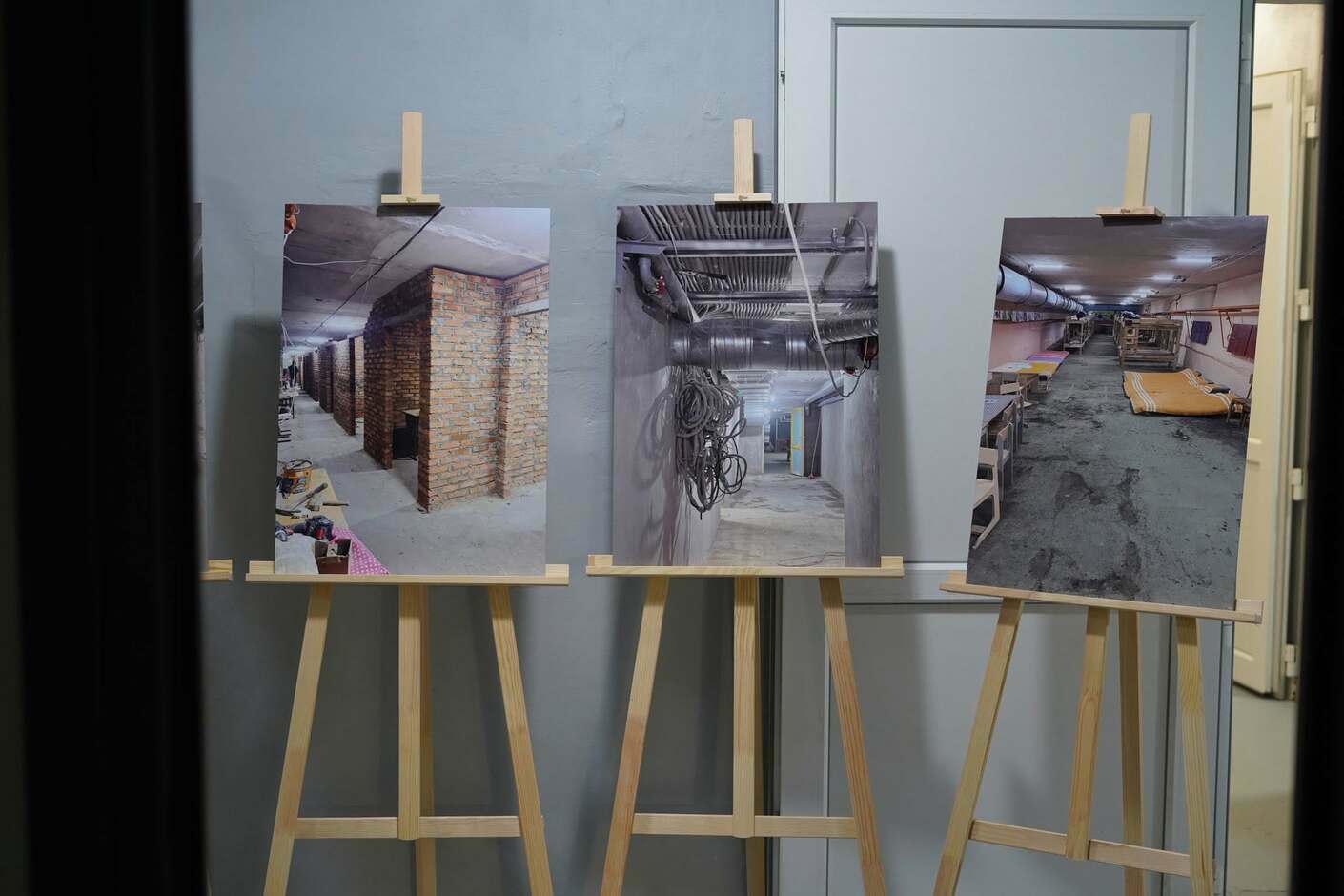
Photo exhibition report on the renovation of the bomb shelter at the O. Dovzhenko Lyceum in Sosnytsia
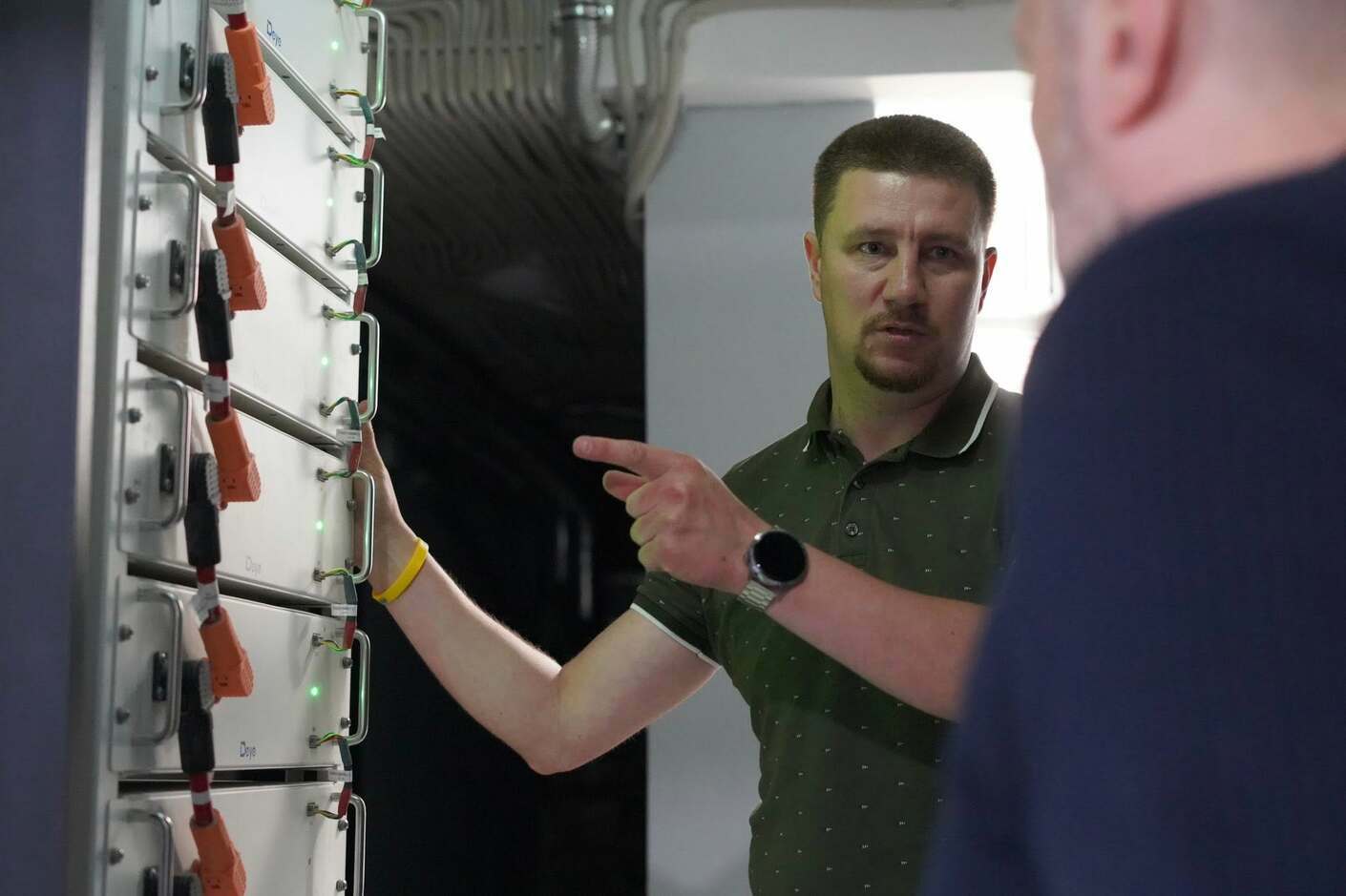
Andrii Portnyi next to the solar power station equipment that provides the bomb shelter at the O. Dovzhenko Lyceum in Sosnytsia with autonomous power
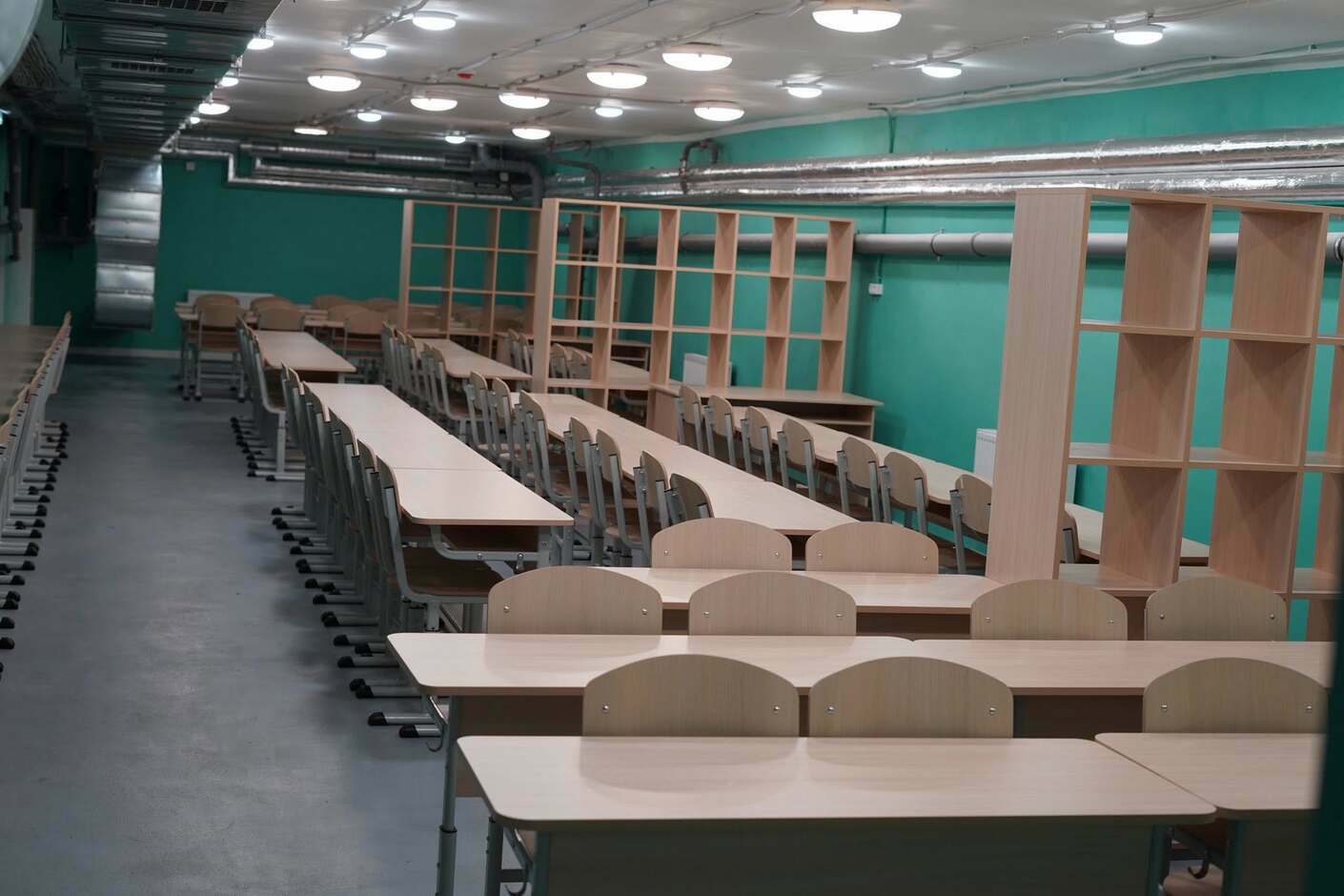
The bomb shelter at the O. Dovzhenko Lyceum in Sosnytsia, the construction of which was funded by the Belgian government
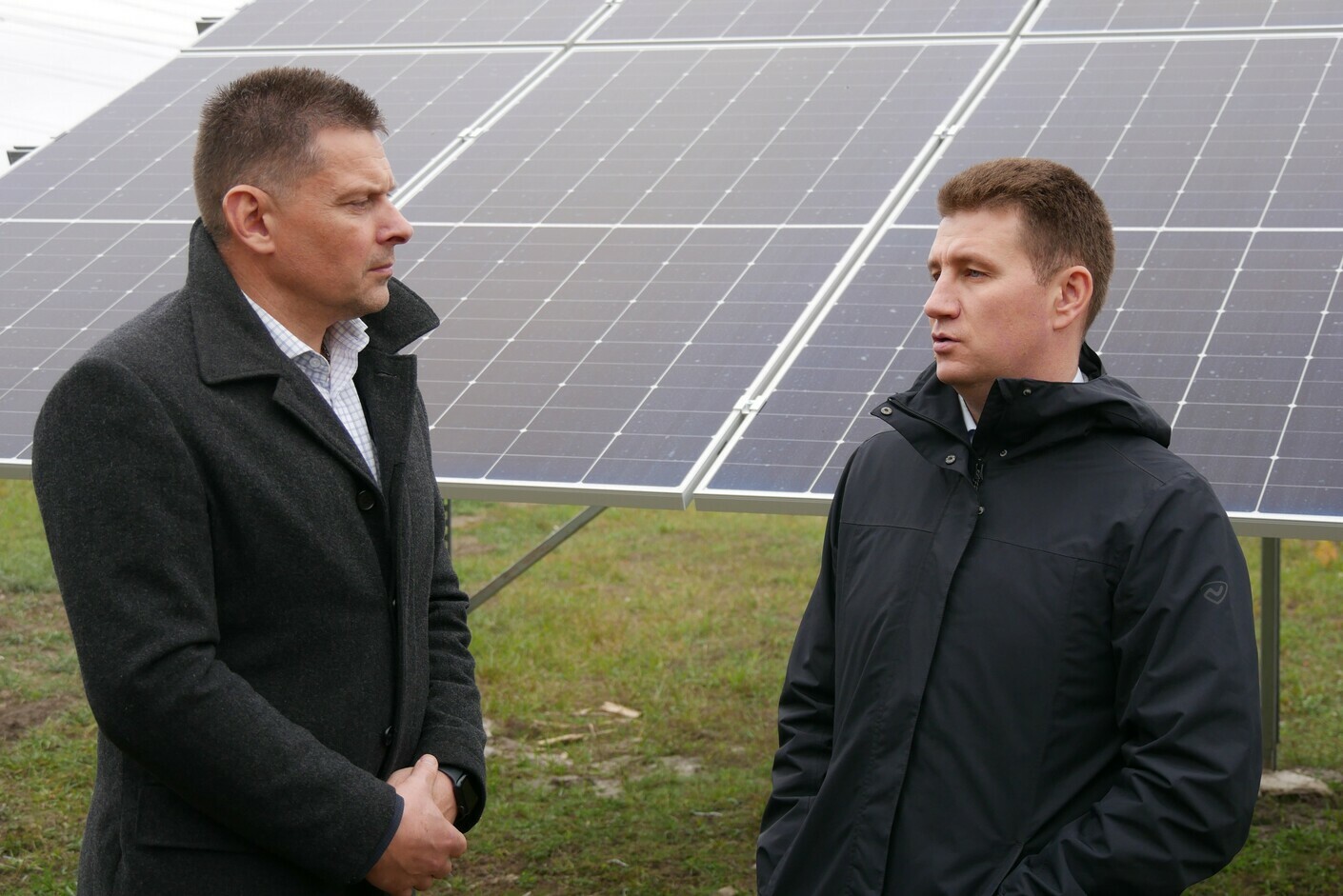
Andrii Portnyi and Oleh Vasylenko, Mayor of Vysoke, next to the solar power station that supplies electricity to the Sosnytsia Water Supply Company
Saint Dovzhenko
You mentioned that a representative of the Belgian donor made the final decision to fund the renovation of your lyceum after spending a little while sitting at the desk of the world-famous film director and writer Oleksandr Dovzhenko, who was born and raised in your community. In what other ways does Dovzhenko’s name help Sosnytsia community?
Indeed, there was such a story. The Belgian did indeed decide to help our lyceum after sitting at Dovzhenko’s desk. Generally speaking, the figure of Oleksandr Dovzhenko is sacred to the community’s residents. Some people believe that Oleksandr Dovzhenko continues to help our community from beyond the grave. To some extent, this is indeed true, because our community is recognised throughout the world precisely because of the name Dovzhenko. The case of the Belgian donor is direct proof of this. Oleksandr Dovzhenko’s legacy is our cultural and economic asset.
Indeed, Decentralisation reported that, before the war, you had ambitious plans for developing tourism – including creating routes “through the sites associated with Dovzhenko”. What has become of these plans now?
On the one hand, it may seem strange to talk about developing tourism just 60 km from the enemy, but on the other, at a time when many men are unable to travel abroad, people have started travelling more actively within the country. They visit us more and more often. So, we have not abandoned the idea of tourism, and we are currently preparing to open a hotel, as there will certainly be demand for it. In addition, we also plan to open a health resort here, with funds earmarked for internally displaced persons being channelled into the project. These are the very people who should be living there now, and after the war, the health resort is set to become a major tourist attraction. The locations here are simply magical. Just read how Dovzhenko described them… Another topic is the development of campsites. We have a very large country, and travelling around it in a caravan or campervan is quite convenient. All we need is the infrastructure: sites with water and electricity connections, showers and proper toilets… We are currently building precisely this kind of infrastructure.
Before the war, together with local artist Vitalii Onyshchenko, the community created a whole series of sculptures, which transformed Sosnytsia from a colourless, peripheral city into an interesting tourist attraction. What is the current status of this initiative?
We have not abandoned this project, even in the face of the war. However, we have drastically reduced its scope, as, for purely political reasons, I cannot currently allow the community such a luxury. Nonetheless, two years ago our sculptor created a small sculpture for the Oleksandr Dovzhenko Museum to mark the 130th anniversary of his birth. Currently, our sculptor is working on a monument to Petro Doroshenko. After stepping down from office, the renowned hetman settled in our city, from where, a few years later, he was forced to move to Moscow at the behest of the tsarist government, which greatly feared his influence over the Ukrainians. So, one way or another, we must have a monument to Doroshenko. And right now, reinforcing the hetman’s image as a victorious leader is very timely…
You have been running the community since 2015. Which management decisions have been the most difficult for you during this time?
Decision related to the closure of organisations and institutions. On the one hand, you realise it has to be done, but on the other, you see real people whom you have known all your life. These people lose their jobs, to which they have often devoted many years of dedicated work. The only thing worse is having to bury friends and acquaintances killed by the russians in the war…
What does Sosnytsia community look like to you in 10 years’ time?
I see not only Sosnytsia community, but our whole Ukraine flourishing and prospering, in the European Union and in NATO. Much depends on how this war ends. If it ends without any specific results, the risk of it restarting will be very high. In that case, our community can forget about any serious development. But if there are reliable security guarantees, development will also be guaranteed.
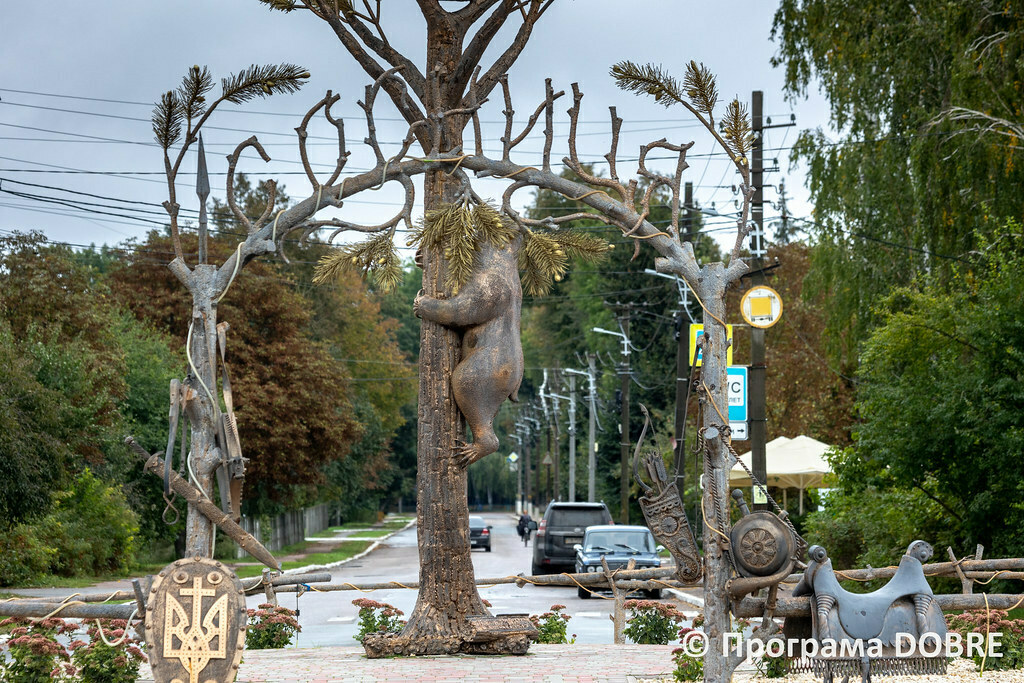
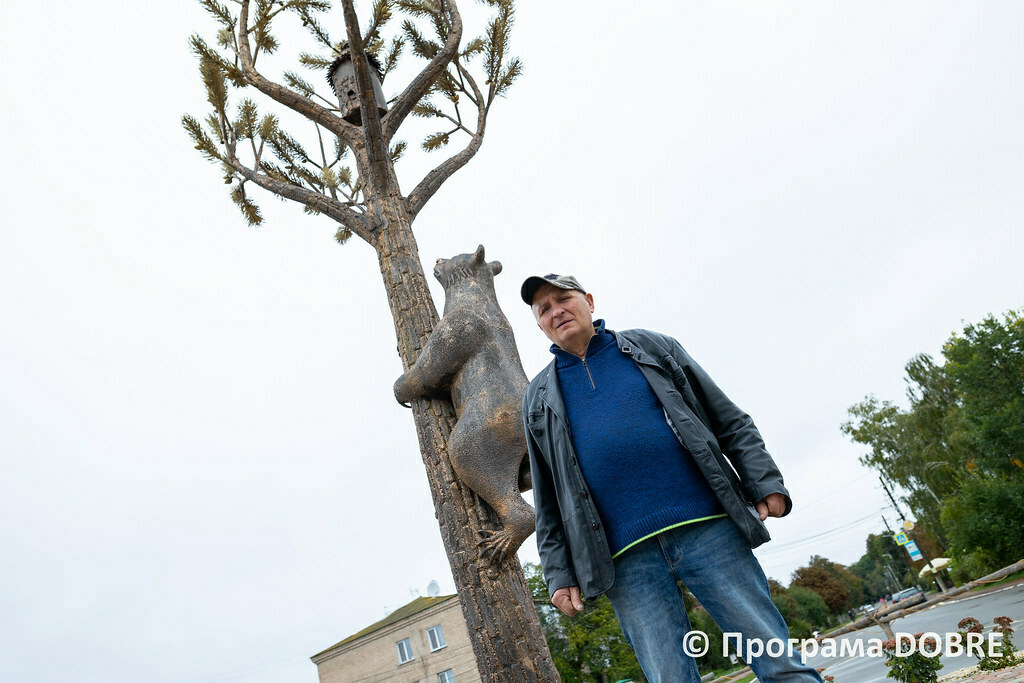
Vitalii Onyshchenko, a sculptor from Sosnytsia, and his work, which has become a symbol of Sosnytsia
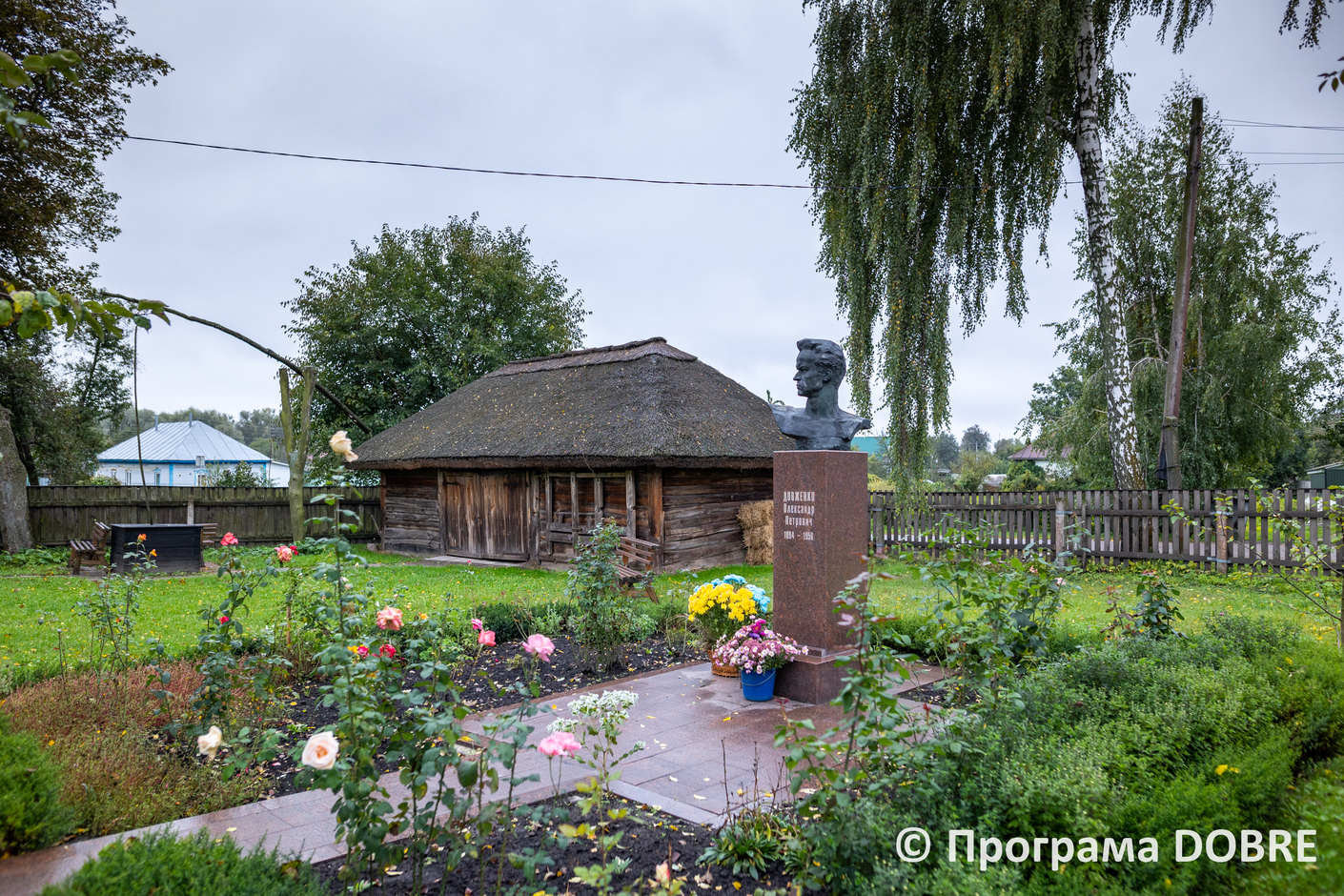
The house in Sosnytsia where the world-famous film director Oleksandr Dovzhenko was born and raised
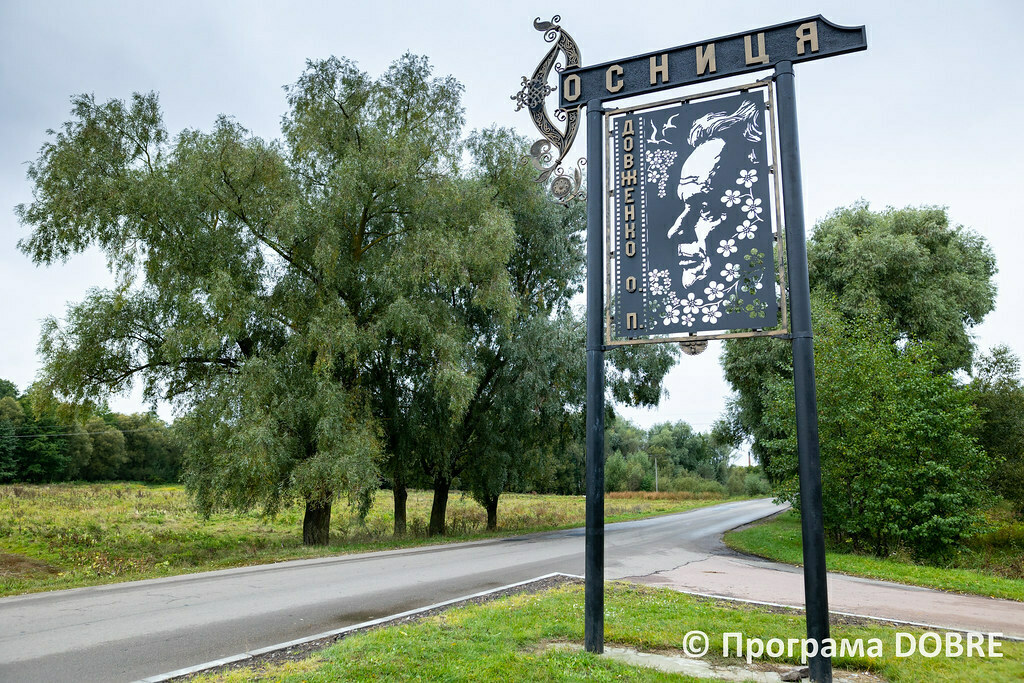
An improvised stele with the name of the city, created by Vitalii Onyshchenko
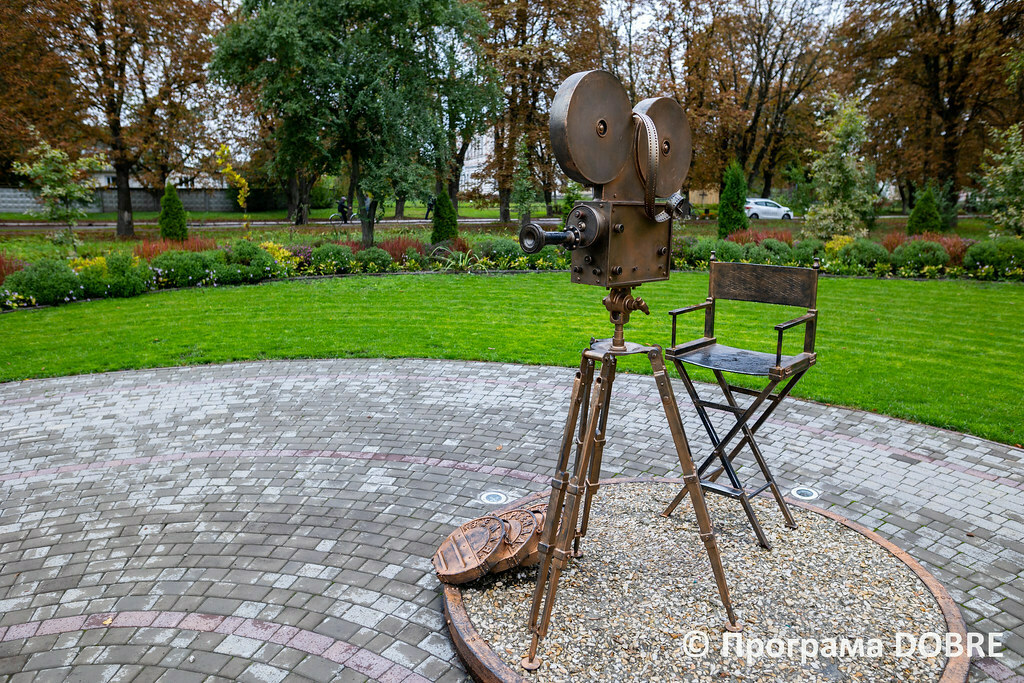
Vitalii Oniyshchenko’s sculpture dedicated to Oleksandr Dovzhenko in Sosnytsia
25 November 2026
Adult Education: Ukrainian delegation learns from Sweden’s experience
Adult Education: Ukrainian delegation learns...
As part of the Polaris Programme ‘Supporting Multilevel Governance in Ukraine’, implemented by SALAR International,...
25 November 2026
Платформа SRP пояснила, як громадам шукати обладнання від швейцарських донорів
Платформа SRP пояснила, як громадам шукати...
За останні тижні на платформі SRP зареєструвалися понад тисячу українських громад та установ. На платформі...
25 November 2026
“Hear Tulchyn”: How the municipality translates Leontovych’s legacy into a tourist route
“Hear Tulchyn”: How the municipality translates...
Every year on Christmas Eve, you can hear Shchedryk playing in different corners of the world. But behind the...
25 November 2026
Сила експортних брендів: як українські продукти можуть просувати громади у світі
Сила експортних брендів: як українські продукти...
Світ знає Україну. Сьогодні значною мірою через війну, боротьбу за незалежність і події, які залишаються в центрі...