Ukrainian local self-government gained a permanent platform for dialogue with the EU: Joint Consultative Committee launched in Brussels
On 20 November 2026, the first meeting of the Joint Consultative Committee between the European Committee of the Regions and Ukraine took place in Brussels. This new body will facilitate ongoing dialogue between Ukrainian local self-government and European partners on preparations for EU accession, decentralisation, regional development, and recovery. Its establishment gives representatives of Ukrainian communities and regions the opportunity to participate in the development of joint recommendations and to represent the interests of their territories in European discussions even before Ukraine joins the European Union.
The Joint Consultative Committee (JCC) was established pursuant to a decision of the Association Council between Ukraine and the EU. It marked the next stage of cooperation after the work of the European Committee of the Regions’ Working Group on Ukraine, transforming the interaction between Ukrainian and European local authorities into a permanent institutional framework.
The European Committee of the Regions is an advisory body of the EU that represents the local and regional authorities of the Member States. Through it, representatives of communities and regions participate in shaping positions on European policy and legislation that directly affect the local level. Similar joint consultative committees are established with candidate countries to involve their local authorities in European integration processes even before they become members.
This is of special importance for Ukraine, as a significant proportion of European standards will be implemented by communities and regions. Therefore, preparations for membership involve not only bringing national legislation into compliance with EU law, but also strengthening the capacity of local authorities to operate under the new rules. The Joint Coordination Committee is designed to ensure a continuous exchange of experience, the formulation of joint recommendations, and the consideration of territorial needs in the process of European integration.
The Ukrainian section of the Committee was formed on the basis of proposals from four all-Ukrainian associations of local governments: Association of Ukrainian Cities, Ukrainian Association of District and Regional Councils, All-Ukrainian Association of Communities, and Association of Amalgamated Territorial Communities. It comprises 14 delegates and 14 alternates. The regional, district, and local levels of local self-government are represented.
The JCC Co-Chairs are the Head of the Kharkiv Regional Council Tetiana Yehorova-Lutsenko, representing Ukraine, and the President of the Parliament of the Federal State of Bremen Antje Grotheer, representing the European Committee of the Regions.
The Committee is scheduled to meet twice a year: in Brussels during the European Committee of the Regions’ annual Enlargement Days, and in Ukraine, security conditions permitting. At the first meeting, the participants adopted the rules of procedure and the work programme for 2026–2030. It covers six areas: local democracy and decentralisation; recovery and energy security; regional development and territorial cohesion; demographic challenges, internal displacement and community resilience; partnerships and cross-border cooperation; and the Sustainable Development Goals.
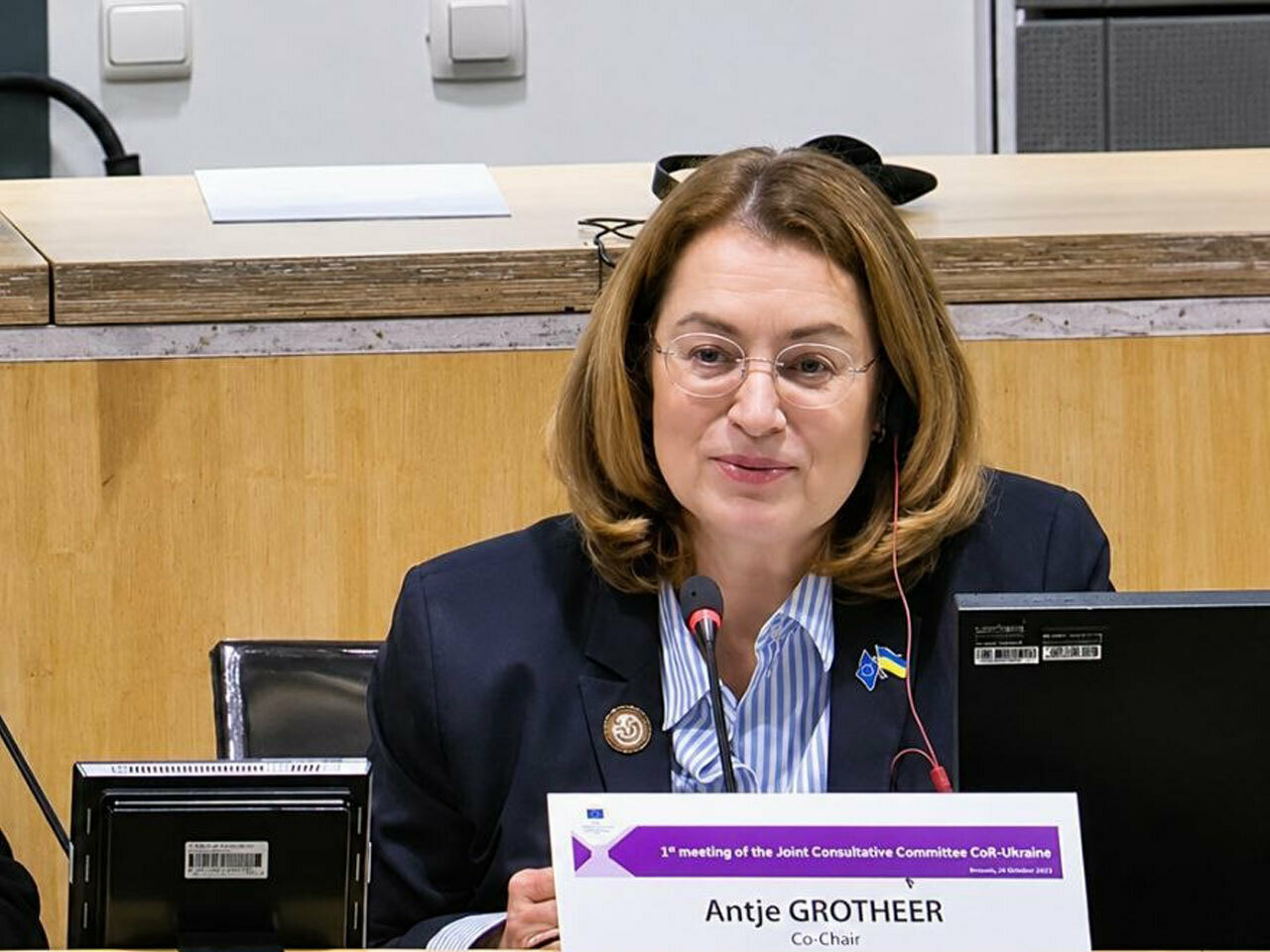
Opening the meeting, Antje Grotheer emphasised that the launch of the Committee is significant for both sides. Ukrainian communities will have the opportunity to learn from European experience in governance and the use of EU financial instruments, whereas European municipalities can learn from their Ukrainian counterparts, who are ensuring the functioning of their territories amidst a full-scale war.
In her view, this new format should not only foster cooperation between communities but also strengthen the influence of local self-government on decisions that affect its activities.
‘The voice of local self-government must be heard. Not only in Brussels; national authorities must also consult with communities and regions,’ emphasised Antje Grotheer.
She highlighted the practical opportunities for future cooperation: the exchange of governance practices, the training of local specialists, gaining an understanding of European funding mechanisms, and the development of municipal partnerships. In particular, she mentioned the TIPS4UA programme and the European Alliance of Cities and Regions for the Reconstruction of Ukraine, which brings together over 120 partners.
Antje Grotheer identified the preparation of local authorities to work with EU cohesion policy funds as a specific priority. Managing such resources demands specific knowledge and skills, and European partners are therefore ready to share their experience in organising this work. At the same time, the Co-Chair noted that Ukraine’s experience in responding to crises and ensuring the resilience of communities is also important for the European Union itself.
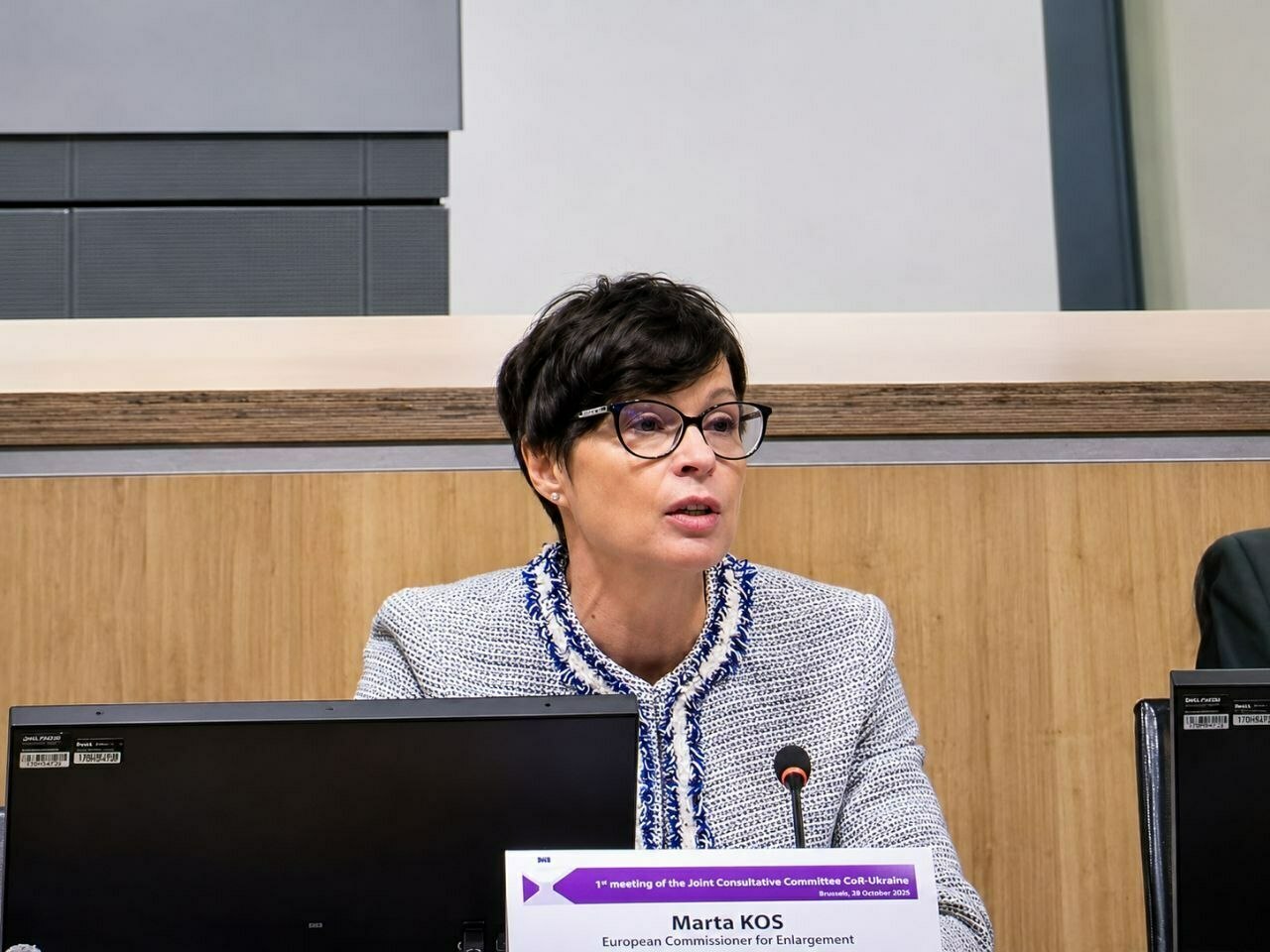
European Commissioner for Enlargement Marta Kos explained in her speech why the involvement of local self-government is an essential component of Ukraine’s EU accession. In her view, European integration cannot be limited to negotiations between governments and changes to legislation. Its results have to be felt in people’s everyday lives.
‘Ukraine’s future in the European Union will not be built solely in negotiating rooms and ministries. It will be built in cities, settlements, and villages across Ukraine,’ said Marta Kos.
The European Commissioner gave examples of the work of Ukrainian communities, through which people directly experience the results of administrative decisions: the restoration of power supplies after russian attacks, ensuring the functioning of schools and hospitals, support for internally displaced persons, and creating the conditions for the revival of business. In her view, the success of European integration should be measured not only by the fulfilment of formal criteria, but also by the extent to which these changes improve citizens’ lives.
Decentralisation reform played a prominent role in Marta Kos’s speech. She noted that the expansion of local self-government powers had been one of the factors contributing to Ukraine’s resilience during the full-scale russian invasion.
‘Over many years, Ukraine has shown that empowering communities is not a peacetime luxury, but a source of resilience in times of war,’ the European Commissioner emphasised.
According to her, decentralisation is not merely an administrative reform, but also a democratic choice that entails trust in citizens and the sharing of responsibility between levels of government. Marta Kos also stressed that Ukrainian communities already have experience in crisis management, rapid response to threats, and supporting the population, which could be useful to European partners
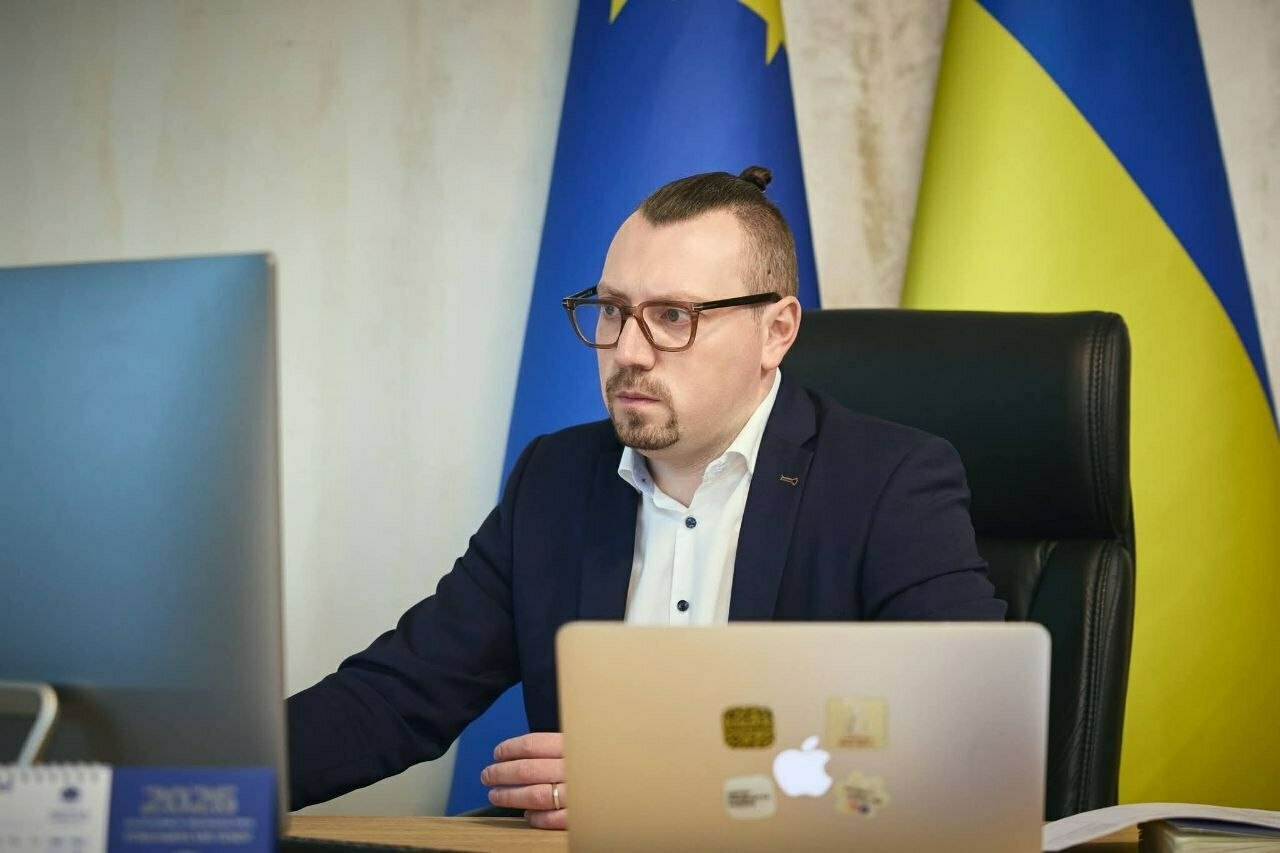
Minister for Communities, Territories and Internally Displaced Persons of Ukraine Vitalii Bezgin, who joined the meeting remotely, described the establishment of the JCC as an important step in the development of cooperation between Ukraine and the European Union. He emphasised that this format is directly linked to Ukraine’s preparations for future EU accession and the need to involve local self-government in the relevant processes.
The Minister reminded that the full-scale russian invasion had posed a serious challenge to the entire public administration system. Ukrainian communities and regions were among the first to respond to security and economic threats, ensuring the functioning of critical services, accommodating internally displaced persons, and organising social support for the population. This experience confirmed the effectiveness of the decentralised system of governance, but at the same time highlighted the need for its further improvement.
Vitalii Bezgin drew attention to the European Commission’s recommendations on continuing decentralisation and strengthening the capacity of local authorities. He identified the development of regional policy in line with European approaches, preparing communities to use cohesion policy instruments, and strengthening their administrative capacities as key tasks.
‘It is very important that the views of Ukrainian communities are taken into account when discussing European policies, particularly those that have a direct impact on regional development,’ emphasised Vitalii Bezgin.
He identified three main areas of the Committee’s practical work: the participation of Ukrainian communities and regions in European processes, the development of bilateral partnerships, and the strengthening of the administrative capacity of local self-government. The Minister also stressed that cooperation has to be mutual. Ukraine is keen to learn from European experience, but can also offer its partners best practice on organising the work of communities in crisis situations.
According to Vitalii Bezgin, it is important that the JCC’s activities are not limited to the exchange of information, but provide an opportunity to develop coordinated positions and propose solutions on issues of significance to both Ukraine and the EU.
‘We need to develop a common position, put forward proposals for the Ukraine–EU agenda, and develop specific initiatives,’ the Minister noted.
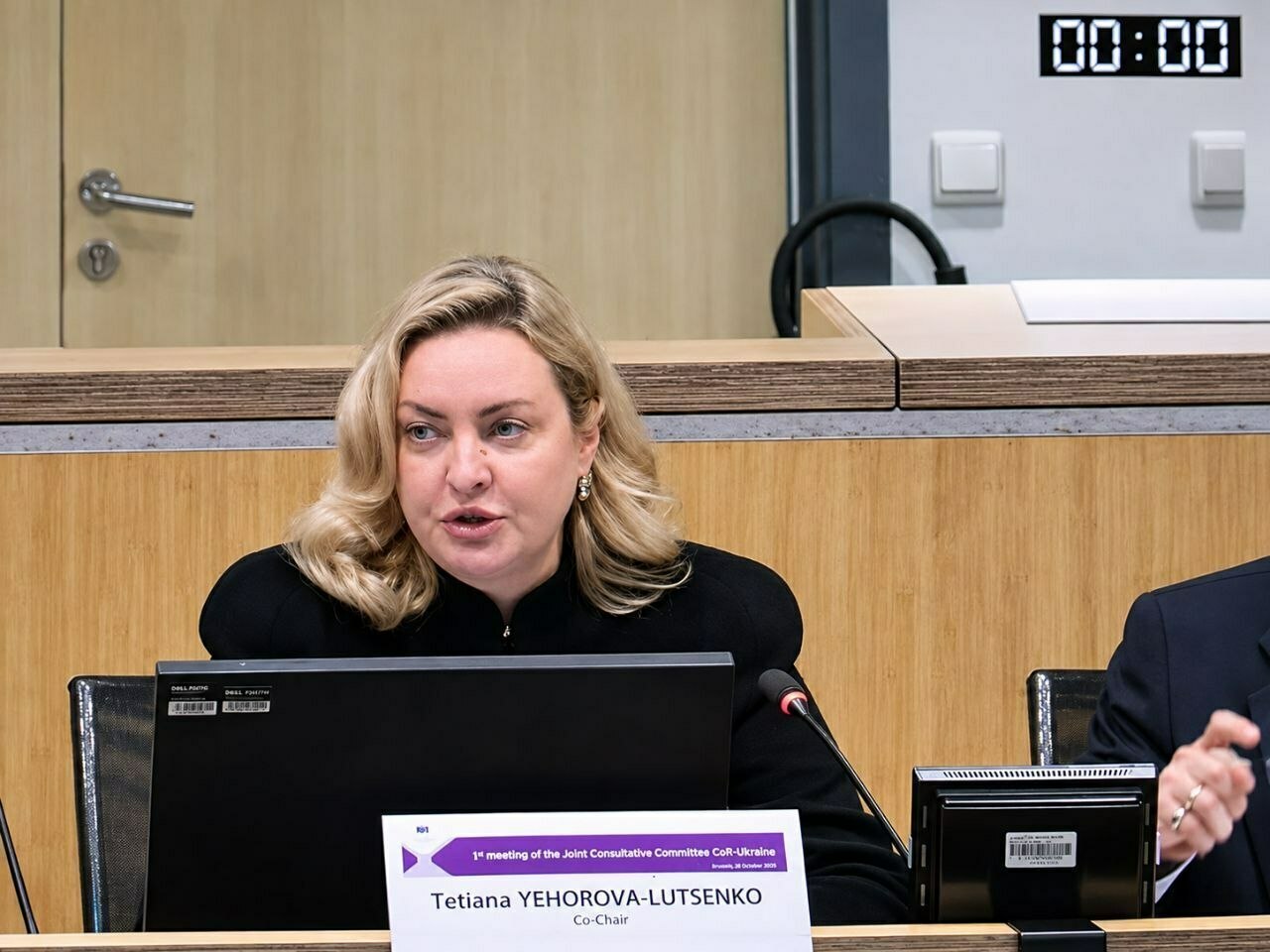
The Ukrainian Co-Chair of the Committee, Tetiana Yehorova-Lutsenko, drew attention to the circumstances under which the new body is commencing its work. Ukrainian communities continue to ensure the functioning of their territories amid russian shelling, while carrying out the tasks of restoration and European integration.
She presented estimates of the scale of the destruction caused by russian aggression. According to joint estimates by the Government of Ukraine, the World Bank, the European Commission, and the UN, as of the end of 2025, direct losses exceeded US 195 billion, while the needs for recovery and reconstruction over the next ten years were estimated at US 588 billion. These figures do not yet take into account the destruction that will occur during 2026.
Despite limited resources and ongoing security threats, local governments continue to ensure the functioning of public utility services, educational and healthcare institutions, and provide support to the military, veterans, their families, and internally displaced persons. Tetiana Yehorova-Lutsenko attributed this capacity to the decentralisation reform, which laid the foundations for communities to respond independently to challenges.
‘From now on, Ukrainian local self-government will have a permanent platform for direct dialogue with European partners, for discussing shared challenges and developing solutions,’ said the Co-Chair.
She emphasised that Ukraine is entering the European dialogue not only as a country in need of assistance, but also as a partner with its own experience in ensuring the resilience of local authorities. In her view, this experience should be taken into account in a common European policy on security, resilience, and regional development.
Tetiana Yehorova-Lutsenko also emphasised the need for the Committee to deliver practical results. This primarily involves taking into account the views of Ukrainian local authorities in the European integration process, drawing up joint recommendations, and developing partnerships that will help communities tackle specific problems.
During the first thematic session, dedicated to reforms and the regional dimension of Ukraine’s accession to the EU, Deputy Director-General of DG ENEST and acting Director for Ukraine Service (European Commission) and Acting Head of the Ukraine Desk, Anna Jarosz-Friis, presented the European Commission’s assessment of Ukraine’s progress.
She noted that the latest EU enlargement package recognises Ukraine’s progress, as the country continues to implement reforms amidst the extremely challenging conditions of war. However, as the negotiation process is based on an assessment of tasks completed, further progress depends on the implementation of the European Commission’s recommendations, particularly regarding the rule of law, the fight against corruption, and sectoral reforms.
Anna Jarosz-Friis singled out decentralisation as one of Ukraine’s most successful reforms. However, she emphasised the need to finalise work on the delineation of powers, tax aspects, and the legal regulation of community activities. These issues are important both for fulfilling European integration commitments and for the country’s effective recovery.
The representative of the European Commission also reported on the efforts of the EU, Member States, and other donors to mobilise additional resources to support Ukraine’s energy and transport sectors. In this context, she mentioned the transfer of EUR 8 billion to the Ukrainian budget, expected in the coming days.
Ukraine’s position on the further negotiation process was presented by the Deputy Head of the Mission of Ukraine to the European Union Oksana Diakun. She emphasised that, despite the full-scale war, Ukraine continues to fulfil the obligations necessary for EU accession, and the European Commission’s latest report confirms the progress made.
She also drew attention to the fact that, in order to make further progress, established criteria must be met, particularly in terms of the rule of law, the reform of democratic institutions, and the protection of human rights. These tasks, she said, must be performed in parallel with the negotiation process and the alignment of Ukrainian legislation with EU law.
Oksana Diakun paid special attention to the regional and local dimensions of European integration. She emphasised that local and regional authorities play a vital role in implementing reforms, providing services to the public, and restoring Ukraine. Their involvement is therefore essential not only to meet European requirements, but also to ensure that the benefits of integration are felt by the people.
The representative of Ukraine to the EU also highlighted the need to accelerate work on Negotiation Chapter 22 “Regional Policy and Coordination of Structural Instruments”. She reported on the cooperation between MinRehion and European institutions, and on the preparation of a document that will set out Ukraine’s priorities and objectives under this chapter.
Ukraine has already prepared a Master Plan for the implementation of the eight final benchmarks under Chapter 22, the final draft of which has been submitted to the European Commission. The relevant amendments to the National Programme for the Adaptation of Ukrainian Legislation to EU Law are scheduled to be introduced by the end of December 2026.
In parallel, work has begun on drafting the State Strategy of Regional Development for 2028–2034, and the reform of the State Fund of Regional Development is ongoing. Objectives include the introduction of multi-annual planning, strengthening the link between strategic priorities and funding, and a gradual alignment with the principles of the EU cohesion policy.
For communities, these changes will mean new requirements for strategic planning, setting investment priorities, project preparation, and resource management. At the same time, they will open up opportunities for broader participation in European programmes and the development of partnerships with municipalities and regions in EU Member States.
The establishment of the Joint Consultative Committee does not grant Ukrainian communities automatic access to European funding or new administrative powers. Its purpose is different: to ensure the ongoing representation of local self-government interests, the exchange of experience, and the development of common positions on issues that will determine the operating conditions for Ukrainian communities within the future European Union.
The first meeting showed that European and Ukrainian participants link the Committee's activities to specific objectives: the continuation of decentralisation, preparations for the EU cohesion policy, strengthening the administrative capacity of communities, the restoration of territories, and the development of international cooperation.
How effective this format will be will depend on whether the recommendations developed are followed up with decisions by Ukrainian and European institutions. It is equally important that communities that are not directly represented on the JCC have the opportunity to convey their needs to its members and receive information on the results of its work.
The participation of local self-government in European integration is significant not only during the preparatory phase for membership. Communities and regions will be responsible for a significant part of the work involved in implementing European policies once Ukraine joins the EU.
Tags:
Committee of Regions European integration international support
Source:
Портал "Децентралізація"
25 November 2026
Adult Education: Ukrainian delegation learns from Sweden’s experience
Adult Education: Ukrainian delegation learns...
As part of the Polaris Programme ‘Supporting Multilevel Governance in Ukraine’, implemented by SALAR International,...
25 November 2026
Платформа SRP пояснила, як громадам шукати обладнання від швейцарських донорів
Платформа SRP пояснила, як громадам шукати...
За останні тижні на платформі SRP зареєструвалися понад тисячу українських громад та установ. На платформі...
25 November 2026
“Hear Tulchyn”: How the municipality translates Leontovych’s legacy into a tourist route
“Hear Tulchyn”: How the municipality translates...
Every year on Christmas Eve, you can hear Shchedryk playing in different corners of the world. But behind the...
25 November 2026
Сила експортних брендів: як українські продукти можуть просувати громади у світі
Сила експортних брендів: як українські продукти...
Світ знає Україну. Сьогодні значною мірою через війну, боротьбу за незалежність і події, які залишаються в центрі...