Lessons learned from one another: Ivano-Frankivsk and Luleå in Sweden
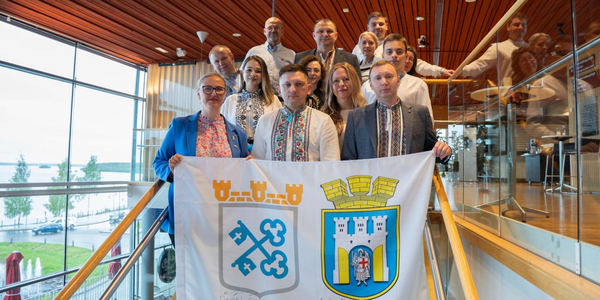
Visit by representatives from Ivano-Frankivsk to their twin city of Luleå
In 2025, Ivano-Frankivsk and Luleå in Sweden signed a partnership agreement. Within the first year, the cities had already implemented a project to improve access to the hospital in Ivano-Frankivsk, established contacts in sports, and are preparing exchanges between businesspeople. At the same time, representatives from Luleå are studying the city’s experience of resilience in wartime conditions.
The partnership was facilitated by Cities4Cities as part of the Polaris Programme “Supporting Multilevel Governance in Ukraine”.
Read the interview with Ihor Popadiuk, Director of the Department of Investment Policy, Projects, International Relations, Tourism and Promotion at Ivano-Frankivsk City Council
A partnership the residents wanted
The initiative to partner with a Ukrainian city came largely from the residents of Luleå.
According to Ihor Popadiuk, public support for Ukraine was one of the key factors in establishing the partnership.
‘It was an initiative by the residents of Luleå, who said they wanted to have a partnership with Ukraine and to help Ukraine. For them, it was also important politically. The residents’ request played a key role in helping us establish this partnership.’
For Swedish local self-government, this is standard practice: municipalities take residents’ requests seriously, and support for Ukraine remains an important issue for Swedish society.
Swedish municipalities plan their activities several months in advance and do not launch new initiatives until they have identified the people responsible and agreed on a plan.
This became particularly apparent during discussions on cooperation between the two cities’ volleyball teams. Ivano-Frankivsk and Luleå both have strong women’s teams, but the Swedish partners suggested starting work with a visit from coaches only next year, as their plans for the coming months are already in place.
Meanwhile, according to Ihor Popadiuk, once specific results are achieved, the Swedish partners are ready to invest time and resources into the cooperation.
A small project with a big impact
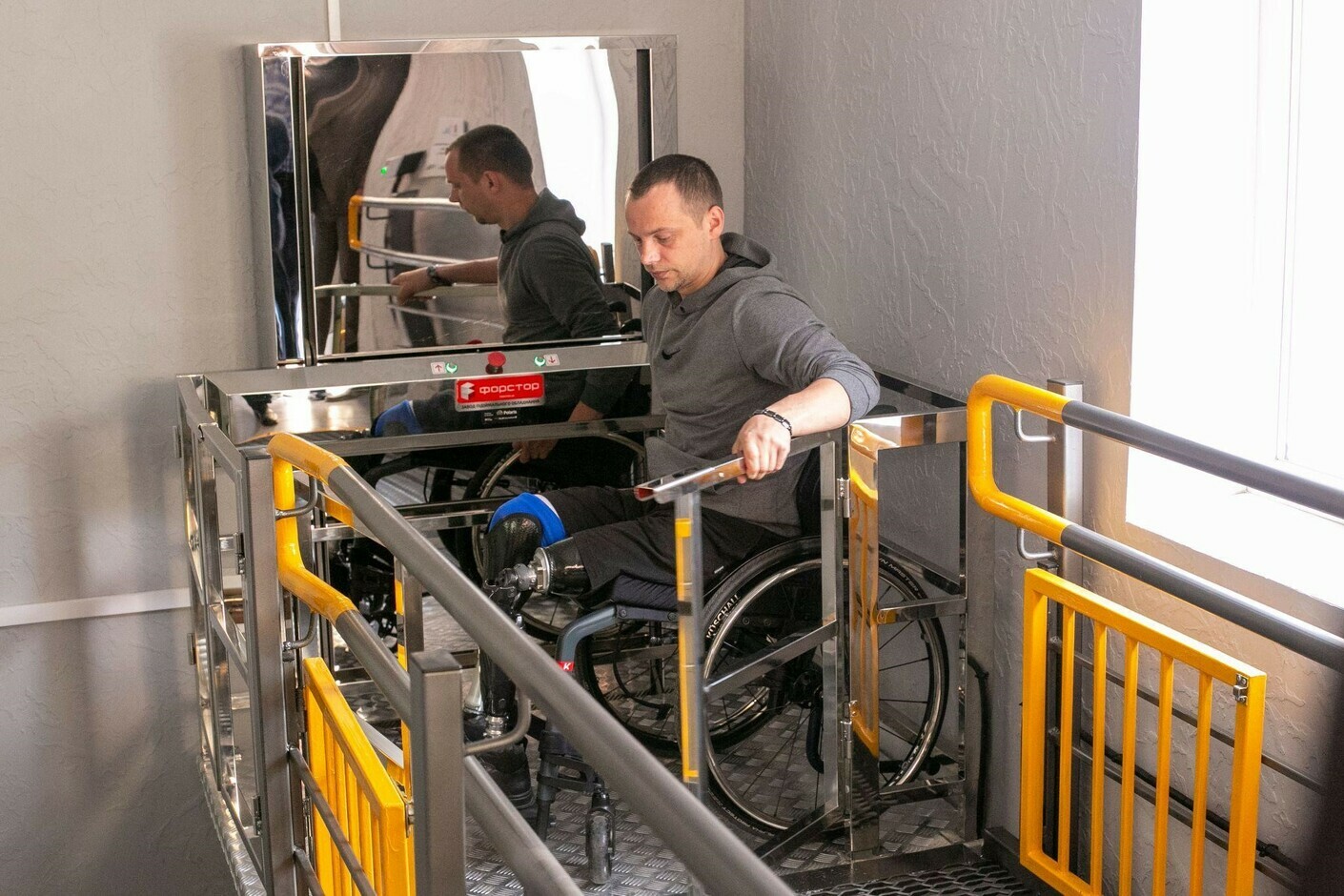
Lift at the hospital bomb shelter in Ivano-Frankivsk
One of the first outcomes of the partnership was the installation of an electric lift at the Central City Hospital in Ivano-Frankivsk. The twin cities jointly submitted a grant application and received support from the Polaris Programme. The project was supported by the Cities4Cities initiative.
The lift has provided safer access to the bomb shelter and the hospital for people with reduced mobility, veterans, and patients in the rehabilitation ward. Its significance, however, extended beyond the infrastructure solution itself.
П During the Sweden Days in Ivano-Frankivsk, the Swedish Ambassador to Ukraine, Martin Aberg, inspected the project’s outcome. For both cities, this provided an opportunity to show that the partnership has already yielded a tangible result that residents can benefit from.
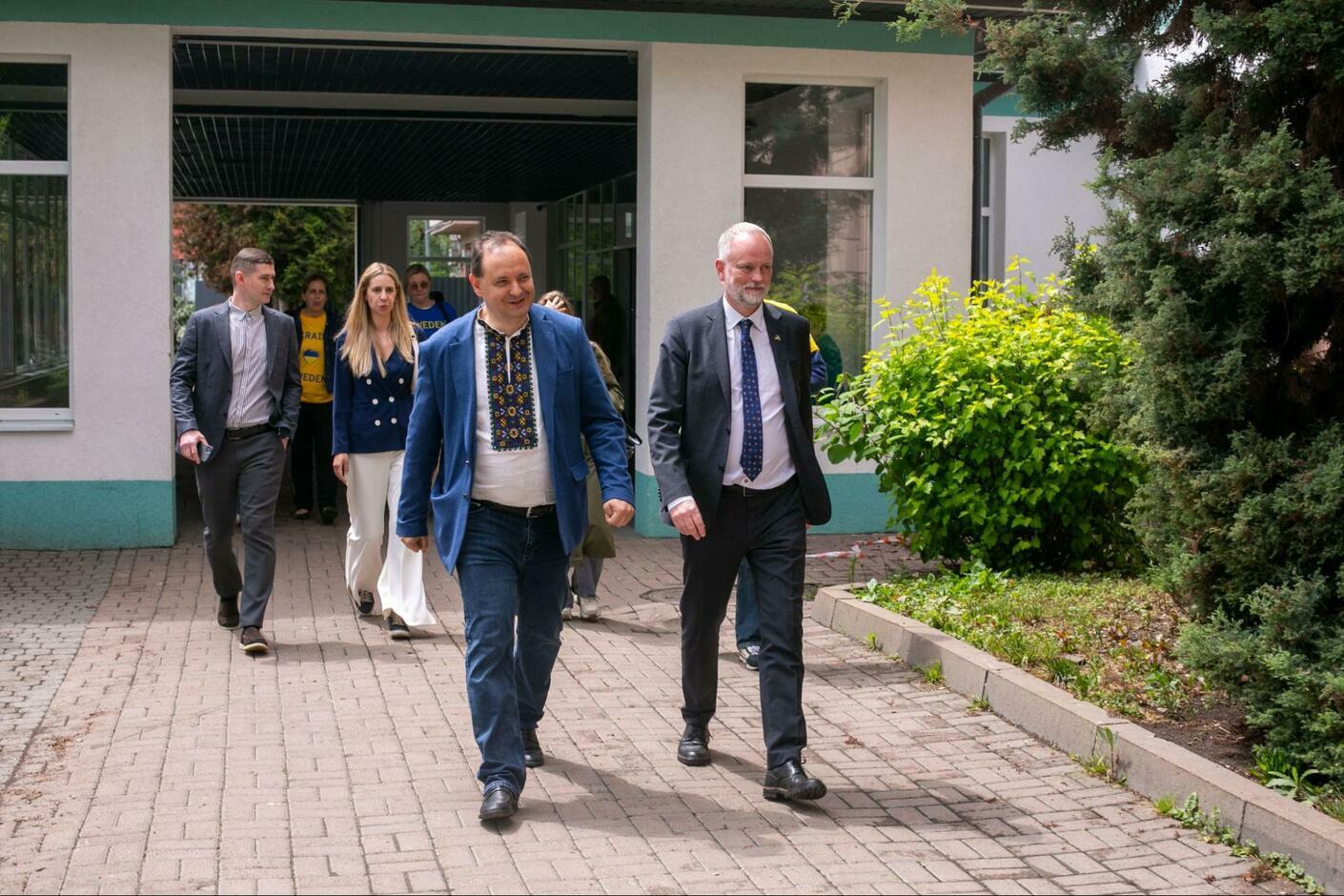
The Ambassador of the Kingdom of Sweden to Ukraine, together with the Mayor of Ivano-Frankivsk
‘For a partnership that has only recently been established, this first joint practical outcome is particularly important: it shows that joint decisions are actually implemented and bring benefits to people. In the case of Ivano-Frankivsk and Luleå, this project has helped to establish direct working contacts between relevant specialists, leading to the exchange of experience and new joint initiatives. And the Sweden Days and the exchange of postcards between young people from the two cities have added a personal dimension to the partnership and helped to bridge the distance between Luleå and Ivano-Frankivsk. Such practical results and meaningful connections form the basis for a long-term partnership,’ Olha Tomkiv, International Cooperation Expert, Cities4Cities.
What Ivano-Frankivsk learnt from Luleå
 |
 |
Visit by representatives from Ivano-Frankivsk to Luleå
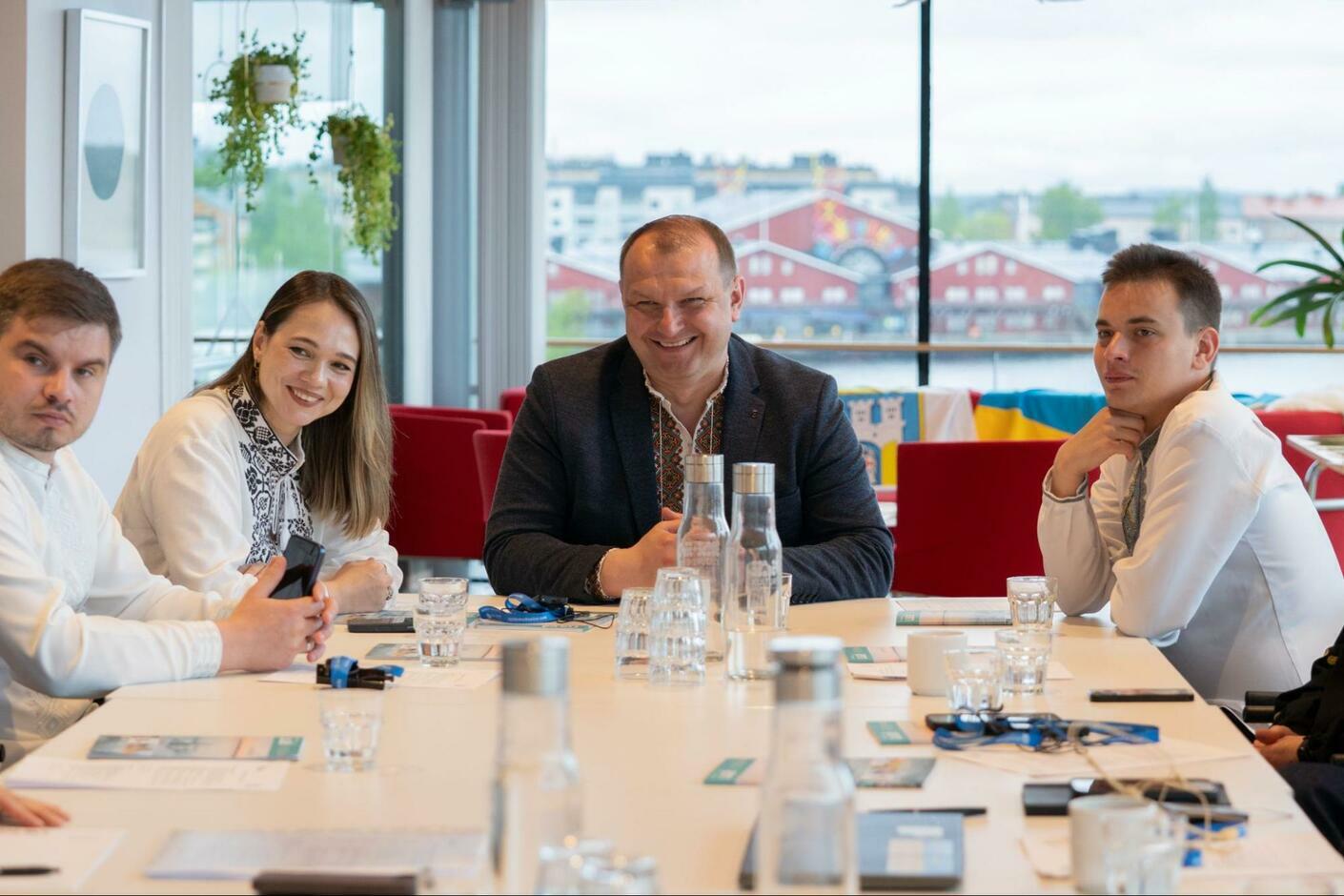
During their visit to Sweden, the delegation from Ivano-Frankivsk met with representatives of the municipality, the science park, the departments of culture and architecture, and teams working on tourism development, investment attraction, and civil security.
The Ukrainian team identified several practices that could be useful for the development of Ivano-Frankivsk.
Residents organise sporting activities themselves
In Luleå, the local council provides the infrastructure, whereas residents form sports teams, clubs, and sections. Parents can volunteer as coaches for children’s teams, even without formal coaching qualifications.
In a city with a population of around 60,000, there are three swimming pools, 16 full-size sports pitches, and teams competing in a variety of sports.
‘People themselves take the initiative to create what they want to see in their community. If parents want to, they become coaches for football or volleyball teams. The local council builds the facilities, and then civil society steps in,’ explains Ihor Popadiuk.
Infrastructure first – then development
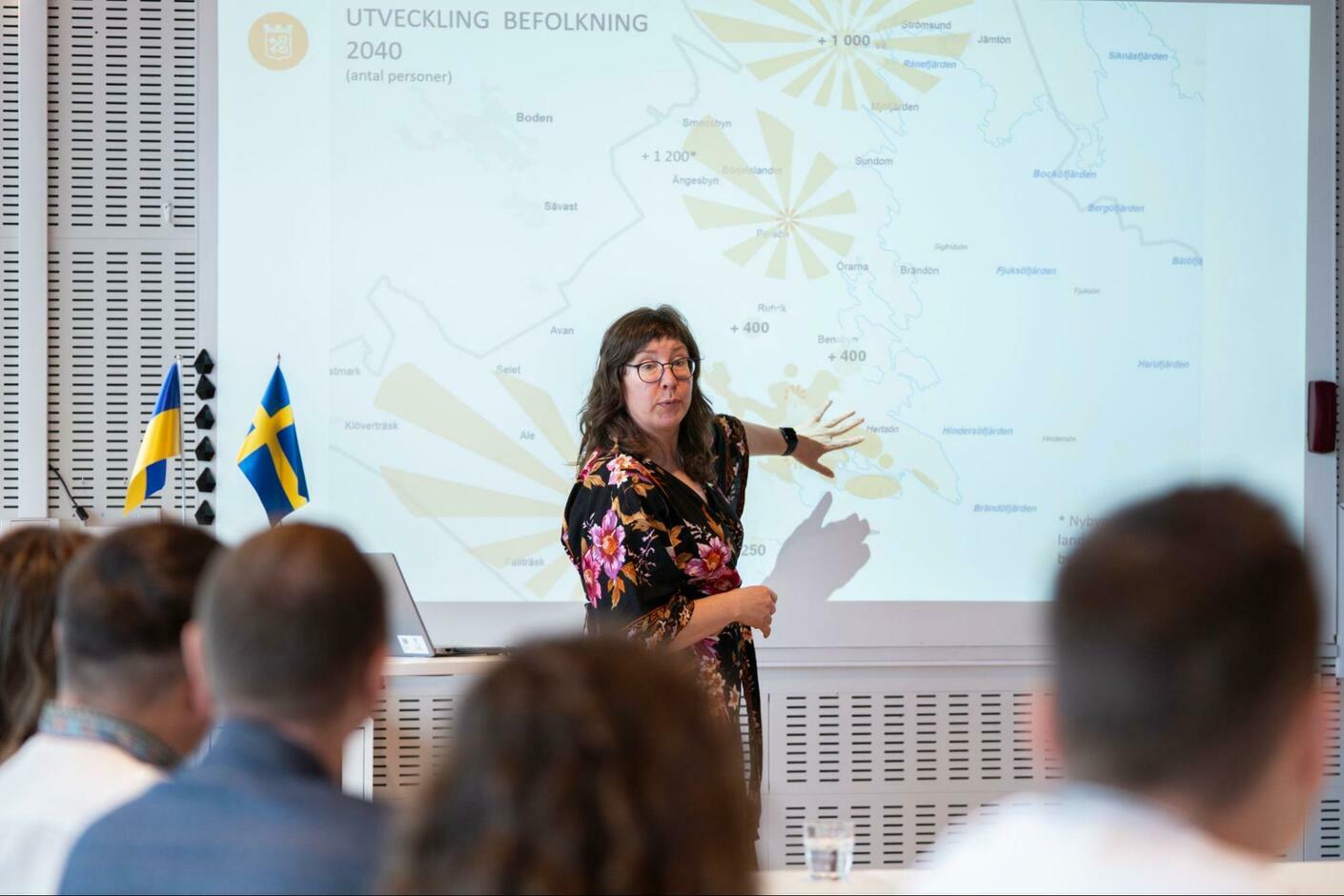
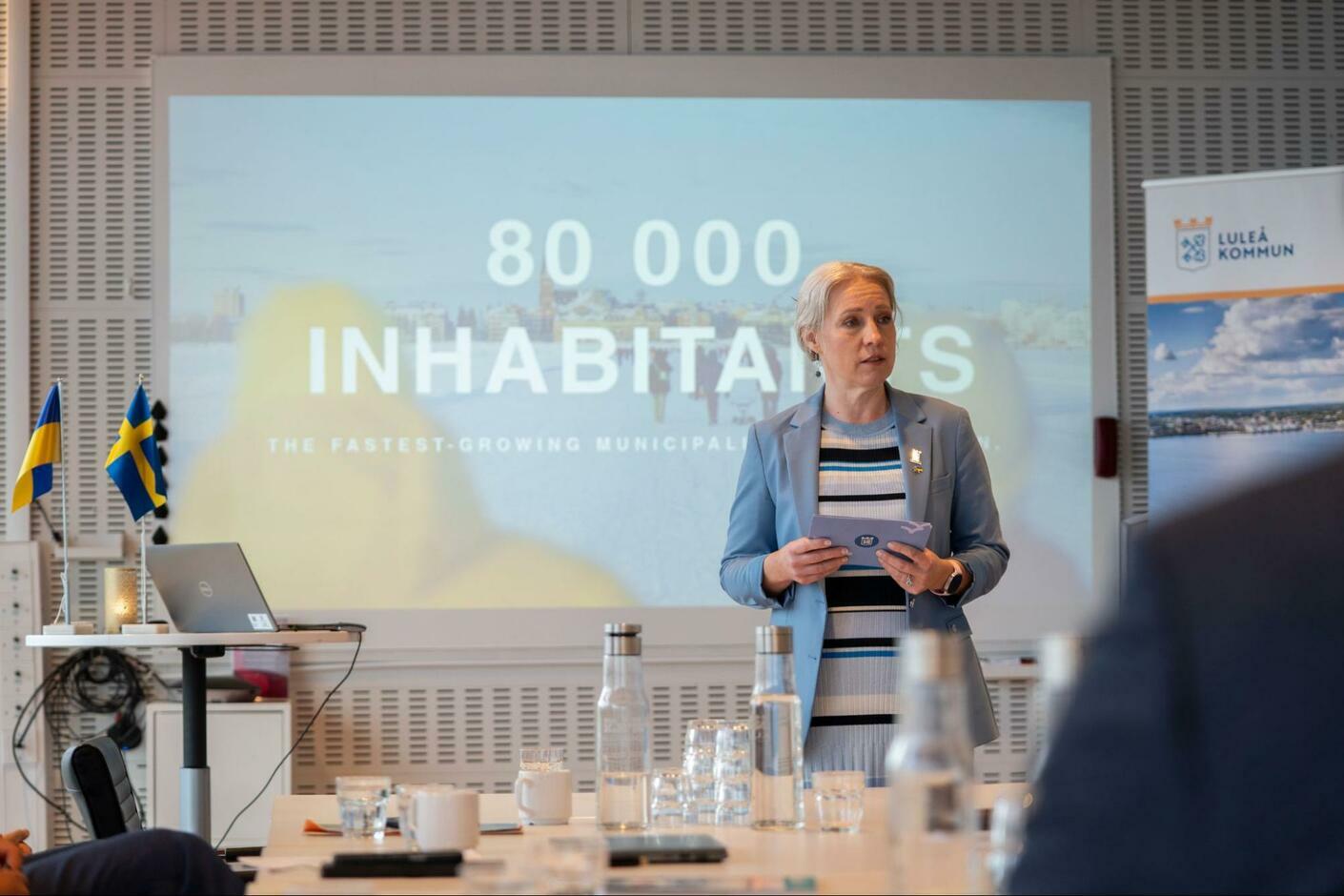
Presentation of Luleå’s infrastructure development plan
The Ukrainian delegation also examined Luleå’s approach to the development of new residential neighbourhoods.
The city is expecting an influx of new workers due to the modernisation of a major steelworks. Before building housing, the municipal authorities modernised the water supply and sewerage networks, increasing their capacity to cater for a doubling of the population.
Developers then began designing a residential area featuring low-rise buildings, public spaces, restaurants, sports facilities, and cycling infrastructure.
‘They first laid the foundations for the city’s growth – replacing the networks – and are only now building homes for the people who will work at the new plant. It all fits together,’ says Ihor Popadiuk.
Waste management is regulated systematically
Household waste management has become another area of interest for Ivano-Frankivsk.
According to Ihor Popadiuk, Sweden’s success is based not only on public awareness but also on strict legislative and municipal regulations. For Ukrainian communities, this experience is particularly relevant in the context of aligning with EU requirements, which call for the development of separate collection, reuse, and recycling of waste, and a gradual reduction in landfill disposal. Communities can therefore already begin, together with their European partners, to analyse their waste management systems, draw up local plans and learn from the practical experience of municipalities that have been working in this field for decades.
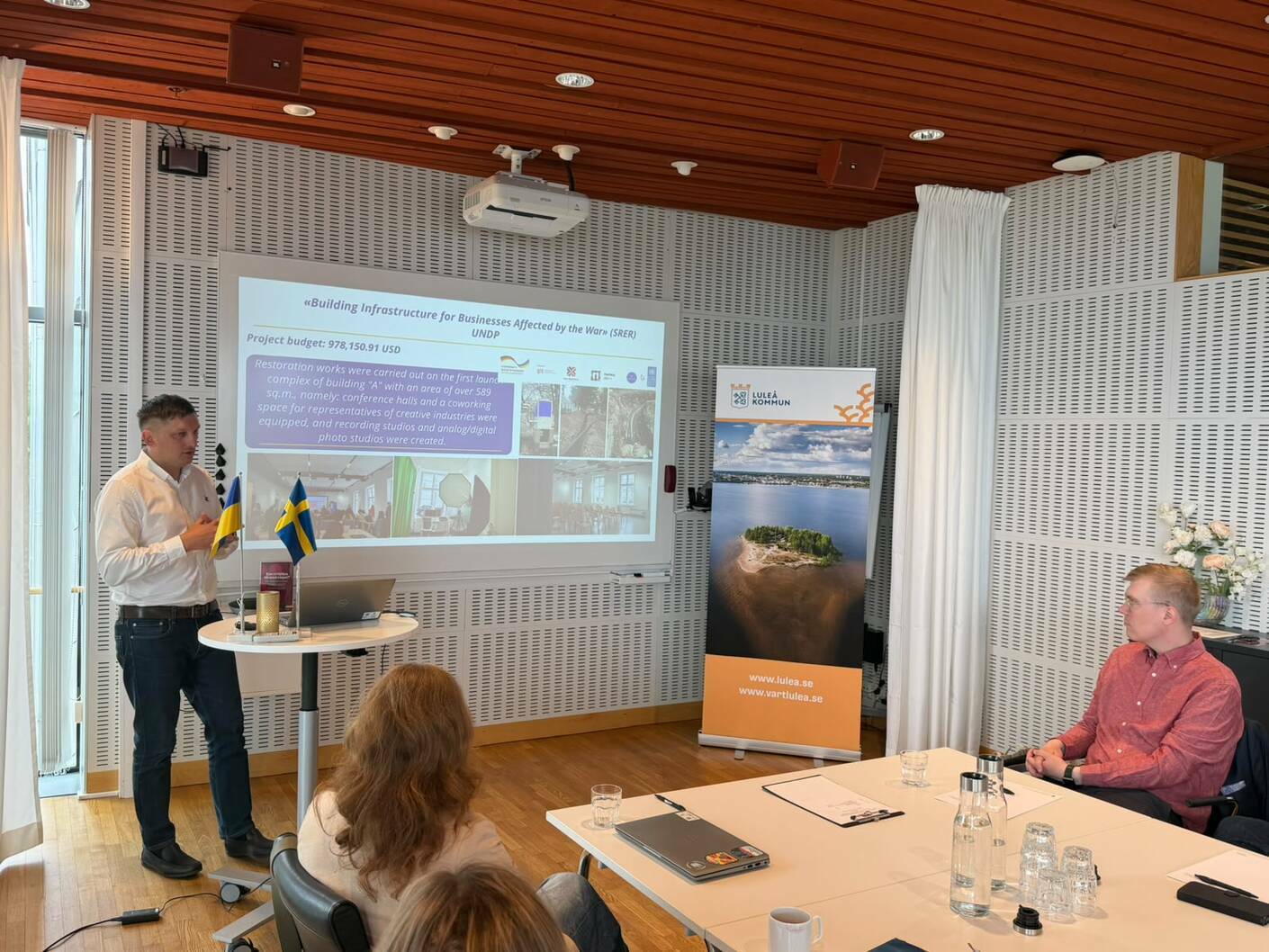
Ivano-Frankivsk shares its experience of crisis response with colleagues from Luleå
What Luleå learns from Ivano-Frankivsk
The exchange of experience is a two-way process.
Perhaps the most engaging interlocutors for the Ukrainian delegation were representatives from the Luleå departments responsible for civil preparedness, safety and emergency response.
The Swedish experts asked how Ukrainian communities had responded after the outbreak of the full-scale invasion: how they had received internally displaced people, accommodated them in schools and kindergartens, and organised the work of city services.
‘Our colleagues listened very attentively and took notes on what we told them about the different stages of our transformation after the full-scale invasion began,’ says Ihor Popadiuk.
A separate topic was residents’ preparedness for crises. In Sweden, municipalities must prioritise helping those who cannot look after themselves. The rest of the residents must know how to cope without electricity, water or communications, and must have basic supplies and a plan for their families.
‘We explained that at one point, all power banks in Ukraine ran out – there was simply nowhere to get them. You need to have a stock or pre-arranged supply contracts. This applies to everything – from a torch to a large transformer,’ explains Ihor Popadiuk.
The Swedish experts were also interested in who should be responsible for the evacuation of elderly people, residents of care homes and those unable to move independently. According to Ihor Popadiuk, the algorithms for action and public guidance are currently one of the main challenges facing Luleå.
From contacts between city councils to business and sport
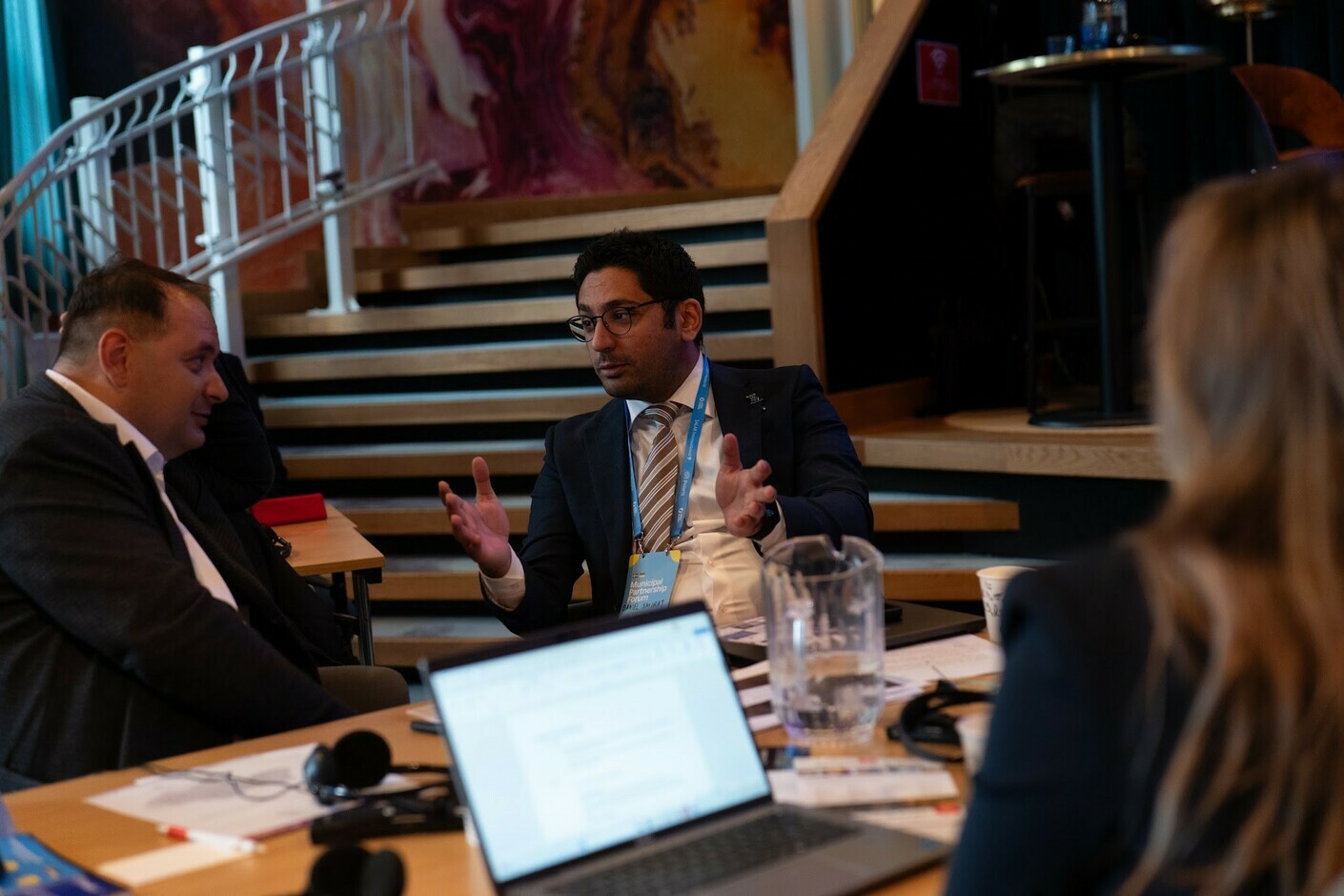
The mayors of both municipalities at the Swedish-Ukrainian Partnership Forum in Stockholm
The partnership is gradually extending beyond the municipal administrations.
Ivano-Frankivsk and Luleå have received support from the Swedish Institute for a pilot project aimed to establish contacts between local businesses. In the first phase, entrepreneurs will take part in online meetings and visits, seek out common interests, and lay the foundations for a larger project.
One of these contacts has already borne fruit: the Ivano-Frankivsk IT cluster has invited the co-owner of a Swedish IT company to speak at a local conference. She will speak about the experiences of women in leadership roles within the technology sector.
The cities are also organising cooperation between women’s volleyball teams. They plan to start with an exchange between coaches and, in the future, expand contacts between the clubs.
A Ukrainian woman who helps partners understand one another
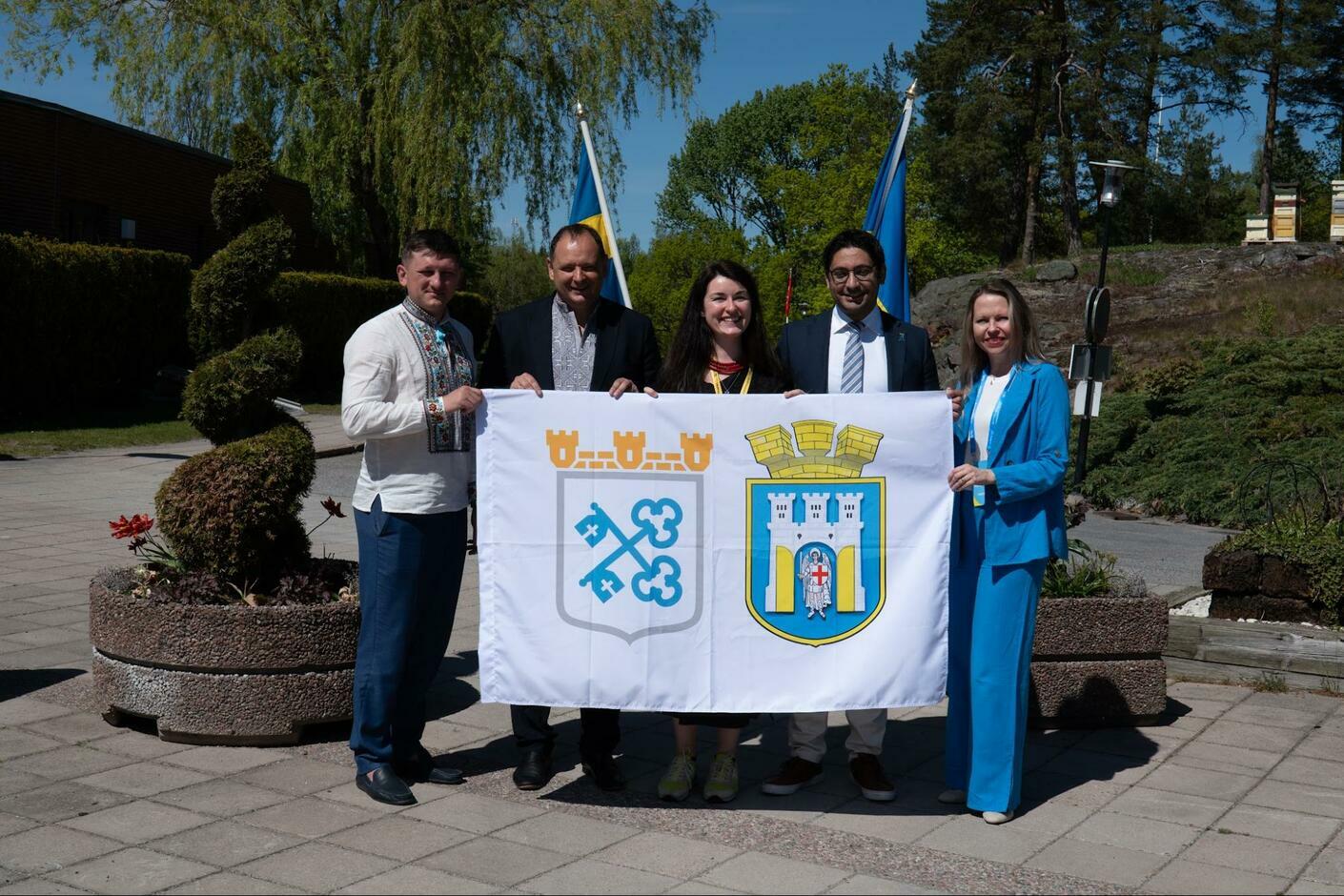
The experience of cooperation between Ivano-Frankivsk and Luleå has highlighted another important point: the effectiveness of international partnerships often depends on people who have an equally good understanding of the context in both countries and can help the municipalities find common ground.
For instance, Natalia Hammarberg, International Cooperation Coordinator for the municipality of Luleå – a Ukrainian national who works at Luleå Municipality and is responsible for international relations – helped the teams to understand the specificities of how both municipalities operate.
‘I would recommend that municipalities in Sweden and other European countries recruit Ukrainians to their teams working on international cooperation. Ukraine is moving towards the European Union, and there will be more cooperation. People who know the Ukrainian language and the Ukrainian context, and at the same time understand how European local authorities operate, can be of great help to both sides,’ says Ihor Popadiuk.
In his opinion, in the coming years, these specialists could become a vital resource for European municipalities that are developing partnerships with Ukraine.
Ihor Popadiuk’s recommendations for communities
A few practical recommendations for Ukrainian communities.
Prepare for the first meeting. You never get a second chance to make a first impression. Before the meeting, it is worth researching the partner city’s priorities, its economy, local projects and potential areas of mutual benefit. Then prepare your community’s presentation by focusing on your strengths and where your interests align.
Offer a concrete outcome. Even a small project should have a clear impact that can be shown to residents and partners.
Plan for years, not months. Advance planning is important when working with Sweden. Swedish municipalities plan their activities several months in advance and do not launch new initiatives until they have designated personnel and an agreed plan.
Respect the rules of communication. In Sweden, work emails, schedules, and working hours matter. A lack of an immediate reply does not mean a lack of interest.
Look for people who understand both sides. Ukrainians who live or work in the partner country can explain cultural and organisational differences and help to avoid misunderstandings.
Do not turn down small projects. Teams learn to plan, implement, and report precisely through these small projects.
‘Funding from major European funds will go to those communities that are already learning to work on small projects. Those who are prepared and have a trained team will be able to receive it,’ concludes Ihor Popadiuk.
Background on the partnership:
The partnership between Ivano-Frankivsk and Luleå is relatively new. In 2025, the mayors of the cities signed an official agreement, one year after first meeting, on cooperation during the Swedish-Ukrainian Municipal Partnership Forum in Stockholm. The partnership was facilitated by the Cities4Cities initiative as part of the ‘International Municipal Cooperation’ strand of the Polaris Programme.
Tags:
European integration European cooperation partnership
Область:
Івано-Франківська областьГромади:
Івано-Франківська територіальна громадаSource:
Cities4Cities

29 October 2026
Відбудова без дорогих помилок: що варто знати...
Для українських громад залучити міжнародне фінансування на відбудову школи, житла, водогону чи іншого...
29 October 2026
Чому європейські села втрачають людей і як...
Чи може громада залишатися успішною, якщо її населення скорочується? Чи завжди закриття школи, лікарні або іншого...
29 October 2026
Етика воєнного часу: як місцевій владі не втратити головний ресурс – довіру
Етика воєнного часу: як місцевій владі не...
Уявімо типовий ранок у громаді, яка разом із цією країною живе в умовах воєнного стану. Перед місцевою владою постає...
29 October 2026
New law on basic social support: Challenges for communities from 2028
New law on basic social support: Challenges for...
Communities will play a defined role in the new system of state social support for families. The executive bodies of...