Shared water supply systems and restoration of rivers: Solutions discussed at the Forum of Agglomerations
Water flows through basins, aquifers, and rivers, not along administrative boundaries. Therefore, a single community’s decisions about wells, land use, or the condition of a river can affect its neighbours, whereas a city’s water supply may depend on rainfall far beyond its borders. The participants in the panel discussion “Water Knows No Administrative Boundaries” at the III International Forum of Agglomerations in Ukraine discussed how communities can work together.
Oleksandra Sladkova, Deputy Director of the Department of Economic Development at Lviv City Council, moderated the discussion. She also spoke about the work on Lviv’s water vision in cooperation with the Danish city of Aarhus. Such a long-term perspective helps to assess whether there will be enough water for people and nature in the future if current practices remain unchanged.
‘Water is not just a matter for water supply companies or river basin authorities. It is an issue that has to be addressed at the level of mayors and communities,’ emphasised Oleksandra Sladkova.
Kryvyi Rih agglomeration: From emergency response to a more sustainable system
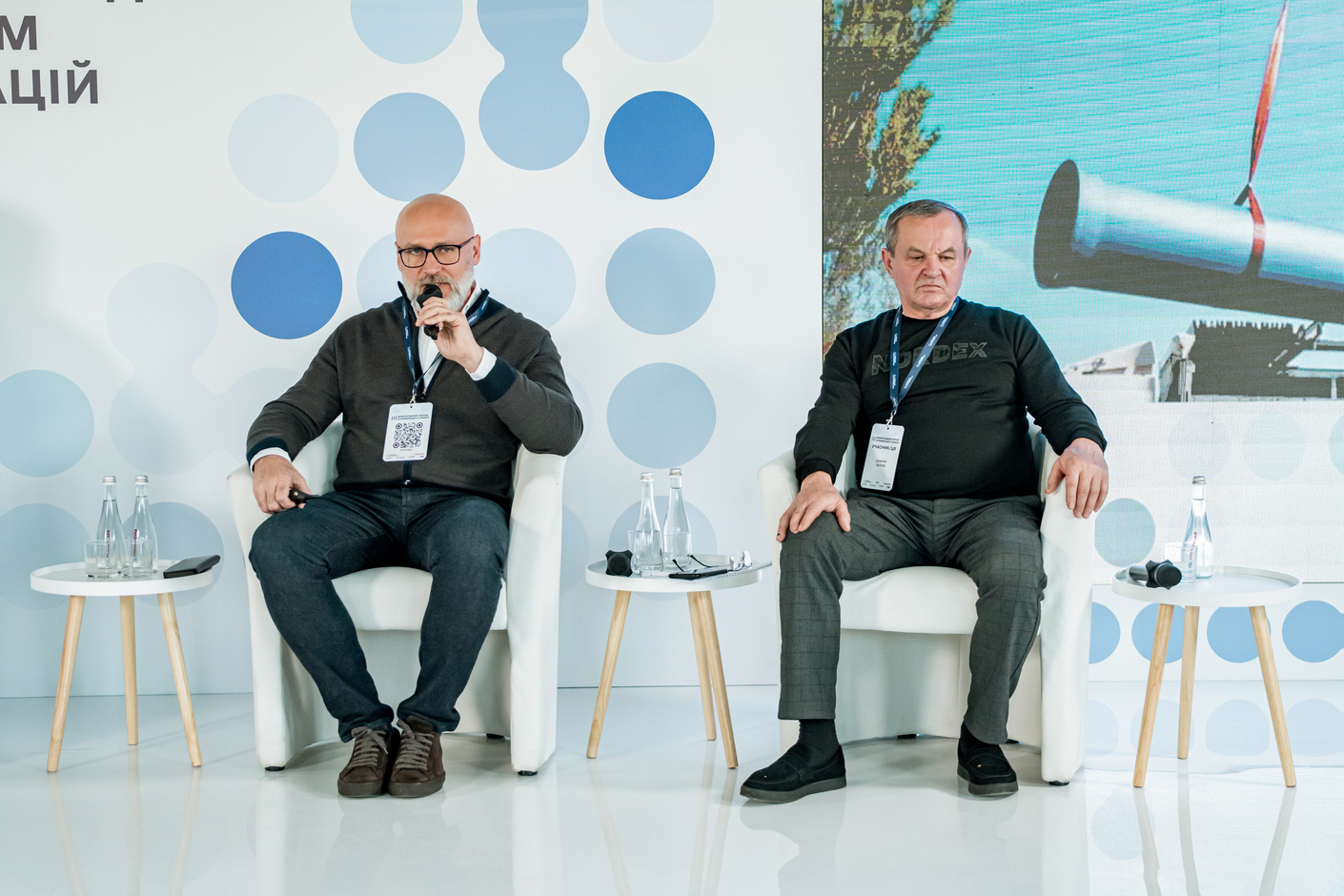
Yevhen Udod, First Deputy Mayor of Kryvyi Rih, explained how the destruction of the Kakhovka dam in June 2023 threatened the water supply to the city and communities across the region. The State implemented a project that restored the water supply over a distance of almost 70 kilometres and helped prevent the territories from running out of water.
Once the situation had stabilised, the next task was to assess the condition of the networks and reservoirs and reduce dependence on individual facilities. Another water intake is planned for the Kryvyi Rih agglomeration, and the reconstruction of a pumping station and water mains is underway in Apostolove. Moreover, as part of a grant-funded project supported by France, over 12 kilometres of water mains are under construction. According to Yevhen Udod, this will enable water to be supplied via a shorter route and reduce the costs of its delivery.
Such projects require cooperation between communities, the state, and international partners. At the same time, Yevhen Udod noted that communities should also think ahead about long-term funding.
‘We need sustainable models for attracting private partners,’ he said, adding that local budget resources will not be sufficient to cover all the necessary investments in water infrastructure.
The Styr River: Communities started cooperation from the bottom up
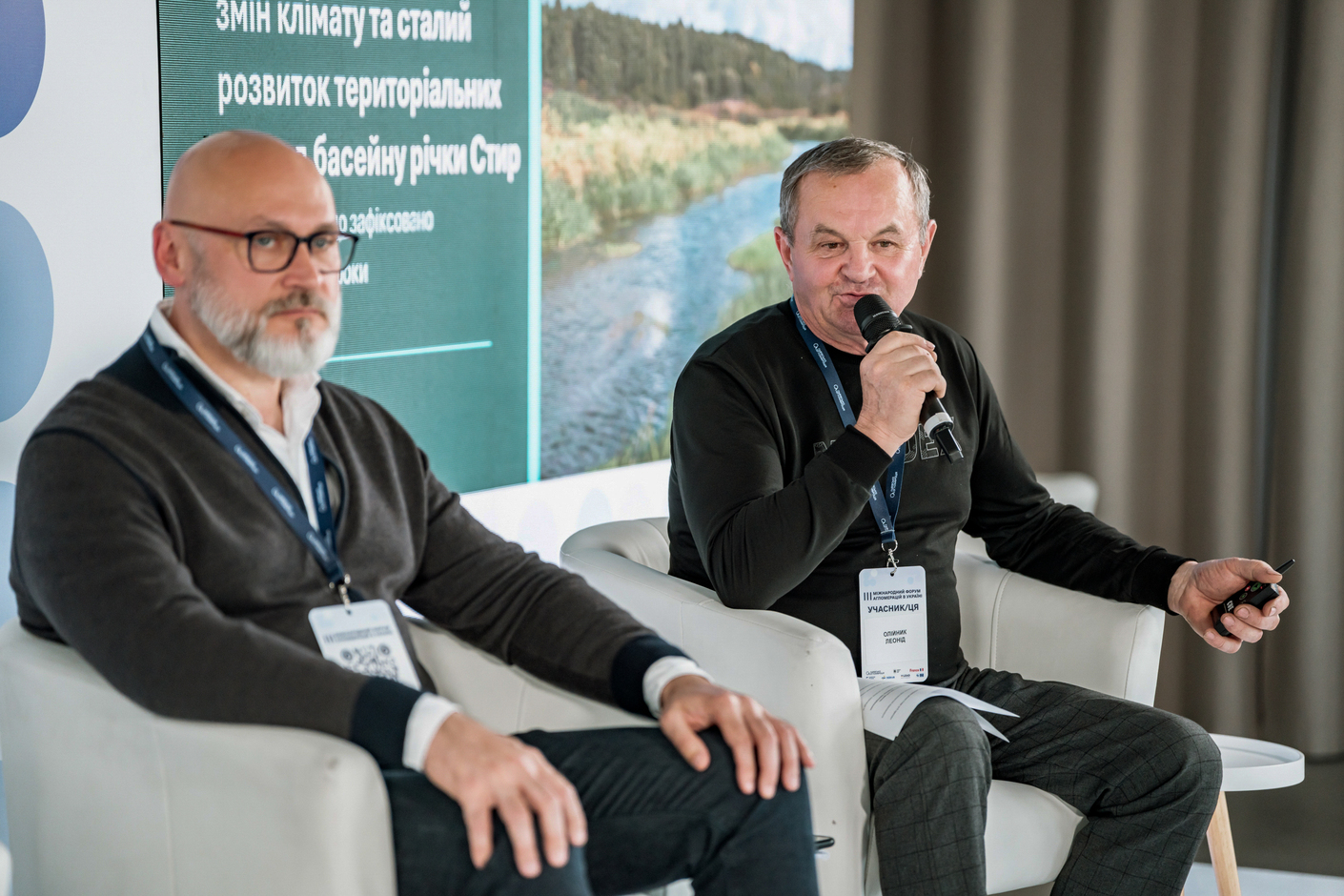
Leonid Oliinyk, Head of Department of Architecture, Urban Planning and Agricultural Relations at Berestechko City Council, spoke about the initiative to restore the River Styr. The river flows through communities in Lviv and Volyn regions, so problems such as silting, overgrowth of the riverbed, and litter cannot be effectively resolved by a single community acting alone.
The communities have joined forces around the project “Restoration of the River Styr and its tributaries, conservation of water resources, and adaptation to climate change” and have signed a memorandum of cooperation. Specialists from the Institute of Water Management and the regional water management departments of Lviv, Volyn, and Rivne regions have been brought in to assist with the work. The coordination group that has been set up is tasked with identifying problem areas, carrying out a survey, and preparing a plan of action.
Currently, the communities are gathering data and developing technical specifications for future work. Funding still needs to be sought. Potential areas of focus for the project include restoring the river to its natural state, preserving its ecological function, and creating recreational areas.
‘We want to preserve this river so that our grandchildren and children can enjoy it,’ said Leonid Oliinyk.
Water intake, wells, and land use are interlinked
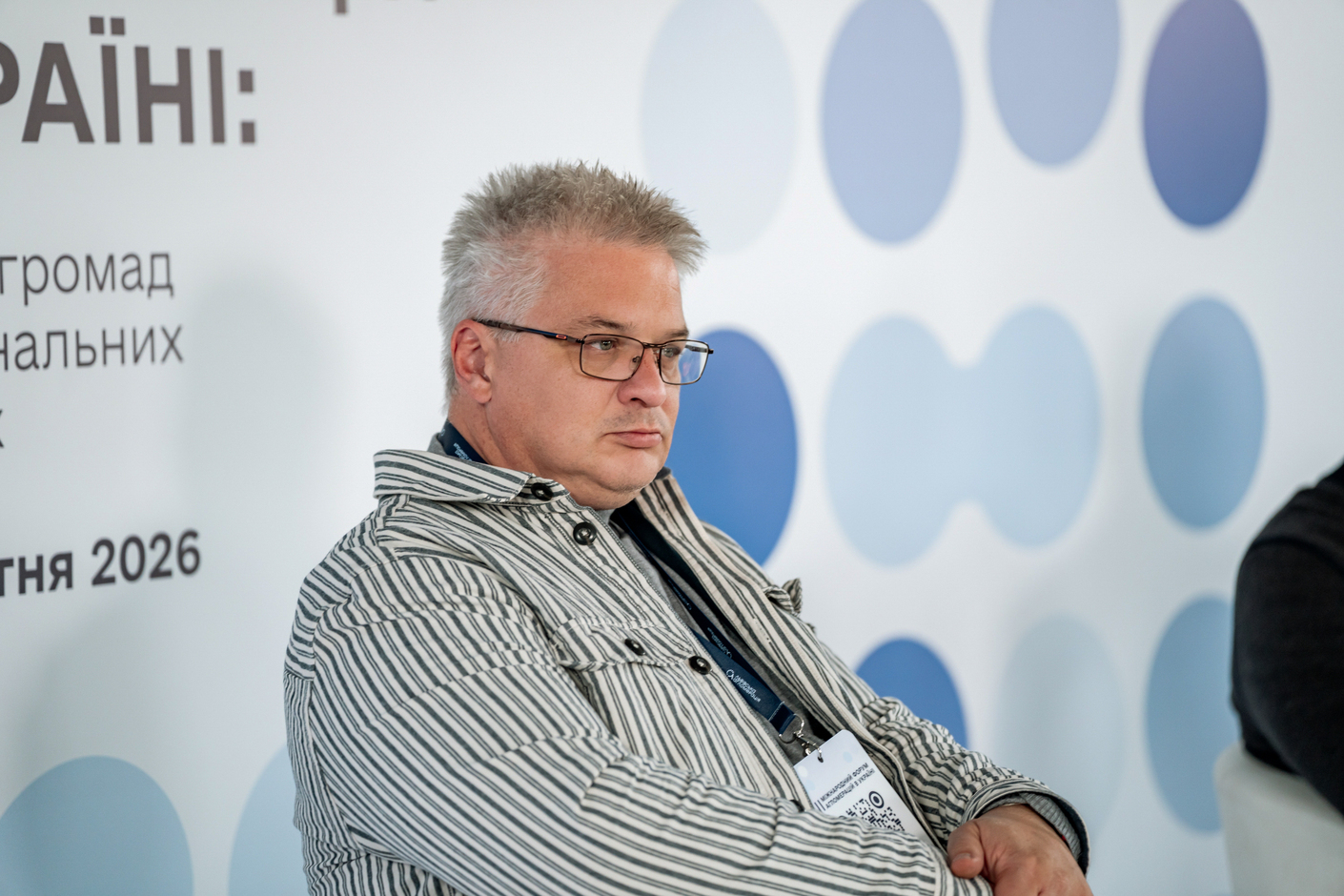
Yevhen Kostenko, an entrepreneur and hydrogeologist, highlighted the interconnection between rivers, aquifers, and boreholes. Water availability is influenced not only by rainfall and climate change, but also by how people use the land, how much water they take, and how efficiently the infrastructure operates.
As an example, he referred to the Stryi water intake, on which the water supply to Lviv and other communities depends. The river, aquifers and boreholes in this system are interconnected, so changes in one area can affect the water supply to other areas. According to Yevhen Kostenko, there is a need for constant monitoring, the search for backup sources, and better coordination between water utility companies and communities.
He also emphasised the importance of local water reserves, which could support residents if the centralised supply needs to be temporarily restored after an accident or damage to the networks.
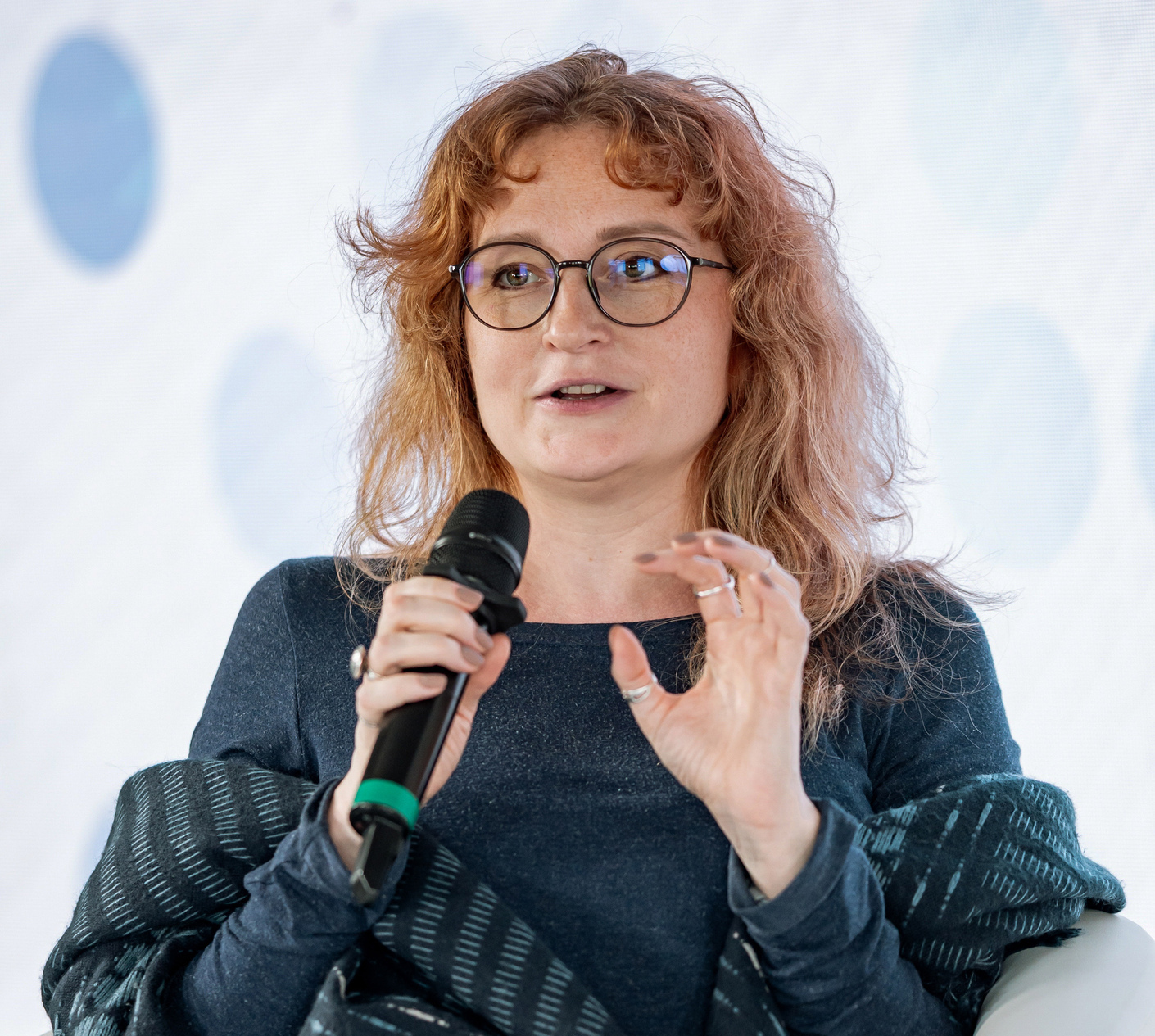
Oleksandra Sladkova concluded that water resources also depend on decisions taken far from the point of consumption. Therefore, cooperation is necessary not only between water utility companies or communities along a single river, but also between those whose territories influence the formation of water resources.
The III International Forum of Agglomerations in Ukraine was organised by the Association “Lviv Agglomeration” and Lviv City Council, in cooperation with and with the support of the Congress of Local and Regional Authorities of the Council of Europe and the RELEVE project (Expertise France), which forms part of the U-LEAD with Europe programme.

Tags:
agglomeration forum water water supply
Source:
Портал "Децентралізація"

05 November 2026
Municipal Enterprises Reform: Polaris Programme...
The Polaris Programme “Supporting Multi-level Governance in Ukraine” has announced the selection results for...
05 November 2026
RESILIENT COMMUNITIES training programme completed!
RESILIENT COMMUNITIES training programme...
On 5 November, International Project Manager Day, the “Resilient Communities” training programme – developed by...
05 November 2026
Як розвивати співпрацю громад України та Румунії: висновки з Rebuilding Ukraine 2026
Як розвивати співпрацю громад України та...
Джерело - Facebook New Strategy Center Традиційно міжнародне муніципальне партнерство з Румунією є більш...
05 November 2026
Open Call for Experts to Conduct Technical...
The Polaris Programme: Support to Multi-Level Governance in Ukraine invites experts to submit their CVs for inclusion...