Waste knows no community boundaries: How communities can set up a shared system
Communities that form part of the same waste management cluster need to agree on how to organise the collection and transportation of waste, where to send it for sorting and processing, and how to jointly finance the necessary infrastructure. Individual decisions made by each community may not form a coherent system unless the logistics and capacity of the facilities are coordinated.
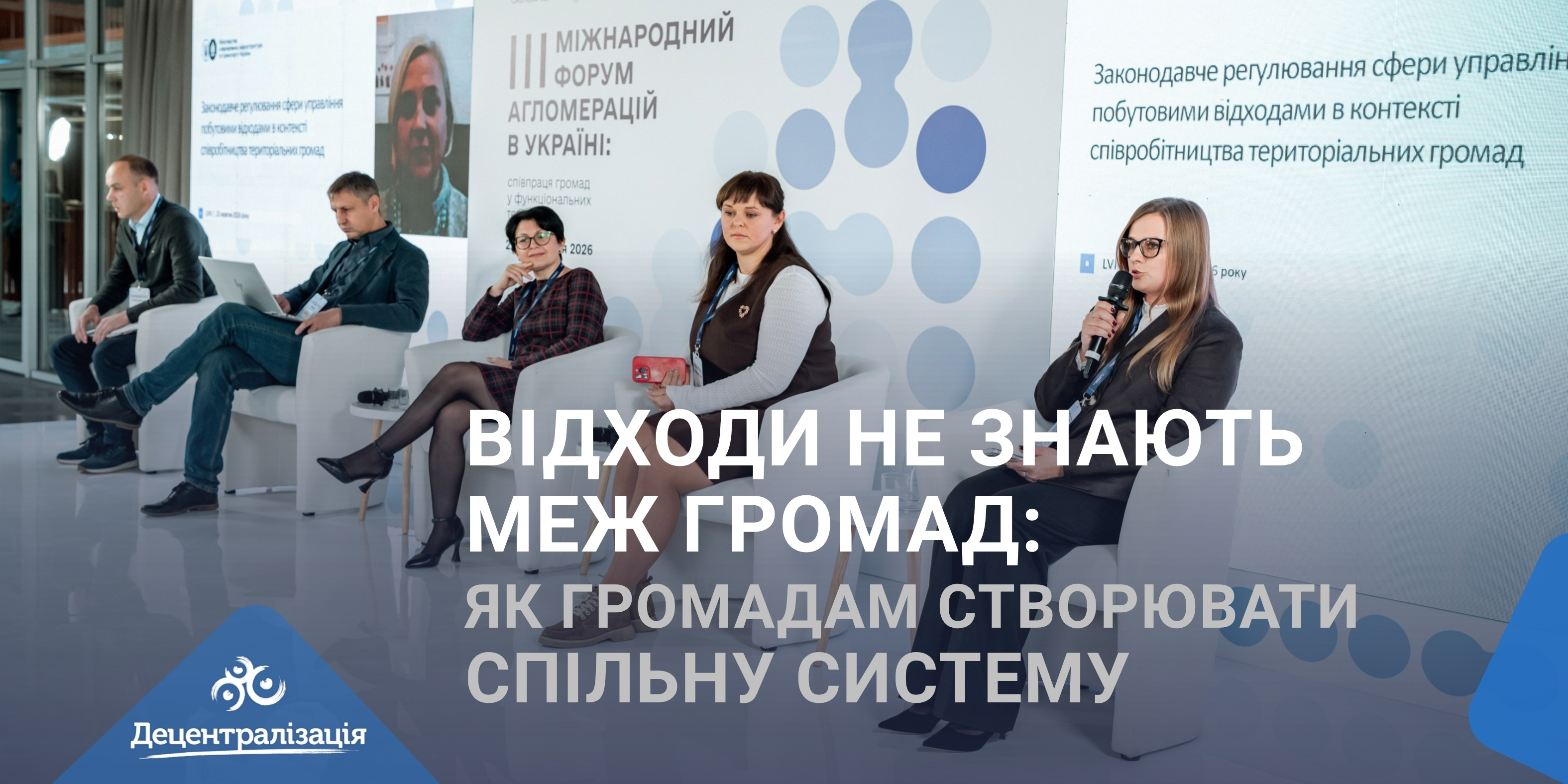
The participants in the panel discussion “Waste: From a Problem for an Individual Community to a Shared System” at the III International Forum of Agglomerations in Ukraine discussed this issue.
Oksana Mylianyk, an expert on Ukraine Facility and the circular economy from the Recovery and Reform Support Team at the Ministry of Economy and Environment of Ukraine, moderated the discussion.
Planning beyond the boundaries of a single community
Diana Novikova, Head of the Department for Household Waste Management and Municipal Services at the Ministry of Recovery, Infrastructure and Transport, spoke about the role of communities in the reform and possible forms of their cooperation. According to the figures she provided, 370 communities are implementing separate collection of household waste. Only 29 communities have set up collection points for hazardous waste. There are 41 sorting lines in operation in Ukraine.
Responsibility for organising the household waste management system at the local level lies with local governments. However, Diana Novikova emphasised that this system needs to be planned with neighbouring communities and shared infrastructure in mind.
‘The household waste management system in each community is not autonomous. It has to be organised within a cluster and have infrastructural, technological, and other links with other communities in the cluster. Only in this way can an economical and environmentally sound system be built,’ said the representative of the Ministry.
She mentioned joint planning, the financing of infrastructure facilities, and the establishment of a joint municipal enterprise or management body as possible formats for cooperation. Which format to choose depends on the objectives: for example, communities may jointly use a facility that belongs to one of them, or together set up an enterprise to serve several territories.
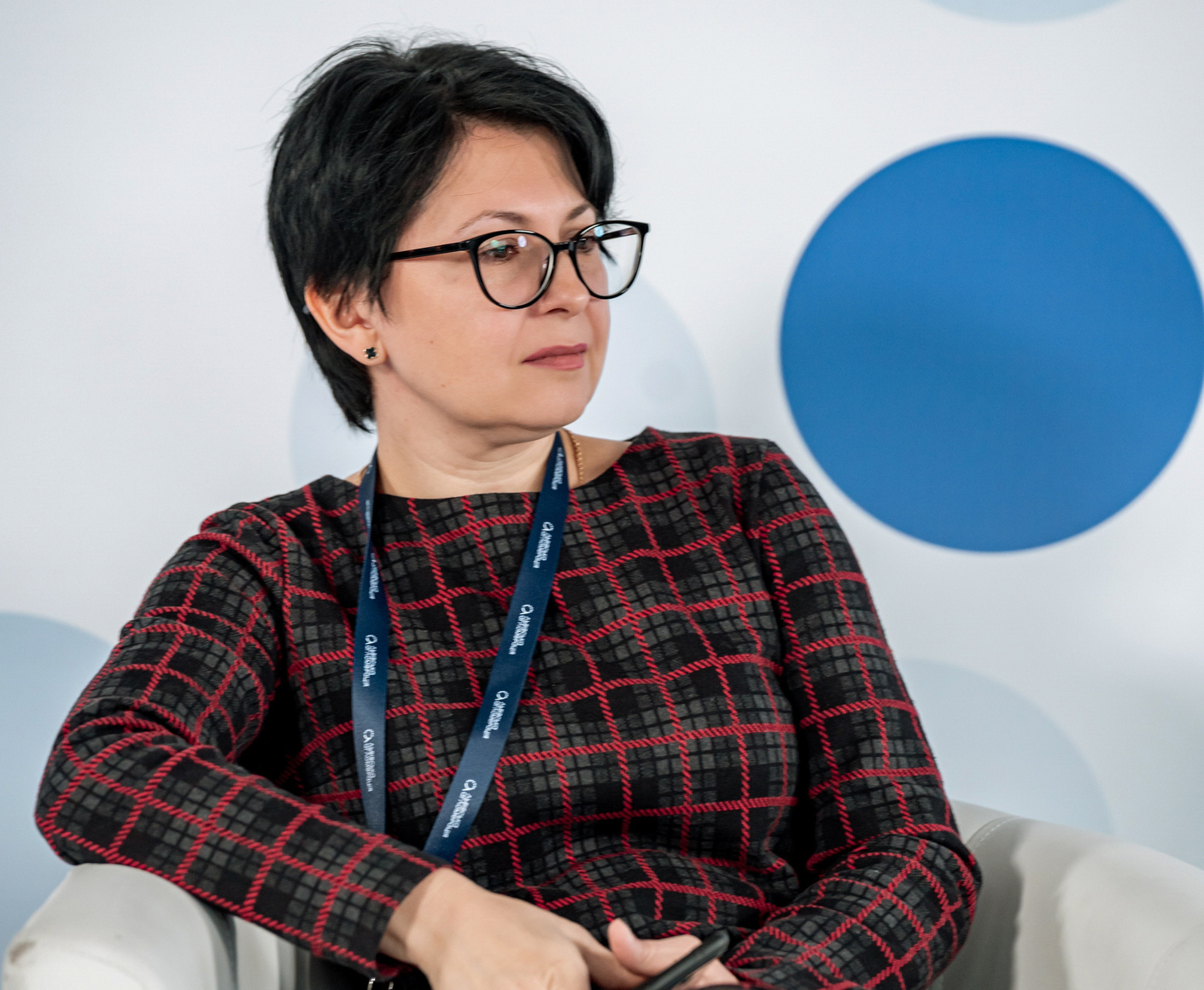
Olena Vusyk, Senior Project Manager for Waste Management Reform, spoke about local waste management plans. According to her, communities should start by conducting an inventory: to establish exactly what types of waste are generated and in what quantities. On this basis, they can determine what treatment facilities are needed and how to organise their operations.
If precise data is not yet available, Olena Vusyk recommends that the local plan allow time for collecting and analysing it. This will enable the planning of logistics and the selection of solutions that meet the needs of the community and the regional plan.
Clusters should take distances and logistics into account
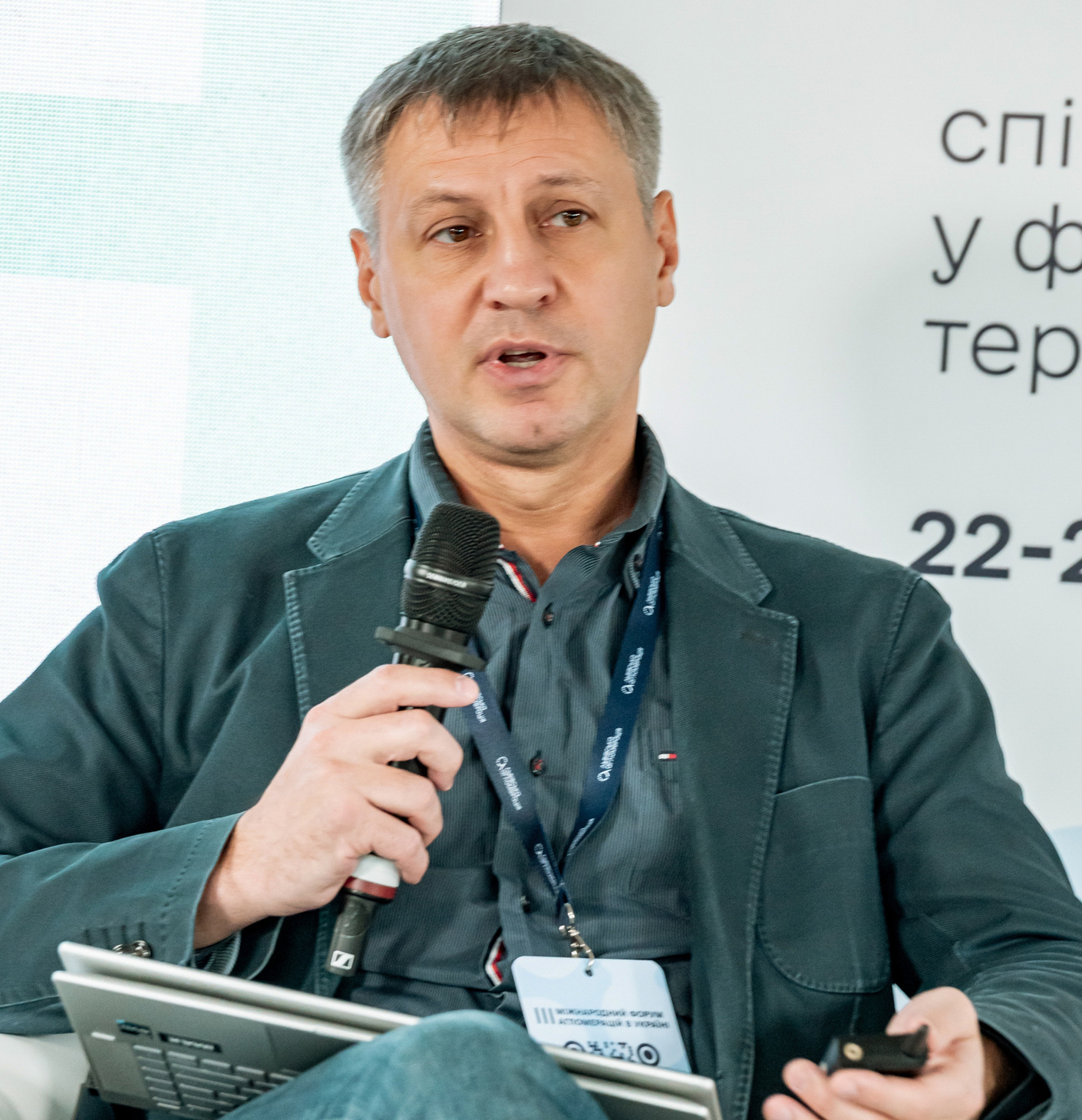
Oleksandr Ihnatenko, an expert in public administration and inter-municipal waste management and Head of the Waste Management for Ukraine project, explained how to combine planning with practical solutions.
The boundaries of a cluster do not necessarily coincide with those of an agglomeration or district. When establishing a cluster, factors such as the location of treatment facilities, the availability of land, the distances between localities, and the condition of roads have to be taken into account. If waste has to be transported over long distances, some operations can be undertaken by intermediate transfer stations or sorting facilities.
The cluster concept, explained Oleksandr Ihnatenko, is intended to help communities agree on exactly what they collect and how this waste is channelled to a shared processing facility.
‘There needs to be a consistent collection system so that we understand which types of waste we are collecting together, and so that the sorting or processing facility is ready to receive them,’ said the expert.
Benefits of cooperation between the four communities
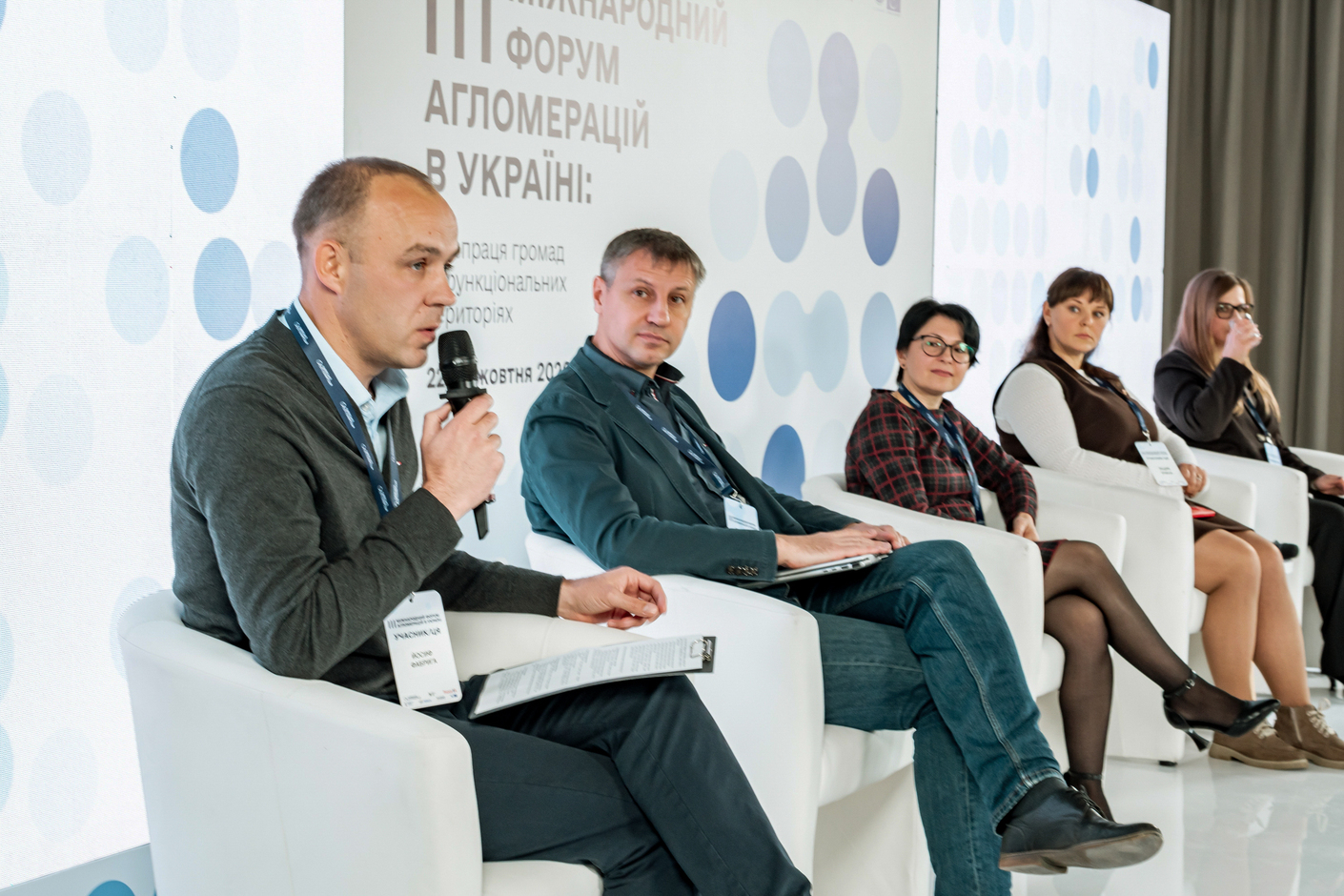
Yosyp Fabryha, Head of the Velykyi Liubin community and a member of the General Assembly of the Association “Lviv Agglomeration”, shared the Lviv Agglomeration’s experience. He said that 13 communities were involved in discussing the problems and possible solutions. This resulted in a strategic plan for household waste management for 2026–2035. The communities also prepared examples of inter-municipal agreements, conducted educational activities, and exchanged experiences.
Yosyp Fabryha spoke in detail about the municipal enterprise set up to operate across the four communities. Its material and technical resources were supported by German partners. The enterprise has refuse lorries, scales, bins, and equipment for handling green waste. Separate waste collection is introduced in the partner communities, and the enterprise’s services are funded from their budgets.
‘We do not currently have a tariff; we provide services free of charge and generate income from sending recyclable materials for processing,’ said the community leader. According to him, the company serves 150 rural localities and two cities. Since starting operations, it has collected over 900 tonnes of recyclable materials, and the proceeds from their sale have exceeded UAH 4 million.
Pyriatyn community: Waste sorting and composting
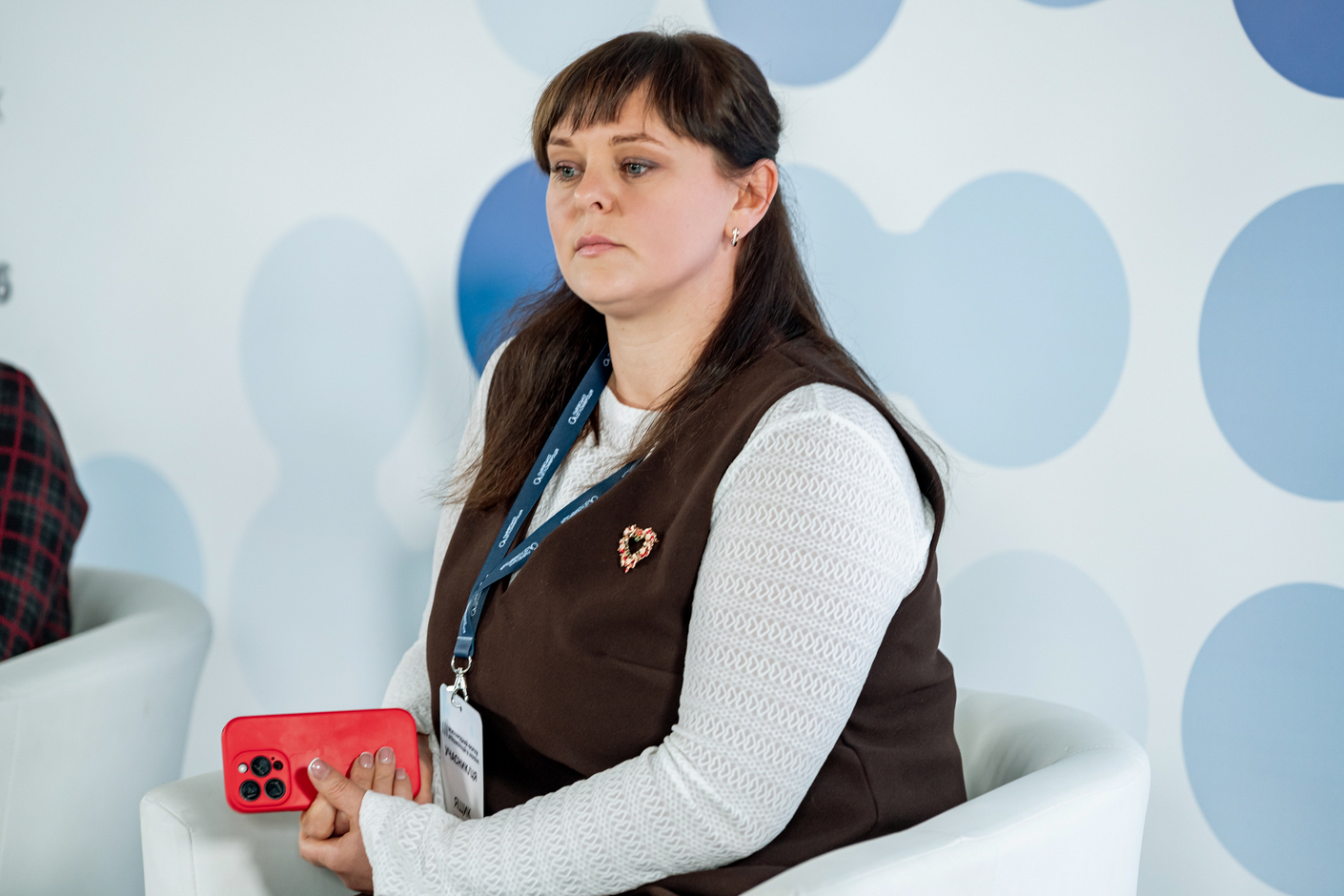
Iryna Yashchyk, an environmentalist at the Ecoservice-2022 utility company of Pyriatyn City Council, spoke about solutions for streets where it is impossible to set up waste collection points. Individual 120-litre bins were purchased for separate waste collection. Initially, 110 were bought, and later more than 200 were distributed to residents.
‘I am surprised myself by how people have reacted to this. People are aware, people are sorting their waste, and people are interested in this,’ said Iryna Yashchyk.
Another area of focus is green waste. The company is preparing a site for composting and has acquired a shredder for branches and plant cuttings. During a trial shredding operation, 60 trailers’ worth of branches were reduced to three trailers’ worth of shredded material.
‘A large amount of branches and plant cuttings is generated. Therefore, one of the solutions is to introduce composting,’ explained the environmentalist. This will help reduce the volume of green waste that ends up at the disposal site.
The company also organises environmental workshops and competitions for children. According to Iryna Yashchyk, by involving children, the community encourages adults to sort their waste.
Waste charges can influence behaviour
Frithjof Laubinger, an environmental economist at the OECD Environment Directorate, provided examples of financial instruments that municipalities in Europe use. These include different service charges depending on the type of waste and local levies on single-use packaging.
He gave the example of Tübingen in Germany, where the levy on single-use packaging is used, specifically, to fund the cleaning of public bins. According to Frithjof Laubinger, this approach can simultaneously generate revenue for the local authority and encourage businesses and consumers to use reusable tableware more often.
Discussions at the Forum revealed that a joint waste management system requires agreements between communities not only on infrastructure but also on daily operations: what to collect, how to transport it, where to process it, and how to finance the service. These decisions, in particular, have to be coordinated in local and regional plans.
The III International Forum of Agglomerations in Ukraine was organised by the Association “Lviv Agglomeration” and Lviv City Council, in cooperation with and with the support of the Congress of Local and Regional Authorities of the Council of Europe and the RELEVE project (Expertise France), which forms part of the U-LEAD with Europe programme.

05 November 2026
Municipal Enterprises Reform: Polaris Programme...
The Polaris Programme “Supporting Multi-level Governance in Ukraine” has announced the selection results for...
05 November 2026
RESILIENT COMMUNITIES training programme completed!
RESILIENT COMMUNITIES training programme...
On 5 November, International Project Manager Day, the “Resilient Communities” training programme – developed by...
05 November 2026
Як розвивати співпрацю громад України та Румунії: висновки з Rebuilding Ukraine 2026
Як розвивати співпрацю громад України та...
Джерело - Facebook New Strategy Center Традиційно міжнародне муніципальне партнерство з Румунією є більш...
05 November 2026
Open Call for Experts to Conduct Technical...
The Polaris Programme: Support to Multi-Level Governance in Ukraine invites experts to submit their CVs for inclusion...