Mobility without borders: How communities can integrate transport, data, and funding
Mobility does not end at the community border, but transport systems often remain fragmented across cities, districts, and different levels of authority. For people to reach work, education, or services without unnecessary changes or delays, it is not enough simply to extend a route across an administrative boundary. Timetables, fares, infrastructure, data and funding have to be coordinated. The participants in the ‘Mobility Without Borders’ panel on the second day of the III International Forum of Agglomerations in Lviv discussed how to achieve this.
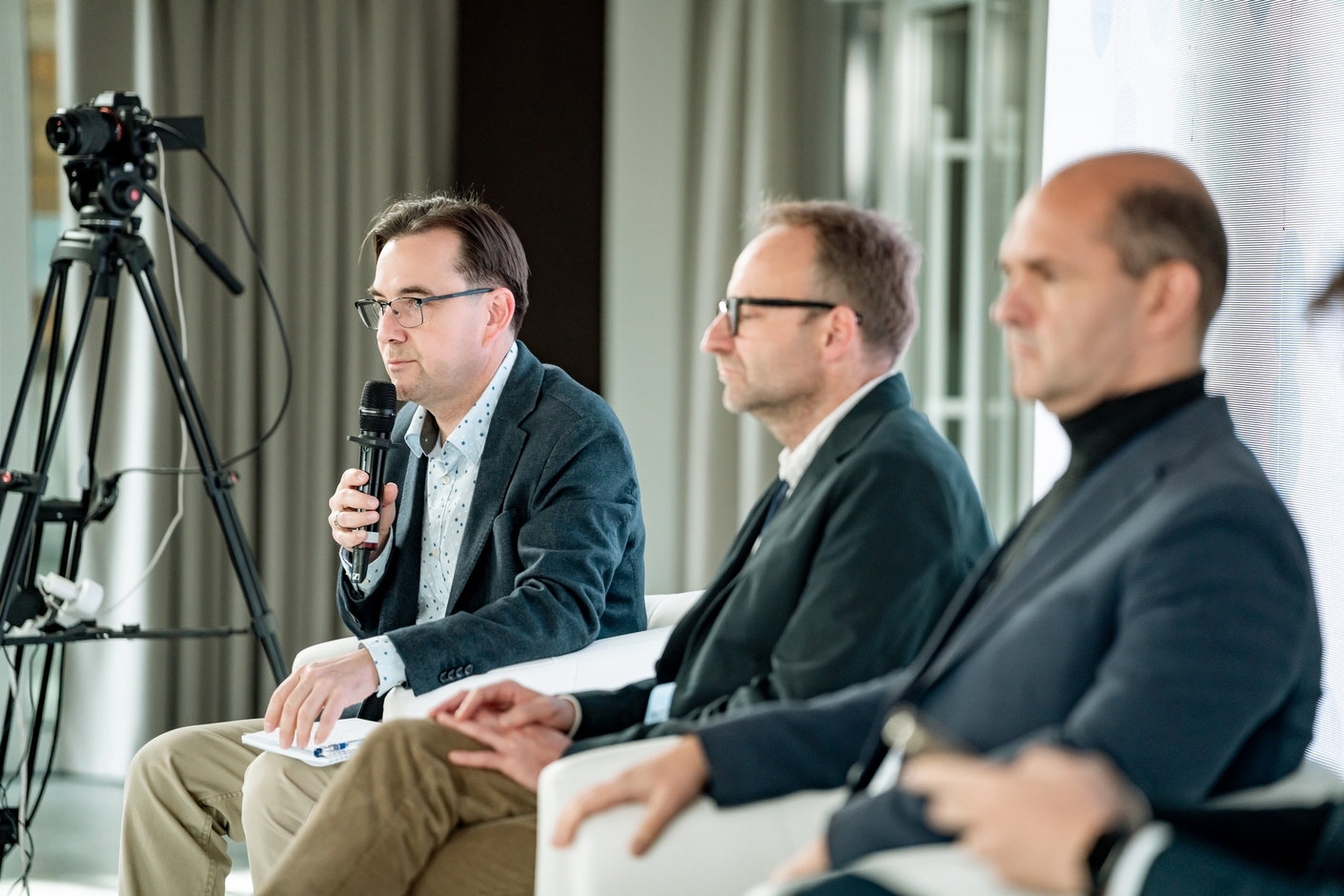
The panel moderator, Markiian Datsyshyn, a consultant to the Council of Europe, pointed out that the territory of an agglomeration is defined by people’s daily journeys, not merely by administrative boundaries or formal distances. This view was echoed by Dmytro Petsii, Deputy Director of the Department of Urban Mobility and Street Infrastructure at the Lviv City Council: “Mobility exists where there are people”. Transport policy has to be based on where people travel and what services they need.
Tickets and co-funding as tools for joint work
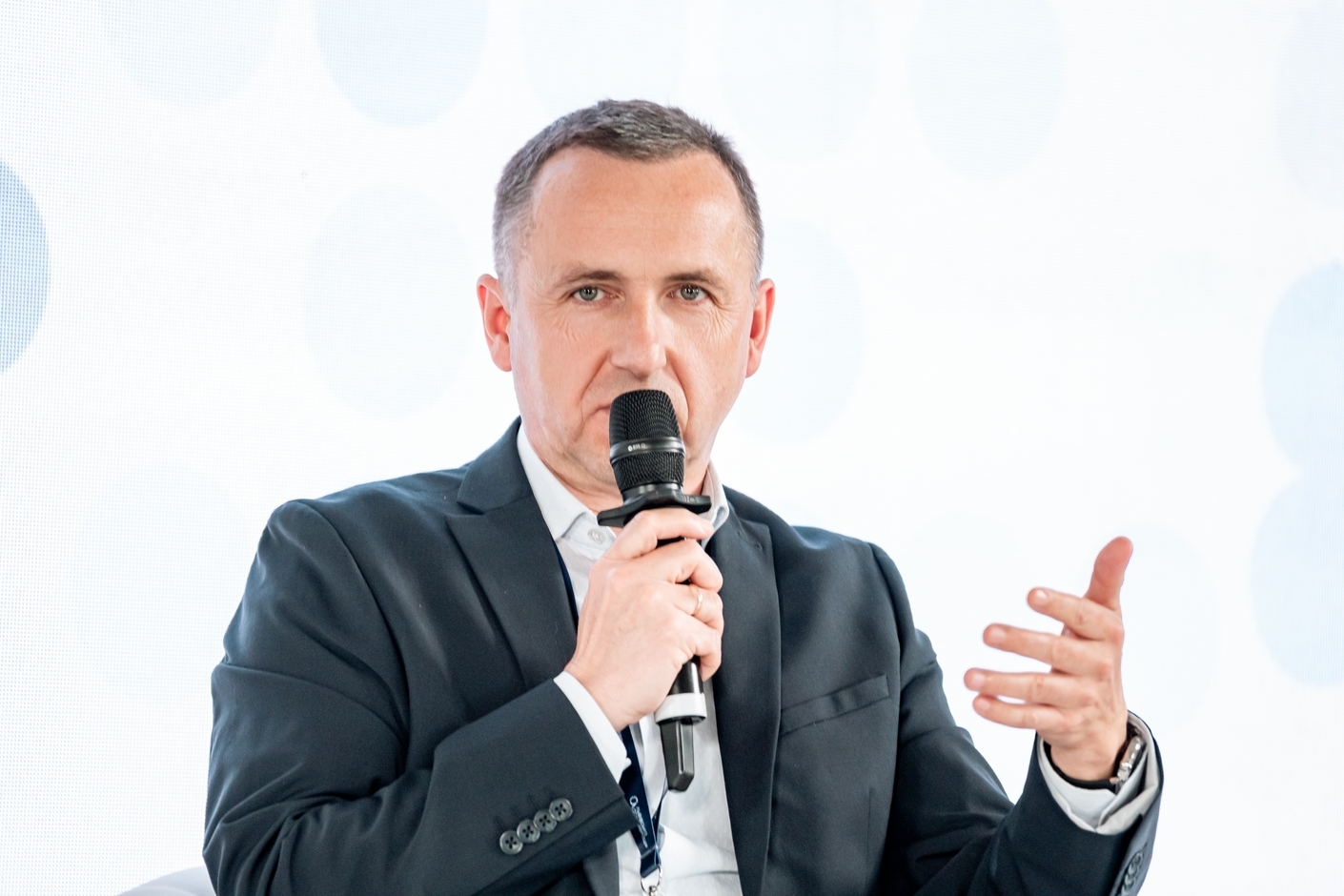
Lviv’s experience shows how digital solutions help to plan and fund transport more effectively. According to Dmytro Petsii, after the introduction of electronic tickets, the number of passenger journeys on public transport rose from 1.7 million to 2.7 million per week. The system displays the number of journeys and enables more accurate tracking of revenue, particularly from reduced-fare travel.
This data is also important for cooperation with neighbouring communities. Lviv has signed an agreement with Murovane community: its residents can use public transport on the same terms as Lviv residents, whereas the community reimburses part of the costs for reduced-fare travel. In this way, the city has extended a public transport route beyond its boundaries and, at the same time, established how to pay for the service for residents of another community.
Dmytro Petsii also explained that Lviv is moving towards contracts in which the transport operator is paid for the transport work performed – adhering to timetables and providing the service – rather than solely for the number of passengers. Currently, this approach is used in cooperation with the municipal transport operator. For private bus services, he said, current legislation does not yet allow for the same model to be applied.
The railway needs a joint plan and a joint budget
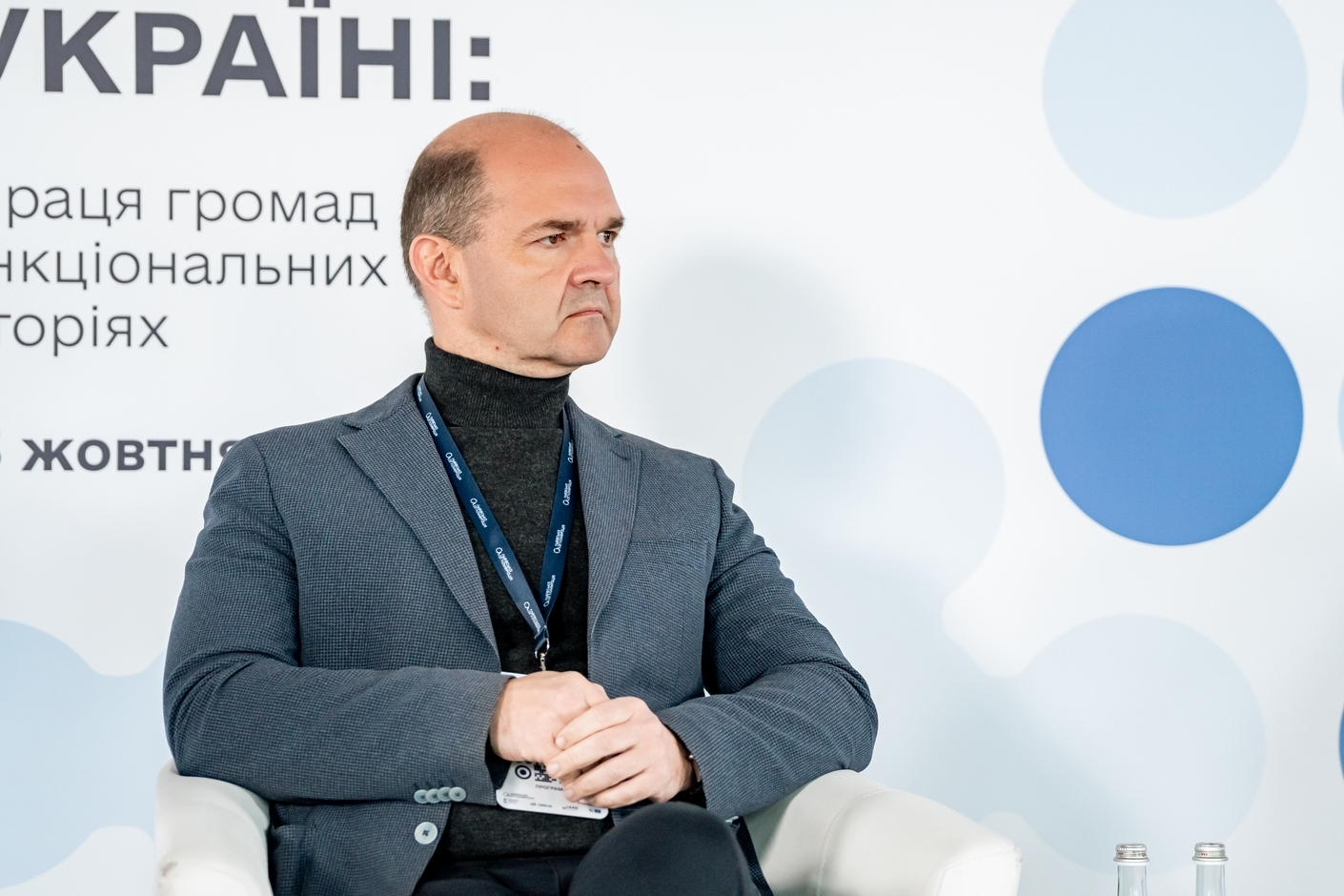
A practical example for the Kyiv agglomeration was presented by Mykhailo Netiazhuk, Mayor of Fastiv. Together with Ukrzaliznytsia, the communities developed a project for a commuter rail service on the Fastiv–Kyiv–Brovary route. According to the figures the Mayor shared, over 100,000 passengers use this route daily, but only around 11% of them travel by rail. The project aims to increase journey times by one and a half times and reduce waiting times to a maximum of 15 minutes.
A co-funding model was agreed for this service: 25% each is to be provided by the state budget, Kyiv, the Kyiv Regional Military Administration and the communities surrounding Kyiv. It was planned that the communities’ shares would be determined based on their distance from Kyiv and passenger numbers. The project was scheduled to launch on 1 October 2026, but it was postponed due to russian attacks on the railway infrastructure and risks to the rolling stock.
Lothar Zeller, a transport expert at the European Investment Bank, also spoke about the need to prepare transport projects well in advance. He emphasised that the preparation of complex infrastructure projects can take between five and ten years. It is therefore important for communities to agree on a shared vision for the development of their territories and to prepare projects in advance for future funding. A mere list of ideas is not enough: they have to be interconnected and align with shared priorities.
Even a large agglomeration has integration problems
Marco Griguolo, President of METREX, the Network of European Metropolitan Regions and Areas, and Counsellor Metropolitan City of Milano, referred to the example of Milan’s transport system. The urban network connecting the city centre with the nearest municipalities functions more effectively thanks to the metro and other modes of transport. However, in the wider metropolitan area, which covers around 110 municipalities, services are provided by different companies and systems. These are not always coordinated with one another, which makes commuting to Milan for work and study more difficult.
This example shows that even a well-established metropolitan area does not automatically have a single transport service. It is necessary to integrate urban and regional transport, the services of different operators and rail links.
The data is to be transformed into a joint transport plan
At the moderator’s invitation, Oksana Bondarets, Executive Director of the Kyiv Agglomeration, joined the discussion. She explained that in the agglomeration, which comprises 18 communities and nearly four million residents, around 500,000 people commute to Kyiv every day for work and study.
With the support of the Council of Europe Office in Ukraine, the agglomeration is developing an interactive transport information dashboard. This is intended to consolidate data from the communities in a standardised format, enabling the planning and implementation of joint projects based on this information. Oksana Bondarets highlighted the Kyiv agglomeration transport plan and transport hubs at the entrances to the capital as among the next steps, where people will be able to leave their cars and transfer to public transport or a train.
Stefan Gabi, an urban planning expert with the Integrated Urban Development Planning (Rupprecht Consult), supported the idea of planning at the level of the entire functional territory. Such a plan should integrate different modes of transport, spatial development, and specific priority projects. He gave the German regions of Aachen and Hanover as examples: in one, cooperation was organised through joint working groups, whereas in the other, a separate institution was set up to plan and coordinate mobility. Thus, the method of organisation may vary, but communities, railway companies, and other relevant bodies have to be involved in the planning process.
In Lviv, catch-up car parks at the city’s entry points were also discussed. According to Dmytro Petsii, the first pilot project involves a car park with space for 100 cars, with the prospect of expanding to 500–600 spaces. The plan is to integrate it with public transport so that drivers can leave their cars and continue their journey to the city centre by bus.
The panel highlighted that mobility in an agglomeration consists of solutions that have to function as a single system. Shared routes require co-funding; transport planning requires shared data; and infrastructure projects require advance preparation and defined sources of funding. For communities, a practical first step is to agree on exactly which journeys and services they wish to provide jointly, and then to clarify the responsibilities of each participant.
The Forum was organised by the Lviv Agglomeration Association and Lviv City Council, in cooperation with and with the support of the Congress of Local and Regional Authorities of the Council of Europe and the RELEVE project (Expertise France), which forms part of the U-LEAD with Europe programme.


29 October 2026
Відбудова без дорогих помилок: що варто знати...
Для українських громад залучити міжнародне фінансування на відбудову школи, житла, водогону чи іншого...
29 October 2026
Чому європейські села втрачають людей і як...
Чи може громада залишатися успішною, якщо її населення скорочується? Чи завжди закриття школи, лікарні або іншого...
29 October 2026
Етика воєнного часу: як місцевій владі не втратити головний ресурс – довіру
Етика воєнного часу: як місцевій владі не...
Уявімо типовий ранок у громаді, яка разом із цією країною живе в умовах воєнного стану. Перед місцевою владою постає...
29 October 2026
New law on basic social support: Challenges for communities from 2028
New law on basic social support: Challenges for...
Communities will play a defined role in the new system of state social support for families. The executive bodies of...