III International Forum of Agglomerations: How to coordinate community development in a shared space

Communities are already uniting in agglomeration initiatives, but the agreement to cooperate alone does not yet enable them to plan the territory jointly, launch transport services, or develop infrastructure. Every such decision has to be reconciled with the plans of individual communities, regional strategies, spatial planning documents, and national regulations. During the first panel discussion at the III International Forum of Agglomerations in Lviv, this mismatch between the actual connections between territories and the decision-making system became the main topic of discussion.
The discussion revealed that the question is not whether agglomerations exist. The question is how to make cooperation effective without turning it into a new level of governance or depriving communities of their autonomy.
Initiatives grow, rules are still to be developed
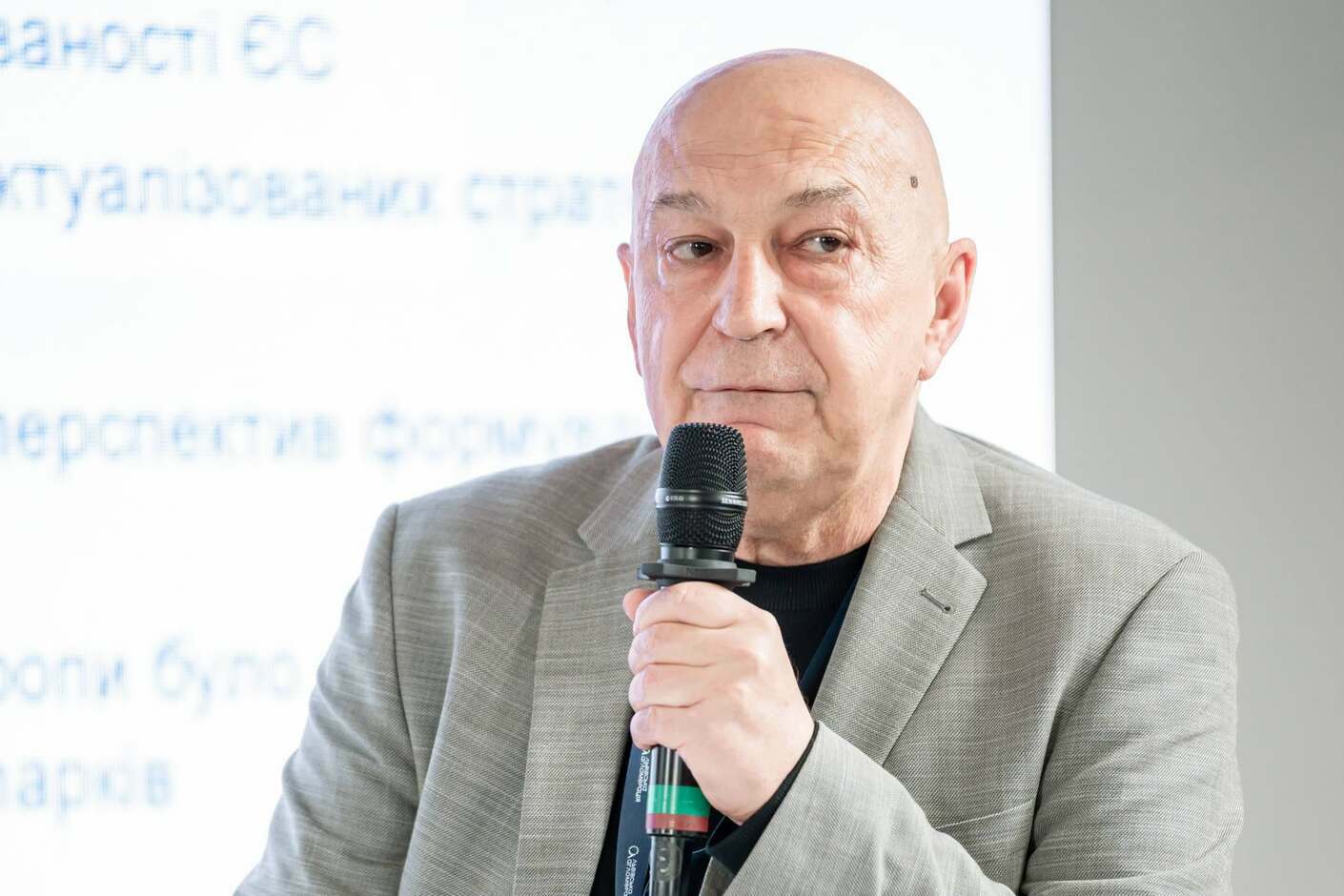
Myroslav Kosheliuk, a consultant to the Council of Europe, pointed out that the agglomeration movement in Ukraine has moved on from isolated discussions to the formation of initiatives. He said there are already eight such initiatives at varying stages: the Kyiv and Lviv associations are active, memoranda have been signed in Kryvyi Rih and Ivano-Frankivsk, and several other regions are exploring opportunities for cooperation. Agglomerations have also begun to be factored into regional strategies, and Cabinet of Ministers Resolution No. 1493 has set out the criteria for them.
However, formal criteria do not always correspond to people’s everyday routes and the links between different territories. The participants in the discussion questioned the 30-kilometre limit set out in the resolution, particularly in the case of Kryvyi Rih, where residents of more remote territories can also make use of the city’s services.
This is a crucial crossroads for future regulation: the criteria should help communities define functional territories, rather than severing connections that have already developed in practice.

Liubomyr Zubach, Deputy Mayor of Lviv, summarised this logic briefly: ‘Agglomerations are not created; they simply exist.’ According to him, the task is to formalise existing links and provide communities with the tools to work together.
When one community’s decisions affect its neighbours
The example of Sokilnyky, mentioned by Liubomyr Zubach, illustrates why spatial planning cannot always be confined to a single community. He explained that the master plan for the village, with a population of around 8,000, provides for housing development for a significantly larger number of people, but without adequate infrastructure. The consequences of such a decision could affect not only Sokilnyky, but also Lviv and the airport.
The point is not that a city or agglomeration should dictate to a neighbouring community how it should develop. The problem lies elsewhere: decisions on construction, utilities, or transport may impose costs and restrictions on neighbours who did not take part in making those decisions. Without joint planning, communities risk ending up in a situation where each decision is legally valid in its own right, but taken together they do not form a viable territory.
Liubomyr Zubach believes that this requires a legal framework which will allow communities to agree on joint action in specific areas, thereby preserving their autonomy. He also explained why a previous attempt to pass a law on agglomerations had failed: at that time, the agenda had focused on the formation of amalgamated territorial communities, without fully taking into account the interests of large cities, in his view.
The question of what the model should look like was raised by Oksana Bondarets, Executive Director of the Kyiv Agglomeration. She asked what would be better for Ukraine: an agglomeration where communities remain independent, or a metropolitan model involving the transfer of some powers and funds to a joint body. The participants did not provide a universal answer, but the very framing of the question highlighted a fundamental distinction: cooperation should strengthen the capacity of communities, rather than erode their accountability to residents.
From a shared need to a solution – a long way
Yevhen Udod, First Deputy Mayor of Kryvyi Rih, highlighted just how difficult it is to implement even a practical project. According to Mr Udod, in order to reach a joint decision on mobility, communities need to develop coordinated programmes, incorporate them into the region’s strategy and spatial planning documentation, and then approach the national authorities. Communities are prepared to follow this path, but at present it seems far too long, and the outcome is not entirely predictable.
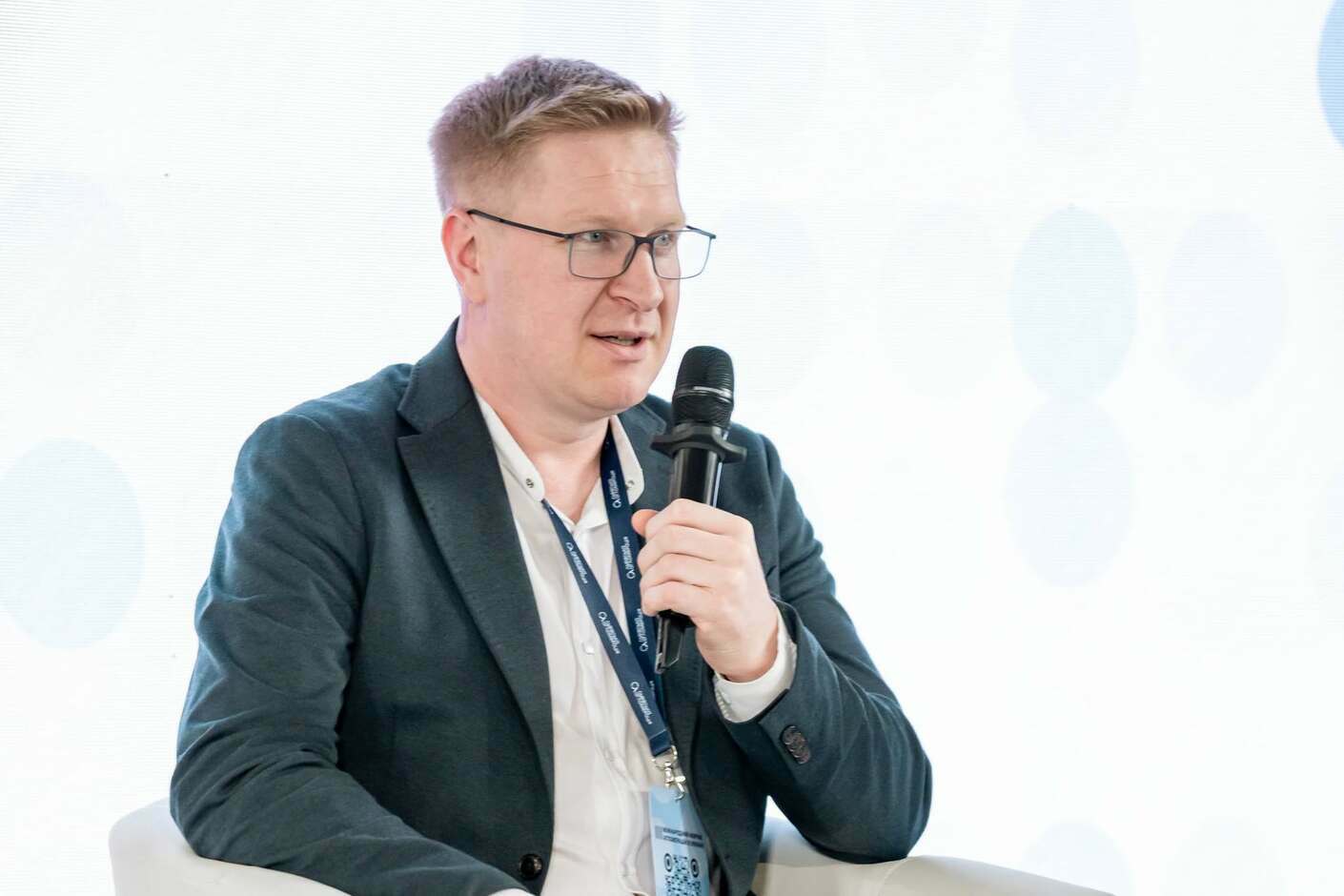
The region plays a crucial role here. Vadym Tabakera, Director of the Department of Economic Policy at the Lviv Regional State Administration, described this role as primarily one of “not getting in the way”, and then supporting initiatives and incorporating them into regional planning. If communities have shared concerns about the economy, water supply, sewerage, transport or spatial development, they can negotiate more effectively directly with one another, whereas the regional level should help to align these plans with the region’s overall development.
Vitalii Fedoriv, Deputy Mayor of Ivano-Frankivsk, explained that 15 communities in Ivano-Frankivsk agglomeration work on joint initiatives: spatial planning, transport, economic development, and industrial parks. At the same time, he proposed reinstating the infrastructure subsidies to support shared needs, in particular water supply, sewerage, and the provision of housing for internally displaced persons.
No consensus was reached at the Forum on the issue of separate funding for agglomerations. Liubomyr Zubach does not believe that a special subsidy is necessary, but described the withdrawal of reverse subsidies from successful communities as a mistake. This demonstrated that the discussion concerns not only the level of financial support, but also its model: should the state create a separate instrument for agglomerations, or is it sufficient to remove barriers and allow communities to use their own resources for joint projects.
From existing cooperation mechanisms to a legislative framework for agglomerations
Stepan Kuibida, Advisor to the Minister for Communities, Territories and Internally Displaced Persons, stated that agglomerations have different characteristics, so the Ministry proposes starting with specific problems and seeking solutions that can be adopted more quickly, in particular through Cabinet of Ministers resolutions. He did not promise a separate law, but emphasised that if communities clearly articulate the need for one, their request should not be ignored. A working group or consultations on a draft law, he said, would already be an important step.
Stepan Kuibida also cautioned against expecting a rapid “cosmic revolution” and urged communities not to postpone their own work, ‘Don’t just sit around and wait. Nobody will do anything for you.’

MP Dmytro Mykysha emphasised that the legislative framework for inter-municipal cooperation already exists, ‘An agglomeration is a form of inter-municipal cooperation. It is already regulated.’ In his view, communities do not need to wait for a separate law to take action. Instead, they should identify which specific provisions of laws and subordinate legislation hinder effective cooperation, and work to amend them. Dmytro Mykysha also assured them that the relevant parliamentary committee would involve communities and their associations in discussions on legislative initiatives.
These positions are not simply a choice between a new law and operating within the framework of existing legislation. Liubomyr Zubach speaks of the need for a framework for joint decision-making; Dmytro Mykysha – of the opportunity to cooperate now and address specific legal obstacles; Stepan Kuibida speaks of tackling problems gradually and the lack of grounds for expecting immediate changes. Together, they outline a practical agenda: not to postpone cooperation, but to amend legislation where it really blocks joint action.
Thus, the main challenge for agglomerations is not to obtain a name or status, but to learn how to transform shared needs into coordinated plans, decisions, and projects. Progress will be measured not by the number of memoranda, but by whether communities can jointly plan their territories, navigate procedures, agree on resources, and provide services to people that do not stop at administrative boundaries.
27 October 2026
NEBA Hub Україна розпочинає створення колекції...
У жовтні 2025 року на території Експоцентру України (ВДНГ) у Києві відкрили терапевтичний сад. Це - публічний простір...
27 October 2026
Чого навчаються один в одного Івано-Франківськ та шведське Люлєо
Чого навчаються один в одного Івано-Франківськ...
Візит делегації з Івано-Франківська до міста-побратима Люлєо У 2025 році Івано-Франківськ і шведське Люлєо...
27 October 2026
Як релокація бізнесів і державних установ змінює малі громади України
Як релокація бізнесів і державних установ...
Онлайн-медіа про схід України «Свої.city» півроку досліджувало, як в умовах повномасштабної війни релокація бізнесів...
27 October 2026
Повернути тепло, відновити домівки, втримати...
Начальниця Роганської селищної військової адміністрації Харківської області Марія Черненко про унікальні кейси...