PIT, reverse transfer, and community needs: All-Ukrainian Association of Amalgamated Territorial Communities held a budget discussion in Lviv region
In Lviv region, the All-Ukrainian Association of Amalgamated Territorial Communities (AAATC) held a discussion on the draft State Budget 2027. The participants discussed financial predictability for communities, the principles of subsidy allocation, delays in treasury payments, and how budgetary decisions affect services for children and families.
The programme comprised two interlinked sections: the financial capacity of communities and investment in children and young people. The situation with treasury payments, which has complicated the implementation of local budgets this year, was discussed separately.
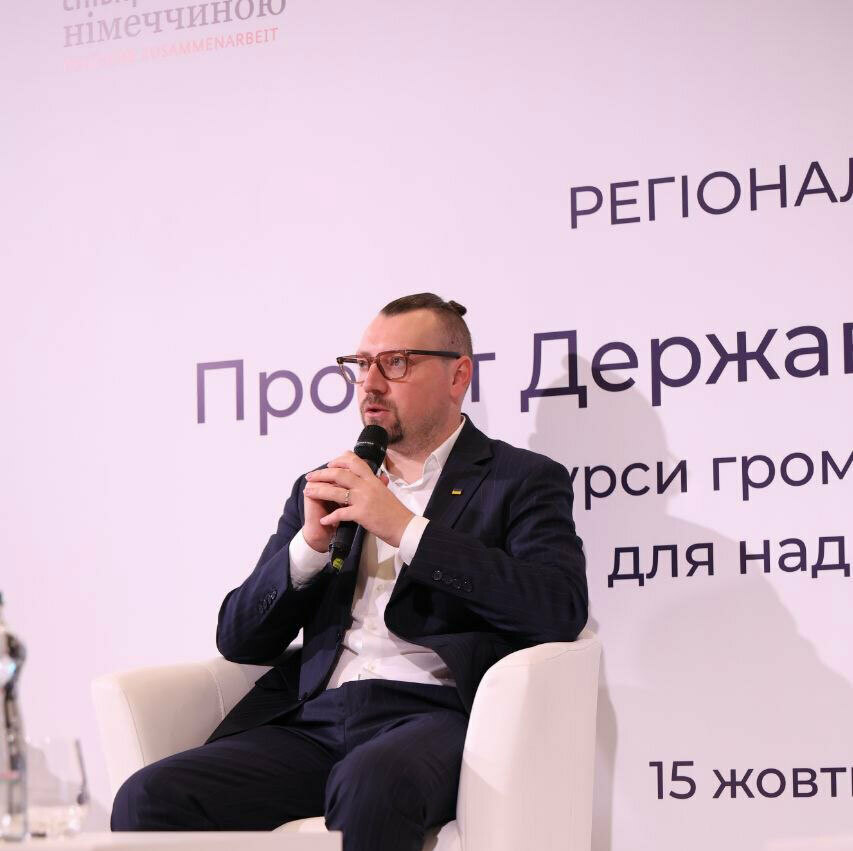
The Minister for Communities, Territories and Internally Displaced Persons, Vitalii Bezgin, stated that this year’s budgetary situation remains challenging. He said it was important to maintain a balance and focus on decisions that directly affect people. He thanked the Verkhovna Rada for supporting the necessary commitments, describing this as a step to stabilise the state and local budgets.
Vitalii Bezgin also thanked the communities of Lviv region for their support of the project to build mobile bomb shelters for frontline regions. He said that the fundraising plan for this initiative had been 100% fulfilled.
Regional support programmes for 2027 are to be drawn up taking into account the functional types of territories and the Ministry’s priorities. The areas mentioned include school meals, accessibility, and the rehabilitation of military personnel.
Communities demand predictable rules
Oleksandr Korinnyi, Chairman of the AAATC Board and Mayor of Novoukrainka, emphasised that communities need to know about financial obligations in advance so that they can plan services and avoid having to revise decisions once implementation has begun.
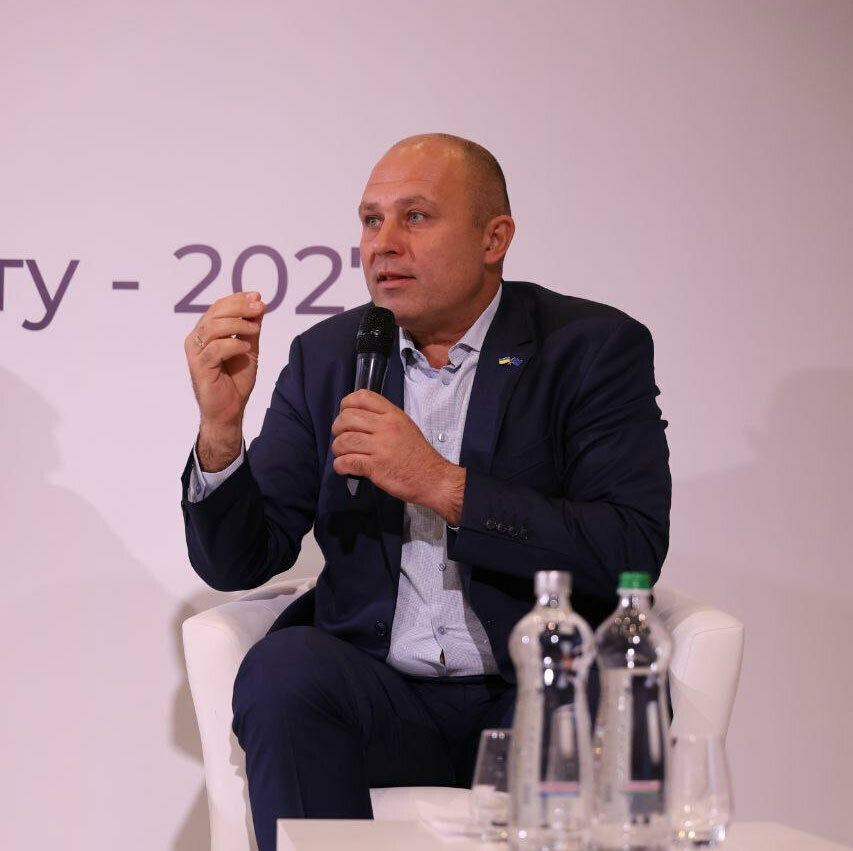
‘Today, one cannot hold discussions with international partners or prepare projects for implementation without knowing what they might tell you tomorrow: now we are providing meals for all children in schools, so spend your savings; and then, two months later, they will announce that there is no money and there will be no funding. Hence, it is vital to discuss budgetary decisions in advance.’
The Association advocates maintaining direct inter-budgetary relations. Oleksandr Korinnyi argues that funds for the development of educational and healthcare services should go to the communities that provide them. He also called for the actual population figures to be taken into account, particularly people who have moved to communities as a result of the war.
‘We still refer to them as internally displaced persons, but in my community we call them “new Ukrainians”. These are people who have lost their homes and the ability to live a normal life. They too must be included in the statistics,’ said the Mayor of Novoukrainsk.
Oleksandr Korinnyi linked community funding to children’s safety. In his view, this involves not only bomb shelter but also access to medical care and education during martial law. He also listed school meals, fire safety, and the proper condition of educational establishments among the key needs.
MinFin: Equalisation should take into account the varying capacities of communities
Oleksandr Moroz, Director of the Department of Inter-Budgetary Relations and Local Budgets at the Ministry of Finance of Ukraine, focused on horizontal equalisation. He explained that the reverse subsidies are part of a mechanism that redistributes resources amongst communities with differing financial capacities.
‘Horizontal equalisation should ensure equal opportunities for regional development and citizens’ access to basic public goods, regardless of where they live. It involves taking a portion of surplus revenue from communities with better performance indicators and transferring this resource to communities with lower capacity. Without a redistributive mechanism, there is no point in talking about horizontal equalisation. The formula must remain mathematical, objective and impartial, even under martial law.’
Oleksandr Moroz drew attention to the disparity in the execution of local budgets: according to his data, over eight months, revenues in non-frontline regions grew by an average of 20%, whereas those in frontline regions grew by 12%. To support regions where there are communities affected by hostilities or temporarily occupied territories, the draft provides for an additional subsidy.
The balance of funds in local budgets provoked a separate discussion. A representative of the Ministry of Finance reported that, as at 1 September, these stood at UAH 186 billion, compared with UAH 90 billion at the start of the year, of which UAH 127 billion had been placed in deposit accounts. He clarified that these figures preceded the restrictions introduced at the end of September and do not reflect their impact.
Ihor Herasymchuk, a financial expert with the Polaris programme, drew attention to the growing role of transfers: according to his estimates, they now account for 33% of local budget revenue, compared with 28% a year earlier. He also compared growth rates: transfers increased by 44.9%, compared with 11% for own-source revenue.
Position on PIT and the reverse subsidy
MP Halyna Vasylchenko stated that during the budget process, she would advocate for preserving the additional 4% PIT for communities and oppose the withdrawal of the reverse subsidy. According to her estimates, these proposals together amount to around UAH 40 billion. She also emphasised the principle that if the state establishes new expenditure commitments, it must provide for a source of funding for them.
In turn, Oleksandr Korinnyi, for his part, supported retaining the reverse subsidy as an instrument of solidarity between communities. He believes that this resource should assist regions which are unable to meet their urgent needs on their own, particularly those related to security.
Staffing constraints also affect the budget
Maksym Kozytskyi, Head of the Lviv Regional Military Administration, named the balance between economic activity and mobilisation as one of the challenges for communities. He drew attention to the inconsistent rules for reserving staff, particularly those responsible for maintaining public infrastructure.
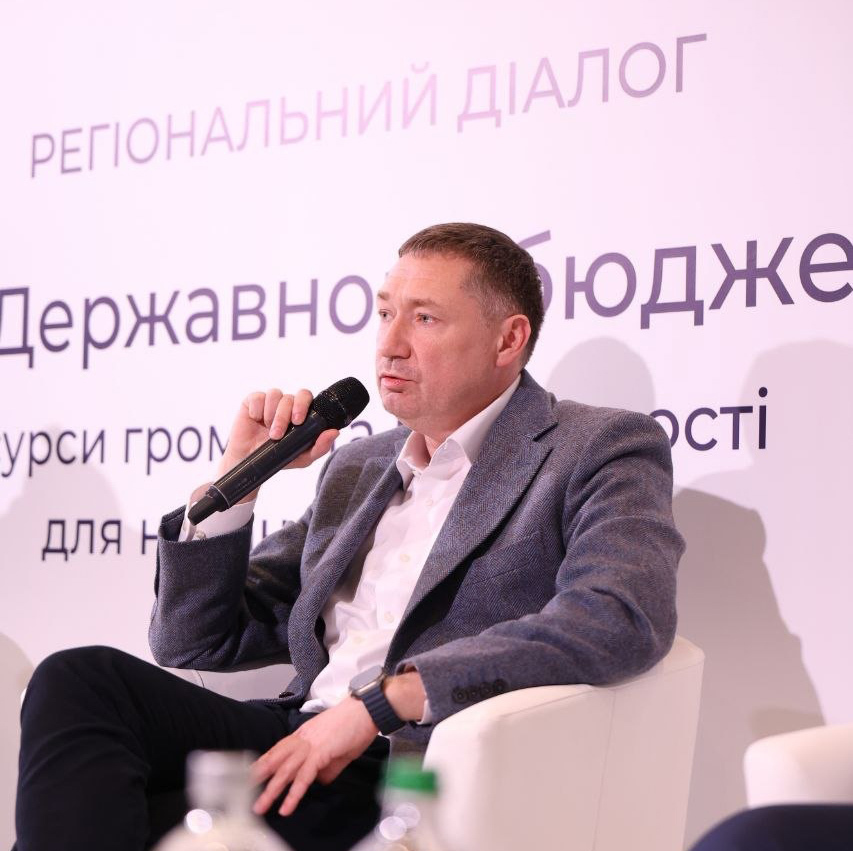
‘The rules of the game must be clear and consistent. We had only just rebooked all the companies by 20 August, and it looks as though we will have to do it all over again by 20 October. Under such circumstances, it is difficult to plan budgets and organise our lives.’
Oleh Demkiv, Director of the Finance Department at the Lviv Regional State Administration, warned that delays in treasury payments could also cause problems in the next financial year: communities will have to verify their accounts payable and amend their budget figures. He also called for the standardisation of delegated powers to ensure that the provision of mandatory services is backed by clear financial support.
The participants’ views differed on exactly how resources should be allocated among communities. Meanwhile, the discussion repeatedly returned to common issues: the predictability of budgetary decisions, taking the actual population into account, and ensuring that funding corresponds to the services that communities are required to provide.


05 November 2026
Municipal Enterprises Reform: Polaris Programme...
The Polaris Programme “Supporting Multi-level Governance in Ukraine” has announced the selection results for...
05 November 2026
RESILIENT COMMUNITIES training programme completed!
RESILIENT COMMUNITIES training programme...
On 5 November, International Project Manager Day, the “Resilient Communities” training programme – developed by...
05 November 2026
Як розвивати співпрацю громад України та Румунії: висновки з Rebuilding Ukraine 2026
Як розвивати співпрацю громад України та...
Джерело - Facebook New Strategy Center Традиційно міжнародне муніципальне партнерство з Румунією є більш...
05 November 2026
Open Call for Experts to Conduct Technical...
The Polaris Programme: Support to Multi-Level Governance in Ukraine invites experts to submit their CVs for inclusion...