How the KRYTSIA Project Supports the Recovery and Development of Communities in Kryvyi Rih Raion
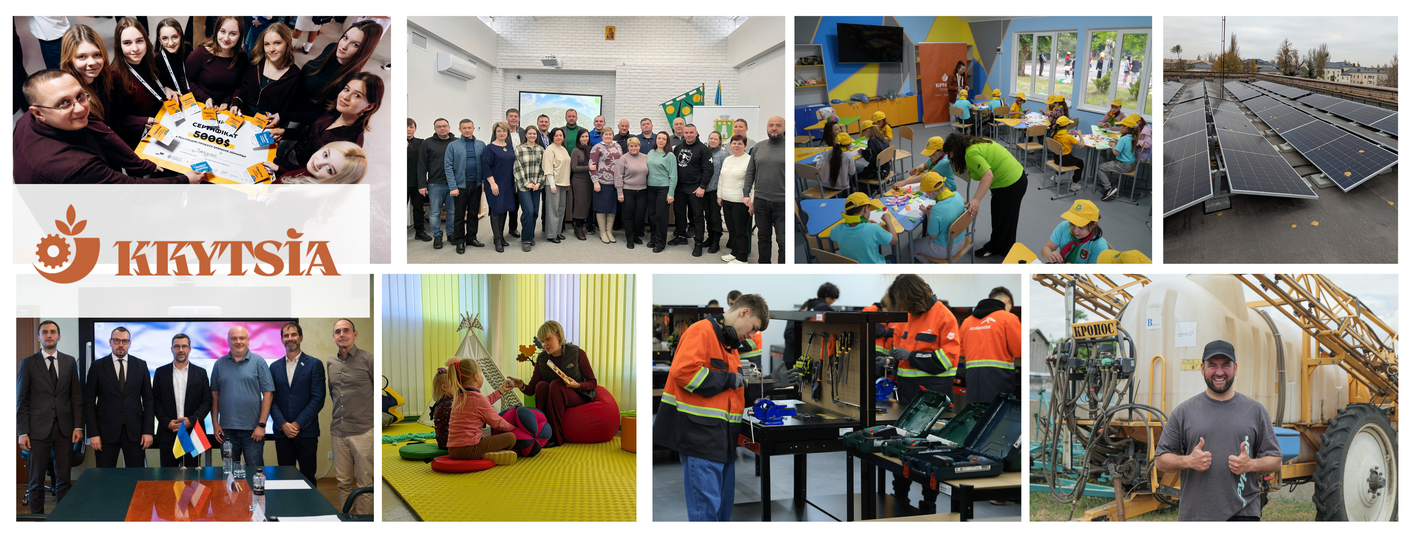
Russia’s full-scale invasion has changed the approach to local development in Ukraine. In the first months following the invasion, communities focused primarily on ensuring security and maintaining essential services. Today, however, the long-term capacity of local areas to develop is becoming increasingly important. For regions close to the front line, this means responding to immediate challenges while also creating the conditions for future economic and social development.
Kryvyi Rih Raion is an example of a territory where these processes are unfolding simultaneously. The region continues to play an important economic role in Ukraine, remaining one of the country’s largest centres of mining and metallurgical production. At the same time, it operates amid persistent security risks, proximity to the front line and the need to adapt local governance systems to new challenges.
It is in this context that the KRYTSIA: Support for the Recovery of Kryvyi Rih Raion project is being implemented. The five-year project runs until March 2029, is funded by the Grand Duchy of Luxembourg and is implemented by the Luxembourg Development Cooperation Agency, LuxDev, in partnership with PROMAN and the National Development Institution (NDI). Its distinctive feature is its integrated approach, combining stronger local self-government, economic recovery, support for and development of micro, small and medium-sized enterprises, human capital development and the modernisation of critical infrastructure within a unified framework for territorial development.
Recovery: More Than Reconstruction
In recent years, Ukraine has increasingly recognised that recovery cannot be limited to repairing damaged buildings and infrastructure. Equally important are communities’ capacity to manage change, develop high-quality projects, mobilise resources, work with international partners and create the conditions for economic development.
Strengthening the capacity of local self-government is one of KRYTSIA’s key areas of work. This involves more than individual training activities: it means building teams within communities that can independently manage the entire process, from identifying problems and needs to preparing and implementing projects.
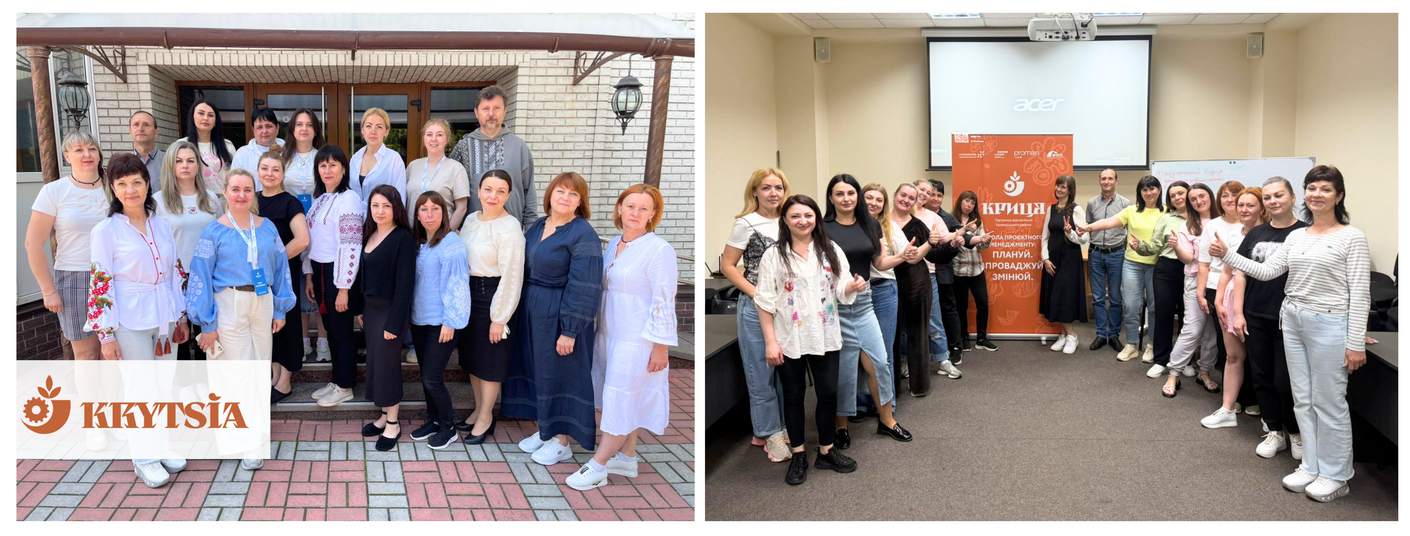
The KRYTSIA Project Management School is already up and running. Participants include representatives of communities, local self-government bodies and development institutions across Kryvyi Rih Raion. They explore strategic planning, territorial potential assessment, change management, investment project preparation and funding mobilisation. In June 2026, for example, 44 community representatives took part in the School’s fourth session, which focused on leadership development and change management. In July, the fifth module covered the preparation of investment projects in accordance with national requirements.
The training is already producing practical results. More than 50 representatives of local self-government bodies have received training; 11 projects have been prepared for the DREAM platform; six pre-project studies have been carried out; and more than 10 technical specifications for recovery projects have been developed. And this is only the beginning.
Particular emphasis is placed on ensuring that the training remains closely connected to real management challenges. Participants work on their own ideas and community projects, applying the tools they acquire to develop project portfolios, establish priorities and prepare applications for national and international funding.
This approach is particularly important given that competition for recovery funding is expected to intensify. Having specialists who can clearly define a problem, justify a proposed solution, prepare project documentation and oversee implementation is becoming just as important for development as having access to funding itself.
KRYTSIA therefore works not only on individual community projects but also on fostering the environment in which these projects can emerge and be implemented. Alongside training, the project promotes inter-municipal cooperation and provides expert support to communities in project preparation, partnership development and resource mobilisation.
In effect, this represents a gradual shift from a model in which “the donor helps deliver a project” to one in which communities themselves develop the capacity to set priorities, prepare high-quality projects and seek the resources needed to implement them. This may prove to be one of the most enduring outcomes of international support for the Kryvyi Rih area.
Inter-Municipal Partnerships as a Tool for Development
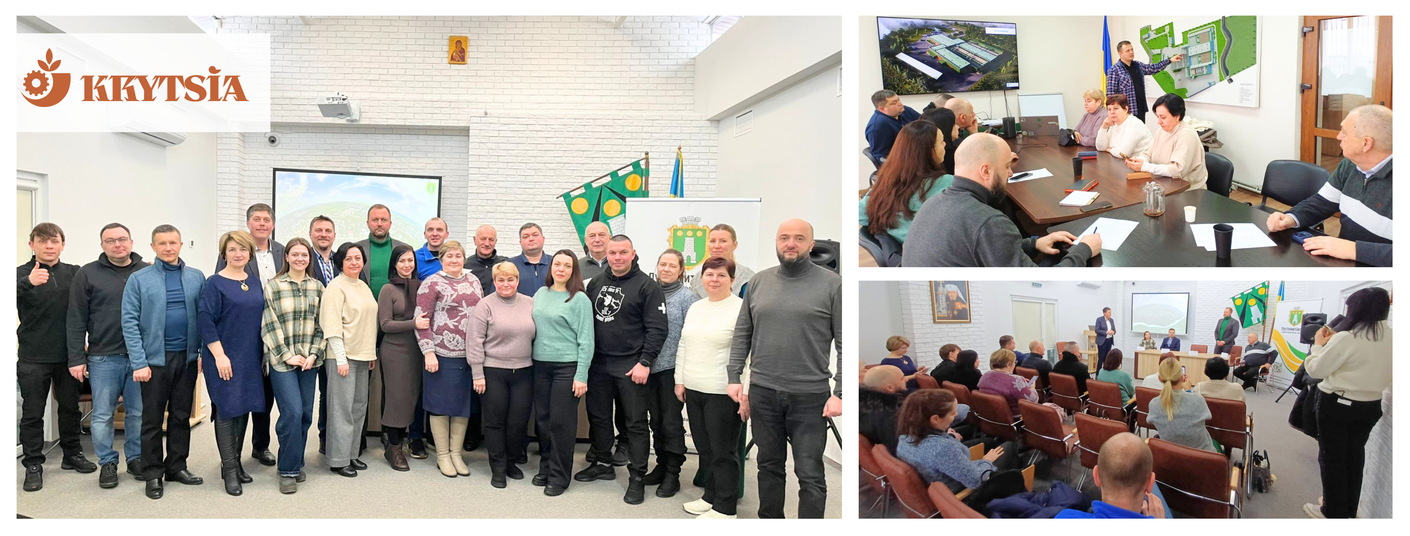
Recovery increasingly requires communities to pool their resources and expertise. Some infrastructure, economic and social challenges are difficult to address effectively within the boundaries of a single community. KRYTSIA therefore supports the development of inter-municipal cooperation and a shared vision for the development of Kryvyi Rih Raion.
In 2026, 14 territorial communities also joined forces to establish and develop the Kryvyi Rih agglomeration and signed a memorandum of cooperation to formalise their commitment.
This arrangement provides a practical foundation for joint planning, the preparation of infrastructure and investment projects, resource mobilisation and addressing issues that extend beyond the boundaries of individual communities. For local self-government, it represents a shift from each community working independently towards coordinating shared interests and resources across the raion as a whole.
Economic Resilience as a Foundation for Community Development
In the Kryvyi Rih area, where the economy has traditionally depended heavily on large-scale industry, developing small and medium-sized businesses is one way to strengthen community resilience.
Through KRYTSIA, approximately 200 micro, small and medium-sized enterprises have already received support. A total of EUR 2.43 million in grant funding has been allocated to their development, a further EUR 4.8 million in investment has been mobilised, and 269 jobs have been created.
Importantly, this support is not limited to financing existing businesses. In 2026, KRYTSIA expanded opportunities for veterans, their family members and graduates of vocational education institutions. They are offered training, assistance with business project preparation and grants to start or develop their own businesses.
For communities, the benefits extend beyond the immediate outcomes of grants in the form of new businesses and jobs. Over the longer term, the aim is to create a more diversified local economy, strengthen entrepreneurial skills and expand employment opportunities for different groups within the population.
At the same time, KRYTSIA is investing in vocational education and workforce training to meet the needs of the local economy. In this way, a mutually reinforcing link is gradually being established between entrepreneurship, skills and employment.
Investing in Human Capital

Community resilience depends to a large extent on the people who live and work there. KRYTSIA therefore works with several groups simultaneously, including young people, local government representatives, educators and businesses.
One of its areas of work is the modernisation of vocational education. A modern training and production workshop has opened in Kryvyi Rih to train specialists in the installation and maintenance of renewable energy systems. Across the project, 21 vocational education institutions have either been modernised or are currently undergoing modernisation, with contemporary learning environments and workshops being established. These improvements are intended to bring vocational training into closer alignment with the needs of the local labour market.
Investment in people therefore has a dual effect: it helps communities manage recovery processes more effectively today while creating the workforce and institutional capacity needed for their longer-term development.
Energy and Mine Action Safety as Pillars of Community Resilience
Following large-scale attacks on energy infrastructure, energy security has become one of the key priorities for communities. For public service facilities, this is not simply a matter of reducing costs; above all, it is about maintaining operations during power cuts.
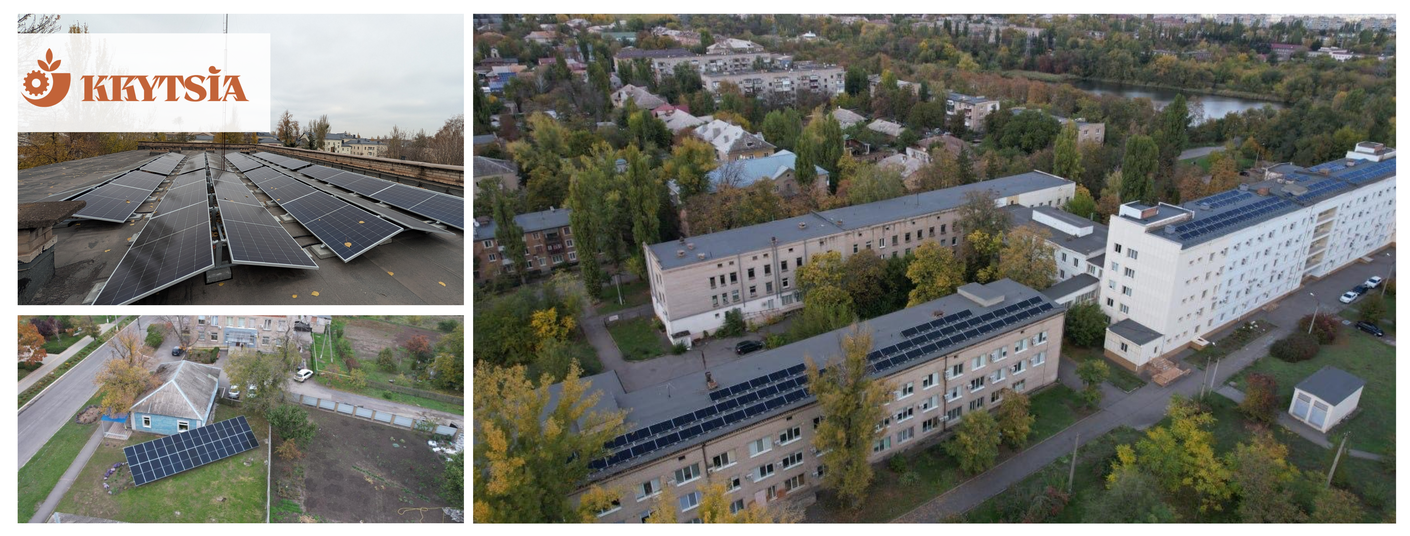
Through KRYTSIA, solutions are being implemented to expand the use of renewable energy and strengthen the energy resilience of social infrastructure. At the end of 2025, the installation of 55 hybrid solar power systems was completed in educational, healthcare, cultural and social protection facilities in Kryvyi Rih.
These systems combine solar power generation with energy storage and backup power capabilities. For communities, this means greater autonomy for critical public service facilities: even during disruptions to the electricity grid, they can continue operating and providing essential services to residents.
This area of work also has long-term benefits. The installed systems enable communities to gradually reduce their dependence on centralised electricity supplies and lower their electricity costs. The experience gained can also be used to scale up similar solutions across other facilities.
KRYTSIA’s energy projects are therefore not merely a response to the immediate challenges of war; they are also part of a broader transition towards a more resilient and decentralised energy model for communities.
Another important component of the KRYTSIA project is fostering a comprehensive culture of safety, led by a specialised mine action team. Its work covers a wide range of practical activities, from professional training for humanitarian demining specialists to educational sessions for schoolchildren and training for employees of local businesses.
Particular attention is also given to first aid training, as timely knowledge of how to protect oneself and assist others can save lives in wartime. By combining practical protection measures with public awareness, the initiative not only helps minimise everyday risks but also strengthens the overall resilience of communities across the Kryvyi Rih area.
Safe Education and Social Support
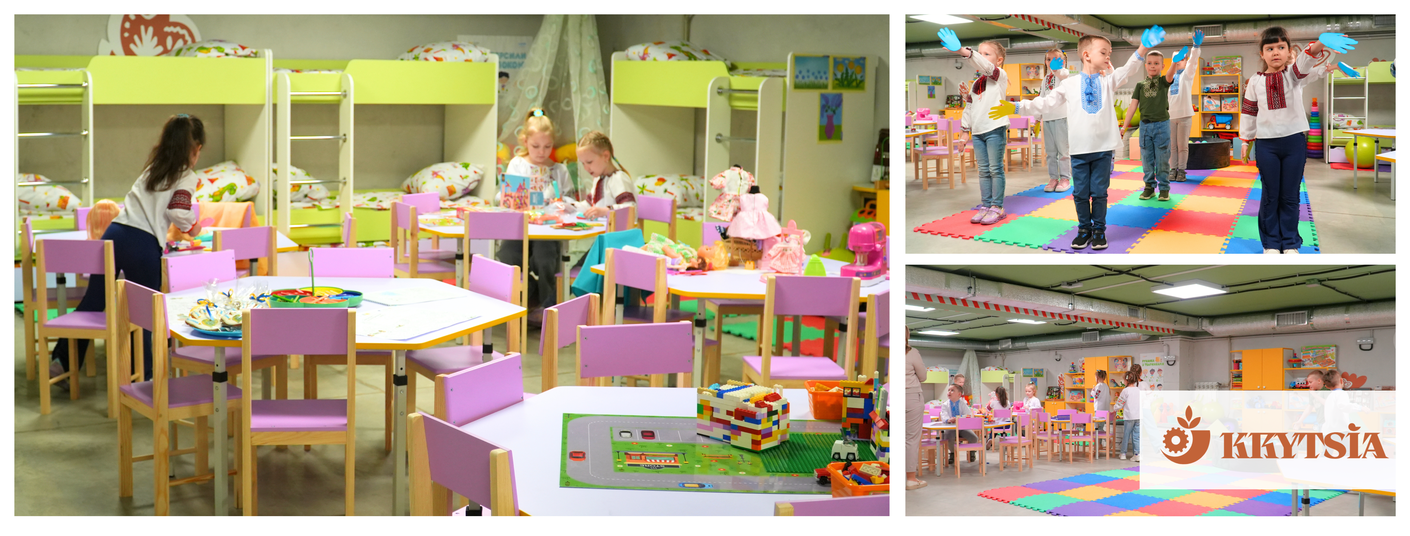
Another area of the project’s work is creating safe learning environments for children and supporting families who are particularly severely affected by the consequences of war.
Across communities in the Kryvyi Rih area, shelters in educational institutions are being equipped and modernised, child-friendly spaces are being established, and mobile psychosocial support teams are providing assistance. This combines physical safety with access to psychological and social support within people’s own communities.
The immediate practical benefit is that educational institutions are better able to operate amid wartime security risks, while children can continue learning in safer, more supportive environments. The spaces created serve not only as shelters during air-raid alerts but can also form part of the wider educational and social environment for children.
The work of mobile teams delivers additional benefits. Specialists can travel directly to communities to work with children and families who need psychological, social or other forms of support. This approach is particularly important at a time when the war is increasing demand for these services, while access to them remains uneven.
KRYTSIA’s work in this area goes beyond equipping individual facilities. Its broader outcome is the development of a more integrated community support system, linking safe educational environments with accessible psychosocial services.
The Next Step: Developing Territories Together
The future development of the Kryvyi Rih area requires moving beyond the model of a giant single-industry city towards a functional subregional agglomeration, in which Kryvyi Rih and its surrounding communities develop a shared policy framework through inter-municipal cooperation.
In this process, international technical assistance projects such as KRYTSIA, together with the local initiatives they support, act as catalysts for systemic change. They do more than mobilise resources for the revitalisation of post-industrial areas: they also create independent platforms for public dialogue, connect the region’s fragmented communities, help retain human capital and encourage a reappraisal of industrial heritage as an asset for the creative economy.
Combining the institutional expertise of international donors, the capacity of local self-government bodies and the energy of local initiatives opens up a pathway for the Kryvyi Rih basin towards a just transition — from an industrial hub to a resilient, innovative and collaborative European agglomeration.
Lessons That May Benefit Other Communities
As noted above, KRYTSIA’s defining feature is its integrated approach. The project brings together support for local self-government, entrepreneurship development, education modernisation, energy resilience, safe social infrastructure and international partnerships.
For Ukrainian communities already preparing for long-term recovery, this experience is particularly valuable as an example of an integrated approach in which individual projects are guided by a shared territorial development strategy. Equally important is the fact that investment is directed not only towards infrastructure recovery but also towards people, governance capacity, the local economy and communities’ ability to prepare and implement projects independently.
Read more about the KRYTSIA Project on the project website and follow its updates on Facebook and LinkedIn.
Tags:
repair amalgamation of hromadas spromozhnist
Область:
Дніпропетровська областьГромади:
Апостолівська територіальна громада Вакулівська територіальна громада Глеюватська територіальна громада Гречаноподівська територіальна громада Грушівська територіальна громада Девладівська територіальна громада Зеленодольська територіальна громада Карпівська територіальна громада Криворізька територіальна громада Лозуватська територіальна громада Нивотрудівська територіальна громада Новолатівська територіальна громада Новопільська територіальна громада Софіївська територіальна громада Широківська територіальна громадаSource:
Портал "Децентралізація"
14 October 2026
Kherson Regional Development Agency joins EURADA
Kherson Regional Development Agency joins EURADA
The Kherson Region Regional Development Agency “Office for European Integration” signed a memorandum with the...
14 October 2026
Cities and regions should influence decisions on the future of Ukrainians in the EU
Cities and regions should influence decisions...
The European Committee of the Regions called on cities and regions to be involved in preparing solutions for...
13 October 2026
Ukraine and CoR prepare for the first JCC meeting
Ukraine and CoR prepare for the first JCC meeting
The first meeting of the Joint Consultative Committee between Ukrainian local governments and the European Committee...
13 October 2026
Seven Hromadas Selected for Polaris Support to Develop Local Veteran Policies
Seven Hromadas Selected for Polaris Support to...
The Swedish-Ukrainian Polaris Programme “Supporting Multilevel Governance in Ukraine” has selected seven new...