Training local specialists to avoid the need for outside ones. How Hleiuvatska community sets up its career guidance system
Hleiuvatska community in Dnipropetrovsk region is situated just 15 minutes from the city of Kryvyi Rih. For many, this would mean an inevitable drain of young people to the big city; however, here the authorities decided to take pre-emptive action. The community is convinced that career guidance is not simply a matter of vocation, but of the economic survival of the entire community.
‘Nowadays, careers guidance is about who will be working in our hospital, school or in the fields tomorrow. Taking children on excursions now and introducing a new course is far cheaper than having to look for outsiders later and bring them into the community at a cost of millions. If we do not give children the opportunity to fulfil their potential at home, another community – or even another country – will do so,’ emphasises Dmytro Hurieiev, First Deputy Mayor of Hleiuvatka.
Thanks to its cooperation with the Swiss-Ukrainian DECIDE Project, Hleiuvatska community has become an example of how partnership between education, authorities, and business delivers tangible results. Read our article to find out how a small community manages to compete with a city, why farmers are willing to pay for young people’s education, and how career guidance works in wartime conditions.
From individual initiatives to a systematic approach
The career guidance in Hleiuvatka began back in 2020. The proximity to a major city and preparations for the reform of specialised secondary schools – which, from 2027, will see only gymnasiums operating in the community – prompted local educators to seek answers to an important question: how can we help children make conscious choices about their future educational and career paths after completing Grade 9? The community organised trips for schoolchildren to vocational education institutions and higher education institutions on its own initiative, in an effort to show them different career paths.
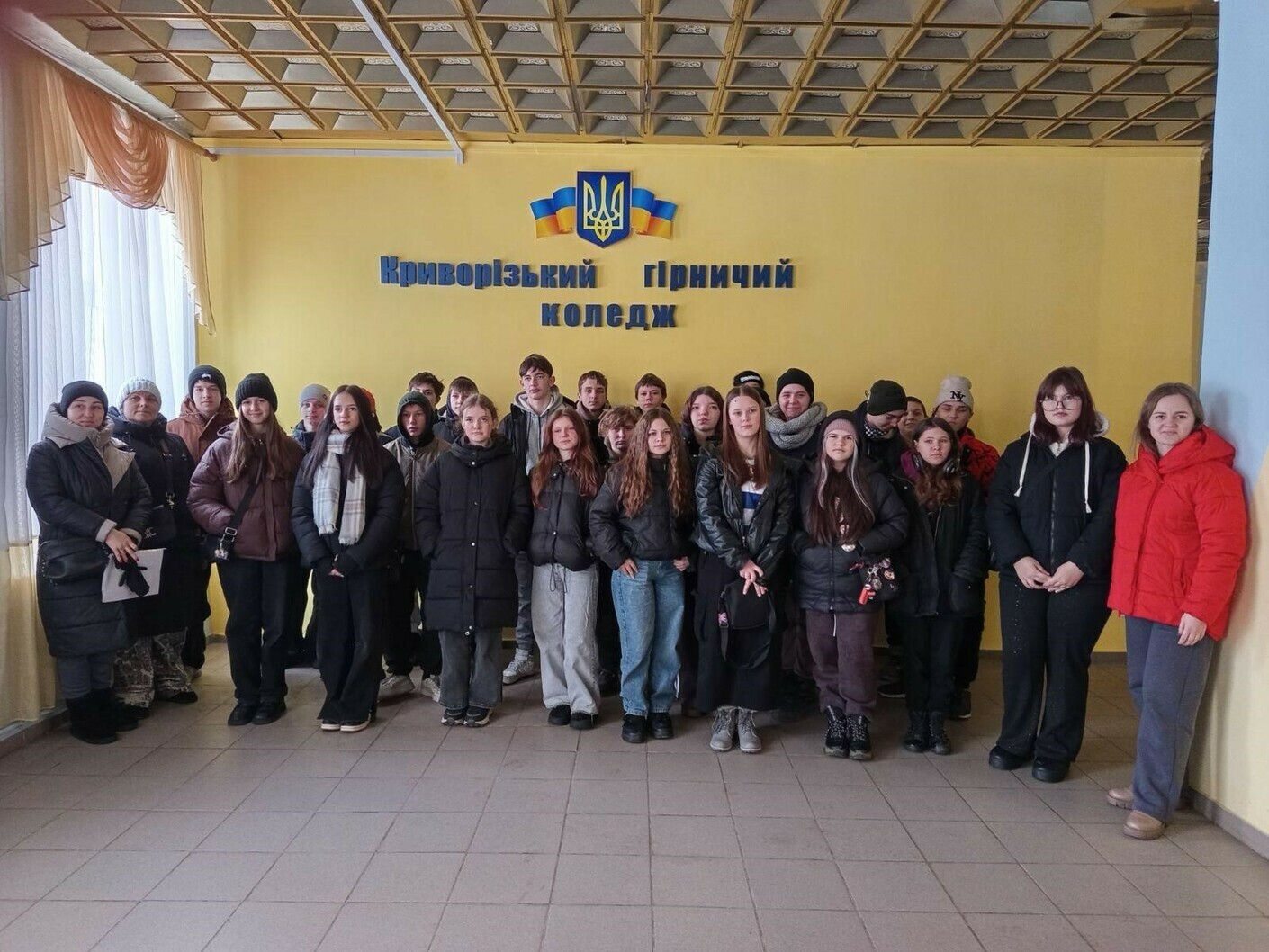
Gymnasium students at Kryvyi Rih Mining College
Moreover, a change in approaches to careers guidance has become vital due to radical shifts in the labour market. The war and mobilisation have created a massive labour shortage. Out of a population of over 6,000 in Hleiuvatska community, about 500 men are currently defending the country in the armed forces. There is a shortage of teachers and doctors, and there is huge demand for specialists in the mining and agro-industrial sectors.
However, the cooperation with DECIDE Project has helped to transform these intuitive steps into a systematic approach and has provided new, effective tools.
‘We have worked on this issue before, but now we have a clear understanding of how it is structured. We have clearly identified our strengths and weaknesses in this work. Before this, we also took the children to local businesses and even to Kyiv. But thanks to the Project, everything has taken on a broader scope, become more vivid, and much more professional. We now have a mechanism for approaching employers, establishing contact with them effectively, and helping children identify their strengths,’ explains Natalia Nehara, Head of the Department of Education, Youth, Sport, Culture and Tourism of Hleiuvatska community.
A “test drive” of professions
‘We want children to get a real feel for a profession as early as Grades 5–8. Career guidance is about giving them the chance to explore and realise in good time whether “this is for me” or “this isn’t for me”. We are trying to establish links with employers so that these events are not just careers fairs, but genuine pathways where children can see what a job is really like from the inside. The path to higher education will always be open, but it is important to help children map out their own path after Grade 9, showing them everything our community has to offer from a practical perspective. This is about giving children a choice,’ explains Nataliia Nehara.
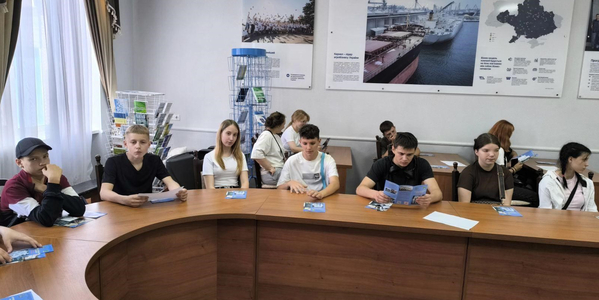
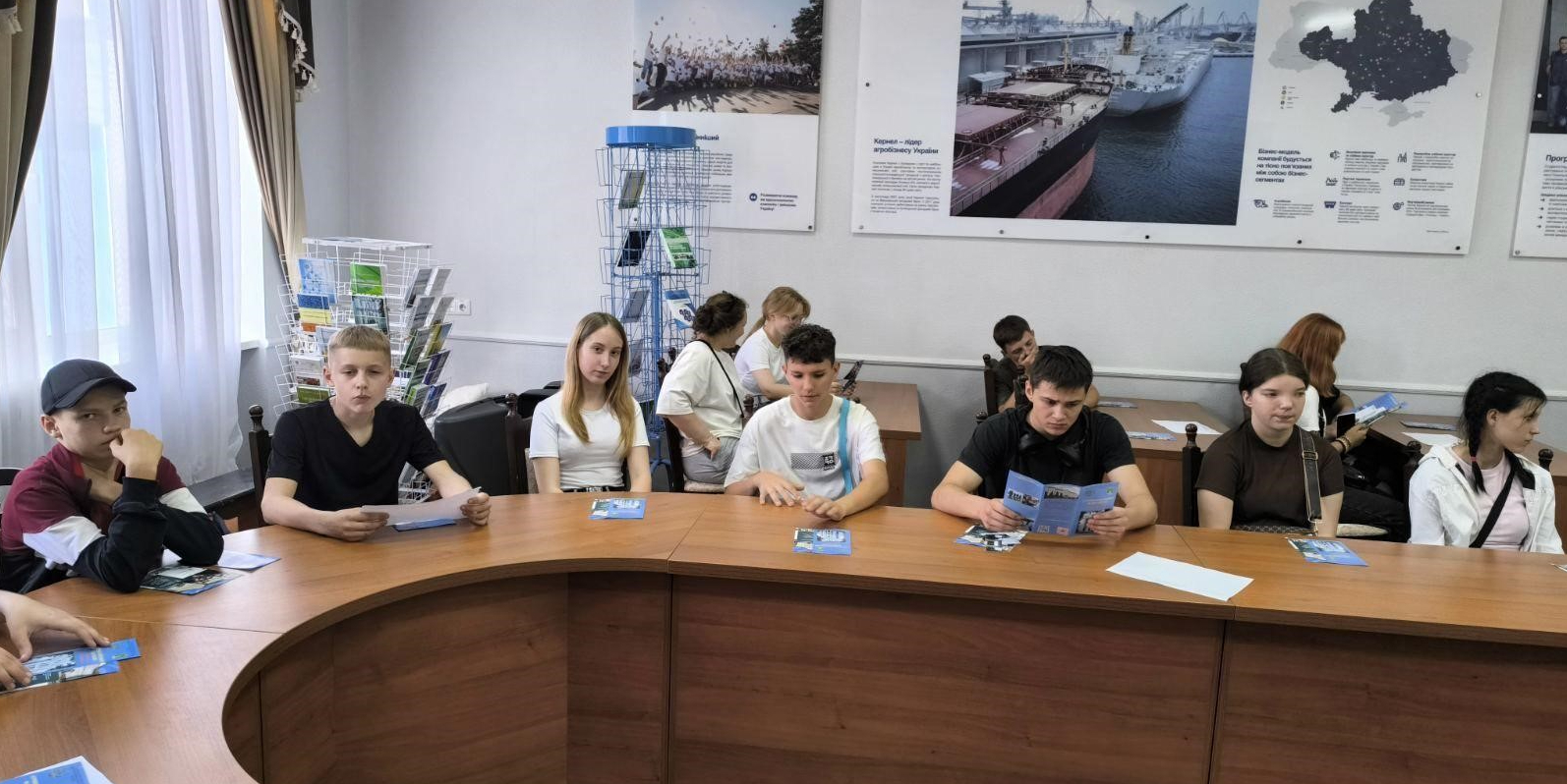
One of the most memorable experiences was a trip by students in Grades 8–9 to Kryvyi Rih Mining College. There, the teenagers took part in modern laboratory sessions rather than a standard lecture:
- Electrical Engineering Centre: where schoolchildren learned to connect real equipment and sockets (which, as it turned out, is a challenge even for adults).
- Smart Energy Lab: where the children were shown the principles behind the construction of solar power stations.
- Welding Technology Centre: where the schoolchildren worked on specialised simulators. The teenagers practised welding and observed the laser cutting of parts.
Tetiana Arama, a careers counsellor at Hleiuvatka Gymnasium, recalls that emotions overflowed:
‘The children were thrilled; they spent the whole bus ride discussing who had made the perfect weld and who had managed to work out the diagram. But it seems we – the teachers and counsellors – were even more thrilled. For us, too, it was a revelation to see the level vocational education can now reach.’
The children were also impressed by the tour of the National University of Life and Environmental Sciences of Ukraine. Hleiuvatka plans to expand the scope of its local excursions. In particular, it aims to organise regular visits to:
- Local agricultural firms and farms, where the children will learn about modern farming, horticulture, and poultry farming.
- Outpatient clinics – to demonstrate how dental surgeries, laboratories, and even ultrasound machines work.
- Companies with heavy machinery, where the girls and boys will be able to test their skills behind the wheel of modern, high-tech vehicles.
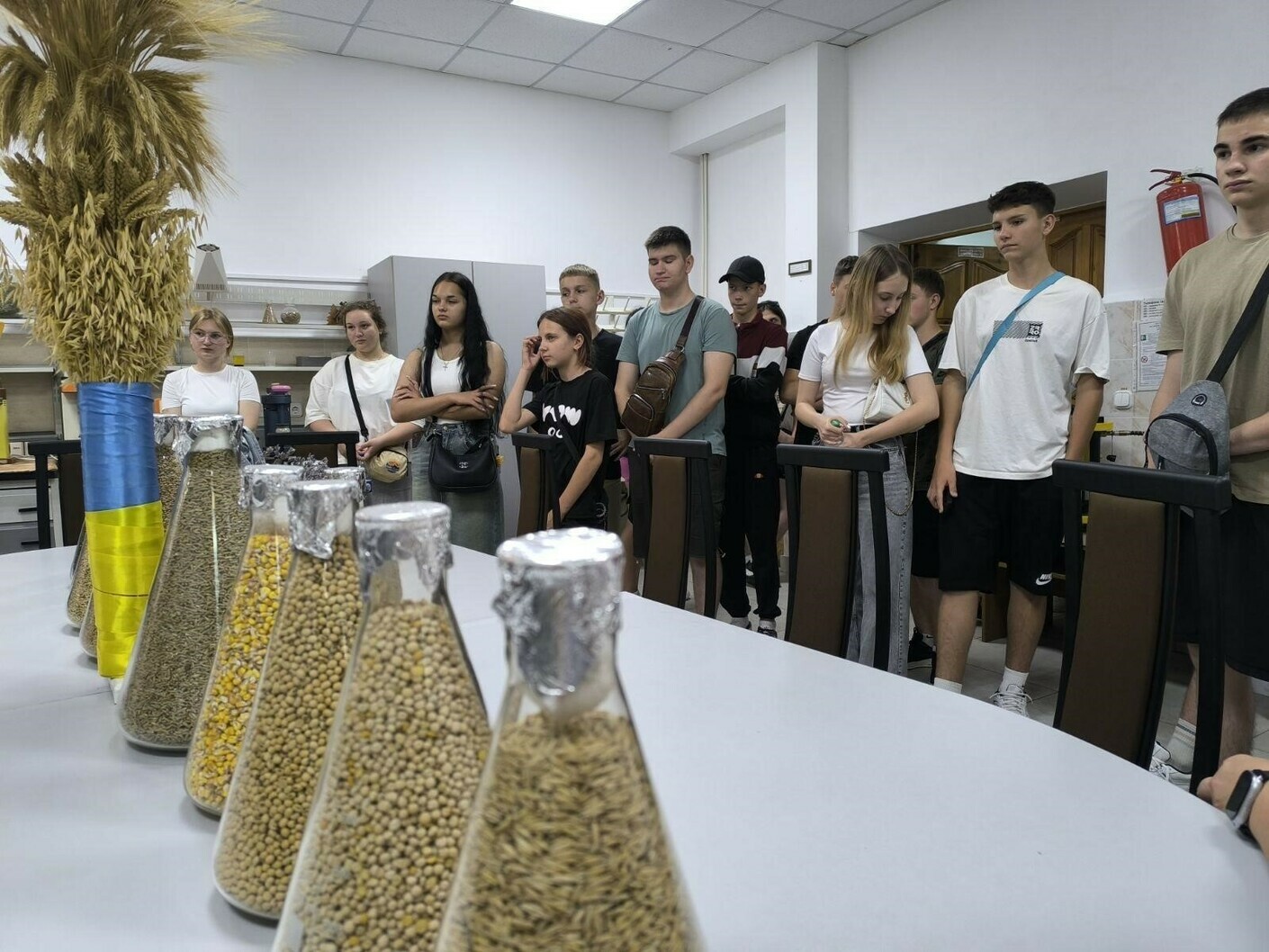
Gymnasium students at NUBiP, Kyiv
The community places special emphasis on inclusivity. Here, new career guidance approaches are sought for children and adults with special educational needs.
A career counsellor is a mentor, not just a teacher
For the system to work, simply taking children on excursions is not enough – there needs to be specialists who can help students reflect on this experience, link it to their interests, and identify possible educational and career paths. Thanks to DECIDE Project, Hleiuvatska community now has career counsellors who have completed specialised training. These are teachers who now approach career choices through the lens of each child’s potential.
Anna Shevchenko, Principal of Hleiuvatka Gymnasium, explains that from the next academic year, the JOBS course will be introduced at the school as a separate optional subject.
‘We are already using extra lessons and educational activities to encourage the children. We identify who prefers working on a computer and who prefers making things with their hands. Last year, our girls visited a construction college and tried operating a crane on simulators there. When they sit in the cab and load something, it shatters all the stereotypes about “male” and “female” professions. The children are thrilled because they realise that nothing is impossible in life,’ says Anna Shevchenko.
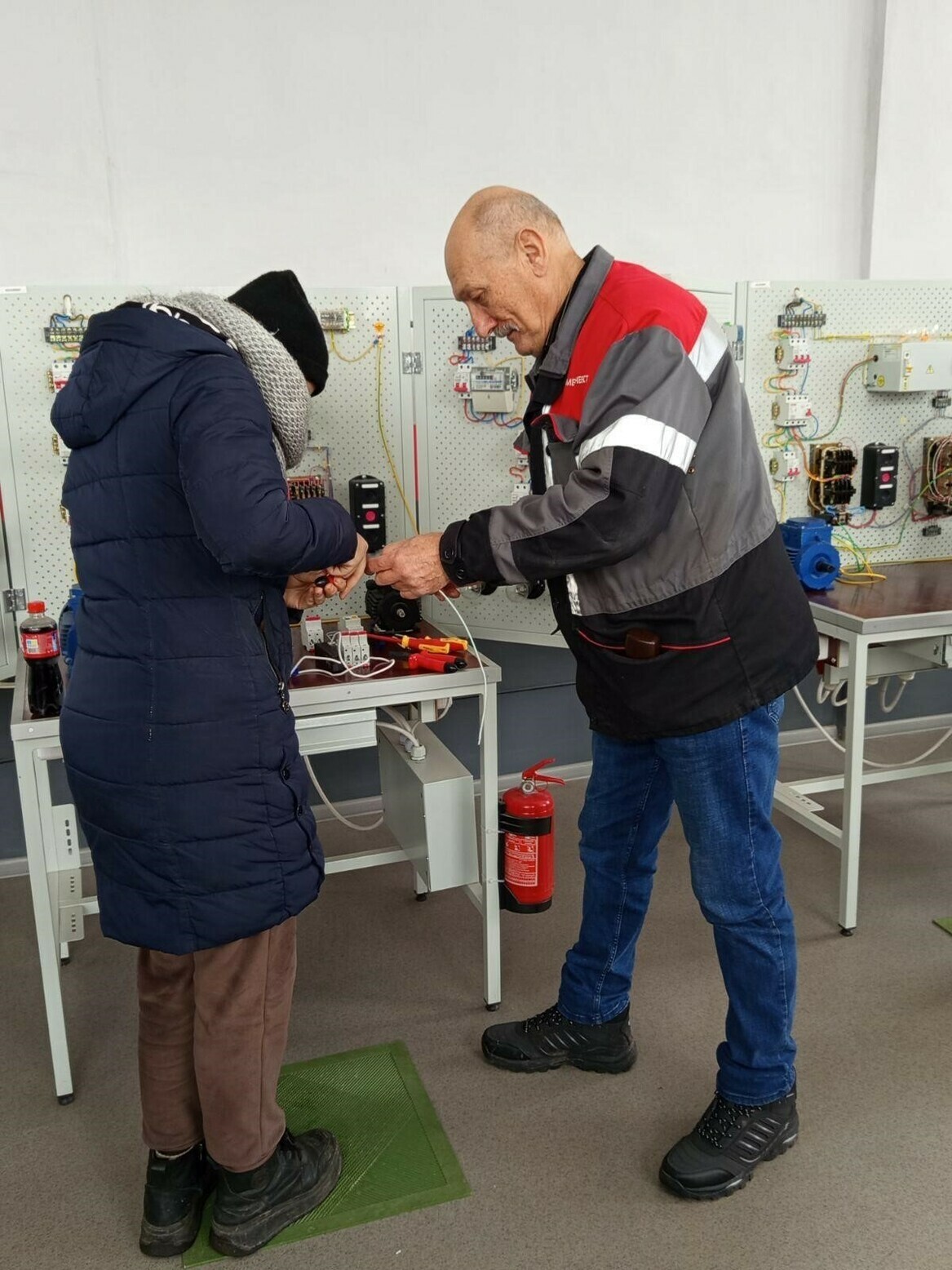
Gymnasium students at Kryvyi Rih Mining College
Careers counsellor Veronika Korobiichuk states that the main challenge these days is not simply to provide information, but to maintain teenagers’ motivation, which is often lost due to the war or distance learning.
‘We learn how to communicate effectively with the children, as some are very open whilst others are very reserved. We use different tools to understand where a child is pursuing their calling independently, and where they need help channelling their interests because they are unsure what to do next. We want as few students as possible to drop out halfway through,’ says Veronika.
Career counsellor Tetiana Arama adds: the main aim of the course is to help teenagers overcome their fear of making mistakes. When you are 14 or 15, it is difficult to choose a career for life, so the teachers teach them to be flexible.
‘I tell the children: never be afraid to try something new. Even if you enrol and realise later that you are not interested, that is still a valuable experience. The important thing is to be passionate about what you do. Some of our ninth-grade students have already completed courses in eyebrow shaping or nail art and are trying their hand at these professions. I admire them! I am 32 years old, and I myself am always ready to learn new things. Our course is about finding your calling, not just going where the pay is high,’ explains Tetiana.
Why businesses are willing to invest in young people
Career guidance cannot succeed without employer interest. In Hleiuvatska community, local businesses are not merely sponsors but active participants in the educational process. The chief agronomist at the “Krasnyi Zaboishchyk” agricultural firm, Volodymyr Poliukhovych, knows from personal experience how important it is to have a clear vision of the future.
‘I myself progressed from a rural nine-year school to a master’s degree in Kyiv. However, the profession of an agronomist used to be considered unprestigious, whereas now it involves digital technologies, drones, engineering agronomy and complex logistics. We need people who have knowledge and can think for themselves. We often find that graduates lack knowledge because they went to study “wherever their mum told them to”, only to realise later that it was not for them. Even in such cases, we are prepared to train our staff ourselves,’ says Mr Volodymyr.
So, the agribusiness in the community offers young specialists not just a job, but a benefits package:
- Tuition fees. The organisation is ready to pay for its employees to undertake master’s degree programmes at leading universities.
- Company housing. Creating the conditions that allow whole families to relocate.
- Comprehensive employment support. When a specialist moves to the community, efforts are made to find work for both the husband and the wife.
‘Ukraine has enormous agricultural potential, and the countryside today is not about decline, but about modern technology. We are ready to welcome specialists to our businesses, show them the machinery, and give them the chance to learn the trade. So that children grow up not just hearing the word “agronomist”, but understanding that it is a prestigious, well-paid, and very exciting job right here at home,’ emphasises the agronomist.
The community itself sets an example of supporting young professionals. For instance, a bonus of UAH 100,000 has been introduced here for new specialists at the local clinic, and they are provided with official accommodation. However, as the village council admits, even such financial incentives do not always work due to the complex security situation in the region. Therefore, the focus on ‘training our youth’ and attracting local young people to local businesses has become a priority strategy for the community’s survival and development.
‘Before the war, workers were looking for jobs, but everywhere they went they were told, “We don’t take people without experience; you need 3–5 years’ experience.” Now the situation is radically different: employers are looking for people, are willing to pay for their training, and are promising accommodation. Therefore, our role today is not to stand on the sidelines. We have become a bridge between young people, education and business, so as to align the needs of businesses with what is taught in schools,’ notes Dmytro Hurieiev.
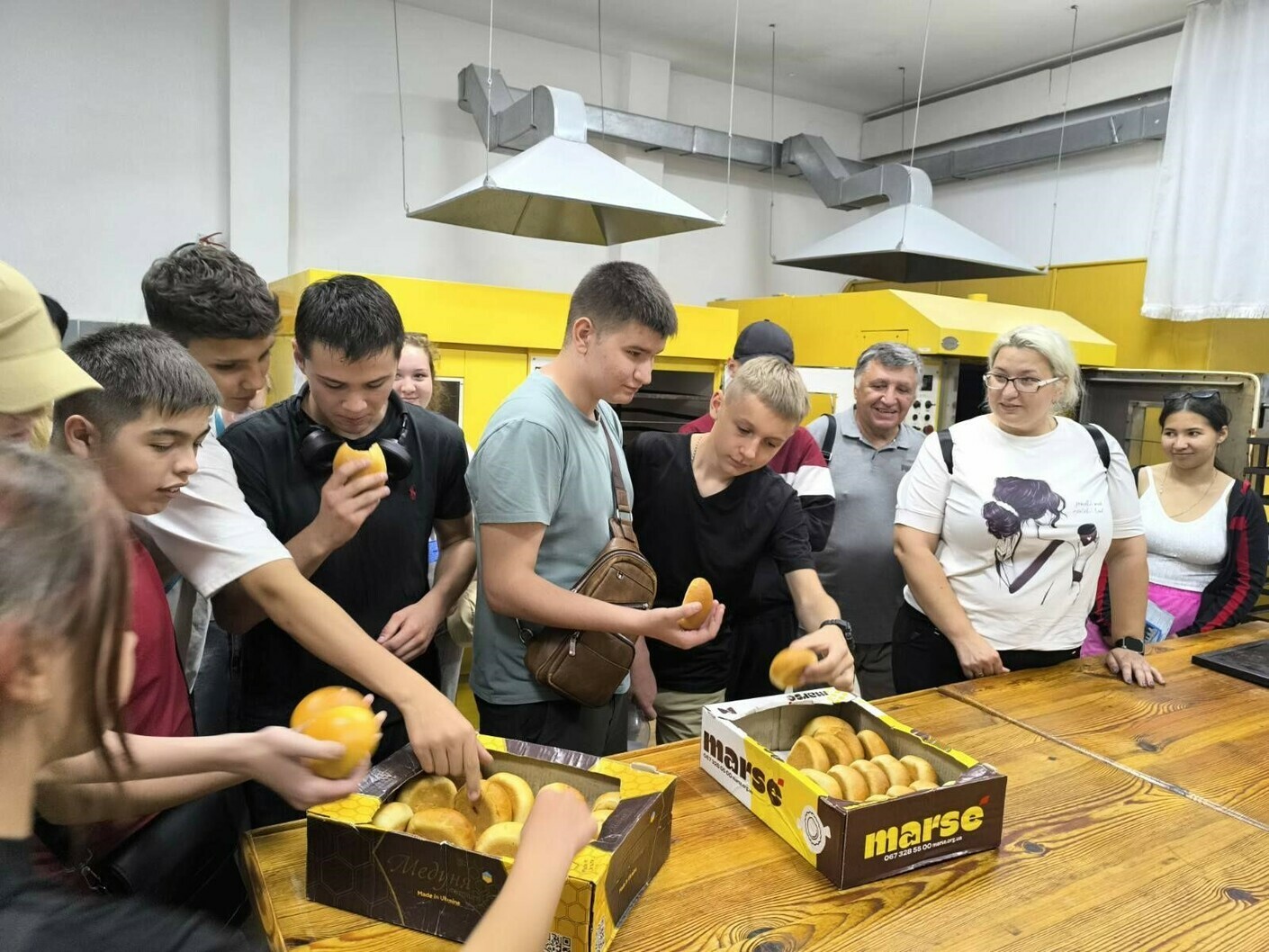
Gymnasium students at NUBiP, Kyiv
Parental perspective: ‘This is helpful for both the children and us’
Career guidance in Hleiuvatska community is more than just a story about school and business; parents also benefit. Parents are often the first “career counsellors” for their children, yet they lack the necessary tools.
Tetiana Shliakhova, a mother of four, shares her experience: one of her sons graduated from school, another is still at primary school, and her daughter, who has special educational needs, finished school long ago. Tetiana admits that when a seventh-grade child asks, ‘Where should I go next?’, parents are often at a loss.
‘From a mother’s point of view, career guidance in general – and career counselling in particular – is very valuable. It is beneficial for children to be shown real-life professions and to have the opportunity to discover different roles for themselves before they leave school. This takes a huge weight off parents’ shoulders. It is particularly important for children with special educational needs. My eldest daughter is very keen to study and get a qualification, but when she graduated, we were simply turned down by every college. So the fact that the community is now looking for ways to help children with special needs socialise and learn gives us great hope,’ says Ms Tetiana.
A small community – a big motivation
The experience of Hleiuvatska community has shown that the motivation and clear stance of the leadership matter more than the population size.
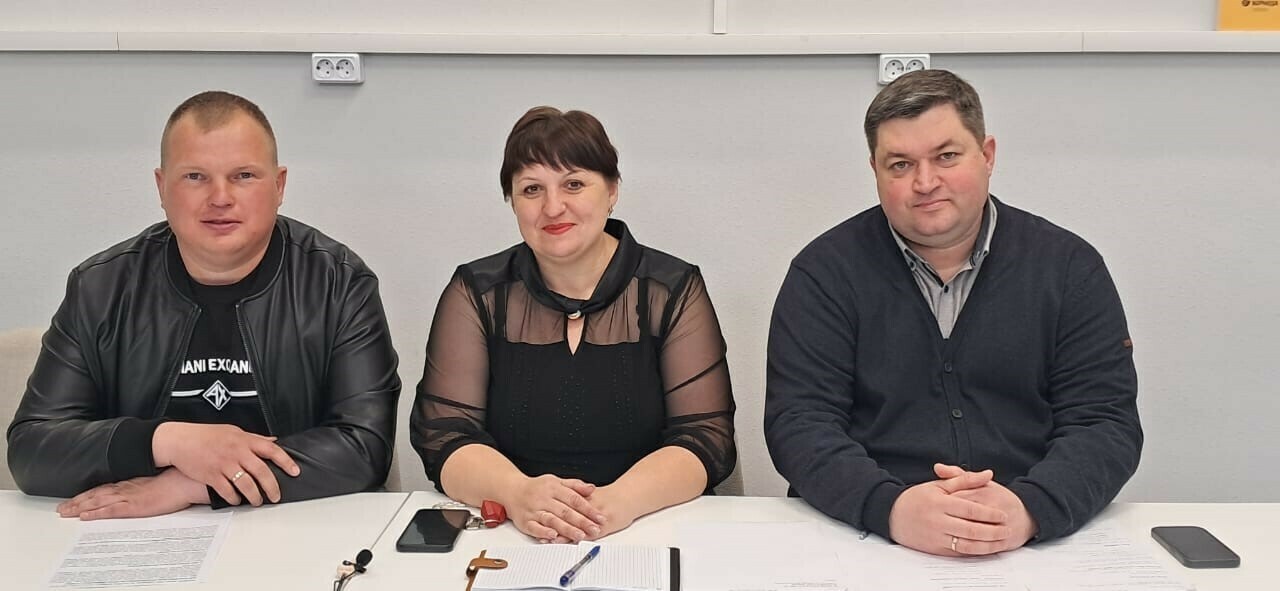
Volodymyr Poliukhovych, Natalia Heraha, and Dmytro Hurieiev
Nowadays, the community successfully competes with the city for human resources, offering not only high salaries but also systematic support. However, the main achievement here is seen as a shift in mindset: school is, besides everything else, a place where a child begins their professional journey.
‘We do not only learn ourselves – we set an example that inspires even large communities and cities,’ concludes Dmytro Hurieiev. ‘Our position is simple: if we want to rebuild the country, we need to know who will do it. Career guidance is about our present. It is about helping children see that they can become self-realised, successful, and happy in their own village.’
Mariia Buleiko (Markovska)
07 September 2026
Як може працювати депозитно-поворотна система: від європейського досвіду до української моделі
Як може працювати депозитно-поворотна система:...
Національний план управління відходами до 2033 року показує важливу статистику. В Україні працює близько 1500...
07 September 2026
UCORD Summer School kicks off in Uzhhorod: Why...
When air raid sirens sound daily in the region, a strategy easily seems like a luxury. First things first: restore...
04 September 2026
“Educational Polissia 2026/27: We teach. We...
On 20 August, Zhytomyr hosted the August Forum “Educational Polissia 2026/27: We Teach. We Inspire. We Succeed”,...
04 September 2026
Анонс: вебінар «ПКМУ №527, що змінилося у...
У серпні 2026 року Уряд вніс важливі зміни до системи управління публічними інвестиціями. Тому I_CAN спільно з...