How to retain the legitimacy of local councils during wartime and regulate the functioning of frontline communities
Martial law posed questions for local government that the peacetime logic of the reform had not anticipated: how should communities act where the council has lost its quorum; what powers should military administrations have; how can residents’ representation be ensured where possible; and what rules are needed for frontline territories.
These matters were raised during the “Decentralisation 2026: Legislative Agenda” forum.
The legitimacy of councils and the role of military administrations
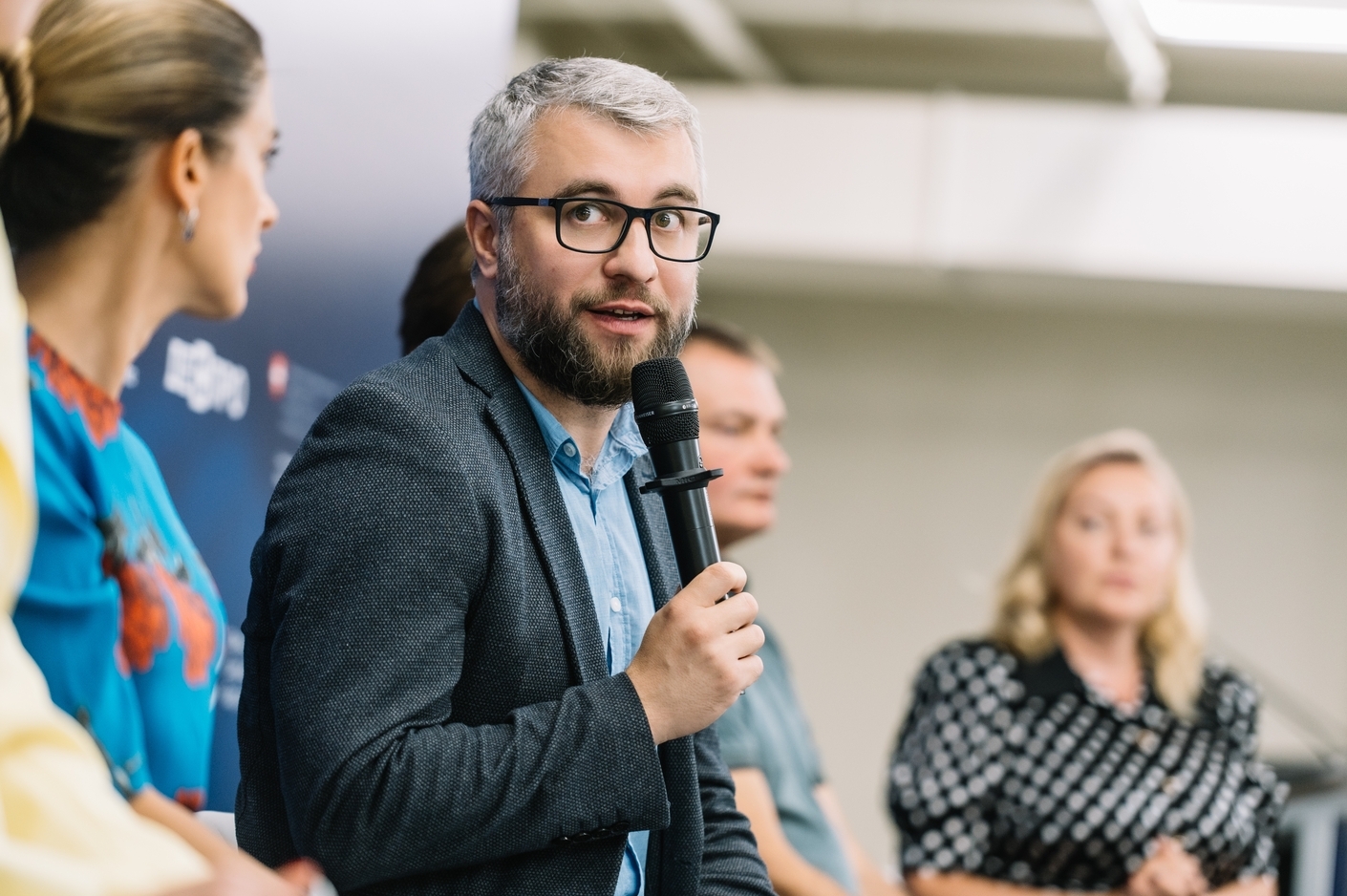
According to MP Dmytro Mykysha, the legislation must preserve the maximum scope of the representative function of local councils. In his view, Draft Law No. 14405 on ensuring the legitimacy of local councils under martial law is aimed precisely at this.
‘We are highly interested in ensuring that this does not turn into a parade of military administrations. Therefore, Draft Law No. 14405 – on the powers of local councils – was registered.’
He stated that, in some communities, the situation with the quorum is already approaching a critical level. The reasons for this, according to the MP, include the mass early resignation of local councillors and other consequences of the war.
‘We are, basically, retaining the representative bodies elected by the residents of the relevant community and enabling them to continue their work. This may not be as high-quality as it could be under normal circumstances, but their legitimacy remains.’
However, Dmytro Mykysha believes that the functioning of military administrations requires separate legal regulation. In particular, the status of staff working in the military administrations of communities needs to be clearly defined.
‘At the level of military administrations in localities, service should be equated with service in local governments. The benefits package, ranks, payments, and bonuses – everything needs to be clear.’
He identified a distinct legislative concern regarding situations where a military administration has already been established but the local council continues to operate. In such cases, according to the MP, it is necessary to clearly define exactly who makes decisions – particularly budgetary ones – and within what limits.
‘When the head of the military administration is appointed and the military administration is established, but the council continues to operate, questions arise: who approves the budget, and who is responsible for what? This needs to be regulated separately.’
Draft Law No. 14405 as a temporary solution
Olena Boiko, an expert on local self-government, described Draft Law No. 14405 as a temporary solution that should enable local self-government to continue operating and making necessary decisions in wartime conditions.
She remarked that there is currently no way of specifying the exact number of councils that are not functioning, have lost their powers, or adopt decisions without them. This figure is constantly changing and therefore requires systematic monitoring.
‘At present, if nothing better comes along, this is at least a temporary stopgap to enable local self-government to operate and make basic decisions during the war.’
According to the expert, if the council is unable to operate and Draft Law No. 14405 is not adopted, there will only be one option left: the establishment of a military administration of the locality. Therefore, she considers the draft law vital for preserving representative bodies where this is still possible.
‘If Draft Law No. 14405 is not adopted, we will have just one option in a situation where the local council does not operate. That is the establishment of military administrations in the localities.’
After the war, according to Olena Boiko, the legislation on the status of local councillors will need to be reviewed and preparations made for holding democratic elections.
Districts and regions are to have a defined place in the system of authorities
At the district and regional levels, the legislative delineation of powers remains a key concern. Tetiana Yehorova-Lutsenko, President of the Ukrainian Association of District and Regional Councils (UAROR), emphasised that UAROR systematically participated in the working groups that prepared the relevant proposals, as every power is important for these levels.
‘The law on the delineation of powers is fundamental for us. It is essential that, in addition to the powers themselves, the subsequent establishment of executive committees at the district and regional levels is clearly defined. In our view, this will mark the effective completion of the decentralisation reform.’
She highlighted that the discussion on the role of the sub-regional and regional levels in the system of public administration is underway. The Association is awaiting recommendations from the Council of Europe and the Congress of Local and Regional Authorities of the Council of Europe, which were discussed with the participation of representatives from different associations and experts.
According to Tetiana Yehorova-Lutsenko, the powers of district and regional councils should be defined through dialogue with all levels of local self-government and taking into account the updated vision of the relevant ministry.
Special rules for frontline territories
Separately, the Head of the Kharkiv Regional Council addressed the needs of frontline territories. She supported the idea of a special legislative solution that would cover not only the status of workers, but also the conditions for business, education, and other areas of life in communities operating under constant threat.
‘This is not about a free economic zone. It is about different conditions under state programmes – conditions that will differ from those in territories which currently have greater opportunities to fill their budgets.’
In her belief, a special approach has to be comprehensive and take into account the real capabilities and limitations of communities, districts, and regions located near the front line.
‘As Head of the Kharkiv Regional Council, and on behalf of my colleagues from the regional and district councils near the front line, I can say: we are waiting for this special law. If it covers not only workers but also business, education and everything else that can be regulated for such territories, it will be an important decision.’
Read more about the general legislative agenda, outlined during the forum by representatives of the Parliament, the Government, and international partners, in the article “Delineation of powers, community resources and rules for frontline territories: Legislative agenda of decentralisation”.
Read more about the findings of a survey of community leaders on legislative priorities in the article “Remuneration, personal income tax, and legitimacy of councils: What community leaders named as legislative priorities”.
Read more about the staffing capacity of communities, administrative services, and the legislation on administrative fees in the article “Administrative Service Centres start with people: What communities need for quality administrative services”.
Source:
Портал "Децентралізація"
04 September 2026
Виховати своїх фахівців, аби не шукати чужих....
Глеюватська громада на Дніпропетровщині розташована всього в 15 хвилинах від міста Кривий Ріг. Для багатьох це...
04 September 2026
«Освітнє Полісся 2026/27: Навчаємо. Надихаємо....
20 серпня у Житомирі відбувся Серпневий форум «Освітнє Полісся 2026/27: Навчаємо. Надихаємо. Перемагаємо», який...
04 September 2026
Анонс: вебінар «ПКМУ №527, що змінилося у...
У серпні 2026 року Уряд вніс важливі зміни до системи управління публічними інвестиціями. Тому I_CAN спільно з...
04 September 2026
Рада є, а впливу не видно. Що заважає...
АВТОР - Володимир Серветник - експерт із публічного врядування та ветеранської політики, PhD з публічного управління...