Accountability of starostas: Research findings and next steps
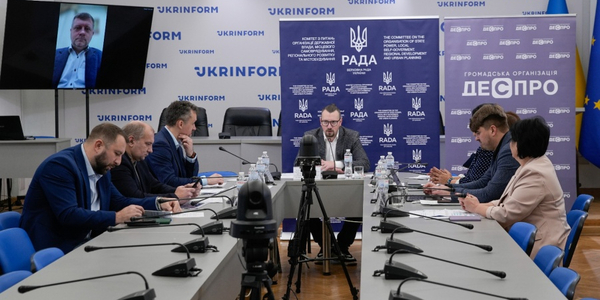
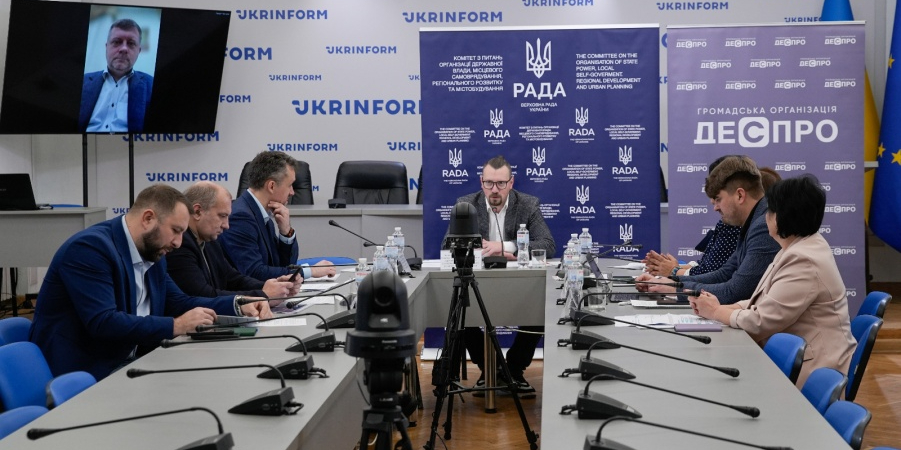
The Verkhovna Rada Committee on Organisation of State Power, Local Self-Government, Regional Development and Urban Planning presented a research entitled ‘Control and Accountability of Starostas’ developed by DESPRO with the support of the EGAP Programme.
This is the most extensive study conducted in 2025 of the institution that is closest to people in the community. As Ukrainian MP Vitalii Bezgin noted, ‘This is more about the relationship between starostas and local residents than the control functions of other levels of governance’. The results indeed show where the system works and where it falls short.
What problems were revealed?
Analysts examined data from reports submitted by over 7,000 starostas from almost every region of Ukraine. Several issues were identified:
- irregular and non-standardised reporting;
- no published reports on community websites;
- different approaches to reporting procedures at the local level;
- lack of control mechanisms on the part of community leaders;
- no sanctions for violating the law.
What do the data show? Several important figures from Vitalii Bezgin:
Local reporting rules for starostas
- 40.1% of communities have enshrined reporting procedures in their charters;
- 87.1% – in regulations on starostas.
According to the MP, this is a signal for unification:
‘We need to come up with regulations when there is a single approach. If the majority of communities opt for a particular regulation, then we should follow their lead.’
Reporting to the local council
- 49.8% of starostas report to the council.
Reporting to local residents
- 57.2% of starostas report directly to the residents of their starosta district.
Leaders in the dynamics are the Kyiv and Zhytomyr regions.
Taking a closer look at regional differences: who is leading and who needs to step up?
The research shows significant regional differences. While the Ivano-Frankivsk (40.8%), Rivne (39.6%), and Odesa (38.4%) regions are leading the way in reporting to the council in 2025, this indicator remains critically low in regions such as Chernihiv (16.4%) and Kherson (0%).
As for reporting to local residents, there are also leaders here: the Kharkiv (43.7%), Ivano-Frankivsk (37.6%), and Dnipropetrovsk (37.5%) regions.
How do starostas report? The vast majority of starostas (over 90% in many regions) prefer traditional public meetings. However, video conferences are most actively used as a reporting method in the Kharkiv (24.2%) and Chernivtsi (15.4%) regions, which may be due to both security considerations and developed digital infrastructure.
Transparency: are reports available online?
The reports for 2024 are claimed to be available on the websites of most communities, but in reality, they are not always publicly accessible. For example, in the Zaporizhzhia region, only 21.6% of communities declared that their reports were available online, and in the Lviv region, 42.9%. This indicates a systemic problem with the disclosure of information.
Systemic problems and ways to solve them
The research identified a number of systemic problems:
- Legal uncertainty: The mechanisms for the community leader to control the activities of the starosta, as well as the principles of accountability to the residents of the starosta district, are not clearly defined.
- Dependence on the will of the council: The fact of reporting to the council often depends not on the requirements of the law, but on the willingness of councillors to hear it.
- Lack of sanctions: There are no legal consequences for violating reporting requirements.
What to do next? Recommendations:
- For the Verkhovna Rada: Improve legislation by removing legal uncertainty regarding the accountability of starostas to local residents, establish a unified control mechanism, and define sanctions for non-compliance with reporting requirements.
- For the Ministry for Development: Provide methodological assistance to communities and consider creating a single register of starosta districts to increase transparency.
- For local government associations: Intensify educational work, disseminate best practices and assist in the development of local acts.
What was discussed and what are the next steps?
Participants at the event, including Members of Parliament, representatives from the Ministry for Development, local government associations, civil society organisations and starostas, discussed the need to strengthen the effectiveness and accountability of the starosta system, as well as the need to amend legislation.
The research and discussion once again demonstrated that the role of starosta is a key link between citizens and the authorities. Its effectiveness depends directly on transparent rules, regular reports and trust. The available data clearly indicates the areas that need to be worked on to strengthen this link.
Watch the video recording of the presentation of the research ‘Control and Accountability of Starostas’ in Ukrainian


03 December 2025
Вакансія: Місцеві експерти з планування управління відходами (WM4U)
Вакансія: Місцеві експерти з планування...
Програма WM4U оголошує відбір двох експертів з планування у сфері управління відходами для роботи з кластерами...
03 December 2025
Оцінювання спроможності громад: що стоїть за новим підходом Мінрозвитку – розгорнутий матеріал
Оцінювання спроможності громад: що стоїть за...
Українські громади отримають новий інструмент, що дає можливість чесно й наочно побачити власну спроможність....
03 December 2025
«3000 км Україною» – програма стартувала у тестовому режимі для прифронтових громад
«3000 км Україною» – програма стартувала у...
Кабінет Міністрів ухвалив ряд рішень, що забезпечать додаткову підтримку жителів прифронтових територій та...
03 December 2025
Година запитань з Наталією Піпою «Оплата праці вчителів у 2026 році: що зміниться насправді?»
Година запитань з Наталією Піпою «Оплата праці...
Яким буде навантаження педагогічних працівників та чому збільшення педагогічного навантаження не означає масових...